Order Cuffed Beanies with Woven Labels Wholesale
Source cuffed beanies with woven labels wholesale with clear specs, realistic MOQ guidance, pricing factors, label options, QC checks, and production planning for bulk orders.
Why Cuffed Beanies with Woven Labels Wholesale Work
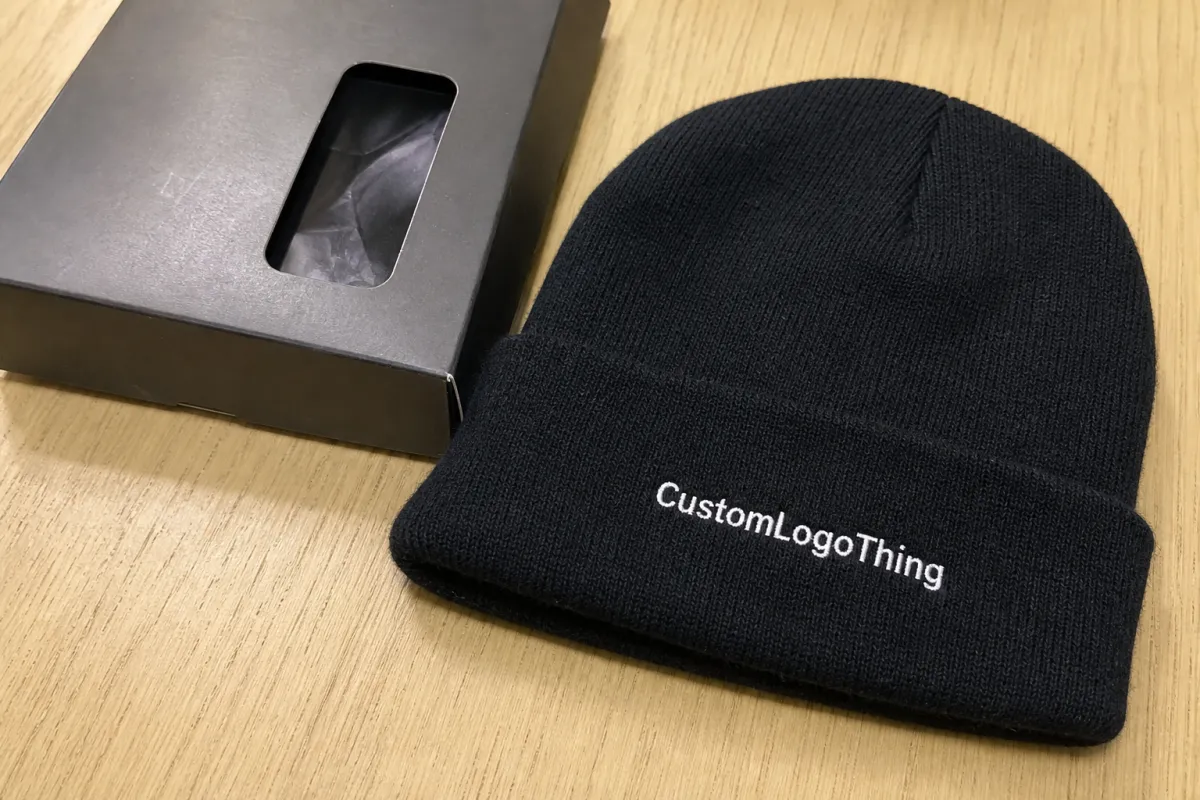
A beanie is small, cheap to ship, and easy to wear. That is exactly why buyers keep coming back to it. For brands ordering cuffed beanies with woven labels wholesale, the cuff becomes a fixed branding zone that stays visible every time the hat is worn.
A flyer gets tossed. A sticker might make it onto a laptop if the design is lucky. A woven label stays attached for the useful life of the product, which gives it more long-term brand value than most loose promotional inserts.
Bulk buyers like cuffed beanies because the size logic is simple. One adult fit usually covers most recipients, so teams avoid the sizing mess that comes with jackets, hoodies, and fitted caps. That matters for employee gear, campus shops, brewery merch, nonprofit fundraisers, outdoor events, construction crews, and winter retail bundles.
The shipping math is friendlier too. Hundreds of knit beanies can fit into cartons that would be unrealistic for structured apparel or hard goods. Lower freight volume does not make the product free, obviously, but it can keep a cold-weather merchandise program from getting eaten alive by dimensional weight.
The best use cases are not limited to freezing climates. Cuffed beanies sell and get worn in mild regions too, especially around travel, music, outdoor work, sports, seasonal gifting, and lifestyle brands that treat the beanie as part of the uniform. A warm item still works as identity gear. People wear plenty of things for reasons other than strict weather survival.
Wholesale ordering also controls risk. One approved label size, one stitch location, one color plan, and one pack-out instruction set reduce inventory surprises. That becomes more important after the order leaves the 100-piece test range and moves into 1,000, 2,500, or 5,000 units.
For resale, the woven label does even more work. It can make a basic knit hat feel like branded merchandise instead of a blank with a logo attached in a hurry. That difference shows up in photos, in retail displays, and in whether customers see the piece as something worth keeping.
Product Details That Make the Beanie Retail-Ready
Cuffed Knit Beanies with woven labels are customized hats with a sewn label on the folded cuff. Simple product. Plenty of room to get the details wrong.
Material choice sets the first impression. Acrylic is common in wholesale programs because it keeps cost predictable, offers broad color availability, and performs consistently across bulk orders. Cotton blends can feel softer and less synthetic against the skin, though they may cost more and stretch differently. Recycled yarn options can support sustainability positioning, but availability depends on yarn color, mill capacity, minimum quantity, and timing.
Knit weight affects both warmth and perceived value. A thin beanie can work for budget giveaways, but it may not hold shape well after repeated wear. A heavier knit usually feels more retail-ready, though it can raise unit cost and carton weight. Buyers should ask whether the quoted beanie is lightweight, midweight, or heavyweight instead of assuming all acrylic knits feel the same.
Cuff height deserves real attention. A taller cuff gives the label more visual room and keeps the branding near the face, jacket collar, hoodie neckline, or scarf. Common cuff heights often sit around 2.5 to 3.5 inches, but the right measurement depends on the body length of the beanie and the label size.
Label construction changes the look fast. Flat woven labels are clean, economical, and good for simple logos. Damask woven labels allow finer detail and a smoother hand, which helps with small type and sharper marks. Merrowed-edge labels create a patch-like border. Fold-over labels wrap around the cuff edge and give a streetwear feel. Heat-cut labels look crisp when the artwork is minimal and the edges need to stay low-profile.
Artwork needs discipline. Thread is not ink. Tiny taglines, thin rules, gradients, distressed effects, and complicated icons may look fine on a screen and terrible at 1.5 inches wide. Vector artwork helps, but even a clean vector file may need editing for the medium.
Color is another trap. Yarn color, thread color, printed packaging color, and digital artwork color will not match perfectly across every surface. Pantone references help, but textile fibers reflect light differently than coated paper or a backlit screen. A good proofing process reduces the gap. It does not eliminate physics. Annoying, but true.
Packaging can turn a bulk beanie into a retail unit. Buyers may add individual poly bags, recycled-content bags, kraft belly bands, hangtags, barcode labels, carton labels, or retail cartons. If the beanies are part of a gift box or launch kit, coordinate the woven label, insert card, and outer packaging through Custom Labels & Tags so the program looks planned instead of assembled from leftovers.
Specifications Buyers Should Confirm Before Ordering
Good bulk beanie orders start with written specifications. Not “premium.” Not “make it pop.” Those words do not tell production anything useful.
A quote should identify the beanie material, knit weight, cuff height, finished size, label dimensions, label type, thread colors, edge finish, sew location, packaging format, carton requirements, destination, and required delivery date. If any of those details are missing, the quote may still arrive, but it will be built on assumptions.
Small changes can affect the order more than buyers expect. A label that grows from 1.5 inches to 2.5 inches may require more woven area, more thread, and slower sewing. A two-color label is usually easier to manage than a six-color label. A bulk-packed order is simpler than one requiring individual barcode stickers, hangtags, color sorting, and carton-level assortment counts.
Across 2,500 units, tiny decisions stop being tiny.
Label size should follow the logo, not someone’s guess. A clean icon may look strong on a 1.25-inch square label. A wordmark, outdoor-style patch, or two-line identifier may need 2 to 3 inches of width. If the label carries a brand name, location, year, and slogan, ask whether that text will still read clearly from three feet away.
Placement needs the same precision. “On the cuff” is not enough. Buyers should confirm left, right, or center placement; distance from the cuff edge; label orientation; and whether the label is sewn on all sides or attached in a fold-over format. If the beanie may be photographed on models, center alignment and repeatable label position become even more visible.
Digital mockups are useful for checking scale, orientation, and general presentation. Physical pre-production samples are better for retail launches, influencer kits, high-visibility corporate programs, and any order where the beanie is meant to be sold rather than handed out casually. Sampling adds time, but it can prevent a more expensive disappointment: a full production run that meets the file but misses the intended look.
Most disappointing bulk beanie orders do not fail because the knit is defective. They fail because the specs were vague, approvals were rushed, or the logo was designed for a screen instead of woven thread.
From a buyer’s point of view, cuffed beanies with woven labels wholesale should be handled like branded inventory. Lock the dimensions. Approve the colors. Confirm the pack-out. Save the final proof. Future reorders get easier when the first order is documented properly.
Pricing, MOQ, and Unit Cost Drivers
Wholesale pricing depends on order quantity, yarn type, knit weight, beanie color count, label construction, label size, thread color count, packaging requirements, inspection needs, and delivery deadline. A standard acrylic beanie with a two-color flat woven label will not price like a recycled yarn beanie with a large merrowed-edge patch, belly band, barcode label, and sorted carton pack.
MOQ is not a random obstacle created to irritate buyers, although it can feel that way. It reflects setup and production efficiency. Knitting, sourcing, label weaving, sewing, inspection, and packing all require fixed steps. Small runs spread those steps across fewer pieces, so the unit cost rises.
Buyers should request quantity breaks instead of one number. Pricing at 250, 500, 1,000, and 2,500 units often tells a clearer story than a single quote. Sometimes the best value sits one tier higher than the original target because setup costs spread out more efficiently.
The cheapest option is not always the smartest option. If a $0.40 label upgrade makes the beanie feel like a $24 retail product instead of a disposable giveaway, that upgrade may pay for itself in perceived value. If the order is a one-day handout with no resale goal, the same upgrade may be unnecessary. Context decides.
| Decision Point | Lower-Cost Direction | Higher-Perceived-Value Direction | Buyer Impact |
|---|---|---|---|
| Beanie material | Standard acrylic | Cotton blend or recycled yarn | Changes hand feel, brand story, and cost |
| Knit weight | Lightweight knit | Midweight or heavyweight knit | Affects warmth, shape retention, and carton weight |
| Label type | Flat woven label | Damask or merrowed-edge woven label | Affects detail, texture, and retail appearance |
| Thread colors | 1 to 2 colors | 3 to 6 colors | More colors can raise complexity and proofing risk |
| Packaging | Bulk packed by color | Individual bags, hangtags, barcodes | Improves resale readiness but adds labor |
| Timeline | Standard production window | Rush review or expedited freight | Late deadlines can increase total spend |
Common quote inputs include total quantity, quantity breaks, beanie colors, logo file, desired label type, packaging needs, destination ZIP or country, and required in-hands date. Provide those early and the quote gets cleaner.
Cost control is usually practical, not magical. Limit yarn color splits. Keep the label artwork clean. Use a standard cuff size. Confirm packaging before the quote is issued. Avoid changing barcode rules or carton assortments after approval, because late packing changes can add labor and delay shipping.
Price ranges vary by market, material, volume, freight method, and decoration. For planning, basic bulk beanie programs often start in the low single digits per unit at higher quantities, while retail-ready versions with upgraded labels and packaging can move several dollars higher. Treat any broad range as directional until the specs are real.
For buyers sourcing cuffed beanies with woven labels wholesale, complete specs are a commercial advantage. They reduce back-and-forth, narrow the pricing range, and help production teams catch problems before materials are committed.
Process and Timeline From Artwork to Delivery
The wholesale process is not mysterious. It is a chain of handoffs: quote request, artwork review, digital proof, buyer approval, label weaving, beanie production or allocation, label sewing, quality control, packing, and shipping.
Timeline depends on order size, label complexity, beanie availability, sample requirements, packaging requirements, and freight method. Standard bulk programs usually need several production stages after proof approval. Physical samples add another review cycle, and specialty packaging can add its own lead time.
A practical timeline starts with the in-hands date, not the event date. If the beanies need to arrive at a warehouse, get counted, move into gift boxes, ship to regional teams, or sit on a retail floor before launch, those days belong in the schedule. Pretending receiving time does not exist is a classic way to create a panic shipment.
Digital proof approval is faster. It confirms artwork placement, approximate size, label orientation, and general presentation. Physical sample approval gives stronger confidence because buyers can inspect texture, stitching, label scale, cuff behavior, and color in real light.
The most common delays are boring: low-resolution logos, missing Pantone references, quantity changes after quoting, unclear shipping details, and too many internal reviewers with no final decision-maker. None of that is dramatic. All of it costs time.
Packaging details should be treated as production specs, not cleanup tasks. If the order needs barcodes, color stickers, carton labels, inner packs, master carton counts, or assortment packing, confirm those requirements before production moves too far. Groups such as the International Safe Transit Association publish transit-focused testing guidance that reinforces a basic point: cartons, counts, labels, and handling assumptions affect delivery performance.
A clear production calendar should identify proof deadlines, sample decisions, final approval dates, packaging instructions, and shipping method. The calendar does not need to be fancy. It needs to be honest.
Quality Checks That Separate Good Bulk Beanies From Cheap Ones
Quality on a cuffed beanie is visible immediately. The cuff sits near the face. The label faces outward. A crooked label is not hiding inside a seam allowance. It is the whole show.
The main checks are simple and unforgiving: consistent cuff fold, centered label placement, clean stitching, stable label edges, even knit tension, accurate color grouping, and correct pack counts. A batch can use a decent base beanie and still look cheap if the labels drift half an inch from unit to unit.
Woven labels are popular because the branding is built from thread rather than printed on the surface. When specified properly, they can hold up better than many surface print methods. Durability still depends on thread selection, edge finish, stitch quality, and normal use conditions. No decoration method is immune to abuse, bad laundering, or sloppy sewing.
Label edges matter more than buyers expect. Fraying, puckering, curling, or stiff corners can make the product feel rough against the hand and cheap in photos. Merrowed borders can create a stronger patch look, while heat-cut edges can stay minimal, but both need the right artwork and sewing method.
The cost difference between acceptable and excellent often sits in proofing, sewing accuracy, and inspection rather than the base beanie alone. A lower-cost blank with careful label placement can outperform a more expensive blank with careless stitching. Glamorous? No. Useful? Very.
Retail orders need packaging inspection too. Check individual bagging, hangtag attachment, barcode placement, color stickers, carton labels, and count accuracy. If sustainability claims appear on paper packaging or hangtags, buyers may review chain-of-custody standards from the Forest Stewardship Council, especially for retail programs that publish material claims.
Inspection should include a reasonable sample size from each colorway or carton group. Buyers do not need to inspect every single piece in every situation, but they do need a plan. Random checks catch label placement drift, wrong colors, missing hangtags, and packing errors before the product reaches customers.
Consistency reduces customer complaints, distributor friction, and emergency replacement orders. That is why bulk cuffed beanies should be inspected as branded inventory, not tossed into cartons as generic winter swag.
Why Custom Logo Things Fits Bulk Beanie Programs
Custom Logo Things fits Buyers Who Need packaging-style discipline applied to branded apparel accessories. A beanie is soft goods, but the order still depends on brand consistency, material control, batch organization, carton labeling, and retail presentation.
That connection matters. Packaging teams think in specifications: dimensions, substrates, finishes, labels, inserts, pack counts, transit handling, and display requirements. The same thinking improves a beanie order. The logo has to translate into thread. The label has to sit straight. The cartons have to arrive with the right counts. The unpacking experience has to match the brand.
For practical buyers, the useful support areas are specification review, label guidance, packaging coordination, quantity-based quoting, and production communication. If the order includes beanies, gift boxes, printed inserts, stickers, hangtags, or fulfillment-ready cartons, coordinating those details can reduce disconnected vendor decisions.
Fewer disconnected decisions usually means fewer mismatched brand elements. One black on the woven label, another black on the belly band, and a third black on the insert card can make a campaign feel patched together. Textile and paper will never behave exactly the same, but the system can still look intentional.
Custom Logo Things can support Wholesale Programs where beanies are part of a larger kit, resale drop, employee package, or customer gift. The value is straightforward: clearer specs, fewer handoff problems, and better alignment from artwork to packed cartons.
The finished beanie has to look good on a person, survive handling, arrive counted correctly, and represent the brand in a way procurement, marketing, and operations can all defend. That is not flashy. It is the job.
Next Steps Before You Request a Wholesale Quote
Before requesting a quote, gather the details that actually shape price and production. Target quantity. Preferred beanie colors. Logo artwork. Label size. Label type. Packaging format. Destination. Required delivery date. “We need branded beanies” is a starting point, not a spec.
- Quantity: Ask for multiple breaks, such as 250, 500, 1,000, and 2,500 units, so you can compare unit cost and total spend.
- Artwork: Send vector files when available, preferably AI, EPS, or PDF, plus Pantone colors or brand guidelines if color accuracy matters.
- Label direction: Choose flat woven, damask, merrowed-edge, fold-over, or heat-cut labels before final quoting.
- Beanie specs: Confirm material, knit weight, cuff height, beanie color count, and finished fit expectations.
- Packaging: Decide on bulk pack, individual bagging, hangtags, belly bands, barcodes, carton labels, or kit-ready delivery.
- Deadline: Share the in-hands date, not just the event date, because receiving, sorting, or kitting may need extra days.
If the order has retail value, influencer exposure, outdoor merchandise placement, or a brand launch behind it, consider a physical sample before full production. If the deadline is tight, remove friction first: finalize quantity, simplify label artwork, choose available yarn colors, and approve proofs quickly.
Internal approval is another quiet risk. Marketing may care about logo scale. Merchandising may care about resale price. Procurement may care about unit cost. Operations may care about carton labels and delivery windows. Collect sign-off before the order is placed, not after the proof is already waiting.
A clean quote request for cuffed beanies with woven labels wholesale should include specs, artwork, quantity, packaging needs, destination, and deadline. Send real details early and the first production plan will be much closer to the final one.
FAQ
What is the typical MOQ for wholesale cuffed beanies with woven labels?
MOQ depends on yarn, label type, customization level, and packaging requirements. Bulk pricing becomes more efficient when setup costs for label weaving, sewing, approval, and packing are spread across a larger quantity. Ask for pricing at multiple quantity breaks before committing.
Can I order cuffed beanies with custom woven labels in multiple colors?
Yes, multiple beanie colors are possible. Each added color can affect inventory planning, packing complexity, and sometimes unit cost. For cleaner production, keep the woven label consistent across colorways unless each color needs separate branding or a different retail story.
How long does production take for custom cuffed beanies with woven labels?
Production timing depends on proof approval, label weaving, beanie availability, sewing, inspection, packaging, and shipping method. Orders with physical samples, multiple colorways, specialty packaging, or strict carton labeling need more planning time than standard bulk runs.
Are woven labels better than embroidered logos on cuffed beanies?
Woven labels work well for detailed logos, small typography, and a retail patch look. Embroidery creates a stitched decoration directly on the knit. The better option depends on logo detail, budget, brand style, texture preference, and the finish you want customers to notice first.
What artwork files are needed for cuffed beanies with woven labels wholesale?
Vector files such as AI, EPS, or PDF are preferred because they preserve logo shape and text clarity. If only raster artwork is available, provide the highest-resolution file possible and expect possible simplification for weaving. Clean artwork speeds proofing and reduces avoidable revisions.


