Personalized teacher bags look straightforward until someone has to place the order. Then the real questions surface fast: what size fits the contents, which material holds up, how many print colors are worth paying for, and whether the final bag will still look presentable after it has been loaded with papers, mugs, snacks, and a few classroom odds and ends.
That is the practical side of the job. The bag is not just packaging, and it is not just decoration. It has to carry real weight, print cleanly, and feel thoughtful enough that it does not read like a last-minute giveaway from the clearance rack.
Personalized teacher bags: what they are and why schools order them
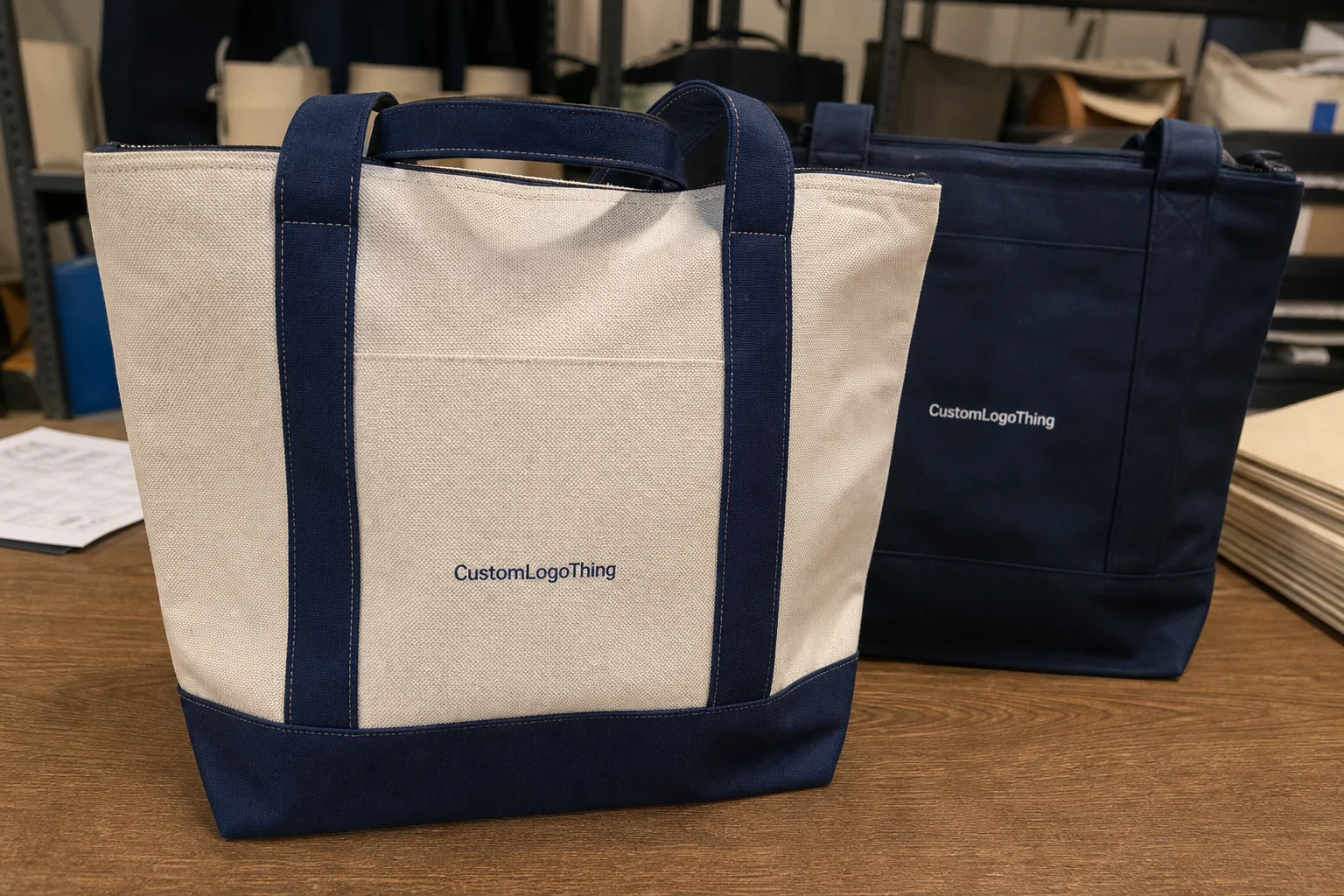
At a working level, personalized teacher bags are Custom Plastic Bags printed for school events, staff appreciation gifts, open houses, welcome kits, donor giveaways, and PTA or PTO handouts. Schools, district offices, booster groups, and parent organizations order them because they are easy to distribute, easy to brand, and easier to budget for than many other promotional items.
The best bags get reused. That matters more than many buyers expect. A teacher may use the bag later for handouts, notes, small supplies, or lunch items, which keeps the school name in circulation and gives the order a longer life. If the bag tears at the parking lot or feels too flimsy to carry anything useful, the whole gesture loses weight immediately.
Buyers usually judge these bags on four things: size, handle strength, print quality, and durability. A sharp logo will not rescue a bag that is too small for the contents or too thin for the load. The opposite is true as well. Good material can still look cheap if the artwork is crowded, the ink is muddy, or the handles feel weak in the hand.
“The bag is part of the gift. If it feels flimsy, people notice before they open it.”
That is why the buying decision is usually about function first, presentation second, and price in the middle. The best result is a bag that looks polished, carries well, and stays inside the budget without hiding costs in freight or setup fees.
How the customization process and turnaround work
The order path is familiar: Request a Quote, send artwork, review the proof, approve the design, then move into production and shipping. The sequence sounds tidy on paper. In practice, most delays come from missing information or slow approvals, not from the printer itself.
To build an accurate quote, a supplier usually needs:
- Bag size or intended contents
- Quantity
- One-side or two-side print
- Number of print colors
- Delivery date and ship-to location
- Artwork file or logo format
Proofing time and production time are not the same thing. That distinction gets missed all the time. If a supplier says 12 to 15 business days, that usually starts after proof approval, not from the day you first email. Shipping is separate again. Ground transit may take a few days, while longer routes can stretch the timeline farther than the buyer expected.
For a simple run, proofing might take 1 to 2 business days and production 10 to 15 business days after approval. Larger quantities, more colors, heavier film, or detailed artwork can push production into the 15 to 20 business day range. Seasonal volume matters too. Back-to-school orders, spring event planning, and holiday gifting often collide, and the calendar gets tight quickly.
Delays usually cluster in three places: missing art files, repeated proof changes, and waiting on approval from several people. A principal, PTA lead, and office manager can all have valid input and still lose a week if no one is clearly responsible for final sign-off. One decision-maker keeps the process moving.
Production itself is usually more predictable than the admin around it. The printer can work from a clean file. What slows everything down is indecision, fuzzy instructions, and art that has to be rebuilt before it can be printed.
Pricing, MOQ, and unit cost: what actually moves the number
Pricing is driven by a few hard variables. Quantity is the biggest one. Then come size, film thickness, number of print colors, number of printed sides, and whether the bag needs extra features such as a reinforced handle or a deeper gusset. The same logo can produce very different costs depending on those choices.
MOQ means minimum order quantity, the smallest run a supplier will produce at that price structure. Smaller runs almost always cost more per bag because setup costs are spread over fewer units. That is not a penalty. It is simply how print economics work. If you need 300 bags, you should expect a higher unit price than a 5,000-piece run, even with the same artwork.
Buyers also underestimate the gap between quoted price and landed cost. Ask whether the number includes setup, plates, artwork adjustments, freight, and any rush surcharge. A quote at $0.28 per bag can be cheaper than one at $0.22 if the lower number hides a setup fee and expensive shipping. The number that matters is the cost to your door.
| Option | Typical use | Unit cost tendency | Tradeoff |
|---|---|---|---|
| Small run, one-color print | Teacher appreciation, small staff events | Higher per bag | Lower commitment, less price efficiency |
| Mid-size run, one or two colors | PTA welcome kits, open house handouts | Moderate | Balanced cost and flexibility |
| Large run, simple print | District events, recurring school programs | Lowest per bag | More inventory to store and distribute |
| Heavy-duty spec with larger imprint | Reusable staff or donor bags | Higher per bag | Better strength and longer use |
For planning, many schools see simple plastic bags land somewhere in the low-cent to mid-cent range at high volume, with smaller custom runs moving into the higher per-unit range once setup and freight are included. A thicker bag, larger imprint, or two-sided print can move the cost quickly. That is usually worth it only if the bag is meant to be reused or needs to carry heavier contents.
Ask for a clean breakdown before comparing suppliers:
- Product cost
- Setup or plate fees
- Artwork charges
- Freight
- Rush fees, if any
That breakdown makes comparison honest. It also helps you decide whether the better move is to increase thickness, simplify the print, or move up a size so the bag actually suits the contents.
Material, size, and print choices that change performance
Most custom plastic teacher bags are made from LDPE or HDPE. Thickness is usually measured in mils, and that detail matters more than many order forms suggest. A thinner bag can work for flat handouts or lightweight inserts. Once books, gift items, or multiple pieces go inside, you need more film strength to avoid tearing, stretching, or an awkward handle failure on the way out the door.
Handle style changes how the bag carries. Die-cut handles look clean and print well, but a loop handle or reinforced handle usually feels better if the contents are heavier. Gusset depth determines how much the bag expands, and a shallow gusset makes the bag look full before it is actually full. That is not the impression you want on a presentation piece.
Size should follow contents, not habit
Many buyers start with a standard size because it feels efficient. The better approach is to list the actual contents first. A set of folders, a card, a mug, and a snack pack need different dimensions than a stack of flyers. If the bag is too large, the contents slide around and look unfinished. If it is too small, the whole package feels cramped.
For teacher appreciation kits, a medium carry bag usually works better than a tiny giveaway bag. It leaves enough room for paper goods and small gifts without looking oversized. For open houses or enrollment handouts, a smaller bag can make sense if the contents are flat and light.
Print simple enough to stay readable
Simple logo placement usually prints better than a busy layout. One-color or two-color artwork often produces a cleaner result on plastic than a detailed graphic with tiny text. Strong contrast matters. A dark logo on a light bag or a light logo on a dark bag is easier to read from a distance, and it survives imperfect print conditions better than a delicate design.
For school branding, less clutter usually looks more confident. A clean logo, the school name, and maybe a short appreciation line is often enough. If the design is crowded, it starts to feel like a flyer instead of a bag.
For buyers who care about disposal and materials handling, ask whether the film is recyclable in your area and whether local rules apply to bag recycling. Plastic bag collection is not the same everywhere, and waste guidance should be checked against the actual municipal stream. The EPA’s recycling guidance is a useful reference point: EPA recycling and waste reduction.
Step-by-step ordering checklist for schools and PTAs
Start with the use case. Is this for teacher appreciation, a welcome kit, donor recognition, or event handouts? That single answer changes the spec. A presentation bag for gifts can justify a heavier material and more polished finish. A handout bag can be lighter and more economical.
Then build the order brief. Keep it short, but include the details that prevent delays:
- Quantity
- Bag size
- Material thickness
- Print sides
- Number of print colors
- Artwork file
- Delivery date
- Ship-to address
Review the proof carefully. Spelling comes first. Then check logo size, spacing, and contrast. A proof can look acceptable at a small zoom level and still fail at actual bag size. If art is too close to the edge, the finished print can look clipped or cramped. Leave a safe margin so the design has breathing room.
Before approval, ask whether the bag can actually hold the intended load. If it is supposed to carry books, a wider opening and stronger film may be worth the additional cost. If it only needs to hold a card, a flyer, and a small gift, there is no reason to overbuild it.
Plan receiving and distribution too. Boxes do not sort themselves, and a school order can get messy fast if no one is ready to accept freight, count cartons, and stage bags for the event. If the office closes early, if access is limited, or if deliveries need special handling, build that into the schedule before production starts.
For larger shipments, packaging teams sometimes rely on transit testing standards such as ISTA to reduce damage risk during delivery. The general framework is available here: ISTA.
Common mistakes that waste budget or delay delivery
The first mistake is choosing the bag before knowing what goes inside. That is how people end up with a handsome bag that cannot fit the gift set. It looks organized in a spreadsheet and awkward in real life. Contents should drive size, not habit or guesswork.
The second mistake is changing artwork after proof approval. Even a small edit can trigger a new proof and push the schedule back. If the event date is fixed, the proof needs to be treated as a real decision, not a draft that can keep evolving.
Third, too much art usually hurts the final result. Tiny text, too many colors, and logos squeezed into a corner rarely print as well as buyers hope. Plastic tends to flatten detail, so crowded designs lose clarity fast. A bag is a carry item first; it is not a poster.
Timeline mistakes are common too. Schools order late, forget that shipping takes time, or send freight to a building that is closed for break. None of that is the printer’s fault, but it still becomes the buyer’s problem. The calendar does not adjust for good intentions.
Quote comparison also goes wrong more often than it should. If one supplier includes freight and another does not, you are not looking at the same cost. The same is true for MOQ and setup charges. If the specs differ, the prices differ for a reason.
For orders that include paper inserts, hang tags, or printed cards, FSC-certified paper may matter. The certification site is here: FSC.
Expert tips for cleaner proofs and better final bags
Use the cleanest version of the logo that still looks official. School emblems often have a detailed seal and a simpler primary mark. The detailed version may work on stationery, but on a plastic bag it can blur or lose shape. Strong forms print better than intricate ones.
Ask for the proof at actual imprint size, not a tiny thumbnail. That is where scale issues show up. A logo that feels balanced on a screen can look too small on the bag, or too large. Either problem is obvious once the order is printed.
Order a small overage if the bags will be used at a live event. A few extras help cover damaged cartons, late additions, or unexpected guests. For school programs, 5 to 10 percent is usually enough. More than that starts creating storage problems no one wants to manage later.
Use one side for primary branding unless there is a real reason to print the second side. A clean front panel often looks more premium than a bag covered in information. If you need a website, event date, or sponsor line, keep it short and readable.
Match the bag style to the event. A heavier, more polished bag suits teacher appreciation gifts. A practical midweight bag is usually fine for welcome kits and handouts. The difference is visible, and staff notice it immediately even if they never say so.
Compare specs before you request quotes
Before asking for pricing, define the use case, quantity, size, artwork, and delivery date. That is the fastest route to quotes that mean something. Vague requests produce vague numbers, and then everyone wastes time trying to compare unrelated offers.
Once the spec is set, collect two or three quotes using the same details. Do not compare a 2 mil bag to a 4 mil bag and pretend the difference is only price. Compare like with like or the spreadsheet turns into noise.
Ask separately about proof timing, production timing, and shipping timing. That gives you a real schedule instead of an optimistic one. Confirm who on your side approves the final art too. One missing sign-off can stall the entire order, and the delay will usually show up at the worst possible time.
Before production starts, lock every detail in writing: bag size, material, color count, print sides, quantity, ship date, and delivery address. Once those pieces are fixed, the order can move forward with less friction and fewer surprises.
If the goal is personalized teacher bags that look polished and hold up in real use, the brief has to be precise. The stronger the spec, the better the bag that comes back.
FAQ
How many personalized teacher bags should a school order?
Base the quantity on headcount, then add a buffer for new staff, damaged bags, and late additions. A small overage is usually cheaper than placing a second order, especially if the event date is close.
What affects the price of personalized teacher bags the most?
Quantity, bag size, material thickness, and number of print colors usually move the price the most. Freight and setup charges can change landed cost more than buyers expect, so ask for a full breakdown.
How long does production usually take for custom plastic teacher bags?
Production depends on proof approval, print complexity, and order size. Ask for production time separately from shipping time. Rush orders can be possible, but they usually cost more and leave less room for revisions.
What artwork works best for personalized teacher bags?
Clean logos, bold contrast, and short text tend to print better on plastic bags. Tiny details, thin lines, and cramped layouts can disappear, especially on lighter-weight materials.
Can personalized teacher bags be reused after the event?
Yes, if the material, handle strength, and size are chosen for actual carrying use instead of just presentation. Reusable bags usually need stronger construction and simpler decoration.