Personalized Water Labels: Order the Right Custom Look
A plain bottle becomes part of the setup the moment the label looks intentional. Personalized water labels do that efficiently: they improve presentation, carry branding, and make event inventory look planned instead of improvised.
That matters at weddings, corporate events, product launches, gyms, fundraisers, hotels, and brand activations. Bottles are handled, chilled, photographed, and sometimes taken home. If the label wrinkles, peels, or fades, the packaging looks unfinished even when the rest of the event is solid.
The most common buyer mistake is judging the label by the mockup alone. Cold storage, condensation, handling, transport, and stacking expose weak materials quickly. The right label is the one that still looks correct after it has been in ice for a few hours.
Why personalized water labels punch above their weight
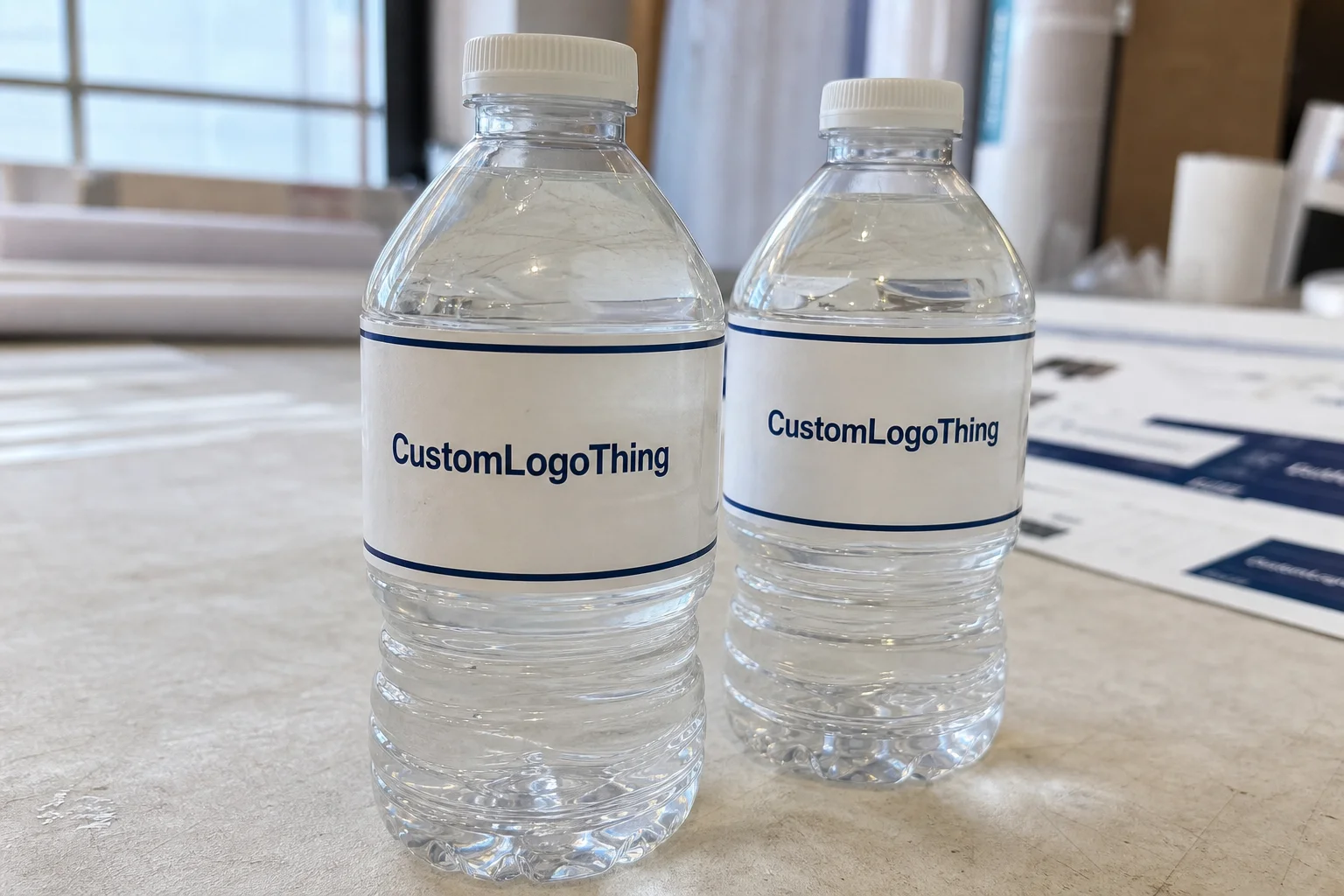
People notice the package before they notice the price. A clean bottle with a custom label reads as polished; a plain bottle reads as generic. That difference is especially visible in photos, where small details have more impact than they do in person.
The label is often the only branded surface a guest touches. It does more visual work than a sign or backdrop because it sits directly on the product. If the print is crisp and the fit is right, the bottle looks like part of the event. If the label is crooked or cheap-looking, that shows immediately too.
There is also a practical side. Personalized water labels help organize service when multiple sponsors, vendors, or product lines are involved. Simple color blocks, logos, and a short line of text are usually enough. Complex art rarely helps because people scan bottles quickly.
Material choice affects the result more than most design tweaks. Paper labels are fine for dry, room-temperature use. Synthetic stocks handle moisture better. Waterproof films perform best when bottles are refrigerated or placed in ice. Matte gives a softer finish; gloss reads brighter and tends to photograph more aggressively. Clear stock can look premium, but only if the bottle color and artwork support it.
A label that looks fine on a dry sample can fail the minute it hits ice. Cold bottles expose weak adhesive choices fast.
Fit matters as much as print quality. Too large, and the label buckles at the seam or wrinkles around the curve. Too small, and it looks temporary. Bottle shape drives the layout more than the mockup does, so dimensions should be confirmed before artwork is approved.
For branded events, the label is not decoration. It is part of the service. The right choice is the one that survives handling, holds color, and matches the bottle shape without fighting it.
How personalized water labels are printed and applied
The production path is usually simple: confirm bottle dimensions, review artwork, approve a proof, print, finish, and pack. If the order includes bottle application, that step comes after print and before shipping. Delays usually come from missing measurements or late file changes, not from the press itself.
For small and medium runs, digital printing is usually the practical choice. It avoids the setup burden of larger offset jobs and works well for event water, limited promotions, and test packaging. Larger runs can use other methods, but the decision depends on quantity, turnaround, and whether specialty finishes or custom shapes are required.
Bottle shape changes the usable label area. Cylindrical bottles are the easiest to label. Tapered bottles are less forgiving because the wrap area changes. Curved shoulders, textured surfaces, and narrow panels all reduce the printable space. If the bottle is dark, transparent stock may also need a white underlayer so the artwork does not disappear.
Adhesive selection is one of the most important decisions. Permanent adhesive gives stronger hold on chilled bottles and long event days. Removable adhesive is better for reusable bottles or situations where cleanup matters after the event. Neither is universally better; temperature, handling, and expected lifespan determine the right choice.
Application method also affects cost and timing. Small event orders are often hand-applied, which is fine when the quantity is manageable. Larger orders may need assisted or semi-automated application to keep alignment consistent. If the supplier applies labels before delivery, that saves labor on your side but changes the quote and the lead time.
One common trap is assuming the monitor tells the full story. Pale artwork on clear stock may look elegant in a mockup and unreadable on the bottle. Dark bottles can swallow fine text. The proof has to be judged against the actual substrate, not the PDF alone.
If the order needs to align with other packaging pieces, the same concerns apply to Custom Labels & Tags. Size, adhesive, stock, and handling conditions decide whether the printed piece survives real use.
| Label option | Best use | Typical unit cost | Notes |
|---|---|---|---|
| Paper label with standard adhesive | Dry, room-temperature giveaways | $0.08-$0.18 | Lowest cost, but weak around ice and condensation |
| Water-resistant synthetic label | Events, refrigeration, light moisture | $0.14-$0.30 | Better balance of cost and durability |
| Premium waterproof label with specialty finish | High-visibility branding, outdoor use | $0.22-$0.45 | Higher durability and stronger shelf presence |
| Applied and packed bottle order | Turnkey event delivery | $0.35-$0.80 | Includes labor; pricing changes with bottle type and quantity |
The better comparison is not label price alone. It is price per label that still looks good after the event starts.
Personalized water labels pricing, MOQ, and unit cost
Pricing usually comes down to quantity, size, material, finish, and whether the labels ship flat or arrive applied to bottles. Add proofing, cutting, shipping, and application, and the quote becomes more meaningful. Small runs cost more per unit because fixed setup is spread across fewer labels.
Minimum order quantities vary by supplier and production method. Digital runs can sometimes start in the 50 to 250 label range. Once the order includes Custom Die Cutting, specialty coatings, or application service, the MOQ often rises. If the quote looks cheap at first glance, check what is missing.
The lowest-cost option is often the most expensive mistake. Paper stock can wrinkle in cold conditions. Weak adhesive can let go once condensation builds. A label that looks fine on a flat sample may become difficult to apply cleanly if the bottle curve is tighter than expected. The job can still be printed correctly and still fail as packaging.
For buyers comparing vendors, ask for the full landed cost: proofing, material, finishing, shipping, and application if needed. Ask whether revisions are included or billed separately. A low starting quote with add-ons is not a bargain; it is an incomplete estimate.
There is also a quality gap between claims and reality. If the bottles will be chilled, transported, or handled by guests, ask what material the supplier recommends for that use case. Do not default to paper just because it is cheaper. A few cents saved per bottle is not useful if the labels fail before the program starts.
For durability-minded buyers, standards such as ISTA are a practical benchmark for transport and handling. The goal is not overengineering. It is matching the label to the conditions it will actually face.
Production steps and lead time for custom water labels
A standard job follows a predictable path: brief, file prep, proof, approval, print, finish, pack, and ship. The delays usually happen before printing starts. Missing bottle specs, low-resolution art, and late revisions are the usual problems.
As a planning rule, standard runs often take 7-15 business days after proof approval. The range depends on stock choice, quantity, finish, and whether the labels need to be applied before shipment. Rush orders are possible, but they narrow material options and leave less room for revisions.
Proofing deserves more attention than it usually gets. A digital proof checks size, layout, spacing, and content. It does not fully predict color on the final substrate. That is why dimensions and material need to be confirmed before approval. If the bottles will be chilled or iced, a test on the actual bottle is worth the effort.
Application time is part of the schedule too. A print run may finish quickly, then slow down while the labels are applied, dried, and repacked. That labor can be the longest part of the order, especially for larger event quantities.
Sustainability requests should be handled with the same pragmatism. If paper-based components are required, certifications such as FSC can support the sourcing decision. Sustainability does not excuse a label that fails in use; a greener label that peels apart still creates waste.
Plan a buffer if the order is for a live event. Underestimating turnaround and assuming a room-temperature proof tells the whole story are the two avoidable errors. Cold storage changes adhesion and finish behavior. The first bottle test is cheap. A replacement run after a failure is not.
Design choices that affect durability and shelf appeal
Finish changes the whole feel of the label. Matte looks restrained and clean. Gloss adds shine and usually reads better in bright light. Synthetic waterproof stocks are generally the safer option for chilled bottles because they resist moisture better than paper. That is the first place to optimize, not the decorative extras.
Readability should lead the design. A sharp logo, a short line of text, and enough contrast will outperform a busy label with too many elements. People scan bottles quickly. They are not reading a paragraph on the side of a cooler.
Size and placement matter just as much. A label that wraps too far around a curved bottle can wrinkle at the seam. One that is too small can look like a sticker that was added after the design was finished. The printable area should be based on the actual bottle dimensions, not a stock image that may show a different model.
Color management is another place where good intentions break down. Pale neutrals, metallic tones, and soft pastels can shift between screen and print. Clear stock makes this more obvious because the bottle color becomes part of the design. If background and type are too close in value, the label loses contrast and looks weaker than the concept.
- Clear labels work best when the bottle color supports the design.
- Opaque labels are safer on dark or inconsistent bottle surfaces.
- Matte finishes reduce glare and feel more restrained.
- Gloss finishes tend to photograph better under direct light.
Durability should outrank ornament when bottles will travel in bulk, sit in coolers, or be handled quickly. A clean label that stays intact looks far better than a clever label that peels at the corners before the event is halfway done.
If the bottle is part of a larger branded set, the label should match the rest of the packaging without competing with it. The same discipline applies across cards, tags, and adjacent print pieces. The label is small; the standards should not be.
Common mistakes buyers make with bottle labels
The biggest mistake is designing before confirming the bottle dimensions. A layout can look balanced on a flat screen and then fail once it wraps around a curved body or crosses a seam.
Temperature is the second major miss. Labels that behave fine on a desk may fail in ice or refrigeration. Condensation changes the rules. If the bottle is cold, the material and adhesive need to be selected for that condition, not for a best-case sample in a meeting room.
Overcrowded design is another easy way to waste budget. Too many logos, too much text, tiny event details, and busy backgrounds all make the label harder to read. Clean layouts usually look more expensive because they give the eye room to work.
Under-ordering is a classic event-supply problem. A small buffer is cheaper than a rushed reprint, and reorders tend to reduce finish options because time gets tight. If the labels are tied to a fixed date, build in margin.
File quality matters more than most buyers want to hear. Low-resolution images, RGB-only files, missing bleed, and poor contrast can create blurry print or unexpected cropping. If the supplier asks for vector art or print-ready PDF files, they are trying to avoid rework.
Another trap is comparing only the base price. Ask whether proofing is included, whether the adhesive is right for chilled bottles, whether the supplier helps with sizing, and whether application is part of the quote. A cheap quote that leaves out the important pieces is incomplete.
Next steps for ordering the right bottle labels
Start with the bottle, not the artwork. Confirm the exact bottle style, diameter, and whether it will be chilled, iced, or kept at room temperature. That choice drives the label size, stock, adhesive, and finish.
Then gather the basics before asking for a quote: quantity, deadline, artwork, finish preference, and whether the labels should ship flat or arrive applied. If you already have other branded pieces in the same job, keep the file standards consistent so the order stays cleaner. If the supplier handles broader packaging work too, that can help reduce handoff errors. The same planning applies to Custom Labels & Tags for related items.
Ask for a proof and, if the schedule allows it, test a sample on the actual bottle. That step catches size and fit issues before they become expensive. If the bottles will sit in coolers or be handled in bulk, choose waterproof or synthetic stock instead of assuming standard paper will hold up.
There is no prize for overcomplicating the order. A simpler finish, a modest quantity buffer, and a realistic timeline often produce a better result than trying to force every design idea into a small label. Personalized water labels work best when they look intentional, survive the conditions, and stay out of the way of the bottle’s actual job.
That is the point. The label should make the bottle look considered, not distracted.
How do personalized water labels stay on cold bottles?
Use a stock and adhesive made for condensation and refrigeration. If the bottles are going into ice or coolers, test them on the actual bottle before approving the full order. Paper stock that softens when wet is a poor fit for that use.
What size should personalized water labels be?
The right size depends on the bottle diameter and the usable area on the body. Measure the printable surface first, then leave room for seams, curves, and handling so the edges do not lift or wrinkle.
Are personalized water labels waterproof?
They can be, but only if the material and adhesive are built for wet conditions. Synthetic or waterproof stock is the safer choice for chilled bottles. Gloss finish alone does not make a label moisture-safe.
How much do personalized water labels cost per bottle?
Unit cost changes with quantity, size, finish, and whether application is included. Small runs cost more per label because setup is spread across fewer pieces. Premium waterproof materials cost more, but they lower the risk of failure.
How far in advance should I order personalized water labels?
Leave enough time for proofing, revisions, printing, shipping, and any application work. Add more time if the artwork is still in progress or if the labels need to be applied before delivery. Rush jobs exist, but they compress your options quickly.