PET Clear Poly Bags MOQ Guide for Smarter Ordering
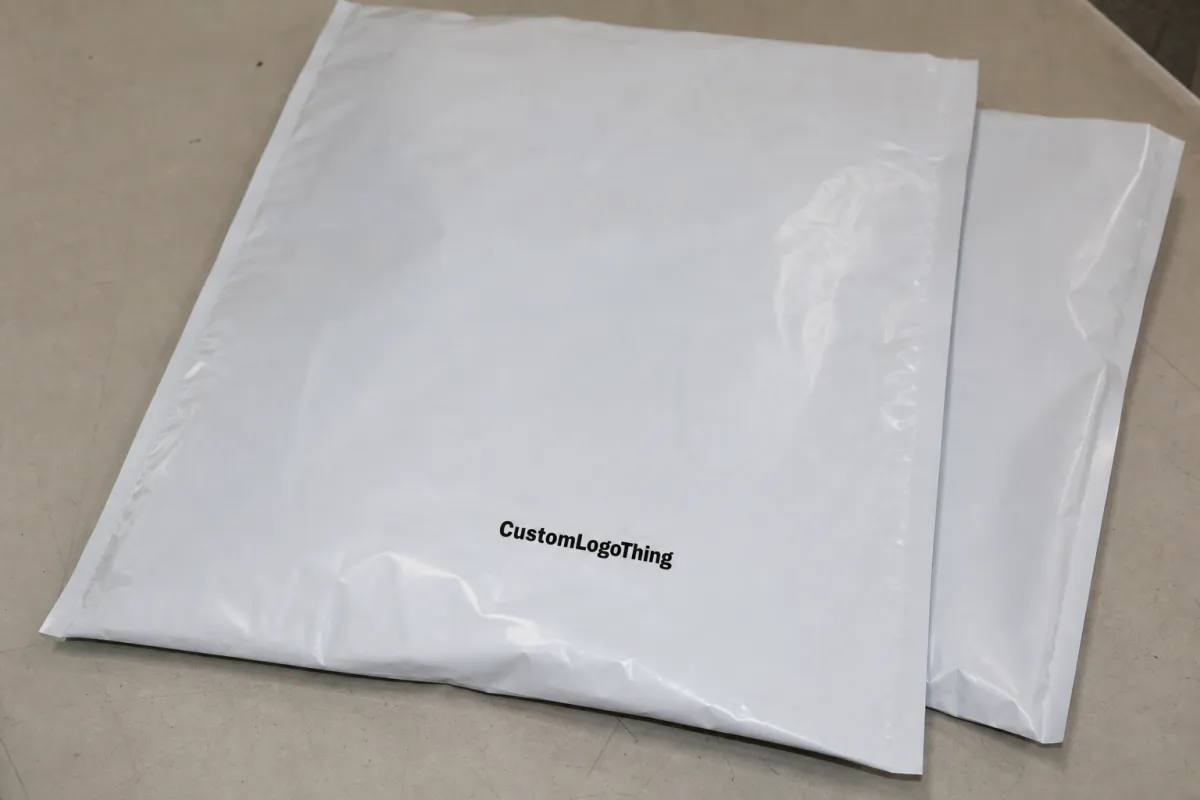
A buyer approves a glossy clear bag sample. The logo is sharp, the product shows well, and the package feels cleaner than a basic commodity poly bag. Then the quote arrives, and the main constraint is not the artwork; it is minimum order quantity, film yield, sealing setup, print waste, inspection time, and the cost of interrupting a production line for a short run. This pet Clear Poly Bags moq guide explains those constraints in the language buyers actually use when planning a launch, reorder, or retail program.
Clear packaging looks simple because the product is visible. That is also what makes it unforgiving. Haze, scuffs, trapped air, seal ripples, adhesive misplacement, dust, and small registration shifts stand out more on clear PET than they would on an opaque mailer or printed sleeve. A clear bag gives the product a clean frame, but it gives production flaws very little cover.
PET clear poly bags are used for apparel, accessories, stationery, cosmetics tools, jewelry cards, hardware kits, collectibles, sample sets, dry promotional goods, and retail kits. The commercial reason is straightforward: staff and customers can see the item without opening the package. That reduces handling, supports SKU verification, and keeps products cleaner through storage, picking, packing, and display.
MOQ should be treated as an operating variable, not only a purchasing hurdle. A lower MOQ can protect cash and reduce leftover inventory when artwork, barcodes, or seasonal messaging may change. A higher MOQ can improve unit cost, reduce repeat setup charges, and give production a steadier run. The right order size is rarely the lowest number available; it is the quantity that matches forecast, storage capacity, reorder timing, and the likelihood that your specification will stay stable.
Practical rule: if the bag will affect retail presentation, fulfillment speed, or customer unboxing, evaluate MOQ and specification together. A cheap clear bag that wrinkles badly after case packing can cost more than it saves.
What PET Clear Poly Bags Are Built to Do
PET clear poly bags are transparent plastic bags made from polyethylene terephthalate or PET-based film structures selected for clarity, stiffness, dimensional stability, and presentation. In purchasing terms, they sit between basic commodity poly bags and more expensive rigid packaging. They remain lightweight and efficient, but the surface finish is usually crisper and more retail-oriented than softer films.
PET is not automatically the best film for every product. LDPE is often selected for softness, flexibility, and forgiving handling. PP can work well for certain clear retail bags and lower-cost presentation formats. PET tends to win when the buyer wants a glossy face, sharper structure, stronger shape retention, and a more deliberate shelf appearance. The choice depends on product weight, fold pattern, closure type, print coverage, storage conditions, and how many times the package will be handled before sale.
Visibility has practical value beyond appearance. Retail staff can confirm color, size, label placement, and bundle contents without opening the bag. Fulfillment teams can verify SKU identity faster. Customers can inspect finish and contents before breaking a seal, which may reduce avoidable returns caused by uncertainty. That matters for products where appearance carries trust: embroidered patches, jewelry cards, folded apparel, craft kits, cosmetics accessories, cables, collectibles, and small components sold as sets.
Common functions include dust protection, shelf presentation, kit organization, barcode visibility, light moisture resistance depending on construction, and compatibility with hang holes or resealable closures. Some orders also require suffocation warnings, lot labels, recycling marks, country-of-origin text, tamper-evident features, or retail-ready carton labels. For broader packaging references and professional standards, the Packaging Association is a useful industry resource.
PET clear bags are a strong fit for premium retail presentation, clean warehouse picking, sample kits, product launches, and brands that want the package to look intentional without moving into folding cartons or rigid boxes. They are less suitable for heavy puncture risk, high-flex squeeze applications, hot-fill exposure, or food and medical uses that require separate compliance documentation, migration testing, or validated handling controls.
Specifications That Change Clarity, Strength, and Shelf Impact
A reliable quote starts with specifications, not adjectives. “Clear bag with logo” leaves too much open. A production-ready request should include bag width, bag height, lip size if needed, flap style, closure type, gauge or thickness, print colors, artwork coverage, packing method, and whether the bags will be hand-packed, machine-packed, pegged, boxed, kitted, or shipped to a co-packer.
Gauge affects more than strength. Thinner film can reduce material cost, carton weight, and freight, but it may wrinkle more easily and feel less substantial in the hand. Thicker film improves stiffness, puncture resistance, shelf feel, and perceived value, though it may raise cost and change how the bag stacks in cartons. A lightweight insert may work in a thin clear bag; a hardware kit with sharp corners may need heavier gauge film, a different structure, or more clearance around the product.
One common buyer mistake is evaluating a single flat sample on a desk. A bag that looks fine with one item inside can behave differently after 500 pieces are packed into a master carton, compressed during transit, and handled by warehouse teams. If presentation matters, test the bag with the actual product, in the actual fold or kit configuration, and inside the carton count you expect to use.
Bag format changes pricing and MOQ as much as material does. Flat bags are usually simpler to convert. Flap bags and adhesive-seal bags add closure setup and liner considerations. Zipper bags require more material and tighter conversion control. Header bags create display value but need extra layout planning. Wicketed bags can speed packing in some production settings. Gusseted bags help with bulkier items but require careful sizing so the finished package does not look loose or distorted.
| Specification Choice | Typical Use | Cost Impact | Buyer Watchout |
|---|---|---|---|
| Flat clear bag | Stationery, inserts, small accessories | Lower setup and conversion cost | May look loose if product depth is ignored |
| Adhesive flap bag | Apparel, cards, retail kits | Moderate increase for closure material | Adhesive direction must match packing workflow |
| Zipper clear bag | Reusable kits, parts, cosmetics tools | Higher material and sealing control | Closure feel can affect perceived quality |
| Header bag with hang hole | Peg display and retail programs | Higher due to layout and punching | Hole position, header height, and weight balance matter |
Print deserves early attention. One-color logo printing may be economical, especially with moderate coverage and simple placement. Fine text, reverse print, metallic effects, heavy ink coverage, or tight registration can add setup complexity and increase waste allowance. On clear PET, misregistration is not subtle. A logo that shifts 1.5 mm toward a seal can look wrong even if the bag still functions.
Compliance language should be resolved before proof approval. Suffocation warnings, recycling marks, country-of-origin details, barcode placement, child-safety copy, and product-specific labeling requirements can affect artwork area and finished size. For packaging waste and recycling context, the U.S. Environmental Protection Agency recycling resources are a practical reference, though final claims should be checked against the market where the product will be sold and the material stream available there.
MOQ, Pricing, and Unit Cost: What Actually Moves the Quote
MOQ is shaped by film sourcing, machine setup, print plates or cylinders, ink changes, waste allowance, labor, inspection, cartonization, and freight planning. It is not simply a supplier preference. A small custom order still requires proofing, setup, test pulls, packing instructions, and quality checks, even if the final quantity feels modest to the buyer.
Fixed and variable costs behave differently. Artwork proofing, tooling, setup charges, test pulls, and some inspection steps are spread across the production run. Film, printing, closures, cartons, labels, and freight scale with quantity. That is why cost per piece often drops as order volume increases: the same setup produces more sellable bags, lowering the burden on each unit.
Higher quantity, however, is not automatically smarter. If your logo changes in eight weeks, a retailer revises barcode placement, or a product size is still being finalized, 20,000 unused bags can become a storage problem with a purchase order attached. Disciplined buyers compare bulk pricing against demand risk, not only against the lowest visible line item.
| Order Tier | Best Fit | Likely Pricing Pattern | Risk to Check |
|---|---|---|---|
| Sample or pilot run | New product launch, fit validation | Highest unit cost due to setup spread | May not reflect full production efficiency |
| Launch run | Initial retail or e-commerce release | Balanced cash exposure and production practicality | Reorder timing must be planned early |
| Reorder run | Stable SKU with proven demand | Lower unit cost if specs repeat | Artwork and compliance copy must stay unchanged |
| Annual-volume program | Predictable repeat packaging | Best opportunity for bulk pricing | Storage, forecasts, and version control matter |
For a useful quote, provide target quantity, annual forecast if known, size tolerance, material preference, bag style, print colors, closure type, shipping destination, retail packing requirements, and requested delivery date. If a supplier receives only a photo and one dimension, the quote will contain assumptions. Assumptions become revisions, and revisions consume time.
Price comparisons can also mislead. One quote may include thicker film, cleaner print control, stronger carton packing, domestic freight, or stricter inspection. Another may exclude those costs or use a lighter structure. A difference of $0.03 per bag matters at 50,000 pieces, but it matters less if the cheaper version increases rework, returns, or repacking labor. Ask for tiered pricing at realistic breakpoints: pilot quantity, launch quantity, reorder quantity, and annual volume.
Process, Lead Time, and Production Steps from Proof to Delivery
The ordering process is manageable when the specification is complete. Confirm the size and material. Review artwork. Build the dieline or bag layout. Quote the production run. Approve the proof. Prepare film. Print if required. Convert the bags. Inspect. Pack. Ship. Receive. None of those steps is unusual, but one missing detail can stall the schedule.
Lead time depends on complexity. Unprinted stock-style clear bags may move faster. Custom size, custom print, specialty closures, hang holes, zipper tracks, or retail carton labeling add production steps. A repeat order using the same approved specification usually moves faster than a first order that needs sampling and new artwork review.
For custom packaging, buyers often plan around several stages: 2-5 business days for specification and quote clarification, several days for proofing and revision, then production and freight based on quantity, route, and current capacity. That is a planning range, not a guarantee. Film availability, queue position, print method, approval speed, and freight selection can all change the calendar.
Proofing deserves careful attention. Verify dimensions, logo placement, print color references, warning language, barcode readability, adhesive strip direction, bag opening direction, hang hole position, header height, and carton labels before approval. A proof is not decoration. It is the legal and operational instruction set for the run.
The most common delays are ordinary ones: late vector artwork, unclear thickness targets, dimensions changed after quote, missing compliance copy, sample revisions, and freight decisions made after production is complete. If a retail launch date is fixed, build backward from the in-hands date and include sampling, internal approval, production, inspection, transit, receiving, and warehouse allocation.
Custom Logo Things works best when buyers share the commercial goal and the physical requirements together. The team can help convert a rough request into a production-ready spec sheet, then connect that spec to MOQ, unit cost, and lead time. Buyers comparing related formats can also review Custom Packaging Products for additional packaging options.
Costly Ordering Mistakes Buyers Can Avoid Before Production
The first mistake is choosing the lowest MOQ without checking total program cost. A low run may carry a high unit cost, higher freight per piece, and more frequent reordering. Three small rush reorders can cost more than one planned run, especially if setup charges repeat and freight timing gets compressed.
The second mistake is underspecifying thickness. A bag can look acceptable in one sample photo and still wrinkle, tear, or feel cheap after case packing, warehouse handling, and retail display. If the product has corners, hardware, folded fabric, or a textured surface, test the fit with the actual item. Similar is not close enough when a few millimeters change how the seal and side edges behave.
Fit is a quiet cost driver. Bags that are too tight slow packing, distort seams, and create trapped air. Bags that are too large look sloppy, waste film, and may reduce perceived value. For hand packing, a little clearance can save labor. For retail display, a cleaner fit may justify a slightly higher material cost.
Artwork errors show up quickly on clear film. Thin logo strokes may fill in. Low-resolution files can print soft. Print placed too close to the seal can distort. Heavy ink coverage can increase drying and handling concerns. If barcode readability matters, test scan position, contrast, and placement before approval, especially if the barcode sits over a product area with variable color behind it.
Logistics belongs in the first quote, not the final email. Carton quantity, master carton weight, pallet configuration, shipping method, warehouse labels, and receiving requirements all affect landed cost and labor. If a warehouse charges by receiving unit, carton count can change the real cost even when the bag price looks attractive.
- Confirm actual product dimensions, including depth and tolerance.
- Define whether packing is hand-packed, machine-assisted, kitted, or retail-ready.
- Approve compliance language before final artwork proof.
- Set acceptable tolerance for size, print placement, and seal appearance.
- Compare MOQ against reorder forecast and storage capacity.
Buyers managing several packaging formats may want to compare clear bag requirements with Custom Poly Mailers, especially if e-commerce fulfillment and branded outer packaging are part of the same program. Inner packaging and shipping packaging do different jobs, but they often share the same budget and timeline.
How Custom Logo Things Reduces Spec Risk for Clear Bag Orders
Supplier choice should be judged on measurable controls: clear quoting, documented specifications, material recommendations, artwork checks, production communication, and practical MOQ guidance. A good price matters, but buyers also need to know what that price includes, which tolerances apply, and what changes would affect cost or schedule.
Many buyers arrive with a target bag size but not a manufacturing-ready specification. Custom Logo Things helps translate that request into dimensions, film thickness, closure type, print method, warning copy, packing details, and quote tiers. That translation step reduces back-and-forth and prevents the familiar problem of comparing two quotes that are not quoting the same bag.
The best order size depends on the stage of the product. A brand testing a new accessory kit may need a launch run with controlled cash exposure. A stable replenishment SKU may justify bulk pricing. A seasonal retail program may need enough inventory to avoid a mid-season rush reorder, but not so much that dated packaging remains after the promotion ends.
Quality control is more visible with PET clear bags than with many opaque formats. Clarity, seal consistency, print alignment, adhesive placement, scuff control, bag count, carton strength, and clean packing all affect the finished impression. If the package is supposed to help sell the product, it cannot look like an afterthought.
Customization can be quoted together: logo printing, suffocation warning copy, hang holes, resealable closures, header areas, retail-ready carton labels, and private-label packaging programs. Buyers with recurring questions about artwork, proofs, or order flow can also use the FAQ as a starting point before requesting pricing.
The outcome is practical: fewer quote revisions, fewer production surprises, better internal approval, and a packaging run that fits both the product and the purchasing budget. That is the business reason to use a pet clear poly bags moq guide before the purchase order is issued.
Next Steps: Build a Quote Package That Gets an Accurate Answer
A strong quote package does not need to be complicated. It needs to be specific. Send product dimensions, bag style reference, target material or thickness, quantity range, artwork files, closure preference, compliance text, delivery location, and desired in-hands date. If you have a current bag that works or fails, share the dimensions and explain what should change.
Request two or three quantity tiers instead of one number. Procurement can then see the relationship between MOQ, cash outlay, storage needs, and cost per piece. Ask for a pilot or launch quantity, a reorder quantity, and a larger annual-volume tier if demand is predictable. The pricing curve will often reveal more than a single quote.
Share the real packing environment. Hand-packed apparel has different needs than machine-fed inserts. Retail peg display has different stress points than e-commerce kitting. Distributor repack creates different handling risk than direct-to-consumer fulfillment. Packaging is not only a container; it is part of the labor system around the product.
If clarity, stiffness, print quality, or closure feel is critical, ask for a sample or comparable production reference. No sample can represent every variable in mass production perfectly, but it can expose fit, gauge, sealing, and presentation problems early. For transport testing of packaged products, especially larger programs, buyers may also reference ISTA procedures where applicable.
Review the quote line by line. Check what is included, what is excluded, tolerance assumptions, proof requirements, freight terms, lead time, payment schedule, and reorder conditions. A useful quote should tell you more than the price. It should show what will happen next, what decisions remain open, and which changes would alter the final cost.
Use this pet clear poly bags moq guide as a working checklist before requesting pricing, so the first quote is closer to the production order you actually need.
FAQ
What is a typical MOQ for custom PET clear poly bags?
MOQ depends on bag size, film thickness, printing, closure type, and whether material is stock or custom sourced. Unprinted or lightly customized bags usually have lower MOQs than multi-color printed bags with specialty closures. The most useful approach is to request tiered pricing so you can compare launch quantity, reorder quantity, and annual-volume pricing.
How does a PET clear poly bags MOQ guide help lower unit cost?
A pet clear poly bags moq guide separates fixed costs, such as setup charges and proofing, from costs that scale with quantity, such as film, closures, packing, and freight. By comparing tiers, buyers can see where the unit cost drops enough to justify a larger run without overbuying. It also helps match MOQ to forecast, storage space, and expected reorder timing.
What details should I provide to get an accurate PET clear bag quote?
Provide bag dimensions, thickness target, closure style, print colors, artwork files, quantity range, delivery address, and required delivery date. Include product dimensions and packing method so the supplier can recommend fit and tolerance. Share compliance requirements such as suffocation warnings, barcode visibility, recycling marks, or retail labeling before proofing.
Do printed PET clear poly bags require a higher MOQ than plain bags?
Often, yes. Printing adds setup time, ink control, registration checks, waste allowance, and artwork proofing. One-color logo printing is usually simpler than full-coverage or multi-color artwork. A supplier can usually quote multiple print options so buyers can balance branding impact against MOQ, tooling fees, and unit cost.
How long does production take after approving PET clear poly bag artwork?
Lead time varies by order complexity, material availability, print method, production queue, and freight method. Simple repeat orders generally move faster than first-time custom orders that require sampling or new artwork review. Buyers should allow time for proof approval, production, inspection, packing, transit, receiving, and warehouse allocation before the bags are needed.
