Pizza Boxes Printed: Order Custom Boxes That Ship Better
A pizza box has one job that matters more than the others: it has to get the food to the customer in decent shape. That means the carton needs enough stiffness to stack, enough breathability to manage steam, and enough print quality to keep the brand looking intentional on the ride out.
Packaging is part of the meal experience. If the box crushes, greases through, or looks sloppy by the time it reaches the door, the customer notices before the first slice is served. The right spec is the one that still performs after handling, transport, and temperature changes.
For buyers comparing Custom Packaging Products, consistency matters across the whole line. Pizza boxes, sandwich cartons, and dessert trays do not need identical artwork, but they should look like they belong to the same brand system.
Why Printed Pizza Boxes Change the Delivery Experience
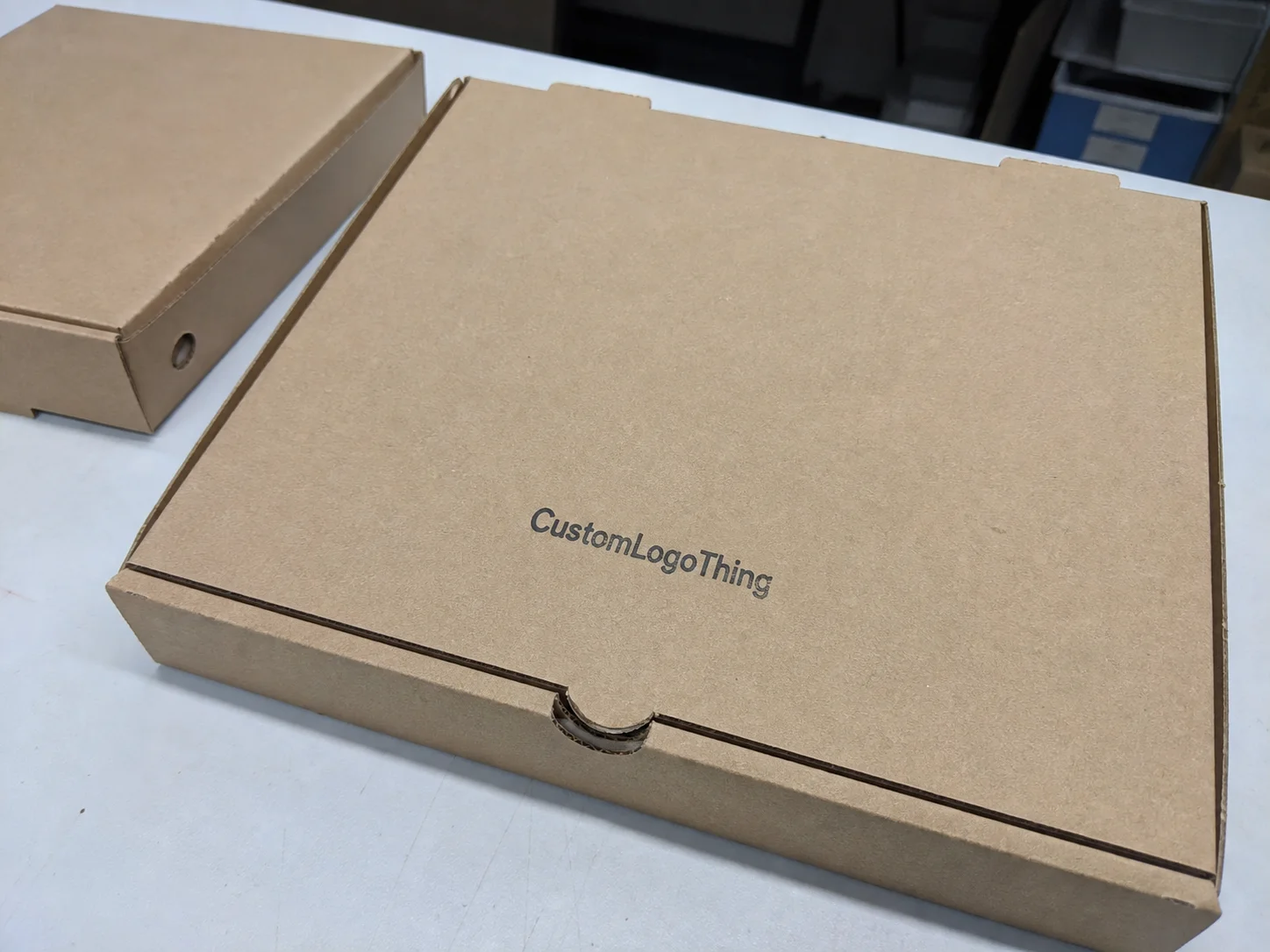
A pizza box is doing more than carrying food. It is helping manage the last mile, where heat loss, steam, stacking pressure, and rough handling all show up at once. The box needs to stay rigid enough to protect the pizza while still giving the customer a clean presentation.
That is the practical value of printed cartons. A plain box can work, but a branded carton gives the customer one more signal that the order was handled with care. A simple logo, a clean kraft surface, and a box that keeps its shape all support that impression.
The box also stays visible longer than the ordering screen or receipt. It appears at the door, on the table, in office break rooms, and sometimes in photos. For local restaurants, that makes the carton useful brand space without adding another marketing layer.
Printed boxes can also support operational clarity. Multi-location brands often use the carton to signal size, menu line, or service tier. That works only if the structure is reliable and the print stays legible after transport.
Practical rule: if the artwork looks good but the board sags, the spec is wrong. If the board is strong but the print scuffs off, the finish is wrong. The package only works when both parts hold up.
A box that arrives dry, rigid, and readable does more for repeat business than a flashy design that falls apart in delivery.
How Artwork, Board, and Coatings Work Together
A pizza box is a material system, not just a print job. The board, ink, coating, vents, folds, and glue tabs all affect how the carton behaves. Most buyers notice the artwork first, but the structure is what determines whether the box survives the trip.
For standard pizza applications, corrugated board is the usual starting point rather than folding carton stock. Single-wall corrugated around 32 ECT is common for everyday delivery sizes. Smaller personal pies may tolerate lighter builds, but larger and heavier pizzas need more rigidity. If the box is too weak, corners crush and the lid bows under stack pressure.
Venting matters because pizza produces steam. Too little venting traps moisture and softens the crust. Too much venting can shorten heat retention. The right balance depends on the menu style, delivery window, and whether the carton is used mainly for pickup or longer courier routes.
Artwork should be designed for the substrate. Kraft board gives a natural look and slightly muted contrast. White-faced board supports sharper color and cleaner logos. Both can work, but only if the art is built around the actual print behavior instead of a screen mockup.
Finish changes the result again. An aqueous coating can improve scuff resistance and reduce rub-off during handling. Matte feels quieter and more natural. Gloss makes color pop, but it can also show fingerprints and grease differently. The right choice depends on whether the brand wants a premium look or a kraft-forward feel.
Ink coverage has limits. Large dark blocks can slow drying and soften on textured stock. Fine type can print well, but only if the board, press setup, and artwork all align. A design that looks sharp on screen may soften on fibrous material, and that is a specification issue, not a printer failure.
If sustainability language matters, ask for the claim support before you approve the run. FSC-certified material may be relevant, but only if the documentation is available and the wording is accurate. For general certification standards, see the FSC program. For distribution and transit testing, the ISTA framework is useful when cartons move through warehouse and delivery channels.
| Option | Typical Use | Strength | Print Look | Relative Cost |
|---|---|---|---|---|
| Kraft board with one-color print | Local shops, value menus, simple branding | Good for standard delivery loads | Natural, understated, slightly muted | Lower |
| White-faced board with multi-color print | Premium presentation, stronger brand emphasis | Good, if the spec matches the box size | Cleaner contrast, sharper logos | Medium |
| Coated board with heavier coverage | Bright graphics, stronger shelf presence | Good to very good, depending on build | Rich color, better scuff resistance | Higher |
Pricing, MOQ, and Unit Cost Drivers
Price matters, but the useful number is total landed cost. For printed pizza boxes, the main drivers are board grade, box size, print colors, coating, die complexity, quantity, and freight. Change any one of those and the number moves.
MOQ matters because setup cost has to be spread across the run. A first run of 1,000 boxes will usually cost more per unit than 5,000 or 10,000 boxes. Plates, press setup, and file prep do not get cheaper just because the order is small. That does not make smaller runs bad; it just means the economics have to match the store volume.
For a standard printed pizza box, a realistic budget often lands around $0.18 to $0.28 per unit at a 5,000-piece run, depending on size and coverage. Add more colors, a coating, or a heavier structure, and the price climbs. Freight can push the landed cost higher, especially if the boxes ship across regions or arrive in multiple drops.
Hidden charges are where people get surprised. Plate costs, dieline cleanup, proof revisions, sample shipping, and artwork corrections can all appear after the first estimate. If a quote gives only a unit price, it is not a full comparison.
The cheapest carton is not always the best value. If a lower-cost box crushes more easily, stains faster, or creates complaints because the brand feels inconsistent, it ends up costing more in reprints and lost trust. Compare price against performance, not in isolation.
For larger programs, ask each supplier to quote the same exact spec: same dimensions, same board, same print coverage, same coating, same shipping assumption. Without that, the numbers are hard to compare and easy to misread.
Production Steps and Lead Time: From File to Ship Date
The production path is straightforward on paper: spec confirmation, artwork review, proofing, scheduling, printing, die cutting, folding, packing, and shipment. Each step can move quickly, or it can become the reason the schedule slips.
The most common delay is the file, not the press. Missing dielines, low-resolution logos, unapproved color builds, or artwork that ignores fold lines slow the job down. If the print crosses a glue tab, vent cut, or panel break, the layout may need adjustment before approval.
Lead time should be separated into two parts: approval time and manufacturing time. Buyers often hear a production estimate and assume the clock has already started. Once the proof is approved and materials are in hand, many runs can move through production in roughly 12 to 15 business days. Complex print work, custom die requirements, or larger volumes can extend that window. Freight sits on top of that and can move the delivery date by a few days or more depending on the lane.
Packaging logistics matter as much as print logistics. Carton packout, palletization, warehouse availability, and the shipping method all affect whether the order arrives in usable shape. If the launch date is fixed, put it in the brief instead of hoping the schedule behaves.
A good workflow is to approve the box structure first, then finalize artwork against the exact dieline. That reduces revisions and prevents a common mistake: designing a box that looks great in mockup form but does not exist in production.
Specs That Matter Before You Approve a Sample
Before you approve a sample, check the specs that affect performance. Size is obvious. Board strength is less visible, but it matters just as much. Beyond that, look at venting, closure style, grease resistance, and whether the carton is meant for hot delivery, pickup, or a more premium dine-at-home experience.
Design can help or hurt function. A large logo across the lid may look clean in a mockup, but if it lands across a fold or vent, the box can read poorly once assembled. Full-bleed graphics are possible, but they need tighter proofing than a simple one-color print.
A sample review should cover more than color. Check fit. Check stackability. Check whether the lid closes without forcing the structure. Check how the print looks under kitchen lighting, not just on a designer monitor. And for delivery use, check whether the base still feels rigid after the box has been lifted, set down, and stacked a few times.
- Fit: Does the pizza sit flat without sliding around?
- Stackability: Can several boxes stay stable in a hot bag or carry stack?
- Readability: Is the logo clear from a normal viewing distance?
- Grease performance: Does the board resist dark marks and soft spots?
- Closure: Does the lid stay shut without distorting the carton?
The right spec also depends on the menu model. A slice shop, a carryout counter, a delivery-heavy brand, and a premium artisanal pizzeria all have different priorities. A box that works for one may be wrong for another, even if the dimensions look similar on paper.
If the project includes food-contact claims or sustainability language, align the paperwork early. A carton can look compliant and still create problems if the supplier cannot support the claim chain.
One more practical check: ask how the boxes are packed for shipment. Loose packing, over-compressed bundles, or poor pallet wrap can distort the cartons before they ever reach the kitchen. A sample that looks good out of the box should still look good after transport.
Common Ordering Mistakes That Cause Reprints
The most expensive mistake is approving artwork before checking the dieline. A design that looks fine in a flat mockup can fall apart once folds, glue tabs, and panel breaks are introduced. The print may be technically correct and still land in the wrong place.
Another common error is treating finish as decoration instead of a functional choice. Grease, heat, and abrasion are normal in pizza delivery. If the finish cannot handle that, the box will age badly before it reaches the customer.
Vague instructions cause damage too. “Make it premium” is not a spec, and neither is “use the standard size.” Suppliers can do good work, but they cannot infer your delivery model, tolerance expectations, or shelf life from a short message. The cleaner the brief, the fewer the surprises.
Teams also get burned when they compare quotes from different specs and assume the numbers are directly comparable. A lighter board, fewer colors, or a simpler die can make one supplier look cheaper. Sometimes that is real savings. Sometimes it is a different product wearing the same label.
Color drift is another predictable problem. A logo that looks rich on screen can print darker, flatter, or more muted on kraft stock. If exact color matters, ask for a physical proof or a proof that reflects the actual stock. Screens are useful, but they are not evidence.
What to Send in a Print Brief
A useful brief makes the quote faster and more accurate. Start with the box dimensions, quantity, target launch date, artwork files, and preferred finish. Add the delivery channel if you know it. A box used only for pickup does not face the same abuse as one that spends time in courier bags and car trunks.
Then ask for the landed price, not just the unit price. Freight, setup, proofing, and any special handling should be included in the comparison. If a supplier can only give a rough number without confirming the spec, that is not enough detail to make a decision.
For operators with multiple locations, keep the brand rules simple. Same logo placement. Same color logic. Same print hierarchy across sizes. That keeps artwork easier to manage and reduces the last-minute edits that usually create delays.
If the box needs to match other packaging, say so. A pizza program rarely exists alone. The restaurant usually has bags, napkins, liners, or secondary cartons that should sit in the same visual system.
For most buyers, the best result from pizza boxes printed with care is not a loud reveal. It is a carton that shows up on time, stacks properly, resists grease, and makes the food look as good as it should have looked anyway.
Frequently Asked Questions
What should I check before ordering printed pizza boxes?
Confirm the box size, board grade, closure style, and venting before artwork goes to press. Check whether the print area leaves room for folds, glue tabs, and handling marks. Ask for a proof or sample so you can verify color, fit, and grease performance before the full run.
How do printed pizza boxes affect food quality during delivery?
The box affects heat retention, steam buildup, and how quickly the crust softens. Board strength and venting matter as much as the artwork because they keep the carton rigid in transit. A well-specified box protects texture while still giving the customer a branded presentation.
What drives the unit price of custom pizza boxes?
Size, material grade, print coverage, coating, and quantity are the main pricing variables. Setup costs and freight can change the real landed cost more than the quoted per-box number. Higher MOQs usually lower unit cost, but only if the inventory level matches actual demand.
How long does production usually take for custom pizza boxes?
Lead time depends on proof approval, material availability, print complexity, and shipping distance. Artwork revisions often add more delay than the manufacturing run itself. A buyer should separate proof time from production time when planning a store opening or campaign launch.
How can I reduce costs without weakening the box?
Keep the design efficient by limiting unnecessary print coverage and avoiding oversized custom features. Choose a board and finish that meet food and delivery needs without over-specifying the structure. Request quotes using the same specs from each supplier so the comparison is meaningful.
What is the biggest mistake buyers make with printed pizza boxes?
They approve a design before checking how it behaves on the actual dieline. A mockup can look clean and still fail once folds, vents, and glue tabs are added. The second-biggest mistake is skipping the sample stage because the first proof looked close enough.