High quality Custom Tote Bags do two jobs at once. They carry product, and they carry judgment. A buyer handles the bag for a few seconds, then keeps using it for months if the build holds up. That gap matters. A tote that feels sturdy in hand but fails in use is not premium. It is expensive disappointment.
These bags show up in retail packaging, trade show kits, employee welcome boxes, nonprofit campaigns, and product launches. In each case, the tote sits close to the brand, almost like part of the packaging system itself. If the stitching wanders, the handles twist, or the print cracks after a few trips, the brand loses credibility every time the bag leaves the room.
Quality is visible in the basics. Fabric weight. Seam alignment. Handle reinforcement. Print clarity. Gusset depth. Finish consistency. None of that sounds glamorous. It is also the difference between a tote people reuse and one they shove in a drawer.
What High Quality Custom Tote Bags Signal at First Touch
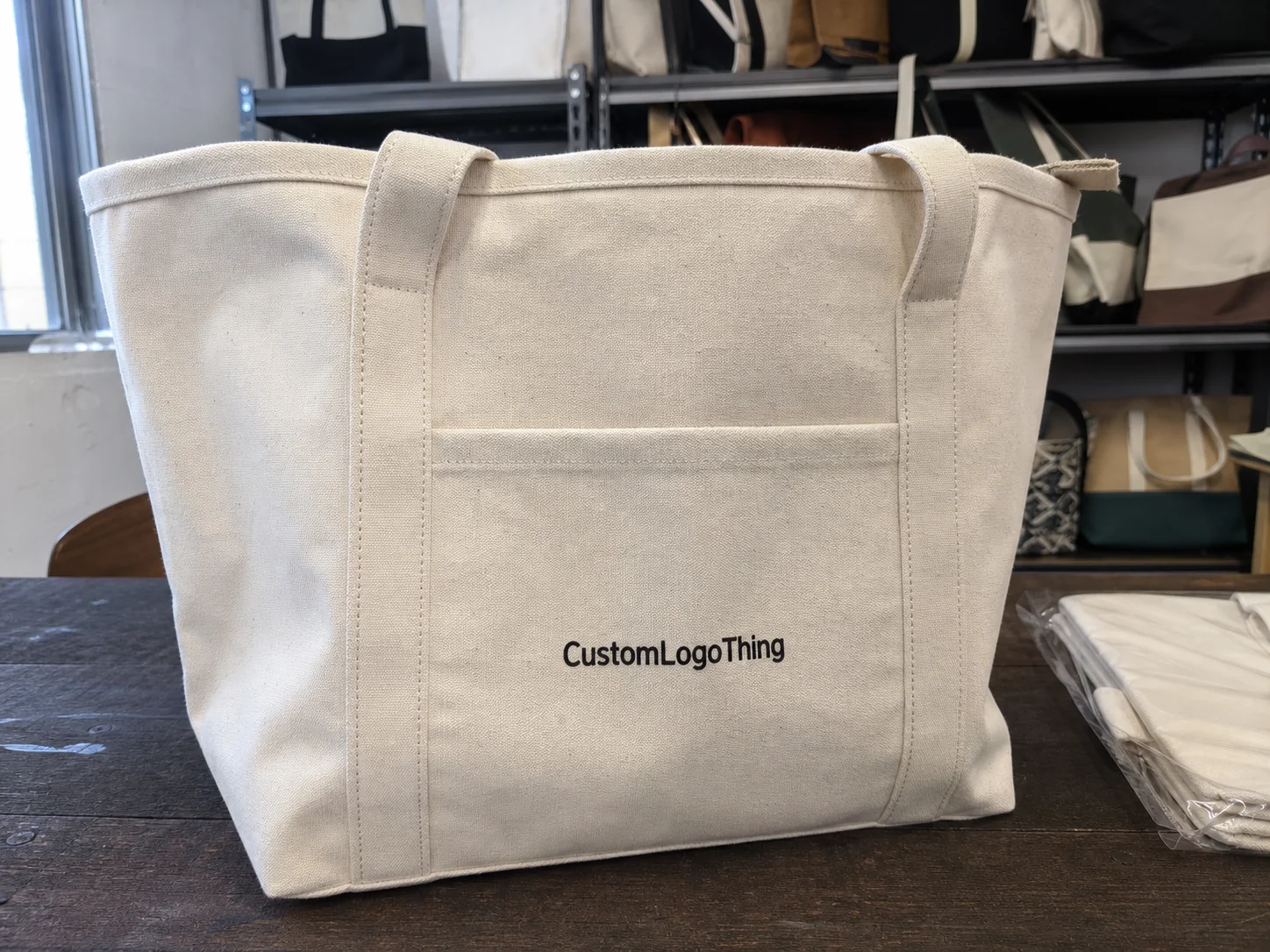
First touch tells the story faster than the logo does. Dense fabric, straight hems, and reinforced stress points make a bag feel deliberate before anyone reads the artwork. That is one reason brands use higher-end totes for retail packaging and premium giveaways. The tactile impression does a lot of the work.
People also judge the bag in motion. Handles that twist, seams that pull, or a bottom panel that caves under a normal load tell users exactly where corners were cut. A well-made tote hangs cleanly from the shoulder, keeps its shape, and carries weight without turning the trip into a repair job.
From a packaging buyer's point of view, the tote is part transport tool, part media surface. It will end up in offices, airports, grocery runs, and conference halls. That makes it closer to a utility item than a one-time promo, and utility items need structural discipline. Good-looking is not enough.
"The fastest way to make a premium tote feel cheap is to let the details fight each other."
Those details are usually small. Clean seam overlap. Even stitch density. Handles anchored low enough to reduce tearing. Print kept away from gusset folds. A top hem that sits flat instead of curling. None of those choices is dramatic alone. Together, they decide whether the tote feels intentional or disposable.
There is also a practical reality buyers learn quickly: tote bags are carried in public. That means every flaw gets repeated exposure. A weak handle or faded logo is not hidden inside a carton. It becomes part of the visible brand record.
Materials, Construction, and Print Methods That Hold Up
Material choice drives feel, durability, and price. Canvas, heavyweight cotton, non-woven polypropylene, laminated woven styles, and recycled blends all sit in different parts of the performance curve. The right one depends on what the bag needs to do. A tote used for event literature does not need the same structure as one meant to leave a retail store with glass bottles inside it.
Canvas is the classic premium option. A 12 oz canvas tote has enough body to stand on a counter better than lighter fabric and enough weight to feel substantial in hand. It tends to look more expensive because it behaves like a real object, not a thin carrier. Cotton in the 8 oz to 10 oz range is lighter and usually easier on budget, but it wrinkles more and has less structure. That can be fine for simple programs. It can also make a bag feel unfinished if the rest of the spec is trying to signal quality.
Non-woven polypropylene is a different category. It is lightweight, economical, and widely used for high-volume promotions. The hand feel is less refined unless the build is upgraded with heavier gsm, better handles, or reinforced seams. Laminated woven PP can look sharper because it holds shape and resists scuffing, which helps in retail promotions and kits that need a cleaner presentation.
Construction matters just as much as the fabric. A gusset increases usable volume. Bound seams reduce fraying. Box stitching or cross stitching at handle points helps the bag survive repeated lifting. A good substrate can still feel flimsy if the finishing is rushed. That is usually where cheap bags give themselves away.
| Material | Typical Feel | Durability | Common Use | Approx. Unit Cost Range |
|---|---|---|---|---|
| 8 oz cotton | Soft, casual | Moderate | Events, light retail use | $0.90-$1.80 |
| 12 oz canvas | Thick, premium | High | Retail packaging, gifts, employee kits | $1.80-$3.80 |
| 80 gsm non-woven PP | Light, structured | Moderate | Trade shows, bulk campaigns | $0.35-$0.90 |
| Laminated woven PP | Stiffer, glossy | High | Retail promotions, structured kits | $0.90-$1.80 |
| Recycled cotton blend | Natural, textured | Moderate to high | Sustainability-led branding | $1.20-$2.50 |
Print method changes the result as much as fabric does. Screen printing is still the workhorse for simple logos because it is durable and predictable on repeat runs. Heat transfer can handle more detail and more color, but the finish needs to be checked closely so it does not read as thick or plasticky. Embroidery adds texture and perceived value, though it usually works better for smaller marks than for large artwork. Full-color process printing helps with photographic or highly detailed designs, but it increases setup complexity and can expose weak fabric more quickly.
The practical takeaway is simple. The more ambitious the decoration, the more the substrate and finish have to support it. A crowded logo on a soft, thin bag loses clarity fast. A cleaner mark on a well-made tote often looks more expensive than a busy print on a weak base.
For buyers comparing packaging systems across formats, the same logic applies to other branded packaging. Material, finish, and transport stress all influence how the item performs once it leaves the supplier.
For broader durability and sourcing context, it helps to review resources from ISTA and fiber sourcing guidance from FSC. Neither one replaces a tote spec sheet. Both make it easier to think about stress, handling, and material claims in a more disciplined way.
Pricing, MOQ, and Quote Factors for High Quality Custom Tote Bags
Price is driven by more than size. Fabric weight, handle style, print area, color count, gusset depth, custom labeling, packaging format, and color matching all move the quote. Quantity matters too. A 250-unit run can make a premium canvas tote look expensive on paper. At 5,000 units, the same spec can land in a far better range because setup costs spread out.
A fair comparison starts with a shared spec sheet. If one vendor quotes an 8 oz bag with one-color print and another quotes 12 oz canvas with reinforced handles and full-bleed art, those numbers are not comparable. Buyers sometimes treat quotes as interchangeable. They are not. The quote only means something if the spec behind it is identical.
MOQ, or minimum order quantity, works the same way. Lower minimums usually mean higher unit costs, especially if the bag requires custom sewing, multiple print passes, or a special finish. If the supplier is using a stock blank, the minimum may be lower. If the tote is built from scratch, the minimum usually rises. That is normal. It is not a trick. It is the cost of setup.
The useful pricing questions are the plain ones:
- What is the unit price at 250, 500, and 1,000 pieces?
- Are setup fees, proof charges, and freight included?
- Is there a rush fee, and what does it cover?
- Does the quote include individual polybagging or carton labeling?
- How much more does a second print color add?
That last point matters more than many buyers expect. The jump from one color to two can be modest on a simple screen print job, or significant on a more complex decoration. Custom packaging buyers already know this from comparing custom printed boxes, where small changes in ink coverage, coating, or finish can move cost faster than the structure itself.
Here is the honest framing. A lightweight non-woven promotional tote can sit under a dollar at scale. A better-finished cotton bag often lands in the low single digits. A heavier canvas tote with stronger finishing and more decoration can cost more. That is not a problem. The problem is paying premium pricing for a bag that still feels generic.
For a broader benchmark, The Packaging Institute offers useful packaging context, especially if the tote is part of a larger branded packaging program. The budgeting rule is the same across categories: compare landed cost, not just headline unit price.
Production Process and Timeline From Artwork to Delivery
A typical tote order moves through a predictable sequence: inquiry, spec confirmation, artwork submission, digital proofing, sample approval if needed, production, packing, and shipment. The delays usually happen before production starts. Missing dimensions, unclear placement notes, or slow approvals add days quickly.
That is why file quality matters. Vector artwork is the safest starting point because it scales cleanly and keeps edges sharp. If the design uses spot colors, confirm the Pantone references early. If it needs a full-color print, check how it sits across seams and folds. A logo that looks fine on a screen can shift badly once it wraps around a gusset or lands too close to a stitch line.
Lead times vary by construction. Standard promotional totes often move faster than fully custom builds, especially when the bag uses a common silhouette or stock material. More involved jobs take longer because the factory has to source material, schedule sewing, prepare screens or plates, and work through approval loops. A realistic range for a standard run is often 12 to 15 business days after proof approval, with more time needed for complex builds or seasonal congestion.
Seasonal demand is the hidden variable. Trade show periods, holiday gifting, and back-to-school campaigns strain schedules even when the bag itself is simple. Buyers who wait until the last minute often pay for rush production or settle for a lower-spec bag because the better option is gone.
One rule saves a lot of trouble. Confirm whether the quoted schedule includes transit time or only production time. Those are different numbers. A vendor may say two weeks and mean two weeks in the factory. The buyer may hear two weeks to delivery. That gap creates avoidable stress and often a bad internal handoff.
For broader branded packaging programs, the tote should be treated with the same discipline as retail packaging or product packaging. The design file, proof, material, and timing all have to line up before the order is released. Small mistakes in any one of those areas become expensive once production begins.
How to Specify the Right Tote Before You Request Samples
The best sampling process starts with a clear job definition. Is the tote carrying conference handouts, retail merchandise, employee welcome kits, or groceries? The answer changes the size, the handle length, the fabric weight, and the decoration method. A tote for a folded T-shirt does not need the same structure as one meant to hold catalog stacks, bottles, or boxed product.
Start with dimensions and load. If the bag needs to hold a shoebox or a stack of brochures, say so. If it should carry 10 to 15 pounds without strain, say that too. Buyers often skip this step and ask only for "a nice tote." That is not a usable spec. It is a wish.
Then decide whether the bag needs a retail-facing finish or a utility-first build. A retail packaging program may call for heavier fabric, tighter stitching, and a cleaner print edge. A utility-first campaign may prioritize capacity, cost, and turnaround. Neither choice is wrong. The problem is trying to get both outcomes from a vague brief and expecting the supplier to infer the rest.
Artwork prep should be just as specific. Confirm logo placement in inches, not guesses. Check distance from the top edge and from the side seam. If the bag has a gusset, decide whether the artwork should wrap, stop before the fold, or stay centered on the front panel. Those decisions change the finished look more than many buyers realize.
A simple approval workflow helps keep the order from drifting:
- Review the sample in hand.
- Compare it against the proof and the spec sheet.
- Test the bag with the actual items it will carry.
- Confirm color, stitching, and handle comfort.
- Release the order only after sample, proof, and quote all match.
If you are buying other branded items at the same time, it helps to coordinate the tote with Custom Packaging Products already in the campaign. Matching visual cues across the tote, shipper, and insert improves package branding without making every item identical.
Samples are not just about appearance. They are about behavior. A tote that looks good but twists under load is not a good tote. A bag should be lifted, folded, filled, and carried. That is the only way to know whether the design fits the use case.
Common Mistakes That Make a Premium Tote Feel Cheap
The fastest way to weaken a tote order is to choose the lightest fabric available and call it premium. Thin material may save a little budget, but it can collapse, wrinkle, or show the contents too clearly. Buyers do this to protect margin, then discover the bag no longer supports the brand promise. That trade is rarely worth it.
Overloading the print area is another common mistake. A logo that runs too close to seams, folds, or the bottom gusset can distort once the bag is used. The proof may look sharp. The real bag will not. Soft construction exaggerates that problem because the artwork moves with the fabric.
Handle details are easy to overlook. If the handles are too short, the bag rides awkwardly. If stitch density is weak, the load shifts stress to one point. If the attachment is not reinforced, the bag can fail early. These are not cosmetic issues. They are performance failures.
Color management matters too. A weak-contrast logo can disappear on natural canvas. An off-tone ink can make the whole piece feel cheaper. In the same way that retail packaging depends on consistent color and finish, tote bags depend on disciplined artwork handling and a clear spec.
Many first-time buyers also assume suppliers are interchangeable. They are not. One vendor may quote lower because the fabric is lighter, the finishing is simpler, or freight is excluded. Another may charge more because the bag is actually better built. The goal is not to buy the most expensive option. The goal is to compare equivalent specs and judge real value.
"If the bag feels flimsy before it leaves the box, it will not get a second chance in the real world."
One more issue gets ignored too often: how the tote is packed for delivery. Polybagging, carton labeling, fold method, and count control all affect how the order arrives. A good bag delivered in damaged cartons or with inconsistent counts creates the wrong first impression and slows down fulfillment work on the buyer side.
Next Steps to Finalize a Better Tote Order
The next move is straightforward. Request physical samples from at least two suppliers. Compare the spec sheets side by side. Confirm the exact delivery window before approving anything. If one quote looks lower but the bag is thinner, the handles are weaker, or freight is excluded, that quote is not better. It is incomplete.
A practical decision rule keeps the comparison honest: choose the tote that balances print clarity, seam strength, hand feel, and landed cost. That usually produces a better result than chasing the lowest headline number. High quality Custom Tote Bags earn their value through repeated use, not through a low entry price.
Lock the details in writing. Quantity, material, handle length, print method, Pantone targets, packaging format, and ship date should all be confirmed before production starts. That level of clarity is basic due diligence. It also prevents most of the problems that show up later, which is usually where budget gets burned.
If the tote is part of a larger branded packaging or retail packaging program, keep the visual system consistent across inserts, mailers, and presentation boxes. The tote should support the package, not fight it. When the system works, the bag stops behaving like a standalone giveaway and becomes part of a coherent brand experience.
Done well, these bags are not just reusable carriers. They are proof that a brand paid attention to the details that matter: material, structure, print, and timing. Order only after those four line up, and the odds of getting a bag people actually use go way up.
Frequently Asked Questions
What makes high quality custom tote bags different from cheap ones?
Better totes use stronger fabric, cleaner stitching, reinforced handles, and a print method that holds up after repeated use. They also feel more substantial in hand, which changes how customers judge the brand. A premium tote should keep its shape, carry weight comfortably, and still look good after multiple uses.
How do I compare custom tote bag prices fairly?
Ask each supplier for the same specs: size, material, print method, quantity, handle style, and packaging. Compare setup fees, freight, proof costs, and rush charges, not just the per-unit price. A lower quote only matters if the materials and finishing are truly equivalent.
What materials are best for durable custom tote bags?
Canvas and heavyweight cotton usually offer the best premium feel and durability. Non-woven polypropylene and laminated woven styles can be strong, lightweight, and cost-effective for high-volume orders. The right choice depends on whether the tote is meant for retail, events, or everyday utility.
How long does production usually take for custom tote bags?
Standard jobs often move faster than fully custom constructions, but proofing, sampling, and shipping all affect the schedule. Delays usually come from missing artwork details or slow approval cycles. Confirm lead time in writing and ask whether transit time is included.
What should I check before approving high quality custom tote bags?
Review dimensions, fabric weight, handle length, print placement, color accuracy, and stitch quality. Test the sample by loading it with the actual items it will carry. Approve only after the sample, proof, and quote match the same specification.