Personalized popcorn boxes do more than hold a snack. They shape the first impression, carry the brand into the room, and make something simple feel deliberate. That matters at weddings, school events, concession counters, fundraisers, and product launches where presentation has to do some of the selling.
The useful test is simple: does the carton look good, fill cleanly, and hold up once real people start handling it? If the answer is yes, the box is doing its job. If it buckles, leaks grease, or feels awkward in the hand, the print work does not matter much. This is where good packaging decisions show up fast.
Buyers usually want two things at once: a carton that photographs well and a carton that survives the actual event. That sounds obvious, but it is where a lot of orders go sideways. The print may look sharp on a mockup and still fail once the box is folded, filled, stacked, or carried across a venue.
Why personalized popcorn boxes stand out at events
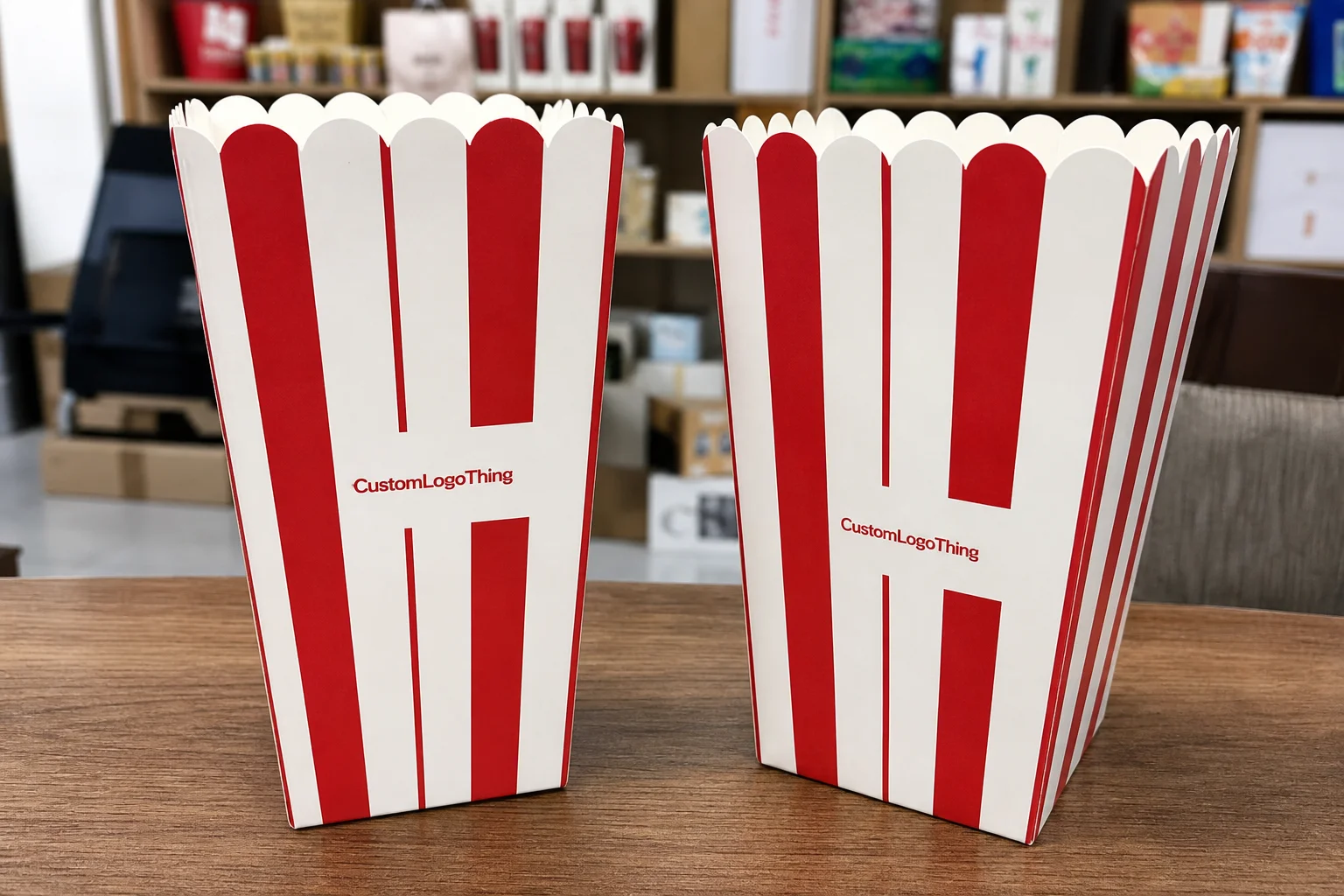
A popcorn box sits in a useful middle ground. It is more polished than a paper cup and less formal than a rigid gift box. That makes it easy to adapt. A bright design with bold colors works for school carnivals and family parties. A softer palette with matte coating or metallic accents fits weddings and upscale receptions. The structure stays the same, but the tone changes completely with artwork and finish.
The shape matters more than people think. Tall cartons feel ceremonial and gift-like. Wider cartons are easier to scoop from and work better at concession counters. Neither style is inherently better. The right choice depends on whether the box will be carried by hand, displayed on a table, or filled by staff on a line.
A good popcorn carton should look intentional in a stack, stay comfortable in the hand, and still make sense when it is filled three-quarters full instead of perfectly styled in a mockup.
Visual hierarchy matters too. If the logo is crowded by folds or the artwork competes with panel seams, the box starts to feel busy. Clean layouts usually win. Strong color blocks, readable type, and enough breathing room around the top edge make the carton easier to use and easier to recognize from a distance.
There is also a practical sales angle. Branded snack packaging raises the perceived value of the product. A mix that might look ordinary in a clear bag feels more giftable in a printed carton, especially when the board feels firm and the finish looks clean. That does not mean every box needs foil or embossing. It means the packaging should match the value of the moment.
For event buyers, that balance is the whole game. Too plain and the box disappears. Too ornate and it starts to fight the rest of the setup. Personalized popcorn boxes work best when the design is specific, not decorative for its own sake.
How the box structure works: size, shape, and fill performance
Most custom popcorn cartons are made from paperboard, often in the 16pt to 24pt range or an equivalent 300gsm to 400gsm stock. Lighter board can be fine for short events and dry snacks. Heavier stock is better when the product has more weight, like caramel corn or coated mixes. If the carton will be stacked, transported, or handled repeatedly, the board choice matters as much as the print quality.
Outside dimensions can be misleading. What matters is the actual serving volume after the box is folded and filled. Popcorn settles. Density changes from batch to batch. A carton that looks generous on a spec sheet can end up reading small if the snack collapses after filling. A smaller profile can look fuller and more premium if the proportions are right. The safest approach is to think in servings, not just width and height.
For single portions, cartons in the 3 x 3 x 5 inch to 4 x 4 x 6 inch range are common starting points. That is not a rule. It is a practical range that covers many event uses without making the box feel oversized. If the snack mix is heavy, oily, or mixed with candy, the right size may need to move up a step.
Shape affects handling. A wider mouth makes filling easier and gives the product more room to show. A taller profile can photograph better and feel more substantial. If guests will be walking, standing, or carrying drinks at the same time, the grip zone becomes important. A narrow enough profile is easier to manage in real use. The box should feel stable, not theatrical.
The structure also affects how the artwork behaves. Fold lines, glue zones, and tuck edges all cut into the usable design area. A layout that looks clean on a flat file can become crowded once it is formed. Large graphics need to be planned around the actual carton, not layered on top after the fact. Dieline planning should happen early, before the visual design gets too far along.
Board flatness and folding memory are worth asking about too. If the cartons are sitting in a humid room or near warm equipment, a weak board can warp. That matters when the boxes are stacked for hours before use. Minor curl is enough to make a display look messy. In practice, structure quality shows up before the first customer takes a box.
For greasy or hot fillings, Buyers Should Ask whether the board has a grease-resistant coating or a food-safe surface treatment. That is more useful than chasing decorative finishes. If the product is going to be touched, stacked, and eaten quickly, basic performance beats visual extras every time.
How the production process and turnaround work
The production path usually starts with the dieline, which shows cuts, folds, glue zones, and safe areas. After that comes artwork prep, proofing, printing, die-cutting, folding, and packing. Each step is straightforward on paper. Delays happen when one of those steps is unclear.
Clean files move faster. Vector logos, properly placed text, and artwork that already fits the supplied dieline reduce back-and-forth. If the supplier has to rebuild panels, resize copy, or replace missing images, the schedule stretches. That is true even before printing starts.
Finishes add time. Soft-touch lamination, spot UV, foil stamping, and window cutting all need setup and approval. None of them is hard in isolation. The issue is that each one creates another control point. If the design is simple, a straightforward board with standard print can move much faster than a heavily finished carton.
Typical turnaround for a clean custom order often lands around 12 to 15 business days after proof approval. That is a useful benchmark, not a promise. Material availability, order size, finishing, and shipping method all affect the actual schedule. A smaller run on standard stock can move faster. A complex order with specialty coating usually cannot.
Rush production is possible in some cases, but it comes with tradeoffs. The design may need to stay within standard board sizes, premium effects may need to be dropped, and proof approval has to happen quickly. If the event date is fixed, the safest route is simple: lock the size early, keep the artwork final, and avoid midstream edits.
There is a shipping detail buyers often miss. Flat-packed cartons save space and usually ship more efficiently, but the outer packaging matters if the order has to travel far or sit in a warehouse before use. If the boxes are part of a kit, the packing method can also change labor on the receiving end. That is not a small detail when the order is tied to a live event.
If transit performance matters, ask how the cartons are packed for shipping and whether the supplier follows any drop-test or handling standard. For reference, ISTA test standards are often used to evaluate packaging during transport. Not every order needs formal testing, but the boxes should be packed like they are expected to survive normal handling. Because they are.
Cost, pricing, and MOQ factors that shape your quote
Pricing is driven by a handful of variables: board grade, carton size, print coverage, color count, finish, and quantity. A small one-color carton on standard board costs very differently from a full-bleed box with foil and soft-touch lamination. The quote should reflect the full spec. If it does not, it is not a useful quote.
MOQ changes the math because setup costs do not shrink just because the run is smaller. The dieline still has to be prepared. The press still has to be set up. The carton still has to be cut and folded. Spread those fixed steps across a larger order and the unit cost drops. Spread them across a few hundred pieces and the unit cost climbs. That is production, not a pricing trick.
| Order tier | Typical use | Approx. unit cost | Notes |
|---|---|---|---|
| 250 to 500 units | Small events, samples, limited favors | $0.95 to $2.10 | Higher unit cost because setup is spread across fewer cartons. |
| 1,000 to 2,500 units | Weddings, school events, mid-size promotions | $0.45 to $1.10 | Often the most balanced range for price, customization, and production efficiency. |
| 5,000+ units | Retail promotions, concession programs, large campaigns | $0.20 to $0.48 | Best unit economics if the spec stays stable and the artwork is settled early. |
Finishes can move the price faster than people expect. Standard coated board is usually the most economical route. Foil, spot UV, heavy ink coverage, and specialty lamination add cost because they add setup and reject risk. That does not mean they are bad choices. It means they should earn their place on the carton.
Material sourcing is another question worth asking before the quote is finalized. If the buyer needs recycled content or a sustainability claim, the board should be traceable. FSC certification is a common reference point for fiber sourcing. It does not solve every packaging question, but it gives buyers a concrete standard to check against instead of relying on vague green language.
When a project includes other printed items, matching specs can simplify the whole package. Coordinating the popcorn cartons with related pieces from Custom Packaging Products can help keep the visual system consistent across a venue or campaign. That matters more than people admit. Inconsistent packaging makes a display look assembled, not designed.
Artwork setup, dielines, and print-ready file checks
The dieline is the part of the process that prevents expensive surprises. It shows where the box folds, where the glue lands, and which zones should stay clear. Logos and important copy need to sit inside the safe area. If they are too close to a fold, they can disappear around a corner or end up half hidden once the carton is formed.
Print-ready files should be built with discipline. Vector art is best for logos and line work. Images need to be high enough resolution to survive print without soft edges. Bleed should be included so color reaches the trim edge cleanly. If the file is in the wrong color mode or the graphics are too low-resolution, the final box will show it.
Problems often show up at the edges. Tiny text near a fold becomes hard to read. Dark backgrounds can reveal scuffs more easily. Repeated patterns that look perfect in a flat layout may stop lining up after conversion. None of this is unusual. It is simply what happens when a flat design becomes a folded object with seams, flaps, and corners.
The proof review should cover spelling, panel order, barcode placement if the carton is going into retail, logo orientation, and the finish itself. If the box will sit near warm or greasy food, the coating and surface treatment need to be confirmed before approval. Food-safe materials matter. Decorative extras do not fix a bad substrate.
A good proof should show the real structure, not just the artwork floating in space. If the placement, scale, or fold behavior could change how the box reads once filled, ask for a mockup that reflects the actual carton. That small step costs less than reprinting an order because one panel looked right on screen and wrong in the hand.
Common ordering mistakes that create waste or delays
The most common mistake is the wrong size. If the carton is too small, the snack overflows and the table looks messy. If it is too large, the portion looks weak and the box feels underfilled. Neither outcome helps. A test fill with the actual popcorn or snack mix is the cleanest way to avoid that problem, because caramel corn, kettle corn, and plain popcorn behave differently in a carton.
That test fill also helps with lid clearance, opening comfort, and settling. A box that seems perfect during sample packing can feel awkward once it is filled quickly on-site. This matters when guests are standing, moving, or holding a drink in the other hand. Packaging failures are often just handling failures in disguise.
Vague instructions cause delay. If a buyer asks for a “custom box” without quantity, use case, finish, or delivery timing, the quote gets broader and the plan gets more conservative. The supplier has to fill in the blanks. That usually means revisions. Clear specs lead to cleaner proofs, tighter pricing, and fewer surprises.
Late artwork edits are another expensive habit. Once the proof is approved, changing the logo version or event date can send the job back into review or reimposition. Even small edits can disrupt panel alignment, especially on full-wrap designs. If the deadline is fixed, the copy should be locked before production starts.
Shipping mistakes matter too. A carton that looks fine in the warehouse can still arrive damaged if the outer pack is weak or the stack is poorly protected. If the boxes have to travel a long lane or sit in storage first, ask how they are packed and whether the printed surfaces are shielded from scuffing. The design only matters if the cartons arrive usable.
Next steps for sampling, approval, and ordering
Start with the use case. Favor, concession, and promotional packaging all ask for different things. A wedding favor box needs a cleaner, more gift-like appearance. A concession carton needs better structure and quick readability. A promo piece may need more color and stronger brand presence. The right answer depends on how the carton will be used, not on what looks good in isolation.
Then gather the order details before requesting a quote: size, quantity, artwork files, finish preference, target date, and any material requirements such as food-safe coating or recycled content. The more precise the brief, the more accurate the Pricing and Timeline will be. If the order is high-visibility, a sample or virtual mockup is worth asking for before approval.
If the project includes other branded items, keep the spec language consistent. That makes it easier to coordinate with labels, inserts, sleeves, or companion cartons. It also reduces confusion in production when several items are running together. A clear approved spec sheet should be the source of truth from proof to shipment.
Good custom packaging rarely happens by accident. It comes from matching structure, print, and real serving behavior before the order is placed. When the carton is sized correctly, printed cleanly, and checked against the dieline, personalized popcorn boxes do exactly what they are supposed to do: hold the snack, support the brand, and make the event feel more considered from the first glance to the last handful.
What size personalized popcorn boxes should I choose for single servings?
Choose based on actual fill volume, not just outside dimensions, because popcorn settles and changes the visual fullness of the carton. For single servings, a sample or test fill is the safest way to confirm the right fit before the full run is approved.
How many personalized popcorn boxes do I need for a wedding or event?
For favors, one box per guest is the usual baseline, plus extras for waste, samples, and late additions. For concession use, estimate by servings per hour and keep a buffer for peak traffic so the busiest part of the event does not run short.
What affects the turnaround for personalized popcorn boxes?
Artwork approval, material availability, print complexity, and shipping speed are the main timing factors. Clean files and fast proof approval usually shorten the schedule more than anything else.
How does pricing change for personalized popcorn boxes with custom printing?
Price usually rises with larger sizes, heavier board, more print coverage, and specialty finishes. Higher quantities lower the unit cost because setup is spread across more cartons.
What artwork files work best for personalized popcorn boxes?
Vector logos, high-resolution images, and clear text layouts usually produce the cleanest result. Always review the dieline, bleed, and safe zones so the design still looks right after folding and trimming.