Buyer Fit Snapshot
| Best fit | Plant Based Shipping Boxes Manufacturer projects where brand print, material claims, artwork control, MOQ, and repeat-order consistency need to be specified before quoting. |
|---|---|
| Quote inputs | Share finished size, material target, print colors, finish, packing count, annual reorder estimate, ship-to region, and any compliance wording. |
| Proofing check | Approve dieline scale, logo placement, barcode or warning zones, color tolerance, closure strength, and carton packing before bulk production. |
| Main risk | Vague material claims, crowded artwork, missing packing details, or unclear freight terms can make a low unit price expensive after revisions. |
Fast answer: Plant Based Shipping Boxes Manufacturer: Board, Finish, Dieline, and Unit Cost should be specified like a repeatable production item. The safest quote records material, print method, finish, artwork proof, packing count, and reorder notes in one written spec.
Production checks before approval
Compare the actual filled-product size with the drawing, then confirm tolerance on folds, seals, hang holes, label areas, and retail display edges. Reserve space for logos, QR codes, warning copy, and material claims before decorative graphics fill the panel.
Quote comparison points
Review material grade, print process, finish, sampling route, tooling charges, carton quantity, and freight assumptions side by side. A quote is only useful when the supplier can repeat the same color, closure quality, and packing count on the next order.
Plant Based Shipping Boxes Manufacturer: Buying Guide
A shipping box looks ordinary until it has to survive a real route. Heavy skincare sets. Apparel cartons stacked a little too aggressively. Flat-packed accessories rattling through a sort hub and then into a van that has definitely seen some things. That is the whole point of a plant based shipping boxes manufacturer. The box is not there to pose for a product page. It is there to protect what is inside, keep fulfillment moving, and not make your brand look sloppy halfway through transit.
People usually start with the wrong question. They ask whether the packaging is greener. Fair enough. Useful, even. But that is only one slice of the job. The real question is whether the shipping materials fit the product, the route, the warehouse conditions, and the level of package protection needed for actual ecommerce shipping. Once you start looking at corrugated board, molded fiber, and fiber-heavy mailers through that lens, the right partner gets much easier to spot. A good plant based shipping boxes manufacturer balances performance, cost, and sustainability without forcing you to choose just one.
Brands building a broader packaging program usually need more than one format anyway. Shipping cartons sit next to options like Custom Shipping Boxes, Custom Packaging Products, and the support content on About Custom Logo Things. It all folds into the same sourcing conversation: how much protection you need, how the box prints, how it fits the fulfillment line, and what the customer sees when the package opens. That part matters more than buyers admit out loud.
What a plant based shipping boxes manufacturer really does
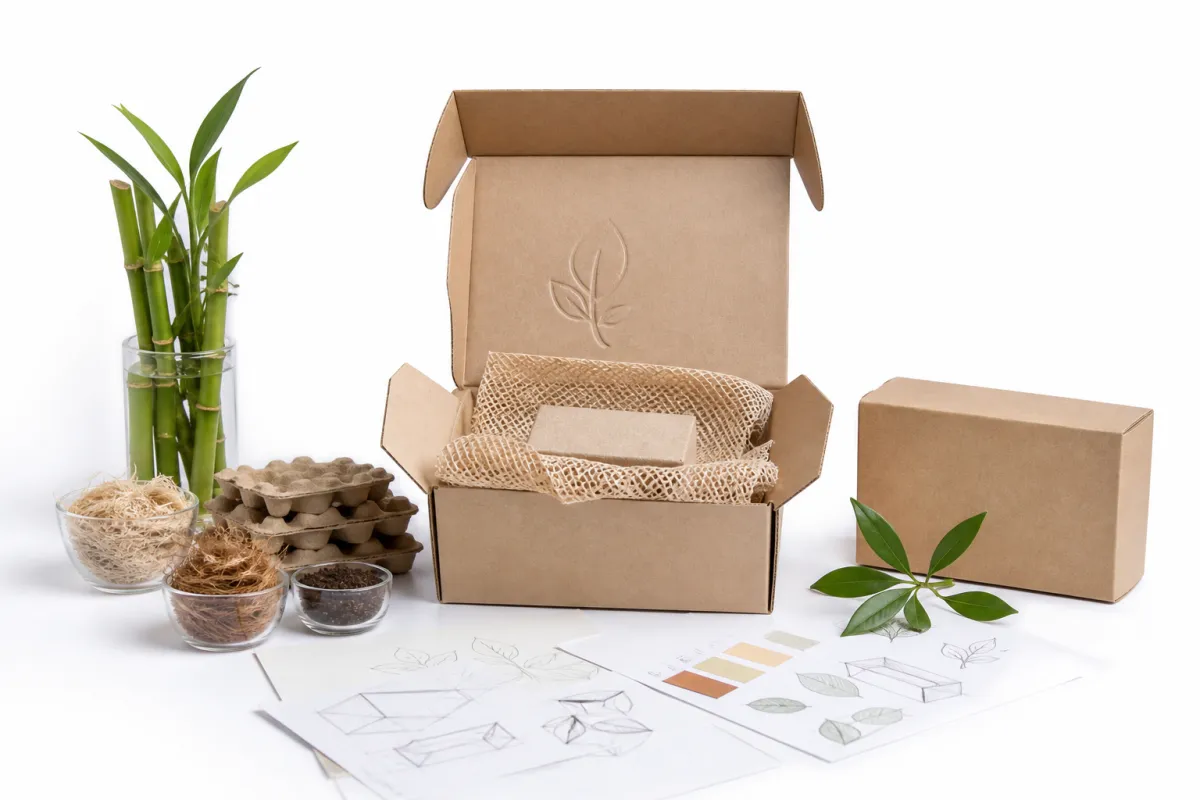
A plant based shipping boxes manufacturer does a lot more than print a logo and send out a stack of cartons. Material selection comes first. “Plant based” can mean a few different things in packaging. Think fiber-based substrates, plant-derived binders, starch blends, molded pulp parts, or bio-based barrier layers that improve moisture resistance. The exact mix depends on the product, the route, and how the brand wants to describe the package after use.
That detail matters. A lot. Marketing can make a box sound cleaner than it is, but the box still has to perform. If it cannot handle stack pressure, corner crush, or the humidity swing between the warehouse and the delivery truck, the claim starts to look a little flimsy. A solid plant based shipping boxes manufacturer ties the material story to measurable specs like compression strength, edge crush, print durability, and recyclability.
Boxes have a job list, not a single job. They protect the product. They keep shipping weight in check. They hold color well enough to support branding. They survive pack-out without tearing, buckling, or slowing the fulfillment crew down. That is why packaging engineers obsess over board caliper, fold geometry, closures, and inserts. A box can look simple and still require a lot of discipline under the hood.
I see buyers miss this part all the time. A plant based shipping boxes manufacturer is not only a materials supplier. It is also a process partner. The right one helps you decide whether lighter board can replace heavier board, whether a water-based coating is enough for the route, and whether the box should be built around dimensional weight instead of just outer appearance. Shipping costs have a funny way of punishing sloppy dimensions.
The first question should not be “Is it plant based?” It should be “Is this the right plant based structure for my product and channel?” A carton for folded tees is not the same as a box for glass jars. A subscription kit is not the same as a bulk wholesale shipper. A thoughtful plant based shipping boxes manufacturer says that out loud instead of trying to squeeze one material story onto every use case.
“A box is cheap until it fails in transit. Then the real cost shows up in returns, repacks, and customer complaints.”
That is the lens I would use with any plant based shipping boxes manufacturer: look past the label, then inspect the structure, finish, and fit inside the actual fulfillment workflow. The pretty words on the spec sheet do not ship the order. The box does.
How a plant based shipping boxes manufacturer turns fiber into boxes
The production path starts with raw fiber choice. Depending on the design, a plant based shipping boxes manufacturer may use virgin kraft, recycled linerboard, molded pulp furnish, or a blended fiber recipe that gives the needed strength and surface finish. That first choice affects almost everything else: printability, compression, moisture response, and how the carton behaves when stacked on a pallet.
After that, the material moves through pulping, sheet formation, pressing, drying, and converting. Corrugated packaging brings flute selection into the picture. Single wall, double wall, and different flute profiles all change stacking strength and surface smoothness. Molded fiber shifts the process toward forming and drying the pulp shape so it can carry load without adding unnecessary weight. A capable plant based shipping boxes manufacturer knows how to match the material route to the product route, and yes, that still trips up a lot of people.
Structure is where the box earns its keep. Fold design, score depth, tuck style, glued seams, locking tabs, and inside fit all affect package protection. A few millimeters can matter more than most buyers expect. Too loose, and the product rattles in transit. Too tight, and the pack-out team slows down or the product scuffs during assembly. Good structure is not just about surviving a drop test. It has to behave predictably inside order fulfillment.
Coatings, inks, and adhesives matter just as much. Water-based coatings can offer enough scuff resistance for retail-ready shipping. Plant-derived or bio-based barrier layers may help in moisture-prone channels. The trick is not to chase the flashiest finish. The trick is to pick the finish that supports the end-of-life path the brand actually wants to claim. A responsible plant based shipping boxes manufacturer should explain whether the system stays recyclable, becomes compostable under a defined standard, or needs a more limited recovery path. If the answer sounds vague, it probably is.
Testing is the gatekeeper. Before a design gets the green light, manufacturers usually check compression strength, edge crush, drop performance, closure integrity, and fit. For distribution-sensitive products, ISTA 3A can be useful, and many packaging teams also reference ASTM methods for board performance and transport simulation. If you want the source material, ISTA covers the testing framework and FSC covers the forest certification side of the equation. I like seeing both in a spec package, because then the conversation stays grounded in facts instead of vibes.
Customization runs through the whole process. A plant based shipping boxes manufacturer may adjust the dieline, add partitions, build brand-forward print panels, or create an insert that holds the product at a specific angle for presentation. That is where function meets brand experience. A shipping box can be plain and still smart, or heavily branded without becoming fragile, but the best results usually come from designing both at the same time.
For brands selling through ecommerce shipping channels, that part matters a lot. A carton that works beautifully on a shelf may fail inside a parcel network. A carton that ships well may still feel underwhelming if the print and finish are ignored. A seasoned plant based shipping boxes manufacturer knows the box is part logistics tool, part customer touchpoint, and it has to pull both jobs without whining.
Key factors when choosing a plant based shipping boxes manufacturer
Performance comes first. A plant based shipping boxes manufacturer should match box strength to product weight, shipping distance, vibration exposure, storage humidity, and the abuse level you expect in transit. A two-pound apparel bundle does not need the same board structure as a set of ceramic containers. A regional route does not carry the same risk as a national parcel network. Good recommendations are tied to the product, not a template pulled from a drawer.
Material transparency is next. Ask what fiber is used, how much recycled content sits in the board, whether the plant-based content applies to the coating or adhesive, and what the supplier can document in writing. The phrase plant based only matters if the spec sheet matches the sample in your hand. A trustworthy plant based shipping boxes manufacturer should explain the composition directly instead of hiding behind broad claims and vague optimism.
Compliance and sustainability claims need a careful look. If you need recyclable packaging, say that clearly. If you want compostability, ask which standard is being referenced and whether the end-of-life path is industrial or home compostable. If the product touches food, cosmetics, or health channels, ask about those use conditions early. A plant based shipping boxes manufacturer that works across categories should know how to separate what is technically possible from what can be safely stated on-pack. That distinction saves headaches later.
Print and branding capability can change the project fast. Crisp logos, color consistency across reorder runs, and a clean surface finish all matter if the box is part of the unboxing experience. Ask whether your artwork is better suited to flexographic print, digital print, or another method. Ask whether the material surface will hold fine detail. If the customer sees the box before they see the product, this is not a side note. It is the package.
MOQ and repeat-order reliability matter more than many buyers want to admit. The cheapest quote on the first order is not useful if the supplier cannot repeat the same board grade, print quality, and lead time on the next run. A dependable plant based shipping boxes manufacturer will give realistic minimums, explain whether inventory can be staged, and clarify how reorders are handled. That matters a lot for growing brands with messy demand curves and not enough patience.
Dimensional weight deserves a serious look too. A box that is oversized by even a small amount can raise shipping cost every time it moves. That is where packaging engineering and operations meet. A good manufacturer will optimize outer dimensions, reduce dead space, and keep the carton efficient for parcel carriers without crushing the product or making pack-out miserable.
If you are comparing options, a simple scorecard helps:
- Product fit: Does the structure protect the item without excess void fill?
- Material proof: Can the plant based shipping boxes manufacturer document what is in the box?
- Transit performance: Has the design been tested for the route you actually ship?
- Brand quality: Will the print and finish support the customer experience?
- Fulfillment fit: Does the box pack quickly and repeatably on the line?
That list is simple on purpose. It cuts through bad proposals fast. In my experience, the best plant based shipping boxes manufacturer is the one that asks smart questions before quoting, because those questions usually reveal whether the supplier understands your channel or is just trying to sell a material label with a nicer haircut.
Plant based shipping boxes manufacturer pricing: what drives cost
Pricing starts with the substrate. A plant based shipping boxes manufacturer using heavier virgin kraft, specialty molded fiber, or multi-layer board will usually quote differently than one using a lighter recycled structure. Caliper, flute profile, and wall construction all push price up or down because they change the amount of fiber in the finished box. Even when the outside size looks similar, the internal build can be completely different.
Box size pulls in two directions at once. Larger boxes use more material, so the direct cost rises. Overspecifying a small box wastes money too. If a product only needs moderate protection and the board is stronger than necessary, you may be paying for stiffness you never use. A careful plant based shipping boxes manufacturer helps you land in the middle ground between protection and material efficiency.
Printing and finishing add another layer. Specialty inks, multiple print locations, embossing, windows, and coated surfaces all affect price. Inserts and partitions can add even more, especially if they need separate tooling or extra converting steps. A premium-looking box is not automatically a better box, and a plain box is not automatically cheap once the structural demands go up. The smartest plant based shipping boxes manufacturer quotes the whole system, not just the shell.
Some costs do not show up until later. Freight from the plant to your warehouse. Storage space. Sample revisions. Waste from rework. Those can erase a low unit price faster than anyone likes to admit. If the first prototype misses by a few millimeters, the correction cycle takes time and money. A reliable plant based shipping boxes manufacturer should talk about those costs plainly instead of hiding them behind a shiny headline number. I trust that kind of honesty a lot more than a bargain quote with no context.
It helps to compare a few structures side by side. The table below is a practical example of how pricing and performance can vary. Real quotes will shift with artwork coverage, board market swings, and order size, but the pattern stays familiar.
| Option | Typical Structure | Approx. Unit Cost at 5,000 Units | Best Fit | Notes |
|---|---|---|---|---|
| Basic plant-based mailer | Single wall fiber board, light print | $0.18-$0.30 | Light apparel, small accessories | Low material use, faster to pack, limited protection for fragile goods |
| Mid-grade shipping carton | Heavier corrugated, custom dieline, one-color print | $0.32-$0.58 | Most ecommerce shipping programs | Balanced cost and strength, often the best starting point for testing |
| Premium branded shipper | Double wall or specialty fiber build, inserts, better finish | $0.68-$1.40 | Premium products, gift sets, fragile items | Higher cost, but often lowers damage and improves presentation |
That table shows why “cheap” and “cost-effective” are not twins. A low-unit-price carton can create more breakage, more void fill, and more labor on the packing line. A slightly stronger option from the right plant based shipping boxes manufacturer may lower total cost if it reduces damage and speeds up order fulfillment. Physics is rude like that, but it does not care about your budget meeting.
Freight matters too. A well-designed box can reduce dimensional weight, and carriers care about that every single time. If the box is oversized, you pay for empty air. If it is too tight, you risk damage and returns. Packaging teams keep coming back to experienced suppliers because honest design input is cheaper than fixing a bad launch.
Step-by-step timeline with a plant based shipping boxes manufacturer
Discovery comes first. A strong plant based shipping boxes manufacturer needs product dimensions, actual weight, shipping method, expected drop risk, branding goals, and your budget range before quoting begins. If the brief is vague, the quote will be vague too. That only creates more back-and-forth later. Include whether the carton has to survive pallet stacking, parcel drops, or both, because those are not the same problem wearing different shoes.
Sampling is the next step. This is where the manufacturer builds test boxes, checks product fit, and adjusts the structure if the first version is too loose, too tight, or too annoying to pack. Sampling is not a formality. It is the point where you find out whether the design protects the product and whether the line team can actually use it without grumbling every five minutes. A thoughtful plant based shipping boxes manufacturer should expect at least one revision round for a custom project.
Proofing follows. Artwork gets checked against the dieline, material gets confirmed, claims get reviewed, and the final sign-off gets locked before production starts. If the box carries sustainability language, this is the moment to nail it down. Good suppliers want approval on the wording that appears on the carton or spec sheet because nobody wants a box that says one thing and does another. That kind of mismatch is a brand mess waiting to happen.
Production lead time depends on tooling, print complexity, order volume, and material availability. For many custom programs, a simple run may take about 12-15 business days after proof approval. More complex structures or seasonal rushes can push that longer. A dependable plant based shipping boxes manufacturer should give you that range in writing and explain what could throw the schedule off.
Logistics is the last mile of the project, and it deserves more attention than it usually gets. Inbound freight, receiving checks, warehouse storage, and launch timing all matter. A box arriving early can create storage headaches. A box arriving late can stall a product launch. The move from sample to live run should be planned like any other supply chain change, especially for high-volume ecommerce shipping programs.
There is one small detail that saves a lot of pain: train the pack-out team before the full rollout. Even a good carton can fail if people fold it wrong, overfill it, or ignore the closure sequence. A smart plant based shipping boxes manufacturer will sometimes suggest assembly notes or sample pack-out instructions. That is not fluff. That is fewer mistakes on the floor.
For brands juggling several product lines, a phased launch helps. Start with a pilot batch. Review returns and damage rates. Scale only after that. It keeps risk low and makes it easier to compare field performance against the sample bench. It is also a very clean way to see whether the plant based shipping boxes manufacturer you picked understands production reality instead of only talking a good game.
Common mistakes when hiring a plant based shipping boxes manufacturer
The first mistake is treating plant based, recyclable, compostable, and bio-based as if they all mean the same thing. They do not. A plant based shipping boxes manufacturer may use plant-derived content in a coating, but that does not automatically make the box compostable. A recyclable box may still include a barrier layer that changes how it should be described. If the end-of-life story matters to your brand, the wording has to match the actual structure.
The second mistake is approving a design without transit testing. Heavy products, brittle goods, and shipments that pass through multiple distribution centers need proof, not wishful thinking. A box that survives a desk demo may fail on a conveyor or in a stacked trailer. Your plant based shipping boxes manufacturer should be willing to test against the actual risk profile instead of pointing at the sample and calling it done.
Under-specifying the product is another expensive error. If the manufacturer does not know the exact weight, center of gravity, or whether there are sharp edges, the box may come back underbuilt. That leads to crushed corners, loose inserts, and product movement inside the carton. A good plant based shipping boxes manufacturer will ask annoying but useful questions, because those answers keep the structure honest.
Skipping sample validation also causes trouble with artwork, folds, inserts, and closures. Small details do the most damage. One extra score line, one changed flap length, or one insert cutout that is 3 mm off can change how the package behaves. If you want fewer surprises, insist on a physical sample and a real pack-out test before release.
Then there is the classic mistake: choosing the lowest quote without accounting for freight, breakage, and customer complaints. A weak carton can cost more than a better one very quickly. Returns and replacements eat margin, and they also damage trust. A solid plant based shipping boxes manufacturer helps you think in total cost, not just unit price.
Here is a simple way to avoid most of those mistakes:
- Share the exact product specs and shipping method.
- Ask the plant based shipping boxes manufacturer for material documentation.
- Test two or three structures with the same acceptance criteria.
- Review fit, print, closure strength, and warehouse handling together.
- Pilot the design on a small shipment batch before full rollout.
That process may look slow on paper, but it is usually faster than cleaning up a damaged launch. Packaging rewards discipline. A little up front saves a lot later.
Expert tips and next steps for working with a plant based shipping boxes manufacturer
My first recommendation is simple: build a small test matrix. Ask the plant based shipping boxes manufacturer to quote two or three structures for the same product, then compare them under the same shipping conditions. If one carton costs a little more but reduces void fill, saves packing time, or lowers damage rates, that is useful information. A fair comparison beats a one-option quote every time.
Second, ask for written material documentation. That means the substrate spec, any coating or adhesive notes, and any recovery claims that will appear on the package. If the supplier can provide sample photos, lab data, or a clean spec sheet, it becomes much easier to compare one plant based shipping boxes manufacturer against another without guessing. Buyers make better calls when the paper trail is clean.
Third, pilot the box in a small live shipment batch. Bench testing has value, but the warehouse is where the truth shows up. You learn how the box stacks, whether the print scuffs, and whether the pack-out team likes the fold sequence. A good plant based shipping boxes manufacturer will not fight that step. They usually welcome it because real data improves the final design.
Fourth, compare cost, damage rates, sustainability claims, and lead times side by side. The best choice is often not the absolute cheapest quote and not the fanciest structure. It is the option that performs consistently, supports your brand, and fits your operational tempo. If you are managing a growing fulfillment program, consistency beats drama every time.
Here is a practical checklist before you commit:
- Confirm the exact product weight and dimensions.
- Ask whether the plant based shipping boxes manufacturer has tested the design for your route.
- Verify print method, color expectations, and any finish requirements.
- Check MOQ, reorder lead time, and freight terms.
- Make sure the sustainability claim can be supported in writing.
Do not forget the customer-facing side either. A carton that opens cleanly, protects the item, and looks intentional can improve the unboxing experience without using extra material. That matters for brands selling premium goods and wanting their plant based shipping boxes manufacturer to support both logistics and presentation. A rare case where pretty and practical can actually get along.
If your business also uses other formats, such as mailers or retail cartons, compare your shipping box spec against your wider packaging mix. The same sourcing logic usually applies across formats, which is why a vendor that handles Custom Poly Mailers and corrugated solutions can be easier to manage over time. Still, the box has to earn its place by passing the same practical test: fit, protection, and repeatability.
For brands that get this right, packaging becomes quiet in the best possible way. It does the job, stays out of the way, and gives the customer a clean first impression. That is what a strong plant based shipping boxes manufacturer should deliver, especially when the box has to survive real transit packaging conditions instead of just looking good in a mockup.
How do I know if a plant based shipping boxes manufacturer is using real sustainable materials?
Ask for the exact substrate, coating, and adhesive specifications instead of relying on broad marketing language. A credible plant based shipping boxes manufacturer should be able to show recycled content, plant-based content, and the end-of-life path in writing. The sample box and spec sheet should line up closely. If they do not, keep asking until the numbers make sense.
What should I send a plant based shipping boxes manufacturer for an accurate quote?
Send product dimensions, product weight, shipping method, and any stacking or drop risks the box needs to handle. Include print requirements, order quantity, target timeline, and whether you need inserts or partitions. A plant based shipping boxes manufacturer can only price accurately when the usage picture is clear. Vague input usually produces vague pricing.
How long does a plant based shipping boxes manufacturer usually need to deliver samples and production?
Sampling often takes longer than buyers expect because fit, print, and structural details may need one or more revisions. Production timing depends on tooling, material availability, and order size, so the lead time should be confirmed in writing by the plant based shipping boxes manufacturer. Add freight and receiving time to the schedule too, because that part gets forgotten way too often.
Can a plant based shipping boxes manufacturer make boxes that still look premium?
Yes, premium results are possible with clean structure, sharp print, and thoughtful material selection. Ask about water-based inks, color matching, embossing, and insert design if the unboxing experience matters. A skilled plant based shipping boxes manufacturer can balance appearance with shipping durability. It is not magic. It is just good packaging discipline.
Are plant based shipping boxes from a manufacturer always compostable?
No, plant based does not automatically mean compostable, and some coatings or laminations change the end-of-life path. Check whether the box is recyclable, industrially compostable, or only partially bio-based before making claims to customers. The safest move is to verify the exact recovery method with the plant based shipping boxes manufacturer and your local waste stream. Otherwise you are basically guessing with a brand label attached.
Choosing a plant based shipping boxes manufacturer is really about making one smart decision that pays off in several places at once: product protection, carrier efficiency, warehouse speed, and customer confidence. Gather the right specs. Compare a few structures. Insist on real testing. Then launch the carton in a small batch and measure what actually happens. That is the cleanest path to a box that behaves well in the field and still supports the sustainability story you want to tell. Use that process once, and the next sourcing round gets a whole lot easier.

