Buyer Fit Snapshot
| Best fit | Poly Mailers Manufacturing Lead Time projects where brand print, material claims, artwork control, MOQ, and repeat-order consistency need to be specified before quoting. |
|---|---|
| Quote inputs | Share finished size, material target, print colors, finish, packing count, annual reorder estimate, ship-to region, and any compliance wording. |
| Proofing check | Approve dieline scale, logo placement, barcode or warning zones, color tolerance, closure strength, and carton packing before bulk production. |
| Main risk | Vague material claims, crowded artwork, missing packing details, or unclear freight terms can make a low unit price expensive after revisions. |
Fast answer: Poly Mailers Manufacturing Lead Time: What Really Delays It should be specified like a repeatable production item. The safest quote records material, print method, finish, artwork proof, packing count, and reorder notes in one written spec.
Production checks before approval
Compare the actual filled-product size with the drawing, then confirm tolerance on folds, seals, hang holes, label areas, and retail display edges. Reserve space for logos, QR codes, warning copy, and material claims before decorative graphics fill the panel.
Quote comparison points
Review material grade, print process, finish, sampling route, tooling charges, carton quantity, and freight assumptions side by side. A quote is only useful when the supplier can repeat the same color, closure quality, and packing count on the next order.
Poly Mailers Manufacturing Lead Time: What Really Delays It
One changed spec can turn a tidy reorder into a late shipment. That is usually how poly mailers manufacturing lead time gets out of hand. The press is rarely the villain. The slowdown usually starts earlier, when artwork changes, the size shifts, or the film choice gets revised after the order is already in motion.
From a packaging buyer's point of view, poly mailers manufacturing lead time is the time from approved order to finished mailers leaving production. It is not the quote stage, and it is not the truck ride after dispatch. Those are different clocks. If you blur them together, the plan gets fuzzy fast, and fuzzy plans are how launch dates get kissed goodbye.
Honestly, the biggest mistake is assuming the schedule lives in one neat place. It does not. A proof correction changes the calendar. A late roll of film pushes the run. A freight delay turns a correct production window into a useless number. Poly mailers manufacturing lead time is a chain, not a single date, and every weak link counts.
I have seen teams lose a week because they treated a "simple reorder" like a copy-paste job. It was not. The old file had a logo that no longer matched brand rules, the bag flap had changed, and the warehouse needed a different carton count. Nobody was being difficult. The order was just more complicated than anyone wanted to admit. That kind of thing is exactly why poly mailers manufacturing lead time deserves real attention instead of a shrug.
Poly Mailers Manufacturing Lead Time: Why Fast Orders Stall
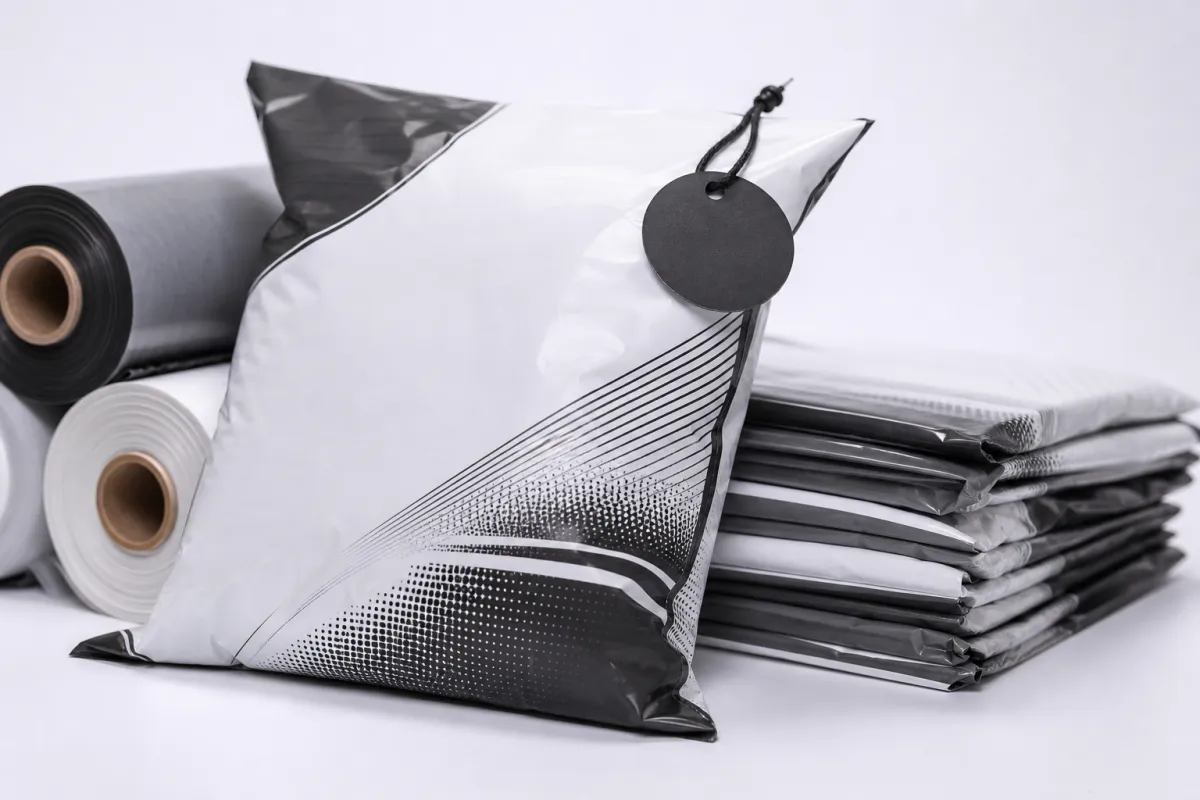
A reorder sounds simple until the details get checked. That is usually where poly mailers manufacturing lead time starts slipping. A size change from 10 x 13 inches to 12 x 15.5 inches, for example, can force a different cutting rule, a different bag layout, and sometimes a different print setup. Small on paper. Not small on the floor.
Business timing adds another layer. A brand launching a new collection may need mailers the same week the products go live. A subscription seller may need replenishment before the next billing cycle. A seasonal brand may have one narrow window before demand spikes. In those cases, poly mailers manufacturing lead time matters more than the quote because a lower price does nothing if the inventory shows up after the sale.
It helps to break the process into gates:
- Order review - the manufacturer confirms dimensions, quantity, artwork, and finishing details.
- Prepress - artwork is checked for color, layout, bleed, and print safety margins.
- Material sourcing - the right film gauge, resin blend, or ink set is reserved.
- Printing - the design is applied, often in one or more passes depending on coverage.
- Converting - the film is cut, sealed, gusseted, or perforated into finished bags.
- Quality control - the run is checked for seal strength, registration, color, and count.
- Packing and dispatch - cartons are labeled, palletized, and released for outbound freight.
Every step can win or lose time. Artwork approval and material availability usually save the most time. Unclear specs and repeated revisions usually burn it. That gap is why poly mailers manufacturing lead time feels random to buyers who only see the final estimate and not the stages underneath.
Stock mailers move faster because they already exist in a fixed size, color, and gauge. Custom printed mailers almost always take longer because the job needs setup, proofing, and print preparation. Even when the design looks minimal, poly mailers manufacturing lead time usually grows once a custom print file enters the schedule.
A stock mailer order might move from approval to dispatch in 3 to 7 business days if inventory is already on hand. A custom printed order can take 10 to 20 business days after proof approval, and that window stretches if the film is not in stock or the artwork needs correction. The production calendar is rarely dramatic; it is just packed with little pauses that add up.
How Poly Mailers Manufacturing Lead Time Works
When buyers ask about poly mailers manufacturing lead time, they usually want one answer. The better question is how the order moves through production. A good supplier will break the job into steps, because each step has its own clock and its own risk of delay.
Here is the practical flow for most custom runs:
1. Order review and spec lock. The manufacturer checks the size, material thickness, seal style, flap length, print coverage, and quantity. If the order says 14 x 19 inches but the artwork template was built for 12 x 15.5 inches, the schedule stops before production even begins. That basic mismatch is a common reason poly mailers manufacturing lead time grows without warning.
2. Artwork and prepress. Files are adjusted for print method, color limits, and bleed. A single-color logo is quick. A full-coverage, multi-color design takes longer because the proof needs more attention. This stage often decides whether poly mailers manufacturing lead time stays near the estimate or slides by several days.
3. Material sourcing. Some jobs use film already in stock. Others need a specific gauge, recycled blend, or colored base film. If the exact material is not available, the order waits. That wait is invisible to the buyer unless the supplier says it plainly. In real terms, this is often where poly mailers manufacturing lead time gets stretched by supply conditions rather than by printing itself.
4. Printing and curing. Depending on the process, ink may need time to set before the film moves to converting. Complex graphics, dense coverage, or specialty finishes can add handling steps. The print stage is not always the longest stage, but it is the one people assume does all the work. That assumption makes poly mailers manufacturing lead time look simpler than it is.
5. Converting and finishing. The printed film is cut, sealed, folded, gusseted, or bagged into the final format. This is where size tolerance, seal integrity, and opening consistency matter. A mailer that looks fine in artwork can still cause trouble if the converted size is off by a few millimeters.
6. Quality control. Reputable factories check seal strength, print registration, count accuracy, and sample appearance. If a run fails a check, it may need rework. That is not a delay caused by carelessness; it is the cost of catching a problem before it reaches the customer. It does, however, affect poly mailers manufacturing lead time.
7. Packing and dispatch. Finished poly mailers are counted, cartonized, palletized, and handed off to freight. Some buyers forget to include this step in their planning. A quote may show production complete, but the goods are not actually on the truck yet.
Standard stock mailers are closer to an off-the-shelf supply item. Custom printed mailers are closer to a short production project. The first needs availability. The second needs coordination. That difference is the line between a smooth order and a headache, especially if poly mailers manufacturing lead time is tied to a launch date.
| Option | Typical lead time | Setup needs | Cost profile | Best for |
|---|---|---|---|---|
| Stock poly mailers | 3-7 business days if inventory is available | Minimal | Lowest unit cost, fewer tooling charges | Urgent replenishment and unbranded shipping |
| Custom printed mailers | 10-20 business days after proof approval | Artwork, plate or cylinder setup, print prep | Moderate unit cost, setup spread across quantity | Branding, retail presentation, recurring shipments |
| Rush custom order | 5-12 business days if materials and artwork are ready | Expedited scheduling and priority handling | Higher unit cost and possible rush fee | Launches, replacements, short-notice campaigns |
That table hides an important truth. Poly mailers manufacturing lead time is not just about speed; it is about how many decisions have already been frozen. The more fixed the spec, the easier the schedule. The more open the spec, the more likely the job will need back-and-forth before the first unit is printed.
If you are still comparing packaging formats, it can help to review Custom Poly Mailers alongside the broader Custom Packaging Products range and the options shown on our Manufacturing Capabilities page. The more you understand the process, the easier it is to predict poly mailers manufacturing lead time instead of guessing at it.
What Changes Poly Mailers Manufacturing Lead Time and Cost
Most buyers want to know whether a shorter schedule will cost more. Usually, yes. Poly mailers manufacturing lead time and cost are tied together because faster jobs either consume premium capacity or require priority sourcing. A plant can move quickly, but it cannot print more hours into the day. If someone claims otherwise, they are probably selling you a story.
The major variables are easy to list and hard to ignore:
- Quantity. A 1,000-piece run is easier to slot than a 20,000-piece run, but the smaller order may carry a higher unit cost because setup is spread across fewer bags.
- Bag size. Larger formats use more film, more storage space, and sometimes more handling during converting. They can also require different tooling.
- Material thickness. Common gauges like 2.5 mil, 3 mil, and 4 mil change both durability and cost. Thicker film is often more protective, but it can slow the line if it needs different settings.
- Print colors. One-color logos are usually faster than multi-color artwork with gradients or dense coverage.
- Finishes. Matte, gloss, metallic, or specialty coatings can add extra steps and drying time.
- Stock vs custom. Stock materials usually move faster because the supply chain is already in motion.
Here is the pricing tradeoff in plain language. If a buyer wants a shorter poly mailers manufacturing lead time, the factory may need to pull material from a premium inventory position or reserve a smaller production window. That usually pushes the unit cost upward. For a 5,000-piece run, many buyers see rough pricing in the range of $0.18 to $0.32 per unit for a simple custom design, but print coverage, film gauge, and bag size can move that figure fast.
Minimum order quantities matter too. If a supplier's setup cost is fixed, a low-volume order can look expensive even before speed is added. A 1,000-piece rush job may cost more per piece than a 10,000-piece standard run, not because the factory is overcharging, but because the machine time, setup, and quality checks are all being spread across fewer units. That is a major reason poly mailers manufacturing lead time and price should always be reviewed together.
There is a simple rule buyers still forget: the cheapest quote is not always the fastest path. A low price can come with a longer queue, a more rigid proof schedule, or less flexibility on film sourcing. A quote that looks higher may include faster access to materials, better scheduling, or a more responsive proofing process. In practice, poly mailers manufacturing lead time often tracks supplier readiness more than supplier optimism.
"If the artwork is still changing, the clock is not really started yet." Production teams repeat that line because it is true more often than buyers want to hear.
Testing and compliance can also affect speed, especially for Brands That Sell fragile or retail-ready goods. If the package must perform under drop, vibration, or distribution stress, standards like ISTA are worth reviewing. For film properties, buyers sometimes also reference ASTM methods for tensile or impact performance, which gives the sourcing conversation more substance than "strong enough." If a mailer is part of a broader sustainability brief, the EPA recycling resources can help frame the discussion around end-of-life expectations, though recyclability varies by local program and material structure.
That is the real commercial picture. Poly mailers manufacturing lead time is not simply a scheduling question; it is a cost question, a materials question, and a risk question. The faster you need the order, the more discipline you need around scope.
Step-by-Step: Planning a Shorter Poly Mailers Lead Time
There is a practical way to shorten poly mailers manufacturing lead time without turning every reorder into a fire drill. It starts before the purchase order is even sent. Most delays come from missing information, not from production complexity.
Use this sequence when planning the next order:
- Finalize the bag size. Confirm width, length, flap depth, and any gusset or expansion requirement. A size change after approval is one of the fastest ways to extend poly mailers manufacturing lead time.
- Lock the material spec. Decide whether you need a standard LDPE film, a recycled blend, a matte surface, or a heavier gauge. A clear spec reduces sourcing back-and-forth.
- Prepare artwork early. Have vector files ready, with fonts outlined and colors specified. If the file is not final, say so. Surprises in prepress almost always slow poly mailers manufacturing lead time.
- Confirm quantity before proofing. Changing the count after a proof is issued can alter production scheduling and price breaks.
- Approve proofs quickly. A 24-hour delay in approval can become a three-day delay in production if the job loses its slot.
- State the deadline clearly. Say whether the date is a launch, a replenishment need, or a customer commitment. Those are not the same thing.
That last point sounds obvious, but it is where many schedules go wrong. A supplier may quote a realistic production window, yet the buyer's internal launch date may include receiving, labeling, and warehouse transfer time that nobody mentioned. Then the team decides the factory missed the schedule when the issue was actually communication. Better brief, better outcome. That is the simplest way to improve poly mailers manufacturing lead time planning.
It also helps to build a buffer around known demand spikes. If a holiday promotion begins in early November, do not plan the mailer order as if November 1 is the deadline. Plan backward from the date the inventory must be physically available, then subtract proofing, manufacturing, freight, receiving, and any internal staging time. For many teams, that means starting the poly mailers manufacturing lead time conversation 3 to 5 weeks before the need date, even if the actual production window is shorter.
Buyers can keep a simple brief on one page. The best version includes:
- Exact dimensions in inches or millimeters
- Material type and thickness
- Print colors and coverage level
- Artwork status: ready, in revision, or needs design support
- Quantity and preferred pack count per carton
- Target ship date and final in-stock date
- Backup option if the first spec is not available
This is how you reduce friction before it becomes delay. The supplier does not need more pressure; it needs fewer unknowns. Once the job is fully defined, poly mailers manufacturing lead time becomes much easier to control.
A final planning tip: ask the manufacturer which elements are fixed and which are flexible. Sometimes switching from a custom-colored base film to a white or clear base saves days. Sometimes reducing print coverage from full bleed to a centered logo saves setup time. Sometimes a smaller carton count per pallet shortens warehouse handling. Those are small choices, but they can materially change poly mailers manufacturing lead time and budget at the same time.
Common Mistakes That Stretch Lead Time
Most slowdowns are self-inflicted. That sounds blunt, but it is usually true. Poly mailers manufacturing lead time stretches when the order changes after the supplier has already started preparing the run. A clean brief beats a frantic follow-up every time.
The most common mistake is delayed approval. Teams often spend days debating colors, logo placement, or finishing details after the proof arrives. A 48-hour delay sounds harmless until the production slot is gone. Once the line moves to another job, poly mailers manufacturing lead time can jump simply because the order lost its place in the queue.
Another frequent problem is a last-minute spec change. If the bag size, film gauge, or print language changes after material has been ordered, the supplier may need to discard or repurpose staged inventory. That can reset part of the schedule, and sometimes all of it. The apparent speed gain from being "close enough" disappears quickly when the production team has to rebuild the job. This is one of the clearest ways poly mailers manufacturing lead time becomes longer than promised.
Buyers also get tripped up by vague quotes. Some quotes include proofing and production only. Others include sourcing but not inbound freight. A few include a fast production estimate but assume the artwork is already finalized. If those assumptions are not explicit, poly mailers manufacturing lead time sounds shorter on paper than it is in practice.
There is a fourth mistake that shows up often in multi-location teams: different departments give different deadlines. Marketing wants the launch date. Operations wants the receiving date. Sales wants the live date. The supplier needs the actual production completion date and the actual ship date, not three internal versions of the same request. When deadlines are fuzzy, poly mailers manufacturing lead time becomes a moving target.
Finally, do not underestimate file quality. Low-resolution logos, missing bleed, unembedded fonts, and color mismatches can add a day here and two days there. None of those issues are dramatic by themselves. Together, they can easily add a week to poly mailers manufacturing lead time. In other words, the problem is rarely the plant. It is usually the input.
The better habit is to treat the first proof as a checkpoint, not a draft stage. If the file is mostly right, approve it quickly. If the file is not right, stop the job early and fix it once. Multiple tiny revisions are far worse than one decisive correction. That discipline makes a measurable difference in poly mailers manufacturing lead time.
Expert Tips to Reduce Poly Mailers Lead Time
There are a few buyer-side habits that consistently improve poly mailers manufacturing lead time. None of them are flashy. All of them work.
First, standardize where you can. If three product lines can use the same 9 x 12 inch or 12 x 15.5 inch mailer, the schedule gets easier and the inventory becomes more predictable. Standardization cuts the number of unique tools, templates, and approvals. It also makes reordering faster because the specs are already known. That is one of the simplest ways to keep poly mailers manufacturing lead time under control.
Second, keep core artwork files ready. A well-organized file library with vector logos, approved brand colors, and print-safe layouts saves time every quarter. The packaging team should not have to hunt for the current logo version every time a reorder comes in. The more reusable the file system, the more repeatable poly mailers manufacturing lead time becomes.
Third, ask suppliers where the real bottleneck is. Some jobs are slowed by material sourcing. Others are slowed by print setup. Others are slowed by converting or carton packing. That answer matters because it tells you which variable to fix. If the bottleneck is artwork approval, your internal team needs a faster review loop. If the bottleneck is material, you may need to specify a more common film. That is how a buyer becomes a better partner and improves poly mailers manufacturing lead time without paying for unnecessary rush fees.
Fourth, request realistic windows rather than optimistic promises. A supplier who says 12 to 15 business days after proof approval is usually more useful than one who says "about a week" without clarifying whether the film is in stock. Accurate timing supports planning. Inflated confidence only makes the eventual miss more annoying. In packaging, honest poly mailers manufacturing lead time is worth more than vague speed.
Fifth, build ordering rhythm. Predictable purchase patterns often reduce delay more than urgency does. When a supplier sees that a customer reorders every six weeks, it can plan inventory, schedule labor, and prepare the right material ahead of time. Urgency helps only when the supplier can absorb it. Consistency helps all the time. That is why predictable demand is quietly one of the strongest levers on poly mailers manufacturing lead time.
One more practical point: keep a shipping buffer separate from the production buffer. A job can finish on time and still miss its business purpose if freight takes longer than expected. The safest planning model treats production, packing, outbound freight, and receiving as separate steps. That sounds tedious. It is also how seasoned buyers keep poly mailers manufacturing lead time from turning into a late launch.
If you want a quick internal checklist, use this sequence:
- Confirm size, gauge, and print layout
- Approve the proof within one business day if possible
- Ask whether stock film is available
- Ask whether the quoted timing includes production only or production plus dispatch
- Build a receiving buffer of at least 2 to 4 business days for inbound freight
That list is simple because the solution is simple. Better planning reduces friction. Better friction control shortens poly mailers manufacturing lead time. And in a category where a few days can decide whether goods arrive before a sale or after it, those improvements matter.
I will say this plainly: the fastest factory on paper is not always the best choice. The better supplier is the one that tells you where the schedule can slip, gives you a clean proof process, and does not hide the freight or material assumptions in tiny print. That kind of honesty saves time later. Funny how that works.
Next Steps for Better Poly Mailers Planning
The easiest way to improve poly mailers manufacturing lead time is to stop treating it as a mystery. Gather the facts, write them down, and compare them with what the factory can actually do. That sounds basic because it is. Basic is good when the goal is fewer delays.
Start with a one-page order brief. Include the size, quantity, film type, print colors, proof status, target ship date, and backup options. If the deadline matters because of a launch or holiday window, say so. The supplier can only plan around what it knows. Clear input improves poly mailers manufacturing lead time more reliably than vague urgency.
Then map your next replenishment date backward. If you need goods in the warehouse by a certain Friday, count back for proof approval, production, packing, transit, and receiving. That exercise often reveals that the real deadline is earlier than the marketing calendar suggests. It is a useful shock, because it prevents a more expensive one later. This is where poly mailers manufacturing lead time becomes a planning tool rather than a surprise.
Keep a lead-time tracker for each reorder. Note the approved date, the proof date, the production start date, the ship date, and the receipt date. After a few cycles, patterns appear. Maybe one artwork team is fast and another is slow. Maybe a certain size always takes longer because the film is less common. Maybe your third-quarter orders consistently take longer than the rest. That kind of record makes poly mailers manufacturing lead time visible across seasons instead of hidden inside one quote.
There is also a commercial angle. Buyers often compare suppliers only on unit price, but the smarter comparison includes proof speed, material availability, production capacity, and communication quality. A supplier that is slightly more expensive but consistently more accurate may save more money than a bargain source that misses the schedule. In other words, poly mailers manufacturing lead time should be part of the buying scorecard, not an afterthought.
Use the checklist and timeline logic before you request quotes. That lets you compare options on the same terms and spot the real differences between suppliers. It also gives your team a cleaner conversation about what can be flexed and what cannot. That is the practical path to managing poly mailers manufacturing lead time without building in unnecessary stress.
And yes, if you are still deciding on format or volume, that decision itself affects the schedule. A fixed, repeatable spec usually moves faster than a fully custom one. The more your team can standardize, the easier it is to keep poly mailers manufacturing lead time in a range that supports operations instead of fighting them.
For packaging teams trying to tighten reorder discipline, the best next move is simple: compare your current spec sheet against the real production path, then trim every avoidable change. That is the fastest way to make poly mailers manufacturing lead time more predictable on the next order, and on the one after that.
FAQs
How long is poly mailers manufacturing lead time for standard orders?
Standard orders are usually faster because they skip most custom setup steps. In many cases, poly mailers manufacturing lead time for stock mailers can run 3 to 7 business days if the material is already on hand. The final timeline still depends on quantity, current factory load, and whether outbound freight is included in the quote.
What makes custom poly mailers manufacturing lead time longer?
Custom artwork usually adds proof approval, setup, and print preparation before production starts. Special colors, finishes, or film types can also require extra sourcing time. Any revision after approval can reset part of the schedule, which is why poly mailers manufacturing lead time for custom runs is usually longer than for stock mailers.
Can rush orders reduce poly mailers manufacturing lead time?
Rush service may shorten the schedule, but only if materials, artwork, and capacity are ready. Expedited jobs can cost more because they use priority production slots or premium labor. Even then, poly mailers manufacturing lead time will still slow down if the specs are incomplete or the proof is not approved quickly.
How do quantity and pricing affect poly mailers manufacturing lead time?
Small runs may be easier to schedule, but setup costs can make them less efficient per unit. Large runs can improve unit pricing, yet they may take longer to print, convert, and pack. The best balance depends on how quickly you need inventory and how often you reorder, because poly mailers manufacturing lead time is shaped by both volume and urgency.
What should I prepare before asking for a poly mailers lead time quote?
Prepare exact dimensions, material preferences, print details, and target quantity. Have artwork files ready, or clearly state that you need design support. Share your deadline and whether it is a launch date, replenishment date, or promotional window, because poly mailers manufacturing lead time can only be estimated well when the request is specific.
The practical takeaway is simple: lock the spec before you ask for speed. If the size, material, artwork, quantity, and deadline are all clear, poly mailers manufacturing lead time becomes predictable enough to plan around. If those pieces keep moving, the schedule will keep moving too. And no, the factory cannot magically print around a changing brief.