Buyer Fit Snapshot
| Best fit | Poly Mailers Minimum Order Quantity projects where brand print, material claims, artwork control, MOQ, and repeat-order consistency need to be specified before quoting. |
|---|---|
| Quote inputs | Share finished size, material target, print colors, finish, packing count, annual reorder estimate, ship-to region, and any compliance wording. |
| Proofing check | Approve dieline scale, logo placement, barcode or warning zones, color tolerance, closure strength, and carton packing before bulk production. |
| Main risk | Vague material claims, crowded artwork, missing packing details, or unclear freight terms can make a low unit price expensive after revisions. |
Fast answer: Poly Mailers Minimum Order Quantity: Film, Print, MOQ, and Carton Packing should be specified like a repeatable production item. The safest quote records material, print method, finish, artwork proof, packing count, and reorder notes in one written spec.
Production checks before approval
Compare the actual filled-product size with the drawing, then confirm tolerance on folds, seals, hang holes, label areas, and retail display edges. Reserve space for logos, QR codes, warning copy, and material claims before decorative graphics fill the panel.
Quote comparison points
Review material grade, print process, finish, sampling route, tooling charges, carton quantity, and freight assumptions side by side. A quote is only useful when the supplier can repeat the same color, closure quality, and packing count on the next order.
Poly Mailers Minimum order quantity is usually the first number a buyer sees, but the real decision sits underneath that number: how much setup, proofing, material waste, and production efficiency the first run has to absorb. From a packaging buyer's point of view, that one line on the quote can shape cash flow, launch timing, and even whether the package design still makes sense once sales data starts coming in.
That is why the smallest order is not always the cheapest way forward. A brand may want custom packaging for a product launch, but still be sorting out the right mailer size, how much print coverage the artwork really needs, and how many units will move each month. In that situation, poly mailers minimum order quantity becomes a planning tool as much as a purchasing limit, and honestly, it is usually the cleaner way to think about it.
Poly Mailers Minimum Order Quantity: What to Expect
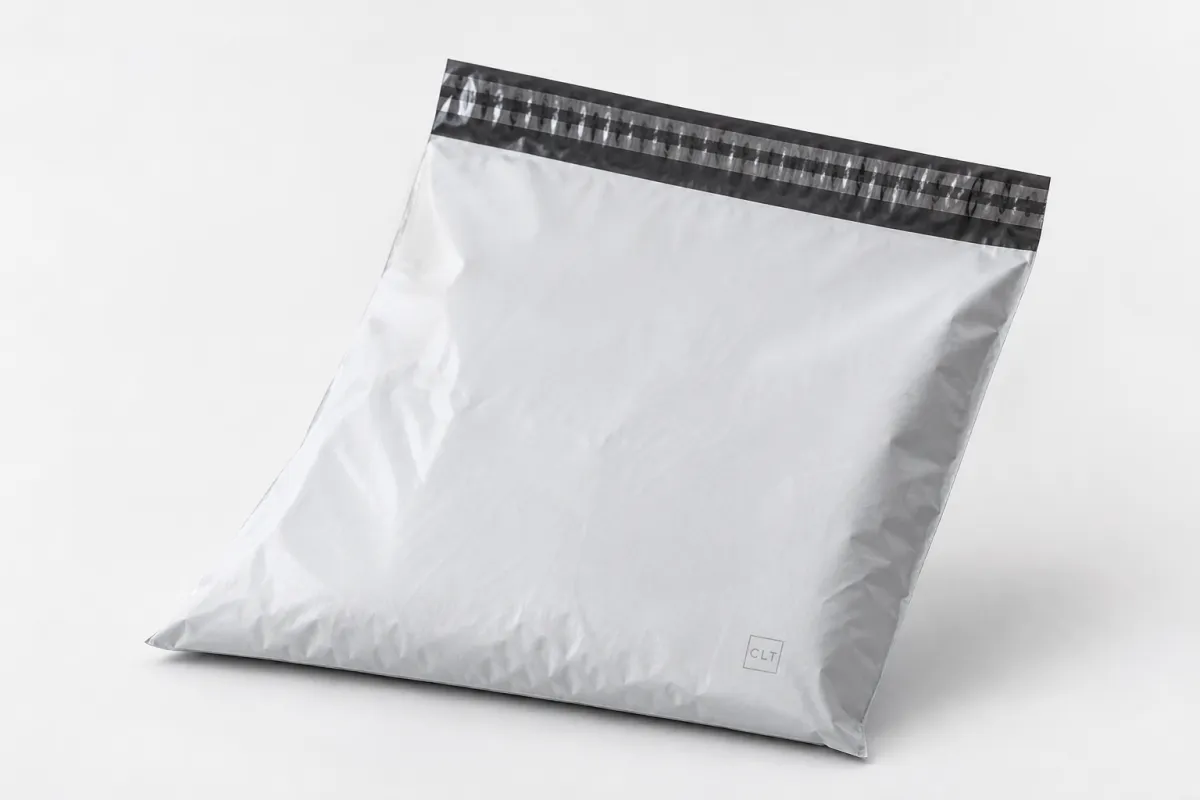
The first surprise for many buyers is simple: poly mailers minimum order quantity is rarely driven by the bag alone. Setup, plate work, proofing, and allowance for rejects all have to be recovered before the first sellable mailer rolls off the line. A clean, standard build with straightforward artwork may keep the MOQ relatively manageable. Add special film, full-surface printing, or a premium finish, and the number can move upward quickly.
That matters because packaging is rarely purchased in isolation. Brands are launching apparel, subscription kits, soft goods, or lightweight retail items, and the team may still be testing the right size, the right artwork placement, and the real monthly volume. In that kind of launch, poly mailers minimum order quantity becomes part of the product planning conversation, not just a purchasing threshold.
Think of MOQ as a guardrail. A properly set poly mailers minimum order quantity helps keep unit costs steady, gives the plant enough volume to run the film efficiently, and avoids a tiny custom job that spends more time being adjusted than produced. It also answers a practical question: how much packaging should be committed before the design, size, and print have proven themselves in the field?
For a first order, the most sensible move is usually to match quantity to actual sales velocity instead of to a wish list. Order enough to learn about customer response, shipping performance, and storage needs, but not so much that cartons of mailers sit idle while the design ages out. That balance works especially well for brands that expect to change logos, promotions, or messaging after the first season.
"The least expensive order on paper can be the most expensive order in practice if the size is wrong or the artwork has to be corrected twice."
That is the real job of poly mailers minimum order quantity. It should support one solid production decision, not lock the brand into a large inventory position before the package has earned its place. Buyers who understand that early usually get cleaner quotes, fewer revisions, and a much steadier launch.
- Stock mailers make sense for very small tests or immediate shipping needs.
- Simple custom runs work well when one-color branding is enough.
- Full custom production fits higher volume programs with stable demand.
- Repeat orders usually become easier once the first specification is locked in.
That first decision often determines whether the next quote falls into a narrow, efficient band or lands in a range shaped by extra setup. Once expected usage is clear, poly mailers minimum order quantity becomes much easier to manage, and the conversation shifts from "How low can we go?" to "What quantity gives us the best value without creating waste?"
Product Details That Shape Your Poly Mailers Order
The phrase poly mailers minimum order quantity means more once the actual product choices are on the table. A stock poly mailer, a lightly customized bag, and a fully printed mailer are not priced or produced the same way. The more the order asks of the material, the print process, and the finishing step, the more the MOQ reflects that complexity.
Start with the film itself. Standard poly mailers are usually made from low-density polyethylene or a blended poly film, and thickness is often discussed in mils. Common builds sit around 2.5 to 3 mil for standard retail use, while heavier-duty options can move higher for better puncture resistance and a firmer feel. Folded apparel, accessories, and soft goods often fit comfortably in that range. Products with sharper edges or a harder shipping life usually justify a stronger construction.
Print coverage changes the production picture quickly. A one-color logo in a single location is usually the easiest path, and poly mailers minimum order quantity can stay friendlier in that case. Add full-color graphics, back-panel copy, oversized art, or edge-to-edge branding, and the job begins to behave like a more complex packaging program. That does not make the work difficult for the sake of it; it simply means the order should be planned with the real setup in mind.
Closure and security deserve attention too. A self-seal adhesive strip is common because it saves labor at pack-out, but not every adhesive behaves the same in hot warehouses, cold receiving docks, or humid shipping lanes. Buyers who want a tamper-evident feel or a stronger initial grab should say so early. The same goes for privacy features such as a black-out interior, which is useful when the contents should not show through the film.
Visual choices can shift perception without changing the core function much. Clear film creates a different impression than opaque film. Matte finish feels quieter and more premium than gloss. Recycled-content blends may support sustainability goals, though the final appearance can vary depending on resin content and print coverage. For buyers who care about material sourcing, FSC certification matters for paper components, while plastic recovery and recycling guidance can be reviewed through the EPA's recycling resources at EPA recycling guidance.
The right packaging partner will not force every customer into the same structure. One brand may only need a straightforward custom run, while another wants recycled content, a thicker film, or a different closure profile. That is why poly mailers minimum order quantity should be discussed together with the material spec, not after the fact.
When the order is matched to the product, the MOQ feels far more reasonable. When the product is still vague, poly mailers minimum order quantity can look arbitrary. It usually is not. It is tied to film waste, press setup, and the number of variables the production team has to manage at once.
- Opaque film is a strong choice for privacy and clean branding.
- Clear film works better when product visibility is part of the presentation.
- One-color print is the simplest custom option to quote.
- Two-sided printing adds branding space but usually raises cost and setup.
- Recycled-content film can be a smart fit for brands with sustainability targets.
If the packaging is being built around a real shipping program, not a concept board, the material choice should lead the conversation. That keeps the rest of the poly mailers minimum order quantity discussion rooted in actual use rather than in guesses.
Specifications Buyers Should Confirm Before Ordering
Before a quote can mean much, the spec sheet has to be clear. Poly mailers minimum order quantity is easier to judge once the filled size, artwork, and performance needs are on the table. Without those details, quotes can look wildly different even when the mailers seem similar from a distance.
The first thing to confirm is the finished size. A mailer should be matched to the product after it is folded, bagged, or inserted, not only to the item's retail dimensions. A shirt in a retail box needs a different size than the same shirt folded flat. Too little room causes awkward loading and seal problems. Too much room creates wasted film, a sloppy pack-out, and a higher freight bill because the carton footprint grows.
Next comes film gauge and seal width. Thickness affects puncture resistance, stiffness, and how much confidence the packer has during sealing. Seal width matters because a narrow seal can struggle if the product carries sharp corners or if the adhesive is expected to perform in damp conditions. Lightweight garments often work well with a standard build. Heavier apparel or a mailer that will see more abrasion needs a spec that reflects that reality.
Artwork files can make or break timing. The best quotes come with final art in vector format, clear color targets, and a defined bleed and safe area. If a brand wants Pantone matching, the production team should know that up front. If the artwork is CMYK, say so. If the logo must stay crisp at a certain size, mention that too. Those details are part of the production method, and they influence poly mailers minimum order quantity because they affect proofing and press preparation.
Handling details matter more than many buyers expect. Carton pack counts matter if the receiving team wants easy storage. Pallet configuration matters if the warehouse has a tight dock or a narrow rack aisle. Shipping method matters too, because a freight plan that works for a 10,000-unit run may be inefficient for 1,000 units. Good quote requests include those pieces early, not after the production plan is already moving.
| Spec Area | What to Confirm | Why It Matters |
|---|---|---|
| Finished size | Flat dimensions and usable interior space | Controls fit, seal quality, and shipping efficiency |
| Film gauge | Standard, medium, or heavy-duty thickness | Affects puncture resistance and package feel |
| Print setup | One-color, multi-color, or full-coverage artwork | Changes proofing time and production cost |
| Closure type | Self-seal adhesive or tamper-evident option | Impacts pack-out speed and shipping security |
| Logistics | Carton count, pallet count, and freight method | Influences storage, receiving, and landed cost |
That level of detail also makes poly mailers minimum order quantity easier to justify. Once the order is specified correctly, the number stops feeling random. It becomes a practical result of the work required to produce the right mailer, in the right format, at a cost that can hold up across the run.
Buyers who come prepared usually see fewer changes, fewer delays, and fewer surprises in the final shipment. A complete spec sheet saves time on both sides, and it gives the supplier enough information to quote poly mailers minimum order quantity accurately the first time.
Pricing, MOQ, and Unit Cost for poly mailers minimum order quantity
Pricing is where poly mailers minimum order quantity becomes very real. The order may look small on a spreadsheet, but the production work behind it is not. Setup, prepress, proofing, film purchase, printing, cutting, sealing, packing, and freight all feed into the final number. If any one of those steps is unusually demanding, the quote will reflect it.
The basic cost structure is easier to read once it is broken apart. There is often a setup charge or a plate-related charge for the artwork. Then there is the material cost, which moves with size and thickness. Printing complexity adds labor and press time. Special finishes, recycled resin content, and heavy coverage bring more cost. Freight then turns the factory quote into a landed cost. That is why poly mailers minimum order quantity can look steep on a small run, even when the design itself is simple.
The logic behind unit price is straightforward: the more pieces in the run, the more the setup gets spread out. A higher MOQ often means a lower unit price because the fixed work is divided across more mailers. That is why a buyer moving from a test order to a repeat order usually sees a better rate, especially if the art and dimensions stay the same.
Still, bigger is not always better. If the order is larger than the brand can realistically use in the near term, the savings can disappear into storage cost, obsolete artwork, or changes in the product line. A sensible poly mailers minimum order quantity should save money without tying up cash in packaging that will sit for months.
Here is a practical comparison using typical market ranges. These are illustrative only, because size, print coverage, film thickness, and freight can push the numbers up or down.
| Order Type | Typical MOQ | Typical Unit Price | Best Fit | Notes |
|---|---|---|---|---|
| Stock poly mailers | 500-1,000 units | $0.10-$0.22 | Fast testing and immediate shipping | No custom print, lower setup burden |
| Simple custom print | 3,000-5,000 units | $0.18-$0.35 | One-color branding and basic customization | Often includes artwork setup or proofing costs |
| Full custom production | 5,000-10,000 units | $0.28-$0.60 | Stable programs with consistent volume | More colors, larger coverage, and more precise specs |
The real comparison is not only price per unit. It is price per unit against inventory risk, lead time, and presentation quality. A lower MOQ can make sense for a brand that is still testing demand. A higher poly mailers minimum order quantity can make better financial sense for a recurring order that already has steady monthly volume. The quote should show which path saves more money over the full production cycle, not just on the first invoice.
When you compare quotes, check whether the price includes proofs, overrun allowance, carton packing, and freight handling. Those details matter more than many buyers expect. A quote that looks lower may be missing one of those pieces, while a quote that looks higher may actually be closer to the real landed cost. That is why poly mailers minimum order quantity should always be reviewed with the scope of work beside it.
If the brand is not sure where to start, the safest budget plan is to request two or three quantity breaks and compare the landed cost at each level. Sometimes the jump from one MOQ to the next is small enough to justify a larger run. Sometimes it is not. Either way, the data makes the decision clearer, and poly mailers minimum order quantity stops feeling like a hard wall and starts acting like a practical planning range.
Process and Timeline for Custom Poly Mailers
From first inquiry to final shipment, the order flow is usually more orderly than buyers expect, provided the details are complete. Poly mailers minimum order quantity only creates delays when the project keeps changing. If the brief is solid, the path is straightforward: quote, artwork review, proof approval, production, quality check, and dispatch.
The slowest step is rarely machine time. It is the back-and-forth around artwork, color approval, and any revision needed to align the proof with the brand standard. If the logo is not clean, the dimensions are vague, or the client has not decided whether the back panel should carry text, time slips away. That is why clear files and decisive approvals matter so much.
For a simple stock or low-color job, turnaround is often faster because the production team can move with less setup. A more complex custom print, especially one with several colors or special construction, needs more time. That is normal. Poly mailers minimum order quantity is tied to that reality, because bigger or more specialized runs usually require more preparation before the first packable unit is produced.
Sampling helps avoid expensive mistakes. A pre-production proof, a digital mockup, or a physical sample can reveal a problem that nobody wanted to find after production started. A logo can sit too close to the seal area. A dark film can mute a color more than expected. A size that looked right on paper can feel too tight once the item is inserted. A little extra time up front usually saves much more time later.
Lead time also depends on factory schedule, raw material availability, shipping method, and the buyer's response time during approval. If the customer takes three days to approve each revision, the clock moves. If the materials are already on hand and the art is locked, the schedule moves faster. That is true whether the job is a small test or a larger poly mailers minimum order quantity.
If your team wants a benchmark for shipping abuse and transit testing, the methods published through ISTA are a useful reference point. For broad recycling and material recovery guidance, the EPA recycling page is also worth a look. Those sources will not quote your mailers, but they help frame why film choice, seal strength, and package integrity matter so much in real distribution.
A good timeline is not just about speed. It is about control. When the spec is clear and the approver stays responsive, poly mailers minimum order quantity can move through production without drama. That makes planning easier for the warehouse, easier for the brand team, and easier for the accounting side as well.
- Day 1-2: Send the brief, quantity target, and artwork files.
- Day 2-4: Review the quote and confirm the spec.
- Day 4-7: Approve proof or sample adjustments.
- Production: Run the order once the final approval is in place.
- Shipping: Dispatch by freight or parcel based on the carton count.
That flow is simple on purpose. It keeps poly mailers minimum order quantity tied to an actual manufacturing sequence instead of to guesswork. When buyers know the steps, they also know where to push for speed and where patience is the smarter choice.
Why Choose Us for Poly Mailers and What to Do Next
Custom packaging buyers usually want the same few things: consistent print quality, honest communication, dependable specs, and packaging that performs in shipping instead of only looking good in a mockup. That is the standard we aim for with poly mailers minimum order quantity, because the number on the quote means little if the mailer does not arrive with the right fit, print clarity, and seal performance.
An experienced packaging partner helps you Choose the Right film, size, and print approach for the volume you actually move. That matters more than forcing every brand into one large standard. A smaller program may need stock mailers or a simple custom run. A larger recurring account may be ready for a fuller branded production order. The right answer depends on usage, budget, and how stable the design is over time.
We also keep the quote process direct. If the brief is incomplete, we will usually say what is missing rather than guessing. That saves time and helps turn a loose request into a production-ready plan. For buyers comparing several options, that clarity is valuable because it makes poly mailers minimum order quantity easier to compare across similar specs.
If your packaging mix is still evolving, it can help to look at the broader line of Custom Packaging Products and, for larger recurring accounts, the structure behind our Wholesale Programs. If you are focused specifically on film mailers, the details on Custom Poly Mailers can help you narrow the spec before you request numbers. And if you want a quick answer to a common packaging question, our FAQ page is a useful starting point.
Before you request a quote, send the product dimensions, desired mailer size, artwork files, quantity target, and any deadline that affects the schedule. If you already know whether you need stock mailers, custom print, recycled content, or a specific finish, include that too. Those details let us quote poly mailers minimum order quantity accurately and recommend the best option without unnecessary revisions.
Most buyers get the strongest result by matching design, budget, and order volume before production begins. That is the cleanest way to approach poly mailers minimum order quantity, and it usually leads to better pricing, less waste, and a packaging program that can grow with the business instead of getting in its way. If you only lock down one thing first, make it the filled product size; once that is right, the rest of the order gets a lot easier to price and a lot less likely to turn into a headache later.
What is a typical poly mailers minimum order quantity for custom printing?
It usually depends on the film type, print complexity, and size, but custom runs often start higher than stock mailers because setup costs must be spread across the order. Simple one-color jobs can sometimes support a lower MOQ than full-color or specialty finishes. The best quote comes from sharing the exact dimensions, artwork, and target quantity up front, because poly mailers minimum order quantity is always easier to price when the spec is complete.
Can I get a lower minimum order quantity if I choose stock poly mailers?
Yes, stock mailers generally allow lower quantities because the base material is already produced. You may still need to meet a minimum if the order includes custom labeling, printing, or special packaging. Stock options are often the fastest path when you want to test packaging before committing to a larger branded run, and they are a good way to learn how poly mailers minimum order quantity affects your budget before scaling up.
How does MOQ affect the price per poly mailer?
Higher order quantities usually reduce unit cost because setup and proofing are distributed across more pieces. Smaller runs can cost more per piece even when the artwork is simple, because the production preparation still has to happen. Freight, packaging, and print complexity can also change the final cost per unit, which is why poly mailers minimum order quantity should always be reviewed as a landed-cost question, not only as a unit-price question.
What information do you need to quote poly mailers minimum order quantity accurately?
Send the filled product dimensions, desired mailer size, print colors, quantity, and whether you want stock or custom mailers. Include artwork files if you have them, plus any finish, privacy, or recycled-content requirements. If you have a delivery deadline, share that too so the timeline and production plan are realistic. The more complete the brief, the more accurate the poly mailers minimum order quantity quote will be.
Do custom poly mailers require a setup charge?
Most custom printed orders do include setup or plate-related costs because the artwork has to be prepared for production. Those costs are often easier to absorb at a larger MOQ, which is why small runs can look expensive by comparison. A detailed quote should spell out whether setup, proofs, and freight are included or billed separately, and that transparency helps buyers compare poly mailers minimum order quantity offers on equal terms.


