Buyer Fit Snapshot
| Best fit | Poly Mailers Supplier projects where brand print, material claims, artwork control, MOQ, and repeat-order consistency need to be specified before quoting. |
|---|---|
| Quote inputs | Share finished size, material target, print colors, finish, packing count, annual reorder estimate, ship-to region, and any compliance wording. |
| Proofing check | Approve dieline scale, logo placement, barcode or warning zones, color tolerance, closure strength, and carton packing before bulk production. |
| Main risk | Vague material claims, crowded artwork, missing packing details, or unclear freight terms can make a low unit price expensive after revisions. |
Fast answer: Poly Mailers Supplier: Artwork Proof, Packing Count, and Landed Cost should be specified like a repeatable production item. The safest quote records material, print method, finish, artwork proof, packing count, and reorder notes in one written spec.
Production checks before approval
Compare the actual filled-product size with the drawing, then confirm tolerance on folds, seals, hang holes, label areas, and retail display edges. Reserve space for logos, QR codes, warning copy, and material claims before decorative graphics fill the panel.
Quote comparison points
Review material grade, print process, finish, sampling route, tooling charges, carton quantity, and freight assumptions side by side. A quote is only useful when the supplier can repeat the same color, closure quality, and packing count on the next order.
I still remember standing on a film line in Shenzhen, watching a batch of poly mailers get rejected because the seal looked fine from three feet away but cracked the second we pulled hard on the edge. That kind of detail sits at the heart of any Poly Mailers Supplier guide. The cheapest quote usually has a little surprise tucked inside it, and it’s rarely a good one. I’ve also learned, usually the hard way, that the prettiest sample is not the same thing as a production run, especially when the factory is running 2.5 mil LDPE film on a humid July afternoon and the sealing heads need constant calibration.
If you sell apparel, supplements, books, or anything else that ships in flexible packaging, your supplier choice affects more than unit cost. It touches lead time, print quality, seal strength, freight damage, and whether your customer opens a clean-looking bag or something that feels like it came from the bargain bin. I’ve seen brands save $0.03 per unit and lose $8,000 because the adhesive failed during peak season, and I’ve seen a 10,000-piece reorder slip by nine days because nobody clarified proof approval before production started. Fun trade. Honestly, I think that’s why a solid poly mailers supplier guide matters so much: the margin is tiny, but the consequences can be ridiculously large.
Poly Mailers Supplier Guide: What Suppliers Actually Do
A useful poly mailers supplier guide starts with the basics: a supplier is not just “the person who gives you a quote.” They handle resin sourcing, film extrusion, printing, cutting, sealing, packing, and often freight coordination too. In a proper factory setup, the supplier may control the whole process from LDPE pellet to carton loading, and a larger plant in Dongguan, Foshan, or Wenzhou might run separate extrusion, printing, and converting lines under the same roof. That matters because every handoff creates another place where quality can go sideways, and packaging has a way of punishing sloppy handoffs faster than almost any category I know.
On a factory visit in Dongguan, I watched a line manager pause production because one roll of film had slightly uneven thickness near the edge. That was a 0.02 mm swing, nothing dramatic on paper, but for a 2.5 mil bag with a wide print area and a 12" x 15" finished size, that tiny variation can affect tear resistance and seal consistency. Most buyers never see that. They just see the finished bag and assume all film is the same. It isn’t, and anyone who’s watched a seal tester chew through a bad batch knows exactly how fast optimism dies on the shop floor.
The poly mailers supplier guide also needs to explain who you’re actually talking to. A factory makes the bags. A trading company coordinates orders from multiple plants and usually adds a margin of 8% to 15%. A broker may simply connect you with a factory and disappear the minute there’s a defect dispute. Sometimes that middle layer is useful if you need sourcing help across different packaging categories, including Custom Packaging Products. If you need strict control over print and material, direct factory communication usually wins. I say that with some bias, sure, but it’s bias built from invoices, freight bills, and a few too many red-ink QC reports from Shenzhen and Suzhou.
Some “suppliers” say they do everything, but in practice they outsource the film, printing, and packing separately. That can work if they manage QC tightly, especially when they’re coordinating a blown-film plant in Zhejiang with a printing shop in Guangzhou and final packing near the port in Ningbo. It can also become a three-party blame game where nobody owns the problem. I’d rather work with one factory that answers clearly than five sales reps who all say “no problem” and mean “not my problem.” That phrase should honestly come with a tiny warning label and a 30-day warranty disclaimer.
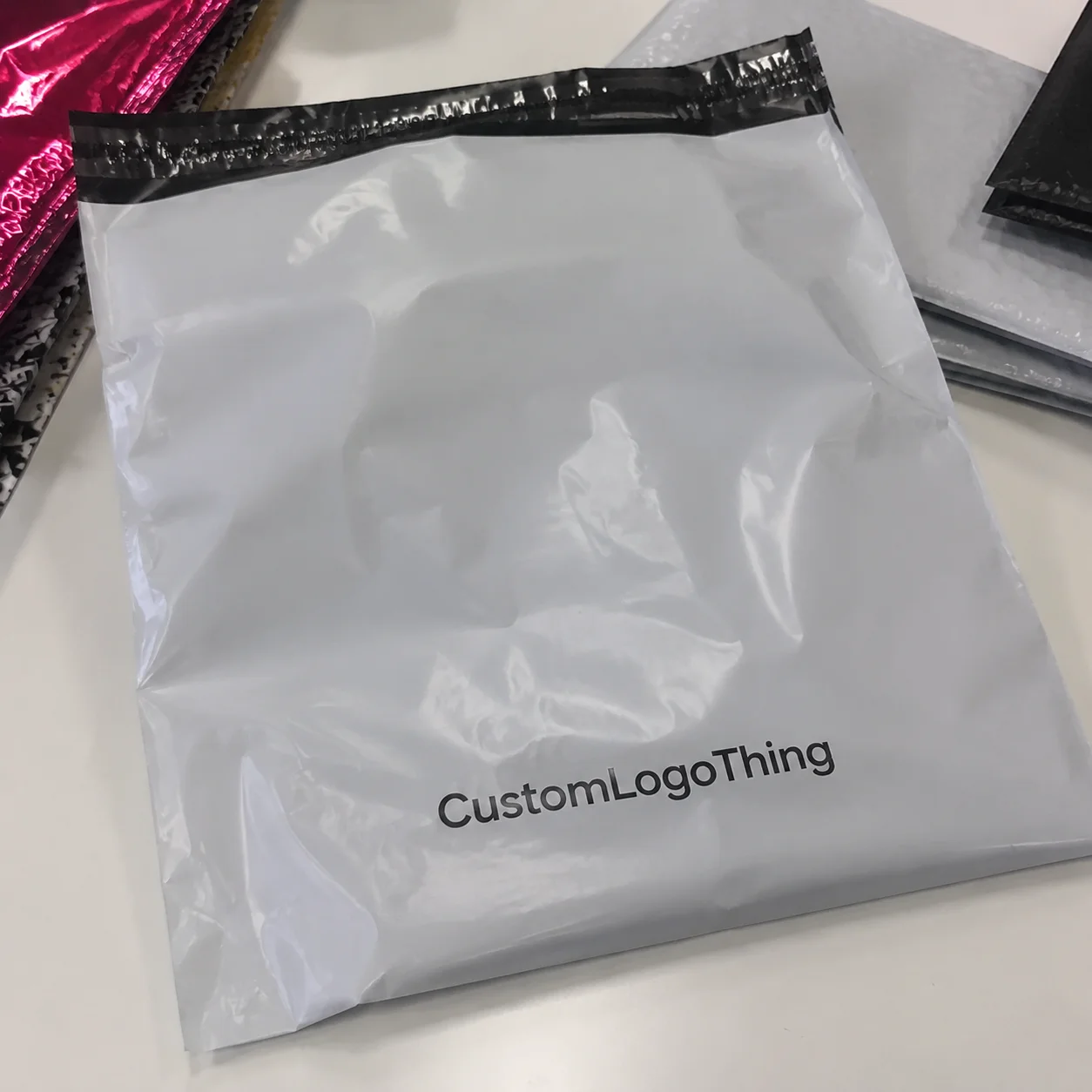
Stock mailers and custom mailers are different animals. Stock mailers are pre-made in standard sizes and colors, usually with generic printing or no print at all, and you can often buy them in cartons of 500 or 1,000 pieces for immediate dispatch. Custom mailers are made to your size, thickness, artwork, closure style, and sometimes even special features like double adhesive strips or return-seal liners. The poly mailers supplier guide changes depending on which one you need, because stock orders are mostly about availability while custom orders are about specification control, artwork accuracy, and carton packing counts like 100 pieces per inner bag and 5 inners per master carton.
What does “good” look like? Consistent color from batch to batch. Strong seam welds. Adhesive that seals on the first press and stays closed through transit. Lead times that match what the salesperson promised in writing, such as 12-15 business days from proof approval for a standard 10,000-piece custom run in Guangdong. Response times that don’t make you send three follow-ups just to get a carton count. If a supplier can’t answer basic questions about thickness, MOQ, or packaging configuration in one email, that’s a loud warning. I’ve had people answer a question about film gauge with a paragraph about “excellent service,” which is not an answer; it’s a dodge wearing a tie.
“The quote looked great until the first shipment arrived with weak seams and a print shift of nearly 5 mm. We lost two weeks and paid for air freight on the replacement.”
— apparel brand owner I worked with during a private-label launch
How a Poly Mailers Supplier Guide Process Works
The ordering flow in a poly mailers supplier guide is usually simpler than people expect, but only if you give the supplier real information. The process starts with inquiry, where you share dimensions, quantity, print area, film thickness, closure style, and destination. Then comes the quote. Then artwork review. Then sampling. Then approval. Then production. Then inspection. Then shipment. Skip one of those steps and you’re inviting trouble. I’ve seen smart teams get turned around simply because they were trying to save two days and ended up losing two weeks, especially when the factory was waiting on Pantone references and nobody realized the PDF proof was still marked “draft.”
Artwork review is where many buyers quietly lose money. I’ve seen logos stretched because the designer used a web PNG instead of a vector file. I’ve seen black turn muddy because the artwork was built in RGB instead of CMYK, then converted badly during prepress. I’ve seen Pantone 186 C requested, approved, then printed as “close enough red” because nobody pinned down the reference properly. That’s why the poly mailers supplier guide should insist on a clean spec sheet and final proof signoff. If the file is fuzzy, the bag will be fuzzy too, and the press room will not save you from that mess. A proper supplier in Shenzhen or Dongguan should be able to return a marked-up proof within 1-3 business days, including bleed, trim, and registration notes.
Pantone matching matters because print consistency is part of brand trust. If you’re reordering 20,000 Custom Poly Mailers every quarter, the red on run three should not look like a different brand than run one. Suppliers that use a proper gravure or flexographic press with calibrated color control can usually keep repeat orders within a tight tolerance, often around a Delta E of 2 to 3 if the film finish stays the same. That depends on ink system, film finish, and whether the base film itself changed. There’s always a small variance. The trick is keeping it controlled, not pretending it doesn’t exist.
Sampling deserves its own budget line. A digital proof shows layout, text placement, and approximate color. It does not prove seal strength or real film behavior. A physical sample shows the material, print finish, and adhesive feel, and shipping one by air courier from Guangzhou to Los Angeles may cost $35 to $65 depending on weight and destination. It still may not prove mass-production consistency. A pre-production sample is the one I push hardest when the order is large or the artwork is complicated. It confirms what the actual production run should match. If a supplier gets defensive about sampling, that usually tells me more than the sample itself, especially if they refuse to show the actual production line or give a sample approval timestamp.
Timeline expectations vary. For stock mailers, you might see 3–7 business days to ship if inventory is ready in a warehouse near Yiwu, Shenzhen, or Ningbo. For custom printed orders, 12–15 business days from proof approval is common for smaller runs, while larger jobs can take 20–30 business days, especially if the supplier is using custom film colors, multiple print stations, or a special matte finish. If you’re importing internationally, add ocean freight, port handling, and customs clearance. From a factory in Guangzhou to a warehouse in California, that can turn a “two-week project” into a five-week reality. The poly mailers supplier guide saves you by forcing the full calendar into view, not just the production window.
Shipping terms matter too. FOB, EXW, DDP, and CIF are not decorative alphabet soup. They determine who pays for inland trucking, export docs, freight insurance, and destination customs work. If the supplier says “shipping included,” ask for the actual lane and the carrier name. I once negotiated a quote with Uline on a domestic filler project and saw a similar pattern: the unit cost looked fine, but the landed cost changed the conversation completely. Freight is never “just freight.” It’s a silent line item that loves showing up after everyone feels good about the order, usually with a fuel surcharge of $180 or a residential delivery fee nobody mentioned in the first email.
| Ordering Stage | What You Get | Typical Time | What Can Go Wrong |
|---|---|---|---|
| Inquiry and quote | Price, MOQ, basic specs | 1–3 business days | Missing thickness, unclear print area |
| Artwork review | Layout check, file feedback | 1–4 business days | Wrong color mode, low-resolution logos |
| Sampling | Digital or physical sample | 3–10 business days | Sample not representative of production |
| Production | Full order manufacturing | 12–30 business days | Material shortage, print shift, seam issues |
| Shipment | Freight, customs, delivery | 5–35 days depending on lane | Port delays, paperwork errors, missed delivery windows |
If you want extra context on packaging standards and supply-chain expectations, the Institute of Packaging Professionals is a solid authority. I don’t treat trade groups like gospel, but they’re useful when you need baseline terminology and industry norms, especially if you’re comparing ASTM-style test language to a factory QC sheet written by a team in Guangdong.
Poly Mailers Supplier Guide: Key Factors to Compare
The smartest poly mailers supplier guide comparison starts with material. LDPE is the most common choice for poly mailers because it’s flexible, durable, and cost-effective, and many factories in Zhejiang and Jiangsu run it as a standard blown-film product with recycled pellets mixed in at controlled percentages. Recycled content can work well if the supplier controls contamination and film consistency. Compostable claims are trickier. A lot of “eco” bags are only compostable under industrial conditions, not in a backyard pile next to your basil plant. Ask for certifications, test data, and actual disposal guidance. Otherwise you’re buying a story, not a spec.
Thickness matters more than sellers like to admit. A 1.5 mil mailer is usually fine for lightweight apparel. A 2.5 mil or 3 mil option may be better for heavier items or rough shipping lanes, especially if your parcels move through regional hubs in Texas, Ontario, or Manchester before final delivery. I’ve seen brands choose a thin 1.25 mil bag to save a penny and then complain about punctures after the first 500 shipments. The math on paper looked cute. The returns did not. Honestly, the returns always make the math look stupid, and the warehouse team is usually the first group to tell you so.
Size and gusset options are another place where people waste money. If your product is 10" x 12" folded, a 12" x 15.5" mailer may be enough. If you pick a 14" x 17" bag “just in case,” you’re buying extra film, extra freight, and more empty space for the customer to complain about. The best poly mailers supplier guide advice I can give is simple: measure the packed product, not the fantasy version in your head. I’ve had buyers bring me an imaginary “average parcel” size once, and I nearly laughed coffee through my nose.
Closure quality deserves attention because adhesive failures are embarrassing and expensive. A peel-and-seal strip should close firmly with one press and hold during handling, and a good hot-melt adhesive usually performs better than a weak acrylic strip in colder lanes like Minnesota or northern Germany. Returnable options with two adhesive strips can help e-commerce brands reduce friction on exchanges. Tamper resistance matters for compliance-sensitive goods. I once visited a facility supplying cosmetics brands and saw a return-seal strip tested at 180-degree peel strength to check whether it would reopen without tearing the flap. That kind of detail separates a serious supplier from a cheerful one.
Printing quality is where your branding lives or dies. Spot colors can look sharp and keep ink usage efficient. Full-bleed print gives you more visual impact, but registration control has to be better. If the supplier can’t keep the print aligned within a few millimeters on repeated runs, your packaging starts looking inconsistent fast. Ask whether they use gravure, flexo, or digital printing. Each method has different setup costs, color range, and repeatability, and I have opinions about all three: gravure looks gorgeous when done right, flexo is the workhorse that can handle 50,000-piece runs efficiently, and digital is wonderful until someone promises it will solve every production problem ever invented.
Supplier credibility should be checked like you’re hiring them for a job, because you are. Ask about ISO certifications if relevant. Ask whether they can provide QC reports, photo records, and in-line inspection data. If they mention ASTM or ISTA testing, ask which package or transit test they actually run, whether it’s vibration, drop, or compression. For transport integrity, the ISTA site is worth a look because it explains testing logic better than a lot of sales decks I’ve seen. A serious factory in Suzhou or Dongguan should be able to show a test report dated within the last 12 months.
Here’s a practical comparison I’d use in a poly mailers supplier guide review:
| Option | Typical Use | Approx. Unit Cost | Strength | Tradeoff |
|---|---|---|---|---|
| Stock LDPE mailer | Fast-moving orders, generic shipping | $0.04–$0.09 | Lowest cost, quickest ship | No branding, limited size choices |
| Custom printed LDPE mailer | Branded e-commerce shipping | $0.12–$0.28 | Brand control, flexible sizing | Setup time, MOQ requirements |
| Recycled-content mailer | Sustainability-focused brands | $0.13–$0.30 | Marketing value, lower virgin resin use | Color variance, supply inconsistency possible |
| Compostable mailer | Brands with verified eco claims | $0.18–$0.40 | Strong story if certified properly | Higher cost, needs proof of disposal claims |
If your brand sells into regions with stricter environmental expectations, the EPA recycling guidance is useful for checking how materials and claims are framed. Don’t let a supplier slap “eco-friendly” on a bag without backup. That’s how marketing turns into legal cleanup, especially if the packaging is sold into California, Ontario, or the EU and the claim language has to survive scrutiny.
I’ve also learned that response speed tells you a lot. A supplier who answers a dimensional question in 2 hours is usually more organized than one who takes 3 days to tell you “yes, can do.” Not always, but often enough that I pay attention. Slow responses are not a sin by themselves, but they do make me wonder what happens when a press plate cracks or a carton count is off by 800 units, because those are the moments when a good supplier earns the extra $0.01 per unit.
Cost and Pricing in a Poly Mailers Supplier Guide
Pricing in a poly mailers supplier guide is built from several layers, not one magic number. Raw resin cost sits at the core. Then come film extrusion, printing setup, plate or cylinder charges, cutting, sealing, labor, packaging, QC, and freight. If the supplier is exporting, you may also see customs paperwork costs or compliance fees. A quote that ignores half those pieces is not a bargain. It’s a teaser, and frankly I distrust teaser quotes the way I distrust a “quick question” email that turns into a 19-item scope change.
Stock versus custom pricing looks simple until you compare landed cost. A stock mailer at $0.06/unit may beat a custom printed bag at $0.18/unit if you only need fast shipping and zero branding. If the stock option causes damage, or the plain mailer reduces customer trust, the “cheaper” bag gets expensive fast. I’ve watched a subscription brand pay $1.40 per replacement shipment because the original mailers split at the fold, and those replacements were sent out of a warehouse in Ohio on two separate Fridays when the team was already behind. That destroys any savings from a lower factory quote.
MOQ matters too. A supplier may quote 5,000 pieces at $0.22/unit, then 20,000 pieces at $0.14/unit. That gap reflects setup amortization and production efficiency. Smaller runs always cost more per unit because the print setup, material waste, and labor don’t shrink proportionally. The poly mailers supplier guide rule here is clear: ask for pricing at 3 tiers, usually 5,000, 10,000, and 25,000 units, so you can see the curve and compare a 350gsm C1S artboard-style quote structure if you’re ordering presentation packaging alongside the mailers.
One negotiation I remember well was with a supplier near Yiwu who shaved $180 off the tooling fee but quietly raised the film thickness tolerance to a range I didn’t like. That saved them money and shifted risk to me. I told them flatly: I don’t buy cheap surprises. We reworked the quote, kept the thickness spec tight, and moved forward at a higher per-unit price because the failure risk was lower. That is how real negotiation works. Not “give me your best price.” More like “show me where the risk is hiding.”
Ask for landed cost, not just ex-factory price. Landed cost includes product cost, freight, duty, insurance, destination charges, and sometimes brokerage. I’ve seen a quote of $1,250 turn into $2,040 by the time the cartons hit the warehouse dock in California. Was the supplier lying? Not necessarily. They just quoted the part that made them look good. Charming. And infuriating, because the spreadsheet always tells the truth after the fact.
What can you negotiate? Usually freight terms, packaging configuration, print setup, payment terms, and sometimes small volume discounts if you commit to repeat orders. What usually cannot move much? Raw material cost, especially when resin prices swing, and labor-heavy custom work on low MOQ orders. If a supplier offers a huge discount without a clear explanation, check whether they downgraded the film, reduced QC, or excluded something critical. A factory in Guangzhou can often offer a better break at 10,000 pieces than at 5,000, but only if the art is final and the packing spec is fixed.
Here’s a simple budgeting view for a poly mailers supplier guide comparison:
- Factory price: what the supplier charges for the bags themselves
- Setup cost: plates, cylinders, or artwork prep, often $60–$500 depending on print method
- Freight: can be $120 for a domestic pallet or several thousand dollars internationally
- Inspection: third-party QC may run $150–$400 for a basic shipment check
- Buffer: keep 5–10% extra for spoilage, reprints, or damaged cartons
Some buyers get fixated on unit price and ignore repeatability. I’d rather pay $0.02 more per bag and know the next reorder won’t become a forensic investigation. Consistency has value. It just doesn’t show up in the flashy quote line, which is probably why people forget it right up until they’re staring at a pallet of bad seals and muttering at the dock in Dallas or Auckland.
Step-by-Step Poly Mailers Supplier Guide to Ordering
The cleanest poly mailers supplier guide process starts with one page of clear specs. Don’t write a novel. Write dimensions, material, thickness, print colors, closure type, order quantity, packaging count per carton, and delivery destination. If you ship apparel, mention folded product size and whether the mailer must fit a polybag inside it. If you ship books or supplements, include product weight. A supplier can’t quote accurately if the brief is a guessing game, and if they claim they can, I’d be extra suspicious, especially if they’re quoting from a desk in Shenzhen without asking for the final artwork file.
Step 1: Define the use case. Are you shipping lightweight tees, boxed skincare, or odd-shaped merch? A 2 mil mailer may be fine for soft goods but too weak for rigid inserts. I always ask clients how the parcel will be handled in the worst lane, not the best one. Ground shipping in one country is not the same as a cross-border route with four distribution points and one angry warehouse. A 14" x 19" mailer for a hoodie is a different calculation from a 10" x 13" mailer for a paper goods subscription.
Step 2: Shortlist suppliers with actual criteria. Make a list of 5 to 7 candidates and screen for MOQ, production capability, sample speed, QC process, and communication. I like to see whether they can answer the same technical question twice without changing the story. If supplier A says “2.0 mil” and later says “approximate,” while supplier B gives a tolerance range and a QC method, I know which one has their act together. The poly mailers supplier guide should reward clarity, not charisma, and certainly not a polished sales deck from a trading office in Shanghai that can’t identify its own film source.
Step 3: Request samples and proofs. Ask for both digital proof and physical sample if the order is custom. If you care about branding, request a print strike-off or pre-production sample. Confirm whether the sample is produced on the actual production line or just mocked up in a sample room. Those are not the same thing. One proves the idea. The other proves the process. I’ve had sample-room bags look so polished I almost felt guilty asking for a production sample, but guilt does not protect margins, especially not on a 25,000-piece reorder.
Step 4: Confirm the written details. I want the timeline, carton pack count, outer carton size, gross weight, inspection standard, and shipping terms in writing. If the supplier says 10 business days, ask what triggers the clock: deposit, artwork approval, sample approval, or all three. The poly mailers supplier guide is really a checklist for preventing “but I thought” emails, which are somehow always written in the least helpful tone possible. If a supplier in Ningbo says DDP to your warehouse, get the named forwarder, the port, and the customs broker in writing before you pay the deposit.
Step 5: Inspect the first order. Check dimensions, print alignment, seal strength, color match, and carton count. Open random cartons from different pallets. Pull-test the seams. Drop-test a few packed units if the contents are fragile. If the supplier says their bags meet transit requirements, ask what testing they used. ASTM and ISTA references are useful here because they give you a common language for testing expectations, not just sales claims. If the factory says “passed internal test,” ask for the actual test load, whether it was 10 kg or 15 kg, and how many samples were pulled from the line.
I also recommend keeping a reorder file. Save the final artwork, approved spec sheet, carton dimensions, shipment photos, and any QC notes. The next time you place a PO, you want the order to be boring. Boring is profitable. Surprise is not, unless you enjoy explaining avoidable defects to finance while they stare at you like you personally designed the problem.
Common Mistakes Buyers Make With Poly Mailers Suppliers
The biggest mistake in any poly mailers supplier guide is price obsession. Yes, budget matters. No, the lowest quote is not automatically the best choice. If one supplier is $0.06 cheaper but uses weaker seam welds, thinner film, or slower shipment, you may spend more dealing with damage and delays. I’ve seen a brand switch suppliers to save $420 on a pilot run and then spend $1,300 on replacement packs, plus another $260 in rush freight from Shenzhen to Chicago. That’s a tidy little self-own, and the warehouse team never forgets it.
Another common problem is vague sizing. Buyers say “our product is about this big” and expect the supplier to figure it out. No. Measure the packed unit in inches or millimeters. Include thickness. Include whether the closure flap needs extra room. A 9" x 12" item can still need a 10" x 14" mailer depending on folding, padding, and branding inserts. The poly mailers supplier guide only works if the dimensions are real, not “roughly laptop-sized” or “close to medium,” which is the kind of language that causes avoidable reprints.
Skipping samples is a classic mistake. Color on screen is not color on film. Gloss finish is not matte. A white mailer can come off slightly warm or cool depending on resin batch. If you approve straight from a PDF, you are gambling with your brand’s first impression. I’d rather spend $40 on samples than explain a bad print run to a client who’s already angry about launch timing. That conversation is never fun, and “it looked fine on my laptop” does not soothe anyone, especially when the bags were printed in Guangdong and the issue only shows up under warehouse lighting.
Not asking about lead times is how stockouts happen. Some suppliers quote production only and forget proofing, sampling, and freight. Others quote a best-case scenario that assumes everything moves without a hitch. Ask for the full timeline from PO approval to warehouse arrival. Then add 10–15% buffer. No drama. Just math. A good factory in Dongguan can hit 12 business days from approval on a clean 5,000-piece job, but a cross-border shipment can still add another 7 to 21 days depending on the lane.
Compliance and sustainability claims are another trap. A supplier may say “recycled,” “recyclable,” or “compostable,” but the real question is where, under what conditions, and backed by which certification. If they can’t show documentation, treat the claim as marketing until proven otherwise. The poly mailers supplier guide should protect you from unverified claims that could become customer complaints later, especially if your packaging is going into markets like California, France, or British Columbia with tighter waste labeling rules.
One more thing: don’t assume every supplier understands your market’s paperwork. Customs codes, labeling expectations, packaging waste rules, and destination import rules vary. The supplier might be excellent at making bags and still terrible at export detail. That’s not a moral failing. It just means you need to ask sharper questions. I’ve had export forms come back with enough odd wording to make me wonder whether anyone read them at all, and correcting a wrong HS code after the cartons leave Ningbo is exactly the sort of headache nobody wants in Q4.
Expert Tips for Working Better With a Poly Mailers Supplier
Make a one-page spec sheet and keep it boring. Dimensions, thickness, print coverage, adhesive type, carton pack count, and destination. That’s the backbone of a strong poly mailers supplier guide workflow. If your spec fits on one page, the supplier can’t claim they missed page seven of the deck, and if they still miss it, well, that tells you something useful too. I like clean spec sheets the way a good plant manager likes clear machine settings: no drama, no guessing, no excuses.
Ask for production photos or a short video if you’re ordering remotely. A 20-second clip showing film thickness checks or print alignment can tell you more than a polished sales brochure. I once had a factory in Guangzhou send me a phone video of a seam test because I asked for proof the weld was holding under tension. That saved me from approving a bag that looked great but failed under load. Not glamorous. Very useful. If they can include a timestamp, roll number, and line number, even better.
Keep a scorecard for every repeat supplier. Track response time in hours, defect rate in percentage, on-time delivery rate, and reprint accuracy. If a supplier consistently scores 9/10 on communication but 6/10 on defect rate, you don’t have a quality partner yet. You have a chatty problem. The poly mailers supplier guide should help you measure that honestly, without the usual “well, they seem nice” fog. I’d rather see 98.5% on-time delivery from a factory in Suzhou than a charming apology after the third missed pickup.
Build buffer time into your schedule. If a launch date is fixed, work backward and give yourself at least 7 to 14 extra days for approval, freight, or customs delays. That doesn’t mean you expect failure. It means you’ve seen enough of the supply chain to respect it. I have. Plenty. The ocean does not care about your calendar, and neither do port workers who are already dealing with three other emergencies before lunch, especially in the weeks before Lunar New Year or the summer peak.
Treat the first order like a pilot. Keep volume moderate, document every issue, and only scale after quality checks out. A supplier that handles 5,000 pieces well may also handle 50,000 pieces well. Or they may start outsourcing part of the job and suddenly the print shifts. The only way to know is to test, document, and repeat. That’s the unglamorous part people skip when they’re excited about a low quote, and it is usually the part that saves them $3,000 later.
“We stopped treating supplier quotes like shopping and started treating them like production plans. Fewer surprises, better margins, less nonsense.”
— operations manager at a mid-size e-commerce brand
Next Steps After You Pick a Poly Mailers Supplier
Once you choose a supplier, the work isn’t over. It just gets more specific. Finalize the spec sheet, request three quote tiers, compare landed cost, and order samples before you sign off. That is the practical version of a poly mailers supplier guide, not the fantasy version where everything is cheap and perfect. If the factory in Shenzhen says the proof is ready on Tuesday and the sample ships on Friday, record those dates and keep them visible in your project tracker.
Create a supplier comparison sheet with columns for unit price, shipping cost, MOQ, lead time, sample quality, QC method, and reorder consistency. Use numbers, not vibes. Packaging is a numbers business whether people admit it or not. A supplier that looks great in a sales call can fall apart when the spreadsheet starts asking real questions. I like to include a simple note column too, so I can track whether the factory in Dongguan returned proofs in 2 days or 5, and whether the quotation included outer carton dimensions like 40 x 30 x 25 cm.
Before you place the PO, confirm the approval steps, reprint policy, and reorder process. Ask who signs off on artwork, who confirms final specs, and who handles a defect claim if something arrives wrong. If you’re buying branded packaging across multiple SKUs, consider aligning your order with related Custom Poly Mailers so the visual system stays clean and repeat orders stay easier to manage. A consistent naming and spec structure also makes life easier when you’re ordering again three months later from a warehouse in Austin or Toronto.
My blunt advice: don’t buy poly mailers from a supplier you haven’t tested. Don’t assume the lowest quote is safe. Don’t skip the QC check because the launch is urgent. The best poly mailers supplier guide conclusion I can give you is this: test the bag, document the spec, confirm the timeline, and build the relationship like you expect to reorder. That’s how you get consistency, not just a one-time win. And if you do catch a bad batch early, celebrate the small victory quietly, maybe with coffee and a short note to procurement, because it probably saved you a headache the size of a pallet.
FAQ
How do I choose the best poly mailers supplier for my brand?
Compare material quality, print consistency, MOQ, lead time, and landed cost instead of focusing on unit price alone. Request samples and ask how they handle repeat orders, because consistency matters more than a cheap first run. If a supplier cannot explain thickness, adhesive, and inspection clearly, I’d keep looking. A good poly mailers supplier guide mindset is less about hunting bargains and more about avoiding expensive surprises, especially on 10,000-piece orders that ship out of Guangzhou or Yiwu.
What should I ask a poly mailers supplier before ordering?
Ask about exact dimensions, thickness, adhesive strength, print method, production timeline, and whether freight is included in the quote. Also ask for sample availability, QC process, and what happens if the order arrives with defects. A good supplier should answer those without hiding behind vague language, and if they start talking in circles, I’d take that as a sign to pause. If they can give you a written answer with dates, carton counts, and a clear factory location, that is usually a much better sign.
How long does poly mailers production usually take with a supplier?
Stock mailers can ship faster, while custom printed orders typically take longer because of artwork approval, sampling, and production setup. International shipping adds extra time, so always confirm the full timeline from PO approval to delivery. In my experience, 12–15 business days from proof approval is common for standard custom runs, but that depends on order size and freight lane. A realistic poly mailers supplier guide always builds in a little cushion, because production calendars love being “almost on time.”
Why do poly mailers supplier quotes vary so much?
Quotes vary because of raw material grade, print complexity, MOQ, freight terms, packaging style, and whether the supplier is a factory or a middleman. A quote that looks cheaper may exclude shipping, setup, or inspection costs. I always ask for landed cost because factory price alone tells only half the story. If one number looks suspiciously low, I assume somebody left something out on purpose or by accident, and neither option is ideal, whether the order is coming from Shenzhen, Ningbo, or a trading office in Shanghai.
What is the biggest mistake when working with a poly mailers supplier?
The biggest mistake is approving an order without samples or a clear spec sheet. That usually leads to size problems, print mismatches, weak seals, or expensive delays. The fix is simple: document everything, confirm the numbers, and don’t let urgency replace QA. That single habit saves more money than most “cost-saving” tricks I’ve seen in packaging, and it matters just as much on a 5,000-piece pilot as it does on a 50,000-piece replenishment.