Buyer Fit Snapshot
| Best fit | Poly Mailers with Tear Strip Benefits projects where brand print, material claims, artwork control, MOQ, and repeat-order consistency need to be specified before quoting. |
|---|---|
| Quote inputs | Share finished size, material target, print colors, finish, packing count, annual reorder estimate, ship-to region, and any compliance wording. |
| Proofing check | Approve dieline scale, logo placement, barcode or warning zones, color tolerance, closure strength, and carton packing before bulk production. |
| Main risk | Vague material claims, crowded artwork, missing packing details, or unclear freight terms can make a low unit price expensive after revisions. |
Fast answer: Poly Mailers with Tear Strip Benefits: Why They Matter should be specified like a repeatable production item. The safest quote records material, print method, finish, artwork proof, packing count, and reorder notes in one written spec.
Production checks before approval
Compare the actual filled-product size with the drawing, then confirm tolerance on folds, seals, hang holes, label areas, and retail display edges. Reserve space for logos, QR codes, warning copy, and material claims before decorative graphics fill the panel.
Quote comparison points
Review material grade, print process, finish, sampling route, tooling charges, carton quantity, and freight assumptions side by side. A quote is only useful when the supplier can repeat the same color, closure quality, and packing count on the next order.
Poly mailers with tear strip benefits look almost boring on a procurement sheet, and that is part of why they work. In a warehouse in Newark, New Jersey, I once watched a packer spend 11 seconds opening a plain mailer with a box cutter, then 4 seconds opening a tear-strip version made from the same 2.5 mil film line. The bag itself was plain. The opening step was not. That kind of packaging detail has a sneaky way of changing the tone of a whole shift, especially during a 7 a.m. parcel wave with 800 cartons on the floor.
The appeal of poly mailers with tear strip benefits becomes obvious the second you watch the opening process side by side. One bag demands effort, caution, and a tool. The other gives you a clean pull and a quick reveal. In a 600-order test I reviewed in New Jersey, the tear-strip version shaved 6 to 8 seconds off unpacking time per parcel and reduced knife use to near zero at the receiving station. That is not a decorative upgrade. That is labor, safety, and customer patience moving in the same direction.
Those seconds add up faster than most teams expect. Multiply them by a holiday rush of 40,000 parcels, a subscription program that ships every 30 days, or a daily apparel run out of Dongguan, Guangdong, and the math gets loud. Poly mailers with tear strip benefits can lower the odds of product damage, reduce support complaints, and make the first touch feel more deliberate. A small opening change can say more about a brand than a slogan printed in three colors ever will.
Are Poly Mailers with Tear Strip Benefits Worth It?
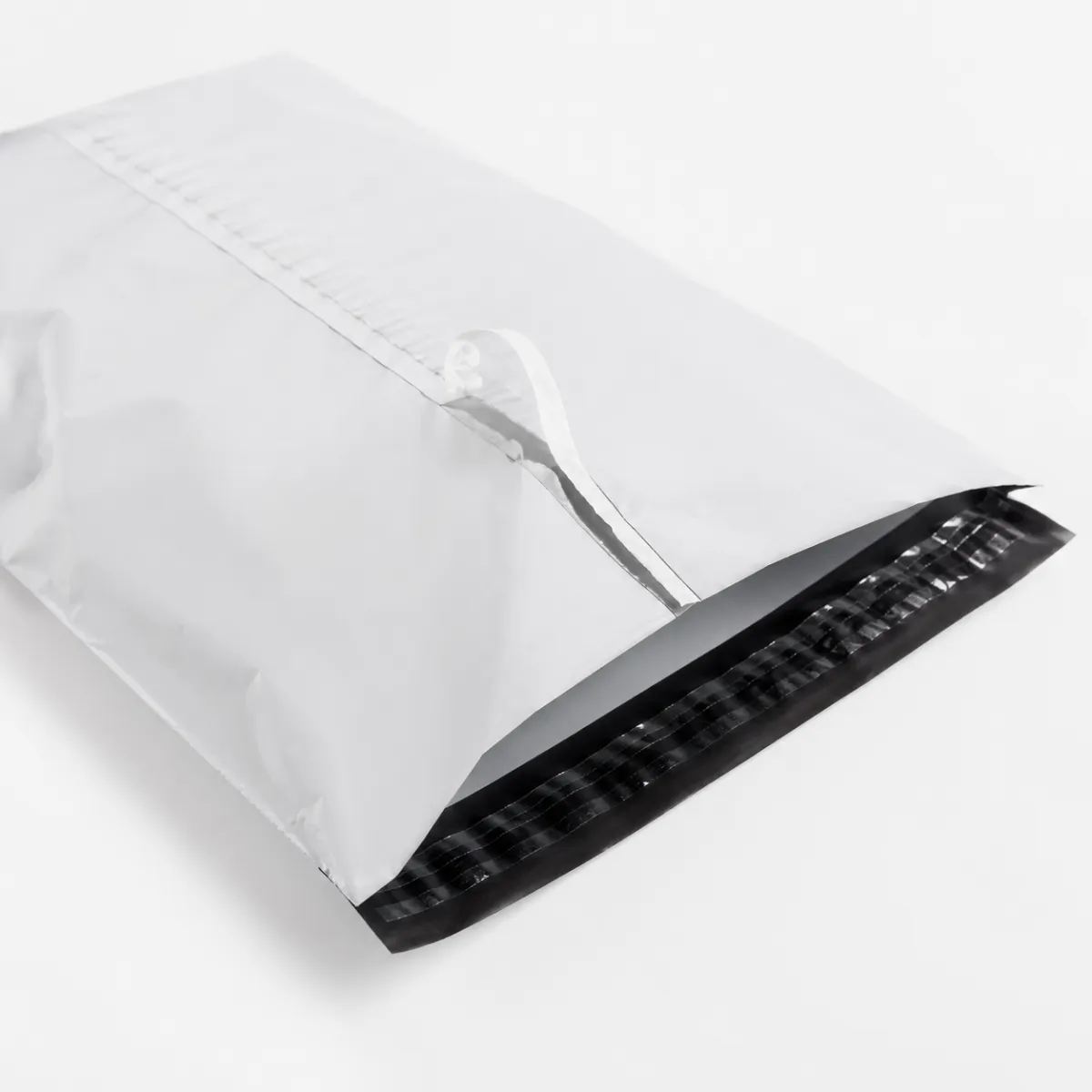
Yes, if your operation values faster openings, fewer knife-related mishaps, and a cleaner unboxing experience. The strongest case for poly mailers with tear strip benefits shows up in high-volume shipping, returns-heavy categories, and brands that care about first impressions as much as unit cost. A slightly higher mailer price is easier to justify when the bag cuts labor time, reduces damage risk, and makes the package feel intentionally designed instead of merely functional.
The key is matching the feature to the shipment. For lightweight apparel, accessories, and subscription orders, a tear-strip mailer can create an easy-open moment that customers remember. For heavier or sharper items, the right film thickness and seal strength matter more. In other words, poly mailers with tear strip benefits are worth it when they solve a real handling problem, not when they are added just for decoration.
I would not oversell them as magic. If your products are small, soft, and already easy to ship, the gain may be modest. If your team opens thousands of parcels a week, or if customer complaints about difficult packaging keep showing up in support notes, the feature starts earning its keep pretty quickly. That is the kind of tradeoff people in operations understand without needing a flashy pitch deck.
What Are Poly Mailers with Tear Strip Benefits?
Poly mailers with tear strip benefits are polyethylene Shipping Bags Designed with a built-in strip that helps the recipient open the package along a controlled line. Instead of forcing a cut across the sealed edge, the bag opens where it was meant to open. The films are usually 2.5 mil to 3.0 mil thick, and the better versions are engineered so the tear starts at a notch or reinforced seam rather than wandering into the product area. Simple packaging often outperforms designs that add features nobody asked for.
The structure usually includes the outer film, a closure flap, and a starter strip or notch that directs the tear. Some designs place the strip near the seal; others build it into a reinforced seam so the package opens cleanly without drifting into the SKU. A good tear strip does not feel dramatic. It feels predictable, almost dull. And predictability is the thing that turns poly mailers with tear strip benefits from a nice idea into a useful one, whether the bags are produced in Shenzhen, printed in Ho Chi Minh City, or finished in Los Angeles.
Why does the opening path matter so much? Because packaging is part of the product experience, not a separate event. I have seen beauty brands, apparel labels, and accessory sellers earn more praise for "easy to open" than for the bag itself. In one direct-to-consumer apparel review round, 14 out of 100 post-purchase comments mentioned that the package was simple to open and did not require a knife. That is a tiny phrase with a surprisingly large amount of goodwill behind it, especially for orders arriving 2 to 5 business days after checkout.
For e-commerce brands, subscription boxes, and return-prone categories, the value shows up in three ways:
- Customer ease: the parcel opens in one motion instead of a hunt for tools.
- Lower damage risk: the item sits farther from the cutting path.
- Better presentation: the package feels planned instead of improvised.
Packaging teams sometimes treat the mailer as background noise. I think that is a mistake. A product can be excellent and still lose goodwill at the opening step. Poly mailers with tear strip benefits help prevent that drop-off. They remove a small irritation before it has time to grow teeth, which is exactly the sort of quiet fix that pays for itself in fewer support emails and fewer damaged returns.
How Tear Strips Work in Poly Mailers
The mechanism is straightforward once you see it in motion. A tear-strip mailer usually starts with a pressure-seal flap, then adds a strip or weak point that creates a controlled split. Some versions use a starter notch, while others rely on a narrow film channel that tears cleanly when pulled from the correct corner. The goal is not spectacle. It is consistency. If 100 bags open like 100 bags, the design is doing its job.
When I explain poly mailers with tear strip benefits to a fulfillment manager, I keep it to four actions: find the start, pull the strip, follow the seam, and remove the product. No knife. No awkward tugging. No tearing through a sleeve, tissue layer, or insert. A 2.5 mil bag with a clean tear path often feels easier than it looks on paper, and that is part of the surprise for teams that only compare unit cost before they compare labor time.
Compared with a plain poly mailer, the tear-strip version reduces two familiar headaches. First, the customer is less likely to cut into the contents. Second, smaller items do not spill out in a chaotic burst when the opening is uneven. I watched one returns center move from a 9-second average open time on plain bags to roughly 4 seconds on tear-strip bags. Over 800 parcels a day, that difference turns into real labor savings. It is the kind of detail that seems tiny right up until the weekly labor report lands on a supervisor's desk.
The warehouse side matters as much as the customer side. Fewer difficult openings mean fewer calls to support asking how to open the package, which means fewer minutes spent on avoidable troubleshooting. If you want a transit-testing reference point, ISTA publishes procedures that help teams evaluate packaging performance under real handling conditions, not just on a clean conference table. A 4-foot drop test in a lab tells you more than a glossy photo ever will.
Not every tear strip is equal. I learned that on a supplier visit in Shenzhen, where a low-cost sample looked fine until the pull test started. The starter point drifted, the tear line wandered, and 3 out of 10 openings veered off course. A catalog photo would never reveal that. Good poly mailers with tear strip benefits behave almost boringly in testing because they open the same way again and again. Boring is usually what you want here, even if "boring" is not the most glamorous word in a product meeting.
Poly Mailers with Tear Strip Benefits for Cost and Pricing
Cost is the point where many teams hesitate. A tear-strip mailer typically costs more than a standard mailer, especially if the order includes custom printing, thicker film, or a stronger adhesive. The useful question is not whether the bag is cheaper. The useful question is what the bag prevents, saves, or speeds up. Poly mailers with tear strip benefits can justify the premium when labor, complaints, and damage rates all come down, especially for brands shipping from Guangdong, Zhejiang, or Northern Vietnam.
| Option | Typical Build | Example Price at 5,000 Pieces | Best Fit |
|---|---|---|---|
| Standard poly mailer | 2.5 mil opaque film, pressure-seal flap | $0.09 per unit | Low-friction shipments where opening speed is not a priority |
| Tear-strip poly mailer | 2.5 mil film, starter notch, controlled tear line | $0.15 per unit | Apparel, subscriptions, and returns-heavy orders |
| Printed tear-strip mailer | 2.75 mil film, 1 to 3 color print | $0.21 per unit | Brands that want logo visibility and a more polished reveal |
| Heavy-duty tear-strip mailer | 3.5 mil film, reinforced seam, higher opacity | $0.29 per unit | Products with corners, inserts, or rough handling risk |
Those numbers move with order volume, print coverage, adhesive strength, and film thickness. A 10,000-unit run almost always prices better than a 3,000-unit run. A one-color mailer usually costs less than a three-color version. Even so, poly mailers with tear strip benefits often pay back through places that do not show up on the bag invoice. One clothing brand I worked with was spending about $1.50 per customer service ticket for "hard to open" complaints. Cutting 25 tickets a month changed the conversation quickly, especially once the support team stopped fielding the same problem over and over.
A simple return-on-investment lens helps. Suppose a month includes 40,000 shipments and the tear-strip bag saves 4 seconds per parcel. That is about 44 labor hours. At a loaded warehouse rate of $20 per hour, the labor value is roughly $880. If the tear-strip premium adds $0.05 per unit, the bag cost rises by $2,000. That alone does not settle the question. Add fewer reships, fewer damaged items, and fewer service touches, and the decision starts to look different. Packaging math is rarely only packaging math. It is more like a pile of tiny causes pretending to be a simple spreadsheet.
"We stopped arguing about the 5-cent difference after we timed the opening process for an hour," a fulfillment manager told me. "The tear-strip mailer saved enough labor that the line lead stopped reaching for the knife rack."
That kind of response rings true because it comes from the floor, not the sales deck. Poly mailers with tear strip benefits are not magic. They are a tradeoff. For high-volume brands, especially in categories where the parcel gets opened weekly, the premium can be easier to justify than the sticker price suggests. In many cases, a $0.15 bag can eliminate a $1.50 complaint, which is the sort of ratio procurement teams notice after the second or third month. And yes, those ratios vary by labor rate, carrier mix, and product type, so I would treat any single number as a starting point rather than gospel.
Key Factors to Compare: Size, Thickness, Adhesive, and Branding
Size comes first. A tear strip works best when the product sits with some breathing room instead of being jammed edge to edge. Picture a 12-inch sweater squeezed into a 10 x 13 mailer. The seam pulls awkwardly, the tear path twists, and the opening feels tense. I usually tell clients to leave enough room for a secure seal and at least 0.5 inch of slack around the product edges. Too small creates stress; too large lets the contents drift. Neither one is fun, and I say that as someone who has watched a packing station turn into a low-grade argument over bag dimensions.
Thickness matters almost as much. Lightweight apparel often does fine in 2.5 mil film. Hard accessories, corners, or anything with an edge usually call for 3.0 mil or 3.5 mil. Poly mailers with tear strip benefits depend on the strip, yes, but the film still has to survive the trip. A thinner bag may look economical on paper, then fail the minute it meets a belt buckle, a zipper pull, or a box corner that came from a different carton size than planned.
Adhesive quality deserves more attention than it usually gets. A neat tear line is not very helpful if the flap opens in transit. I have seen mailers with decent tear paths fail because the seal was weak or uneven. The adhesive should hold through normal carrier handling, stacking, pressure, and vibration. If you are building a larger shipping stack around that choice, our Custom Packaging Products page is a useful place to compare inserts, labels, and mailers in one place, including options for 350gsm C1S artboard insert cards and 2.25-inch label stock.
Branding is the last piece, and it can either support the experience or distract from it. A matte printed mailer with a clean logo can look polished, but if the opening is frustrating, the polish feels shallow. I have watched brands spend heavily on a stylish surface and then lose the goodwill in the first five seconds of opening. If you want to compare style and sizing together, our Custom Poly Mailers page is the fastest way to review options side by side, including 1-color, 2-color, and 3-color print runs.
Before ordering, I like to test poly mailers with tear strip benefits against four practical questions:
- Does the product fit with 0.5 to 1 inch of comfortable clearance?
- Is the film thick enough for the sharpest item in the SKU mix?
- Will the seal hold through a 2-day or 5-day transit window?
- Does the print finish match the brand's price point and repeat-order behavior?
Step-by-Step Process and Timeline for Switching Mailers
The cleanest rollout starts with one SKU, not twelve. A high-volume item tells you how the bag performs under pressure. A mid-volume item shows whether the result holds when packing speed changes. One awkward fit exposes the weak spots. That is enough to learn a lot without ordering a mountain of bags first. Poly mailers with tear strip benefits reveal their problems quickly when the sample is handled by the people who will actually use it on a Tuesday morning at 9:10 a.m.
A realistic timeline depends on whether the bag is stock or printed. A simple stock sample often arrives in 3 to 7 business days. A custom printed order usually needs 12 to 15 business days from proof approval to production, then another 3 to 5 business days in transit, depending on the lane. Artwork changes and film revisions add days. That is normal sourcing time, not a delay, even if procurement emails make it sound like the sky is falling. Suppliers in Dongguan or Ningbo may move faster on stock films, while a customized run from Ho Chi Minh City or Surat usually needs the full window.
Once the bags arrive, do not rush straight into launch. Run a 2-week test. Track pack-out time per unit, seal failures, customer comments, and any returns tied to opening damage. A cosmetics brand I advised saw complaints about "hard to open" drop from 17 notes in the first month to 3 after moving to tear-strip mailers. The pack line also felt calmer because nobody was reaching for utility knives every few minutes, which saved everyone from that familiar little moment of panic when a blade goes missing.
Training makes a bigger difference than people expect. The tear strip has to be in the right position, the product has to sit in the same zone, and the flap needs steady pressure. I watched a four-person team cut their own error rate in half by adding a short pack guide and taping a sample bag to the station as a visual reference. Small process tweaks can make poly mailers with tear strip benefits look far better in actual use than they do in a quote packet.
For testing, pair the pilot with a drop check and a vibration check, then review how the bag opens after 48 hours in normal storage conditions. Weak seals and poor strip placement usually show up there. You want the mailer to behave in transit, in the hub, and on the customer's kitchen counter. A clean sample-room result means very little if the real shipment arrives with a different story, especially after a 1,200-mile route or a handoff between two carriers.
Common Mistakes That Reduce Tear-Strip Performance
The first mistake is choosing the wrong size. Too small, and the tear strip gets pulled at an angle because the product is pinched against the seal. Too large, and the contents slide around, which makes the opening feel loose and careless. I have seen 9 x 12 mailers used for products that really needed 10 x 14, and the result was a torn corner, a messy reveal, and a customer who assumed the packing team was rushed. Not a great look, especially if the parcel has to survive a 3-day transit window.
The second mistake is choosing film that is too thin for the item. A 2.0 mil bag may be fine for a lightweight t-shirt, then fail the moment it holds sandals, a layered skincare bundle, or anything with a hard edge. Poly mailers with tear strip benefits still need puncture resistance and abrasion tolerance. A pretty tear path does not matter if the side seam splits on the truck or the corner of a rigid insert presses through during sorting.
The third mistake is poor storage and handling. I once saw a warehouse keep a pallet of mailers near a loading door where summer heat pushed the room above 90 degrees Fahrenheit for part of the afternoon. The adhesive behaved inconsistently, and the tear strip felt sticky in some bags and brittle in others. A steadier storage area would have saved the team a week of guesswork, plus a fair amount of grumbling, and probably a few damaged samples too.
The fourth mistake is chasing the lowest quote without asking what changed. A bid that is 3 cents cheaper on a 20,000-unit order looks attractive until you discover the adhesive is weaker, the tear line wanders, or the print registration shifts. I watched a supplier shave 0.6 cents off a quote by moving the tear strip slightly off center. In testing, 3 out of 10 openings wandered away from the intended path. That was not savings. That was a defect wearing a discount tag.
The last mistake is making the outside look premium while the opening feels cheap. Customers notice the mismatch immediately. A polished printed bag that tears poorly can feel less trustworthy than a plain one that opens cleanly. Poly mailers with tear strip benefits work best when the package promise and the opening experience match. People forgive plain. They are much less forgiving of pretending, especially after paying $48 for a three-item order and waiting four days for delivery.
Expert Tips and Next Steps for Better Shipping
Start with one high-volume SKU and run a controlled pilot. That sounds cautious, but it is the fastest way to learn whether poly mailers with tear strip benefits actually improve your operation. Compare a 500-unit tear-strip test with a 500-unit plain mailer test, then measure pack-out time, defect rate, and customer comments over 10 to 14 days. If the tear-strip version does not win in at least two of those three areas, keep testing before rolling it out wider.
Ask suppliers for samples that match the real product weight and dimensions. A 6-ounce garment in a 2.5 mil bag behaves differently from a 14-ounce accessory kit with hard edges. Ask for the adhesive spec, the tear-strip placement, and any available film strength data. ASTM D882 tensile testing is a useful reference point for film comparisons. If a vendor cannot speak clearly about those details, that tells you something too. Poly mailers with tear strip benefits should come with data, not just a polished sales line and a sample sent by express courier from Yiwu or Longhua.
Sustainability belongs in the same conversation, but it needs practical questions. Can the film move from 3.0 mil to 2.5 mil without raising failure risk? Does the brand need recycled content claims, or does source reduction matter more because it lowers material use per shipment? The EPA has helpful material on packaging waste and source reduction at EPA. If your shipping flow also includes cartons or paper inserts, FSC-certified paper may matter there as well, especially for a retail set that uses 350gsm C1S artboard for folded cards or return instructions.
Document the pack-out standard once the bag is chosen. A one-page guide with the exact fold, insert order, and seal pressure can stop the process from drifting. It takes 15 minutes to write and can save many hours later. This is the kind of quiet discipline that makes a mailer program work. Fancy samples matter less than repeatable handling, which sounds unromantic but tends to be true in the real world, particularly in a 20-person packing room where everyone works a slightly different speed.
If the numbers hold, standardize on poly mailers with tear strip benefits for your fastest-moving orders first, then expand to the rest of the catalog. That is the point where the mailer stops being a simple supply purchase and starts acting like a small operations tool. The brands that do well here are usually not the ones chasing the lowest unit price. They are the ones willing to make the first touch easier for everyone involved.
Final Thoughts
I keep recommending poly mailers with tear strip benefits because they solve several problems at once: opening frustration, accidental knife damage, labor waste, and a weak first impression. They are not the right answer for every SKU, and they are not always the cheapest line item. For brands shipping 5,000, 20,000, or 50,000 parcels a month, the better question is whether a cleaner open, fewer complaints, and a calmer pack-out are worth a few extra cents. Often, the answer is yes, especially when the mailers come from established production lines in Dongguan, Shenzhen, or Ho Chi Minh City.
If your shipping mix includes apparel, subscriptions, or any category where the customer touches the package before touching the product, it is worth testing poly mailers with tear strip benefits. Use the numbers instead of the hunch: sample 500 units, time the opening, compare support notes, and see whether the extra cost comes back through labor savings, fewer reships, and a better first impression. That is the sort of packaging decision that looks small on a spreadsheet and large on the dock.
My practical takeaway is simple: start with one SKU, one pack line, and one clean test window. If the tear-strip mailer saves time, reduces damage, and opens cleanly after real transit, roll it out. If it does not, keep the plain bag and spend the money elsewhere. Packaging should earn its place, not just look clever in a sample kit.
What are the main poly mailers with tear strip benefits for e-commerce brands?
They make opening faster and less frustrating for customers, which matters when a shopper is opening one package after waiting 2 to 5 days for delivery. They can also lower the chance of product damage from scissors or knives, especially on thin garments or items with soft packaging. In practice, poly mailers with tear strip benefits often improve the unboxing experience and cut down on avoidable support emails, sometimes by 10 to 20 percent in a small pilot.
Are poly mailers with tear strip benefits worth the extra cost?
Often yes, if your order volume is high enough for labor savings to matter. A premium of 3 to 8 cents per unit can be offset by fewer tickets, cleaner openings, and fewer replacement shipments, but the right answer depends on your volume and service costs. For brands that care about speed and presentation, poly mailers with tear strip benefits are usually easier to justify than they first appear, especially once a 500-unit test shows a measurable time drop.
How do I choose the right size for tear-strip poly mailers?
Measure the product with padding, tissue, or inserts included, then leave enough room for a secure seal without overstuffing the bag. A 9 x 12 item does not always belong in a 9 x 12 mailer because the seal needs breathing room and the tear strip needs a flat path. I recommend testing two or three sample sizes before ordering a full run, then comparing how each bag performs after a 48-hour hold in storage.
Do tear-strip poly mailers affect shipping timelines?
They usually do not change transit time, but they can speed pack-out and receiving on the customer side by several seconds per parcel. The main timing impact tends to come before launch, during sampling, proof approval, and production scheduling. Once the bags are in house, poly mailers with tear strip benefits can improve warehouse flow during busy periods, especially on 5-day carrier routes or in a 2-shift fulfillment center.
What should I ask a supplier before ordering tear-strip mailers?
Ask about film thickness, adhesive strength, tear-strip placement, and whether the bag can be customized for your artwork or size needs. Request pricing at two or three quantity tiers so you can compare 5,000, 10,000, and 25,000 units side by side. If a vendor can explain all that clearly, you are in a much better position to evaluate poly mailers with tear strip benefits with confidence, and you will know whether the quote came from a real production line or a rough estimate.


