Buyer Fit Snapshot
| Best fit | Popcorn Packaging Bags Custom projects where brand print, material claims, artwork control, MOQ, and repeat-order consistency need to be specified before quoting. |
|---|---|
| Quote inputs | Share finished size, material target, print colors, finish, packing count, annual reorder estimate, ship-to region, and any compliance wording. |
| Proofing check | Approve dieline scale, logo placement, barcode or warning zones, color tolerance, closure strength, and carton packing before bulk production. |
| Main risk | Vague material claims, crowded artwork, missing packing details, or unclear freight terms can make a low unit price expensive after revisions. |
Fast answer: Popcorn Packaging Bags Custom: Materials, Costs, Timing should be specified like a repeatable production item. The safest quote records material, print method, finish, artwork proof, packing count, and reorder notes in one written spec.
Production checks before approval
Compare the actual filled-product size with the drawing, then confirm tolerance on folds, seals, hang holes, label areas, and retail display edges. Reserve space for logos, QR codes, warning copy, and material claims before decorative graphics fill the panel.
Quote comparison points
Review material grade, print process, finish, sampling route, tooling charges, carton quantity, and freight assumptions side by side. A quote is only useful when the supplier can repeat the same color, closure quality, and packing count on the next order.
Popcorn Packaging Bags Custom: Materials, Costs, Timing is really a conversation about control. Control over freshness. Control over grease migration. Control over how a bag behaves on a line when the product is hot and the clock is moving. A package can look finished in a mockup and still fail the simplest test in the room: does it keep popcorn crisp, readable, and easy to fill without drama? In a 10,000-bag run, a small flaw does not stay small for long.
That is why the build matters more than the render. A bag with sharp artwork but weak seals is a liability. A package that photographs well but scuffs in transit becomes a retail problem before the first shopper even touches it. Smart buyers treat popcorn Packaging Bags Custom as a three-part system: material performance, line efficiency, and retail presentation. Brands that sell multiple snack items tend to think the same way about Custom Packaging Products and other flexible packaging formats, because the package has to earn its place in the supply chain.
I still remember a snack buyer telling me, after a failed launch, that the bags looked “great on the PDF and kind of miserable in real life.” That was not a design problem. It was a packaging system problem. The film was fine, the artwork was fine, but the seal window was too narrow for the product temperature. One variable, and the whole run started acting fussy. That kind of mistake is expensive, and it shows up fast.
What Are Popcorn Packaging Bags Custom, and Why Do They Matter?
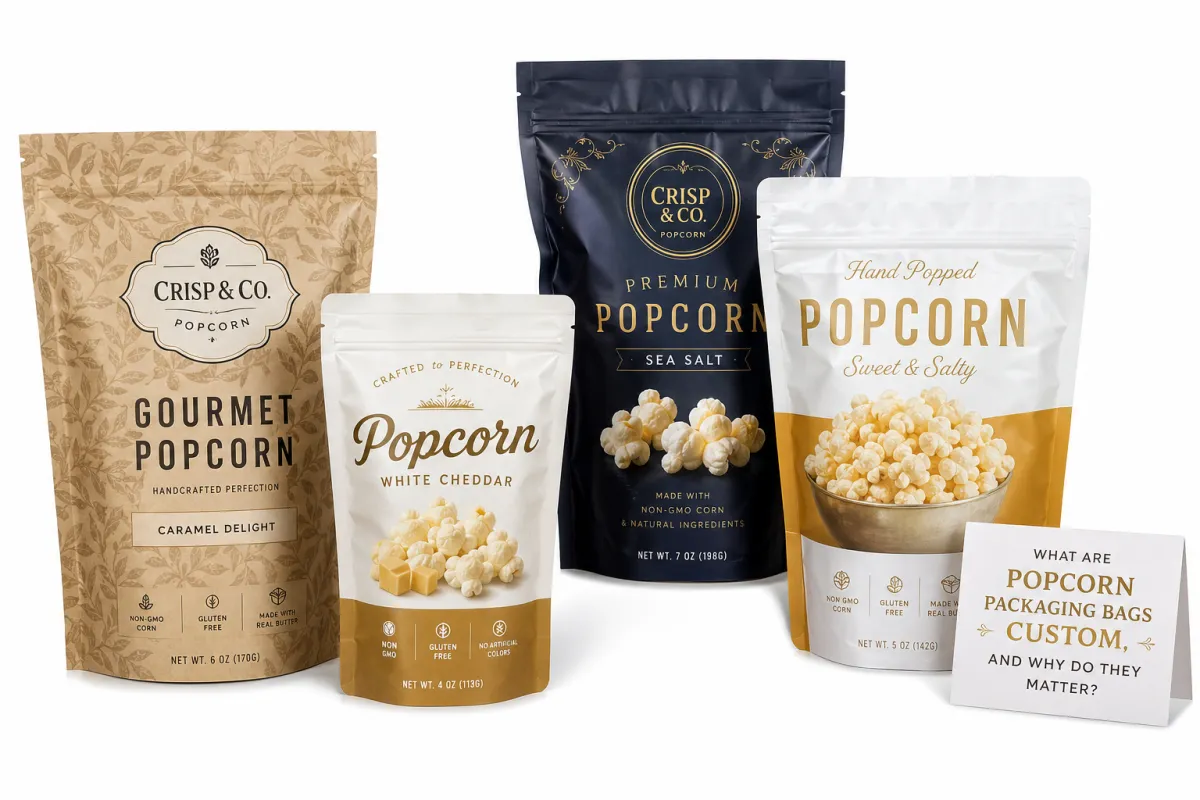
Popcorn Packaging Bags Custom are built around a specific product, fill weight, and sales channel instead of forcing the snack into a stock size that only roughly fits. The difference sounds minor until the bag reaches a filling line. A pouch that is too narrow can pinch product and slow the cycle. One that is too large can make a premium snack look sparse, even when the scale says the weight is correct. Packaging is never just a container here. It is also a freshness barrier, a grease shield, and the first salesperson standing on the shelf.
That matters because popcorn is not a uniform product. Buttered kernels, caramel corn, cheddar blends, kettle corn, and light airy mixes all create different packaging pressures. Oil can telegraph through a weak film. Sugar coatings can change how the snack settles in the pouch. Light exposure can dull flavor faster than the shopper expects. A package that solves those problems quietly is doing real work, even if nobody in the aisle notices the engineering behind it.
From a buyer’s angle, the best Popcorn Packaging Bags custom solve the actual business issue instead of merely checking a specification box. Humid distribution routes push teams toward stronger moisture control. Heavily buttered products need better grease resistance. Premium retail programs demand print that reads cleanly from six feet away and still looks disciplined under store lighting. The bag is not there to decorate the popcorn. It is there to help it sell without aging in public.
Line behavior belongs in the same conversation. A bag that seals in half a second less can save real money over a year. A bag that wrinkles near the jaws can create rejects every few minutes. Even a tiny increase in waste compounds fast; on a million-bag program, one extra percent of scrap means 10,000 units gone before the product leaves the plant. That is why popcorn Packaging Bags Custom should be chosen with the machine in mind, not just with the marketing calendar.
Product style changes the equation too. Kettle corn and caramel corn have very different textures from buttered popcorn, and mixed snack blends behave differently again. Some products are oily, some are dry and fragile, and some shed crumbs that interfere with seal zones. Headspace, fill temperature, display position, and shipping method all shape the final structure. Popcorn Packaging Bags Custom work best when those factors are settled before the artwork gets locked.
There is also a trust factor that rarely gets discussed directly. A crisp seal, clean print, and proportionate bag size signal that the product was handled with care. Shoppers may not analyze the bag the way a converter does, but they still register the difference between a package that feels managed and one that feels improvised. In food packaging, appearance and function keep borrowing credibility from each other.
A popcorn bag that looks inexpensive on paper can become the most expensive item in the room if it fails on seal, shelf life, or machine performance.
How Popcorn Packaging Bags Custom Are Made and Filled
The production path for popcorn packaging bags custom usually starts with film selection, then printing, then lamination or extrusion, followed by bag forming, sealing, inspection, and shipment. That sequence looks tidy on a process chart. Reality is messier. A print file with poor registration can put artwork too close to a cut edge. A laminate with weak adhesive can curl during converting. A bag cut 2 mm off spec can trigger jams, crooked stacks, or slower case packing. Small deviations become operational tax.
Most projects begin with questions about the product, not the artwork. What is the fill weight? How much headspace does the snack need? Will the bag be sealed immediately after filling, or does the product cool first? Is the popcorn coated with oil, sugar, seasoning powder, or a mix that behaves differently in heat? Popcorn packaging bags custom are more sensitive to these details than many first-time buyers expect, because the snack changes state faster than the package can forgive mistakes.
Filling method matters as much as the material. A buttery popcorn line does not flow like a kettle corn line. Sugar coatings can cause bridging. Irregular pieces can trap air, which lifts the fill level and shifts pressure into the seal area. A bag that runs perfectly at nominal weight but fails at actual product temperature is not a good bag; it is a bag that has only passed a paper test. Line spec should follow product behavior, not just a spreadsheet number.
Seal design deserves real attention. Heat seals are common, but the geometry can vary more than buyers realize. Fin seals, lap seals, side seals, and gusseted structures each bring different handling traits. For popcorn packaging bags custom, the target is usually a dependable closure that does not slow output. Strong seals help protect crunch and reduce transit failures. Weak seals turn product quality into a customer service issue, which is a costly way to learn about closure design.
Artwork placement is more mechanical than creative teams sometimes expect. Print has to account for folds, trim, and seal zones that disappear during conversion. A barcode too close to a gusset may scan poorly. A logo pushed toward the edge may distort after forming. A package design that ignores the dieline is really a gamble disguised as a layout. The art has to survive the machine, not just the approval meeting.
Temperature changes the seal window too. Freshly cooked popcorn can carry enough heat and moisture to interfere with package integrity if the line is not tuned correctly. Popcorn packaging bags custom should be validated with actual product, not a filler sample or a dry mockup. A bag can look perfect on screen and still need a different seal bar temperature, longer dwell time, or a slightly wider seal zone once the real snack is introduced. That is one of those unglamorous details that separates a polished launch from a messy one.
If transit is part of the risk profile, the standards published by the International Safe Transit Association are a useful reference point, especially when bags need to hold up in cartons, on pallets, or through repeated handling. For broader packaging material and performance guidance, the educational resources at packaging.org can also help teams compare structures and conversion methods before they commit to a spec.
Once the bags are formed, they are usually packed flat or nested and shipped to the filling site. Then the real test starts. Does the bag open cleanly? Does it fill evenly? Does it seal without wrinkles? Does it stack correctly in case packs? Popcorn packaging bags custom are only successful when they perform in the plant, on the truck, and at the shelf, not just in the art approval stage.
Choosing Materials, Barrier Levels, and Print Options
Material choice is where popcorn packaging bags custom often succeed or fail. The core question is simple: how much protection does the product need, and how much structure can the budget support? A thin mono-film can be enough for a local snack with a short shelf life. A laminated high-barrier pouch makes more sense for premium retail packaging, long distribution routes, or products that sit in warmer warehouses before they hit store shelves. The right answer depends on the product, the channel, and the shelf-life target.
Common build options include polyethylene-based films, laminated structures with metalized or clear barrier layers, kraft-faced pouches, and transparent windows for visibility. Each choice carries tradeoffs. A kraft exterior feels natural and tactile, which can strengthen package branding, but the inner layer still needs to resist grease and moisture. A fully clear pouch shows the product well, yet it can still cloud, bloom, or lose flavor performance if the barrier is too weak for the snack inside. These are the kind of tradeoffs that separate generic custom snack pouches from packaging that is built for a specific market.
Three performance factors sit near the top for popcorn Packaging Bags Custom: grease resistance, moisture control, and oxygen barrier. Grease resistance helps the package stay visually clean. Moisture control preserves crunch. Oxygen barrier slows flavor loss, which matters a lot for coated or seasoned products. Not every snack needs the strongest possible version of all three, and that is where careful material selection can save money without underbuilding the package.
Print method changes both appearance and economics. Flexographic printing is often the efficient choice for larger runs because the setup cost can be spread across volume. Digital printing fits shorter runs, seasonal programs, and faster artwork changes. Finish choices matter too. Gloss can push color and shelf pop. Matte can feel more controlled and premium. Soft-touch coatings add tactile depth, though they also add cost and sometimes complicate recyclability claims. The best-looking package is not automatically the best one for the business.
A transparent window can help shoppers see the snack, yet it also reduces available print area and may expose the product to more light. A bold full-panel design creates strong shelf impact, though it may be excessive for club packs or foodservice channels where pallets matter more than front-facing appeal. Popcorn packaging bags custom should reflect the actual sales environment, not a mood board that ignores where the product will be sold.
Sustainability deserves a practical lens. Some buyers want paper-based aesthetics, recycled content, or lower-plastic options, and those priorities can be legitimate. The package still has to protect the popcorn. A structure that uses less material but cuts shelf life short can create more waste than it prevents. For brands looking at fiber sourcing or paper components, the Forest Stewardship Council remains a useful reference point.
To make comparison easier, here is a working snapshot of how popcorn packaging bags custom are often specified:
| Material Option | Typical Use | Approx. Unit Cost at 5,000 pcs | Protection Level | Notes |
|---|---|---|---|---|
| Printed mono-poly pouch | Shorter shelf life, local sales, entry-level snack lines | $0.12-$0.22 | Basic moisture and grease resistance | Usually the lowest-cost path, but not ideal for heavy seasoning or long distribution |
| Laminate pouch with barrier layer | Retail popcorn, kettle corn, and more sensitive flavor profiles | $0.18-$0.34 | Moderate to strong barrier performance | Good balance of shelf appeal, seal performance, and freshness control |
| Metallized high-barrier pouch | Premium popcorn packaging bags custom for longer shelf life | $0.22-$0.42 | Strong barrier against light, oxygen, and moisture | Often chosen when product freshness and visual impact are both priorities |
| Kraft-faced laminate | Natural-looking branded packaging and specialty snack lines | $0.20-$0.38 | Moderate, depending on inner layers | Looks warm and artisanal, but still needs a proper internal barrier to protect popcorn |
Those figures are not universal and should never be treated as a quote. They are planning ranges, useful before a supplier call. Print coverage, pouch size, barrier layer, closure style, and order volume all move the final number. Popcorn packaging bags custom should be judged by fit, performance, and production behavior together, not by appearance alone.
Popcorn Packaging Bags Custom Cost Factors and Pricing Drivers
Pricing for popcorn packaging bags custom is shaped by a cluster of variables that usually move together. Bag size comes first. Larger bags use more film, more ink coverage, and often more conversion time. Barrier level comes next. A structure that blocks moisture, oxygen, and grease usually costs more than a simpler film, but that extra spend can be justified if shelf life is real and distribution is wide.
Print complexity has a direct effect too. A one-color brand mark is easier to produce than a full-coverage design with gradients, metallic accents, and multiple side-panel callouts. More colors can mean more plates, more setup, and more proofing. Spot varnish, matte-gloss contrast, and window cutouts all add layers to the quote. Popcorn packaging bags custom are rarely expensive for one reason alone; cost climbs when several premium choices stack on top of each other.
Quantity is one of the strongest levers. Higher minimum order quantities often reduce unit cost because setup is spread over more bags. That math is useful, but it creates inventory risk if the product is still in testing. A buyer who orders too many bags too early may lower the unit price and still lose money by storing the wrong spec for six months. That situation is common in snack packaging because market testing and production planning rarely move at the same speed.
Tooling and setup are easy to underestimate. Plates, cylinders, die lines, and prepress work all affect cost, especially when the design starts from scratch. Proofs may involve physical samples, digital approvals, or both, and every revision adds time and expense. Zippers, tear notches, euro slots, and unusual gusset shapes make conversion more complex. Popcorn packaging bags custom with extra functionality usually require extra planning as well.
Freight and warehousing belong in the quote comparison. A low bag price is not the same as the lowest total cost. If the structure takes more storage space, arrives later, or causes higher waste on the line, the real number climbs. Unit cost, waste rate, freight, and shelf life should be reviewed together. That is the only way to judge whether popcorn packaging bags custom are actually economical.
Here is a simple pricing lens I use when reviewing snack packaging quotes:
- Bag cost - the quoted unit price based on size, material, and print.
- Setup cost - plates, proofs, prepress, and tooling, especially on shorter runs.
- Run efficiency - how much film waste and line downtime the bag creates.
- Distribution cost - freight, storage, and pallet count.
- Product protection - the value of longer freshness and fewer returns.
That final point is where the decision often changes. A cheaper bag that shortens shelf life can cost more through spoilage, complaints, markdowns, or rework. Popcorn packaging bags custom should be evaluated as part of the product system, not as an isolated purchasing line. A procurement spreadsheet can miss that detail; the warehouse and the store shelf usually do not.
For brands expanding into related formats, the same cost logic often applies to custom printed boxes and other retail packaging. The structure changes, but the economics stay familiar: better fit and better protection can justify a higher starting price when the package performs through the full supply chain.
Process and Timeline: From Spec Sheet to Delivered Bags
A clean project timeline begins with a complete spec sheet. The strongest popcorn packaging bags custom projects usually start with finished dimensions, fill weight, product type, seal method, target shelf life, and the intended retail channel. Add product photos, case pack details, and line speed constraints when possible. The less guesswork at the front end, the fewer surprises later in the process.
The typical workflow is discovery, material selection, artwork preparation, proof review, production, quality checks, and shipping. Each stage carries its own risk. Artwork can need resizing once the actual dieline is built. Film stock may need to be swapped if a preferred material is unavailable. A proof can look acceptable on a monitor and still need another round once brand colors are checked in print. Popcorn packaging bags custom move best when one person owns the calendar and keeps decisions moving.
Timelines vary, but a straightforward project can move faster than a heavily customized one. Standard structures and ready art usually shorten the path. Specialty materials, multi-layer laminates, unusual sizes, and multiple SKU versions stretch it. That is normal. Trouble starts when design time, production time, and transit time are treated as one lump sum instead of three separate clocks.
Sampling is worth the effort. A material swatch can help with finish and print decisions, but a filled sample tells more because it shows how the package behaves with real product. That is the moment popcorn packaging bags custom prove themselves. Do the seals hold? Does the bag sit upright? Does oil show through after several hours? Does the pouch fit the filling jaws without wrinkling? Those are the questions that matter before a mass run starts.
Line trials matter even more when the product is sensitive to heat or the machine has a narrow operating window. A test run can reveal whether the bag needs a wider seal band, a different fill temperature, or a small film-gauge adjustment. A few hours spent testing can prevent days of frustration later. That is a better trade than discovering the problem after thousands of bags are already printed.
Delays usually come from a familiar set of places: artwork revisions, approval hold-ups, material substitutions, and shipping congestion. None of those are rare. A smart schedule includes buffer, especially for launches, seasonal promotions, or date-driven sell-in plans. Popcorn packaging bags custom should not be scheduled as if every step moves instantly. The realistic plan is usually the one that stays intact.
If the package must hit shelves by a fixed date, work backward from the shelf date rather than forward from the purchase order. That simple shift prevents a common mistake: approving artwork too late to leave room for production and freight. The bag may be small, but the project is not.
Common Mistakes That Hurt Freshness or Raise Costs
The first mistake is choosing on appearance alone. A glossy, colorful bag can look strong in a mockup and still fail to control moisture or grease. Once that happens, the product stales out or looks tired long before the graphics become the issue. Popcorn packaging bags custom have to perform as both a marketing object and a technical barrier. Split those two jobs apart, and disappointment usually follows.
Underestimating fill volume is another frequent error. Popcorn is light, but it occupies more space than people expect. If the bag is too small, seams get stretched and sealing becomes less forgiving. If the bag is too large, the package can feel underfilled and waste film. The right volume matters because packaging design is part math, part merchandising, and part machine compatibility.
Artwork placement causes trouble more often than it should. Designs set too close to the seal area can distort during forming. Logos can disappear into folds. Barcodes can lose readability if they cross a curve or gusset. Popcorn packaging bags custom need artwork built around the dieline, not layered onto it after the fact. I have seen good graphics turned into awkward packages because nobody checked the actual cut and seal map before approval.
Skipping fill-line testing is another expensive mistake. Oil-heavy snacks, sugar-coated kernels, and irregular blends behave differently under real production conditions than they do in a static sample. A bag may seal perfectly with an empty mockup and then struggle once actual popcorn is added. That is why a pilot run or sample fill is worth the time. It tells the truth before the full order locks in.
There is also a habit of buying the cheapest spec and calling it efficient. Sometimes that works for a simple product with a short life span. Often it does not. A low-cost bag can create hidden costs through higher spoilage, more returns, extra labor, or more frequent replenishment. Popcorn packaging bags custom should be evaluated over the life of the product, not only on the purchase order. Cheap per unit is not the same as cheap per sale.
Buyers should ask for tolerances too. What variation in width is acceptable? How much print registration drift is normal? What seal width range does the supplier control? Those questions expose how tightly the process is managed. Good popcorn packaging bags custom come from process control, not from optimistic promises.
When a project is compared against pouches, cartons, or secondary wraps, the same discipline applies. A package that looks cheaper at first may need extra handling, extra protection, or extra case packing later. That is how small decisions turn into larger costs. The bag has to work in the plant, on the truck, on the shelf, and in the customer’s hands.
Expert Tips and Next Steps for Popcorn Packaging Bags Custom Projects
Start with a clear spec sheet. It sounds basic because it is basic, and basic is usually what keeps a project from drifting. Include finished dimensions, fill weight, product type, seasoning style, desired shelf life, sealing equipment, and where the bag will be sold. Note whether the product is single-serve, family-size, club-pack, or foodservice. Those details change structure and pricing more than many first-time buyers expect.
Request samples before committing. Even when the spec looks simple, the feel of the material, the finish, and the seal behavior can differ more than the quote sheet suggests. If you are comparing matte, gloss, window, or high-barrier options, see them side by side. Popcorn packaging bags custom are easier to approve when someone has handled the film and checked the printed sample, not just reviewed a PDF.
A small production test is usually money well spent. Run the bag on the intended filling line if possible, or simulate the process closely. Watch fill speed, seal quality, headspace, and case packing behavior. If the package is retail-facing, place a few samples on a shelf and view them from consumer distance. That simple test often reveals whether the package branding still works once it is standing in a store instead of sitting in a design file.
Compare suppliers on more than price. Communication quality matters. Proof accuracy matters. Tolerances matter. Reorder reliability matters. A low quote with slow responses can become an expensive launch problem if the date is fixed. Popcorn packaging bags custom work best with suppliers who understand snack packaging, production reality, and the cost of late changes. That coordination is part of the value, even when it never appears as a separate line item.
If your brand is building a wider product family, think about visual consistency across formats too. The tone of the pouch, the label system, and the box style should feel related without becoming identical. That is where a broader packaging family can support package branding while still leaving room for each product to do its own job. A coordinated line can include popcorn bags, accessory pouches, and Custom Packaging Products that share colors, type treatment, and structural logic.
Here is the short version of the next moves That Actually Help:
- Finalize the spec sheet and include the real fill weight.
- Gather artwork with dieline-safe placement and readable barcodes.
- Request quotes for at least two material structures.
- Ask for samples and test seals on the actual equipment.
- Confirm lead time, freight method, and reorder expectations before approving the run.
Once those pieces are in place, popcorn packaging bags custom become much easier to manage, and the project feels less like guesswork and more like controlled production. That is usually the moment a buyer stops seeing the bag as a supply expense and starts seeing it as part of the product itself.
Frequently Asked Questions
What makes popcorn packaging bags custom better than stock bags?
Custom bags can be sized to the exact fill weight, which reduces headspace, wasted film, and awkward shelf presentation. They also let you Choose the Right barrier level for freshness, grease resistance, and shipping conditions instead of settling for a one-size-fits-all format. Branding, barcode placement, and retail compliance are easier to control when the bag is designed around the product and sales channel. For many snack brands, popcorn packaging bags custom are the cleaner long-term choice because the package is built to support the product, not just contain it.
How do I choose the right material for popcorn packaging bags custom?
Start with the product type. Buttery popcorn usually needs stronger grease resistance, while caramel or kettle styles may need different barrier and seal performance. Match the material to your storage and distribution conditions, including humidity, heat, and whether the bags will sit on shelves or ship in cases. Ask for samples and compare how each structure seals, prints, and holds up when filled, stacked, and handled. That is the safest way to narrow down popcorn packaging bags custom options without relying on guesswork.
What affects the cost of popcorn packaging bags custom the most?
Order quantity, material structure, print count, and specialty features such as windows, zippers, or matte coatings usually have the biggest impact. Setup and prepress costs matter more on smaller runs, while larger orders often bring the unit price down. Freight, warehousing, and waste rate should also be included when comparing quotes because the lowest bag price is not always the lowest total cost. Popcorn packaging bags custom should be compared on total project economics, not unit price alone.
How long does it take to produce custom popcorn packaging bags?
Lead time depends on artwork readiness, material availability, proof approval, and the complexity of the bag structure. Simple projects move faster when the spec is locked early, while custom print and specialty materials usually add time. A sample or pilot run is worth scheduling before full production if the bags must run on specific filling equipment. For popcorn packaging bags custom, the schedule is usually most predictable when design, approval, and production are treated as separate phases instead of one single deadline.
What should I ask a supplier before ordering popcorn packaging bags custom?
Ask about material options, minimum order quantities, print method, seal performance, and whether they can support your fill line speed. Request examples of similar snack packaging and confirm how artwork, proofing, and final approvals are handled. Make sure they can explain how the bag will protect freshness, display well, and meet your shipping or retail needs. The best popcorn packaging bags custom suppliers should be able to talk about performance, not just print.
For a popcorn brand, the bag is never just a bag. It protects the product, shapes the shelf impression, and affects how smoothly the operation runs from printing through fulfillment. Treat popcorn packaging bags custom as a technical packaging decision instead of a simple purchasing item, and the result is usually better freshness, cleaner presentation, and fewer surprises in production. The most useful next step is straightforward: lock the spec, test the real product in the real bag, and only then approve the run. That is how the package stops being a gamble and starts doing its job.

