Buyer Fit Snapshot
| Best fit | Compostable Packaging Custom Printed projects where brand print, material claims, artwork control, MOQ, and repeat-order consistency need to be specified before quoting. |
|---|---|
| Quote inputs | Share finished size, material target, print colors, finish, packing count, annual reorder estimate, ship-to region, and any compliance wording. |
| Proofing check | Approve dieline scale, logo placement, barcode or warning zones, color tolerance, closure strength, and carton packing before bulk production. |
| Main risk | Vague material claims, crowded artwork, missing packing details, or unclear freight terms can make a low unit price expensive after revisions. |
Fast answer: Compostable Packaging Custom Printed: Artwork Proof, Packing Count, and Landed Cost should be specified like a repeatable production item. The safest quote records material, print method, finish, artwork proof, packing count, and reorder notes in one written spec.
Production checks before approval
Compare the actual filled-product size with the drawing, then confirm tolerance on folds, seals, hang holes, label areas, and retail display edges. Reserve space for logos, QR codes, warning copy, and material claims before decorative graphics fill the panel.
Quote comparison points
Review material grade, print process, finish, sampling route, tooling charges, carton quantity, and freight assumptions side by side. A quote is only useful when the supplier can repeat the same color, closure quality, and packing count on the next order.
Compostable Packaging Custom Printed: A Practical Guide
Compostable packaging custom printed sounds tidy on a quote, but on a production line it behaves like a systems problem with several moving parts. Substrate, ink, adhesive, coating, closure, artwork, and seal all have to cooperate. Miss one, and the pack can fail under heat, moisture, pressure, or the simple abuse of a conveyor belt. A buyer who treats compostable packaging custom printed like a decorative choice usually pays for that mistake later, either through damaged goods, rejected claims, or a shelf life that collapses before the product gets a fair chance.
The strongest launches tend to come from teams that treat compostable packaging custom printed as both a brand decision and an engineering brief within a broader sustainable packaging strategy. The package has to look credible, yes, but it also has to survive filling, shipping, display, and disposal. One layer might control oxygen, another might support print quality, and a third may decide whether the pack qualifies for composting claims at all. That combination is why the phrase deserves more scrutiny than it usually gets.
I have sat through more than one packaging review where the mockup looked spotless and the first production sample came back with a completely different story. A natural substrate can look premium, but it is kinda unforgiving when artwork is too delicate. That is the quiet truth behind compostable Packaging Custom Printed: the nice render is not the product. The finished structure is.
What follows is a close look at the tradeoffs behind compostable Packaging Custom Printed: material behavior, print compatibility, standards, pricing, timelines, and the easy-to-miss errors that can derail a launch. Teams comparing branded packaging, Custom Printed Boxes, or retail packaging for a new product line can use the details here to sort signal from marketing gloss.
What compostable packaging custom printed really means
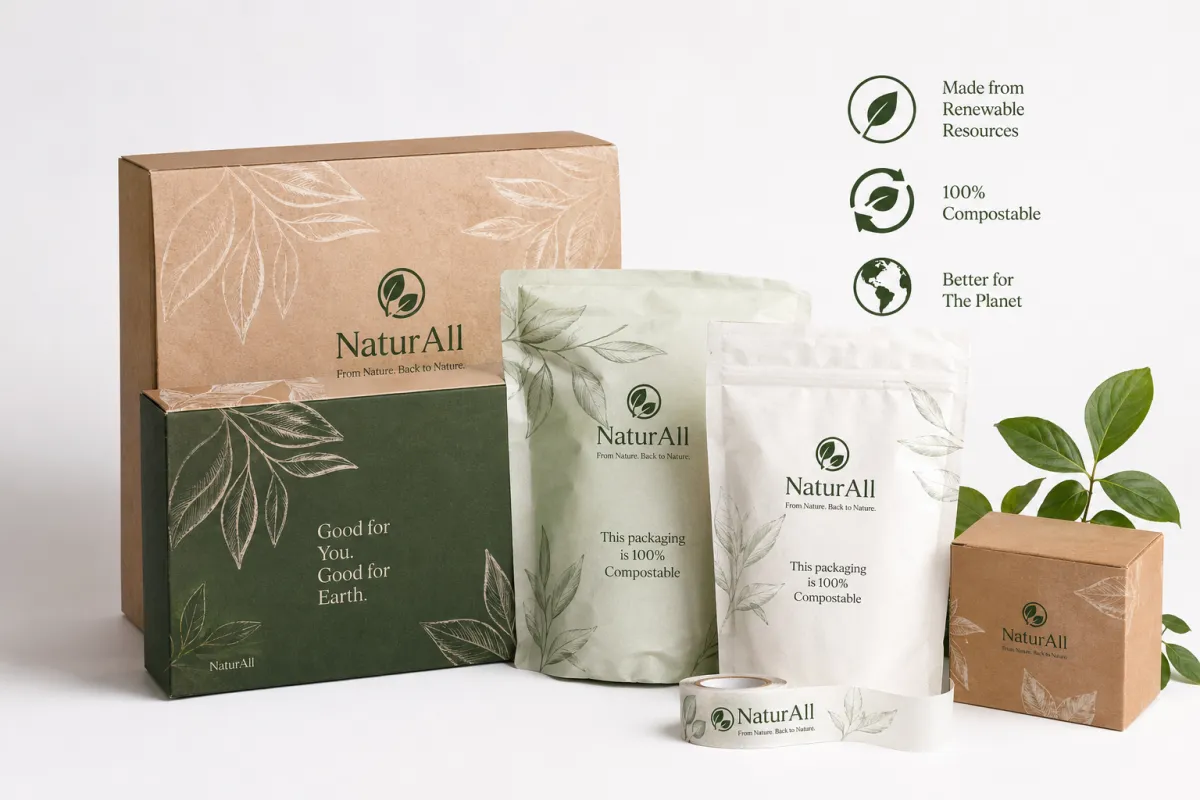
The first trap is visual. A package can look compostable and still fail the practical test. Compostable packaging custom printed is not a single material choice; it is a full construction choice. Board, film, sealant, adhesive, label, coating, and varnish all affect the final claim. If one component is out of step with compostability standards, the whole structure can be disqualified even when the outer layer seems fine. That is why reviewing only the face stock or the glossy mockup is a weak way to buy compostable packaging custom printed.
Compostable, biodegradable, and recyclable do not mean the same thing. Compostable means the material is designed to turn into carbon dioxide, water, biomass, and mineral compounds under specified composting conditions. Biodegradable is much looser and can describe a material that breaks down slowly, partially, or in the wrong environment. Recyclable points to a different recovery stream altogether. A brand choosing compostable packaging custom printed needs to know which disposal route the pack truly fits, not which word sounds strongest in a pitch deck.
The printing side matters just as much. Once the pack needs branding, ingredient copy, barcode placement, lot codes, nutrition panels, and legal statements, compostable packaging custom printed has to carry dense information on a surface that may be matte, textured, natural, or lightly coated. That changes contrast, registration, ink holdout, and readability. A paper-based pouch that looks elegant in a render may print darker, duller, or less precise once it meets a real press and a real substrate.
Think of compostable packaging custom printed as a system rather than a surface. Print method, cure temperature, coating selection, and sealing profile all influence whether the pack still fits the end-of-life claim and whether it performs in transit. Water-based ink may suit one structure. Low-migration ink may matter more for food contact or aroma-sensitive products. The correct answer depends on fill weight, shelf-life target, storage conditions, and order size, not on whether the design feels environmentally friendly at first glance.
That is where packaging design stops being a styling exercise. Good packaging design for compostable packaging custom printed needs to support the product, defend the claim, and survive production. Sometimes that means reducing ink coverage. Sometimes it means moving away from dense full-bleed graphics. Sometimes it means using a natural substrate that gives the brand a more restrained, credible look. Those changes are not losses. They are a cleaner fit between material and message.
If a brand is comparing formats, compostable packaging custom printed should sit inside a broader product packaging strategy. Many teams begin with one pouch or sleeve, then add cartons, labels, or secondary shipping packs after the first structure proves itself. For sourcing across formats, a review of Custom Packaging Products beside the compostable option helps teams compare print methods, structures, and expected shelf performance in the same conversation.
Appearance alone is not a reliable filter. A structure can look earthy and premium while still carrying a non-compostable adhesive, an excessive barrier layer, or a print system that will not hold registration on a rougher surface. The better question is simple: what is the full construction, and can every piece of it support the claim?
How does compostable packaging custom printed break down?
To understand compostable packaging custom printed, it helps to define what "breaks down" actually means. Compostable materials are engineered to convert into carbon dioxide, water, biomass, and mineral compounds when the composting conditions are right. That is not the same thing as getting wet, curling, cracking, or fading on a shelf. Microbial activity, oxygen, moisture, temperature, and time all matter. Without that living system, the material can sit far longer than the label suggests.
Industrial composting and home composting are not interchangeable. Industrial composting generally runs hotter, more consistently, and with better aeration and moisture control. Home composting tends to be cooler and less uniform. A package that performs well in an industrial facility may not disappear at the same pace in a backyard bin. For compostable packaging custom printed, that difference is not a footnote. It changes the claim language that can be printed on the pack and the documentation that should support it.
According to the EPA's composting basics, successful composting depends on the right balance of carbon, nitrogen, oxygen, water, and microbial activity. That is a useful reminder that materials do not vanish by branding alone; they need an active environment to do the work. See the agency's guidance at EPA composting resources.
Common compostable substrates include PLA blends, paper-based structures, molded fiber, and compostable films. Each one behaves differently once print is added. PLA-based films can offer decent clarity and decent print support, but sealing temperatures need attention. Paper-based compostable packaging custom printed often delivers a warmer, more premium feel, though it can absorb ink differently and may need extra barrier support for grease or moisture. Molded fiber works well for trays and protective inserts, yet it is not a fit for every graphics-heavy project. Compostable films are often used for sachets, wraps, or pouches, but they need tighter process control to keep seals consistent.
The ink layer deserves more attention than it usually gets. Water-based inks and low-migration systems are often preferred because they align better with compostability goals and food-contact expectations, but the best choice still depends on the structure and use case. A coating can improve appearance, yet the wrong coating can block compostability or interfere with the substrate. Primers, varnishes, overprints, and spot finishes all carry the same risk. Compostable packaging custom printed only works when those choices are made with the final disposal route in view.
Printed graphics do not always break down at exactly the same pace as the substrate, and that surprises some teams. The material may begin composting while the printed image remains visible for a while longer, especially if the ink or surface treatment resists degradation more than expected. That does not automatically create a problem. It does mean suppliers need to balance color density, abrasion resistance, and compostability carefully. In plain terms, compostable packaging custom printed is less about "print it and hope" and more about choosing the least risky mix of appearance and performance.
Production teaches a blunt lesson: keep the construction as simple as the product allows. Fewer layers, fewer incompatible finishes, and fewer unnecessary effects usually make compostable packaging custom printed easier to certify, cheaper to run, and less likely to fail in the field. Complexity looks impressive in a sample kit. It often looks expensive on a purchase order.
Key factors that shape quality, shelf life, and compliance
Once the material is chosen, the hard part begins. Compostable packaging custom printed still has to protect the product, hold shelf life, and satisfy the legal and technical demands of the category. A dry snack needs different behavior than coffee. Coffee needs different behavior than frozen food. The same compostable packaging custom printed structure can perform very well in one category and poorly in another.
Barrier performance usually comes first in the conversation. Moisture, oxygen, aroma, grease, and light each create different risks. A dry granola bar might need only modest moisture protection. A powdered beverage mix may need a stronger seal and better aroma control. If the package cannot protect the product long enough for the intended shelf life, the compostable angle loses most of its value because the product quality fails before disposal ever becomes relevant.
Seal strength and puncture resistance deserve their own focus. A beautiful pouch that tears in transit is a bad package, no matter how persuasive the eco story sounds. Compostable packaging custom printed has to survive filling, handling, pallet movement, retail stocking, and consumer use. Materials that are too delicate can create line speed issues and waste. Materials that are too brittle can crack, crease badly, or lose seal integrity under stress. Real-world testing is the difference between a nice sample and a usable pack.
Compliance is another area where discipline matters. Compostability standards, food-contact requirements, labeling rules, and regional claim language all shape what can be printed on the pack. A supplier should be able to identify the relevant standard, whether that is ASTM D6400, EN 13432, ISO 17088, or another recognized framework, and explain exactly what the certification covers. If a label says industrial compostable, that claim should not drift into home compostable language without proof. Food contact needs the same attention. Inks, coatings, and adhesives have to match the intended use.
For packaging professionals who want a stronger benchmark for distribution testing, the International Safe Transit Association offers useful guidance on package performance protocols. Their methods help teams think more clearly about how a structure behaves in transit: ISTA testing guidance.
The print side is easy to underestimate. Color accuracy can shift on natural substrates. Registration tolerance can tighten on textured surfaces. Small type can fill in. Heavy full-bleed designs can look rich in proof and uneven in production. If the substrate has visible fiber or a warm tint, the color palette may need to adjust. Compostable packaging custom printed usually performs better with strong contrast, moderate ink coverage, and typography that remains legible when the pack is bent or rubbed.
Packaging consistency matters too, especially across multiple SKUs. The visual system needs to repeat cleanly. Barcode quiet zones, logo placement, and legal copy all need enough room to breathe. A layout that works for one small pouch may not scale neatly into Custom Printed Boxes or a second retail packaging format without revision. Good product packaging planning accounts for those variations before artwork gets locked.
Practical rule: if the product needs unusually high barrier performance, ask whether compostable packaging custom printed is truly the right answer or whether another format would protect the product better without overbuilding the structure. Sometimes the greener choice is the pack that prevents waste first.
Compostable packaging custom printed: pricing, MOQ, and timeline
Pricing for compostable packaging custom printed is usually a stack of separate costs, not one mysterious line item. Buyers pay for material, setup, tooling or plates if required, finishing, testing, freight, and sometimes compliance documentation. At low volumes, those fixed costs hit hard. At larger volumes, they spread out and the unit cost becomes easier to manage. A structure that looks pricey in a 3,000-piece run may look far more reasonable at 25,000 pieces.
As a working range, simple digital compostable packaging custom printed can land around $0.18-$0.45 per unit for mid-size runs depending on size, coverage, and finish, while more complex flexographic builds or higher-barrier structures can move upward from there. That is a planning range, not a quote. A plain one-color paper sleeve prices very differently from a multi-color pouch with a zipper, a valve, or specialty barrier needs. The cost driver is usually construction and volume, not the compostable label by itself.
Minimum order quantities change with the print method and the format. Digital setups often support lower MOQs, which helps launches and multiple SKU tests. Flexographic orders usually want more volume because plates, setup, and changeover time need to be spread across more units. When comparing compostable packaging custom printed options, ask whether the quote assumes one size, one artwork version, and one finish. Many pricing disputes start with hidden variation.
| Option | Typical MOQ | Relative Unit Cost | Best Fit | Notes |
|---|---|---|---|---|
| Digital compostable print | 500-5,000 units | Higher at very low volume | Launches, test runs, small SKUs | Fast setup, flexible artwork changes |
| Flexographic print | 5,000-25,000+ units | Lower as volume rises | Repeat orders, stable artwork | Plate cost and setup matter more |
| Paper-based carton or sleeve | 1,000-10,000 units | Moderate | Retail packaging, secondary packs | Good for strong branding and messaging |
| Molded fiber or tray | Often project-based | Varies widely | Protection, tray inserts, food service | Tooling and geometry affect cost |
Lead time is another place where expectations can drift. A realistic timeline for compostable packaging custom printed usually runs through quote review, specification alignment, artwork prep, proofing, sample approval, production, and shipping. Clean artwork and a standard structure can move faster, especially in digital print. Special finishes, custom tooling, or multiple revision rounds slow things down. Twelve to fifteen business days from proof approval is not unusual for a straightforward run. Complex orders can take longer.
Delays usually come from predictable sources. Artwork changes after proofing. Late decisions on claim language. Material backorders. Extra sample rounds. Missing barcode files. Each one can add days, sometimes a week or more, to a launch schedule. Compostable packaging custom printed rewards teams that lock specs early and keep approvals tight. Fewer print hits, fewer revisions, and fewer surprises usually mean better control of both cost and timing.
There are ways to reduce spend without weakening the sustainability goal. Simplify the design. Standardize sizes. Skip unnecessary specialty finishes. Group SKUs under one structure when possible. Plan reorders before inventory gets thin so a rush fee does not swallow the margin. A good supplier will show where the cost sits, because compostable packaging custom printed gets more efficient once the spec stops moving.
Step-by-step process for launching compostable printed packaging
The cleanest way to launch compostable packaging custom printed is to work backward from the product. Start with the item being packaged, the shelf-life target, storage conditions, and the sustainability claim the brand wants to make. A frozen entree, a shelf-stable tea, and a coffee product do not need the same structure. Once those basics are fixed, the decision tree gets much shorter.
Step one is a technical brief. Write down product type, fill weight, storage conditions, seal requirements, shelf-life target, print colors, file status, and whether the pack needs industrial or home compostability language. If compostable packaging custom printed is going to work, that brief should read like a spec sheet, not a casual message thread. Vendors respond better when they can evaluate the job against concrete requirements.
Step two is format selection. Decide whether the product needs pouches, wraps, labels, sachets, cartons, sleeves, or a combination. A pouch may suit one item. A carton or sleeve may fit another. If the brand is building a broader packaging system, compare options alongside existing product packaging and any future custom printed boxes you expect to need. That keeps the visual system aligned instead of patching it together later.
Step three is material matching. Paper-based compostable packaging custom printed can be a strong option for premium dry goods or secondary packs. Compostable films may suit flexible formats better. Molded fiber is useful for protective inserts and trays. The point is to match the substrate to the job, not force one material into every role. If the product needs grease resistance or odor control, ask for the limits up front. A clear answer now costs less than a failed run later.
Step four is artwork planning. Keep typography readable, barcode placement clear, and legal copy organized. If the substrate is natural or lightly textured, the layout usually works better with stronger contrast and less clutter. Fine lines, soft gray text, and tiny disclaimer blocks can vanish on compostable packaging custom printed if the surface is less predictable than coated stock. Good packaging design tends to rely on one or two dominant brand colors, then leaves room for function.
Step five is sampling and testing. Ask for a prototype or sample run before full production. Check seal integrity, drop performance, scuff resistance, and how the printed graphics behave under handling. If the pack is food-related, confirm that the inks and adhesives match the use case. If the product is moisture sensitive, do not skip shelf testing. Compostable packaging custom printed can look perfect in proof and still fail after a few days if the barrier choice is off.
Step six is final approval. Nothing should be signed off until the compostability standard, production method, lead time, reorder plan, and disposal language are all confirmed. This is also the moment to verify documentation for the sales team or retail buyer. A transparent process protects both brand and customer, which is why serious teams treat compostable packaging custom printed as a project with checkpoints, not as a one-line purchase order.
"A good compostable package is not the one with the loudest sustainability claim; it is the one that protects the product, prints clearly, and still fits the disposal pathway it promises."
Starting with a single SKU is usually the smartest move. It keeps risk contained, makes the test data more meaningful, and gives the team room to learn how the structure behaves on the line. Once the first format proves itself, expansion into additional sizes or related retail packaging becomes much less speculative. That phased rollout works especially well for brands moving from conventional stock packs into compostable packaging custom printed for the first time.
Common mistakes with compostable packaging custom printed
The first mistake is assuming an eco-looking package is automatically compostable. It is not. Some structures use laminations, coatings, or closures that appear natural but do not support compostability claims. Compostable packaging custom printed needs documentary proof, not visual guesses. If a supplier cannot explain the whole build, that is a warning sign.
The second mistake is overengineering the barrier. Buyers sometimes ask for more moisture, oxygen, and grease resistance than the product actually needs. That can push the structure into higher cost, tighter print limits, and a material stack that no longer fits the intended compostability path. Good packaging engineering is about enough protection, not maximum protection at any price. The strongest compostable packaging custom printed solutions usually avoid unnecessary layers.
The third mistake is vague sustainability language. Saying "compostable" without specifying industrial or home composting creates confusion and compliance risk. The same problem appears with recycled content claims that the structure cannot support. Packaging claims need to match the material, the test data, and the disposal behavior. If the brand wants trust, the language on the pack must be precise.
The fourth mistake is ignoring print limitations. Tiny type, low-contrast colors, soft gradients, and crowded layouts often look worse on compostable substrates than they do on conventional coated films or paperboard. Compostable packaging custom printed usually benefits from cleaner compositions, stronger contrast, and a bit more whitespace around functional information. That does not mean the design needs to be dull. It means the design should respect the material. The same principle applies to eco-friendly packaging across every format.
The fifth mistake is skipping compatibility testing. The product, film, ink, and sealant all have to work together. If one layer dislikes heat, moisture, or pressure, the entire structure can suffer. Plenty of teams have ordered a handsome run only to find seals cracking after a week on the shelf or graphics scuffing too quickly in transit. That is expensive learning, and it is avoidable.
There is one more issue that deserves attention: assuming every compostable packaging custom printed option fits retail packaging equally well. They do not. Some are excellent for short-life products. Some are better for dry goods. Some work best as secondary packaging or inserts rather than direct food-contact formats. The smarter sourcing teams ask how the pack behaves in the channel, not just how it looks in the render.
FSC sourcing matters when paper is part of the build. If the project uses paperboard or fiber-based components, look for responsible fiber sourcing and clear documentation. The Forest Stewardship Council explains its certification framework at FSC certification information, which is useful when compostable packaging custom printed includes responsibly sourced paper elements.
Most of these mistakes trace back to one habit: moving too quickly. When a package seems simple, teams rush. Compostable packaging custom printed punishes that habit because the weak points are usually hidden inside the structure, not on the surface.
Expert tips and next steps for compostable packaging custom printed
If I were handing this project to a new packaging buyer, I would tell them to build a short technical spec before speaking with suppliers. List the product, fill weight, shelf-life target, print colors, finish preference, composting claim, and expected order volume. That single page turns compostable packaging custom printed from a vague idea into a real sourcing request. The clearer the brief, the sharper the response.
Ask for documentation early. Material data sheets, compostability certification details, ink information, food-contact statements, and testing references should be part of the first review. A serious supplier will share the basics without a fight. That is not being difficult. It is ordinary packaging diligence, the same standard you would apply to custom printed boxes, cartons, or any other part of the package system.
Launching one SKU or one size first is usually the safer path. It gives real feedback on print quality, seal performance, and customer response before the whole family rolls out. Compostable packaging custom printed often looks simple in theory and reveals its actual behavior only after it is filled, shipped, opened, and handled by real customers. One pilot run teaches more than a stack of opinions.
Plan for the end-of-life story while the design is still in development. If the pack is industrial compostable, say so plainly. If the format is home compostable, verify that the claim is supported. If the package is not meant for a broad compost stream, do not overstate it. Clear disposal language builds trust, and trust matters as much as the carbon story you are telling.
For many brands, the next move is to compare a few substrates and formats before locking artwork. A paper-based pouch may be the right choice for one product, while a film or molded fiber option may suit another. If the line is still evolving, review the broader range of Custom Packaging Products so you can compare structure, print style, and use case in a practical way. The useful decision often happens there, side by side, not in isolation.
Here is the checklist I would use before launch:
- Confirm the product's shelf-life and storage needs.
- Verify the compostability standard and claim language.
- Review the print method, ink system, and finishing choices.
- Test seals, scuff resistance, and handling durability.
- Check barcode readability and legal copy legibility.
- Lock the reorder plan so you are not scrambling later.
Follow that sequence and compostable packaging custom printed becomes much easier to manage. The result tends to feel more intentional, too: a package that carries the brand well, protects the product properly, and matches the disposal story being told. That is the point, not compostable packaging custom printed as a slogan, but compostable packaging custom printed that behaves honestly in use.
The strongest compostable packaging custom printed programs respect both material science and brand story. That balance takes more planning than a conventional stock pack. It pays back in clearer communication, fewer production surprises, and a package that feels credible on shelf and practical after use.
One useful takeaway: write the spec before you write the artwork. If the structure, claim language, and test plan are settled first, the design has a real chance of surviving production without compromise. That order sounds small, but it usually decides whether the launch feels controlled or kinda chaotic.
Is compostable packaging custom printed better for dry foods or greasy products?
It is usually easier to specify for dry goods because greasy or high-moisture products need stronger barrier protection and tighter seal performance. Grease resistance and oxygen control can be achieved, but the material choices narrow and the cost usually rises. The right answer depends on shelf life, storage conditions, and whether the package needs industrial or home compostability claims.
What inks work best on compostable packaging custom printed?
Water-based and low-migration ink systems are often preferred because they align better with compostable material goals and food-contact needs. The best choice still depends on the substrate, curing method, rub resistance, and whether the package must survive moisture or handling wear. Always confirm ink compatibility with the actual structure instead of assuming one system works for every pack.
How much does compostable packaging custom printed cost compared with standard packaging?
It is often more expensive at low volumes because the material itself, setup, and testing requirements can all add cost. The price gap can narrow as quantities rise, especially when the design uses standard sizes and efficient print layouts. Cost usually depends more on barrier needs, order volume, and print complexity than on the word "compostable" alone.
How long does compostable packaging custom printed take to produce?
A typical timeline includes quote review, artwork prep, proofing, sample approval, production, and shipping, so lead time is rarely instant. Simple digital runs can move faster than multi-color flexographic orders, especially when tooling or special finishing is required. The biggest delays usually come from artwork changes, material backorders, or late approval of samples.
Can compostable packaging custom printed also be recycled?
Not always, because compostable and recyclable are different end-of-life systems with different material requirements. Some structures may appear recyclable but perform best in composting, while others are designed for neither curbside recycling nor home composting. The safest approach is to follow the supplier's disposal guidance and use claim language that matches the actual material structure.
For a brand that wants the message to feel credible, compostable packaging custom printed works best when the material, the print, and the disposal claim all tell the same story.

