A Premium Cuffed Beanies print method comparison sounds simple until the cuff enters the picture. The fold changes the surface, the knit stretches, and a logo that looks crisp on a screen can land crooked, crowded, or oddly cheap on the finished hat.
That is why the real decision is bigger than decoration style. Buyers are choosing how the mark behaves after stretching, folding, shipping, wear, and washing. Mockups rarely show that part. Production does.
Premium Cuffed Beanies Print Method Comparison Buyers Need
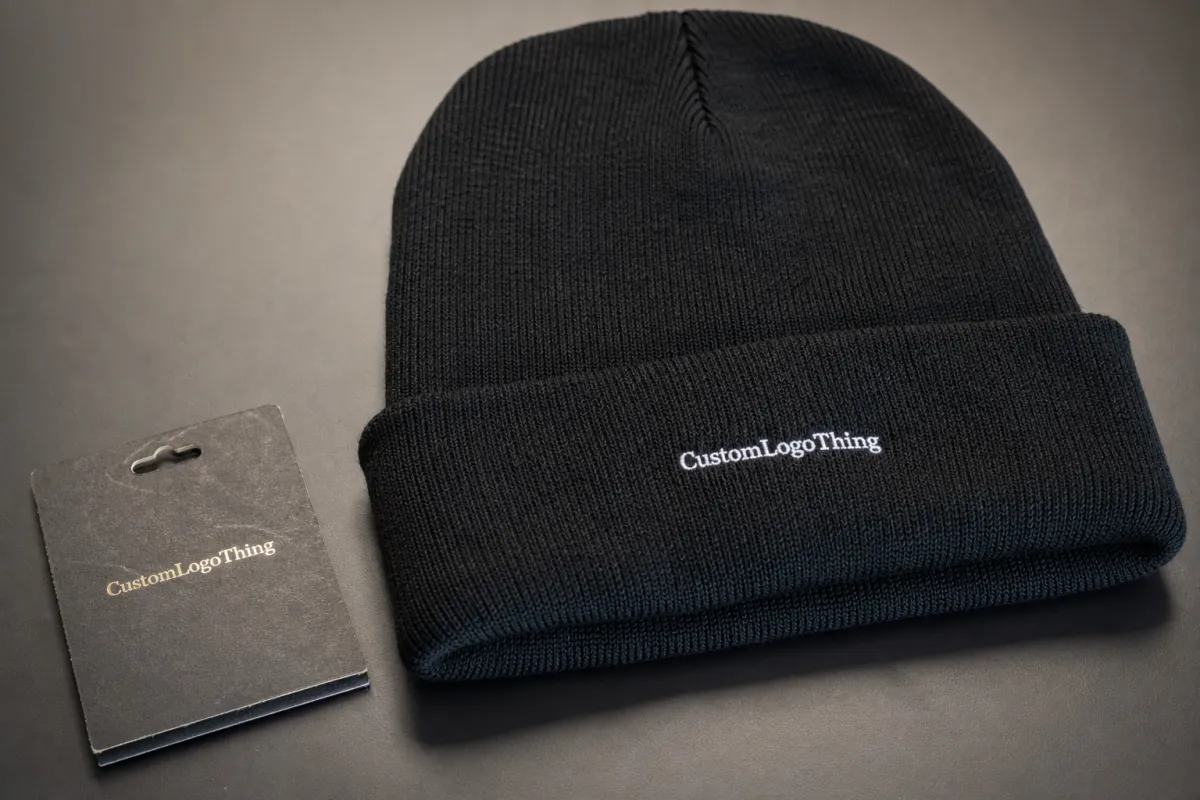
A premium cuffed beanies Print Method Comparison starts with one inconvenient fact: the cuff changes the canvas. The front panel is not really flat. It is usually a rib knit, often 1x1 or 2x2, and that texture can pull thin strokes apart, compress small type, and shift the visual center of the decoration once the cuff is folded.
Construction matters more than most buyers expect. A beanie body might be 100% acrylic, an acrylic-wool blend, or a heavier knit with a brushed interior. Acrylic tends to hold shape and price well. Wool blends usually feel warmer and more elevated, but they can raise cost and make fine detail more sensitive to texture changes. A thicker cuff can help decoration sit cleaner, while a loose knit can make even a good logo wobble visually.
The fold steals vertical space too. A logo that feels properly sized at 2.5 inches wide can look too low, too high, or just oddly small once the cuff is turned. That is why placement is not a cosmetic detail. It is part of the decoration method.
For buyers, the question is not simply “print or embroidery?” It is whether the brand mark still looks deliberate after the beanie is worn by different head sizes, stretched in transit, and handled by people who will not baby it. On a retail-style cuffed beanie, the best result usually comes from three things: clean placement, enough contrast, and a method that works with the knit instead of fighting it.
That is why a useful comparison looks at four practical points: how the decoration reads on rib knit, how it wears, what it costs at your quantity, and how long the full order takes from proof to shipment. Fancy renderings do not protect margins. Production choices do.
There is a familiar pattern here for anyone who has bought offset printing, digital printing, or flexographic work. Setup, volume, and material all shape the price. Beanies add stretch, fold, and abrasion to that equation, which is why a decoration method that looks cheap in a quote can become expensive once rework enters the picture.
How Screen Print, Embroidery, and Patches Behave on Rib Knit
Each method behaves differently on a cuffed beanie, and the knit is the judge. Not the mockup. Not the mood board. The knit.
Screen Print
Screen print sits on top of the surface, so it works best for bold art, simple messaging, and placements with enough visual breathing room. On cuffed beanies, that usually means one to three colors, with thick enough strokes that the knit texture does not eat the edges. A spot-color build is usually cleaner than chasing fine gradients, because rib knit already introduces visual noise.
Good screen print can be a strong value on larger runs. The weak point is detail. Thin serifs, hairline strokes, and tiny enclosed spaces tend to blur or crack sooner on a stretchy cuff. It can still look sharp if the artwork is simplified and the print area is modest, but it is not the best choice for artwork that depends on microscopic detail to read properly.
Embroidery
Embroidery is often the most premium-looking direct decoration because it adds texture, depth, and a retail feel that flat ink cannot match. It works especially well on solid-color knits and small logos that need a cleaner, more finished look. A simple monogram can look expensive very quickly.
The tradeoff is detail. Tiny text, thin lines, and crowded symbols get compressed once stitch count and thread width come into play. On a cuffed beanie, the problem gets larger because the knit moves under tension. A logo that looks tidy at 2.25 inches wide can become cramped at 1.5 inches wide. Buyers should ask for stitch count guidance and size limits, not just a yes-or-no answer.
Digitizing quality matters too. A poor digitize can make even a good logo look jagged, overfilled, or oddly dense. That step is usually invisible on a quote sheet and obvious on the hat.
Patches and Labels
Woven patches, leather patches, and sewn labels solve a lot of the knit distortion problem because the artwork is built off the beanie surface and then attached. That gives more control over tiny details, stronger edges, and a heavier premium feel. A woven patch can hold small type better than direct embroidery. A leather patch can make the product feel weightier. A sewn label can stay quiet and polished when the brand wants restraint instead of loud merch.
The edge treatment becomes part of the product. Merrowed edges, laser-cut edges, clean stitch lines, and backer choices all affect how finished the beanie feels. The tradeoff is assembly. Patches add parts, extra approvals, and another point where errors can creep in. That is the price of control.
Transfers and Digital Methods
Heat-applied graphics, including DTF, give buyers flexibility on smaller runs and more complex art. This is where digital printing logic shows up: CMYK builds, quick setup, and good detail retention on small logos. For a cuffed beanie, that can be useful when the art is multicolor, the quantity is low, or the launch date is tight.
The drawback is feel. Transfers sit differently than thread or patch material. They can be smoother than a thick patch, but they still read as applied rather than built into the product. That is acceptable for a campaign item or a test order. It is less convincing for a collection that is trying to look like permanent retail apparel. Ask how the transfer behaves after washing and stretch recovery, not just how it looks on day one.
| Method | Best Use | Typical Hand Feel | Typical Setup | Approx. Added Cost at 500 pcs |
|---|---|---|---|---|
| Screen print | Bold logos, simple text, spot-color art | Flat, light | Screen setup per color | $0.40-$1.10 |
| Embroidery | Retail-style branding, small marks | Textured, premium | Digitizing plus stitch approval | $0.90-$2.25 |
| Woven patch | Fine detail, clean branding | Structured, polished | Patch art and sample approval | $1.10-$2.80 |
| Leather patch | Heavy premium look, minimal art | Firm, tactile | Tooling or laser prep | $1.25-$3.00 |
| DTF transfer | Short runs, multicolor art, fast trials | Smooth, applied | Digital print prep | $0.85-$2.00 |
Those ranges move around with quantity, logo size, placement, and the beanie body itself. A 100-piece order and a 5,000-piece order are not the same business problem. Anyone giving you one number without the production details is leaving out the part that changes the quote.
Cost, Pricing, and MOQ Tradeoffs by Decoration Method
Pricing breaks into two buckets: setup cost and unit cost. Buyers who only look at the per-piece number miss the line items that appear later. Digitizing, screens, patch tooling, sample work, revision rounds, and color changes can all move the total.
Embroidery usually carries a digitizing fee, often $25-$80 for simple logos and more for complex designs. Screen printing can have a setup charge per color or per location, which is why a one-color print is far easier to quote than a four-color build. Patches often have the highest prep but the most predictable unit pricing at scale because the patch becomes a repeatable component.
If you already buy printed packaging or branded paper goods, the structure will feel familiar. Offset printing usually rewards larger volumes after setup. Flexographic printing does the same in packaging once plates are paid for. Beanies work in a similar way. The method that looks attractive at 100 units may not be the best method at 2,000.
Here is the practical rule: low-MOQ orders usually favor transfers or simple embroidery, while larger bulk runs can make screen print or patches more efficient per unit. If the order is 48 pieces for a team launch, paying a bit more for a clean transfer can make sense. If the order is 1,500 retail beanies, a woven patch or a simpler embroidery build may give better shelf presence and a better landed cost.
The hidden cost traps show up quickly:
- Sampling - expect $20-$75 for a pre-production sample or decorated test, depending on the method.
- Rush fees - compressing a 12-business-day job into 5 days changes the math immediately.
- Rework - poor artwork, wrong placement, or late color changes can trigger another proof round.
- Shipping - soft goods are lighter than many hard goods, but freight still matters on time-sensitive orders.
A useful comparison is to ask for pricing at three quantities, not one. For example: 100, 500, and 2,000 units. That shows where setup cost stops hurting and unit cost starts making sense. It also exposes whether the supplier is giving a real scale break or just polishing the middle number.
Ask for the same details on every method you compare: logo size, placement, thread or print colors, backing type, and whether one or both sides are decorated. A quote without those details is more of a guess than a quote.
Process and Timeline: From Artwork to Final Delivery
The process starts with artwork review, and that is where a lot of orders quietly go off the rails. Vector files are best. Clean outlines are better. A blurry JPEG with a shadow effect and ten tiny details is not a production file, no matter how polished it looks in a presentation deck.
For embroidery, the added step is digitizing. The designer turns artwork into stitch data, then checks how the logo behaves at the actual size. That step can take one to three business days, sometimes longer if the art needs to be simplified. For patches, mockups and sample approval matter because edge style, backing, and material all affect the final look. Screen print jobs need setup and color separation, especially if the art is not a simple spot-color design.
Lead time is not the same as total timeline. That distinction matters. Production might be 7-10 business days after approval, but sampling, revisions, and freight can turn a “quick” project into a three-week project. Buyers get burned when they only hear the factory clock and forget the proofing clock. The proofing clock is the one that usually eats the calendar.
For reference, I like to ask suppliers for a dated milestone list:
- Artwork received and checked
- Proof sent
- Sample or mockup approved
- Production slot confirmed
- Quality check completed
- Ship date and transit method confirmed
If the order is time-sensitive, ask for transit standards too. Soft goods can still get crushed, scuffed, or delayed in freight. The ISTA framework is a useful mental model for packaging and transit handling. It is better than assuming a box survives on hope. If you are adding hang tags, belly bands, or inserts, FSC-certified paper is a practical choice for brands that care about material sourcing.
Simple transfers can move faster than embroidery. Embroidery is usually mid-range. Custom patches and mixed builds take longer because there are more moving parts, more approvals, and more chances for someone to ask for a logo adjustment after the proof is already approved. That happens constantly. Usually late in the day.
Common Mistakes That Make Premium Beanies Look Cheap
The fastest way to ruin a premium beanie is to overcomplicate the artwork. Tiny text, thin strokes, and crowded details do not age well on rib knit. The cuff stretches, the fabric shifts, and a polished concept can start reading like it was squeezed through a bad photocopier.
Placement is the next problem. Too low on the cuff and the mark gets swallowed by the fold. Too close to a seam and it looks accidental. Too high and it may float awkwardly above the visual center of the hat. A decent logo can look amateur if it is placed without a real beanie mockup.
Color choices matter more than people expect. Low-contrast thread on dark knits can disappear. A print that matches the body color too closely can flatten the design. A patch with the wrong border color can make the whole product feel dated. If the brand wants a premium finish, contrast should look deliberate.
A flat proof is a suggestion. The beanie is the final judge.
The biggest miss is approving art without a sample, then acting surprised when the finished beanie looks different on head than on screen. That surprise is optional. A sample or a clear size mockup catches most of the issues early, when they are still cheap to fix.
Another common failure is asking a decoration method to hold more detail than the material can physically support. That is not really a production problem. It is an artwork problem. Simplify the mark, or move to a method that preserves detail better, such as a woven patch. Everyone saves time when the design respects the knit.
Expert Tips for a Better Premium Finish on Bulk Orders
If the goal is a premium read, simplify the artwork before quoting it. Strong shapes, open spacing, and fewer tiny interior details usually beat complicated linework on cuffed knits. A clean two-color mark often looks more intentional than a crowded six-color design that tries too hard.
Match the method to the brand story. Embroidery works well for classic retail vibes and heritage brands. Woven patches and leather patches push the item toward a heavier, more tactile premium feel. Transfers suit sporty launches, promotional drops, and short runs where speed matters more than long-term structure. That choice changes how the product feels in hand.
Ask for a size mockup on the actual beanie spec, not just a floating logo on white. The cuff height, knit density, and logo width should be shown together. A 2-inch mark on a 2.75-inch cuff reads very differently from the same mark on a 3.25-inch cuff. Buyers who check that detail avoid the familiar “we thought it would be bigger” conversation.
Quality control should not stop at visual approval. Test three things before signing off on the full order: hand feel, stretch recovery, and wash durability. If the decoration cracks, curls, lifts, or gets scratchy after a few cycles, it is not premium. It is decoration with a short memory.
For branded bundles, keep the print logic simple. If the beanie is the hero item, let the decoration do one job well. If there is a logo on the hat and another on a hang tag, make sure the two pieces support each other. Packaging discipline helps here too: the graphic system should feel connected, not like three departments were designing different products.
One more practical point. Dark knits hide flaws, but they also hide detail. Light knits show detail better, but they expose uneven stitching and color mismatch more quickly. Neither side is automatically better. The body color, decoration color, and method need to be judged together.
What To Confirm Before You Request Quotes
Start with the basics: logo size, placement, quantity, target in-hands date, and the minimum quality standard you will not compromise on. If those five things are fuzzy, every quote will come back fuzzy too. Suppliers can only price what you actually define.
Then shortlist two decoration methods and ask each supplier for the same line items: unit cost, setup fees, MOQ, sample cost, revision policy, and lead time. That comparison keeps the conversation honest. It also makes it obvious which vendor is quoting the work you asked for versus the work they wish you asked for.
Request a sample or photo proof using the same beanie body, cuff height, and artwork scale you plan to buy. Not a similar one. Not “basically the same.” The exact spec. This is where buyers save money by avoiding a bad run, not by trimming fifty cents off a unit price and hoping for the best.
Then compare full landed cost and approval risk. A slightly higher per-piece price can be the better business decision if it removes rework, protects the logo, and gets the order out on time. That is the point of a premium cuffed beanies Print Method Comparison: pick the method that fits the brand, the budget, and the production reality, not the one that looks prettiest in a spreadsheet.
Which print method lasts longest on premium cuffed beanies?
Embroidery and sewn patches usually last the longest because they are physically anchored to the knit. Screen print can hold up well on simple art, but very fine details may wear faster on stretchy cuff areas.
Is embroidery better than screen printing for cuffed beanies?
Embroidery usually looks more premium and works better for small logos or retail-style branding. Screen printing is better when the art is bold, simple, and you want a lower-cost option on larger runs.
What is the cheapest way to decorate premium cuffed beanies in bulk?
The cheapest route is usually the method with the lowest setup cost at your quantity, which is often simple screen print or a basic transfer. At higher volumes, the cheapest unit cost can shift, so ask for pricing at several quantities instead of guessing.
How long does production take for custom cuffed beanies?
Simple jobs can move quickly, but embroidery digitizing, patch approval, and sample revisions can add days or weeks. Ask for both production lead time and total turnaround so shipping, proofing, and sampling do not surprise you.
How detailed can a logo be on a cuffed beanie?
Small text, thin strokes, and tight spacing are risky because the cuffed knit can stretch and blur the detail. If the logo has fine elements, a woven patch or simplified embroidery usually preserves the artwork better than direct print.
For a real order, keep the decision practical: compare appearance, durability, cost, and lead time, then check the artwork against the actual beanie spec. That is the cleanest way to handle a premium cuffed Beanies Print Method Comparison without paying for avoidable surprises.


