Custom Poly Bags Premium Quality: What Buyers Actually Get
Custom Poly Bags premium quality is not a branding phrase. It is a production standard. Buyers usually discover that only after a bag has already failed: a seal splits during packing, film scuffs in transit, print rubs off against another carton, or the dimensions miss by enough to slow the line. The quote looked fine. The total cost did not.
The useful way to judge a poly bag is not by the sample sitting flat on a table. It is by how the bag behaves when it is filled, handled, stacked, shipped, and opened by a customer. That is where quality separates from appearance. A good bag protects the product, supports the brand, and reduces avoidable labor. A weak bag looks acceptable for a moment, then creates work.
For packaging buyers, the practical question is simple: does the bag fit the product, survive the distribution path, and print cleanly enough to represent the brand well? If any of those answers are shaky, the bag is not truly cheap. It is just shifting cost into damage, rework, and complaints.
Custom Poly Bags Premium Quality: What Buyers Actually Get
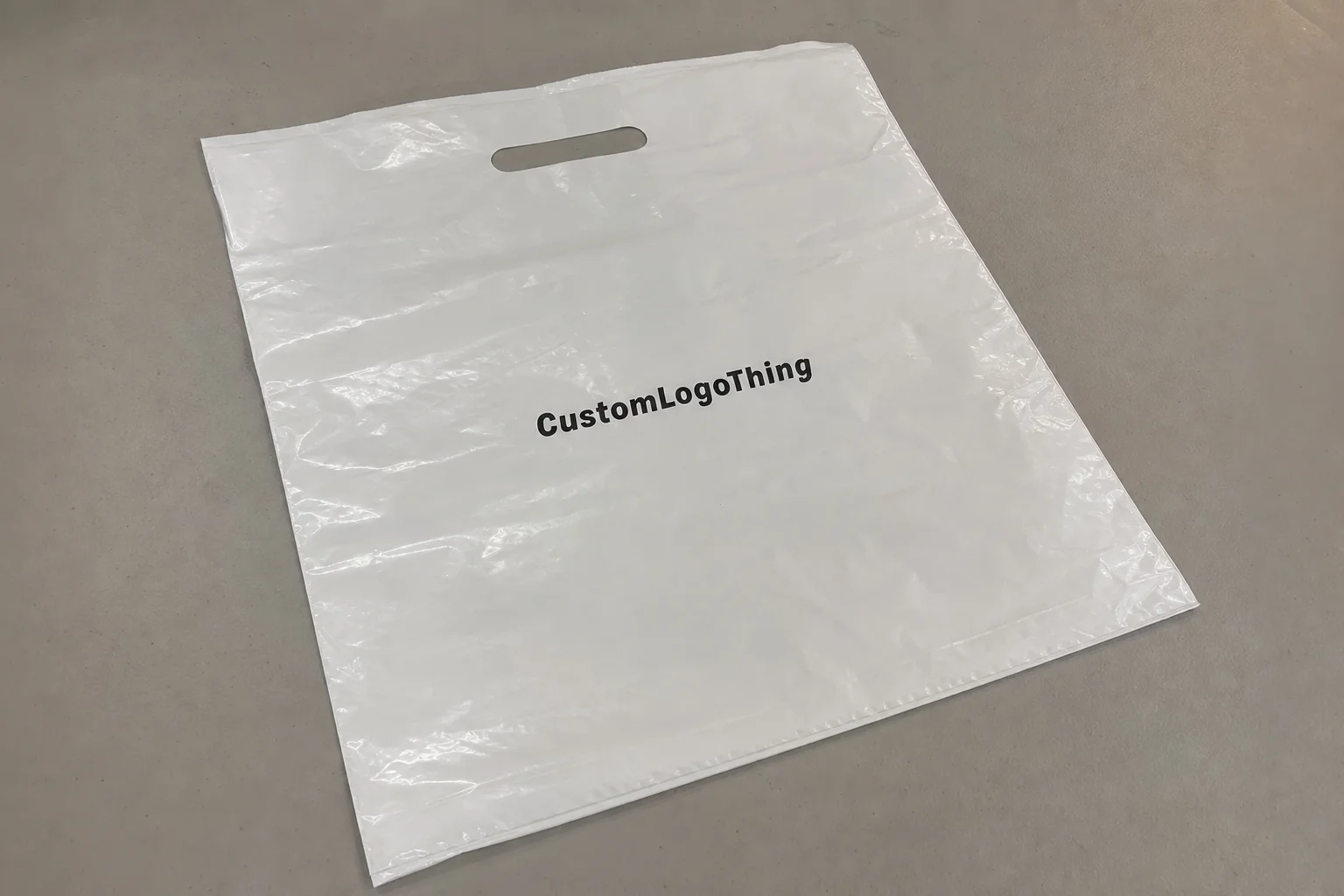
Premium quality shows up in the details that rarely make it into a sales pitch. Consistent film gauge. Clean seals. Accurate sizing. Print that stays legible after handling. Low odor. Stable appearance from batch to batch. None of these sounds dramatic on its own, but together they determine whether a bag performs like packaging or like an afterthought.
In practice, buyers are paying for control. A lower-priced bag can be acceptable when the contents are forgiving and the bag is only doing basic containment. Once the product has sharp corners, higher weight, moisture sensitivity, or a customer-facing role, the spec has to tighten. That is where Custom Poly Bags premium quality becomes a performance requirement, not a marketing claim.
There is a common trap here. A bag can look crisp on approval day and still fail under stress. Poor seal geometry, inconsistent resin blending, or loose gauge control can turn a visually clean bag into a weak one. The same is true for print: color density may look acceptable in the proof, then shift once the job moves into full production.
Premium is a combination of material choice, seal behavior, print durability, and dimensional control. If one of those is weak, the whole bag feels cheap.
For retail packaging, the payoff is often lower shrink, fewer returns, and better shelf presentation. For shipping and fulfillment, the gain is fewer damaged items, fewer repacks, and less operator frustration. That is the business case. Not luxury. Not decoration. Reduction of avoidable friction.
A useful mindset is to compare the bag against the failure points in the operation. If the product has corners, weight, or movement inside the package, the film and seal need to answer that. If the bag is part of a branded customer experience, print registration, finish, and clarity matter more. A premium bag does not do everything equally well. It is designed around the actual use case.
Typical buyers also underestimate how much packaging perception changes with smell, texture, and sound. Harsh resin odor can make a package feel lower grade even if the material technically performs. Excessively slick film can make packing harder. Loud crinkle can affect perceived quality for retail items. Those are small signals, but packaging is full of small signals.
How Film, Seals, and Print Work Together
Most of the quality story comes down to three variables: the film, the seal, and the print system. Thickness matters, but it is only one part of the picture. A heavier bag with poor processing can underperform a lighter bag with tighter control. Buyers who only compare mils or microns are missing the real variables.
Material formulation changes how the bag behaves. LDPE, LLDPE blends, and coextruded films all offer different tradeoffs in clarity, puncture resistance, softness, and sealing behavior. A soft film can feel nicer and conform better around product edges. A stiffer film may stack better and hold shape more cleanly. Neither is universally better. The right choice depends on what the product needs the bag to do.
Seal quality is where many packaging problems start. A seal can look uniform and still be weak if the heat profile, dwell time, or seal design is off. That matters most on wider bags, heavier contents, and bags that will be compressed in transit. A good supplier should be able to explain seal strength in relation to the fill weight and the handling environment, not just point to film thickness.
Print is part of the structure, not just decoration. Ink choice, cure, substrate finish, and registration all affect how the bag holds up after folding, stacking, and shipment. A glossy surface may improve shelf appeal and color pop. A matte finish may reduce glare and fingerprints. Clear film can make a package feel lighter and more premium, but it also exposes contents and any scuffs more easily.
For buyers comparing Custom Poly Bags premium quality with a plain utility bag, the difference is usually visible in handling. A utility bag may do fine for internal storage or secondary protection. A branded bag has to do more. It must present well, stay intact, and match the product story. If it cannot survive the basic movements of fulfillment, the branding is working against itself.
Testing standards help keep these conversations grounded. ASTM methods for thin films are useful for comparing tensile and tear behavior. ISTA distribution tests are useful when the bag needs to survive realistic shipping stress, not just an approval photo. A supplier who can talk through those references clearly is usually more dependable than one offering vague reassurance.
Cost, MOQ, and Quote Variables That Move Unit Cost
Pricing for Custom Poly Bags moves with a short list of variables: bag size, film thickness, resin grade, color count, print coverage, finish, packing format, and order quantity. Minimum order quantity matters because setup cost gets spread across the run. A 5,000-piece order rarely prices like a 50,000-piece order, even if the bags are close in appearance.
Below is a practical range view for common bag types. These are illustrative numbers for standard production runs, not universal market pricing. Freight terms, artwork complexity, and quality requirements can move the result materially.
| Bag Type | Typical Use | Illustrative Unit Cost | Main Tradeoff |
|---|---|---|---|
| Plain utility poly bag | Internal storage, secondary protection, low-visibility packing | $0.03-$0.07 | Lower presentation value and fewer print options |
| Printed branded bag | Retail packaging, direct-to-consumer shipments, branded packaging | $0.08-$0.22 | Higher setup cost, but stronger shelf and customer impact |
| Specialty or high-barrier bag | Moisture-sensitive, sharp, or higher-risk products | $0.15-$0.40+ | Best protection, but usually the highest MOQ and lead time |
The table is useful only if you read it alongside your operational cost. A cheaper bag can still be the expensive decision if it increases scrap, damages the product, slows packing, or creates returns. The same logic applies to Custom Printed Boxes versus poly bags. The package line item is only one part of the real total.
To compare quotes fairly, make every supplier quote the same spec sheet, tolerance range, artwork format, packaging format, and shipping assumption. If one price assumes loose-packed cartons and another includes carton dividers or palletization, the numbers are not directly comparable. Ask whether the quote includes plates, proofs, overage allowances, and any tooling or setup fees. That is where hidden differences tend to live.
Print coverage can move price more than buyers expect. A simple one-color logo on clear film is a different production problem from full-bleed artwork with multiple spot colors. Sometimes the best answer is not to simplify the brand, but to simplify the print structure. Fewer colors, cleaner file setup, and smarter use of negative space can protect budget without making the package feel generic.
Production Process and Lead Time From Artwork to Shipment
The production sequence is straightforward, but every handoff can add time if the spec keeps changing. It usually begins with artwork review, then proofing, then material setup, printing, sealing or converting, inspection, packing, and shipment. If the artwork is not final, the schedule moves. If the material is not available, the schedule moves. If the proof is not approved on time, the schedule moves again.
Lead time usually stretches in three places: artwork corrections, color matching, and resin or film availability. New tooling adds another delay, especially for custom dimensions, gussets, wicketing, or unusual bag structures. Specialty prints and heavy ink coverage can also slow the process because drying and inspection take longer. A rush order is possible in many cases, but it normally costs more and leaves less room for correction.
For standard orders, a realistic planning window is often around 12-15 business days from proof approval to shipment, though that depends on the supplier’s queue and the job complexity. Some production runs are faster. Some are slower. What matters more than the average is the approval path. If lead time starts at deposit for one supplier and at final artwork sign-off for another, the quote sheet is hiding a schedule difference.
Quality control should not be vague. Ask whether the factory checks dimension tolerance, seal strength, print alignment, and pack-out consistency before shipment. Visual inspection alone is not enough for a premium product. A bag can look right in a sample photo and still drift out of spec in production. The more precise the QC checklist, the less likely the shipment is to surprise you.
If you are also ordering Custom Packaging Products or coordinating with Custom Poly Mailers, the timeline gets more sensitive. Multiple packaging formats often depend on different tooling, different approvals, and different lead times. Planning them together is efficient only if the specs are locked early.
Responsible suppliers should also be willing to discuss material sourcing and waste considerations without hiding behind vague sustainability language. The EPA’s plastics guidance at epa.gov is a reasonable reference point for general context. It will not specify your bag, but it helps buyers ask better questions about recycling claims, downgauging, and scrap reduction.
Step-by-Step: Spec the Right Bag for Your Product
Start with the product. Measure it. Weight it. Look at its edges, corners, surface finish, and how much it moves once packed. Guessing from a previous order is how packaging gets mismatched. A flat, soft product can work in a simple bag. A dense item with corners needs a different answer. A product that shifts during transit needs room for that movement without stressing the seal.
Then choose the bag format. Flat bags are the simplest choice for low-profile items. Gusseted bags add volume and are often better for thicker products or kits. Wicketed bags matter when packing speed and controlled dispensing are priorities. Resealable styles make sense for repeat-open use or samples. Printed display bags are the right fit when the package itself contributes to the sale.
- Flat bag: good for simple, low-profile items with limited packing complexity.
- Gusseted bag: better for thicker products or items that need more internal space.
- Wicketed bag: useful where line speed and uniform dispensing matter.
- Resealable bag: practical for repeat access, samples, and consumer-facing kits.
- Printed display bag: strongest fit for retail packaging and package branding.
After format, define the performance target. Clarity may matter most for one product. Puncture resistance may matter most for another. Moisture control, static reduction, tamper evidence, and odor control can all be relevant, but the bag should be built around the top priorities rather than a wish list. Trying to optimize everything equally usually produces a compromise that satisfies no one.
Sampling should happen under real conditions. A sample that looks right on a desk can behave differently once the product, packing bench, and operator habits are involved. Too slippery. Too tight. Too floppy. Too much stretch. Too much memory. These are the problems buyers discover late if they never test the bag on the actual line.
If the product will move through rough distribution, ask for transit simulation or at least a stress test plan aligned to the route. ISTA profiles are useful because they force attention on compression, drop, and vibration rather than appearance alone. A bag that survives those conditions is usually a better commercial decision than a bag that only photographs well.
A good bag spec protects the product, speeds packing, and supports the brand. Miss one of those and the quote starts looking cheaper for the wrong reason.
It also helps to decide what the bag does not need to do. If the product is already housed in a rigid box, the poly bag may only need to protect against dust or moisture. If the item is delicate and shipped loose, the bag may need more puncture resistance and better seal strength. Narrowing the job makes the spec stronger.
Common Spec Mistakes That Make Bags Look Cheap
Underspecifying film gauge is one of the easiest ways to create avoidable failures. Buyers sometimes shave thickness to save fractions of a cent, then wonder why the bag tears, wrinkles, or feels flimsy. If the contents are heavy, sharp, or unstable, the film has to be chosen for the load, not for the spreadsheet.
Weak seal expectations are another common problem. A seal can look neat and still fail if the geometry, fill method, or heat profile is wrong. This matters more on wider bags and higher-fill applications. A bag that opens in transit or on a forklift is not a premium bag, even if the print looks good. The package failed at its main job.
Print issues often come from file setup rather than the press. Heavy coverage, poor contrast, incorrect bleed, or a mismatch between artwork and substrate finish can make a bag look dull or sloppy. Buyers sometimes blame the supplier when the root issue is file quality. A good supplier should catch those issues early, but the cleaner the artwork handoff, the better the result.
Tolerance errors are easy to overlook and expensive to ignore. If the bag needs to fit a product plus insert, a small dimension miss can create a packing delay or a poor shelf presentation. Storage conditions matter too. Heat, humidity, and stacked weight can distort low-grade film before the bags even reach the line. If the approved sample never matched the production run, the approval process was incomplete.
There is one more mistake that shows up often: treating the sample like the finished product without checking how it was made. A hand-made or lab sample can hide production constraints that matter later. The better comparison is production-style sample versus production-style sample. That is the only comparison that tells the truth about Custom Poly Bags premium quality.
Next Steps: Request Samples, Compare Proofs, and Lock Specs
Before committing to a supplier, build a simple comparison sheet. Include size, thickness, resin type, print method, MOQ, unit cost, lead time, freight terms, and who owns approval at each stage. A one-page spec comparison often reveals whether a quote is genuinely competitive or just incomplete.
Order production-style samples whenever possible. The sample should match the final structure, material family, and print approach, not just the general appearance. Then test the bag with the actual product and the actual packing team. A sample that works only in isolation is not enough.
Ask for a written spec sheet and a proof that matches the exact production version. That prevents confusion later, especially when artwork, dimensions, or print placement matter. It also gives both sides a clear reference if there is a dispute about what was approved.
For sustainability-sensitive projects, ask for documentation rather than broad claims. Can the film be downgauged without sacrificing performance? Does recycled content affect clarity or seal strength? Is the recyclability claim tied to a real stream? Those questions are more useful than generic eco language. Packaging decisions should be defensible, not decorative.
The practical path is usually straightforward: compare two or three suppliers against the same spec, test the samples under real conditions, and choose the option that proves the best balance of quality, cost, and operational fit. That is how Custom Poly Bags premium quality earns its price. Not through a polished quote. Through fewer surprises after the order ships.
Common Questions
How do I tell if custom poly bags premium quality is worth the extra cost?
Compare the bag against the failures that actually cost money: punctures, split seals, print scuffing, size drift, and handling problems. Then add downstream costs such as returns, repacking time, damaged product, and customer complaints. Premium quality tends to pay off fastest on sharp, heavy, moisture-sensitive, or customer-facing products.
What thickness should I choose for premium custom poly bags?
Start with the product weight, edge sharpness, and handling environment instead of a fixed industry number. A thicker bag is not automatically better if the seal, resin blend, or bag geometry is wrong. Ask the supplier to recommend a thickness based on sample testing, then validate it on the actual packing line.
Why do quotes for custom poly bags vary so much?
Price changes with resin grade, film thickness, print complexity, bag dimensions, finish, order quantity, and packaging format. Quotes may also differ in freight assumptions, tooling charges, proofing, and inspection standards. The cheapest quote often leaves something out, so compare the full specification line by line.
What is a normal lead time for custom poly bags?
Lead time depends on proof approval, material availability, print setup, and whether the job is standard or highly customized. Simple runs are usually faster than printed or specialty bags, but rush orders can increase cost and reduce flexibility. Confirm whether the clock starts at deposit, proof approval, or final artwork sign-off before placing the order.
Can premium custom poly bags be recyclable or eco-friendly?
Yes, but the material choice has to fit the recycling stream and the performance target. Ask whether the bag uses recyclable resin content, downgauged film, or post-consumer material without compromising seal strength. Verify sustainability claims with documentation, because eco-friendly does not automatically mean durable or compliant.