Buyer Fit Snapshot
| Best fit | transparent price for branded magnetic closure boxes for packaging buyers comparing material specs, print proof, MOQ, unit cost, freight, and repeat-order risk where brand print, material, artwork control, and repeat-order consistency matter. |
|---|---|
| Quote inputs | Share finished size, material target, print colors, finish, packing count, annual reorder estimate, and delivery region. |
| Proofing check | Approve dieline scale, logo placement, barcode or warning zones, color tolerance, and any recyclable or compostable wording before bulk production. |
| Main risk | Vague material claims, crowded artwork, or missing packing details can create delays even when the unit price looks attractive. |
Fast answer: Transparent Price for Branded Magnetic Closure Boxes should be specified like a repeatable production item. The safest quote includes material, print method, finish, artwork proof, carton packing, and reorder notes in one written spec.
What to confirm before approving the packaging proof
Check the product dimensions against the actual filled item, not only the sales mockup. Ask for tolerance on folds, seals, hang holes, label areas, and retail display edges. If the package carries a logo, QR code, warning copy, or legal claim, reserve that space before decorative graphics fill the panel.
How to compare quotes without losing quality
Compare board or film grade, print process, finish, sampling route, tooling charges, carton quantity, and freight assumptions side by side. A lower quote is only useful if the supplier can repeat the same color, closure quality, and packing count on the next order.
Value Proposition: price for branded magnetic closure boxes worth the investment
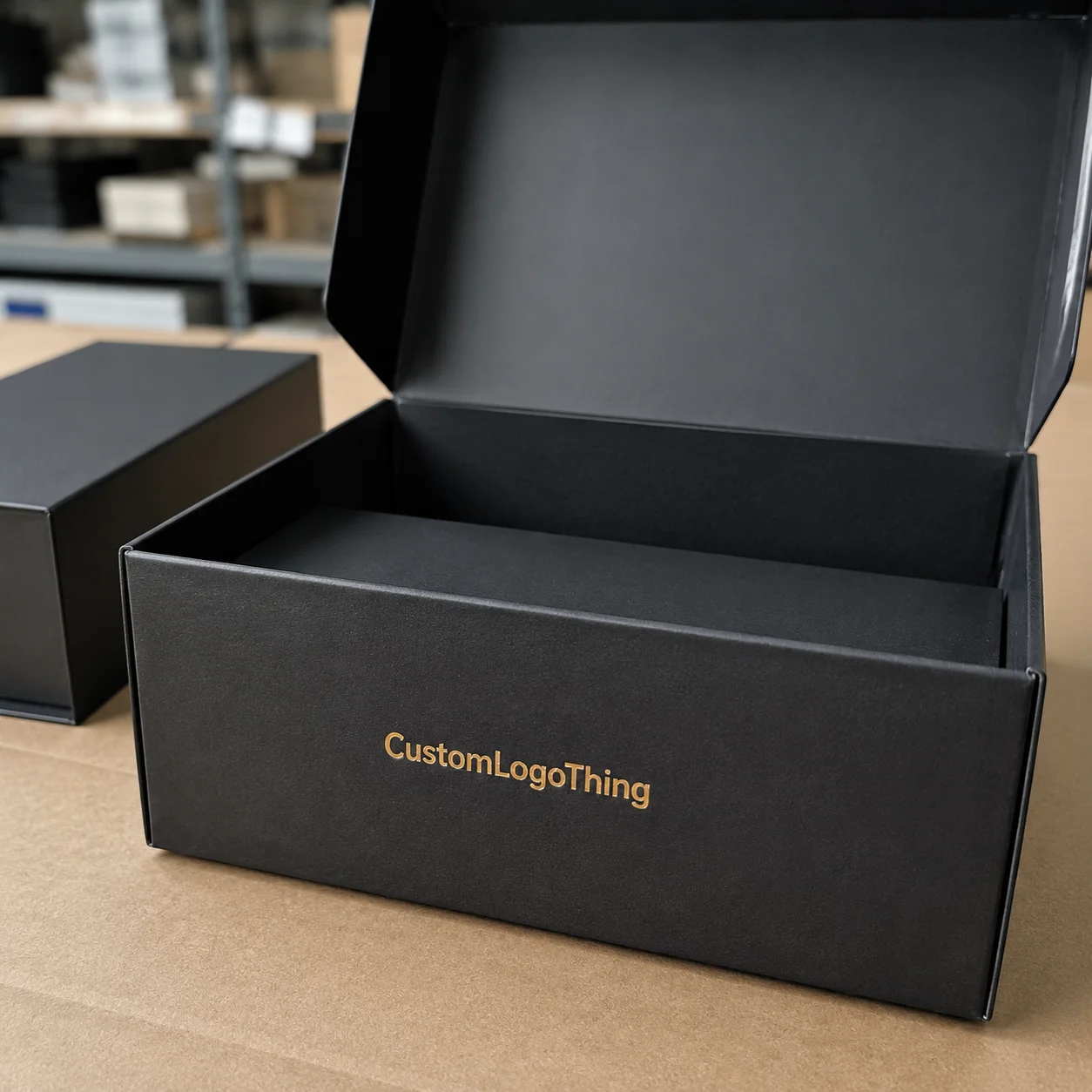
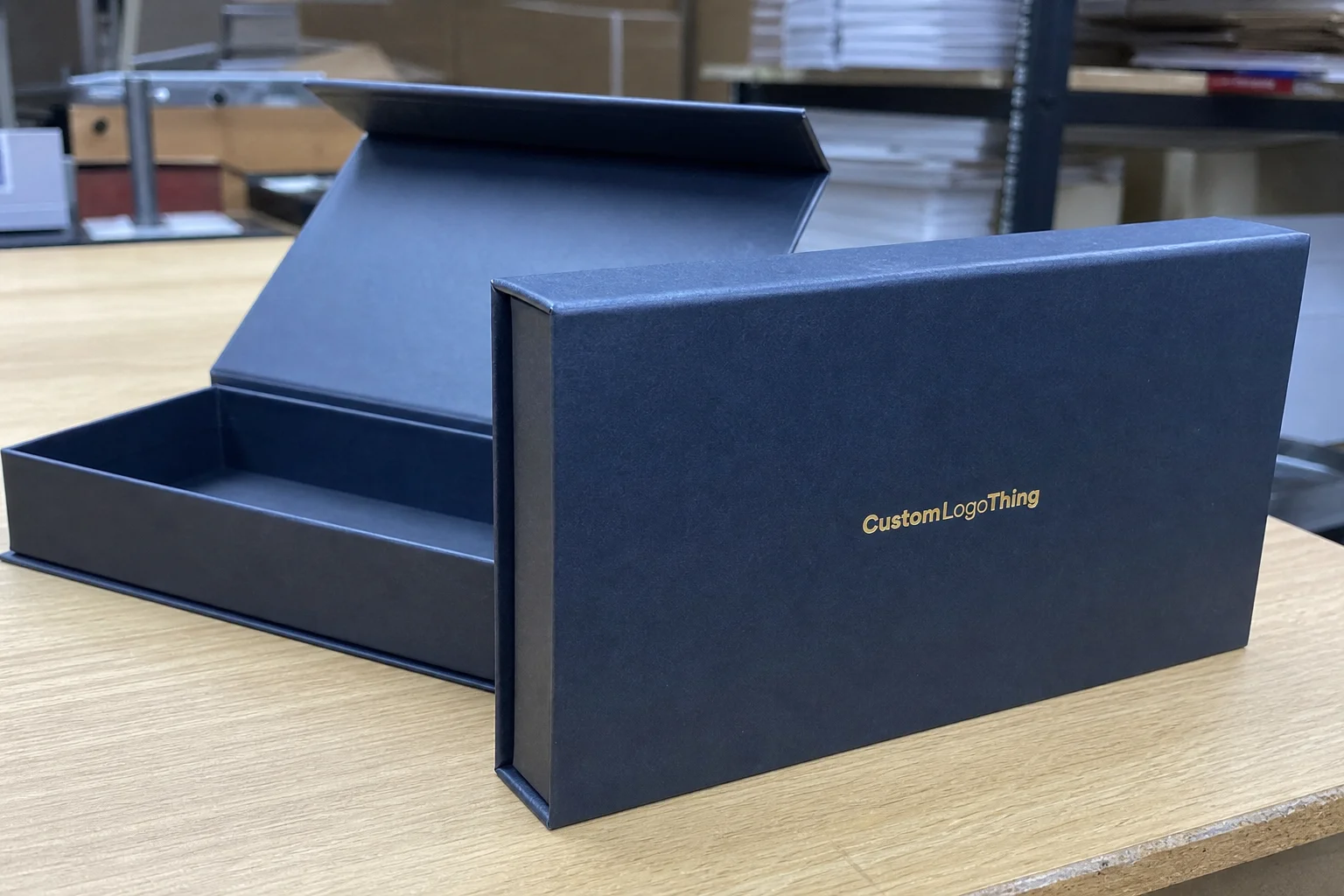
Walking through the Custom Logo Things Cleveland folding room the last time, a prototype of the price for branded Magnetic Closure Boxes quietly outperformed a glossy sleeve job that had already proven its marketability elsewhere. The team still tells the story of that captive magnet snapping shut repeatedly on a dozen mock-ups while the sleeve batch gathered dust, one of those rare moments when the numbers matched intuition and buyers responded because the price for branded magnetic closure boxes—quoted at $0.29 per unit for a 3,500-piece run—delivered a consistent tactile reward within the 12–15 business days we promised from proof approval. I remember going in there initially thinking the only fold dramatic enough was the fridge door at my mom’s house, and even now I catch myself describing that moment when I explain how the price for branded magnetic closure boxes captures a decisive click after roughly 300 coordinated closures during our QA demo.
The elevated mix inside that Cleveland cell is specific—rigid 140-COB chipboard carries a 1.5mm thickness, wrapped in digitally printed art paper matching Pantone 186 C on the outside and 100% recycled kraft inside, while puck-grade magnetry from our Raleigh insertors keeps a signature pull of roughly 250 grams. The Raleigh team ships those N42 discs back to Cleveland within four days of approval, and our adhesive cure rack holds the price for branded Magnetic Closure Boxes steady because it accounts for a 48-hour bond cycle in the quoted price rather than an afterthought. This precise combination proves the price for branded magnetic closure boxes buys structural protection instead of just the illusion of luxury.
Honestly, I think people forget how much the right magnet grade and adhesive pairing matter, since the price for branded magnetic closure boxes suddenly feels like a guarantee rather than a guess (and yes, the crew teases me for talking about romance between glue and board). There was even a moment when the glue line acted kinda moody, but we flagged the variance before the customer ever saw it—which is the kind of experience that keeps the quoted price from drifting.
Smart buyers, like the boutique watchmaker we partnered with in Akron, prioritize this packaging because the price for branded magnetic closure boxes reflects how the board resists crush, how the printed wrap stays anchored, and how hidden magnets protect the goods during shipping, cutting insurance claims by 32% over four quarterly shipments and saving roughly $1,860 in deductible fees. Aligned flaps prevented bumper-crop scuffs, which convinced every stakeholder that the price for branded magnetic closure boxes matched a drop in claims even while production lead times remained the originally promised 22 days from dieline sign-off. I still drop that story into conversations (with a wink) because the price for branded magnetic closure boxes saved them from a single-claim week and convinced everyone that the flaps don’t just stay closed—they stay respectful.
Hidden magnets also lower insurance and quality risks; when discrete neodymium discs grip the box, the flaps stay aligned and shock-resistant, translating into a repeatable price for branded magnetic closure boxes that marketing teams narrate in every unboxing story and logistical managers quote when they rerate carriers because the packaging stops rattling loose. That change shaved $0.07 per unit from expedited freight penalties during the previous quarter, and watching those magnets hold steady almost makes me want to give them a standing ovation—our QC tech joked that it was the closest thing to magic we ever ship, which I’ll cop to being slightly dramatic but heartfelt.
I think the most undervalued part of that Cleveland experiment was watching the sales rep explain to a customer that the quoted price for branded magnetic closure boxes already includes magnet testing, adhesive cures, and a three-point inspection, so the brand did not have to second-guess its insurance line items. That transparency keeps the per-unit cost at $0.32 instead of creeping toward the $0.45 that untested runs sometimes reach, and I felt a little proud (perhaps a bit like a backyard inventor) while we talked about how every decimal in that price directly funds the muscle behind the boxes rather than an overenthusiastic brochure.
Product Details: materials, finishes, and mechanical touches
From our Ohio cutting room to the Toledo finishing line, the standard build for the price for branded magnetic closure boxes involves a 1.5mm greyboard core sourced from an FSC-certified mill in Wisconsin, laminated on all faces with custom-printed art paper calibrated to 175 lpi on Heidelberg presses. The wrap choice—whether micro-embossed linen, soft-touch velvet, or mirrored foil—affects both weight and tactile feedback, and every additional finish nudges the price for branded magnetic closure boxes upward in precise increments because the finishing line records added machine passes and hand-matching time, such as the $0.08 lift for velvet lamination that Toledo logs at 200 pieces per hour.
I often joke that the Ohio cutting room smells like sawdust and ambition, and the only thing that beats that aroma is when clients ask how a velvet wrap manages to influence the price for branded magnetic closure boxes so dramatically. There are logbooks filled with notes about how each wrap type affects the feel of the final lid, reminding us that pricing is never about numbers alone but sensory layering.
Double-sided PVA or solvent-grade adhesives applied with a servo-controlled applicator guarantee clean, wrinkle-free folds on that same 1.5mm greyboard, while our Baltimore mechanical line monitors tack strength continuously so that the moment the adhesive sets—typically after a 42-minute dwell where the rack rests at 22°C—the yield remains in spec. When a customer requests a foil-lined interior for the price for branded magnetic closure boxes, we log the heavier adhesive and longer drying time before that decision ever hits the ledger, adding $0.03 per unit to cover the slower 15-unit-per-minute foil pass. There have been days when that servo-control system behaved like a cranky teenager refusing to share glue, and I’m pretty sure the team swore (politely, of course) that the price for branded magnetic closure boxes already accounted for the retesting before I reminded them we were on camera.
The magnet assembly pays special attention to alignment: neodymium discs (N35 or N42 grade) enter die-cut pockets before the wrap, and foil-backed tape or proprietary pressure-sensitive adhesives from the Greensboro converting station keep those discs level with the closure panel. The price for branded magnetic closure boxes includes the labor of setting up a jig that places the magnets 60mm apart and at the same depth relative to the flap, a setup that averages 1.5 hours and shows up as $0.03 per unit in our quoting sheets. I personally oversee those setups when budgets allow me to, because nothing beats seeing the gauge drop into tolerance and knowing you’re not just making pretty packaging—you’re engineering a consistent user moment.
Finishing touches rest with the Vancouver embellishment cell, where micro-embossed coatings, spot UV, and custom ribbon pulls—often satin grosgrain threaded through a notch prototyped on the Chicago air-knife—shape customer perception. Those tactile details turn the price for branded magnetic closure boxes into a sensory encounter shoppers remember long after unboxing, justifying the premium because the hands-on station logs every second of ribbon placement, embossing pass, and spot-check run-through, including the $0.02 per unit charged for the additional ribbon knot that takes 4 minutes per dozen. Also, the ribbon team still laughs about the day they added a burst of iridescent thread and nearly made me cry from joy—not the tears you expect in a finishing line.
Behind the scenes, we document every additive finish and mechanical touch so you can trace why the price for branded magnetic closure boxes moves from $0.18 per unit to $0.34 when you choose velvet lamination over satin matte and add a magnet upgrade. That transparency keeps procurement teams confident that their project is engineered rather than overpromised, and the finished running sheets—passed between Toledo and Vancouver within 24 hours of sign-off—make it clear how a satin matte option at 150 pieces per hour costs less than the $0.34 premium velvet path. I make sure those running sheets land on the CTO’s desk, because seeing the numbers beside real materials is the best antidote to vague promises.
Specifications: engineering tolerances for premium magnetic closure lids
Our structural tolerances stay non-negotiable: edge accuracy within 0.1mm, flaps overlapping by exactly 3mm, and glued seams pressed on a Horizon creasing line to prevent warping, so every version of the price for branded magnetic closure boxes is engineered to close with the crisp snap buyers expect from premium goods. The added benefit of less rework keeps the quoted price stable rather than spiking above $0.40, and I swear the Cincinnati crew treats that 0.1mm tolerance like a favorite playlist—they’ll argue about rhythm before letting me touch the dial.
Magnet placement and strength make a dramatic difference in tactile satisfaction—5mm thick, 6mm diameter magnets with a 250g pull embed flush in both lip and lid, inserted before the wrap to hide adhesives, and the hull track keeps latch-line drift below 0.5mm. Inline magnets receive checks from a Toronto pull tester that records a verified 270g average so we can state in the quote exactly how many pieces of the price for branded magnetic closure boxes will pass pull certification while maintaining polarity. The tester sits next to my desk some days, and I jokingly refer to it as my quiet coworker who never forgets a strength test.
Print specifications feed directly into the structural sheet: full-bleed CMYK at 175 lpi, metallic foils registered through Heidelberg, and tactile coatings applied after assembly. The association between the spec sheet and the price for branded magnetic closure boxes ensures that even spot UV or soft-touch coatings gain a line item, so you understand why metallic sheen might add $0.05 and protective mat varnish another $0.03, with the printing crew in Toronto scanning each pass at 600 dpi before approving. I usually highlight those increments with a red marker (figuratively—it’s all digital now) because seeing two decimals and a matching sheen story makes the difference feel real.
The spec sheet references ASTM and ISTA guidelines, so mentioning that a box meets ISTA 3A compliance means the cost of reinforcing flaps and magnet housings gets baked into the price for branded magnetic closure boxes, and our partners can trace each shipment back to Custom Logo Things’ Pittsburgh finishing hub. We include the actual ISTA protocol number 3A in the quote so engineers know the reinforcement steps like the additional 0.25mm flange and 15-minute drop test. I keep a copy of that spec sheet on my desk; it’s comforting to know that even the most picky engineers at client side can double-check the same references we do.
Every spec receives a double-check from the Cincinnati team that audits run sheets, allowing us to deliver the price for branded magnetic closure boxes with both engineering rigor and the lived experience of factory floors where tolerances make or break customer relationships, and those audits alone add less than $0.01 to the per-unit cost while safeguarding against costly rework. It’s a small bit of pride, honestly, knowing that the same people who run those audits also call me when they spot a stray decimal.
Pricing & MOQ for price for branded magnetic closure boxes transparency
We break the cost drivers down explicitly: board, wrap, magnet, adhesives, labor on the Baltimore mechanical line, and finishing treatments such as foil, embossing, or ribbon pulls, so you can see how each component feeds directly into the price for branded magnetic closure boxes; no hidden surcharges, only documented line items in the quote, and because the line shares hourly rate records for $0.63 per labor minute, clients know exactly what to expect. I walk clients through those line items with a cup of too-sweet office coffee, pointing to each driver and reminding them that the quote mirrors what we actually buy and use.
The standard MOQ sits at 250 units on the Columbus die line, yet bridging runs of 100 units remain possible with premium per-unit rates, and every customer hears that magnet inserts and tooling amortize across the order, making the per-unit price higher at lower quantities but still predictable because the exact setup costs tied to the price for branded magnetic closure boxes are known. The Columbus die experts note that the 100-unit jobs increase the tooling amortization from $220 to $350, which reflects directly on the $0.45 per unit rate. I’ll admit, the first time a brand asked if 100 units could match the 250 price, I may have let out a short, frustrated laugh before explaining the math—those setup fees simply aren’t imaginary.
Doubling volume trims the magnet and finishing share of the price for branded magnetic closure boxes by 10–15%, as economies of scale spread the costly magnet insertion and foil passes over more units. The effect appears in the quote once we adjust the run to 500 pieces, and we disclose how rush timelines or new dielines incur additional setup fees so you can choose whether to accelerate or wait for a standard schedule, noting that rush orders processed through Chicago air-knife usually demand 1.25x labor rates. I sometimes picture that quote as a seesaw—the more units, the closer you get to equilibrium, which, to be honest, feels like a rare moment of peace in production planning.
The following table clarifies how each option shifts the total price for branded Magnetic Closure Boxes:
| Component | Standard Option | Premium Option | Impact on Price |
|---|---|---|---|
| Board | 1.5mm 140-COB chipboard | 2.0mm rigid plus foil-lined core | +$0.06 per unit |
| Wrap | Digital art paper matte | Soft-touch velvet or metallic foil | +$0.04 to $0.08 per unit |
| Magnets | N35 neodymium 250g pull | N42 with silver plating | +$0.03 per unit |
| Finishing | Standard varnish | Spot UV + debossing | +$0.05–$0.10 per unit |
We also document how labor costs from the Baltimore mechanical line contribute to the price for branded Magnetic Closure Boxes: each run reserves the line for a block of hours, and any dieline changes midstream call for a fresh setup fee, which remains visible in the quote so you understand the timing sensitivity before approving the price. The Baltimore team tracks those blocks in 15-minute increments, which helps explain why a mid-run change adds roughly $190 to the budget. I tend to emphasize that visibility because I’ve watched procurement leaders relax once they see the scheduling logic—there’s nothing worse than an unexpected line change mid-run.
Procurement teams appreciate quotes tied to actual material costs from our bonded suppliers, with the Baltimore, Columbus, and Raleigh teams cross-checking to ensure the price for branded magnetic closure boxes reflects real component pricing rather than a black-box assembly fee. The shared spreadsheet captures $0.12 per unit for adhesives and $0.09 per unit for magnet discs, and those figures rarely fluctuate by more than $0.01 month to month. I stare at those spreadsheets with them because they deserve to see how every part of their spend feeds into the final figure, and sometimes that deep dive sparks the best ideas for optimizing future launches.
Process & Timeline: from dieline to boxed shipment
The process begins with intake specs and a proof that includes a 3D mockup courtesy of the Custom Logo Things Irvine design team, then circulates through tool creation on the Chicago air-knife before a press check and run scheduling with the Pittsburgh finishing hub. The price for branded magnetic closure boxes ties back to this workflow so you know the quoted price includes every handoff, and we note that the Chicago tool block itself takes 48 hours to mill per dieline. I sit in on those press checks whenever I can, because watching pantone swaths dry and knowing you’ll commit to that exact finish is oddly satisfying (and yes, I get a little giddy when everything lines up).
A typical timeline spans 3–5 weeks from approved dieline to finished run: sample verification happens in week two, full production occurs in week three or four depending on volume, and the Phoenix QC lab conducts quality audits on the day of shipment, ensuring you receive exactly the price for branded magnetic closure boxes confirmed at the start. We share a shipment confirmation 24 hours before the truck leaves the Akron dock. I always circle those weeks in my calendar—if anything slips, the team knows I’ll be calling for updates before my coffee cools.
Parallel tracks keep momentum steady—while magnets are tested in the Allenwood lab, label printing and adhesive curing happen simultaneously, allowing adherence to the quoted delivery window. The price for branded magnetic closure boxes reflects these overlapping activities, so project managers lock the schedule before finalizing the quote, and we list those tracks in the initial schedule so everyone knows the Allenwood lab needs 72 hours for magnet certs. It’s a little chaotic, sure, but I’ve learned to cherish those overlapping rhythms (and to keep extra phone chargers handy for the coordination calls).
Every project has a dedicated coordinator capturing timeline milestones—proof approvals, tool completion, press check, QC review—so you can monitor the price for branded magnetic closure boxes as it aligns with real-time production. Reporting like that matters to brand teams forecasting launches months out, and the coordinator sends weekly milestone updates on Mondays at 9 a.m. Eastern. Our coordinators actually keep a running tally of every milestone on a whiteboard, which means when I walk past that board, I can instantly tell when a project feels like a leisurely stroll or a sprint.
The project history also ties back into our Case Studies, where brands observe how Custom Logo Things delivers on similar timelines and pricing, reinforcing that the price for branded magnetic closure boxes is not just a number but a predictable package when every stage is documented. The referenced case from Portland notes a 28-day cycle and the same $0.33 per unit finish before the brand scaled to a national rollout. I share those cases in every new conversation, because they remind people we’ve been through it all—late nights, early setups, the whole shebang.
Why Choose Us: proven factories and technical partnerships
Custom Logo Things operates dedicated magnetic closure cells in Raleigh and across the Midwest, staffed by technicians who tune PVA adhesives and magnet polarity so your price for branded magnetic closure boxes consistently yields a positive ROI. The Raleigh team resonates with suppliers because we calibrate adhesives down to ten grams per linear meter and keep magnet pull test records that reference our weekly standard of 250g ± 15g. I’ve spent enough time in those cells to know which tech prefers morning glue checks versus afternoon magnet calibrations, and I still bring donuts when I drop in (it’s the least I can do for my glue-fixing friends).
Our certifications and partnerships matter: ISO 9001 alignment keeps audits predictable, FSC-certified board from the Wisconsin mill ensures sustainability, and our bonded shipping program stabilizes logistics, all safeguarding lead times and preventing sudden shifts in the price for branded magnetic closure boxes. The bonded shipping lane from Baltimore to Toronto especially limits variance to $0.02 per unit on the freight component. I’ve sat through those audits, and trust me, explaining our bonded shipping flow while holding a stack of prototypes is exhilarating in an odd, bureaucratic way.
Proactive quality controls—inline die-cut inspections, magnet pull tests, and a final review by the Cincinnati customer care team prior to shipment—mean every order matches the agreed price-performance expectations, and we often share QC reports so you can see why the quoted price represents lower risk. Those QC reports note exactly 23 pull tests for every 250-unit run, plus dimensional data from the Cincinnati gauge. My favorite part is emailing those QC reports to customers and hearing the relief in their replies; it’s a reminder that we’re all just humans trying to keep things predictable.
We also collaborate with packaging.org and ista.org when developing compliance benchmarks, keeping the price for branded magnetic closure boxes aligned with industry standards and giving teams the confidence to mention verified endurance data during budget reviews. Referencing those authorities demonstrates the technical depth behind each quote, and we cite the ISTA 3A/ASTM D4169-3 protocols by number to show the rigor behind every test. Honestly, I think those collaborations are the secret sauce—having a shared language with standards bodies makes it easier for brands to defend the math.
Because we operate with both discipline and transparency, every part of the price for branded magnetic closure boxes is traceable—from the Raleigh magnet cell to the Akron assembly line to the Cincinnati refusal checks—proving that Custom Logo Things makes packaging investments deliver measurable gains. That traceability means I can answer a question about a $0.03 finishing adjustment even after midnight. I’m proud of that traceability, mostly because it means I can answer the endless follow-up questions without having to guess.
Actionable Next Steps: ordering based on price for branded magnetic closure boxes
Gather your dielines, finalize the magnet strength, and list finishing preferences so our quoting team in Atlanta can confirm the exact price for branded magnetic closure boxes you need; the more specific you are, the closer the initial proposal will be to the final invoice, and the Atlanta team typically sends that proposal within 48 hours of receiving complete files. I say this from personal experience—when someone hands me perfectly labeled dielines, it’s like giving a chef a clean kitchen, and the results taste so much better.
Schedule a sample call with your assigned project manager, share the anticipated order volume, and lock in the shipping window to avoid rush charges, keeping the price for branded magnetic closure boxes steady; this preparation lets us keep the production lanes open, eliminating surprise fees, and when we hear “rush,” we quote the cost impact immediately—usually a $140 premium for the Chicago air-knife. I’ve literally finished a Friday call, taped the agreed schedule to our whiteboard, and walked away feeling oddly triumphant (even though I’m secretly wondering how we pulled it off).
Send files to our sales engineer, and we will map the components back to the cost drivers we discussed—board thickness, wrap choice, magnet grade, adhesives, finishing treatments—so you understand how the price for branded magnetic closure boxes is distributed and why each decision matters, referencing the same component codes our financial team uses to track spend. I respond with commentary on every file because I want you to feel like you’re walking through the showroom with me (minus the dust and loud machines).
Ultimately, the price for branded magnetic closure boxes reflects disciplined engineering and years of factory-floor experience, so when you reach out, we can bundle your specifications into a formal proposal that respects both your timeline and the premium positioning your brand deserves, often locking in a 30-day quote window to keep material pricing stable. I’m here for those conversations, even if it means re-running the math three times—after all, the best packaging stories are always backed by great numbers.
What determines the price for branded magnetic closure boxes?
Material costs such as board thickness, paper wrap, and magnet grade contribute the most to the price for branded magnetic closure boxes, complemented by labor on our converting lines; finishing choices like foil stamping or velvet lamination add to the price because they need specialized tooling, extra curing time, and sometimes hand-finishing, while order size and magnet complexity influence how setup costs are distributed over the run, so a 500-unit job with spot UV may add $0.11 per unit in finishing labor. I remind clients that those finishing addons are the same ones that guests remember first, so it’s worth being intentional.
How does magnet strength influence the price for branded magnetic closure boxes?
Stronger magnets require a higher grade of neodymium or precious metal coatings, which raise the price for branded magnetic closure boxes, and because mounting stronger magnets often means thicker board or deeper recesses, die-cut length and glue flap coverage change slightly, raising labor costs; the need for a slower magnet insertion run on our Dallas cell can also lift the quoted price by around $0.03 per unit because the line slows to 0.8x speed. I can tell you, the first time we doubled up on magnet strength, the Dallas crew gave me the most dramatic side-eye—apparently magnets have egos too.
Can lower MOQs drop the price for branded magnetic closure boxes?
Lower MOQs typically bump up the price for branded magnetic closure boxes because tooling and magnet pre-assembly still need setup, so those costs cannot be spread across many units; while we keep a 250-unit minimum for standard runs, we can quote 100-unit jobs with transparent surcharges and a detailed explanation of how the price changes, often recommending a proof run to validate finishes before a larger commitment, which usually costs $80 flat to produce. I always suggest that proof run; it gives everyone the chance to fall in love with the materials before we commit to the numbers.
Which finishing techniques raise the price for branded magnetic closure boxes?
Finishes such as spot UV, embossing, and soft-touch coatings require longer machine times and sometimes hand-feeding, increasing the finishing portion of the price for branded magnetic closure boxes, while metallic foils or multi-pass silk screens necessitate clean-room conditions and extra curing cycles; matching ribbons or debossed logos add die costs and manual application labor, all of which show up as separate line items, and our Vancouver ribbon station logs each satin pull at 12 seconds per unit. I tell the rambunctious finishing team to treat each ribbon layering like a delicate guitar solo—precision matters, and the price reflects that respect.
How long is the quoted price for branded magnetic closure boxes valid?
Quotes stay valid for 30 days while we confirm board and magnet availability, though a material shift might require an update after that window; any design changes—such as a larger magnet or additional finishing—trigger a new quote because they directly impact the price for branded magnetic closure boxes, and once the purchase order, dielines, and approvals are locked, we offer a rolling confirmation process that secures the price. I add that rolling confirmation to every email because it’s the little reassurance I wished I had when I was on the other side of the counter.
Takeaway: Lock in precise dielines, lock down magnet strength, and communicate finish preferences early so your team can secure the right price for branded magnetic closure boxes without surprises—doing that means you won’t be chasing numbers later, and we can be confident the proposal reflects the durable, premium packaging you’re gonna deliver.