Buyer Fit Snapshot
| Best fit | Custom Magnetic Closure Boxes projects where brand print, material claims, artwork control, MOQ, and repeat-order consistency need to be specified before quoting. |
|---|---|
| Quote inputs | Share finished size, material target, print colors, finish, packing count, annual reorder estimate, ship-to region, and any compliance wording. |
| Proofing check | Approve dieline scale, logo placement, barcode or warning zones, color tolerance, closure strength, and carton packing before bulk production. |
| Main risk | Vague material claims, crowded artwork, missing packing details, or unclear freight terms can make a low unit price expensive after revisions. |
Fast answer: Custom Magnetic Closure Boxes: Design, Cost, and Uses should be specified like a repeatable production item. The safest quote records material, print method, finish, artwork proof, packing count, and reorder notes in one written spec.
Production checks before approval
Compare the actual filled-product size with the drawing, then confirm tolerance on folds, seals, hang holes, label areas, and retail display edges. Reserve space for logos, QR codes, warning copy, and material claims before decorative graphics fill the panel.
Quote comparison points
Review material grade, print process, finish, sampling route, tooling charges, carton quantity, and freight assumptions side by side. A quote is only useful when the supplier can repeat the same color, closure quality, and packing count on the next order.
Most customers decide whether a product feels “worth it” before they ever touch the item itself, and Custom Magnetic Closure Boxes are one of the fastest ways to shape that judgment. I remember standing near a cosmetics counter in Los Angeles years ago, watching shoppers lift a rigid lid, hear that soft snap, and instantly treat a $28 serum like a $68 one. That reaction is not accidental. custom magnetic closure boxes do a lot of heavy lifting in the first three seconds: they signal care, weight, and intent.
Many brands underestimate packaging because they compare it to a shipping carton instead of a sales tool. That comparison misses the point. A mailer protects. custom magnetic closure boxes protect, brand, and stage the product at the same time. Honestly, I think that distinction gets ignored because packaging is easy to dismiss from a spreadsheet. In client meetings, I’ve seen a single packaging sample close a deal faster than a slide deck full of brand language. People feel quality before they can explain it, especially when the board is 1,200gsm and the closure lands with a precise magnetic pull.
Below, I’m breaking down how custom magnetic closure boxes work, what drives cost, where brands go wrong, and how to order them without creating expensive headaches. I’ll keep the language plain, but I’ll stay specific—because in packaging, vague advice usually costs money. A rigid box order from Dongguan or Shenzhen can move quickly, but only if the specs are exact down to the millimeter, the coating type, and the insert depth. And because I’ve had enough “we’ll just figure it out later” conversations to last a lifetime, I can tell you those conversations usually become rush fees.
What Are Custom Magnetic Closure Boxes? Why They Feel Premium
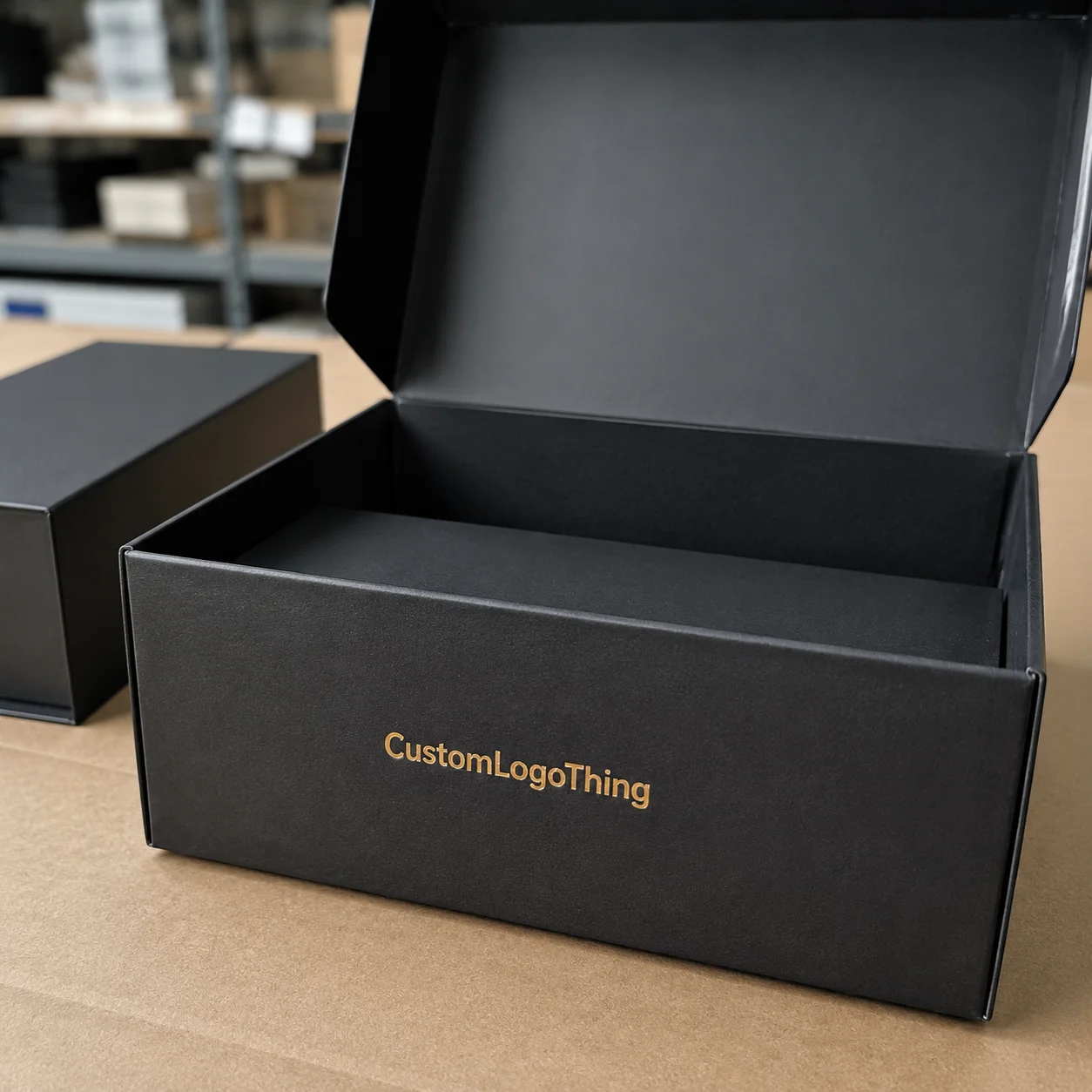
custom magnetic closure boxes are rigid boxes with hidden magnets embedded in the lid and base, so the box shuts with a clean, controlled snap. The structure is usually made from thick paperboard, then wrapped in printed paper, textured stock, soft-touch film, or specialty finishes. They are not flimsy folding cartons. A typical premium build uses 1,500gsm to 2,000gsm greyboard, wrapped with 157gsm C2S art paper or 128gsm textured paper, which is why they feel substantial in the hand.
I’ve stood on a factory floor in Shenzhen while operators checked alignment on a batch of rigid gift boxes, and the difference was obvious the moment one lid sat 2 millimeters off-center. The whole box looked cheaper. That tiny gap changed the perceived value of the entire package. That’s the kind of detail that makes custom magnetic closure boxes so effective for premium retail packaging, especially when the outer wrap is soft-touch laminated and the logo is foil stamped in gold or silver.
They’re common in luxury beauty, electronics, apparel accessories, corporate gifting, candles, and subscription packaging because they do two jobs at once. First, they hold product securely. Second, they create a ritual. The lid opens slowly. The magnet catches. The structure resists collapse. All of that tells the customer, quietly but clearly, “This was made for you.” In practice, brands in New York, London, and Dubai use them for launches where the box itself is part of the pitch, not just the protection.
The sensory effect is real. The click of the magnet, the density of the board, and the crisp opening sequence all add up to an experience. I’ve had clients bring me a plain sample next to a finished one with foil stamping and a soft-touch wrap. The product inside was identical. The packaging changed the conversation. That is package branding doing actual work, not just looking pretty on a mockup. I honestly love that moment, because you can almost see the buyer’s brain switch from “hmm” to “okay, now we’re talking,” especially after handling a sample with a velvet tray.
“We thought the box was just a container. After the first sample came in, we realized it was the first product our customer touches.” — a brand manager I worked with on a mid-range skincare launch in Chicago
That’s the reason custom magnetic closure boxes show up so often in branded packaging programs. They do not just protect an item during handling. They frame the item as something worth opening carefully. When the box feels deliberate, the product inside inherits some of that authority. A $19 candle in a well-built rigid box can look more considered than a $40 candle packed in a plain folding carton.
If you’re comparing packaging formats, I’d look at rigid magnetic boxes alongside other Custom Packaging Products and ask one simple question: does this box need to sell the experience, or merely move the product? If the answer is “sell the experience,” custom magnetic closure boxes move up the list fast. For retailers in Toronto, Sydney, or Los Angeles, that distinction often shows up in return rates and repeat gifting, not just in shelf photos.
For brands focused on product packaging that earns repeat attention, the box becomes part of the purchase memory. That memory can be more valuable than the board stock itself. A customer may forget the filler used in a shipping carton. They rarely forget a box that opened with a satisfying snap and felt worth keeping on a dresser or desk. I still have a sample box on my shelf from a project I worked on in 2021, which is either a compliment to the packaging or a quiet confession that I’m a nerd about this stuff.
How Custom Magnetic Closure Boxes Work
The structure is straightforward, even if the finished piece looks refined. A typical box has three layers: a rigid paperboard shell, a decorative wrap, and embedded magnets placed in the lid and base. The magnets are hidden inside the board or underneath the wrap, so the closure feels clean rather than mechanical. That hidden detail is part of the appeal of custom magnetic closure boxes, especially when the box is built with a 2mm to 3mm wall thickness and a wrapped hinge spine.
Here’s the sequence. You lift the lid. The hinge flexes or the flap opens, depending on the style. As the lid closes, the magnets align and pull together. If they’re matched correctly, the closure lands with a soft snap instead of a clack. That difference sounds minor, but consumers register it immediately. I’ve seen people test the box three times in a row, just to feel it again. Human beings are weird like that, and packaging absolutely benefits from it. A magnetic pair rated around 5 to 8 pounds of holding force is often enough for smaller formats, while larger presentation boxes may need more.
Magnet strength matters more than most first-time buyers expect. Too weak, and the box opens in transit or feels sloppy in the hand. Too strong, and customers may struggle to open it, especially on larger formats or boxes with heavier lids. For repeated opening—think subscription kits, luxury stationery, or high-end electronics—balanced magnet pull is critical. A box that fights the user is a bad box, no matter how pretty the print is. In practice, many suppliers in Guangdong test this by placing magnets 15 to 20 millimeters from the edge, then checking pull after the wrap is applied.
There are several common configurations for custom magnetic closure boxes:
- Hinged lid boxes — the lid stays attached at the back and opens like a clamshell.
- Book-style boxes — the box opens like a hardback cover and feels ideal for presentation kits.
- Fold-flat magnetic boxes — shipped flat to save space, then assembled for use.
- Lift-off lid rigid boxes — sometimes combined with magnetic locking for a more formal reveal.
In a supplier negotiation I handled for a cosmetics brand in San Francisco, the team initially wanted the largest possible lid opening because they believed “more drama” meant better unboxing. It didn’t. The sample that performed best used a slightly shorter flap, 2 neodymium magnets per side, and a tighter insert. The product looked more expensive because the box behaved more precisely. I wish I could say every packaging decision is that poetic, but most of them are just math with prettier paper and a production line in Dongguan.
Inserts are where form meets function. Foam, molded pulp, EVA, paperboard, and velvet-lined trays can all sit inside custom magnetic closure boxes without interfering with the closure, as long as the internal depth is planned correctly. A 10mm EVA insert, for instance, may be appropriate for a small electronics accessory, while a 350gsm C1S artboard insert works well for lighter cosmetics and gift sets. I usually recommend designing the insert after finalizing the product dimensions, not before. Otherwise, you end up paying for custom tooling that solves the wrong problem, which is an expensive habit in factories around Shenzhen and Ningbo.
One more practical note: the exterior finish does not change the magnet system, but it changes perceived quality. A matte wrap, a linen texture, or a foil-stamped logo can alter how the customer interprets the closure. That’s why packaging design should be treated as a system, not a pile of decorative choices. custom magnetic closure boxes work best when closure, insert, graphics, and board thickness all pull in the same direction, from the first dieline through the final freight carton.
Key Factors That Shape Quality, Pricing, and Performance
If you ask five suppliers for quotes on custom magnetic closure boxes, you may get five very different numbers. That doesn’t automatically mean someone is overcharging. It usually means the specs are not truly identical. Box size, board thickness, print coverage, finish selection, magnet count, and insert complexity can swing the final price more than buyers expect. A supplier in Guangzhou may quote very differently from one in Ho Chi Minh City or Yiwu because labor, paper sourcing, and finish capabilities are not identical.
Let me give you a concrete example. A 6" x 6" x 2" rigid box with 2-color print, matte lamination, and a simple paperboard insert can land around $0.18 to $0.35 per unit at 5,000 pieces, depending on region and materials. If you increase the order to 10,000 pieces and keep the same spec, some factories in Shenzhen or Dongguan can drop the unit cost closer to $0.15 per unit in repeat-run pricing at the same volume, particularly if the paper wrap is standard C2S art paper and the insert is plain board. Add soft-touch coating, foil stamping, embossing, and a custom EVA insert, and that number can climb well above $1.00 per unit. Same box family. Very different economics. That’s not “mystery pricing”; that’s a pile of small choices quietly eating the budget.
Here’s a useful way to compare common options for custom magnetic closure boxes:
| Specification | Typical Cost Impact | Best Use | Notes |
|---|---|---|---|
| Matte lamination | Low to moderate | Minimalist retail packaging | Clean look, fewer fingerprints, lower cost than soft-touch |
| Soft-touch finish | Moderate | Luxury cosmetics and gifting | Velvety feel; often paired with foil for stronger shelf impact |
| Foil stamping | Moderate to high | Premium branding accents | Great for logos; cost rises with coverage area and color count |
| Embossing/debossing | Moderate | Tactile brand marks | Works well on logo marks and short copy |
| Custom insert | Moderate to high | Fragile or shaped products | EVA costs more than paperboard; molded pulp may fit eco goals better |
| Extra magnets | Low to moderate | Larger or heavier lids | More magnets can improve closure but increase labor and placement checks |
Board thickness is another factor people underweight. A 1,200gsm rigid board feels different from 1,600gsm board, and the difference shows up in edge definition, durability, and shipping performance. Thicker board usually means better crush resistance, but it also means more material cost and more storage space. In some programs, that extra thickness is exactly right. In others, it’s just expensive overkill. I’ve had clients fall in love with the phrase “premium thickness” as if the words themselves lowered freight costs from Hong Kong to Chicago. They do not.
Surface finish affects both cost and perceived value. Matte lamination is often the safest choice for controlled budgets. Soft-touch adds a tactile finish that feels expensive, but it can show scuffs depending on handling. Foil stamping can elevate a logo fast. Spot UV can create contrast on dark wraps. I’ve watched brands overspend on full-coverage foil when a single 2-inch logo would have delivered the same visual message for less. That kind of restraint is hard to sell in a meeting, but it usually wins in the market, especially in a channel where the final retail price sits between $24 and $48.
Durability is not a mystery if you inspect the construction. Look at glue consistency at the corners, alignment around the spine, magnet placement, and the quality of the edge wrap. Poorly finished edges tend to peel first. Misaligned magnets create the kind of customer annoyance that turns a premium unboxing into a cheap one. ASTM and ISTA testing standards are useful references here, especially if your boxes will travel through distribution rather than sitting on a boutique shelf. The International Safe Transit Association has useful materials at ista.org, and general packaging guidance is also available through the Association for Packaging and Processing Technologies.
Shipping footprint matters too. custom magnetic closure boxes take up more space than folding cartons because they are rigid. That means freight cost, warehouse storage, and pallet efficiency all need to be considered before you approve the design. I’ve had a client cut total landed cost by 12% simply by reducing the box depth from 3.25 inches to 2.75 inches and changing the insert geometry. Nothing glamorous. Very effective. Packaging is full of these annoyingly simple wins, especially if your goods are moving through Long Beach or Savannah instead of staying inside one retail store.
Custom Magnetic Closure Boxes: Step-by-Step Design and Ordering Process
The best custom magnetic closure boxes projects begin with the product, not the artwork. First, define the product dimensions, weight, fragility, and how it will be removed from the box. If a customer will lift a candle jar from the top, that changes the insert. If the product slides out sideways, that changes the internal fit. Packaging design should follow actual use, not a sketchboard fantasy. I say that with affection, but also with the memory of many beautiful concepts that failed the moment a real product entered the room, whether in a Brooklyn studio or a warehouse in Atlanta.
Here’s the sequence I recommend in real production:
- Measure the product in millimeters, not rough inches, and include any cap, sleeve, or accessory.
- Select the style—hinged lid, book-style, or fold-flat magnetic design.
- Choose the board and wrap based on weight, budget, and brand position.
- Request a dieline and place artwork into the file with correct bleed and safe zones.
- Approve a prototype for fit, closure, and finish.
- Move to production only after you’ve checked the sample under real use conditions.
Artwork mistakes are common, and they’re expensive when you’re ordering custom magnetic closure boxes. Use vector logos, keep fine text above readable size, and make sure your colors are matched to a print standard such as Pantone or a clearly defined CMYK profile. If you want precise edge-to-edge coverage, leave bleed at the edges. If you need a clean margin, protect it with safe zones. I’ve seen luxury brands lose a full print run because the logo was placed 4 millimeters too close to the spine fold. Four millimeters. The kind of number that makes you stare at a proof and wonder who decided “close enough” was a design philosophy.
Sampling is where the real information shows up. A digital mockup cannot tell you whether the box feels too loose, too stiff, or too heavy in the hand. A prototype can. In one meeting, a corporate gift client in Dallas changed the entire closure direction after testing a sample because the magnets pulled too hard on an oversized lid. They had budgeted for 8,000 pieces. The sample saved them from 8,000 customer complaints. That is a very expensive sentence I’m glad we never had to say out loud.
Timeline depends on complexity, but a realistic window for custom magnetic closure boxes is often 12 to 15 business days from proof approval for standard production, then additional time for freight. Highly customized boxes with foil, embossing, or specialty inserts can take longer, especially if the supplier needs a tooling step or multiple revisions. If your launch date is fixed, back-plan from it aggressively. I’ve watched product launches slip 10 days because the packaging was ordered after the photo shoot was already booked. That order of operations is backward, and it always creates a mess.
Coordination matters. If the boxes support a holiday campaign, retail rollout, or media kit, the packaging schedule should be locked before you confirm the fulfillment calendar. custom magnetic closure boxes are not an afterthought. They are part of the delivery promise. When packaging arrives late, the whole launch looks disorganized even if the product itself is excellent. A December campaign in Toronto can fall apart fast if the boxes land in week three instead of week one.
For brands comparing suppliers, I suggest using one spec sheet across all quotes. Same size. Same board. Same finish. Same insert. That is the only way pricing becomes meaningful. Otherwise, one quote may include a wrapped insert and the other may not. Apples and oranges. Or more accurately, rigid boxes and inflated assumptions. I’ve seen teams try to compare them anyway, which is how bad decisions get dressed up as “value sourcing.”
Common Mistakes Brands Make With Custom Magnetic Closure Boxes
The most common mistake is ordering a box that is too big. Brands do this because they want “breathing room,” but excess space can make the product shift, look underfilled, or require too much insert material. With custom magnetic closure boxes, the first impression is proportionality. A beautiful box with a floating product inside feels less premium than a tighter, more deliberate fit, especially if the package is meant to hold a $45 fragrance or a $79 set of skincare samples.
Another problem is weak magnet placement. If the magnets are too far apart, misaligned, or underspecified, the lid may pop open during handling. That is frustrating in a store and worse in transit. I’ve seen a batch of corporate presentation kits come back from distribution with scuffed corners because the closure kept opening inside secondary shippers. The problem was not the outer corrugate. It was the magnet pull. That sort of issue makes everyone involved sound calm in meetings and exhausted in private, particularly after a fulfillment center in New Jersey starts calling about returns.
Branding can also go sideways. Some companies pile on too many graphics, too much copy, and three different finishes on the same surface. The result is clutter, not luxury. A premium box usually benefits from restraint. One strong logo. One tactile accent. Maybe a short line of copy inside the lid. That’s enough. custom magnetic closure boxes do not need to shout to feel expensive, and a clean 1-color interior print often outperforms a crowded exterior.
Cost mistakes are common too. Buyers sometimes specify foil, embossing, soft-touch, custom inserts, and multiple magnet points because they assume more features equal more value. Not always. If the product is a lightweight accessory selling at a modest price point, those upgrades can eat margin without improving conversion. I’d rather see one thoughtful finish and a well-fitted insert than five decorative choices that compete with each other. A box built in Xiamen with a 157gsm art paper wrap and one foil logo may deliver more perceived value than a fully loaded box that looks like it was trying too hard.
There are logistical errors as well:
- Ignoring storage space for rigid cartons.
- Ordering too few units because the MOQ looked intimidating.
- Forgetting that custom magnetic closure boxes ship larger than flat cartons.
- Not testing how the box nests in a master shipper.
- Assuming one prototype is enough when the product has accessories or seasonal variations.
In a factory review I did, a client wanted to reduce unit price by shrinking the carton footprint by 6%. Smart idea, in theory. But they forgot the charger cable that came with the device. The cable ended up bent inside the insert, and the lid barely closed. That small size reduction created three new problems. Packaging decisions tend to do that when they are made on a spreadsheet alone. The spreadsheet never has to deal with a bent cable or an annoyed customer, which is frankly insulting.
Another mistake is choosing materials that clash with the product category. A minimal tech accessory may look odd inside a heavily ornamented box with gold foil roses. A high-end fragrance kit may look underdeveloped in plain kraft wrap unless the typography and insert design carry enough weight. Good custom magnetic closure boxes make the product feel coherent, not randomly dressed. If the item is meant to sit on a shelf in Miami or Milan, the packaging should already speak that language.
Expert Tips for Better Results With Custom Magnetic Closure Boxes
My first rule is simple: design from the product outward. If the product fits properly, the box usually performs better. That sounds obvious, but I’ve seen too many packaging programs start with the mood board instead of the dimensions. custom magnetic closure boxes should be built around real use, real handling, and real storage conditions. If the item ships from a warehouse in Houston and lands on retail shelves in Vancouver, those conditions matter.
Second, think of the magnetic closure as part of an unboxing sequence, not just a latch. The reveal should move in stages. Exterior branding. Lid release. Product reveal. Insert lift. If every step is crowded with decoration, the experience becomes noisy. If the steps are deliberate, the customer remembers them. That is one reason luxury retail packaging feels slower; it is designed that way. I’m convinced people don’t just buy the object in these moments—they buy the pause, especially when the box opens with a 2-second reveal and a clean 90-degree lid angle.
Third, balance tactility with durability. Soft-touch laminations feel excellent on day one, but they can scuff faster than matte films. Foil looks sharp, but it may not suit every brand. A gift box for a wedding accessory line may benefit from a soft surface and satin ribbon. A tech accessory box may be better with a cleaner wrap and restrained print. custom magnetic closure boxes work across categories, but the finish should fit the product story. A box shipped through Miami humidity will not age the same way as one stored in Phoenix, so material choices matter.
I always recommend requesting physical samples or prototypes before you commit to a full run. A sample tells you whether the magnet strength is right, whether the lid aligns, whether the insert grips properly, and whether the box feels too bulky in hand. No CAD drawing can replace that. At one meeting with a subscription brand, a prototype revealed that the box looked elegant but opened too aggressively for their target customer. They adjusted the magnet spacing by 3 millimeters and solved the problem immediately. Three millimeters. Packaging has a dramatic relationship with tiny numbers.
Here are the finish combinations I see work most often:
- Minimalist brand: matte lamination, blind emboss, black or white ink.
- Eco-conscious brand: paper wrap, reduced coating, molded pulp insert, FSC-certified board.
- Premium beauty brand: soft-touch finish, foil logo, printed interior, ribbon pull.
- Tech-focused brand: clean typography, spot UV, dense foam or EVA insert, understated color palette.
- Gift-oriented brand: magnetic closure, satin lining, foil detail, interior message print.
FSC-certified paperboard can be a smart option if sustainability is central to your package branding. For context, the Forest Stewardship Council maintains certification and sourcing information at fsc.org. That doesn’t make a package automatically eco-friendly, of course. You still need to review coatings, adhesives, inserts, and end-of-life behavior. But it is a meaningful starting point for brands that want more responsible material choices, especially if the board is sourced through certified mills in Malaysia, Vietnam, or southern China.
One more point from the shop floor: ask how the magnets are installed. A well-run line will check polarity and placement repeatedly. If magnets are flipped on even a small percentage of boxes, the closure can fail in ways that are awkward to detect until the customer opens it. That is not a “tiny defect.” It is a brand experience problem. custom magnetic closure boxes need process discipline, not just attractive artwork. A line in Dongguan that checks magnet orientation every 50 units will usually catch trouble before it becomes a truckload of complaints.
And yes, sometimes simpler is better. A 1-color logo, a solid wrap, and a precisely fitted insert can outperform a busy premium build because the box feels intentional. Fancy does not equal effective. Clear does. I say that with a little affection for all the shiny things, because I also know how quickly a cluttered box can make a brand look like it lost an argument with itself.
What to Do Next Before Ordering Custom Magnetic Closure Boxes
Before you request quotes for custom magnetic closure boxes, build a brief with hard numbers. Include product dimensions, product weight, finish preference, target audience, required quantity, shipping destination, and your price ceiling per unit. If you skip those details, suppliers will fill the gaps differently, and the quotes will not be comparable. A factory in Guangzhou may quote on a 350gsm insert while one in Ningbo assumes 400gsm, and the difference can distort the entire cost comparison.
Gather your logo files, die-ready artwork, and any insert notes in advance. If you already know you want foil, embossing, ribbon pulls, or a foil-lined interior, say so early. The sooner a supplier sees the full scope, the fewer surprises you’ll have later. I’ve watched quote requests lose 48 hours because the client mentioned a custom insert only after the first proof. That kind of delay always feels harmless until the calendar starts screaming, especially when a launch date in September depends on a proof approved in August.
Compare suppliers using the same spec sheet. Ask them to break out board, wrap, printing, finish, magnet count, insert, and shipping separately if possible. That way you can tell whether the low quote is truly lower or just missing a detail. With custom magnetic closure boxes, the hidden cost is often in the extras that were left off the initial estimate. A quote from Dongguan that includes a 157gsm art paper wrap, foil stamp, and paperboard insert is much more useful than a quote with “all in” pricing and no detail.
Ask for a sample checklist before approving production. At minimum, that checklist should include:
- Magnet strength and closure alignment
- Print accuracy and color consistency
- Edge wrap quality and corner finish
- Insert fit and product retention
- Shipping durability and carton nesting
If your packaging is destined for retail shelves, corporate gifting, or e-commerce unboxing, test the box under the actual use case. Open it with one hand. Close it slowly. Carry it across a room. Stack it in a secondary shipper. Put it on a shelf for a day and see whether the wrap scuffs. That kind of rough handling test tells you more than a perfect studio photo ever will. And yes, I have absolutely watched someone do the “one-hand open” test in a meeting and immediately regret an overly tight magnet.
My practical sequence is always the same: measure the product, request a dieline, approve one prototype, then place the full order. That sequence reduces risk and protects your budget. It also keeps the packaging decision tied to real function, which is the part many brands forget when they get excited about finishes. custom magnetic closure boxes can elevate a product fast, but only if the structure, graphics, and logistics are aligned from the start. If the run is produced in Shenzhen or Dongguan, ask for a production photo before shipment so you can verify color, wrap tension, and corner finish.
If you are still deciding how far to push the premium features, start small. Test a clean version with a strong logo and good board. Then add a finish on the next run if the market response justifies it. That’s how smart brands Build Better Branded packaging without tying up cash in decoration that does not move units. Honestly, I think that restraint is underrated because it doesn’t photograph as dramatically as foil, but it usually ages better in the marketplace.
And if you want to compare options more broadly, revisit your Custom Packaging Products lineup alongside your rigid box plan. Sometimes the right answer is custom magnetic closure boxes. Sometimes it is a hybrid program with a mailer for fulfillment and a rigid presentation box for the product reveal. Good packaging strategy often uses both, especially when one SKU ships from a warehouse in New Jersey and another is handed over at a showroom in London.
Done well, custom magnetic closure boxes do more than hold a product. They shape how the product is remembered, gifted, displayed, and discussed. That’s why I keep recommending them for brands that need packaging to carry real commercial weight. Not just decoration. Not just protection. A physical signal that the item inside matters.
The clearest next step is simple: write one spec sheet, test one prototype, and judge the box by how it performs in a real hand, not by how it looks in a rendering. If the closure feels right, the fit is tight, and the finish matches the product’s price point, you’re probably on the right track. If not, adjust the structure before you decorate it. That saves money, and more often than not, it saves the launch.
FAQ
Are custom magnetic closure boxes worth the cost for small brands?
Yes, if the product depends on premium perception, gifting appeal, or repeated unboxing value. I’ve seen small beauty and accessory brands use custom magnetic closure boxes to raise perceived value far beyond the packaging cost, especially when the box is kept and reused. If margins are tight, simplify the finish and avoid expensive add-ons that do not change the customer experience. A clean rigid box with a 1-color logo and 1,200gsm to 1,500gsm board can still look strong without pushing the budget over the edge.
What affects the price of custom magnetic closure boxes the most?
The biggest drivers are box size, rigid board thickness, print coverage, specialty finishes, insert complexity, and order quantity. Magnet placement and the number of magnets also affect labor and quality checks. Shipping and storage matter too because custom magnetic closure boxes take more space than folding cartons and usually cost more to move. For example, a shipment from Shenzhen to Los Angeles can be priced very differently from one leaving Ho Chi Minh City if pallet density and freight class change.
How long does it take to produce custom magnetic closure boxes?
The timeline depends on artwork readiness, sampling, and factory capacity. Simple custom magnetic closure boxes can move faster, while heavily customized versions with foil, embossing, or special inserts usually take longer. Build in time for prototype approval so you can test fit, closure strength, and print quality before full production begins. In many cases, production is typically 12-15 business days from proof approval, plus freight time from the manufacturing city to your destination.
Can custom magnetic closure boxes be eco-friendly?
Yes, they can use recyclable paperboard and paper wraps, but you still need to review magnets, coatings, and inserts carefully. Eco-conscious custom magnetic closure boxes often reduce unnecessary lamination, use FSC-certified board, and rely on durable structures that are kept and reused. Ask suppliers about recyclable material options before you finalize the build, including whether the wrap is 157gsm paper, whether the insert is molded pulp, and whether the adhesive system is water-based.
What products work best in custom magnetic closure boxes?
Luxury cosmetics, apparel accessories, electronics, candles, gifts, stationery, and corporate presentation kits are all strong fits. custom magnetic closure boxes work especially well when the packaging needs to signal quality, protect the contents, or support a premium unboxing experience. Heavier or fragile products usually benefit from custom inserts that stabilize the item inside the rigid box, such as EVA, molded pulp, or a 350gsm C1S artboard tray.