Buyer Fit Snapshot
| Best fit | Price Comparison for Seasonal Gift Boxes projects where brand print, material claims, artwork control, MOQ, and repeat-order consistency need to be specified before quoting. |
|---|---|
| Quote inputs | Share finished size, material target, print colors, finish, packing count, annual reorder estimate, ship-to region, and any compliance wording. |
| Proofing check | Approve dieline scale, logo placement, barcode or warning zones, color tolerance, closure strength, and carton packing before bulk production. |
| Main risk | Vague material claims, crowded artwork, missing packing details, or unclear freight terms can make a low unit price expensive after revisions. |
Fast answer: Price Comparison for Seasonal Gift Boxes: Material, Print, Proofing, and Reorder Risk should be specified like a repeatable production item. The safest quote records material, print method, finish, artwork proof, packing count, and reorder notes in one written spec.
Production checks before approval
Compare the actual filled-product size with the drawing, then confirm tolerance on folds, seals, hang holes, label areas, and retail display edges. Reserve space for logos, QR codes, warning copy, and material claims before decorative graphics fill the panel.
Quote comparison points
Review material grade, print process, finish, sampling route, tooling charges, carton quantity, and freight assumptions side by side. A quote is only useful when the supplier can repeat the same color, closure quality, and packing count on the next order.
Two seasonal gift boxes can sit side by side and look almost identical. Same glossy finish. Same ribbon. Same tidy little holiday mood. The invoice, though, can be wildly different once inserts, coatings, freight, tooling, and setup are all counted. I have seen landed cost swing by 20% to 60% on what looked like a simple packaging decision. That is why a price comparison for seasonal gift boxes should never stop at the first unit quote. The real comparison starts with structure, decoration, and delivery timing.
Seasonal packaging does not behave like steady, year-round buying. Lead times tighten. Forecasts get messy. A missed carton can wreck a holiday launch faster than a modest unit-price gap ever could. A serious price comparison for seasonal gift boxes has to weigh the box itself, the conversion process, and the risk of sitting on inventory after the season closes. Holiday packaging has a funny way of exposing sloppy math. And it does not care who signed off on it.
Custom Logo Things works in that space every day: custom presentation packaging that has to look right, show up on time, and still make sense on a margin sheet. If you are comparing quotes for a retail promotion, a holiday bundle, or a direct-to-consumer campaign, the rule is simple. Compare apples to apples. Then compare the landed cost, not just the shiny number on the quote. That is the part people tend to skip when they are in a hurry.
Price comparison for seasonal gift boxes: where the real savings appear
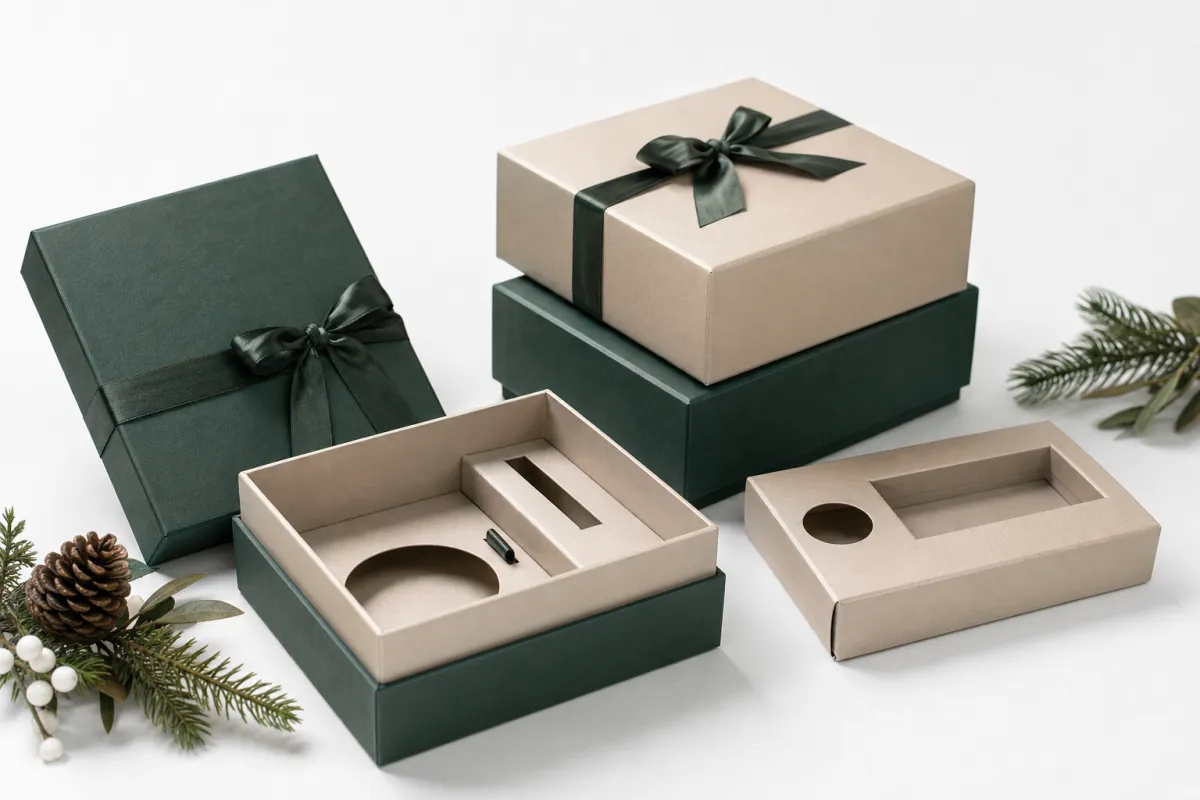
A useful price comparison for seasonal gift boxes starts with one uncomfortable truth: the cheapest quote is often the least complete quote. One supplier may include the board, print, coating, and insert. Another may leave out freight, proofing, or a special die. That gap is not cosmetic. On a 5,000-unit order, a missing line item can add hundreds or even thousands of dollars to the final bill. Sometimes more, depending on how ugly the shipping lane gets.
Seasonal work runs on compressed buying cycles. That changes pricing behavior fast. Suppliers often build urgency into the quote because production slots are limited and holidays crowd the calendar. Early planning may unlock better material sourcing, better freight options, and fewer rush charges. A late program may pay for speed, split shipments, or rework. In a strong price comparison for seasonal gift boxes, timing belongs in the cost stack right next to board and print.
Inventory risk is the other quiet line item. Order too many boxes and you carry storage cost plus obsolescence risk after the season passes. Order too few and you may pay for a second run under pressure. The best price comparison for seasonal gift boxes asks a sharper question than “What is the unit price?” It asks, “What does the order cost across the full sales cycle?” That question saves money. Usually more than once.
“The box is never just the box. In seasonal packaging, the cost story includes setup, freight, decoration, and the cost of being late.”
From a packaging buyer's point of view, the cleanest way to manage the comparison is to split costs before requesting quotes. I would break them into four buckets: structure, decoration, logistics, and risk. Once those are visible, the decision gets a lot less fuzzy. A price comparison for seasonal gift boxes stops being a guessing contest and starts looking like procurement, which is what it should have been in the first place.
For buyers who want a broader packaging context, industry groups such as the International Safe Transit Association and the Packaging Machinery Manufacturers Institute publish useful handling and packaging references. Those standards will not price your box for you, but they help define what “good enough” actually means in transit and retail environments.
A final point here: a price comparison for seasonal gift boxes is not about finding the lowest number and calling it a victory. It is about finding the strongest balance of presentation, durability, and total spend. That usually means comparing three or more quotes with the same build spec and the same delivery window. Anything less invites false savings, and false savings have a way of showing up as expensive surprises later.
Product details that change seasonal gift box pricing
Box construction drives cost more than most buyers expect. A rigid gift box is a different expense profile from a folding carton, and a magnetic closure box lives in another lane again. For a clean price comparison for seasonal gift boxes, the structure itself has to be part of the conversation. A rigid box might run from about $1.20 to $4.50 per unit at moderate volumes, depending on size, wrap material, insert complexity, and print coverage. A folding carton may sit closer to $0.18 to $0.65 per unit under similar conditions. Those are not interchangeable products, no matter how much the mockup wants to pretend otherwise.
Decoration can move the quote as much as structure. Foil stamping, embossing, debossing, spot UV, soft-touch lamination, and textured specialty papers all add labor or material cost. A minimal sleeve with one-color print may deliver a clean seasonal look at a lower unit price, while a fully decorated rigid box can project premium value but demand a larger budget. In a price comparison for seasonal gift boxes, decorative choices should be weighed against the value they create for the person opening the package. Not the person approving the invoice. Those two people are not always aligned.
There is a common trap here. Buyers sometimes assume the most ornate box is always the best seasonal choice. That is not always true. If the box will spend most of its life inside a corrugated shipper, the money may be better spent on a stronger insert, better board, or a more efficient pack format. If the box is retail-facing and part of the gift itself, premium finishing can pay for itself through perceived value. The right answer depends on channel, not taste.
How box style changes the quote
Rigid boxes usually cost more because they involve more handwork, more wrap material, and a stronger presentation payoff. Folding cartons are lighter, cheaper to ship, and efficient for high-volume seasonal programs. Magnetic closure boxes add a tactile premium but can increase both material and assembly cost. Sleeves are often the most budget-friendly way to add seasonal branding to an existing tray, bottle, or carton. Mailer-style gift boxes sit somewhere in the middle and work well for e-commerce because they can reduce the need for secondary packaging.
In a price comparison for seasonal gift boxes, style choice often sets the shape of the entire budget. A buyer may think print finish is the biggest variable, but the structure usually moves the number further. If the box needs to survive warehouse stacking or parcel delivery, the extra board and structural reinforcement may matter more than an additional special finish. Pretty is nice. Surviving transit is better.
Inserts, dividers, and protection
Inserts cost money, but so do damages and returns. Custom paperboard inserts are usually cheaper than molded pulp or foam, though the best option depends on product weight, fragility, and the unboxing effect the brand wants. Dividers for bottles, jars, candles, cosmetics, or confectionery can add a noticeable amount to the unit price, especially when each cavity requires a separate tool or cut pattern.
A price comparison for seasonal gift boxes should include damage prevention because seasonal orders often move through busy fulfillment centers. A broken ornament set or a crushed candle box can erase the savings from a lower quote. That is why many buyers accept slightly higher packaging cost to reduce returns, repacks, and customer service complaints. Cheap packaging that creates refunds is not cheap. It is just slow-motion expensive.
Branding intensity and presentation value
Minimal branding often lowers cost, but not always by much if the structure is already premium. A printed sleeve over a stock tray may offer a better spend than a fully customized rigid format if the objective is seasonal branding rather than permanent retail packaging. On the other hand, if the box is meant to be gifted as-is, the opening experience matters enough that the premium may be justified.
The point is not to minimize branding. The point is to match branding intensity to the use case. A price comparison for seasonal gift boxes should test the visual payoff against the extra unit cost. That is how buyers avoid paying for a luxury finish on a box that will never be seen by the end customer.
Specifications to compare before requesting quotes
A clean price comparison for seasonal gift boxes begins before the first supplier is contacted. The tighter the spec sheet, the fewer surprises in the quote. At minimum, buyers should standardize dimensions, board type, material thickness, print method, finish, insert requirement, and pack-out style. If those fields are vague, the comparison falls apart quickly. Guessing is not a sourcing strategy, even if people keep trying to treat it like one.
Dimensions matter more than many teams realize. A box that is 5 mm larger in each direction can use more board, create a different nesting pattern, and change pallet count. That small change may also alter freight density and carton fill efficiency. In seasonal programs, where shipment windows can be tight, those details move landed cost more than a buyer expects. A tiny change on paper can become a very real change in freight.
Board type is another major variable. SBS, CCNB, kraft, rigid wrapped board, and specialty stock all carry different cost structures. Add a coating or laminate, and pricing changes again. If the gift box is for food, cosmetics, or sensitive merchandise, the buyer may also need barrier or compliance considerations. None of that should be guessed. It should be written down before quotes are requested. Guesswork and packaging are a bad mix.
A practical way to manage a price comparison for seasonal gift boxes is to create a side-by-side spec sheet and send the same file to every supplier. That sheet should include the exact finish, any foil or emboss coverage area, insert details, and the required ship date. If one quote comes back low, the buyer can immediately check whether it is based on weaker material, a simpler finish, or a different packing method. That is how you keep people honest without turning every quote review into a courtroom drama.
Use the same build, every time
The biggest mistake in a price comparison for seasonal gift boxes is comparing two different products as if they were the same. One quote might include a custom insert and matte coating; another might omit both. A third might quote a lower price because the art coverage is limited to one panel. Those are not alternative prices for the same box. They are different packaging programs wearing the same costume.
Standardization makes negotiation easier too. If you know the exact board caliper, closure style, and finish level, you can ask suppliers to quote the same format at 1,000, 3,000, and 5,000 units. That reveals the volume curve. It also makes it easier to spot whether a supplier is truly competitive or merely low on one narrow line item. Low on one line item is not the same as low overall. Buyers learn that lesson sooner or later.
Build for storage and shipping reality
Seasonal boxes often spend time in a warehouse before they ever reach a store shelf or parcel label. That means compressive strength, scuff resistance, and stackability are not optional concerns. If a box will move through e-commerce fulfillment, it may need a shipper outer carton, which changes the economics again.
For projects with demanding transit conditions, standards from the ISTA testing family and sustainability references from the U.S. Environmental Protection Agency can be useful. The EPA's packaging and waste reduction resources at epa.gov are a sensible starting point if the buyer is balancing presentation with material reduction. A good price comparison for seasonal gift boxes should not ignore performance or sustainability, because packaging failure is expensive in both dollars and brand perception.
And yes, a written spec sheet helps with reorders too. If seasonal demand repeats, the next buy can move faster because the prior spec already exists. That lowers the risk of rework and keeps the price comparison for seasonal gift boxes focused on actual changes rather than memory and guesswork.
Price comparison for seasonal gift boxes: pricing, MOQ, and hidden fees
This is where the numbers usually get less comfortable. A useful price comparison for seasonal gift boxes needs to break pricing into unit cost, setup, tooling, sample cost, freight, taxes, and packaging extras. If a quote only shows one number, it is incomplete. Buyers need the whole picture because a small setup fee spread over a large order can be trivial, while a rush fee on a short run can swing the economics sharply.
MOQ is one of the biggest levers in the market. Lower minimums give flexibility, but they often raise the per-unit cost because artwork preparation, die cutting, and press setup are spread across fewer units. Higher minimums reduce unit price, yet they increase cash tied up in inventory. For a seasonal campaign, that trade-off can be smart if sell-through is proven, and risky if the forecast is shaky. There is no magic number here. Just math.
A disciplined price comparison for seasonal gift boxes should request at least three quantity tiers. For example: 1,000 units, 3,000 units, and 5,000 units. That does two things. First, it shows the price curve. Second, it makes the MOQ conversation concrete. A buyer can see whether doubling the quantity cuts the unit price enough to justify the added inventory. Numbers beat hope every time.
| Box option | Typical unit range | Common MOQ pattern | Best use case | Main cost driver |
|---|---|---|---|---|
| Folding carton with print | $0.18-$0.65 | 1,000-5,000+ | High-volume retail seasonal items | Print coverage and finish |
| Printed sleeve over tray | $0.12-$0.40 | 500-3,000+ | Budget-conscious seasonal branding | Artwork setup and sleeve sizing |
| Rigid gift box | $1.20-$4.50 | 500-2,000+ | Premium gifting and retail display | Handwork, wrap material, inserts |
| Magnetic closure box | $2.00-$6.00 | 500-2,000+ | High-perceived-value seasonal kits | Structure complexity and assembly |
| Mailer-style gift box | $0.60-$2.20 | 250-3,000+ | E-commerce seasonal subscriptions | Board strength and shipping fit |
Those ranges are directional, not universal. They still help in a price comparison for seasonal gift boxes because they show where the market tends to separate by format. A buyer can see immediately that a rigid box and a folding carton are not competing on the same economic field, even if the front graphics look similar. Packaging people love pretending otherwise. The quote usually corrects them.
Hidden fees deserve their own line because they often surprise first-time buyers. Common add-ons include rush production, color matching, split shipments, sample revisions, special inserts, storage fees for early completion, and secondary packaging. A quote that appears inexpensive can become the most expensive option after a few of those extras are added.
Freight deserves special attention in seasonal programs. A box that is cheap to make but expensive to move can lose its advantage quickly. Dimensional weight, pallet configuration, and delivery zones all affect transportation cost. If the order must ship into multiple distribution centers, the landed cost can rise faster than the production quote suggests. That is why a price comparison for seasonal gift boxes should always request a freight assumption in writing.
One practical tactic: ask each supplier for the same quote presented in three ways. First, ex-works or factory gate. Second, delivered to one location. Third, landed cost with any known packaging extras. That gives the buyer a clearer view of the real commercial impact and reduces the chance of comparing incomplete numbers. Clarity is useful. So is not getting blindsided by a freight invoice.
Process and timeline: from quote to delivery window
Price matters. Timeline matters just as much. A lower quote is not a win if it misses the launch date or holiday cutoff. In a price comparison for seasonal gift boxes, the schedule should be treated as a cost factor because delay can force air freight, emergency reprints, or a missed sales window. Those are expensive outcomes, and they are often avoidable.
The sequence usually looks like this: brief, spec confirmation, quote, artwork, sample approval, production, quality check, and shipping. Each step can add time. For custom work, the sample stage alone may take several rounds if the structure or finish needs adjustment. That is normal. What is not normal is assuming the first proof will be final.
Typical lead times vary by complexity. A simpler folding carton may take about 10 to 15 business days after artwork approval, while a Custom Rigid Box can run 15 to 25 business days or more, depending on finish level and workload. If special materials are involved, the schedule may stretch further. A price comparison for seasonal gift boxes should always pair each quote with a realistic timeline, not a promise that sounds convenient.
Work backward from the sell date
A reverse calendar is one of the most useful tools a packaging buyer can use. Start with the in-store date or shipping cutoff, then count backward for freight, receiving, production, sample approval, artwork revisions, and order placement. That reveals the true deadline for each decision. It also shows where the buyer has slack and where the program is already tight.
This approach also helps during supplier conversations. If a vendor can meet the date only by compressing proof time or pushing a rush run, that should be obvious early. A price comparison for seasonal gift boxes becomes more credible when the timeline is written beside the quote and not treated as an afterthought.
Quality checks are part of the schedule
For seasonal packaging, quality control should not be left vague. Ask whether the supplier inspects print registration, board crush, finish consistency, and insert fit before release. If the order will travel through retail or e-commerce fulfillment, consider whether the packaging needs testing against transit conditions. ISTA methods are a practical reference point for that kind of evaluation.
A low price is less interesting if it produces rejects, color shifts, or misfit inserts. The more seasonal the program, the less room there is for rework. That is why the best price comparison for seasonal gift boxes treats QA as a value item, not a hidden burden.
Why choose us for seasonal gift box sourcing
Buyers usually do not need another promise of “premium quality.” They need a supplier who can keep the quote structure clean, explain the trade-offs, and build packaging that fits the actual use case. That is the advantage Custom Logo Things aims to bring to seasonal packaging: clear communication, practical specifications, and support that keeps the price comparison for seasonal gift boxes grounded in facts rather than assumptions.
One of the most useful things a packaging partner can do is reduce rework early. If the structure, print, and fulfillment requirements are aligned before production starts, the order moves with fewer surprises. That matters even more in seasonal work, where an extra revision can mean missing a retail date or paying for expedited shipping. A well-run price comparison for seasonal gift boxes should reveal not only cost, but also how organized the supplier is behind the quote. The quote is the easy part. Execution is where the truth shows up.
Custom Logo Things also helps buyers compare format options without inflating the project. If a rigid box is too expensive for the budget, a printed sleeve or mailer-style solution may preserve presentation while easing cost pressure. If the goal is premium gifting, we can still compare finish levels and insert options to find the best fit. That kind of practical range is what makes a price comparison for seasonal gift boxes useful.
From a commercial standpoint, the value is straightforward: fewer surprise charges, better color consistency, fewer damaged shipments, and a better unboxing experience during the busiest selling period. Those outcomes are not abstract. They show up in gross margin, customer satisfaction, and the amount of time your team spends fixing avoidable packaging issues. No one builds a holiday plan around avoidable packaging issues. Yet here we are.
If your program also needs broader packaging support, our Custom Packaging Products page is a good place to review options across formats. The goal is not to overspec every box. The goal is to Choose the Right structure for the right season, then price it accurately.
Actionable next steps for a better price comparison
If you want a better price comparison for seasonal gift boxes, start with a cleaner brief. Gather dimensions, target quantity, preferred material, finish level, insert type, and delivery deadline before requesting quotes. If those inputs are incomplete, the supplier will fill gaps with assumptions, and the numbers will drift. A disciplined brief saves time and reduces false comparisons.
Next, request at least three quote scenarios: budget, mid-tier, and premium. That creates a visible ladder between cost and presentation. It is much easier to make a decision when the team can see what a small upgrade costs, what a better insert adds, or how a more premium finish affects the budget. A price comparison for seasonal gift boxes becomes more actionable once the range is clear.
Then ask for a written breakdown. Not a summary. A breakdown. Separate line items for unit cost, setup, freight, samples, and any special handling. If a supplier cannot show what is included, the quote is harder to trust. The more transparent the breakdown, the easier it is to compare options and defend the choice internally.
For brands with sustainability goals, ask whether the structure can be optimized for material reduction or recyclability without compromising performance. FSC-certified paper options, right-sized inserts, and reduced overpack can all influence the final decision. This is one area where a price comparison for seasonal gift boxes should account for both compliance and brand positioning. The Forest Stewardship Council is a useful reference if certified paper sourcing is part of the brief.
Finally, compare the full landed cost and not just the sticker price. That means production, freight, setup, risk, and timing. A box that looks inexpensive on paper can be expensive in operation. A box that costs a little more per unit may save money if it arrives on time, reduces damage, and makes the product feel more valuable. That is the real job of a price comparison for seasonal gift boxes: to surface the total business cost before the order is placed.
Before you approve anything, lock the spec, confirm the timeline, and verify the full landed cost on one sheet. Then compare the numbers one more time. That is the cleanest path to a price comparison for seasonal gift boxes that supports margin, presentation, and a season that actually launches on schedule.
FAQ
How do I make an accurate price comparison for seasonal gift boxes?
Use the same dimensions, material, print finish, and insert spec across every quote. Compare landed cost, not just unit price, so freight and setup fees are included. Ask for pricing at multiple quantities to see where the unit cost drops. Same box. Same rules. Much less drama.
What usually drives the biggest price difference in seasonal gift box quotes?
Material type and box structure often move the price more than the printed design. Special finishes such as foil, embossing, and soft-touch lamination add cost quickly. Low MOQ orders usually have a higher per-unit price because setup costs are spread over fewer boxes.
What MOQ should I expect for custom seasonal gift boxes?
MOQ depends on structure, decoration method, and supplier capacity. Rigid boxes and complex finishes usually require higher minimums than simple folding cartons. Ask for several volume tiers if your demand is uncertain so you can compare flexibility against unit cost.
How long does it take to produce seasonal gift boxes after approval?
Production time starts after artwork and structural approval, not after the first quote. Sampling, revisions, and freight planning can add time before manufacturing begins. Build extra buffer for holiday or promotional launches because seasonal capacity fills fast.
How can I lower costs without making the box look cheap?
Simplify the structure before cutting print quality or brand presence. Use targeted finishes, such as one premium accent, instead of multiple decorative techniques. Review the packaging size carefully to avoid paying for extra board, extra freight, and unnecessary inserts.


