Buyer Fit Snapshot
| Best fit | Custom Rigid Box Inserts projects where brand print, material claims, artwork control, MOQ, and repeat-order consistency need to be specified before quoting. |
|---|---|
| Quote inputs | Share finished size, material target, print colors, finish, packing count, annual reorder estimate, ship-to region, and any compliance wording. |
| Proofing check | Approve dieline scale, logo placement, barcode or warning zones, color tolerance, closure strength, and carton packing before bulk production. |
| Main risk | Vague material claims, crowded artwork, missing packing details, or unclear freight terms can make a low unit price expensive after revisions. |
Fast answer: Custom Rigid Box Inserts: Board, Finish, Dieline, and Unit Cost should be specified like a repeatable production item. The safest quote records material, print method, finish, artwork proof, packing count, and reorder notes in one written spec.
Production checks before approval
Compare the actual filled-product size with the drawing, then confirm tolerance on folds, seals, hang holes, label areas, and retail display edges. Reserve space for logos, QR codes, warning copy, and material claims before decorative graphics fill the panel.
Quote comparison points
Review material grade, print process, finish, sampling route, tooling charges, carton quantity, and freight assumptions side by side. A quote is only useful when the supplier can repeat the same color, closure quality, and packing count on the next order.
Custom Rigid Box inserts are the part people forget right up until the product lands crooked, rattles in transit, or floats around like nobody bothered to measure anything. If you are paying for premium product packaging, the insert should do more than sit there and look polite. It should hold the product, protect it, and make the first lift feel deliberate.
Custom Rigid Box inserts matter more than most buyers expect because the outer box only does half the job. A rigid box can look expensive and still feel off the second the lid opens if the item shifts, tilts, or arrives off-center. The insert turns decorated board into engineered packaging. It controls presentation, shipping performance, and the value the customer thinks they are holding.
For brands investing in branded packaging, Custom Printed Boxes, and polished package branding, the insert is not background noise. It is the quiet piece doing the real work. That usually means paying attention to shape, material, tolerance, and finish with a bit more discipline than many teams give it.
Custom Rigid Box Inserts: Why the Fit Matters More Than the Box
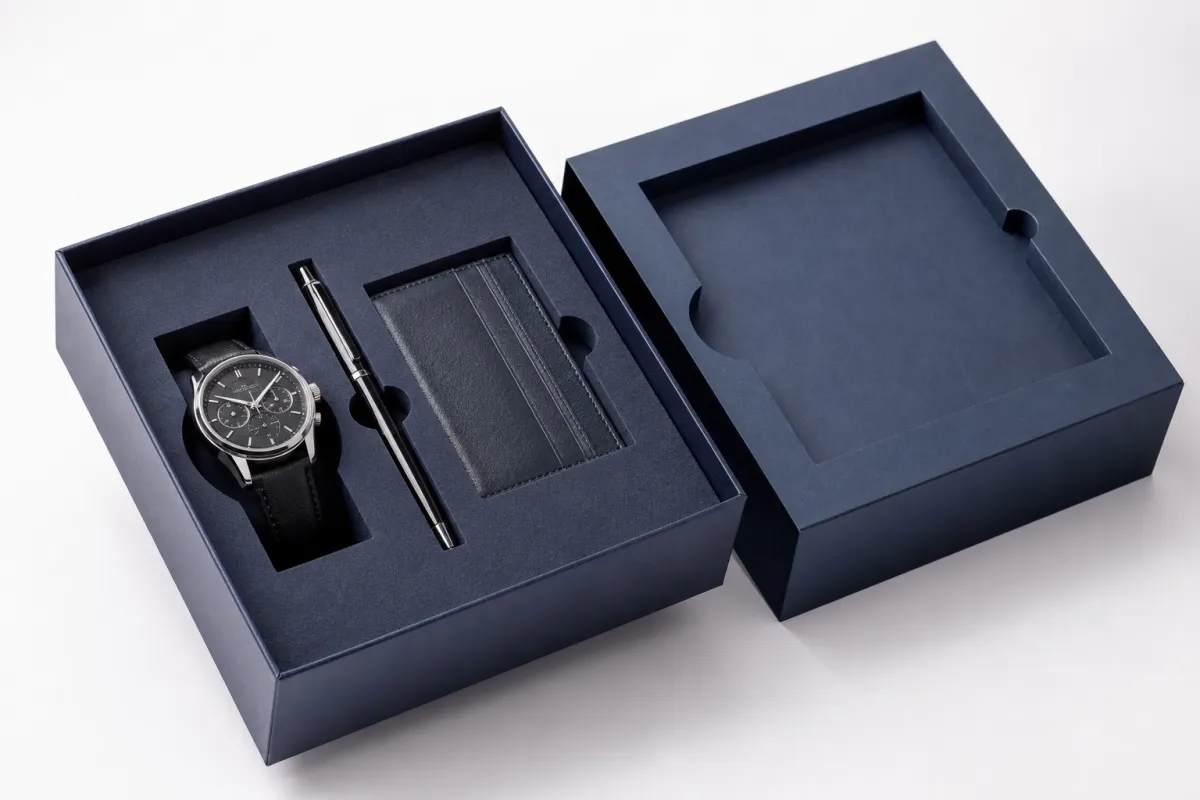
Simple version: custom rigid box inserts are the shaped internal components that hold a product in place inside a rigid setup box. They can cradle a bottle, frame a watch, divide a gift set, support a cosmetic kit, or keep fragile pieces from banging into each other. They are the reason a package opens cleanly instead of looking like someone dumped the contents in before lunch.
Fit matters because the insert controls movement. A rigid box has structure, but structure alone does not stop a product from sliding around. A good insert creates the right amount of restraint: snug enough to kill rattling, loose enough to make packing and removal painless. That balance sounds obvious. It is also where a lot of custom rigid box inserts go wrong. Too loose and the product bounces. Too tight and the packer fights the package, the corners deform, or the customer scratches a finished surface pulling the item out.
From the buyer’s side, the insert changes how the product reads visually. Centered placement, clean reveal lines, and controlled depth make the package feel designed for one exact item. That is the whole point of premium retail packaging. Nobody usually says it that way. They just say the box feels nice. Usually, the insert is why.
Here is the part teams miss: custom rigid box inserts often decide whether a package feels engineered or merely decorated. Two boxes can use the same wrap, foil, and magnetic closure. The one with the better insert still wins. The product sits straighter. The unboxing feels intentional. Damage rates usually improve too, especially for items that hate vibration, corner pressure, or surface abrasion.
A premium box without a proper insert is just an expensive way to let a product slide around.
That is not dramatic. It is packaging math. If the product moves, presentation weakens. If it shifts enough in transit, returns get messy. If it arrives damaged, the beautiful outer box becomes a very expensive apology. Good custom rigid box inserts stop that chain reaction before it starts.
How Custom Rigid Box Inserts Work Inside the Packaging
Custom rigid box inserts work by managing three things at once: position, pressure, and protection. Position keeps the product centered. Pressure keeps it from moving. Protection reduces shock, abrasion, and stack stress. Different materials handle those jobs in different ways, which is why there is no single best insert for every project.
The main insert styles are straightforward, and each one has a different personality:
- Paperboard inserts use folded or layered board to form channels, platforms, or compartments. They are common in lighter products and in packaging programs that need easier recycling.
- Foam inserts such as EVA or EPE add cushioning and usually get picked for higher protection needs or precise surface presentation.
- Molded pulp inserts fit eco-focused packaging and work well when the product needs broad support more than a luxury look.
- PET or clear plastic inserts can create a clean display effect, though they are not always the easiest choice for sustainability goals.
- Layered board structures combine cutouts, liners, and risers to build depth without moving into foam territory.
Each material changes the feel of the package. Paperboard looks crisp and structured. Foam feels more protective and more technical. Molded pulp has an honest, functional look that suits some brands and clashes with others. For custom rigid box inserts, the material is part of the brand story whether you plan for that or not.
Fit comes from a few simple mechanics. A custom rigid box insert can use a friction fit around the product body, a cutout matched to the silhouette, a compartment for accessories, or a cavity with depth control that sets how high the item sits. Sometimes it is one tray. Sometimes it is a stack of pieces: base, riser, top frame, and lid cushion. The geometry is doing the work, not the marketing copy.
Product dimensions matter, obviously, but so do weight and fragility. A 60-gram cosmetic jar does not need the same retention as a 900-gram glass bottle. A metal accessory can tolerate a firmer cavity than a lacquered item that scuffs if you breathe on it. Good custom rigid box inserts account for tolerance, not just nominal size. That gives the insert room for manufacturing variation while still holding the product steady.
Shipping and display also shape the structure. If the box will move through parcel networks, inserts need to resist vibration and drop events. The standards people usually reference here are ISTA test procedures and related ASTM packaging methods, because gut feeling is not a shipping spec. If the package will sit on retail shelves and get opened repeatedly, the insert also needs to survive handling without collapsing, fraying, or drifting out of alignment.
That is why the same custom rigid box inserts design can perform beautifully in one scenario and fall apart in another. A display-first insert may look great and offer limited impact resistance. A ship-ready insert may protect well but feel too plain for premium gifting. The job is to match the structure to the use case instead of pretending one setup can do everything.
Key Factors That Affect Performance, Cost, and Pricing
Pricing for custom rigid box inserts is driven by a handful of variables, and vague briefs get punished. The faster you define material, thickness, cavity count, and finish expectations, the easier the quote. If the spec is fuzzy, suppliers either pad the price or underquote and fix it later. Neither option is charming.
The biggest cost drivers are material choice, thickness, cut complexity, number of cavities, and any decorative finish. A simple paperboard insert with one product cavity and one accessory slot can be economical. Add layered construction, embossed wraps, foil, or tight multi-part assembly, and labor cost climbs fast. Custom rigid box inserts are often priced more by process complexity than by material alone.
Here is a practical range, assuming typical production quantities and no unusual decoration:
| Insert Type | Typical Use | Approx. Unit Cost Range | Notes |
|---|---|---|---|
| Basic paperboard | Lighter retail goods, cosmetics, gifts | $0.12-$0.30 | Good for simple geometry and recyclable builds |
| Layered board / compartment tray | Sets, bundles, small accessory kits | $0.20-$0.55 | More assembly steps, better structure |
| EVA or EPE foam | Fragile or premium products | $0.35-$1.10 | Higher protection, usually more premium feel |
| Molded pulp | Sustainable packaging programs | $0.18-$0.60 | Can be cost-effective at scale, shape limits vary |
| PET / display insert | Presentation-focused retail packaging | $0.25-$0.70 | Strong visual clarity, sustainability tradeoff |
Those ranges are not universal. Quantity changes everything. At 500 pieces, setup costs carry more weight. At 5,000 or more, unit pricing usually improves because tooling and labor get spread across a larger run. For many custom rigid box inserts projects, the sweet spot is not the cheapest possible build. It is the point where the insert protects the product, looks right, and does not chew through margin.
Hidden costs deserve attention too. Sampling fees can stay modest or get annoying fast, depending on revision count. Oversized rigid boxes increase shipping and storage costs before the customer ever sees them. Premium wraps, magnets, specialty paper, and tight structural tolerances all add work. If your insert needs custom tooling or a highly precise die cut, that can change both lead time and pricing. No mystery there.
The practical buying rule is simple: spend on fit and protection first, then pay for visual polish where it actually helps sales or brand value. Custom rigid box inserts should solve a real packaging problem. If the budget is tight, a cleaner insert structure often beats a fancier finish that does nothing for performance.
One more thing buyers get wrong: they compare only the insert price and ignore the system cost. A slightly more expensive insert can reduce assembly time, lower damage, and cut returns. That is real money. Packaging teams love arguing about pennies per unit, then lose dollars per order to bad fit. Sensible, right?
If you are building a full packaging program, it helps to coordinate the insert with the outer carton, printed sleeve, and shipper. Browse Custom Packaging Products if you want the inside and outside to work together instead of fighting each other like two departments that never met.
Custom Rigid Box Inserts Process: From Dieline to Sample
The production flow for custom rigid box inserts usually starts with product data, not art files. A manufacturer needs accurate product dimensions, weight, fragility notes, quantity, box style, and the experience you want at opening. Leave those out and the first design is just a guess with branding on top. Not great.
The process normally looks like this:
- Measure the product carefully, including accessories, surface finishes, and any protruding features.
- Choose the insert concept based on protection, display, recyclability, and budget.
- Build the dieline or structural layout for the insert and rigid box interior.
- Produce a prototype so the fit can be checked with the actual product.
- Review and revise if the item sits too high, too low, too tight, or too loose.
- Approve the sample and move into production once the structure is right.
The sample step is where custom rigid box inserts get saved from embarrassing mistakes. CAD measurements help, but a physical prototype catches the annoying details drawings hide. A cable bends differently than expected. A bottle shoulder hits the lid. A tray looks centered on screen and crooked in hand. Normal stuff. The sample exists to expose the gap between theory and reality.
Typical timelines vary by complexity, but a realistic range looks like this: briefing and measurements can take a day or two, structural engineering often takes several more, sample production can take about 5-10 business days, and revisions may add a few days if the fit is off. Once approved, production commonly runs in roughly 12-18 business days for straightforward jobs, though more complex custom rigid box inserts can take longer.
Delays usually come from vague specs, midstream changes, or slow approvals. The worst offender is the late “small” change. Someone decides the product cap is 2 mm taller, the accessory moved, or the logo needs a different center point. Suddenly the insert has to be rebuilt. That is not the factory being difficult. That is geometry doing its job.
For brands that care about environmental claims, ask what certifications are available for paper-based components. FSC-certified paperboard can support responsible sourcing claims, and EPA guidance on packaging reduction can help teams think about material efficiency and waste reduction. The point is not to turn the insert into a lecture. The point is to make custom rigid box inserts serve the product, the brand, and the packaging plan without adding avoidable waste.
During sampling, ask for clear photos and notes. Better yet, test the prototype with real products, not just dummy pieces. A polished prototype can still fail under the weight of an actual item. That is especially true for glass, metal, multi-part kits, and products with delicate surface coatings. Custom rigid box inserts should be proven under real conditions before a full run starts.
Common Mistakes With Custom Rigid Box Inserts
The most common failure in custom rigid box inserts is a loose fit. The product wiggles, corners rub, and the box feels cheaper than it should. The opposite problem is just as bad: an over-tight cavity that forces the product in, scuffs the finish, or slows assembly enough to annoy everyone on the packing line. Fit is not a theory exercise. It shows up in customer hands and warehouse labor.
Another classic mistake is designing for appearance while ignoring movement. A tray can look elegant in a rendering and still fail drop testing, stack pressure, or vibration. That happens a lot when teams treat custom rigid box inserts as decorative instead of structural. Once the package ships, gravity and impact stop caring about the presentation deck.
Bad alignment is a quieter problem, but it matters. If the product sits off-center, the reveal feels sloppy. If accessory cutouts are too close to the edge, the insert can tear during repeated use. If the corners are weak, the structure collapses after a few packs. These are the kinds of issues that make custom rigid box inserts look fine in a photo and disappointing in the real world.
Overcomplication is another trap. More compartments do not automatically mean better packaging. They can slow assembly, increase scrap, and raise cost without improving customer experience. Sometimes a simpler insert with one clean cavity and a small accessory recess works better than a complicated puzzle of folded parts. Less drama. Fewer line headaches. Same or better result.
Product tolerance changes get ignored too often. Batch variation, coating thickness, and accessory swaps can all affect fit. If a package must work across multiple SKUs or product revisions, the insert needs some tolerance built in. Custom rigid box inserts are only as reliable as the product data behind them, and product data drifts if nobody watches it.
Before approval, verify these points:
- Product sits centered and level.
- Removal is easy without force or scraping.
- The cavity tolerates normal batch variation.
- Shipping movement is controlled.
- Assembly time is acceptable for the packing team.
- Finishes, corners, and edges stay intact after handling.
If any of those fail, fix them before production. Rework on custom rigid box inserts usually costs far more than getting the structure right the first time. That is not a poetic truth. It is a line-item truth.
Expert Tips for Better Custom Rigid Box Inserts
The smartest way to approach custom rigid box inserts is to design around the product first and the box second. Too many teams draw the outer box, then squeeze an insert inside as an afterthought. That usually creates wasted space, awkward cavity depths, or packaging that looks luxurious until the lid opens. Treat the box and insert as one system. They should pull in the same direction.
Real product samples beat dimensions on paper. Every time. A caliper gives size. It does not tell you how a soft-touch finish drags, how a nozzle catches, or how a glass shoulder shifts under pressure. For custom rigid box inserts, the product itself is the best test tool you have. Use it early.
Choose a simpler insert when speed, consistency, or budget matters more than theatrical presentation. Choose a more premium structure when the unboxing is part of the sale, the product is fragile, or the packaging needs to support a high-end brand position. There is no prize for overbuilding a package that only needs to survive. There is also no medal for underbuilding a luxury kit and listening to the contents rattle like loose change.
Small design choices can lift the experience without blowing up cost. Finger notches make removal easier. Lift tabs help users access the product without digging. Layered reveals can make custom rigid box inserts feel more considered. Clean edge alignment and accurate depth control make the whole package look better than a random tray shoved into a square box ever could.
When sourcing, ask for material swatches, prototype photos, and tolerance notes. Ask what happens if the product comes in slightly larger than spec. Ask whether the insert can be tuned for a second SKU later. Those questions save time and money. If the supplier cannot explain the tradeoffs clearly, that tells you something too. You are not getting a packaging partner. You are getting a quoting machine.
One more practical tip: test how the insert feels after repeated handling. Some custom rigid box inserts look excellent on day one and start fraying or loosening after a few open-close cycles. If the package is going to live as a keepsake or presentation box, that matters. A rigid box with a tired insert stops feeling premium fast.
For projects with sustainability goals, compare structure choices honestly. FSC paperboard, recycled board, and molded pulp may fit certain briefs better than foam. That does not make foam bad. It means the best choice depends on the product, the distribution method, and the brand promise. Good custom rigid box inserts match the claim you want to make instead of pretending every material tells the same story.
What to Do Next Before Ordering Custom Rigid Box Inserts
Before You Order custom rigid box inserts, gather the basics. Measure the product carefully. Confirm final quantity. Decide how much protection you actually need. A fragile glass item headed through parcel shipping is not the same project as a lightweight promotional kit handed over in-store. The insert should solve the real use case, not the one that sounds nicer in a meeting.
Then collect everything a supplier needs to quote accurately: product photos, CAD files if you have them, physical samples if possible, box dimensions, branding goals, and any packing constraints. The more complete the brief, the less guesswork in the engineering stage. Guessing is expensive. Guessing with rigid packaging is especially annoying because every millimeter matters.
It also helps to compare at least two structural options. One should be cost-focused. One should be more premium. That side-by-side view makes tradeoffs obvious. You may find that a slightly better material or cleaner cavity costs only a little more and saves much more in presentation or damage reduction. Or you may discover that the premium route adds cost without adding much value. Either way, the comparison is useful.
A final approval checklist for custom rigid box inserts should cover fit, finish, shipping durability, and assembly speed. Ask whether the product sits properly after packing. Ask whether the surface stays clean. Ask whether the insert survives a reasonable handling test. Ask whether packers can assemble it without improvising. If any answer is shaky, keep adjusting.
Good packaging is practical before it is pretty. The best custom rigid box inserts do not just fill empty space with expensive board or foam. They prevent movement, support the product, and make the unboxing feel intentional. That is the standard worth aiming for. Everything else is decoration with a bill attached.
Here is the actionable takeaway: define the product, the ship route, and the opening experience before you ask for quotes. If you can hand a supplier real dimensions, a real sample, and a clear priority list, your custom rigid box inserts are far more likely to fit the first time. That saves money, protects the product, and keeps the box from doing a bad impression of a marble tray.
What are custom rigid box inserts used for?
Custom rigid box inserts hold products securely inside rigid boxes so items do not shift, rattle, or arrive damaged. They also improve presentation by centering the product and creating a cleaner unboxing experience. For brands that care about retail packaging and branded packaging, the insert is often what makes the box feel finished.
Which material is best for custom rigid box inserts?
There is no single best material. Paperboard works well for lighter products and recyclable builds, while foam or molded options suit heavier or more fragile items. The right choice depends on protection level, brand feel, budget, and whether the insert needs to support a sustainability claim. That is why custom rigid box inserts should be chosen case by case, not by habit.
How much do custom rigid box inserts usually cost?
Pricing depends on material, shape complexity, quantity, and whether you need sampling or custom tooling. Simple paperboard inserts are usually the most economical, while foam, molded, or highly detailed structures cost more per unit. For many custom rigid box inserts projects, the real question is not “what is cheapest?” but “what protects the product without adding wasteful cost?”
How long does it take to produce custom rigid box inserts?
Timing depends on how fast you approve the design and whether samples are needed before production. A simple job moves faster; custom structures with multiple revisions can take noticeably longer because fit has to be verified. In practice, custom rigid box inserts often move through briefing, sampling, revisions, approval, and production in stages that add up quickly if decisions are slow.
Do custom rigid box inserts need to match the box exactly?
They need to match the product and the box interior closely enough to keep everything stable, but they should still allow for manufacturing tolerances. A good insert balances snug fit with practical assembly, so the product is protected without becoming impossible to pack. That balance is the whole job of custom rigid box inserts, and it is where many packaging projects either get smart or get expensive.

