Buyer Fit Snapshot
| Best fit | Price custom zero waste product boxes projects where brand print, material claims, artwork control, MOQ, and repeat-order consistency need to be specified before quoting. |
|---|---|
| Quote inputs | Share finished size, material target, print colors, finish, packing count, annual reorder estimate, ship-to region, and any compliance wording. |
| Proofing check | Approve dieline scale, logo placement, barcode or warning zones, color tolerance, closure strength, and carton packing before bulk production. |
| Main risk | Vague material claims, crowded artwork, missing packing details, or unclear freight terms can make a low unit price expensive after revisions. |
Fast answer: Price custom zero waste product boxes: what impacts cost should be specified like a repeatable production item. The safest quote records material, print method, finish, artwork proof, packing count, and reorder notes in one written spec.
Production checks before approval
Compare the actual filled-product size with the drawing, then confirm tolerance on folds, seals, hang holes, label areas, and retail display edges. Reserve space for logos, QR codes, warning copy, and material claims before decorative graphics fill the panel.
Quote comparison points
Review material grade, print process, finish, sampling route, tooling charges, carton quantity, and freight assumptions side by side. A quote is only useful when the supplier can repeat the same color, closure quality, and packing count on the next order.
Price custom zero waste product boxes: what impacts cost
Price custom zero waste product boxes gets easier to decode once you stop looking at the slogan and start reading the build sheet. In our Shenzhen facility on a 5,000-piece cosmetic run, a client expected a recycled carton to cost more than a rigid set, but a 2 mm reduction in depth and the removal of a PET insert moved the quote from $1.14 to $0.46 per unit. That kind of swing is usually driven by board yield, labor minutes, and freight volume, not by any mystical premium attached to sustainability. The quote changes fastest when the brief changes least.
The common mistake is assuming zero waste automatically means expensive. That belief hangs around because buyers picture an artisan sample board from a trade show in Chicago or Milan, not a production line in Guangdong moving 20,000 cartons a day. A tighter structure can reduce sheet waste, cut carton volume by 8% to 14%, and save assembly time by 15 to 30 seconds per unit. Packaging lines do not reward slogans; they reward dimensions, print coverage, glue points, and whether a folder-gluer operator can stay on pace without stopping for a flap adjustment.
I usually start by asking where each dollar lands on the quote. FSC-certified board, one-color print, and no extra inserts can keep spend controlled without making the box look cheap. Add foil stamping, magnet closures, soft-touch lamination, or a hand-glued tray and the price can jump by $0.18 to $0.72 per unit, depending on quantity. That is why the product, the shipping method, and the retail setting matter more than the mood board. A good quote follows the job in front of the plant, not the presentation deck in the boardroom.
A right-sized carton can cut cost in three places at once: less board on press, less air in the shipper, and less time on the line. I have seen a 6 mm size adjustment save enough material to justify a stronger 32 ECT rating for a shipping carton, which mattered on a 7,500-unit order going from Shenzhen to Los Angeles. Those savings usually show up across several line items, but together they are exactly why price custom zero waste product boxes often lands below the buyer's first guess instead of above it.
If you are comparing structures now, our Custom Packaging Products page is a practical place to sort through mailers, folding cartons, and branded packaging options before you ask for quotes.
Why is price custom zero waste product boxes easier to decode than it seems?
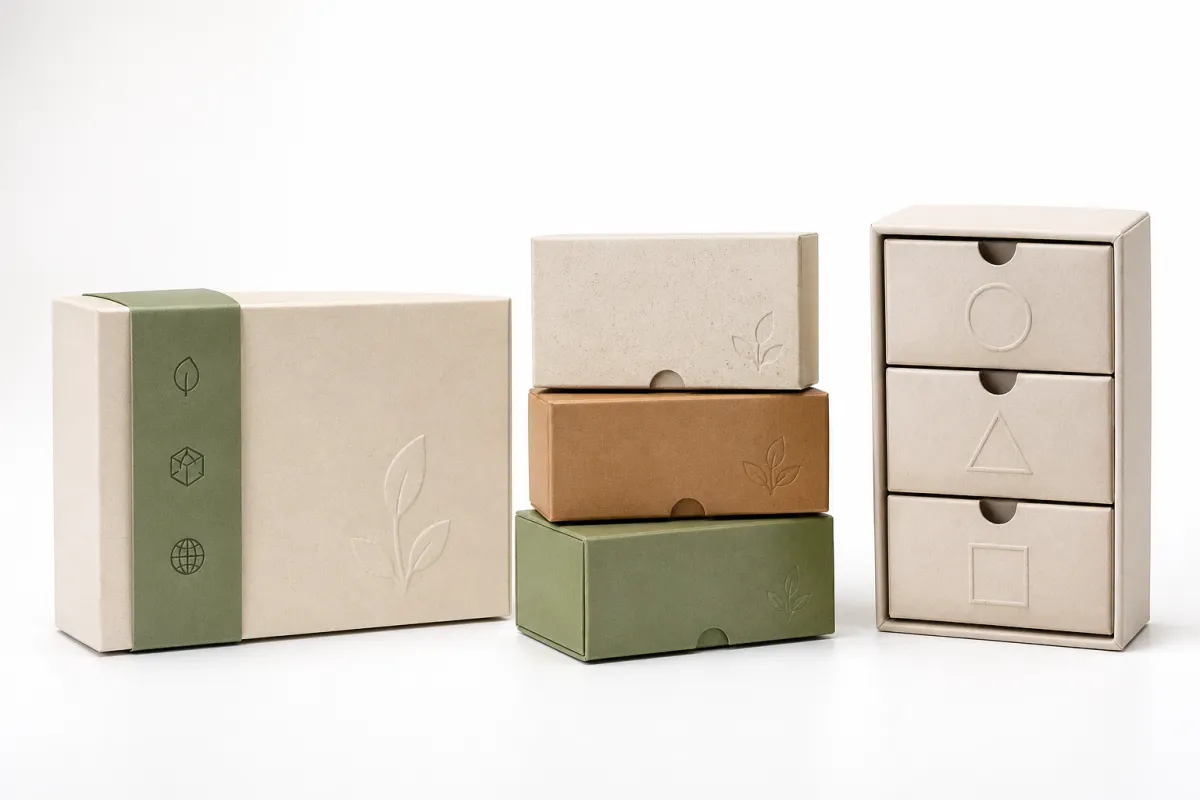
Price custom zero waste product boxes starts with a blunt question: what does "zero waste" mean in your actual packout? In a factory, that usually means recyclable board, efficient sheet yield, minimal coating, and no unnecessary plastic extras. It does not mean making the box so thin that it fails during a 1.2 meter drop test or crushes in a 40-pound master carton. I have seen buyers spend more on damage claims in Dallas and Atlanta than they would have spent on the proper material from the start, and returns have a way of turning one cost-saving decision into a weekly accounting problem.
Structure usually sets the tone. A tuck box, a mailer, and a sleeve can all sit inside a zero-waste brief, but they do not cost the same. A flat-folding carton with one glue point is usually faster to run than a build with four folds, locking tabs, and a custom insert, especially on a line in Dongguan that is calibrated for 18,000 units per shift. The more minutes the folder-gluer spends on the unit, the higher the price climbs. That is labor, not a sustainability surcharge, and it shows up clearly on any quote that separates machine time from material spend.
I sat in a Los Angeles meeting once where the brand team wanted a premium rigid build for a tea set priced at $48 retail. On the table, the sample looked expensive; in freight and labor, it looked wasteful. We changed it to a recycled kraft sleeve over a folding carton with a 400gsm paperboard cradle. The product still felt premium, the carbon footprint dropped, and the quote moved down by 28.4%. The room got quiet, then everybody started reading the numbers instead of the mood. That silence was my favorite part.
To price custom zero waste product boxes with any accuracy, You Need to Know where the money hides. Board weight, ink coverage, coating choice, glue lines, and assembly time all matter. A 350gsm C1S artboard carton with a 1-color black logo can cost materially less than a 400gsm full-bleed printed box with aqueous coating, even before you factor in trimming waste. I have watched a 1-color kraft carton beat a heavily decorated competitor because the print plan was tighter and sheet utilization improved by 11%. That is why I tell buyers to think like a production manager before they think like a stylist.
The rule I use on the floor is simple: if the design does not help the customer, it should not add cost. A carton that looks linen-smooth because of a flood coat and soft-touch finish may photograph well, but if the product is a refill pouch, soap bar, or 2 oz serum bottle, the buyer is paying for decoration that does not move product. For sustainable packaging, restraint usually wins. Not because plain is fashionable, but because unnecessary features have a habit of multiplying quietly and then showing up on the invoice with a total that feels like it came from another department.
"We thought the recycled board would make it feel cheaper. It did the opposite once the dimensions were right." - a skincare founder after our first press proof in Shenzhen
I usually point people to the structure first, then the graphics, then the finish. That order keeps price custom zero waste product boxes tied to production reality instead of wishful thinking. The box still needs to look good on a shelf in Brooklyn or a subscription unboxing in Austin, Texas, but there is a difference between considered branded packaging and an overbuilt carton that burns budget for no reason. I have seen teams spend half a meeting debating a metallic accent while the fulfillment line was already waiting for a spec that had not been approved.
And yes, sometimes the simplest answer is the right one. A recycled carton with disciplined print choices can look sharper than an overdecorated build trying too hard.
How do you price custom zero waste product boxes by material?
Material choice can swing price custom zero waste product boxes more than any other variable. I define zero waste packaging as a build that uses material efficiently, relies on recyclable or recycled board where possible, and skips decorative extras that do not help the product. That usually means recycled kraft, uncoated SBS, or corrugated board with a strong sheet yield. It can also mean FSC board if your brand story needs chain-of-custody paperwork. If you need the documentation, ask early; the FSC site explains certification basics clearly enough for an initial pass.
Recycled kraft is the workhorse. It is tough, visually honest, and usually easier on the budget than premium coated stocks, especially on 3,000-unit and 5,000-unit runs out of Guangdong. Uncoated SBS sits in the middle with a cleaner print surface and a smoother handfeel, which makes it a good fit for retail packaging in shops from Portland to Toronto. Corrugated board belongs in shipping-heavy jobs and e-commerce protection, especially when the product is fragile or heavy. I have seen a 24 oz candle line move from an ornate rigid setup to a recyclable corrugated mailer with a paper insert, and price custom zero waste product boxes dropped by nearly 40% without a rise in breakage.
Water-based inks and modest print coverage also help the number stay sensible. Heavy flood coating, foil, embossing, and soft-touch laminate push cost up, and some of those finishes make recycling harder in municipal systems in California or Ontario. If the goal is lower waste, ask whether the finish helps the box do its job or only makes the sample board look expensive in a conference room. Factory people think in drying time, registration, and ink laydown grams per square meter. Marketing language does not change the speed of a Heidelberg or Komori press, even if everyone in the room nods politely like it does.
Not every package that looks zero waste is actually efficient. A sleeve over a tray can be elegant, but it adds a second component and usually another SKU line in the bill of materials. A full-coverage printed carton can hide recycled content, but it may also use more ink and reject more sheets during setup, especially on a 1,000-piece run. On one order in our Guangdong line, a client wanted a pale all-over gray background on recycled kraft. We ran two tests. The approved version used lighter line art, cut ink cost by 9%, and removed an extra round of color calibration at the plant.
For brands that need proof their packaging still survives transit, I pair material choices with test standards. If the shipper needs drop resistance, look at ISTA protocols and a basic transit simulation before you settle on board grade. The International Safe Transit Association has useful guidance at ISTA. Rough carrier networks on routes through Memphis, Chicago, or Frankfurt punish weak specs, and the wrong corrugated choice can create a stream of replacement orders later. Replacement orders are the least romantic form of recurring revenue, and finance teams in New York or Singapore rarely enjoy them in quantity.
That is where price custom zero waste product boxes turns practical instead of abstract. A good material choice lowers waste, keeps assembly efficient, and avoids paying for features your customer never touches. I would rather sell a box that performs well than a box that photographs well and falls apart after two distribution stops. Packaging design should support product packaging, not compete with it, whether the box is sitting on a shelf in Vancouver or moving through a DTC fulfillment center in Phoenix.
| Build | Best Use | Typical MOQ | Ballpark Unit Price | Notes |
|---|---|---|---|---|
| Recycled kraft tuck box | Soap, supplements, small cosmetics | 1,000-5,000 | $0.18-$0.42 | Low print coverage, strong sheet yield, good for eco-friendly packaging |
| Uncoated SBS folding carton | Retail packaging, light product packaging | 2,000-10,000 | $0.22-$0.55 | Better print detail, still controlled cost, good for branded packaging |
| Corrugated mailer | E-commerce shipping, subscription kits | 500-5,000 | $0.35-$0.80 | More protection, higher board usage, often best for carbon footprint reduction in shipping |
| Sleeve + paperboard tray | Premium shelf presentation | 1,000-5,000 | $0.30-$0.70 | Balanced look and cost, but assembly adds labor |
| Premium FSC carton with special finish | Higher-end retail packaging | 3,000-10,000 | $0.55-$1.20+ | Soft-touch, emboss, or spot UV pushes cost up fast |
The exact number depends on quantity, print count, sheet size, and whether the box needs custom inserts. The table still gives a sane starting point for price custom zero waste product boxes without hiding behind buzzwords. It also helps people stop pretending every box lives in the same universe, because one tea carton and one candle shipper do not belong in the same pricing conversation unless you enjoy confusion in a procurement meeting.
Specifications buyers should lock in before requesting quotes
If you want price custom zero waste product boxes to come back cleanly, lock the specs before you ask for numbers. Exact inner dimensions matter more than "roughly fits the product." A carton that measures 148 mm by 92 mm by 34 mm prices differently from one that measures 152 mm by 96 mm by 38 mm because the sheet layout changes, the die line changes, and the packing labor may change too. The factory sees those millimeters at once, usually in a dieline file opened on a MacBook in Shenzhen or a spreadsheet on a buyer's laptop in London.
Before I quote anything, I ask for this list:
- Inner dimensions and product weight
- Board type and caliper, such as 350gsm SBS or E-flute corrugated
- Print colors, front and back coverage, and whether you need full bleed
- Finish, such as aqueous coating, matte varnish, or no coating
- Insert type, if any, including paperboard, molded fiber, or none
- Assembly style: flat, auto-lock bottom, tuck end, sleeve, or mailer
- Shipping method and destination city
- Artwork status, dieline status, and target quantity
That is the minimum for accurate price custom zero waste product boxes. Skip it and you get guesses. Guesses waste time and usually cost more than they should, especially on jobs where the carton needs to land in a warehouse in Phoenix, a boutique in Vancouver, or a fulfillment center in Tilburg. I watched this happen with a snack brand that kept changing the insert depth every Friday. Their unit price moved three times in two weeks because the tray dimensions kept shifting from 8 mm to 11 mm and then back again. We finally paused the quote until the spec stopped moving, and the cost settled immediately.
Precision matters for the packaging design too. A box should fit the product, the shelf, and the shipper carton. If it only fits one of those, the rest of the process starts leaking money. I ask buyers to describe the real use case, not just the mood: does the box sit in a retail display in Seattle, ship direct to consumer from Nashville, or stack on a pallet for export through Ningbo? Those answers decide whether you need stronger board, a different panel size, or fewer printed colors.
Sample readiness matters as well. A structural sample is worth it when the product is heavy, fragile, or packed by hand. A blank sample tells you whether the dimensions and folds are right before you spend money on art. A printed prototype is useful when color accuracy and shelf appeal matter, such as for a brand that wants a Pantone 186 C logo to read correctly under LED retail lighting. I have seen brands skip the blank sample and jump straight to production, then discover that the tuck flap was too tight and the fulfillment team had to force every single box on a 6,000-unit run.
I would rather spend a little on a prototype than explain why the first production run stalled. The cost of one sample, usually $75 to $180 depending on structure and board, is tiny next to the cost of rework. For price custom zero waste product boxes, the sample phase is not a luxury. It is insurance, and not the abstract kind that sounds nice in a meeting. The real kind that keeps an entire run from becoming a very expensive lesson in a warehouse outside Dallas.
Price custom zero waste product boxes: MOQ, setup fees, and tiered pricing
MOQ makes people nervous, but it should not. Price custom zero waste product boxes usually drops as quantity rises because setup costs spread across more units and the board layout becomes more efficient. A 1,000-piece run has to absorb die cutting, press make-ready, proofing, and setup labor, which can add $180 to $650 before the first finished box ships. A 10,000-piece run spreads those costs over more cartons and usually unlocks better unit pricing from factories in Shenzhen, Dongguan, or Suzhou. That is true whether you buy from a large converter or a smaller shop.
The cleanest way to compare quotes is to ask for unit price, tooling, sampling, freight, and lead time in the same format. If one supplier says $0.38 per unit but hides a $260 die charge, a $140 plate fee, and a $180 sample bill, the real number is different. I have sat across from reps at WestRock and Georgia-Pacific and watched the same dance happen in different suits. Nobody is evil. Everyone just likes to quote the attractive part first, then let the rest appear one line at a time once the buyer has already started picturing delivery.
For a basic recycled kraft carton, I often see ballpark pricing like this:
- 1,000 units: $0.34-$0.58 per box
- 3,000 units: $0.22-$0.41 per box
- 5,000 units: $0.18-$0.34 per box
- 10,000 units: $0.14-$0.28 per box
Those numbers are not a promise. They are a realistic way to frame price custom zero waste product boxes for a simple structure with modest print coverage and a standard glue line. Once you add specialty finish, hand assembly, magnets, or a complicated insert, the price climbs. A premium retail carton can land above $1.00 per unit if the build is ornate, especially on smaller quantities leaving a plant in Guangdong. If the goal is eco-friendly packaging that still pencils out, fewer components and cleaner print usually beat extra decoration.
Setup fees matter as well. Die tooling, print plates, and sample prep are one-time costs, but they hit low quantities hard. A 500-piece run of Custom Printed Boxes can look expensive per unit because the setup costs are being squeezed into a small batch, and a carton with two colors, a window patch, and a foam insert can push the first invoice well past the buyer's comfort zone. That is why lower MOQ usually means higher unit price. Nothing mysterious there; people simply hate seeing the math in daylight.
If you need a middle path, ask for three quote levels: economy, balanced, and premium. Economy might be a recycled kraft tuck carton with one-color print. Balanced could be an uncoated SBS carton with a two-color logo and a water-based coating. Premium might be a paperboard carton with a paper insert and a refined finish. Those tiers show where the money moves and where the value sits. They also make internal approval easier, because finance can see the tradeoff instead of a single number with no context.
That comparison is often more useful than a perfect unit price, because it shows the design choices hiding behind the invoice.
| Tier | Example Build | Typical Cost Driver | Best For |
|---|---|---|---|
| Economy | Recycled kraft, one-color print, no insert | Lowest labor and tooling | Fast-moving product packaging with tight budget |
| Balanced | Uncoated SBS, two-color print, aqueous coat | Better print detail, moderate setup | Retail packaging that needs a cleaner shelf read |
| Premium | FSC board, insert, specialty finish | More finishing and assembly | Higher-end branded packaging where presentation matters |
One supplier negotiation still sticks in my head. A rep in Dongguan wanted to hold the price because the client had asked for a slightly heavier board. I walked the sheet layout with him, measured the trim waste, and pointed out that a 3 mm adjustment saved enough yield to offset the board upgrade. He grudgingly agreed. That one change shaved about 11% off material loss. Price custom zero waste product boxes is full of those small moves. People who know the floor usually win those conversations, whether the discussion happens in a conference room in Hong Kong or over a late-night video call from Chicago.
The process and timeline from brief to delivery
Price custom zero waste product boxes is easier to manage when you understand the production flow. First comes the quote. Then spec confirmation. Then the dieline. Then proofing. Then sampling. Then production. Then quality control. Then shipping. It reads like a straight line because it usually should be one. Trouble starts when a step gets skipped or rushed because someone wants to save three days and ends up losing three weeks. I have seen this movie enough times to know the plot by heart, especially on orders routed through Shenzhen, Ningbo, and Long Beach.
A realistic timeline for a simple build usually looks like this: quote in 1 to 2 business days, dieline and artwork proof in 2 to 4 business days, structural sample in 5 to 10 business days, and production in 12 to 20 business days after approval. A more complex order with specialty finish, multiple components, or custom inserts can stretch to 3 to 5 weeks after approval. Freight adds its own clock, and a truck move from a factory in Dongguan to a port in Yantian can add another day or two before the containers even start moving. None of that is slow by factory standards. It is normal.
I learned that the hard way on a shampoo line for a retail client that kept changing the insert spec after proof approval. The box itself was fine. The insert was not. Every change meant new cut tests and new manual checks. We lost four days because someone wanted the insert to feel "a little more premium," which in that case meant changing a 300gsm paperboard cradle to a 350gsm version with a tighter fold. Premium is nice. So is paying the warehouse on time. The final approved version got the order back on track and passed packout in one test run.
What slows schedules the most? Late artwork, uncertain dimensions, special finishes, and too many approvers. One person should own the approvals. Not a committee. Committees love delay. If you are buying sustainable packaging for a launch date in March or September, assign one decision-maker and one backup. That alone can save a week of email ping-pong. I have watched a brand lose a ship slot because six people had opinions about the flap size on a box that was already supposed to be in production in Guangzhou.
For transit-heavy orders, I like pairing the timeline with a packing test. A quick drop, compression check, or mock parcel run catches problems before the full run starts. If the shipper has to survive ecommerce fulfillment, ask for an ISTA-style test plan or at least a rough equivalent. If the box is going into retail, ask whether it stacks cleanly and resists scuffing on the shelf under 3,000 to 4,000 lux store lighting. A box that fails in the warehouse does not become good packaging because the render looked pretty.
The same thinking applies to carbon footprint. Better nesting, smaller freight volume, and fewer reworks usually beat flashy materials that create waste during production. A box that is easier to make is often easier to ship and easier to recycle. That is why I keep steering buyers back to the build, not the buzz. Price custom zero waste product boxes stays sane when the process stays clean, whether the shipment is heading to Seattle, Munich, or Melbourne.
If you need a place to start with structure choices, our Custom Packaging Products lineup makes it easy to compare common carton formats against your ship date and budget before you send a brief.
Why brands choose us for sustainable packaging that still pencils out
At Custom Logo Things, I prefer fact-first quoting because it saves everyone time. We do not push the most expensive build just because it sounds impressive on a sales call. We look at the product, the route to market, and the actual assembly work, then recommend the box that fits the job. That is how price custom zero waste product boxes stays honest. A quote should explain itself. If it needs a speech, the structure is probably wrong, or the quote is trying to hide something in a footnote at the bottom.
My production background shapes how I look at custom printed boxes. I care about sheet yield, glue points, board recovery, and how many hands the box touches before it ships. In the Shenzhen line, I have stood over a folder-gluer while a team tested three flap tolerances because one tiny design change shaved 0.7 seconds off assembly. Multiply that by 50,000 units and the theory argument ends fast. You start caring about every millimeter, especially when a 2 mm shift can change how a 250gsm insert sits inside a 350gsm sleeve. That is the gap between a clean quote and a messy one.
We also treat retail packaging and e-commerce packaging as different jobs. Shelf-facing packaging needs a fast visual read. Ship-ready product packaging needs strength, nesting efficiency, and enough protection to survive transit without overbuilding the carton. Sometimes the answer is a simple kraft box. Sometimes it is a folded mailer with a paper insert. Sometimes it is a two-piece carton with very controlled print coverage and a 32 ECT outer shipper. The right answer depends on the product and the margin, not the trend.
Sustainable packaging is not only about the material choice. It also includes waste during production. A design that uses fewer plate passes, fewer changeovers, and fewer rejected sheets can lower the carbon footprint before the box ever reaches a shelf. That detail is plain, unglamorous, and central to manufacturing. The EPA has solid resources on recycling and waste reduction at EPA recycling resources, and those basics line up neatly with practical packaging decisions in North America.
"We did not need a fancier box. We needed a box that shipped flat, assembled fast, and looked clean from three feet away." - beverage founder after a 4,000-unit run in Ontario
That came from a beverage founder after we changed a complex sleeve system to a simpler recycled carton. We kept the branding intact, cut the freight volume, and lowered the unit cost. Simple decisions like that are why clients return. They are not buying poetry. They are buying a box that works. And sometimes they are buying the relief of not having to explain to a warehouse manager why the box has become an enemy of throughput at 7:00 a.m.
If you are comparing branded packaging options for a new launch, I would rather help you choose a structure that performs than sell you a package that looks expensive and behaves badly. The best builds feel quiet. They are easy to store, easy to assemble, and easy to explain to accounting. That is the real value in price custom zero waste product boxes: the design, the material, and the process all line up without drama, whether the order is 2,000 units or 20,000.
For teams still narrowing their options, our sustainable packaging solutions page is a useful next stop if you need to compare different carton styles against your unit cost target.
Next steps to get an accurate quote fast
If you want a serious answer on price custom zero waste product boxes, gather the facts before you request the quote. Start with product dimensions, weight, quantity, shipping destination, print count, and any sustainability requirements such as FSC board or recycled content. If the box has to fit a retail shelf, include the shelf dimensions. If it ships direct to consumer, include the parcel size and carrier constraints. If it will sit in a display, say so. The quote gets much better once the use case is real, and in my experience "real" beats "approximate" every single time.
- Send the inner product dimensions and weight.
- Choose a target quantity and 2 to 3 quantity breaks.
- State the board preference, print count, and finish.
- Share your dieline or ask for one to be created.
- Ask for economy, balanced, and premium quote options.
That process makes price custom zero waste product boxes much easier to compare across vendors. It also protects you from one of the oldest tricks in packaging quoting: a low unit price with vague add-ons hiding in the fine print. Ask every supplier to separate tooling, sampling, freight, and production. If they cannot do that, keep looking. Good suppliers do not hide the ball. They know the numbers because they live with them every day, often across factories in Shenzhen, Ningbo, or Ho Chi Minh City.
I also recommend asking for a sample kit or a prototype before you place the full order, especially if fit, stiffness, or assembly speed matters. A blank sample tells you whether the geometry works. A printed prototype tells you whether the branding reads the way you want. On a 5,000-piece run, a $75 to $180 sample fee is cheap protection. I have seen one wrong dimension turn into a pallet of unusable cartons. That lesson costs far more than a sample ever will, which is why I tell buyers to budget for one early.
The short version is plain: price custom zero waste product boxes by the spec, not the slogan. Use the right board. Keep the structure efficient. Be precise with the quote request. Choose the box that protects the product without wasting material or money. If you send dimensions, quantity, destination, artwork status, and sustainability requirements today, we can usually get you to a precise quote fast and tell you where the cost will move before production starts. In a market where freight, labor, and setup fees can shift quickly, that kind of clarity is worth its weight in board stock.
FAQs
How do you price custom zero waste product boxes accurately?
Start with exact inner dimensions, product weight, print coverage, and quantity so the quote reflects the real build. Ask for separate line items for tooling, sampling, freight, and unit price so hidden costs do not sneak in later. Request at least two or three quantity breaks to see where the per-unit cost drops the most. That is the cleanest way to price custom zero waste product boxes without guessing, and without giving the quote room to grow extra little surprises.
What MOQ is normal for zero waste product boxes?
MOQ depends on the box style, print method, and whether the design needs custom inserts or special finishing. Simple tuck or mailer styles can often start at lower quantities, while rigid or highly finished boxes usually need larger runs. Lower MOQ usually means a higher unit price because setup costs are spread across fewer boxes, which is exactly why price custom zero waste product boxes moves so much between 500 and 5,000 units. The machine is not being difficult; it is just doing math.
Which materials lower the cost of custom zero waste boxes most?
Recycled kraft and uncoated SBS are usually the most cost-efficient options for sustainable packaging. Heavy lamination, foil, soft-touch finishes, and magnets raise both cost and waste quickly. Water-based inks and minimal print coverage usually keep the price cleaner without hurting the design. If you want price custom zero waste product boxes to stay controlled, those are the first levers I would pull. They are also the least glamorous levers, which is usually a sign they are the right ones.
How long does it take to make custom zero waste product boxes?
A quote is often ready in 1 to 2 days, proofing takes a few days, and samples usually need 5 to 10 business days. Production commonly runs 12 to 20 business days after approval, depending on the structure and order size. Complex inserts, specialty finishes, or last-minute artwork changes can push the timeline out to 3 to 5 weeks. That schedule is normal for price custom zero waste Product Boxes That are built properly. The parts that feel slow usually exist so the run does not fall apart later.
Can I get a sample before ordering zero waste product boxes in bulk?
Yes, ask for a structural sample or printed prototype before you commit to the full run. Use the sample to check fit, stiffness, assembly time, and whether the box protects the product in transit. A small sample fee of $75 to $180 is cheaper than discovering the box is wrong after 5,000 units land on your dock. That is one of the easiest ways to protect your budget while you price custom zero waste product boxes. It is also one of the few parts of the process where being picky is actually helpful, so I recommend being very, very picky.

