Buyer Fit Snapshot
| Best fit | Printed Anti Static Bags with Logo projects where brand print, material claims, artwork control, MOQ, and repeat-order consistency need to be specified before quoting. |
|---|---|
| Quote inputs | Share finished size, material target, print colors, finish, packing count, annual reorder estimate, ship-to region, and any compliance wording. |
| Proofing check | Approve dieline scale, logo placement, barcode or warning zones, color tolerance, closure strength, and carton packing before bulk production. |
| Main risk | Vague material claims, crowded artwork, missing packing details, or unclear freight terms can make a low unit price expensive after revisions. |
Fast answer: Printed Anti Static Bags with Logo: Film, Print, MOQ, and Carton Packing should be specified like a repeatable production item. The safest quote records material, print method, finish, artwork proof, packing count, and reorder notes in one written spec.
Production checks before approval
Compare the actual filled-product size with the drawing, then confirm tolerance on folds, seals, hang holes, label areas, and retail display edges. Reserve space for logos, QR codes, warning copy, and material claims before decorative graphics fill the panel.
Quote comparison points
Review material grade, print process, finish, sampling route, tooling charges, carton quantity, and freight assumptions side by side. A quote is only useful when the supplier can repeat the same color, closure quality, and packing count on the next order.
Printed Anti Static Bags with Logo: Buyer Guide Basics
One wrong bag can turn a clean electronics shipment into a return nobody budgeted for. A cracked sensor, a board with an unseen charge, a label that points to the wrong SKU, and suddenly the whole carton looks like a small operational mess. That is why printed Anti Static Bags with logo are not decorative extras. They help protect static-sensitive parts, identify them fast, and reduce handling errors before those errors spread through receiving, kitting, and outbound shipping.
For buyers at Custom Logo Things, the appeal is pretty straightforward. Most teams do not want branding without protection, and they do not want protection that looks anonymous on the shelf. printed anti static bags with logo sit in that narrow space where function and presentation actually agree. The bag does real work. The print does real work. Neither should be treated like a side note.
In practice, printed anti static bags with logo serve three purposes at once. They reduce static risk, they tell people what is inside, and they make the shipment look like it came from a company that planned ahead instead of winging it. That sounds simple until the bag has to fit the part, survive transit, and still leave enough room for a clean logo on a flexible film surface that bends, creases, and reflects light in all the wrong ways.
The best way to think about them is simple: working packaging first, branding second. If the material is wrong, the logo cannot rescue it. If the print is sloppy, the bag may still protect the product, but it will still make the operation look careless. The strongest buyers understand that the technical layer and the visual layer have to match.
Printed Anti Static Bags With Logo: Why They Matter
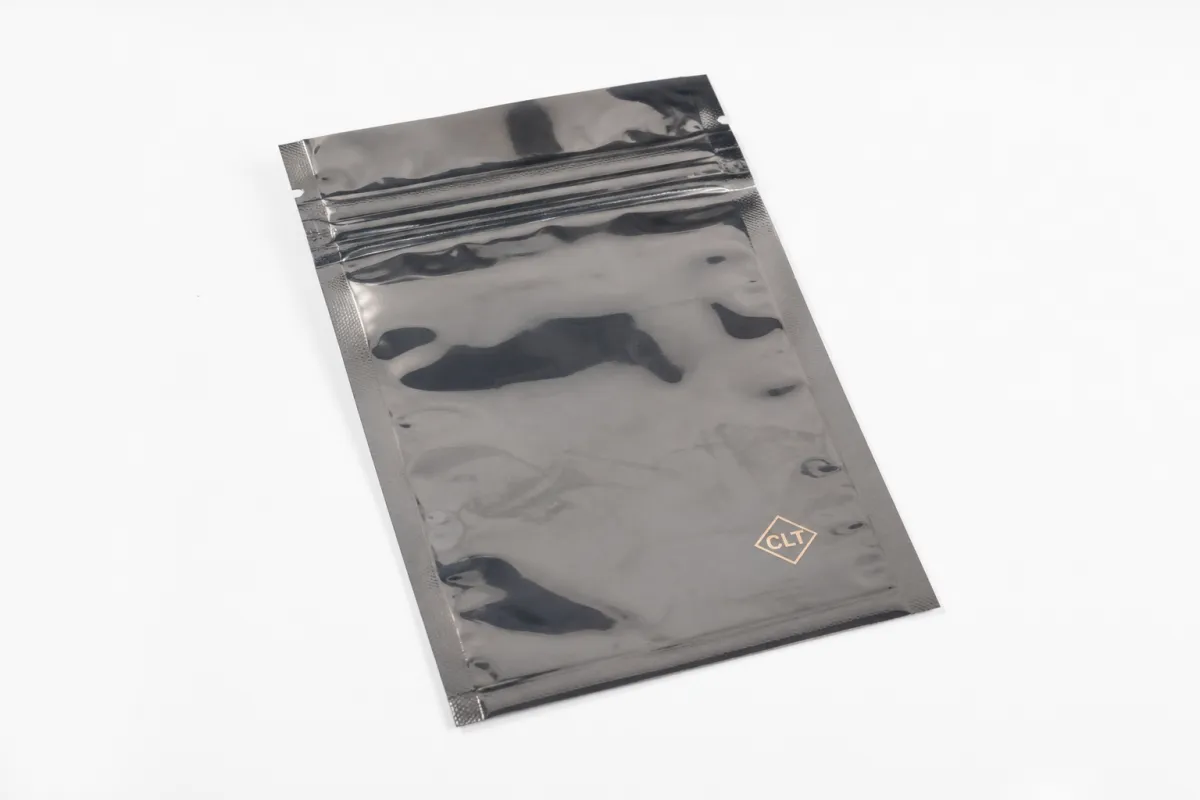
printed anti static bags with logo matter because electronics packaging usually fails in ordinary, expensive ways. A part gets repacked into the wrong bag. A worker cannot read the marking. A carton opens too early. Static builds up. The product may be fine, but the shipment now has a problem that never needed to happen. Someone pays for it later, usually twice.
These bags combine ESD-style protection with custom branding. They are used for circuit boards, modules, sensors, replacement parts, repair kits, and other items that do not tolerate static well. The logo is not there to make the bag pretty. It helps identify the brand, the part family, or the handling rule at a glance. That detail matters more than a lot of buyers admit during procurement.
printed anti static bags with logo also help on the logistics side. Warehouse teams move faster when the packaging explains itself. A clear mark can separate product lines, reduce bin mix-ups, and save time in kitting stations and outbound packing areas. A company shipping 5 SKUs can sometimes live with vague packaging. A company shipping 50 SKUs usually cannot.
Who actually needs them?
- Electronics sellers shipping boards, modules, and accessories.
- Repair shops packing replacement parts and service kits.
- Contract manufacturers that need consistent part identification.
- Fulfillment teams shipping static-sensitive items at scale.
- Brands that want printed anti static bags with logo to match product presentation.
From a buyer’s point of view, the value is not decoration. It is fewer mistakes, cleaner storage, and packaging that makes sense the first time someone sees it. That is why printed anti static bags with logo keep showing up in serious electronics programs and not just in marketing decks.
If you want a standards-based view of protective packaging and transport testing, the industry references at ISTA are worth a look. For broader packaging education and material context, packaging.org is a useful reference point too.
If the bag protects the part but the label creates confusion, the supply chain still loses. You have not saved money. You have purchased a cleaner-looking mistake.
That is the core reason printed anti static bags with logo matter: they support protection, identification, and brand consistency in one package. Boring, maybe. Effective, definitely.
How Printed Anti Static Bags With Logo Work
To understand printed anti static bags with logo, start with the film itself. The material is usually dissipative or anti-static, which means it helps reduce charge buildup instead of letting it sit on the surface like a problem waiting for a careless handoff. The bag does not cancel physics. It simply gives static a less dangerous route.
Many buyers blur the difference between anti-static, dissipative, and shielding bags. The terms overlap in conversation, but the performance is not identical. A pink anti-static bag may be enough for one part. A metallized shielding bag may be the right answer for another. The product’s sensitivity, the handling path, and the likelihood of external discharge all shape the choice.
printed anti static bags with logo depend on that same material logic even after the branding goes on. The print helps with identification, but it does not replace ESD performance. That mistake shows up often. A crisp logo on the wrong film is still the wrong film.
Printing deserves more attention than most buyers give it. Ink adhesion, film finish, and surface treatment all affect how readable the logo stays after the bag has been folded, stacked, and pushed around in transit. Weak print does not just look bad. It disappears at the exact moment people need it most.
Typical constructions include:
- Clear dissipative bags for visual checks and straightforward branding.
- Pink anti-static bags for basic static-sensitive handling.
- Metallized shielding bags for stronger protection requirements.
- Multi-layer structures when the product needs more than one layer of defense.
printed anti static bags with logo can also support SKU control. One bag size may serve one product family, while the printed model code or warning line keeps the warehouse from guessing. That matters when a facility handles parts that look similar but cannot be mixed without creating a problem that shows up later in returns or rework.
For formal static-control guidance, the standards language used in ANSI/ESD S541 and IEC 61340-5-1 is a better reference than guessing by color alone. The point is not to turn a purchase into a lab report. The point is to match the bag to the actual risk. That is the difference between a usable spec and a lazy one.
Once the film choice is clear, the rest starts to make sense. The logo sits on top of a material system that already has a job to do. It should help people recognize the package quickly, not become the reason the bag was selected. Keeping that order straight makes printed anti static bags with logo far more useful in real operations.
Cost, Pricing, MOQ, and Quote Basics
printed anti static bags with logo are priced like most custom packaging. Size, material, print coverage, and quantity do most of the work. If a supplier gets a request that says “standard bag,” the quote will usually be vague too. Dimensions, film type, print colors, and quantity produce useful numbers. Mystery does not.
The biggest price driver is often the bag structure itself. A simple clear dissipative bag usually costs less than a metallized shielding bag with custom sizing and multiple print colors. Add special sealing features, thicker film, or custom hang holes, and the price moves upward. That is not a sales trick. It is the cost of setup, material, and production complexity.
For planning purposes, smaller runs of printed anti static bags with logo usually cost more per unit because the setup is spread across fewer pieces. At higher quantities, the unit cost drops because the press setup, plates, proofing, and calibration are spread over more bags. The math is old-fashioned, and it shows up in almost every packaging category.
A practical way to read the numbers: 1,000 pieces can feel expensive when setup is involved. 10,000 pieces can absorb the same setup much more comfortably. Buyers who think ahead on inventory usually get cleaner pricing and fewer rushed orders later.
printed anti static bags with logo quotes should include more than the bag price. Ask for the full picture.
- Unit price at your actual quantity.
- Setup or plate fee for the print.
- Sample or proof fee, if any.
- Freight terms and carton details.
- Lead time from proof approval.
- Testing or compliance notes, if the supplier offers them.
| Bag Type | Best For | Typical Print Feel | Ballpark Unit Price at 5,000 pcs | Tradeoffs |
|---|---|---|---|---|
| Pink anti-static | Basic static-sensitive accessories, light handling | Good contrast for one-color print | $0.08-$0.16 | Lower protection level than shielding bags |
| Clear dissipative | Products that need visibility and easy identification | Clean look, logo is easy to place | $0.10-$0.20 | Not ideal for the highest-risk parts |
| Metallized shielding | More sensitive assemblies and higher protection needs | Print can be sharp, but surface needs careful setup | $0.14-$0.30 | Usually higher MOQ and more expensive setup |
Those numbers are planning ranges, not promises. A larger bag, a thicker film, or heavier print coverage can move the price quickly. Still, the table gives buyers a way to compare options without pretending every printed anti static bags with logo quote belongs in the same bucket.
MOQ creates surprises when the buyer has not thought through the print setup. A factory may accept a low minimum for a simple one-color print on a stock size. Ask for a custom size, a special film, or multiple print colors, and the floor rises. That is not punishment. It is how production lines work.
Artwork changes the arithmetic too. A clean one-color logo is much easier to set up than a dense full-coverage design with small type. More colors can mean more proofing, more setup, and more room for registration problems if the print drifts even a little. If you want printed anti static bags with logo to stay affordable, keep the artwork disciplined.
The smarter buyers compare total landed cost, not just the unit price. Freight from the supplier, sample cost, packaging for shipment, and the labor involved in fixing a bad proof all belong in the calculation. A low quote that creates a headache later is not a bargain. It is a delayed expense with a friendly face.
Production Steps, Process, and Lead Time
The production path for printed anti static bags with logo is usually straightforward, but only after the buyer has done the homework. The process begins with a spec discussion: bag size, material type, film thickness, seal style, print colors, and quantity. Then the supplier checks the artwork and decides whether the logo will print cleanly on the chosen surface.
Proofing comes next, and that is where weak communication tends to show itself. A low-resolution logo file can make the proof look fuzzy. A vague color reference can shift the print away from the brand standard. An unclear measurement can leave the bag close enough to pass, but not quite right for the product inside. Close enough is rarely good enough in packaging.
printed anti static bags with logo usually move through these steps:
- Inquiry and specification review.
- Artwork check and print method selection.
- Digital proof or physical sample approval.
- Production scheduling and material prep.
- Printing, converting, and sealing.
- Quality check, packing, and shipment.
Lead time changes with the order type. A repeat order with the same artwork and the same spec can move quickly. A fully custom job takes longer because the factory has to coordinate materials, printing, and cutting around your requirements rather than around a stock layout that already exists in the system.
Late changes stretch the schedule. A new logo version, a size adjustment, or a layout change after proof approval can add days, sometimes more. That is why the best planning happens before the order is released. A few extra minutes at the beginning often save a lot of friction later.
Typical timelines vary, but a useful planning range is often 12-15 business days after proof approval for a straightforward custom run, with longer lead times for complex structures or high-volume jobs. Rush orders may be possible, though the tradeoff is usually higher cost and less room for correction. Nobody enjoys that equation, yet it shows up again and again.
printed anti static bags with logo also need to fit your own schedule. If the bags are supposed to support assembly, testing, or launch day, leave room for receiving, inspection, and any rework. A delivery that arrives one day late can still be a problem if the whole workflow depends on that carton being opened on time.
The buyer who protects the timeline protects the project. That sounds plain because it is plain. Packaging orders fail most often when someone assumes the bags will show up exactly when the calendar wants them to. printed anti static bags with logo are no different.
Common Mistakes When Ordering Printed Anti Static Bags With Logo
The first mistake is choosing the bag for appearance before protection. That sounds almost too simple to say, yet it happens constantly. A buyer sees a clean-looking option, likes the color, likes the print area, and only later asks whether the film matches the static risk. With printed anti static bags with logo, the visual side is the easiest part to notice. The performance side is the part that creates the real bill.
Vague artwork causes another round of trouble. A blurry logo file, a screenshot instead of a vector file, or a random color reference can lead to poor proofs and avoidable rework. If you want crisp printed anti static bags with logo, send clean art and specific instructions. “Make it look nice” does not help a printer, a plant manager, or anyone trying to hit a deadline.
Size mistakes are expensive too. A bag that is too tight can stress the product or slow packing. A bag that is too loose can shift around, wrinkle, and make inventory look messy. Fit matters because a strong print cannot save a poor size choice. The wrong dimensions can make the whole order feel off even when the logo is perfect.
Buyers also forget to ask about print durability. If bags will be stacked, moved, or handled more than once, the surface can scuff and the logo can fade in the exact spots that matter most. That becomes a problem if the bag carries part identification or handling instructions. A print that wears off has already lost part of its purpose.
Skipping a sample is another classic error. A flat proof on a screen does not tell you how the bag folds, feels, or reads once it is filled. A sample catches the problem before the full run does. That difference can be the gap between a small correction and a very expensive lesson.
Here is the short version: printed anti static bags with logo fail when buyers treat them like a design exercise instead of a controlled packaging decision. The fix is not complicated. It just requires discipline.
Check the protection spec first, the fit second, and the print third. Reverse that order and you are buying trouble with a logo on it.
That is why the best orders for printed anti static bags with logo begin with product requirements, not branding mood boards. Packaging is there to work. The logo is there to help people recognize it and trust it faster.
Expert Tips for Better Branding and Protection
If you want printed anti static bags with logo to look sharp and perform properly, keep the design simple. One strong logo, clean typography, and enough contrast usually outperform a crowded layout with too many messages. Flexible film is not a billboard. It folds, wrinkles, and catches reflections in ways paper never would. Simple often wins because simple survives handling.
Print placement matters more than most people expect. If the bag will be folded, stacked, or tucked into cartons, place the logo where it stays visible after normal handling. A beautiful logo in the wrong corner can disappear as soon as production starts using the bag in real life.
Requesting a sample against the actual product is another smart habit. A bag can look good on a screen and still feel wrong when filled. The way printed anti static bags with logo drape, seal, and stack changes as soon as the part goes inside. Physical validation catches what artwork proofs cannot.
Standardizing bag sizes across multiple SKUs can simplify the operation a lot. Fewer sizes mean less inventory confusion, fewer purchase orders, and fewer chances to reorder the wrong thing under pressure. If one or two bag dimensions can cover a whole product line, the warehouse usually feels the benefit quickly.
A practical buying rule works well here: choose the lowest spec that still protects the product, then spend the rest of the budget on consistency, print quality, and clear supplier communication. For printed anti static bags with logo, that approach usually beats overbuilding the bag just to feel safe.
One-color or two-color print is often the sweet spot. It costs less, reads more clearly, and leaves less room for print problems on flexible film. Full-color print can work in some cases, but it is not automatically the better choice. The best print is the one people can read quickly in the environment where the bag will actually be used.
If sustainability matters, ask about the wider packaging system too. The bag may carry the logo, but outer cartons, inserts, and shipping materials still shape the overall footprint. If you also specify paper components, FSC certification from FSC is a useful reference point for responsible sourcing.
I have seen small assembly lines lose more time to confusing packaging than to actual product defects. A bag that can be read instantly and filled without hesitation saves real labor. That is the kind of detail people only appreciate once the line gets busy and everyone is kinda moving too fast to think about it.
At a practical level, the strongest printed anti static bags with logo orders are the ones that make warehouse work easier. Clear branding, correct sizing, and the right ESD performance all push in the same direction: fewer mistakes, fewer returns, and less time spent fixing what the bag should have prevented in the first place.
Next Steps for Printed Anti Static Bags With Logo Orders
Before you request a quote for printed anti static bags with logo, gather the non-negotiables: product dimensions, static sensitivity level, target quantity, logo file, and required delivery date. Missing any one of those usually means extra emails, extra delay, and a price that stays fuzzy longer than it should.
Then build a short supplier checklist. Ask about material type, bag thickness, print method, MOQ, sample policy, freight terms, and whether the supplier has handled similar electronics packaging before. Good suppliers do more than sell bags. They spot a spec problem before it turns into a production headache.
printed anti static bags with logo should always be reviewed with a proof or sample before the full order is released. That matters even more if the logo must match brand guidelines, if the bags will run through machine packing, or if the warehouse team needs to move quickly without pausing to interpret a vague print.
Compare total landed cost, not just unit price. Count the bag cost, setup fee, sample cost, freight, and any import or receiving costs that show up later. A quote can look inexpensive and still become the expensive option once all the extras are added. Buyers make that mistake often enough that it has almost become a habit.
Place the order only after protection, pricing, and timeline all make sense together. If one of those three fails, the order is not ready. That is the part people rush, and it is usually the part they regret.
For a clean decision, write the spec down in one page: bag type, size, print colors, approval sample, delivery date, and acceptable price range. If the supplier cannot quote from that sheet, you are not ready to buy yet. If they can, you will usually get a faster answer and fewer surprises, which is exactly what this kind of packaging needs.
If you are working through a new packaging program, Custom Logo Things can help you think through the branding side without losing sight of the technical side. That balance is the real job. printed anti static bags with logo are useful only when they protect the product, fit the workflow, and print cleanly enough to do the job every time.
Frequently Asked Questions
Are printed anti static bags with logo still safe for electronics?
Yes, if the bag material is correctly rated for the product and the print process does not interfere with performance. The logo is branding; the film structure is what handles static control. With printed anti static bags with logo, always match the material to the sensitivity of the item you are shipping.
What is the usual MOQ for printed anti static bags with logo?
MOQ varies by size, print colors, and whether the bag is stock or fully custom. Simple one-color jobs can often start lower than multi-color or custom-size orders. The cleanest way to compare is to ask for a tiered quote so you can see how printed anti static bags with logo pricing changes at different quantities.
How long does production usually take?
Timeline depends on artwork approval, proofing, and whether the bag spec is standard or custom. Simple repeat orders move faster than new custom jobs. If you need samples, revised proofs, or special packaging requirements, build in extra time for printed anti static bags with logo production.
Can I print a full-color logo on anti static bags?
Sometimes, yes, but full-color print is not always the best choice for flexible film. One- or two-color designs often give better contrast and lower risk of print issues. The right answer depends on the bag surface, print method, and durability requirements for your printed anti static bags with logo.
What should I send to get an accurate quote?
Send bag dimensions, material preference, quantity, logo file, print colors, and required delivery date. Include any performance or handling requirements so the supplier quotes the correct spec. If possible, share a photo of the product that will go inside the printed anti static bags with logo so sizing is not left to guesswork.


