Buyer Fit Snapshot
| Best fit | Custom Paper Bags with Logo Print projects where brand print, material claims, artwork control, MOQ, and repeat-order consistency need to be specified before quoting. |
|---|---|
| Quote inputs | Share finished size, material target, print colors, finish, packing count, annual reorder estimate, ship-to region, and any compliance wording. |
| Proofing check | Approve dieline scale, logo placement, barcode or warning zones, color tolerance, closure strength, and carton packing before bulk production. |
| Main risk | Vague material claims, crowded artwork, missing packing details, or unclear freight terms can make a low unit price expensive after revisions. |
Fast answer: Custom Paper Bags with Logo Print: Design, Cost & Delivery should be specified like a repeatable production item. The safest quote records material, print method, finish, artwork proof, packing count, and reorder notes in one written spec.
Production checks before approval
Compare the actual filled-product size with the drawing, then confirm tolerance on folds, seals, hang holes, label areas, and retail display edges. Reserve space for logos, QR codes, warning copy, and material claims before decorative graphics fill the panel.
Quote comparison points
Review material grade, print process, finish, sampling route, tooling charges, carton quantity, and freight assumptions side by side. A quote is only useful when the supplier can repeat the same color, closure quality, and packing count on the next order.
Custom Paper Bags With Logo print do a deceptively large amount of work. They carry a purchase, then keep carrying the brand after the sale has ended. The bag goes to a car, then to a desk, then often into a closet, a laundry room, or a kitchen drawer. Some come back into circulation as gift bags. Others get reused for storage, lunch, or errands. That afterlife is part of the value, and it explains why custom paper bags with logo print matter so much in retail, food service, and hospitality. A bag that leaves the counter still has a job to do.
For buyers, the appeal is practical as much as visual. Custom Paper Bags with logo print can be plain and economical, or polished and high-end. A bakery order, a boutique launch, a trade show giveaway, and a seasonal gift program may all use the same broad packaging format, yet the requirements change sharply from one setting to the next. Paper weight, handle type, print method, coating, and quantity all affect how the bag looks, how it holds up, and how much it costs. The logo is only one part of the equation.
I have seen buyers fall in love with a mockup and then get surprised by the real thing on press. That gap is usually where paper stock, ink coverage, and handle reinforcement show up and say hello. A good-looking render does not tell you whether a bag will stand upright with boxed candles in it, or whether the seam will stay neat after transit. That is where the spec sheet matters more than the sales pitch, and honestly, it is the part many teams gloss over.
That mix of branding and utility makes these bags worth examining closely. A buyer who understands the production steps and cost drivers is far less likely to overpay or end up with a bag that bends, tears, smudges, or looks cheaper than intended. If you are weighing branded packaging options or comparing paper bags with Custom Packaging Products such as printed cartons or inserts, the details below should help narrow the field without guesswork.
Custom Paper Bags with Logo Print: What They Are and Why They Matter
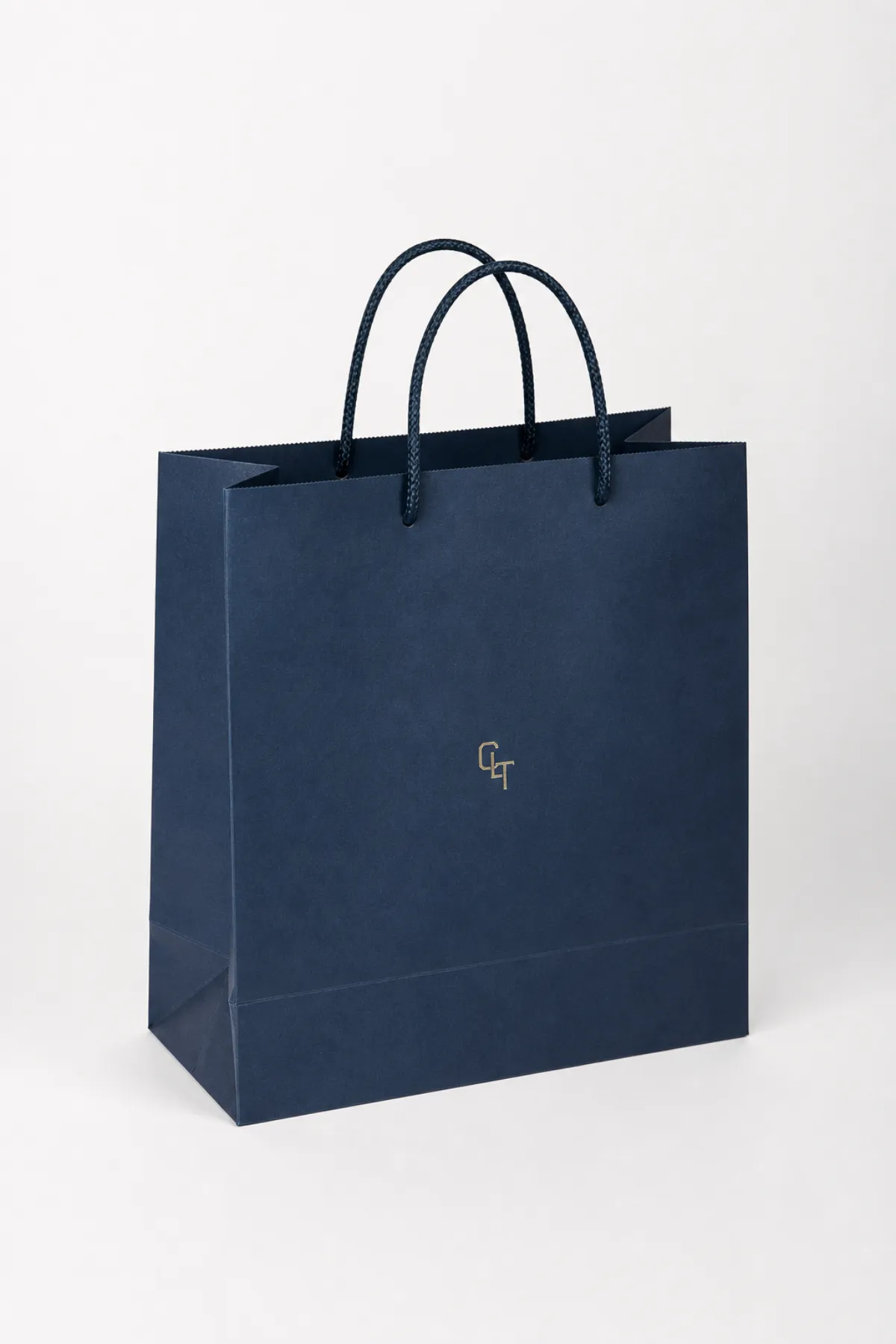
Custom paper bags with logo print are paper shopping bags, gift bags, takeout bags, or promotional carriers printed with a logo, brand mark, message, or pattern. Some are basic kraft carriers with a single ink color. Others use coated paper, rope handles, foil accents, or full-coverage artwork. The bag may be technically outer packaging, yet customers often treat it as part of the product itself. That is a small distinction on paper and a large one in the hand.
The reason custom paper bags with logo print hold value is not hard to see. A purchase feels more deliberate when it is handed over in packaging that stands straight, prints cleanly, and fits the contents properly. There is a psychological effect at work. A bag that sags or tears can make a brand feel careless, even if the product inside is excellent. A sturdy bag with clean edges and a clear logo does the opposite. It creates the sense that someone paid attention.
Paper still matters because it carries a different set of associations than plastic or rigid packaging. Kraft paper suggests restraint, utility, and a more natural visual language. Coated paper gives a smoother surface and sharper graphics. Thicker stock can make a bag feel closer to a premium retail item than a disposable carrier. Those choices shape the brand as much as the logo itself. The material says something before anyone reads the print.
Retail is only part of the picture. Restaurants use custom paper bags with logo print for takeout. Cafes use them for pastry boxes and drinks. Salons use them for retail products and gift sets. Event teams use them for welcome kits and conference materials. Each setting changes the demands. Food service often needs grease resistance and economical one-color printing. Apparel retail needs a wider footprint and stronger handles. Gift programs need a cleaner finish and better presentation. One product family, several very different jobs.
The next sections stay practical. You will see how these bags are made, what changes the price, where MOQ matters, and which mistakes tend to create avoidable reprints. That matters because custom paper bags with logo print are specification-driven. Small choices have a way of showing up later as weak handles, muddy print, or an order that arrived too late to matter.
Package branding also deserves a wider view. A bag is not isolated from the rest of the customer experience. It often sits beside labels, tissue, cartons, inserts, and shipper boxes. The bag may be the first branded object a buyer touches, which gives it an outsized role in the memory of the purchase. In a market where one weak detail can make a brand look generic, that role is not trivial.
Custom Paper Bags with Logo Print: Process and Timeline
The production path for custom paper bags with logo print begins with artwork and ends with inspection, packing, and shipping. The sequence sounds simple. Real orders rarely are. One unclear specification can delay a quote. One missing file can slow proofing. One late approval can push the ship date past a launch or seasonal window. Bag orders move fastest when the buyer and supplier agree on the exact style, stock, handle construction, color count, and deadline before the first proof is generated.
Print method sits near the start of that decision tree. Offset printing works well for crisp detail, tight registration, and consistent color on medium to larger runs. Digital printing often fits shorter runs, faster proof cycles, and artwork with multiple color changes. Flexographic printing is common for simpler work, repeat orders, and food service bags, especially on kraft stock. Each method has its own setup rhythm, and that rhythm affects both cost and timing. A design that looks straightforward can become expensive if the method is poorly matched to the run length.
Construction changes the schedule too. Flat-bottom bags are common for takeout and smaller retail items. Twisted-handle bags usually bring a practical, cost-conscious profile. Rope handles add a more premium feel and may need different reinforcement. Laminated bags introduce another finishing stage, which helps presentation but adds handling time. Custom dimensions can slow the job further because the cutting pattern and machine setup must match the requested size precisely. A standard bag can move quickly; a special format often cannot.
The calendar depends on the slowest step, not the fastest one. Final artwork, standard stock, and a simple bag style can produce a short lead time. Revision cycles, stock sourcing, foil, spot UV, or Custom Die Cutting can stretch the timeline. A common production window for custom paper bags with logo print is often 12-18 business days after proof approval, though the actual number changes with plant capacity, seasonality, and shipping distance. Holiday demand alone can push a routine order into a stressful one.
A practical production flow usually looks like this:
- Submit final artwork and specifications.
- Review a digital proof or sample.
- Approve size, placement, and color targets.
- Run printing and finishing.
- Attach handles, inspect, and pack.
- Ship with enough time for receiving and storage.
Artwork readiness saves more time than most buyers expect. Vector files, outlined fonts, and clearly named brand colors reduce back-and-forth. Shipping time also belongs in the lead time, even when the bags are finished on schedule. An order that leaves on time but lands after a promotion has still missed the mark. Treating custom paper bags with logo print as a production project, not a quick print request, makes the whole process easier to manage.
A bag can look excellent on a screen and still fail on the sales floor if the structure cannot survive the load, the handling, or the transit.
For buyers who want a broader reference point on materials and recycling standards, the U.S. EPA's sustainable materials management guidance is a useful starting place. Shipping performance matters too, and the testing methods referenced by ISTA help explain why carton pressure, vibration, and handling can alter the outcome of printed packaging.
Custom Paper Bags with Logo Print: Cost, Pricing, MOQ, and Quotes
Pricing for custom paper bags with logo print comes down to a small set of variables, but each one moves the number. Paper grade matters first. Then size, handle type, number of print colors, print coverage, finishing, and quantity all enter the calculation. A simple kraft bag with one-color artwork usually sits at a lower price point than a laminated retail bag with rope handles and full-color artwork. The difference can widen quickly as the order becomes more elaborate.
MOQ, or minimum order quantity, exists because setup costs have to be paid before the first finished bag rolls off the line. Plates, screens, calibration, cutting dies, machine adjustments, and test runs all add fixed cost. Spread that cost over more units and the unit price falls. Spread it over fewer units and the price climbs. That is why larger runs tend to be more economical, while smaller runs remain possible but less efficient.
For a rough sense of how costs shift, the same basic order can move in very different directions depending on specification choices. These are common patterns buyers see when requesting quotes for custom paper bags with logo print, not fixed market prices.
| Option | Typical Use | Price Pressure | Notes |
|---|---|---|---|
| Standard kraft bag, one-color print | Retail, takeout, events | Lower | Simple setup, economical at scale, straightforward branding |
| Coated paper bag, two-color print | Boutiques, gifts | Moderate | Smoother surface, sharper artwork, stronger visual finish |
| Laminated bag with rope handles | Premium retail, gifting | Higher | More finishing steps, stronger presentation, longer lead time |
| Custom size with special finish | Special campaigns, luxury packaging | Highest | Custom tooling and extra setup usually add cost and time |
Headline price is not enough for comparison. Ask whether the quote includes artwork support, plates or screens, freight, inner packing, and proof revisions. Two quotes can look close until one of them adds shipping and the other does not. That is how a “good deal” becomes a high landed cost. A complete quote for custom paper bags with logo print should list size, paper weight, handle type, print count, finish, and delivery terms. Anything less leaves room for surprise charges.
Higher price is not always a warning sign. Heavier stock reduces tearing complaints. Better reinforcement lowers replacement issues. Cleaner registration makes the bag look more polished in the shop. When bags are part of a premium retail experience, those small differences matter. Saving a few cents can cost more in customer confidence than it saves in procurement.
It helps to compare custom paper bags with logo print against other branded packaging tools as well. A retailer may need paper bags for carry-out, printed cartons for shipping, and inserts for presentation. Brands with a formal sourcing policy may also care about fiber origin, which is where the FSC chain-of-custody discussion becomes relevant. The right mix often matters more than a single packaging format.
One useful habit: request quotes with three fixed details in place, namely exact size, exact artwork file, and exact quantity. Once those are locked, pricing becomes far easier to compare. Without them, quotes for custom paper bags with logo print can vary for reasons that have little to do with the actual order value.
Choosing Materials, Sizes, and Finishes for Logo-Printed Paper Bags
Material choice shapes how custom paper bags with logo print feel and how well they print. Kraft paper gives the bag a natural look and suits bakeries, cafes, eco-conscious retail, and brands that want a grounded visual tone. Coated paper offers a smoother print surface, which improves logo edges and detailed graphics. Heavier, board-like stock feels more substantial in the hand, which works well for luxury retail, apparel, and gifting. Each stock changes the impression in a different way.
Size matters just as much. A small boutique bag fits jewelry, cosmetics, and folded accessories. A medium bag handles clothing, books, and boxed products. Larger bags support wider items or purchases with several pieces. A bag that is too small looks cramped. A bag that is too large wastes material and can feel awkward to carry. Good packaging design matches the product, not just the logo. The difference shows up immediately at the handoff.
Handle choice influences both feel and load capacity. Twisted paper handles are economical and widely used. Flat handles are common in food service and can keep costs down. Rope handles signal a more premium presentation, especially in gift and boutique settings. Die-cut handles can create a cleaner profile, though heavy loads may require reinforcement. The right handle is not a decorative afterthought. It affects the customer’s grip, the bag’s strength, and the perception of quality.
Finishes carry a lot of visual weight. Matte softens glare and can make the design feel quieter and more refined. Gloss makes colors pop, though it can reveal scuffs faster. Spot color printing can keep the budget under control while still making the logo prominent. Foil stamping, embossing, and debossing add a premium touch, but they work best when used sparingly. Heavy decoration can make a bag look crowded instead of elevated. That risk is present with custom paper bags with logo print just as it is with any custom retail package.
A simple decision framework tends to work well:
- Load weight: Match the paper and handle to the contents, not the ideal version of the contents.
- Brand style: Use kraft for a natural look, coated stock for sharper graphics, or thicker stock for a more premium feel.
- Budget: Keep print colors and finishes realistic if unit cost matters.
- Reuse: If customers are likely to reuse the bag, invest in strength and print durability.
- Storage conditions: If the bags will sit in humid storage or move through rough handling, pick finishes that can tolerate that environment.
If you are uncertain about the right spec, ask for samples or spec sheets before approving a larger order of custom paper bags with logo print. Ten seconds of handling tells you a great deal. The stiffness, the handle feel, the print clarity, and the fold lines all become obvious very quickly. That kind of evidence is more useful than a string of product descriptions.
Step-by-Step Guide to Ordering Custom Paper Bags with Logo Print
The strongest orders for custom paper bags with logo print begin with a tight spec sheet. Before asking for a quote, define the bag type, size, paper stock, color count, handle style, quantity, and delivery target. A supplier can still help if some details are not final, but the quote will carry assumptions. Those assumptions usually show up later as a longer approval cycle or a cost adjustment. Clear inputs make cleaner comparisons.
Artwork deserves the same discipline. Vector files remain the safest choice because they scale cleanly and keep the logo edges sharp. Fonts should be outlined or packaged properly. Brand colors should be named clearly, especially if they need to match a specific Pantone target. Safe zones matter too. A logo placed too close to a fold, seam, or gusset can disappear once the bag is assembled. That is a common problem with custom paper bags with logo print, and one of the easiest to avoid when the proof is checked with a ruler instead of only with the eye.
Proofing should be treated like inspection, not decoration. Check dimensions, placement, color, copy, handle attachment, and any barcode or promotional information. Retail bags sometimes need to carry a gift receipt, return note, coupon, or campaign message. Those details may feel secondary until the bag is in use. Approval should happen only after the bag is judged on function as well as appearance.
Production starts once the proof is approved. A clean timeline for custom paper bags with logo print includes printing, drying or curing if required, finishing, handle attachment, inspection, and packing. If a supplier promises speed, ask what that means in business days and which material or sourcing delays could interrupt the schedule. Packaging delays rarely come from one dramatic failure. They usually build from a string of smaller ones that were not visible at the start.
Receiving is part of the plan too. A shipment that arrives on time but has nowhere to go can still create problems in the back room. Paper bags need dry storage, a flat stack, and enough space to avoid bending or crushing. If the order supports a seasonal launch, make sure the receiving team knows where it belongs and who checks quality. A useful delivery inspection for custom paper bags with logo print should cover color consistency, handle strength, registration, and count accuracy.
A practical ordering sequence looks like this:
- Define the product use case and required load strength.
- Select the bag style and paper stock.
- Prepare the artwork in a print-ready file format.
- Request a detailed quote and sample specification.
- Review and approve the proof.
- Confirm the production lead time and shipping window.
- Inspect the delivery before it enters daily use.
Growing brands often benefit from planning the rest of the packaging system alongside the bag order. A business using custom paper bags with logo print for retail may also need printed tissue, labels, or Custom Packaging Products for shipping and display. Ordering those pieces as a system can reduce mismatches and make the brand look more deliberate across every touchpoint.
Common Mistakes with Custom Paper Bags with Logo Print
The first mistake is choosing the lightest paper weight without checking the actual load. A bag can look fine on a sample table and still fail once a customer adds a glass jar, several small items, or a boxed product. If the bottom sags or the handles pull out, the brand takes the damage. With custom paper bags with logo print, structure is not separate from branding. It is part of the message.
The second mistake is sending artwork that was never prepared for print. Low-resolution logos, thin strokes, unconverted fonts, and busy layouts all create problems. Paper is not a display screen. Texture, coating, and ink absorption change how graphics appear. A logo that looks sharp on a monitor can soften on kraft stock or lose definition on a rough surface. Proofing catches a lot, but only if someone is willing to study the file before it becomes a batch of finished bags.
Wrong sizing causes just as much trouble. A bag may be too narrow for a rigid box, too short for a bottle, or too shallow for a stacked purchase. The contents tilt, the handles strain, or the bag looks overfilled. Custom sizing can solve the problem, though it adds cost and time. Measuring the product first is usually the better move. That is especially true for custom paper bags with logo print used in retail packaging or gifting, where proportion shapes the first impression.
Timing mistakes are easy to make and painful to fix. Buyers sometimes forget that proof cycles, shipping windows, holiday demand, and freight delays sit on top of production time. A project that seemed relaxed at the start can become a rush order as soon as someone asks for an earlier launch date. The safest approach is to build in buffer time, especially for store openings, trade shows, holiday campaigns, and promotional rollouts.
Color expectations can also create friction. A logo printed on paper will not match the glow of a backlit screen. Paper stock, ink density, and finish all affect the final appearance. Matte surfaces mute gloss. Kraft paper can warm certain colors. Coated stock usually preserves cleaner edges. None of that is a defect; it is part of the medium. With custom paper bags with logo print, color control depends on the proof, the substrate, and the press operator, not on hope.
Before approving a run, these issues are worth checking:
- Paper weight too light for the contents
- Artwork too detailed for the chosen print method
- Bag size mismatched to the product
- Lead time ignored until the schedule is already tight
- Quote missing freight, setup, or proof revision charges
Those mistakes sound basic, yet they account for a large share of ordering headaches. The good news is that they are all manageable once custom paper bags with logo print are treated as a specification-based purchase rather than a generic commodity order.
Expert Tips for Better Custom Paper Bags with Logo Print Results
If better results are the goal, start with restraint. A clean logo that reads from a few feet away will do more for the brand than a crowded layout packed with extra text. Good packaging design usually means giving the main message room to breathe. Empty space can make a bag feel more expensive, not less. Many brands fill every panel because they fear understatement. The stronger move is often the opposite.
Test before scaling up. A sample run can reveal whether the bag is too glossy, too stiff, too thin, or too small for the product. That matters when a business is moving from generic carriers to a controlled branded packaging program. The first order is often a learning order. That is normal. What matters is whether the next order improves because the first one taught you something useful about custom paper bags with logo print.
Keep the spec stable once you find a formula that works. Repeatable paper weight, consistent print colors, and a standard handle style make reorders easier and often more cost-efficient. Stability also protects recognition. If the bag changes materially every time you reorder, the package branding starts to feel less intentional. Consistency is one of the quiet advantages of strong retail packaging, and customers notice it even when they do not say so directly.
Storage and transit deserve more attention than they usually get. Paper dislikes humidity, rough stacking, and long exposure to moisture. Glue lines, folds, and laminated surfaces can all suffer if the bags are stored badly. If the shipment is traveling a long distance, ask how it will be packed and whether inner cartons or corner protection are included. Those details separate a clean delivery from one that arrives bent or scuffed. The finished bag is only part of the story; the way it reaches the counter affects how custom paper bags with logo print perform in real use.
A practical checklist keeps decisions grounded:
- Choose the bag style based on the product weight and use case.
- Confirm artwork early and in a print-ready format.
- Request a detailed quote that shows all charges.
- Ask for a sample or proof before approval.
- Leave time for shipping, receiving, and storage.
That process is not flashy. It does not need to be. Good packaging depends on controlled material, controlled structure, and controlled timing. When those three line up, custom paper bags with logo print do exactly what they should: present the brand cleanly, carry the product safely, and give customers something they can reuse without thinking twice.
If you are comparing options now, start with the bag’s job and then move to the artwork. The design should support the use case, not fight it. That approach keeps custom paper bags with logo print practical, durable, and far more persuasive than packaging that only looks good in a mockup.
FAQ
How much do custom paper bags with logo print usually cost?
Pricing depends on paper weight, bag size, print colors, handle style, finish, and order quantity. Smaller runs usually cost more per bag because setup and prepress costs are spread across fewer units. Ask whether the quote includes artwork support, plates or screens, freight, and packaging so you can compare offers accurately.
What is the best paper stock for custom paper bags with logo print?
Kraft paper works well for a natural, sturdy look and is common for retail and food service. Smoother coated stocks are better when you want sharper logo detail or a more premium appearance. The best choice depends on bag weight, branding style, and how much scuff resistance you need in real use.
How long is the turnaround for custom paper bags with logo print?
Turnaround depends on artwork readiness, proof approval, printing method, bag construction, and shipping distance. Standard runs move faster when the design is simple and the specs are already approved. Special finishes, custom sizing, or tight seasonal deadlines usually add time, so it helps to build in a buffer.
What file format should I send for logo printing on paper bags?
Vector files are usually best because they keep edges sharp at any size. Common preferred formats include AI, EPS, and PDF with fonts outlined and colors clearly noted. If you only have a raster image, make sure it is high resolution and clean enough for print.
Can I order a small quantity of custom paper bags with logo print?
Yes, but small quantities often cost more per bag because setup costs are divided across fewer pieces. If you need a low quantity, ask about digital printing or standard bag sizes that reduce tooling and setup. Small orders are a good way to test size, print quality, and customer response before committing to a larger run.
For most businesses, custom paper bags with logo print are worth doing carefully because they sit right at the handoff point between sale and experience. A precise spec, a realistic timeline, and a clear quote can turn a basic paper bag into a dependable branding asset, whether the bag is used for retail, gifting, or food service. If there is one practical takeaway, it is this: lock the bag size, artwork file, paper stock, and delivery date before you approve anything, because that is what keeps custom paper bags with logo print from turning into a rushed, expensive redo.

