Buyer Fit Snapshot
| Best fit | Printed Biodegradable Mailers Cost projects where brand print, material claims, artwork control, MOQ, and repeat-order consistency need to be specified before quoting. |
|---|---|
| Quote inputs | Share finished size, material target, print colors, finish, packing count, annual reorder estimate, ship-to region, and any compliance wording. |
| Proofing check | Approve dieline scale, logo placement, barcode or warning zones, color tolerance, closure strength, and carton packing before bulk production. |
| Main risk | Vague material claims, crowded artwork, missing packing details, or unclear freight terms can make a low unit price expensive after revisions. |
Fast answer: Printed Biodegradable Mailers Cost: What Drives It should be specified like a repeatable production item. The safest quote records material, print method, finish, artwork proof, packing count, and reorder notes in one written spec.
Production checks before approval
Compare the actual filled-product size with the drawing, then confirm tolerance on folds, seals, hang holes, label areas, and retail display edges. Reserve space for logos, QR codes, warning copy, and material claims before decorative graphics fill the panel.
Quote comparison points
Review material grade, print process, finish, sampling route, tooling charges, carton quantity, and freight assumptions side by side. A quote is only useful when the supplier can repeat the same color, closure quality, and packing count on the next order.
Printed Biodegradable Mailers Cost: What Drives It
The printed biodegradable mailers cost on a quote sheet is only the starting point. The real number shows up after you factor in damage risk, freight, rework, labor, and the cost of sending out a package that looks sloppy. A mailer that is slightly more expensive on paper can still be cheaper in practice if it protects the product and keeps the brand presentation intact.
That is the part a lot of buyers miss. Packaging does not live in a vacuum. It moves through receiving, storage, packing, transit, and customer unboxing. If the mailer tears at the seam, prints poorly, or forces the team to slow down on the packing line, the low unit price stops looking like a win. A few cents saved up front can disappear fast.
For teams comparing options across Custom Packaging Products and other shipping formats, the better question is not whether biodegradable mailers cost more than plain poly mailers. It is whether the added spend returns value through fewer replacements, less waste, and a better first impression. For apparel, accessories, and subscription-style orders, that answer often leans toward yes.
Cheap on paper is not cheap in practice. A mailer that splits, prints badly, or slows the line usually costs more by the time the order reaches the customer.
Why Printed Biodegradable Mailers Cost More Than a Plain Mailer
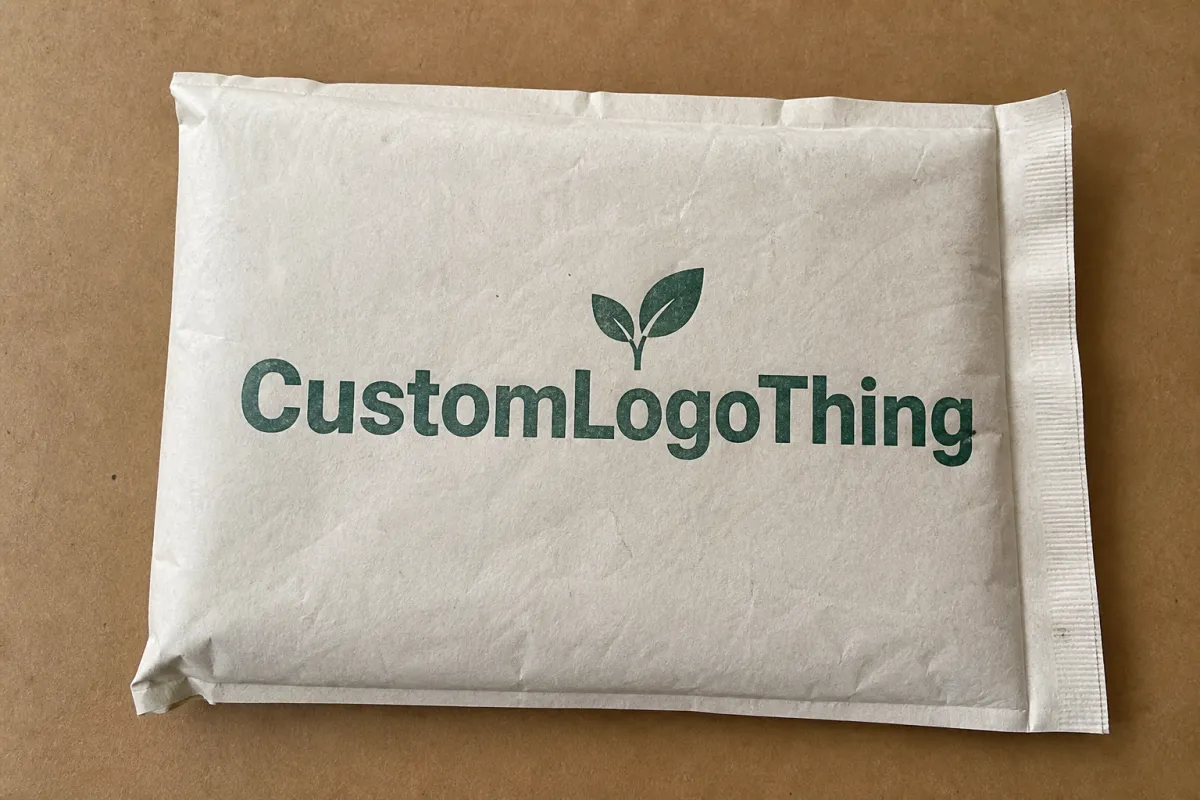
The first surprise for many buyers is how small the gap can be between standard mailers and printed biodegradable options. That gap exists, but it is not always as large as people expect. In many programs, the higher quote is offset by lower damage rates, cleaner branding, and fewer support issues. That is especially true for soft goods that do not need rigid protection.
Think about a brand shipping knitwear, socks, scarves, or light accessories. These products are usually a poor fit for bulky packaging, but they still need a bag that seals cleanly and arrives in one piece. If a better-built mailer reduces returns, replacement shipments, or packing errors, the difference in printed biodegradable mailers cost can shrink quickly. The same logic applies to subscription boxes and repeat-order brands. One bad presentation can do more harm than the packaging budget line ever shows.
Buyers should look at landed cost, not just unit price. Landed cost includes freight, palletization, storage, setup charges, and any tooling tied to the print run. It also includes the softer but very real costs that procurement teams deal with every day: time spent fixing exceptions, customer service tickets from damaged shipments, and labor wasted on packing workarounds.
Here is the simple version. A plain mailer may be $0.03 to $0.08 cheaper per piece. If a printed biodegradable mailer lowers damage risk, keeps the brand image consistent, and reduces substitutions or extra handling, that difference may vanish. On a 10,000-piece order, a $0.05 spread equals $500 before freight. Avoid one replacement shipment in every few hundred orders and the math starts to move.
Experienced buyers do not ask for the lowest price alone. They ask what the packaging will really cost once it is in the warehouse, on the line, and in the customer’s hands. That is the honest way to buy.
What Printed Biodegradable Mailers Are Made Of
Most printed biodegradable mailers are made from films that are designed to break down under specific conditions, but the build varies by supplier. Some use PBAT/PLA blends. Some include starch-based additives. Others combine plant-derived content with performance polymers. The label matters, but the standard behind the label matters more. “Biodegradable” is not a single universal claim, so buyers should ask where the material is meant to break down, how long the process takes, and whether the product is intended for industrial composting rather than home composting.
That detail is not academic. It affects how the packaging should be described, how it can be marketed, and whether the claim will hold up if a customer or retailer asks for proof. A supplier should be able to explain the material structure in plain language. If they cannot, that is a red flag.
Construction affects more than sustainability language. It affects tear resistance, moisture protection, seal performance, and how the bag behaves on a packing line. Apparel, books, and light e-commerce goods each place different demands on the film. Books need better puncture resistance. Apparel needs enough flexibility to avoid seam stress. Moisture-sensitive products need stronger barrier performance and a seal that stays closed through transit.
Print compatibility changes with the substrate too. Flexographic printing is common for larger runs because it keeps unit cost under control once setup is spread across volume. Digital printing can work for shorter runs, rapid changes, or designs with more variation, but it is not always the cheapest route at scale. Ink coverage, number of colors, and printed area all affect the quote. A simple one-color logo near the top edge is usually less expensive than a full-bleed design, not just because of ink, but because registration and setup get more involved as the coverage expands.
Buyers should also verify the claim language in writing. That includes whether the mailer is intended for industrial composting, whether the supplier can provide certification references, and whether the film has been tested to standards such as ASTM D6400 or similar compostability benchmarks where applicable. If the broader package includes paper inserts, cartons, or outer wraps, FSC-certified paper components can strengthen the sustainability story even if the mailer itself is a film-based product.
For transit testing and performance validation, the ISTA testing framework is useful because it pulls attention back to actual handling. A mailer does not earn its keep because it looks good on a sample table. It has to survive drops, stacking, compression, and the general abuse of the warehouse.
Specifications That Affect Fit, Strength, and Print Quality
Size is where a lot of programs quietly go off track. A mailer that is too large wastes material and adds bulk. A mailer that is too small strains the seam, distorts the print, and forces the packing team into workarounds that slow the line down. The right dimensions usually follow the packed product, not the retail product alone. That sounds like a small detail. It is not.
Small accessory mailers often fall into compact formats such as 6 x 9 inches or 7 x 10 inches. Apparel usually lands in 10 x 13, 10 x 15, or 12 x 15 ranges, depending on the fold style and whether a gusset is needed. Larger garments or bundled orders may need more width so the seal does not land directly on the product edge. Miss the size by a little and the hidden cost shows up later in wasted film, extra outer packaging, or slower fulfillment.
Thickness matters just as much. Some biodegradable mailers are light and flexible, which keeps cost per piece lower, but they may not suit heavier goods or rough handling. Others use thicker film or reinforced seams to improve tear resistance. That can add a few cents to the unit price, but it may be the difference between a stable package and a replacement after a seam split. Match thickness to actual product weight instead of relying on catalog photography.
Seal type is another practical detail. A reliable adhesive strip or a strong heat seal reduces the chance of the bag reopening in transit. For printed programs, the seal area should also be checked against the design so important branding does not disappear under a flap or fold. Print area, bleed requirements, and minimum line thickness all affect logo clarity. Fine text, hairline borders, and tiny reversed details can vanish on darker or textured substrates. Bold artwork usually wins. Tiny artwork usually loses.
Use this buyer checklist before approving a spec:
- Dimensions: confirm the folded product size, not just the retail size.
- Thickness: match film gauge to product weight and transit abuse.
- Seam and adhesive: check seal strength at normal packing speed.
- Print coverage: confirm logo placement, bleed, and color count.
- Compatibility: make sure the mailer works with your existing packing line and labels.
- Claim language: verify the exact sustainability wording before launch.
If you already know the look and feel you want, comparing the biodegradable option against Custom Poly Mailers can be a useful benchmark. In many cases, that comparison shows whether the price gap is really about performance or just about the label attached to the material.
Printed Biodegradable Mailers Cost, Pricing, and MOQ
This is the section most buyers search for, and for good reason. Pricing is where the purchase becomes real. Printed biodegradable mailers cost usually comes down to a small group of variables that move together: material type, mailer size, print colors, total quantity, packaging configuration, and freight destination. Change one and the quote shifts. Change several and the spread can get wide.
MOQ is one of the first constraints to understand. Minimum order quantity usually tracks production efficiency, especially when the run uses flexographic print or custom tooling. Smaller runs carry a higher unit cost because setup work, plate charges, and production prep are spread over fewer pieces. Larger volumes usually unlock better bulk pricing, which lowers the cost per piece even while the total order value rises.
Quotes also vary in how they are presented. Some suppliers list a clean piece price and separate tooling fees, setup charges, freight, and packaging. Others roll part of that into one line and leave the rest to surface later. Buyers should always ask what is included before comparing suppliers. A low headline number can stop looking attractive once plate charges, print setup, pallet fees, or inland shipping are added.
The table below gives an indicative view of what buyers often see on custom programs. These are planning ranges, not universal pricing. Freight, artwork complexity, and the exact film structure can move the numbers up or down.
| Order profile | Typical MOQ | Indicative cost per piece | Common extra charges | Best fit |
|---|---|---|---|---|
| Small branded run with one-color logo | 5,000 pieces | $0.15-$0.26 | Setup charges and plate/tooling fees of roughly $100-$300 total, depending on print method | Seasonal launches, test programs, smaller apparel brands |
| Mid-volume custom mailer with 1-2 colors | 10,000 pieces | $0.11-$0.20 | Tooling fees may be spread across the run; freight usually matters more at this level | Stable e-commerce programs with recurring volume |
| Full-bleed branded design | 10,000-25,000 pieces | $0.08-$0.16 | Higher setup charges, tighter proofing, and color-control costs | Brands that want packaging to function as a front-line marketing asset |
| Larger format or heavier-duty build | 25,000+ pieces | $0.10-$0.22 | May include higher material cost, stronger seals, and more freight per pallet | Higher-weight goods, national rollouts, multi-warehouse use |
Those ranges make one thing clear: the lowest quote is not always the best value. A mailer that costs a few cents less can still end up more expensive if it tears more often, prints badly, or creates inventory headaches. Buyers who know their numbers judge the purchase by unit cost, then by landed cost, then by the operational risk tied to the spec.
Frequency matters too. A brand that reorders often may care less about the first run and more about whether the second and third runs match it cleanly. That is where precise specs and repeatable print files pay off. If the second order changes because the original quote was vague, the first-order savings start looking fake.
Process, Timeline, and Lead Time for Custom Orders
A clean ordering process protects both price and schedule. The usual path starts with a brief, moves through artwork review, digital proofing, sample approval, production, and shipment. Each stage can move fast or drag depending on how complete the information is at the start. The more exact the dimensions, material expectations, print colors, and quantity, the fewer revisions the supplier has to make before production begins.
Artwork delays happen a lot, and many of them are self-inflicted. A logo sent in the wrong format, a missing bleed, or a late color change can add days. The same thing happens when buyers have not finished deciding whether a sustainability claim needs to appear on the mailer. If that language is still shifting during proofing, the print file needs another round of edits and approval. That adds time and can add cost if plates or setup work need to be redone.
A realistic timing framework is easier to trust than a promise of "fast turnaround." For many printed biodegradable mailer programs, buyers should plan for a proof stage plus a production window that often runs 12 to 25 business days after final approval, depending on order size, print complexity, and factory load. Shipping time then depends on origin and destination. Domestic delivery moves faster than ocean freight, and rush options usually narrow the available print methods or film choices.
That timing matters because packaging is inventory, not a brochure. If you run out of mailers, fulfillment slows immediately. If you order too early, cash gets tied up. The clean way to handle it is to work backward from the reorder point. If a run takes three weeks to produce and another week to land, you need a buffer before stock gets tight.
For buyers who want a better read on shipping test expectations, the ISTA resource library is useful because it reinforces a simple idea: packaging should be approved in motion, not only on a screen. That matters even more for mailers that promise strength while still trying to stay light and material-efficient.
Clear approvals also improve manufacturing consistency. A supplier that receives final artwork, exact dimensions, approved claim language, and the target quantity in one shot can move without constant stops. That usually means a cleaner handoff to production, fewer revision loops, and a more predictable arrival date. In plain language, that is how a buying team keeps both cost and lead time under control.
Why Choose Us for Sustainable Mailer Programs
Custom Logo Things is strongest when the conversation stays practical. Buyers do not need packaging theater. They need consistent specs, direct communication, and a partner that can explain where the price comes from. That matters even more with biodegradable programs, because the sustainability claim has to stand up to questions from procurement, operations, and customers.
Good support starts with the basics: thickness, size, seal type, print area, and total quantity. It continues with quality control. A reliable production partner checks print alignment, color registration, and seal performance before shipment. Those checks are not flashy, but they are the difference between packaging that supports the brand and packaging that creates avoidable exceptions.
Repeat orders are where a disciplined supplier proves its value. If a program reorders every quarter, the buyer wants the second and third order to match the first without surprises. That means stable artwork files, reliable material sourcing, and documentation that stays consistent. It also means helping the buyer forecast volume so they can Choose the Right order size instead of guessing at the MOQ.
Sustainability claims should be handled with the same discipline. Ask for documentation. Ask what the film is made from. Ask what disposal stream the product is intended for. Ask whether the material is certified for industrial composting, and whether any paper components in the broader package carry FSC credentials. The more transparent the supplier is, the less room there is for a claim mismatch later.
If your packaging program includes more than mailers, it helps to view the whole system together. Labels, cartons, inserts, and outer mailers should all support the same operational goal: fewer errors, better presentation, and a cleaner cost structure. That is where a source like Custom Packaging Products becomes useful, because the real decision is rarely about one bag alone. It is about the shipping system around it.
Practical buyer note: a trustworthy supplier does not hide behind vague language. If a bag is designed for industrial composting, say that. If the quote includes plate charges, say that. If a lower MOQ changes the unit price, say that too. Buyers can work with clarity. They cannot work with guesses.
Next Steps: Samples, Specs, and Ordering Plan
The fastest way to reduce risk is to turn the decision into a short checklist. Before requesting quotes, confirm the product dimensions, approximate shipping weight, target quantity, print coverage, and delivery window. Those five items drive most of the pricing range. If any of them are still fuzzy, the quote will be shaky and the production plan will be more likely to slip.
- Measure the product in its packed state. Fold it the way fulfillment will actually pack it, then measure the footprint.
- Choose the right mailer size. Leave enough room for seal integrity, but not so much that you pay for wasted film.
- Confirm the print approach. One-color branding behaves very differently from full-coverage artwork.
- Ask for samples. Test feel, seal strength, and print appearance against a real product.
- Map reorder timing. Build a forecast that matches monthly volume with lead time and safety stock.
Samples are worth the time. A photo can hide weak seals, dull color, or a texture that feels flimsy in the hand. A physical sample tells the truth quickly. It also lets your packing team test speed, adhesive behavior, and whether the mailer works with your current labels and scanner flow. If you are comparing several styles, test them side by side with a filled product, not empty in your hand.
It also helps to build a basic replenishment plan. If a program uses 8,000 mailers per month, a six-week lead time means the reorder should happen before the last pallet gets opened. That discipline protects cash, avoids rush freight, and keeps bulk pricing options open. Procurement teams usually get better results by ordering on a schedule than by waiting for an emergency.
The practical takeaway is simple: printed biodegradable mailers cost should be judged as part of the shipping system, not as a stand-alone quote. The right choice is the one that fits the product, survives transit, prints cleanly, and lands on time without creating extra work for the warehouse.
FAQ
What affects printed biodegradable mailers cost the most?
Material choice usually drives the biggest change, followed by size, print coverage, and total order quantity. Freight and packaging configuration can shift landed cost enough to matter, especially on larger or heavier mailers. Setup charges and tooling fees stay small on big runs but become noticeable on low-volume orders.
What is the typical MOQ for printed biodegradable mailers?
MOQ varies by size, material, and print method, but custom runs often start higher than stock bag programs. Smaller MOQs usually carry a higher unit price because setup costs are spread over fewer pieces. If your volume is still uncertain, ask whether staged reorders or a tighter size range can keep the first order manageable.
How long does custom production usually take?
Timeline depends on artwork approval, proofing, and production capacity, but buyers should plan for proof review plus manufacturing time. Rush requests are possible in some cases, although they often limit print complexity and shipping options. The best way to avoid delays is to approve specs early and keep artwork final before the quote is released.
Are printed biodegradable mailers strong enough for apparel shipments?
Yes, when the material thickness, seal strength, and mailer size are matched correctly to the product weight. Apparel, accessories, and lightweight retail goods are common use cases because they do not need rigid protection. For heavier items, ask for load guidance and sample testing before committing to a larger order.
Can I request samples before placing a larger order?
Yes, and that is one of the smartest ways to verify material feel, seal quality, and print appearance. Samples also help teams test packing speed and confirm whether the mailer fits current fulfillment workflows. If possible, compare the sample against a filled product or a ship test so you can judge real-world performance before scaling up. That keeps printed biodegradable mailers cost tied to the actual shipping model instead of a headline quote.