Buyer Fit Snapshot
| Best fit | Branded Barcode Labels Wholesale Cost projects where brand print, material claims, artwork control, MOQ, and repeat-order consistency need to be specified before quoting. |
|---|---|
| Quote inputs | Share finished size, material target, print colors, finish, packing count, annual reorder estimate, ship-to region, and any compliance wording. |
| Proofing check | Approve dieline scale, logo placement, barcode or warning zones, color tolerance, closure strength, and carton packing before bulk production. |
| Main risk | Vague material claims, crowded artwork, missing packing details, or unclear freight terms can make a low unit price expensive after revisions. |
Fast answer: Branded Barcode Labels Wholesale Cost: What Drives It should be specified like a repeatable production item. The safest quote records material, print method, finish, artwork proof, packing count, and reorder notes in one written spec.
Production checks before approval
Compare the actual filled-product size with the drawing, then confirm tolerance on folds, seals, hang holes, label areas, and retail display edges. Reserve space for logos, QR codes, warning copy, and material claims before decorative graphics fill the panel.
Quote comparison points
Review material grade, print process, finish, sampling route, tooling charges, carton quantity, and freight assumptions side by side. A quote is only useful when the supplier can repeat the same color, closure quality, and packing count on the next order.
Branded barcode labels wholesale cost can look straightforward on a quote sheet, and then the order hits a damp dock, a freezer door, or a scanner that reads through dust and motion. That is usually where the real math shows up. A label that peels, fades, or misreads a code can cost far more than the nicer-looking option that stays put and scans cleanly the first time.
Most packaging buyers start with unit price because it is clean and easy to compare. Fair enough. But the better question is deeper: how does branded barcode labels wholesale cost affect total landed cost, rework, shipment accuracy, and the number of hands that have to touch the job a second time? A label that works on the first scan usually ends up cheaper than the bargain version that sends staff back to the pallet. I have watched that happen more than once, and it never looks small by the end of the week.
At Custom Logo Things, the aim is practical, not theatrical: help buyers read quotes accurately, separate real cost drivers from polished sales talk, and Choose the Right label build for the actual environment. If you are comparing broader sourcing paths, our Wholesale Programs and Custom Labels & Tags pages are a useful starting point before you ask for pricing.
Branded Barcode Labels Wholesale Cost: What Buyers Miss First
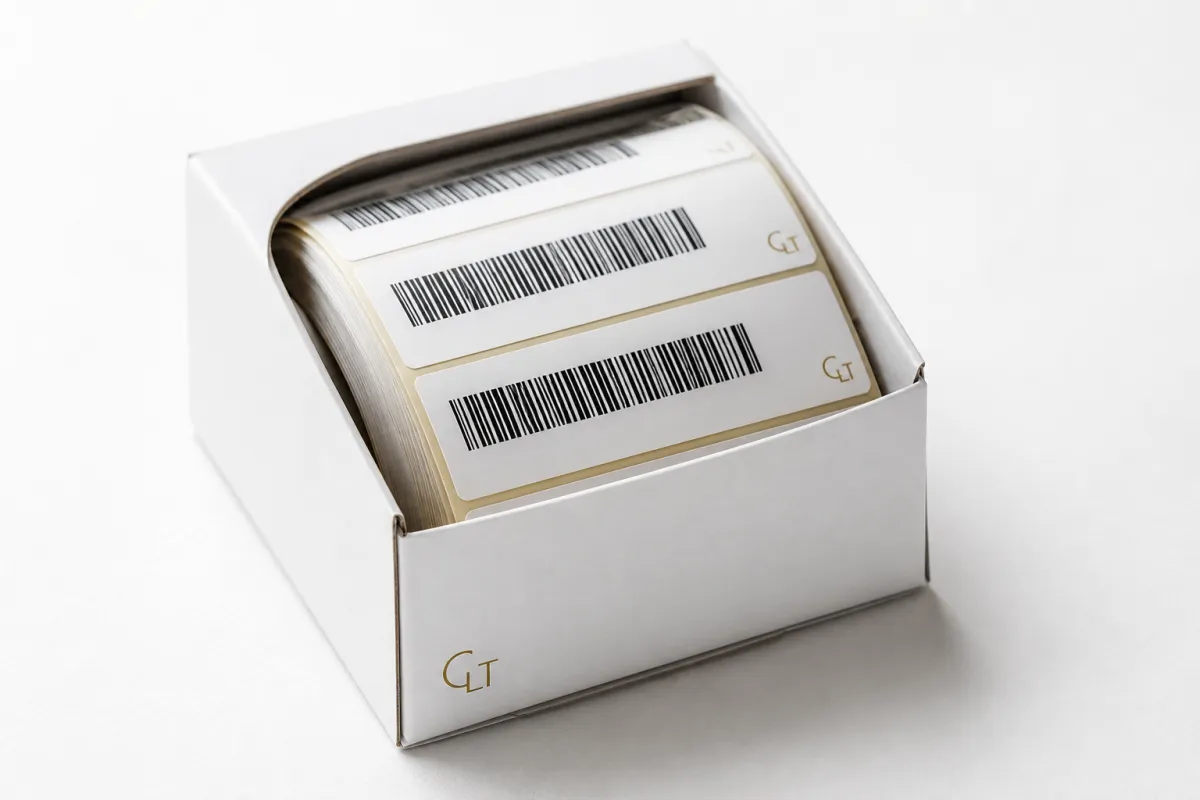
The lowest number on the quote is not always the cheapest label. That is the first thing I would tell a warehouse manager reviewing branded barcode labels wholesale cost for the first time. A label can look economical and still create hidden expenses: manual relabeling, missed scans, delayed outbound loads, damaged brand presentation, and the slow bleed of tiny interruptions that turn into a bad month.
Picture a receiving dock where cartons are labeled, stacked, cooled, and then moved again for cross-dock transfer. A weak adhesive in that flow is not a minor flaw. It becomes more labels, more labor, more second passes, and more time spent correcting a job that should have been finished once. I have seen teams treat peeling as a nuisance on Monday and a line item problem by Friday. That is why branded barcode labels wholesale cost should be treated as a total system cost, not a simple sticker price.
The first buying question should be blunt: what does the label need to survive? A shipping label on a dry carton has a short, easy life. A branded barcode label on a retail pack, a cold-chain tote, or a moisture-heavy surface faces a different reality. That shift changes the material, adhesive, print method, and the final branded barcode labels wholesale cost you should expect.
Most buyers benefit from a simple checklist:
- Unit cost matters, but replacement frequency matters too.
- MOQ changes how much inventory and setup cost you absorb.
- Bulk pricing can mislead if the job needs specialty stock or variable data.
- Cost per piece should include the printed label, not just the base material.
That last point catches people off guard. A quote may exclude proofing, finishing, freight, versioning, or plate charges. Once those are added, branded barcode labels wholesale cost can shift enough to change the purchasing decision. Regulated workflows feel that shift even more sharply, because reprints are not just inconvenient; they can stall a release. And if a launch window is tight, that delay gets expensive fast.
Practical rule: compare the cost of a label against the cost of failure. If a failed label creates relabeling, downtime, or a rejected shipment, the cheap option stops looking cheap very quickly.
Like-for-like comparisons matter. One supplier may quote paper stock with minimal durability, while another includes a stronger facestock, a better adhesive, and tighter print control. Those are not interchangeable offers, so the branded barcode labels wholesale cost is not truly the same.
Packaging teams often borrow testing logic from groups such as the ISTA and the ASTM. Labels are not pallets, but the logic overlaps: if a package must survive stacking, vibration, temperature swings, and repeated handling, the label has to stay readable in the same environment.
Product Details: Materials, Adhesives, and Print Methods
Material choice drives a large share of branded barcode labels wholesale cost, and buyers often underestimate how quickly the numbers move. Paper labels usually sit at the economical end of the range for dry, short-duration use. They print cleanly, keep the face bright, and make sense for high-volume runs where durability is not the main concern. Once the job needs better resistance, polypropylene or polyester enters the picture, and the price rises with it.
Paper stock works well for carton labels, shelf tags, and packaging that sees light handling. Thermal transfer paper is often the better fit when barcode sharpness matters and the label still needs a modest service life. More demanding environments call for polypropylene, which handles moisture and scuffing better. Polyester goes further, especially where heat, abrasion, or chemicals are in play. Each step up in resilience tends to raise branded barcode labels wholesale cost, and the trick is knowing whether that increase buys actual value or just extra specification.
Adhesive choice deserves equal scrutiny. I have seen buyers obsess over the print face and miss the adhesive, then lose money because the label never stayed put. Corrugated board, recycled cardboard, plastic bins, glass, powder-coated containers, and chilled film all behave differently. A label that bonds well to one surface may fail on another. That failure changes branded barcode labels wholesale cost in ways the quote line items never fully explain.
Print method changes appearance, durability, and setup time. Direct thermal can be cost-effective for short-life labels because it avoids ribbons. Thermal transfer usually makes more sense when the code must remain readable after shipping, rubbing, or storage. Digital printing suits short custom runs and brand-heavy jobs. Flexographic printing fits larger repeat programs where setup can be spread across volume. The method you choose affects both quality and branded barcode labels wholesale cost.
How finish changes the result
Finish is not decoration. Matte surfaces usually scan more cleanly because they reduce glare, while gloss can support shelf appeal if the barcode zone still has solid contrast. A topcoat can improve abrasion resistance, but it also adds cost and another layer of production complexity. The challenge is simple to say and harder to execute: keep the logo sharp, keep the barcode readable, and keep branded barcode labels wholesale cost aligned with the real use case.
Brand color needs discipline. A label can look strong in a mockup and still fail on a scanner if the barcode contrast is weak. Dark-on-light remains the safest approach for machine readability. If the design team wants richer color blocks, the barcode area still needs quiet space and enough contrast to scan without hesitation. That is not a creative setback; it is a production constraint, and it has a direct effect on branded barcode labels wholesale cost over time.
| Label Construction | Best Use | Relative Wholesale Cost | Typical Benefit |
|---|---|---|---|
| Paper, direct thermal | Short-life shipping and carton labeling | Low | Fast production and lower unit cost |
| Thermal transfer paper | Retail, inventory, and internal logistics | Low to moderate | Better print durability than direct thermal |
| Polypropylene | Moisture-prone or handled packages | Moderate | Improved resistance to scuffing and water |
| Polyester | Harsh environments and long-term identification | Higher | Strong durability for demanding workflows |
If the label has to do more than carry a barcode, the higher price is often justified by the lower waste rate. That is the piece many buyers miss when they compare branded barcode labels wholesale cost across suppliers. A pricier construction can reduce labor, scrap, and error corrections enough to offset the invoice.
For buyers with sustainability targets, paper-based stocks can sometimes be specified with FSC-backed fiber, depending on the job and the supplier's inventory. The FSC site explains the framework. That choice does not automatically lower branded barcode labels wholesale cost, but it can support procurement policies that require documentation and traceability.
Specifications That Affect Readability and Durability
Specifications determine whether the label performs the way the buyer expects. If there is one place where branded barcode labels wholesale cost gets misunderstood, it is the spec sheet. Barcode symbology, label dimensions, core size, roll diameter, unwind direction, print resolution, and application surface all shape the final result. Leave one of those details vague, and the quote turns into a guess.
Barcode compatibility is not a design preference. It is a production issue. A scanner on a warehouse floor may read one symbol instantly and reject another if the bars are too narrow, the contrast is weak, or the quiet zone is missing. A solid spec sheet prevents that kind of rework, which protects branded barcode labels wholesale cost before the job reaches production.
Environmental exposure changes the outcome. Moisture can soften some adhesives. Cold storage can make a general-purpose adhesive lose tack. UV exposure can fade inks. Friction from repeated handling can wear a printed face, especially on a lower-grade material. Chemicals and oils can do their own damage. If the label faces any of those conditions, the quote should reflect it, because branded barcode labels wholesale cost depends on survival as much as printing.
Variable data is common in barcode programs, and it adds another layer of work. Sequential numbering, lot codes, SKUs, version control, and serialized identifiers all require clean file handling. A single static label is simple. A run with multiple versions across several product lines calls for more proofing, more setup, and a higher branded barcode labels wholesale cost than a straightforward repeat job.
What to confirm before you approve
Before production starts, confirm the exact size, barcode type, artwork placement, and application method. Hand-applied labels and machine-applied labels do not use the same roll setup. Roll diameter and unwind direction can matter as much as the artwork itself. Those details rarely make it into a casual sales email, yet they can decide whether the job runs smoothly and whether branded barcode labels wholesale cost stays where you planned it.
- Label size: length, width, and any corner radius.
- Core size: important for dispenser compatibility.
- Roll diameter: affects press and application equipment.
- Barcode symbology: UPC, Code 128, QR, DataMatrix, or a custom format.
- Print resolution: often 203, 300, or 600 dpi depending on detail.
- Surface type: corrugate, film, glass, plastic, or coated board.
Testing is not optional on difficult jobs. A sample roll, a scan check, and a real application test can save a lot of frustration. If the labels will be used in a harsh environment, test them on the actual packaging surface rather than a sample sheet. That one step can prevent a full rerun and keep branded barcode labels wholesale cost under control.
For shipping-related stress, many packaging teams use test logic associated with ISTA and similar distribution standards. Even when you are not certifying a finished package, the principle holds: if the package will be bumped, stacked, chilled, or handled repeatedly, the label must stay legible.
Branded Barcode Labels Wholesale Cost: Pricing, MOQ, and Quote Basics
Once the material and specification choices are set, branded barcode labels wholesale cost becomes easier to interpret. The main pricing levers are quantity, material grade, adhesive performance, print method, finishing, and whether the job is a repeat run or a new setup. Add variable data or multiple versions, and the total moves again.
MOQ matters because label production is built around efficient runs. A higher minimum order quantity usually lowers cost per piece, but it also increases the amount of inventory sitting on your shelf. That tradeoff is fine when the label is a stable SKU with predictable demand. It becomes less attractive when product lines shift often or when artwork changes every quarter. Branded barcode labels wholesale cost should support operations, not create dead stock.
The setup-versus-volume equation explains a lot of quotes. A run with modest setup charges spread across a larger quantity will usually show a better unit price. A shorter order, or one that needs specialty materials, extra colors, or variable numbering, will usually cost more per piece. That is normal. The real test is whether the quote explains the tradeoff clearly enough for the buyer to judge the true branded barcode labels wholesale cost.
Send enough detail to get an accurate quote. Include dimensions, quantity, barcode type, artwork status, substrate, application method, and shipping destination. If the label must work in cold storage or near moisture, say so. If several SKUs are involved, say that too. Better input usually leads to a more useful branded barcode labels wholesale cost estimate.
What belongs in a quote request
- Final label dimensions and shape.
- Estimated annual volume and initial order quantity.
- Facestock preference, if known.
- Adhesive requirement or target surface.
- Barcode type, variable data, and artwork files.
- Target ship date and delivery location.
Compare quotes line by line. One supplier may include plates, proofing, freight, and variable data charges. Another may quote only the print portion. If those are not aligned, the difference in branded barcode labels wholesale cost may be about quoting style, not actual production value. That is why procurement can feel slippery: the number looks simple until the supporting charges appear.
As a rough market pattern, simple paper labels for internal or short-life use usually land near the lower end of wholesale pricing. Durable polypropylene or polyester labels cost more, especially with stronger adhesive or extra finishing. Custom die sizes, specialty coatings, and tight registration on brand elements increase the price again. The shape of branded barcode labels wholesale cost is not mysterious; it is the sum of small decisions that either reduce friction or create it.
| Pricing Factor | How It Affects Cost | Buyer Impact |
|---|---|---|
| Quantity | Higher volume usually lowers unit cost | Best for stable, repeat SKUs |
| Material grade | Durable stocks cost more than paper | Better performance in tough environments |
| Adhesive type | Specialty adhesives add cost | Needed for cold, rough, or low-energy surfaces |
| Setup charges | New artwork and press setup raise the first run | Spreads out as volume increases |
| Tooling fees | Custom dies or plates can add one-time charges | More noticeable on low-volume orders |
| Lead time | Rush jobs may raise shipping and handling costs | Can compress proofing and testing time |
That table is the short version. The longer version is simpler than it sounds: branded barcode labels wholesale cost is rarely driven by one factor alone. It is usually a stack of small decisions that either support efficient production or create complexity. The clearer the brief, the easier it is to remove waste without weakening performance.
Process and Timeline: From Artwork to Delivery
A clean production process keeps branded barcode labels wholesale cost predictable. It also keeps the buyer from getting surprised by delays that could have been avoided with a stronger brief. The usual path starts with discovery, moves into spec confirmation, then artwork review, proofing, press setup, production, finishing, packing, and shipment. Each step has its own failure point.
Missing barcode files create delays. Low-resolution logos do too. Sometimes the SKU list is incomplete, or the buyer sends an older artwork version and notices the error only after proof approval. Any of those issues can push the schedule and change the final branded barcode labels wholesale cost if revisions or new proof rounds are needed.
Lead time depends on the job. A repeat order with no artwork changes can move faster than a new custom construction that requires special material or adhesive sourcing. If the label needs unique stock, the material lead time may drive the schedule more than printing itself. A quick proof approval and early asset handoff can shorten turnaround, though they do not reduce branded barcode labels wholesale cost by default. What they do prevent is rush expense.
Rush orders can happen, but speed has a price. Expedited shipping costs more, and compressed proofing leaves less room for correction. In some cases that tradeoff is worth it. If the labels are tied to a product launch, a retail reset, or a compliance date, a fast turn may protect revenue. Just expect urgency to affect branded barcode labels wholesale cost in one form or another.
Common timeline ranges
- Simple repeat job: often faster once artwork is approved and materials are in stock.
- New custom job: usually takes longer because proofing and setup are more involved.
- Special material order: can extend timing if the stock or adhesive must be sourced.
- Variable data job: may add time for file checking and version control.
Buyers often ask for the fastest quote and expect the full operational picture to emerge later. The better move is to state the use case up front. If the labels support shipping, inventory, or retail compliance, say so. If the label will face moisture or cold, say that too. Clear context keeps branded barcode labels wholesale cost tied to the real application instead of a generic guess.
Why Choose Us for Wholesale Barcode Label Programs
For wholesale buyers, the right supplier does more than print labels. It helps match construction to environment so the final product performs in the field instead of only looking good on a proof. That is the core value behind our approach to branded barcode labels wholesale cost: consistent quality, dependable readability, and materials chosen for actual packaging conditions.
One of the most useful things a supplier can do is prevent over-specification. A buyer does not always need the most expensive facestock or the strongest adhesive. Sometimes a simpler structure works perfectly well and keeps branded barcode labels wholesale cost in a sensible range. Other times the harsher option is worth every cent because the label will be handled, chilled, or transported repeatedly. Good advice means knowing the difference.
Repeat purchasing matters as much as first-run pricing. When a label program spans multiple launches or seasonal orders, version control becomes important. The art file, barcode data, and materials need to stay consistent so reorders do not drift from the original spec. That consistency protects brand presentation and keeps branded barcode labels wholesale cost from creeping upward through preventable changes.
Clear communication matters too. Buyers Should Know where the quote stands, what the proof includes, when production starts, and how the shipment will be packed. That sounds basic, and it is exactly where many jobs go sideways. Tight communication means fewer surprises and a clearer view of branded barcode labels wholesale cost.
We also understand that labels sit between branding and operations. They are not only a decorative face, and they are not only a logistics tool. They have to do both jobs well. That balance is what most packaging teams want, and it is what keeps branded barcode labels wholesale cost useful as a planning number rather than a misleading headline.
If you want examples of how different packaging programs approach labeling choices, our Case Studies page is a useful place to compare use cases without guessing how a spec behaves once it moves into the real world.
Next Steps: How to Request the Right Quote
The fastest way to get an accurate answer on branded barcode labels wholesale cost is to prepare the job details before asking for pricing. Measure the label, confirm the surface, identify the barcode type, count the quantity, and gather the artwork files. If the label will face cold storage, moisture, heavy handling, or UV exposure, include that too. A complete brief saves time on both sides.
Ask for two or three quote options. That makes it easier to compare material grades, MOQ levels, and turnaround choices side by side. One option can show the lowest unit cost. Another can show a more durable construction. A third can balance the two. Then branded barcode labels wholesale cost becomes a decision tool instead of a single fixed number.
When the application is demanding, request samples or a proof. Cold storage, glossy film, rough corrugate, and variable environments all deserve a test run. A sample can reveal a better adhesive, a clearer barcode contrast, or a small size adjustment before production starts. Those are the adjustments that keep branded barcode labels wholesale cost from turning into waste later.
It also helps to name the buying goal in plain language. Are you chasing the lowest unit cost, the strongest durability, or the best balance between brand impact and throughput? If you know which one matters most, the quote can be built around the right tradeoff. That clarity improves the value of branded barcode labels wholesale cost as a planning metric and reduces back-and-forth during sourcing.
For buyers who need a broader sourcing conversation, our Wholesale Programs page can help frame order volume, repeat runs, and packaging consistency across multiple product lines. That is often where the real savings appear, not in a single line item but in a cleaner buying process over time.
Use branded barcode labels wholesale cost to set the target, then refine the spec based on performance, scan reliability, and timeline. The smartest buyers do not just ask what the labels cost. They ask what the labels will save when they do their job well.
What affects branded barcode labels wholesale cost the most?
Quantity, material, adhesive type, print method, and whether the job needs custom artwork or variable data have the biggest impact. More durable constructions usually cost more upfront, but they can lower total cost if they reduce reprints, relabeling, or scan failures.
What is a realistic MOQ for branded barcode labels wholesale orders?
MOQ varies by material, size, and print method, but wholesale orders usually start at a volume that makes setup economical. If you need several SKUs, ask whether one shared construction can be run in multiple versions to keep MOQ manageable and avoid unnecessary setup charges.
Are thermal transfer labels more expensive than direct thermal labels?
Often yes, because thermal transfer materials and ribbons are chosen for longer wear and better resistance to smudging or abrasion. Direct thermal can be a lower-cost option for short-life use, but it is not the right choice when labels must hold up over time.
How long does wholesale barcode label production usually take?
Timelines depend on proof approval, material availability, and the complexity of the run, but repeat jobs are usually faster than new custom builds. Rush jobs may be possible, yet they can affect cost and reduce time for testing or proof changes.
What should I send to get an accurate quote for branded barcode labels wholesale cost?
Send dimensions, quantity, material preference, barcode type, surface details, artwork files, and any special handling needs like cold storage or moisture exposure. If you already know your target unit cost or budget range, include that too so the quote can be built around the right options.
Branded barcode labels wholesale cost is easiest to manage when the buyer treats it as part of packaging performance, not just purchasing. Match the label to the surface, the environment, the barcode type, and the production schedule, and the quote becomes clearer while the finished labels are far more likely to do their job without waste. The cleanest takeaway is simple: build the brief first, then compare quotes against the real use case, not just the lowest sticker price.


