Printed cardboard packaging boxes are not just containers with graphics on them. They are a merchandising tool, a shipping decision, and a quiet promise about the product inside. Buyers notice that promise quickly. A box that feels flimsy or prints poorly can make even a good product seem cheap. A well-built carton can do the opposite: it can make a modest item feel considered, and a premium item feel worth the price before anyone opens it.
That is why the best packaging decisions are rarely about decoration alone. Structure, board grade, finish, and print method all pull in the same direction or they fight each other. When they fight, the result is obvious in hand. Scuffed coatings, crushed corners, color that looks flat under store lighting, or a lid that does not close cleanly are all signs the spec was built around appearance instead of use.
Why printed cardboard packaging boxes get noticed first
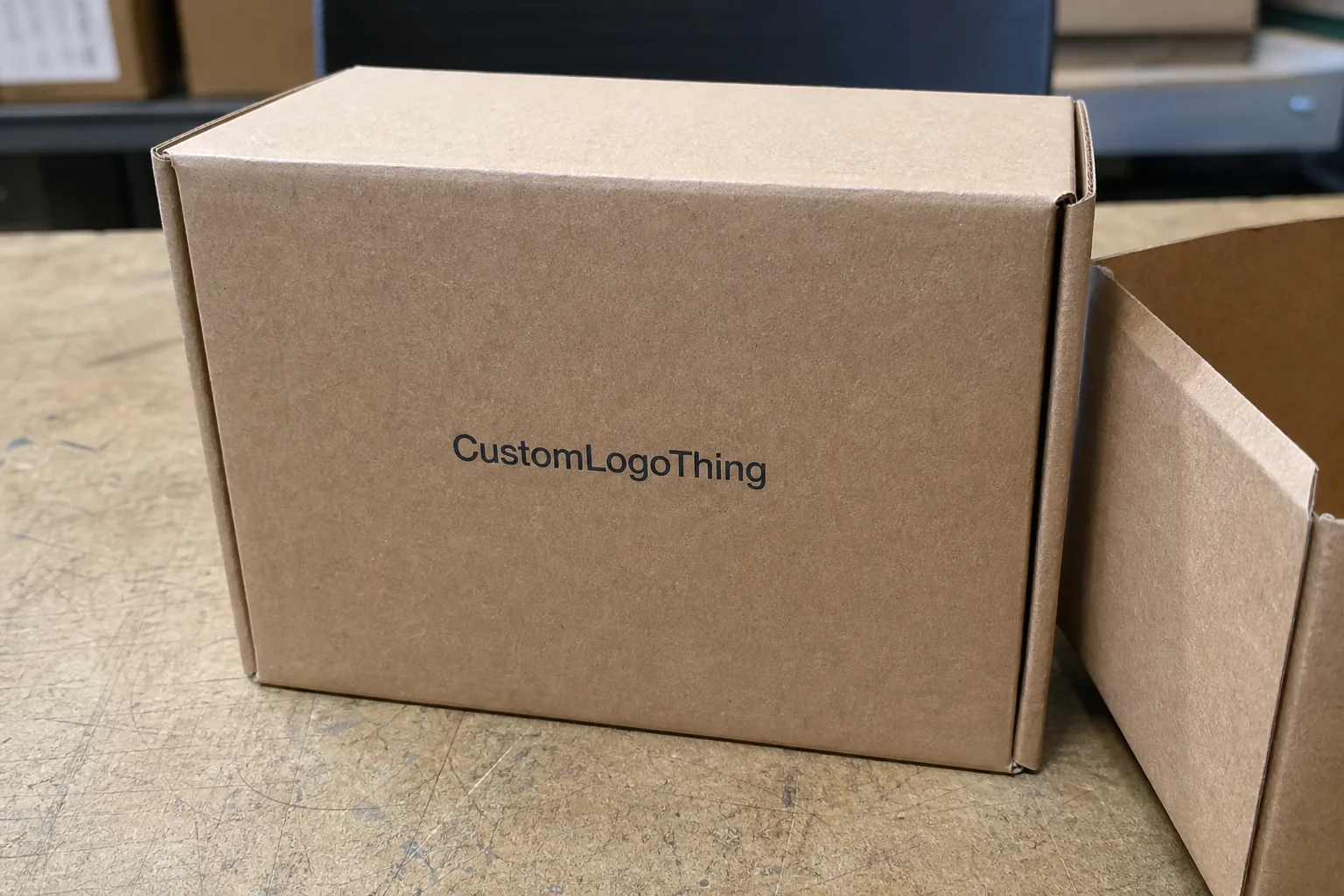
For retail packaging, ecommerce fulfillment, subscription kits, and promotional mailers, the box is usually the first physical touchpoint. That matters because the buyer has not yet used the product. They are reading the package as a signal: Is this brand careful? Is the product protected? Was this built for shelf presentation or for transport? A package answers those questions almost immediately.
When people ask for printed cardboard packaging boxes, they are usually talking about several different structures at once. Folding cartons are common for lightweight consumer goods. Rigid or semi-rigid boxes are used when presentation matters more. Mailer-style cartons work better for direct-to-consumer shipping. Each format solves a different problem, and the wrong one tends to show its weakness quickly. A folding carton can look sharp on shelf but fail if the product is heavy. A corrugated mailer can survive shipping but feel too plain for retail display.
The most common mistake is treating printing as the only variable. Printing matters, but it is only one part of the build. Packaging performance comes from the combination of substrate, structure, and decoration. A matte finish on thin stock can look muted in a bad way. Heavy foil on a light carton can feel overworked. The right answer is not the fanciest spec. It is the spec that fits the product, the channel, and the budget Without Wasting Money on features that do not change buyer perception.
A box has two jobs: protect the product and make the brand believable before the customer opens it.
That is why packaging teams compare more than artwork. They compare how the box opens, how it stacks, how it survives transit, and whether the unboxing sequence makes sense. On small consumer goods, cosmetics, candles, accessories, and electronics, those details change the result more than a logo treatment ever will.
How the printing and converting process works
The production sequence starts with the dieline. That template shows folds, cuts, glue tabs, and panel dimensions. It seems simple, but this is where a surprising number of delays begin. Artwork has to be built around the dieline, not the other way around. If critical text sits across a fold or a barcode is too close to the trim edge, the job can stall in prepress before it ever reaches the press.
Once the file is laid out, the supplier reviews bleed, resolution, line thickness, and whether the content will still read cleanly after folding and gluing. Then comes the print method. Digital printing is usually the most flexible option for short runs, prototype work, and jobs with frequent artwork changes. Offset printing usually becomes the better choice when color consistency, image detail, and larger quantities matter. Flexographic printing still has a place on some packaging lines, especially where speed and simpler graphics are more important than very fine tonal detail. The right method depends on quantity, design complexity, and the finish the box needs to deliver.
Proofing is where buyers can save real money. A PDF proof checks content and layout. A hard proof shows how the board, print, and finish will behave in hand. A press check matters most when the color has to be close, the design carries a strong brand identity, or the package is going into a premium retail setting. Small differences in ink density, coating, or registration are easy to miss on screen and hard to ignore once the boxes are packed.
After approval, the job moves into plate or form creation, printing, die cutting, stripping, folding, gluing, and packing. Each stage adds risk if the job was not locked properly up front. If a buyer changes the size after the die has been made, the cost rises fast. If the finish changes late, the schedule usually slips. Packaging production rewards final decisions. Partial decisions cost time.
A few standards are worth checking before release. If the carton will travel through parcel networks, ask whether the structure should be evaluated against ISTA test methods. If the paperboard needs sourcing credentials, confirm whether FSC-certified stock is required. Those questions sound administrative, but they affect the spec, the lead time, and sometimes the entire quote.
Board grade, finish, and structure choices that affect performance
Board choice changes how the carton looks, feels, prints, and survives handling. SBS, or solid bleached sulfate, is often selected for premium printed cartons because it has a bright, clean surface and usually handles fine graphics well. CCNB, or clay-coated news back, is more cost-conscious and widely used when the reverse side does not need to look pristine. Kraft board gives a more natural appearance and can support minimal branding or eco-focused positioning. Corrugated board is the workhorse when the package needs shipping strength, cushioning, or stacking performance.
Caliper matters just as much as board type. A carton can be “cardboard” on paper and still behave very differently in production depending on thickness and fiber structure. Thin stock may print crisply but bend too much around a product insert or at a tuck flap. Heavy stock can improve shelf presence, yet it can also crack on folds if the score is wrong or the grain direction is ignored. Buyers often ask for a sturdier board without checking whether the product shape actually needs it. That usually increases cost without solving the real problem.
Finishes affect first impressions quickly. Matte coatings feel restrained and modern. Gloss coatings make color look brighter and can improve wipe resistance. Soft-touch lamination adds a velvety feel that works well for higher-end items, although it can show scuffs if the carton is handled often. Foil stamping, embossing, and spot UV all add emphasis, but they should support the hierarchy of the design. On a strong layout, they create focus. On a weak layout, they just inflate the price.
Structure matters as much as the surface. Tuck-end cartons are efficient and easy to pack. Crash-lock bottoms save assembly time on busy lines. Inserts help center fragile products and reduce movement in transit. Window patches help the product sell itself from the shelf. The best structure is not always the most elaborate one. It is the one that packs cleanly, protects the item, and opens without frustration.
Two details are easy to miss but important in production. First, most carton specs need realistic tolerances. A buyer who expects machine-perfect closure on a hand-packed carton is setting up a problem. Second, finish selection should consider handling. A beautiful soft-touch box can look expensive and still pick up marks if it moves through high-touch fulfillment. What looks premium on a sample may behave differently after 500 units are packed, stacked, and shipped.
A practical rule helps here: if the product is light and shelf-facing, spend more attention on print quality and finish. If the product is heavy, fragile, or irregularly shaped, spend more attention on board strength and structure. The package only works if the core mechanics work first.
Cost, pricing, MOQ, and quote drivers
Pricing for printed cardboard packaging boxes is driven by a small set of variables that buyers can actually control. Size is one. Quantity is another. Board grade, print coverage, special finishes, structural complexity, and insert requirements all move the cost in predictable ways. A compact carton with one-color print and a simple tuck-end format will usually price lower than a large carton with full-bleed graphics, foil, embossing, and a custom insert.
MOQ is where many buying decisions get uncomfortable. Lower quantities usually mean a higher unit cost because setup costs are spread across fewer boxes. Larger quantities reduce the per-box price, but they tie up more cash and storage. There is no universal “best” MOQ. A test launch may justify a smaller run even if the unit price is higher. A stable product line can usually support a larger order and bring the cost down. The right order size is the one that matches sales confidence, storage capacity, and product risk.
The hidden costs matter too. Tooling, dies, plates, samples, freight, and rush fees can all change the landed cost. If a quote only includes the box price and leaves out freight or prototyping, it can look cheaper than it really is. That is a common source of bad comparisons. The useful quote is the one that includes enough detail to price the job cleanly the first time.
| Build level | Typical features | Common use case | Indicative unit price |
|---|---|---|---|
| Value build | Simple structure, limited colors, standard coating | Price-sensitive product packaging | $0.18-$0.35 at 5,000 units |
| Mid-range build | Full-color print, better board, matte or gloss finish | Retail packaging and branded packaging | $0.35-$0.75 at 5,000 units |
| Premium build | Special coating, foil, embossing, insert, tighter color control | Gift sets, luxury items, launch kits | $0.75-$1.50+ depending on size and coverage |
Those numbers are directional. A narrow carton with heavy ink coverage can price very differently from a larger carton with a simple layout. Freight can also swing the total cost, especially on smaller orders or longer lanes. That is why quote requests should include finished dimensions, quantity, product weight, artwork status, finish preferences, shipping destination, and whether a prototype is needed. Without those inputs, the number tends to be either vague or padded.
For teams comparing broader packaging systems, it can help to review related Custom Packaging Products to see whether the carton should be the hero or part of a larger set. If the item also needs transit protection, a matching shipper may be worth reviewing alongside Custom Shipping Boxes.
Process timeline, lead time, and production steps
A realistic timeline starts with specification gathering and artwork prep. That part is easy to underestimate because the packaging team may still be deciding on board, finish, insert style, or even the final dimensions. Once those choices are set, proofing and approval begin. In practice, approvals often take longer than printing. That is especially true when marketing, operations, and procurement all want a say.
For a straightforward job, 10 to 20 business days from final proof approval to shipment is a common range, depending on quantity, finish, and workload. More complex jobs take longer. Foil, embossing, custom dies, unusual pack-out instructions, and heavy insert work add setup and inspection time. Rush work is possible, but there are limits. Glue cure time, coating dry time, die creation, and freight schedules still have to happen in sequence.
A clean production flow usually looks like this:
- Prepress review of artwork, dieline, and barcode placement
- Proof approval, including color target and finish confirmation
- Press setup and first-article inspection
- Die cutting, folding, gluing, and inline quality checks
- Final pack-out, carton count verification, and shipment booking
Each checkpoint can stop the line if something is off. A font error can hold the file. A wrong dimension can delay the die. A late change in coating can push the schedule back. Buyers who want the timeline to hold should lock the structure early and treat proof approval as a real milestone, not a casual email exchange.
Quality checks matter more than many buyers expect. For carton work, common inspection points include color consistency, registration, scuff resistance, glue strength, fold accuracy, corner crush, and whether the printed panels stay aligned after forming. On a high-volume run, a small defect rate can become expensive quickly. A box that looks fine as a flat sheet may still fail once it is folded and packed, so sampling in the final form is worth the time.
Common mistakes that raise cost or delay delivery
The first mistake is sending unfinished artwork. Low-resolution images, missing fonts, incorrect color mode, and poor dieline alignment all trigger prepress corrections. Those fixes are usually manageable, but they consume time. If the file has to be rebuilt, the production clock stops while the supplier waits for a clean version.
The second mistake is choosing the wrong structure for the product. A carton may look good in a render and still fail in use if the item is heavy, oddly shaped, or sensitive to pressure. The warning signs are practical: crushed corners, loose inserts, poor shelf facing, or a box that opens too easily during shipping. Packaging should be judged against the actual product weight and movement, not just a mockup.
The third mistake is asking for pricing without enough context. If quantity, shipping zone, finish, and assembly method are missing, the quote will either be vague or padded to cover uncertainty. That makes comparison hard and often leads to re-quotes later. Clean input produces cleaner pricing.
The fourth mistake is treating branding and operations like separate problems. They are linked. A parcel-shipped product may need stronger edges and a finish that resists scuffs. A retail product may need better contrast, cleaner hierarchy, and a more premium tactile surface. Those tradeoffs are normal. The goal is not to make the most elaborate box. The goal is to make a box that holds up in the channel and supports the sale.
There are also small technical errors that can become expensive. Overprinting rich black on fine type can muddy readability. Putting a barcode too close to a fold can cause scan problems. Forgetting to account for grain direction can lead to cracking on scores. These are not exotic issues, but they show up often enough to deserve attention before production starts.
The easiest way to reduce risk is to ask a few blunt questions early: How much does the product weigh? Will it ship individually or in master cartons? Is the box decorative, protective, or both? Those answers are more useful than a last-minute design tweak.
Next steps for ordering printed cardboard packaging boxes
If you are sourcing printed cardboard packaging boxes, start with a simple internal checklist: finished dimensions, target quantity, artwork status, budget range, finish preferences, product weight, and shipping location. If any of those inputs are missing, the project is still in the discovery stage. That is not a problem, but the quote should reflect the uncertainty instead of pretending it does not exist.
For many buyers, requesting two or three spec scenarios is more useful than asking for one perfect version. A value build shows what can be stripped back without breaking the package. A mid-range build shows where the sweet spot is. A premium build shows the upper limit of presentation. Comparing those three options helps teams see whether extra spend is actually improving the buyer experience or just adding decoration.
When the product is fragile, tightly fitted, or tied to a launch window, request a prototype before production. Flat artwork proofs cannot show how the insert holds the item, whether the box closes cleanly after packing, or whether the structure feels too tight once the product is inside. Physical samples catch the issues that a screen cannot.
The strongest packaging decisions are usually the least dramatic. Lock the structure. Confirm the print method. Approve the proof. Then move into production. That sequence keeps the job controlled and lowers the odds of spending money to fix avoidable mistakes later. For buyers comparing vendors, that discipline usually matters more than a polished sales deck or a glossy mockup.
What details do I need to quote printed cardboard packaging boxes accurately?
Provide exact finished dimensions, product weight, quantity, artwork status, shipping destination, and any required finish or insert. If the box has a special structure or unusual assembly method, include that too because tooling and labor can change the price quickly.
How do I choose between folding cartons and corrugated boxes?
Use folding cartons when shelf presentation, branding, and a lighter structure matter more than heavy transit protection. Use corrugated when the package must survive parcel handling, stack well in fulfillment, or protect a heavier product. If both jobs matter, pair a retail carton with a shipping shipper.
What drives the price of printed cardboard packaging boxes the most?
Quantity usually has the biggest impact because setup costs are spread across more units as volume rises. Board grade, print coverage, finishing, and custom tooling come next. Freight, sampling, and rush timing can also move the final cost.
How long does production usually take?
Simple runs can move quickly once the artwork is final, but approvals usually set the pace. A common range is 10 to 20 business days after final proof approval, with more time needed for special finishes, custom structures, or complex inserts.
Can I order a small MOQ without getting stuck with a high unit cost?
Yes, but the unit cost will usually be higher because setup, tooling, and press time are spread across fewer boxes. You can often keep the increase under control by simplifying the structure, limiting special finishes, and keeping the print setup efficient.