Buyer Fit Snapshot
| Best fit | printed clamshell cartons branding design for packaging buyers comparing material specs, print proof, MOQ, unit cost, freight, and repeat-order risk where brand print, material, artwork control, and repeat-order consistency matter. |
|---|---|
| Quote inputs | Share finished size, material target, print colors, finish, packing count, annual reorder estimate, and delivery region. |
| Proofing check | Approve dieline scale, logo placement, barcode or warning zones, color tolerance, and any recyclable or compostable wording before bulk production. |
| Main risk | Vague material claims, crowded artwork, or missing packing details can create delays even when the unit price looks attractive. |
Fast answer: Printed Clamshell Cartons Branding Design: Dieline, Finish, Proof, and Buyer Review should be specified like a repeatable production item. The safest quote includes material, print method, finish, artwork proof, carton packing, and reorder notes in one written spec.
What to confirm before approving the packaging proof
Check the product dimensions against the actual filled item, not only the sales mockup. Ask for tolerance on folds, seals, hang holes, label areas, and retail display edges. If the package carries a logo, QR code, warning copy, or legal claim, reserve that space before decorative graphics fill the panel.
How to compare quotes without losing quality
Compare board or film grade, print process, finish, sampling route, tooling charges, carton quantity, and freight assumptions side by side. A lower quote is only useful if the supplier can repeat the same color, closure quality, and packing count on the next order.
Printed Clamshell Cartons Branding: Design That Sells starts with a simple truth: printed clamshell cartons branding is often decided by details people barely register until the pack sits on shelf, lands in the hand, or opens for the first time. The folded edge, the closure style, the rhythm of the panels, and even a small window can do as much for brand identity as the logo itself, because those structural cues shape customer perception before a single line of copy gets read.
Printed Clamshell Cartons Branding: Why Small Details Sell
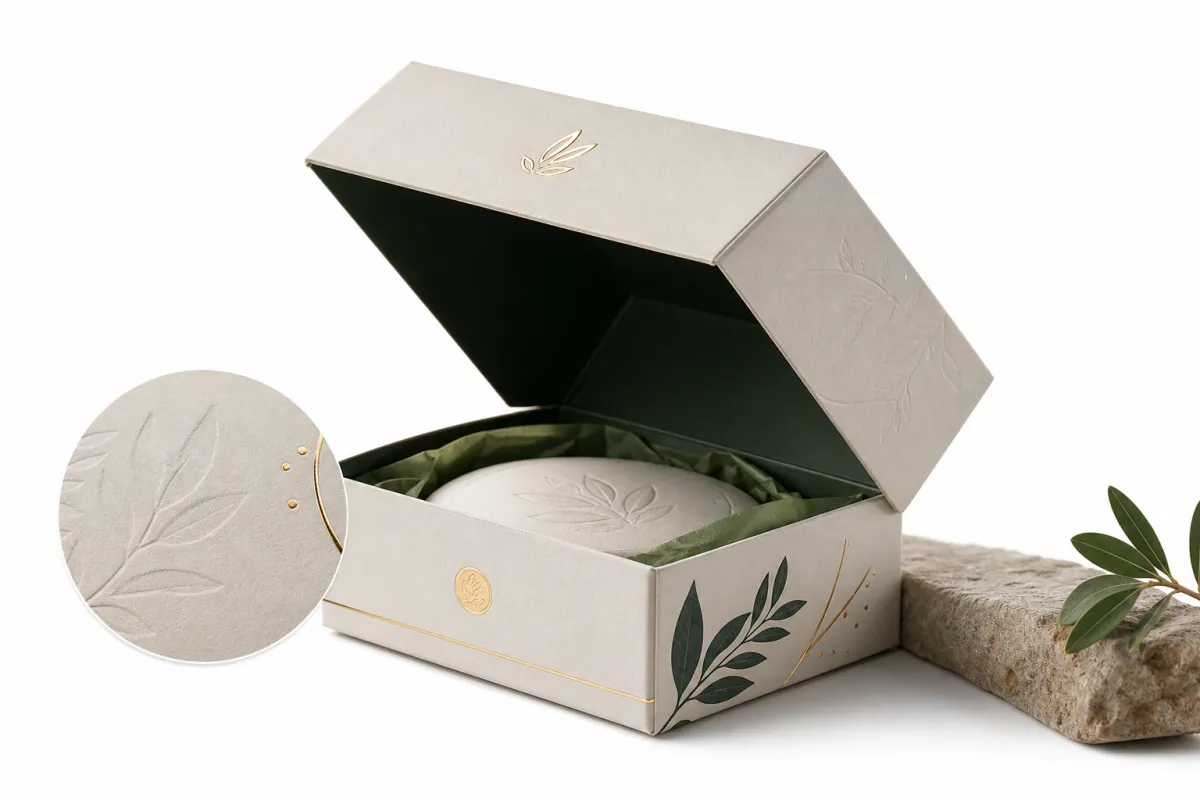
Printed clamshell cartons branding works because the format sits in a useful middle ground. It is more protective and more structured than a sleeve, yet more display-friendly than a plain shipper, which explains why so many retail buyers prefer it for products that need both presence and practicality. A clamshell carton is a folded paperboard pack that closes over itself, often with a front panel, a back panel, side panels, and a closure or tuck feature that becomes part of the look. That closure is not only mechanical; it is part of the brand story.
On a shelf, people rarely study every panel with equal care. They glance, compare, and move on. That is where printed clamshell cartons branding earns its keep. A clean fold line can make a pack feel engineered rather than generic. A well-placed window can show the product without making the carton feel flimsy. A strong block of color can build recognition from a few feet away, while secondary copy supports trust once the pack is in the hand. The package is doing sales work long before the product is opened.
From a packaging buyer's point of view, that matters because the pack has to justify itself in more than one way. It must protect the product, fit the merchandiser's plan, and support the visual language of the brand. Printed clamshell cartons branding is rarely just a graphic exercise. It is a structural decision, a print decision, and a commercial decision all at once. Strong brands understand that the unboxing experience begins before the customer even breaks the seal, and a plain or wobbly carton can undercut a product that is otherwise quite good.
In the strongest printed clamshell cartons branding, the pack does not shout from every panel. It gives the eye a clear path, tells the product story quickly, and leaves enough breathing room for the structure to look intentional rather than crowded.
That balance separates a carton that merely contains a product from one that earns a premium impression. In a category with plenty of visual noise, the carton's silhouette, closure style, and print finish become part of brand memory. If the pack feels sturdy and clean, customers often assume the product inside is equally well made. That is not magic; it is customer perception responding to the physical cues in front of it.
For teams building a new launch or refreshing a tired retail package, printed clamshell cartons branding is often a smart place to start because the format naturally supports brand consistency. It gives designers multiple panels to organize hierarchy, yet it still forces discipline. Weak structure cannot hide behind oversized graphics forever. The carton either reads clearly or it does not, and shelf conditions tend to be brutally honest. I have seen a modest product look more expensive simply because its carton was clean, balanced, and honest about what it was doing.
How Printed Clamshell Cartons Branding Works on the Line
Printed clamshell cartons branding starts with a dieline, not artwork. That is the part many teams underestimate. The structural file sets the rules for where panels fold, where glue lands, how much quiet space exists around a barcode, and which areas sit near a seam or a spine. Once the structure is defined, the printed sheet is built to match it, then die cut, creased, folded, and finished. Every one of those steps affects how the branding looks once the carton is assembled.
If the board is too stiff, the folds can crack or spring back. If it is too light, the carton can feel soft or lose its shape in transit. If print registration slips by even a little, a fine type line can shift near the fold and suddenly look careless. Printed clamshell cartons branding has to be planned with the production line in mind. A design that looks flawless on screen can behave very differently once it passes through scoring, folding, and packing. That is why a prepress file and a real sample are never the same thing, no matter how polished the mockup looks.
Clamshell geometry also changes how information should be placed. The logo may belong on the primary face, but the product claims, ingredients, instructions, and legal text often need to spread across multiple panels. That makes hierarchy especially important. The consumer should see the product name first, the benefit second, and the fine print only after the first message has landed. Good printed clamshell cartons branding does not make the eye hunt for the main story.
On retail lines and in fulfillment, legibility matters at speed. Barcodes need clean contrast and quiet zones. Short claims need enough type size to survive a quick glance. If the carton also moves through shipping or e-commerce handling, the graphics have to stay readable after scuffing, stacking, and tape contact. For some teams, that means choosing a varnish or film that resists abrasion. For others, it means simplifying the art so the brand survives the real journey rather than only the proof. I have had more than one press check where the conversation shifted from "Can we make it prettier?" to "Can we make it survive the route?" and that is usually the right question.
Key Factors Behind Strong Printed Clamshell Cartons Branding
Material choice is where printed clamshell cartons branding starts to take shape physically. Solid bleached sulfate board, coated recycled board, and similar paperboards each behave differently under ink, scoring pressure, and folding. A smoother surface tends to hold fine detail and cleaner solids. A more economical board may still work well, yet it can trade away some print sharpness or fold performance. In practice, the right stock depends on product weight, the retail environment, and how premium the pack needs to feel in the hand.
Brand hierarchy is the next filter. From a distance, the pack should answer three questions quickly: what is it, what brand is it, and why should I care? That sounds basic, yet many cartons fail because too much copy competes with the primary message. Printed clamshell cartons branding works best when the front panel carries the essential story and the side or back panels support it with facts, benefits, or regulatory text. The result is cleaner visual branding and better shelf readability.
Typography and color are also carrying a lot of weight. A compact multi-panel carton needs type that can survive small sizes without looking brittle. Color should reinforce the category and the brand identity, but not collapse into generic retail sameness. Strong contrast helps on shelf, yet the palette still has to feel owned by the brand. If the pack uses imagery, those visuals should be chosen for clarity at reduced size, because a cropped photo that looks luxurious on a monitor may turn muddy once it is printed on a narrow flap.
Durability finishes the job. Scuff resistance, moisture exposure, and handling during packing all shape the final impression. A gloss surface can pop under bright retail lights, while a matte or soft-touch coating can communicate restraint and higher perceived value. Neither choice is automatically better. What matters is whether the finish supports the product's use case. A carton that rides in humid storage or gets touched often may need more protection than a carton sitting in a dry display tray. That practical reality is a big part of printed clamshell cartons branding, even if it is not the glamorous part.
For teams trying to improve brand consistency across multiple formats, the clamshell is also a useful test. If the logo, color system, and tone of voice can hold together on a folded carton with several interrupting seams, they will usually hold up well on other retail packaging too. That is one reason designers often pair this work with Custom Labels & Tags so the same visual language carries across the wider package family. The package becomes more coherent, and the customer feels that coherence without needing to analyze it.
| Board / Finish Option | Typical Use | Print and Handling Notes | Budget Impact |
|---|---|---|---|
| 18 pt C1S board with aqueous coat | Light retail items, controlled shelf environments | Good print clarity, economical, moderate scuff resistance | Often a lower-cost printed clamshell cartons branding option for mid-volume runs |
| 24 pt SBS with matte or satin varnish | Premium cosmetics, accessories, specialty food | Cleaner folds, stronger feel, better color pop than lighter stocks | Usually a step up in unit cost, but often worth it for stronger customer perception |
| Coated recycled board with film-free finish | Eco-forward brands and FSC-oriented programs | Can support good print results, though solids may not look as dense as SBS | Varies widely based on print coverage and sourcing requirements |
| Soft-touch lamination with spot UV | High-touch premium presentation | Feels upscale, but needs careful scuff planning and folding tests | Raises setup and finishing cost, especially on shorter runs |
For brands thinking about sustainability, certification matters too. FSC-certified paperboard can support a stronger sourcing story, and many buyers ask for that documentation early. If the carton must survive shipping tests, teams often reference ISTA protocols or similar distribution testing methods to make sure the packaging survives vibration, compression, and drop exposure before production starts. Those standards do not replace design judgment, but they give the launch a more reliable foundation. You can review testing guidance through the ISTA organization and chain-of-custody information through FSC.
Printed Clamshell Cartons Branding Cost and Pricing Drivers
Printed clamshell cartons branding cost is shaped by a handful of predictable variables, and the sooner a team understands them, the easier the project becomes to manage. Substrate choice is a big one. So is print method, because digital, offset, and flexographic workflows all carry different strengths and setup profiles. Number of colors matters too, especially if the design uses rich solids, metallic accents, or multiple spot inks. Add coatings, die cuts, special folds, and any windowing or embossing, and the budget starts to move quickly.
Quantity changes the math more than many buyers expect. A short run may carry a higher unit price because prepress, plate, and make-ready costs are spread across fewer cartons. A larger run can lower cost per piece dramatically, especially if the structure is stable and the art does not require repeated changes. In many projects, printed clamshell cartons branding lands somewhere around $0.18 to $0.28 per unit at 5,000 pieces for a fairly straightforward board and print build, while more complex finishes, windows, or heavy coverage can push that higher. At 20,000 pieces or more, the unit cost can improve, but only if the design stays efficient. Those numbers are only directional, though; board availability, freight, and local production conditions can nudge them around more than buyers expect.
One common mistake is treating print cost as the whole budget. It is not. A smarter view is to ask what the carton is doing for sell-through, perceived value, and product protection. A pack that costs a few cents more but lifts shelf appeal can easily outperform a cheaper alternative that feels weak or forgettable. That is especially true in categories where visual branding drives impulse decisions. The right carton may also reduce damage, shrink fulfillment errors, or make retail replenishment easier. Those savings do not always show up in the art quote, but they do show up in the business results.
A practical way to compare options before final approval is to rank the pack by role. If the brand is launching a hero SKU, it may make sense to spend more on finishing. If the carton is a workhorse item with high unit volume, a simpler build can be the smarter move. Printed clamshell cartons branding should support the product's role, not fight it. A premium cosmetic line and a budget utility item should not carry the same finishing logic just because both are in cartons.
My rule of thumb is simple: spend where the customer can see or feel the value, and save where the choice does not change shelf impact, opening experience, or transit durability.
That perspective also helps teams avoid over-designing. A carton does not need every possible embellishment to look good. Sometimes the strongest printed clamshell cartons branding comes from cleaner structure, tighter hierarchy, and a finish that feels deliberate rather than loud. If the brand is still maturing, that restraint can make the product look more credible than a pack covered in effects.
Step-by-Step Process for Printed Clamshell Cartons Branding
The best projects begin with product facts, not artwork. Measure the product carefully, including any inserts, closures, or accessories that must fit inside. Then define the retail need: hang display, shelf display, e-commerce shipment, or mixed use. After that, gather distribution requirements, because a carton that looks elegant in a mockup can still fail if it cannot survive compression or stack pressure. Printed clamshell cartons branding is easier when those constraints are clear before design begins.
Once the size and use case are set, build the dieline and map content zones. This is where the brand story gets translated into panels, folds, and glue areas. Put mandatory text where it can be read cleanly, keep the barcode in a reliable zone with proper quiet space, and reserve the strongest visual space for the primary brand message. If the pack includes a window, place it so it reveals something useful rather than just cutting into the design. Good structure supports the artwork; it does not compete with it.
The proofing stage deserves patience. A color proof should be checked against the brand standards, and against the material itself, because coated board, recycled board, and laminated board can all shift slightly in tone. Fold behavior matters too. Type that sits too close to a crease may distort once the carton is assembled. A registration line that looks acceptable on a flat proof can drift visually once the structure wraps around a hinge. For this reason, printed clamshell cartons branding should always include a close review of fold maps, glue zones, and panel transitions.
After proof approval, production moves through print, finishing, die cutting, scoring, folding, and pack-out. If the design includes a coating or lamination, the team should check that the finish does not interfere with glue adhesion or crack on a fold. Then comes the real-world check: open, close, stack, ship, and inspect. A carton that looks strong on a proof sheet may reveal weak points only after it has been handled a dozen times. That is normal, and it is why pre-production samples matter so much in printed clamshell cartons branding.
Timelines vary by complexity, but a straightforward project can often move from approved structure to production release in 12 to 15 business days once artwork is final and the factory has a clean spec. Add custom tooling, special finishes, or repeated revisions, and the schedule stretches. That is not a problem if it is planned for. What slows teams down is usually not the print itself but the back-and-forth around missing dimensions, unfinalized copy, or late-stage color corrections. Clear input shortens the road.
Common Mistakes in Printed Clamshell Cartons Branding
The most common mistake is crowding the panel. A clamshell is not a brochure, even though it offers several surfaces. If every face is packed with headlines, claims, icons, and decorative lines, the package loses its ability to guide the eye. Strong printed clamshell cartons branding gives the customer a first read, then a second read, then a deeper read. It does not force all of the information to compete at the same volume. White space is not wasted space; it is part of the composition.
Another frequent problem is ignoring the way board behaves. A design may look refined on a digital mockup but crack at the fold, dull under a soft-touch layer, or warp when exposed to humidity. That can hurt both product presentation and brand consistency. If the carton changes shape after folding, the logo may sit off-center or the closure may no longer align cleanly. In a retail setting, those small defects send a larger message than people realize. They can make the brand feel less controlled, even if the product itself is fine.
Barcode and regulatory placement also cause trouble. Teams sometimes leave these details until the end, only to discover that the legal copy no longer fits comfortably or the barcode lands too close to a crease. The fix is usually not dramatic, but it can force a redesign at the worst possible moment. A better habit is to place compliance content from the start, so the visual system can flex around it. That keeps printed clamshell cartons branding both attractive and production-ready.
Finish choices can also backfire. A dramatic coating may look beautiful in a mockup, but if it scuffs in transit, the package loses polish before it reaches the shelf. A highly reflective surface can be hard to photograph, hard to read under retail lighting, or unforgiving around fingerprints. None of that means finishes should be avoided. It means they should be chosen for the actual handling environment. A good package respects the route from press to pallet to shelf to customer hand.
Here are the mistakes I would flag first during a packaging review:
- Overloading the front panel with too many messages.
- Placing text across folds without testing the final assembly.
- Choosing a finish for appearance alone instead of durability.
- Skipping a pre-production sample and hoping the first run will be perfect.
For a brand trying to improve its retail presence, these issues are avoidable. The fix is usually discipline, not drama. If the team wants proof of how structure and graphics can work together, browsing a few Case Studies can help turn abstract ideas into practical references. That is often where printed clamshell cartons branding becomes easier to judge, because people can see the balance between form, print, and shelf behavior.
Next Steps for Printed Clamshell Cartons Branding
If you are planning a launch or redesign, start by collecting the basics: product dimensions, target retail channel, shipping environment, brand assets, and any compliance text that must appear on pack. From there, ask for a structural drawing before finalizing artwork. That sequence avoids a lot of expensive rework. Printed clamshell cartons branding is much easier to evaluate when the structure is real and the artwork is sitting inside a true dieline rather than a loose mockup.
Then request at least one sample or pre-production prototype. Put it under the same kind of light and handling the actual customer will experience. Open the carton. Close it. Stack it. Look at it from three feet away, then from a foot away. Check whether the logo remains dominant, whether the finish holds up, and whether the carton still supports the intended unboxing experience. A pack can look great in a rendering and still feel off in the hand, which is why printed clamshell cartons branding benefits so much from tactile review.
It also helps to compare two or three material and finish combinations side by side. One option may be more cost-efficient, another may feel more premium, and a third may offer stronger durability in transit. There is no universal best choice. The right one depends on product weight, channel, and the level of perceived value the brand wants to create. If the goal is a sharper retail presence without overspending, the smartest choice may be a modest board upgrade rather than a long list of effects. Good printed clamshell cartons branding often comes from a few well-judged decisions, not a dozen flashy ones.
Before approval, build a checklist that covers fit, fold behavior, barcode quality, color tolerances, finish durability, and timeline. If the pack has multiple SKUs, confirm that the brand system stays consistent across all of them. That is how a family of cartons starts to look like a family instead of a collection of unrelated boxes. And if the packaging strategy needs to stretch beyond the carton itself, pairing the project with other touchpoints like labels, inserts, or secondary packaging can strengthen the whole presentation. Printed clamshell cartons branding works best when it is part of a larger visual system.
For teams ready to move, the next practical step is usually a spec review, a sample quote, and a short conversation about print method, board, and finish. If that brief is clean, the project usually moves faster and with fewer surprises. That is the advantage of treating printed clamshell cartons branding as a manufacturing decision as much as a creative one.
Strong printed clamshell cartons branding should protect the product, support the shelf story, and reinforce the brand identity in a way that feels natural every time the carton is handled. If those three pieces line up, the package earns its place, and the brand gets a cleaner, more believable first impression. The clearest next move is to lock the dieline, choose the board and finish for the real handling environment, and test one prototype under actual shelf and transit conditions before you sign off on production.
FAQ
How does printed clamshell cartons branding differ from a standard folding carton?
Printed clamshell cartons branding usually has more visible panels, a more noticeable closure shape, and a stronger relationship between structure and identity. A standard folding carton may still be attractive, but the clamshell format often gives the brand more display surface and more room to shape the unboxing experience. The structure changes where the logo, claims, and compliance text can live, so the design logic has to be more deliberate.
What materials work best for printed clamshell cartons branding?
Solid bleached sulfate board, coated recycled board, and other clean paperboard stocks are common choices because they support print quality and fold performance. The best material depends on product weight, shelf life, and handling conditions. Heavier boards usually hold shape better, while lighter stocks may suit simpler builds. Good printed clamshell cartons branding starts with the right board and finish combination for the actual use case.
How much does printed clamshell cartons branding usually cost?
Pricing depends on size, board grade, print method, number of colors, coatings, finishing, and order quantity. Short runs usually carry more setup cost per unit, while larger runs lower the piece price. A simple build may land near the lower end of the range, while windows, specialty coatings, or custom cuts raise the total quickly. In printed clamshell cartons branding, the cheapest quote is not always the best value if it weakens shelf appeal or durability.
How long does printed clamshell cartons branding take from proof to production?
Simple projects can move quickly if the dieline and artwork are already final. More complex jobs need extra time for structural sampling, color proofing, and revision cycles. If the design includes special finishes, added tooling, or multiple SKUs, the schedule stretches further. The smoothest printed clamshell cartons branding projects are the ones where product dimensions, copy, and brand assets are approved early.
What artwork files are best for printed clamshell cartons branding?
Vector logos, outlined type, and packaged files with linked images usually give the cleanest prepress result. It also helps to work from the final dieline and keep critical text away from folds and glue areas. Ask for print specifications before building the file so bleed, safe zones, and color expectations are clear. That preparation reduces surprises and makes printed clamshell cartons branding look more polished in production.


