If you need a Printed Clothing Labels Quote for jewelry, start with the production details, not the logo file. These labels are seen at close range, under strong retail lighting, so weak material, poor print, or a bad finish shows up quickly.
A useful quote should identify the construction, what is included, and what can change the price later. The most common failures are practical: the label is too wide for the pouch, the type is too fine for the material, the finish adds glare, or the quote forgot artwork setup, packaging, or freight.
What the Quote Should Cover
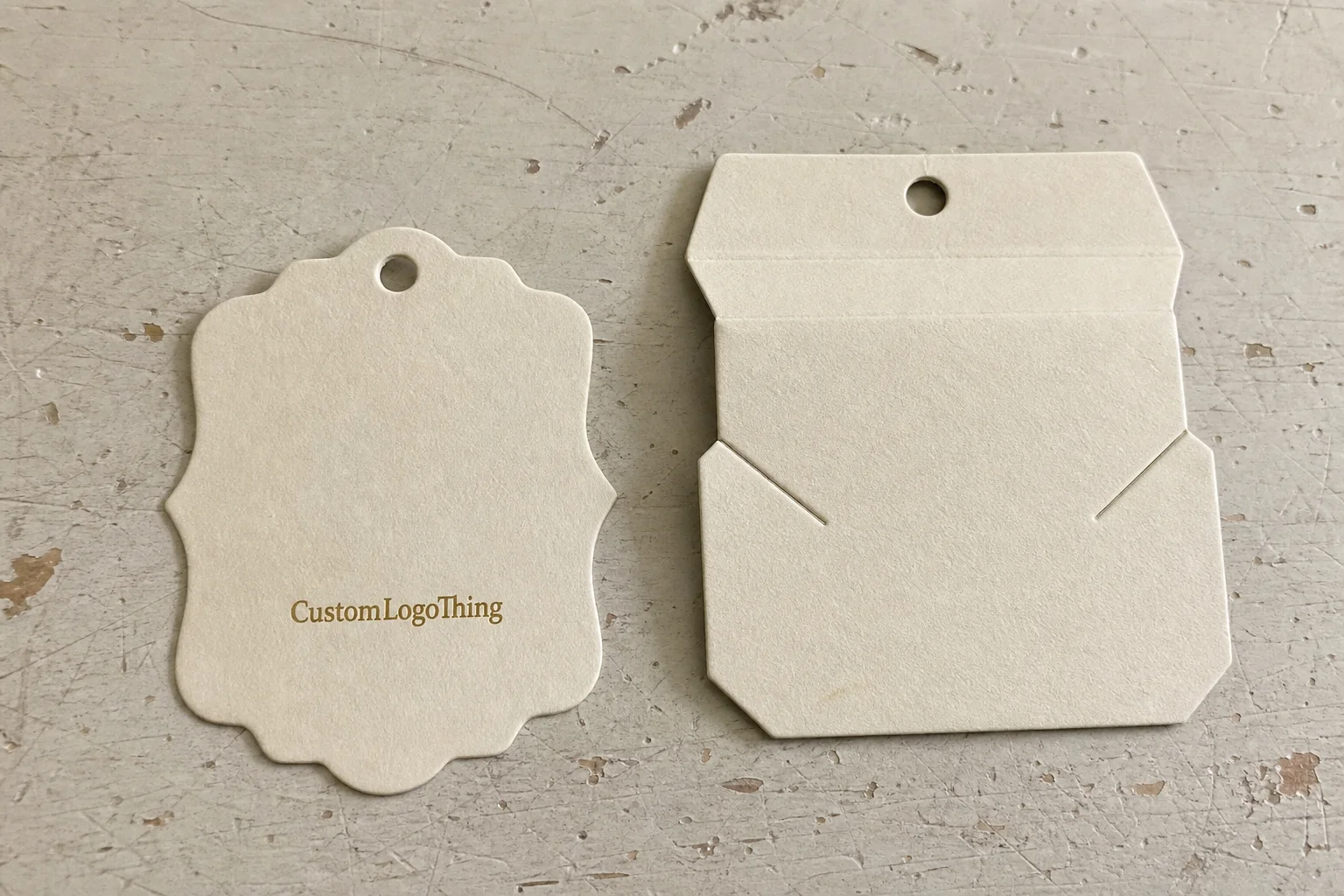
A quote for jewelry labels should read like a production spec with pricing attached. It needs to identify the label style, substrate, finished dimensions, print colors, fold or cut style, attachment method, artwork requirements, shipping terms, and any packaging assumptions. That level of detail matters because jewelry packaging is compact, and a label that works on one pouch may fail on another if the width, fold, or edge finish is wrong.
The quote also needs to distinguish between the item and the application. A sewn-in apparel label, a tag tied to a velvet pouch, and a label used on a retail insert are not the same build, even if the artwork is identical. Small changes in use case can change cost and appearance.
A serious quote reflects the full production path: artwork setup, proofing, quantity break, finishing, carton pack-out, and freight. A unit price by itself is not enough to compare suppliers if it hides plate charges, revision fees, or special handling costs.
Practical rule: if the quote does not tell you what the label is, how it is finished, and what is included, it is not ready for approval.
For broader label and tag programs, the same standard applies across Custom Labels & Tags, especially when the brand needs one consistent presentation across pouches, inserts, and apparel-linked pieces.
Label Styles, Materials, and Finishes
Jewelry retail usually calls for a label that stays visually quiet but still feels premium. Printed satin is common because it has a smooth face and soft hand. Woven damask gives a sharper, more structured look and holds fine type better when the weave density is high enough. Cotton twill creates a natural, slightly handcrafted feel that works well for artisan or heritage positioning, though it can look less crisp if the artwork is too detailed.
Finish matters as much as substrate. Straight cut labels are simple and economical, but they work best when the edge is hidden or the label is attached in a way that keeps the cut edge from showing. Center folds and end folds are useful when the label sits inside a seam, wraps a pouch, or hangs from packaging. Soft-edge finishing reduces fraying and keeps the label looking clean in hand.
Print quality is where low-cost sourcing often breaks down. A logo that looks fine on a screen can lose its edge under bright lighting if the line weight is too fine or the register is off. Small type is usually the first problem to show up. If the label must carry care information or country-of-origin copy, the text needs to fit the material width before the quote is approved.
Material sourcing can matter as well, especially for brands that document packaging inputs. If the program requires responsible paper or board, ask about FSC-certified components through FSC. If the labels will move through cartons and outer packs, transit guidance from ISTA helps reduce scuffing and handling damage.
The most practical choice depends on the job:
- Inside apparel pieces sold with jewelry: prioritize soft hand, stable fold behavior, and readable brand text.
- On pouches, wraps, or gift items: prioritize clean edges, strong contrast, and a finish that photographs well.
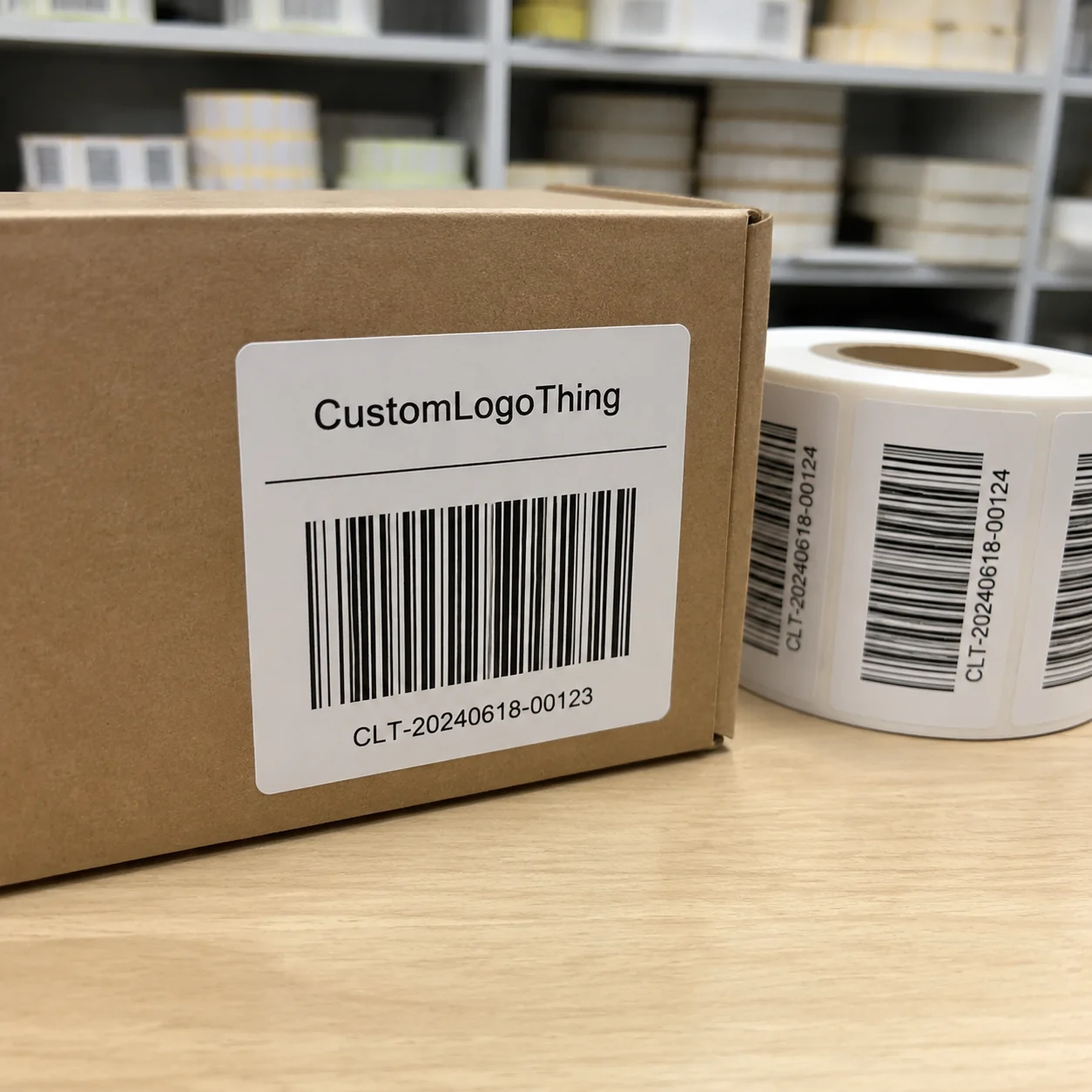
- On outer packaging: prioritize adhesive performance, scuff resistance, and consistent color across the run.
Size, Artwork, and Technical Specifications
The cleanest quote starts with exact dimensions. Avoid words like “small” or “narrow” unless you also provide the finished width and length. If the label is folded, the supplier needs both the flat size and the finished size. If it is straight cut, the quote should state the cut size and the trimming tolerance. On jewelry packaging, a fraction of an inch can change how the label sits, how it folds, and whether it crowds the rest of the presentation.
Artwork files need the same discipline. Vector files such as AI, EPS, or editable PDF are the safest starting point because they keep logos crisp at production scale. Fonts should be outlined. Pantone references are preferable whenever color matching matters, especially if the label needs to coordinate with a box, pouch, or hang tag. Raster files can work, but only if the resolution is high and the design does not depend on tiny details.
Buyers should also define technical limits up front. Minimum line thickness matters, as does bleed on edge-to-edge print jobs and dark backgrounds with light logos. If the finish is called matte, ask whether that is a coating, a lamination, or just the base material. Those are different choices with different results. Matte can reduce glare in product photos. Gloss can lift color, but it may reflect too much on a small-format label.
Before asking for price, send this list:
- Finished size: width, length, and fold type if applicable.
- Material: satin, woven, cotton, paper-based, or another substrate.
- Print method: one-color, multi-color, woven-in, heat transfer, or digital print.
- Attachment method: sewn, folded, adhesive, stringed, or inserted.
- Artwork files: vector preferred, with outlined fonts and Pantone references.
- Compliance text: fiber content, care instructions, or country-of-origin copy if the label is used on apparel.
- Target delivery date: so the quote reflects real schedule pressure.
That list reduces back-and-forth and removes a common mistake: approving a quote that only works after a hidden redesign. A real production quote should be built on the final specification, not on assumptions that still need to be corrected later.
Pricing, MOQ, and Unit Cost Factors
Label pricing usually moves with five variables: quantity, material, print complexity, finishing, and freight. Setup charges matter too, especially on lower volumes. A supplier can show a low unit price and still leave out artwork charges, plate fees, or special packaging. A useful quote breaks those items out clearly so the buyer knows what the invoice will actually look like.
MOQ is simple in theory and expensive in practice. A minimum order quantity is the smallest run a supplier will accept at a given price structure. On low-MOQ orders, the per-piece cost is usually higher because setup time is spread across fewer labels. As the run gets larger, the unit price usually falls. That is just production math.
Here is a realistic pricing snapshot for bulk orders. The ranges are directional, but they are useful for comparing suppliers at the quote stage:
| Label Option | Typical Bulk Use | Indicative Price Range | What Drives the Cost |
|---|---|---|---|
| Printed satin label | Soft brand tags for pouches, wraps, or apparel add-ons | $0.06-$0.14 each at 5,000 pieces | Width, one-color vs multi-color print, and fold style |
| Woven damask label | Premium brand presentation with sharper texture control | $0.09-$0.22 each at 5,000 pieces | Thread density, number of colors, and edge finish |
| Cotton twill label | Natural look for artisan or heritage positioning | $0.08-$0.18 each at 5,000 pieces | Fabric weight, print coverage, and trimming |
| Adhesive packaging label | Boxes, inserts, and outer pack branding | $0.03-$0.08 each at 10,000 pieces | Stock type, adhesive strength, and die-cut shape |
Those numbers move if the build includes specialty materials, metallic ink, soft-touch coating, or custom pack-out. A simple one-color label is not priced the same way as a label with multiple colors, tight finishing, and added handling.
It helps to ask for two versions when the program allows it: one economy build and one premium build. The economy option may use standard satin or a basic woven construction. The premium version can include tighter weave, cleaner cutting, or a richer hand feel. That comparison makes the tradeoff visible.
Production Steps, Proofing, and Lead Time
The production path should be predictable. First comes inquiry and spec confirmation. Then artwork review. Then a digital proof or sample approval. After that, production starts, followed by quality check and shipping. If the quote skips any of those stages, ask why.
Lead time depends on order size and print method, but schedules usually slip for the same reasons: incomplete artwork, unclear sizing, late approvals, or last-minute changes. For most standard runs, production often begins after proof approval and may take roughly 12-15 business days, though larger or more complex orders can run longer. Rush service may exist, but it should be treated as a backup.
A useful supplier will explain what happens before production starts. That should include how the proof is delivered, how many revision rounds are included, whether a physical sample is available, what triggers a schedule change, and how cartons are packed and labeled for receiving.
If the labels are part of a larger packaging program, sample approval matters even more. A sample lets the buyer judge texture, contrast, fold behavior, and how the label sits beside the jewelry presentation pieces. It is easier to approve a slightly longer lead time than to correct a run that does not match the brand standard.
What Separates a Reliable Quote From a Placeholder
A reliable quote is specific enough that another supplier could reproduce the same item from the email alone. A placeholder quote is vague, optimistic, and often wrong once artwork review begins. The difference shows up in the details. Real quotes list the material, size, finishing, quantity break, lead time, proof terms, and freight assumptions.
Speed matters, but accuracy matters more. A supplier that answers in ten minutes with no questions can look efficient, yet that often means they have not looked closely enough. A slower quote that asks for dimensions, fold style, and use case is usually more trustworthy because it is built around the actual job.
Operational signals reveal a lot. Does the supplier offer a clear proof process? Can they provide samples or photos of previous constructions? Do they explain substitutions if a specific stock is unavailable? Can they document tolerances and finish options? If the answer is yes, the supplier is likely handling production rather than just sales.
Three filters usually work well:
- Accept: a quote that names the build, finish, and delivery assumptions.
- Question: a quote that gives a unit price but no spec sheet.
- Reject: a quote that changes as soon as artwork is reviewed.
Ask what happens if the order arrives short, damaged, or out of spec. That is basic procurement discipline. A supplier who can explain correction steps, proof approval boundaries, and packaging checks usually has a better handle on the work.
How to Request a Quote and Move to Production
If you want a Fast, Accurate Quote, send the request like a production brief. Include quantity, finished size, material preference, fold or cut style, print colors, artwork files, target ship date, and whether you need low-MOQ pricing or bulk pricing. If you are unsure about the best construction, say so. A good supplier can usually narrow the options to two or three practical builds.
It helps to ask for two paths. One can be the lowest-cost version that still meets the presentation goal. The other can be the premium version with better texture, cleaner finishing, or more durable print. That comparison keeps the discussion grounded in unit economics rather than general brand language.
The approval sequence should stay tight. Review the proof first. Confirm the spec sheet second. Approve final pricing third. Release the order only when all three match the intent. A Printed Clothing Labels Quote for jewelry should be treated as a working production document, not a formality.
What details do I need for a printed clothing labels quote for jewelry?
Send quantity, finished size, label style, material preference, print colors, and whether the labels will be sewn, folded, tied, or attached to packaging. Include artwork files and the target delivery date so pricing and lead time reflect the actual job rather than a placeholder estimate.
Can I get low-MOQ printed clothing labels for jewelry?
Yes. Low-MOQ runs are usually available, but the unit price is often higher because setup costs are spread across fewer pieces. If you are testing a new product line, ask for sample pricing and a production quote so you can compare the short-run cost against the larger run.
How fast is turnaround after proof approval?
Turnaround depends on the print method, finish, and order size, but production should begin only after the final proof is approved. For standard orders, production often takes about 12-15 business days, with longer schedules for larger or more complex runs.
What artwork format works best for jewelry label quotes?
Vector files such as AI, EPS, or PDF are best because they keep logos and small type crisp at production scale. Outline fonts, provide Pantone references when possible, and send high-resolution images only if the design uses raster artwork.
Are printed clothing labels for jewelry suitable for packaging and apparel?
Yes, but the specification should match the use case. A packaging insert, a hang tag, and a sewn-in apparel label all need different constructions. Tell the supplier how the label will be used so they can recommend the right finish, attachment method, and durability level.