For food brands, Hang Tags Unit Cost for food is usually the number that decides whether a design moves forward or gets trimmed back. A tag can look polished in a mockup and still miss the budget once the stock, finish, die cut, and order quantity are all counted honestly. That is why buyers ask for unit cost early. They need a number that can survive a launch budget, a seasonal refresh, or a retail listing without forcing a late redesign.
The common mistake is to start with artwork and think pricing will sort itself out later. It rarely does. In packaging, a small change in paper weight, coating, or quantity can move the unit price more than a change in layout ever will. If the tag is going on bakery boxes, bottled goods, farm products, or gift sets, the quote has to reflect how the piece will actually be printed and handled, not just how it looks on screen.
A clean brief helps more than almost anything else. Size, quantity, stock, print sides, finish, and any hole or stringing requirement all affect the final number. The more specific those details are, the less padding you will see in the quote.
Why Food Brands Ask for Unit Cost First
Food packaging budgets are won and lost on cost per piece. That sounds blunt because it is. A brand may like the design, but if the tag pushes the landed pack cost over target, the order gets revised or delayed. Buyers want Hang Tags Unit Cost for food before approval because the tag is often tied to a launch date, a seasonal promotion, or a retail requirement that cannot slip by two weeks.
Unit pricing matters more than headline pricing. A quote that looks low at first glance can still be expensive if it carries heavy setup charges, a custom die, and a finish the product does not need. The opposite happens too. A slightly higher unit price with lower prep cost can be the better choice for short runs, especially when the SKU is still being tested.
"The cheapest quote is often the one with the smallest print line item and the largest surprise later. That is not savings. That is deferred cost."
Food brands also ask early because the tag may need to do more than carry branding. There may be pricing, allergen text, QR codes, lot codes, or a short compliance note. Those details affect the layout, and layout affects size. Bigger size means more material. More material means higher unit cost. Simple math, inconvenient result.
As a planning habit, ask for tiered pricing at 500, 1,000, 5,000, and 10,000 units. That shows where the cost drop starts to make sense. It also tells you whether repeat replenishment orders are smarter than one large run.
Food Hang Tag Formats That Affect Cost and Use
Not every tag serves the same purpose. A single-sided tag for a bakery box is not the same job as a folded information tag on a retail gift set. Format changes both production time and pricing, so it should be a functional decision, not a decorative one.
Single-sided tags are the simplest option. They work well for product names, prices, short promotions, or a basic brand message. They are usually the most economical because they use less print time and less finishing. If the message is short and the compliance text is minimal, this format usually keeps the quote tight.
Folded tags are useful when you need more space without crowding the front. They are common for ingredient notes, care instructions, or seasonal campaigns. They cost more than flat tags because you are adding fold work and additional layout time, but they can be a better fit than forcing too much information onto a single panel.
Die-cut tags give a product a distinct shape, but custom contours are not free. A complex outline adds tooling fees and usually extends turnaround. If the shape does not improve shelf impact or product fit, it is often just expensive decoration.
Multi-panel tags make sense for food items that need more information: ingredients, origin notes, allergen reminders, or QR codes that link to recipe pages or product stories. They cost more, but they can reduce clutter on the main package.
Food brands use hang tags on bakery boxes, bottled goods, farm products, gift sets, and bundled retail packs. The right format depends on how much space is needed, how the tag will hang, and whether the customer has to read it from arm's length in a store.
Material, Finish, and Print Specs That Change the Quote
Material choice is the fastest way to move a quote up or down. A basic paperboard tag is one thing. A heavier stock with a specialty finish is another. If you want a realistic Hang Tags Unit cost for food, the stock has to match the way the tag will be used.
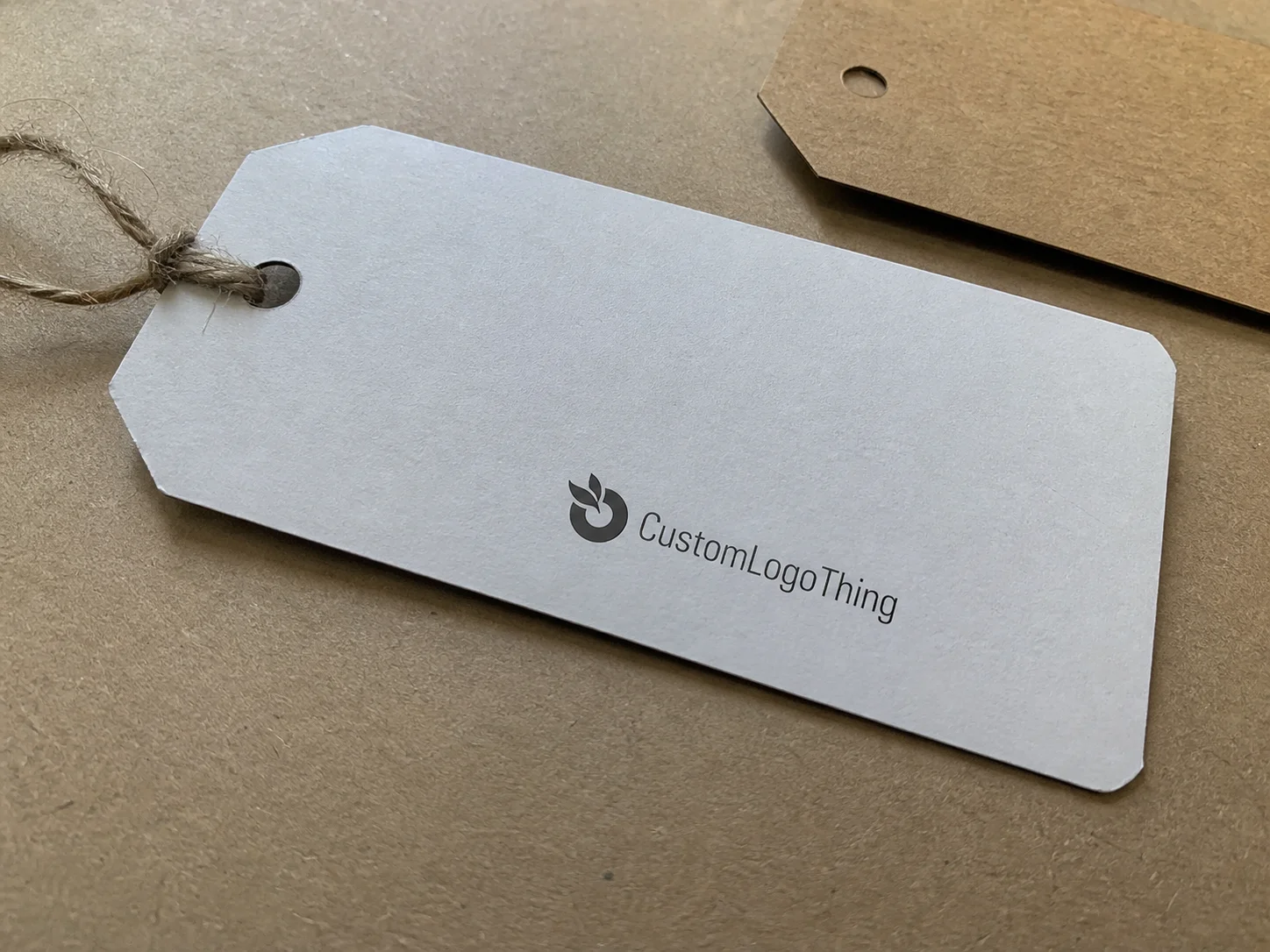
Paperboard and tag stock are the standard baseline. They hold print well, cut cleanly, and usually give the best balance of appearance and price. Kraft stock works well for natural, farm, or artisanal food positioning. It can look premium without expensive finishing, although the design has to respect the darker background. Coated stock gives sharper images and stronger color contrast, which is useful for retail promotions and cleaner typography. Recycled papers are a sensible choice if the brand needs a more sustainable presentation, but not all recycled grades print the same way, so proofing matters.
Print method changes the math too. Digital printing usually makes sense for short runs, variable data, or fast turnaround. Offset printing becomes more cost-effective as quantities rise, especially for full-color work. A single-color tag on kraft stock may be enough for some products. A full-color, two-sided tag with fine detail and a barcode requires more press attention, and that shows up in the quote.
Finishes are where many buyers overspend. Matte lamination creates a softer look and adds scuff resistance. Gloss makes color pop harder. Soft-touch feels premium, but it is rarely necessary for a food tag unless the tag is part of a higher-margin gift set. Foil and spot UV can look strong on shelf, but they add cost and usually make sense only when the tag is doing real selling work.
The small specs matter too. Hole shape, stringing method, corner radius, writable space, and barcode quiet zone all affect production. If the tag needs a scannable code, leave enough clean space around it. If it needs handwriting space for weights or batch numbers, build that into the layout from the start. Reprints caused by poor spacing are expensive in the dumbest possible way.
For standards and testing references, packaging teams often rely on ISTA for transit considerations and FSC when paper chain-of-custody matters to the brand story. If the tag sits inside a broader pack system, a supplier that understands those details saves time and avoids rework.
Hang Tags Unit Cost for Food: Pricing, MOQ, and Volume Breaks
This is the part buyers usually need most. Hang Tags Unit cost for food is built from four things: setup charges, print costs, finishing, and shipping. If you want a realistic number, you have to look at all four. A low print price with a heavy setup fee is not a low-cost order. It is just a nicer-looking invoice.
The MOQ changes everything. Short runs carry a higher unit cost because the setup gets spread across fewer pieces. That is normal. A 500-piece order often looks expensive next to a 5,000-piece order because the press, plate, die, and finishing time do not shrink just because the quantity is small. If the food line is going to repeat every month, larger quantities often make more sense than placing several small reorders.
Here is a practical way to compare options. These ranges assume a standard food hang tag size, simple artwork, and no unusual compliance handling. If you add variable data, complex die lines, or specialty finishing, the numbers move.
| Order Profile | Typical MOQ | Typical Cost per Piece | Common Setup / Tooling | Best Fit |
|---|---|---|---|---|
| Digital print, simple one-sided tag | 100-500 | $0.45-$1.10 | Low setup, usually minimal tooling | Launch tests, short seasonal runs, variable data |
| Digital or offset, full-color flat tag | 1,000-3,000 | $0.18-$0.42 | Moderate setup, possible die fee | Retail food SKUs, bakery packaging, repeat promotions |
| Offset print, larger volume flat tag | 5,000-10,000 | $0.08-$0.22 | Higher setup, lower unit spread | Stable SKUs, chain orders, bulk replenishment |
| Custom shape or multi-panel tag with finish | 1,000-5,000 | $0.28-$0.85 | Die tooling, finish charges, more proofing | Gift sets, premium food items, information-heavy tags |
The key is to compare tiered pricing, not just one number. Ask for 500, 1,000, 5,000, and 10,000-piece quotes if you are deciding between launch quantity and replenishment quantity. That shows where the bulk pricing starts to work in your favor. It also makes clear whether a slightly larger order saves enough to justify holding inventory.
Some buyers focus only on the piece price and ignore the setup line. That is how they end up paying too much for a small run. Others overbuy to chase a lower unit cost, then sit on cartons of extra tags for months. Both mistakes are avoidable if the supplier shows pricing clearly and explains where the breakpoints sit.
If you are building matching packaging elements, pairing tags with Custom Labels & Tags can keep the look consistent without forcing every item to use the same material or finish. Consistency matters more than perfect sameness.
Production Steps and Lead Time for Food Hang Tags
Once the quote is approved, the production path is usually straightforward: dieline review, artwork proofing, printing, finishing, cutting, packing, and shipment. The slow part is rarely the press. It is the back-and-forth around files that are not ready.
Most delays happen in the same places. The artwork is not sized to the dieline. The barcode area is too tight. The copy changes after proof approval. Or the finish request lands late and forces a schedule reset. None of that is mysterious. It is just avoidable friction.
For standard jobs, a realistic lead time is often 12 to 15 business days from final proof approval, assuming the order is simple and the files are clean. Custom shapes, foil, soft-touch, or multi-panel construction can push that out. Rush production is possible in some cases, but the unit cost usually rises because the shop is rearranging the schedule and taking on more handling risk.
Food packaging jobs deserve extra care on readability and edge safety. If the tag carries a barcode or QR code, test the size before print approval. If the tag will hang near food-contact packaging, check placement so it does not interfere with sealing, folding, or product handling. And if the content includes allergens or lot numbers, keep the text size readable enough that nobody needs to squint in a warehouse.
From a buyer's point of view, speed depends on three things: clean files, fast approvals, and specs that do not need constant revision. That is why suppliers ask for the dimensions, stock preference, hole position, and finish up front. They are not being picky. They are trying to keep the schedule from wobbling.
Why Food Brands Buy from a Packaging Supplier That Knows the Margin Math
A supplier that understands food retail is worth more than a supplier that can simply print attractive tags. The difference shows up in the quote. A packaging-focused team looks at the real use case: display impact, sell-through volume, compliance text, and whether the tag needs to survive handling without curling or scuffing. That is how over-specification gets avoided.
Good quoting reduces waste. If the tag is going on a low-margin product, you probably do not need foil, heavy lamination, or a custom die that adds a stack of tooling fees. If the product is premium and the tag does real selling work on shelf, then paying a bit more for finish and stock can be justified. The point is not to buy cheap. The point is to buy correctly.
Experienced suppliers also help with setup charges, proofing, and dieline setup. That sounds boring. It is not. That is where hidden cost gets controlled. A supplier that spots an awkward barcode area or a bad fold early can save a reprint later. That is real value, not sales talk.
Consistency matters too. Food brands often manage multiple SKUs, seasonal runs, and replenishment orders. If the supplier keeps the specs aligned, you do not end up with a different shade, different hole placement, or a different finish on the next batch. That kind of drift is how packaging starts looking messy even when the design file is technically unchanged.
If you are comparing vendors, ask how they handle repeat orders, dieline storage, and proof retention. Ask whether they can keep your Custom Labels & Tags aligned across related SKUs. Then compare the answers against the quote. The lowest headline price does not matter much if the second order goes sideways.
Next Steps to Lock In Your Food Hang Tag Order
If you want a quote that actually helps you buy, gather the basics before you ask for one. Send the dimensions, quantity, stock preference, print sides, finish, and any hole or stringing requirements. If the tag needs allergen text, lot codes, pricing, or a barcode, include that too. The cleaner the brief, the cleaner the hang tags unit cost for food.
Do not ask for one quantity and stop there. Compare at least two tiers. A 1,000-piece launch order may fit the budget today, but a 5,000-piece run might cut the unit cost enough to justify a longer replenishment cycle. That decision depends on sell-through, storage space, and how often the SKU changes. Not every food tag deserves a large run. Some do.
Send current packaging photos or a simple product mockup if you can. That gives the supplier context. A tag that looks fine flat on a screen can fail once it hangs from a narrow neck, sits next to a folded carton, or has to clear a tamper-evident seal. Real packaging has dimensions, which is inconvenient for mockups and useful for production.
If the tag carries a barcode, pricing, or compliance copy, ask for a sample or proof before full production. That extra step costs less than a reprint. For food brands, that usually separates a clean launch from an expensive apology.
If the order is still in the planning stage, the best move is to define the job clearly rather than chase the lowest number in isolation. A tag that fits the product, the budget, and the production schedule is a better buy than a cheap piece that needs a second run to fix preventable errors.
What affects hang tags unit cost for food the most?
Quantity is usually the biggest driver because setup gets spread across more pieces. Material, print method, and finish changes can move the price quickly. Custom shapes and extra panels also add cost, especially if the tag needs special tooling or extra proofing.
What is the typical MOQ for food hang tags?
MOQ depends on the print method and stock choice. Digital runs can start smaller, while offset jobs usually need higher quantities to be cost-effective. If you are comparing a launch order against a replenishment order, ask for tiered pricing so the breakpoints are clear.
Can food hang tags include barcodes or QR codes without raising the price too much?
Yes, if the codes are static and included in the original artwork. Variable or serialized codes add handling and setup cost. Keep the code area clean and sized correctly so you do not pay for reprints caused by scanning issues.
How long does production usually take for custom food hang tags?
Standard jobs move faster when artwork is final and specs are clear. Complex finishes, custom die cuts, and approval delays extend turnaround. Rush service is possible, but expect a higher unit cost because the job needs priority handling.
What information should I have ready before requesting a quote?
Provide size, quantity, stock preference, print sides, finish, and any hole or stringing requirements. Include artwork files and any compliance text that must appear on the tag. If you want an accurate quote, send the product use case and target budget too.