Buyer Fit Snapshot
| Best fit | Printed Corrugated Cartons With Logo projects where brand print, material claims, artwork control, MOQ, and repeat-order consistency need to be specified before quoting. |
|---|---|
| Quote inputs | Share finished size, material target, print colors, finish, packing count, annual reorder estimate, ship-to region, and any compliance wording. |
| Proofing check | Approve dieline scale, logo placement, barcode or warning zones, color tolerance, closure strength, and carton packing before bulk production. |
| Main risk | Vague material claims, crowded artwork, missing packing details, or unclear freight terms can make a low unit price expensive after revisions. |
Fast answer: Printed Corrugated Cartons With Logo: Design, Cost, Setup should be specified like a repeatable production item. The safest quote records material, print method, finish, artwork proof, packing count, and reorder notes in one written spec.
Production checks before approval
Compare the actual filled-product size with the drawing, then confirm tolerance on folds, seals, hang holes, label areas, and retail display edges. Reserve space for logos, QR codes, warning copy, and material claims before decorative graphics fill the panel.
Quote comparison points
Review material grade, print process, finish, sampling route, tooling charges, carton quantity, and freight assumptions side by side. A quote is only useful when the supplier can repeat the same color, closure quality, and packing count on the next order.
Plain shippers can still fail the brand test. A box shows up scuffed, crushed, or taped like it lost a fight, and customers notice immediately. Printed corrugated cartons with logo fix part of that problem, but only when the board, print method, size, and timing actually fit the job. Otherwise you just paid extra to make an average carton look slightly more expensive.
Printed Corrugated Cartons With Logo: What They Really Do
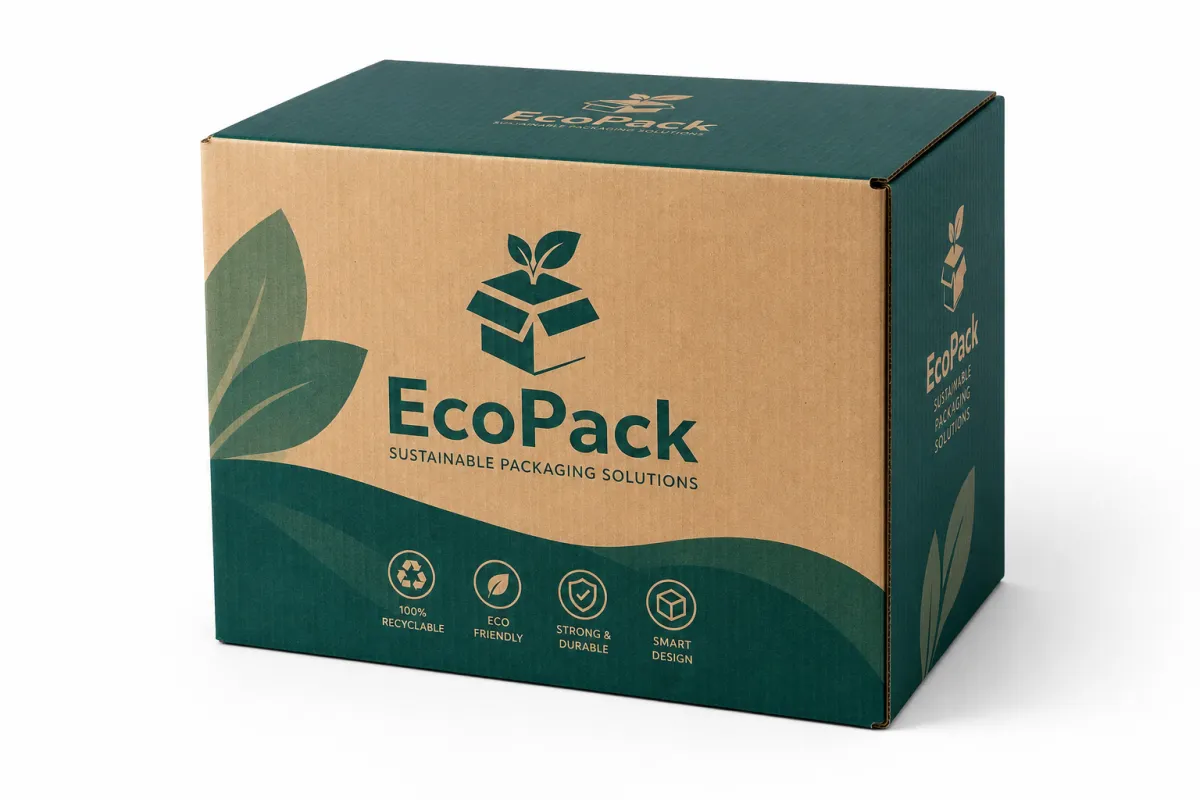
Printed corrugated cartons with logo are fiber-based shipping or retail cartons that use print to carry branding, product cues, handling instructions, or plain identification. That sounds basic because it is. The goal is not to turn a freight box into a luxury gift set. The goal is to make the carton do more than hide the product.
A plain shipper can still fail the brand test even if the product inside is perfect. If the corners arrive crushed, the tape line runs crooked, or the box opens like a stubborn cereal packet, the customer experience drops fast. Printed corrugated cartons with logo help set expectations before the first cut with a blade, and they keep the brand visible in storage rooms, on loading docks, and at the packing bench.
They show up in e-commerce, subscription kits, B2B shipping, product launches, and retail backstock. In all of those settings, printed corrugated cartons with logo do three jobs at once: they protect the product, identify what is inside, and reduce the need for repackaging or extra labels. That last one matters more than many buyers admit. A clean carton can save labor every week, not just look good on day one.
The logo itself does more than decorate the box. It builds recognition, makes the package feel deliberate, and gives the buyer a visual cue that the shipment is legitimate. If the outer box stays consistent, the unboxing experience feels consistent too. That is not fluff. That is repeatability.
Good packaging is not the carton that looks best in a rendering. It is the carton that arrives intact, prints cleanly on the chosen board, and still makes sense after a rough ride through fulfillment and transit.
One mistake buyers make all the time: corrugated print is not the same as full-color folding carton work. The substrate is thicker, rougher, and more variable. That changes dot gain, fine detail, coverage, and finish. Printed corrugated cartons with logo can look sharp and professional, but they are not a free pass for tiny type, full-bleed gradients, or ultra-fussy color matching.
If you need shipping-ready packaging, start by asking whether the carton has to work as a shipper, a display piece, or both. A box for a palletized B2B order has different needs than a direct-to-consumer mailer. If you already know the size and protection requirements, the next move is usually to compare Custom Shipping Boxes against stock-sized options. That comparison alone can save a surprising amount of money.
Printed corrugated cartons with logo are best treated as a system, not a decoration choice. Size, board, print method, and handling conditions all matter. Ignore one of them and the logo becomes a very expensive apology.
How Printed Corrugated Cartons With Logo Are Made
The board comes first. Printed corrugated cartons with logo are usually built on single-wall or double-wall corrugated board, and the flute profile changes both strength and print behavior. E-flute can give a cleaner surface for graphics. B-flute is common for shipping cartons and offers good stack strength. C-flute, and combinations like BC, handle more abuse but can make fine detail harder to hold. If you want the logo crisp, the liner quality matters as much as the flute.
From there, the print method sets the tone. Flexographic printing is the workhorse for shipping cartons, especially for one-color or two-color branding at higher quantities. Digital printing works well for short runs, pilot orders, and variable graphics. Litho-lamination is the premium route when the outer face needs sharper imagery and a more retail-ready finish. Direct-to-board systems can be useful for certain short-run jobs, though print consistency depends heavily on the equipment and board surface.
Printed corrugated cartons with logo usually move through the same production chain: file prep, dieline setup, plate or file creation, printing, converting, die-cutting, gluing, and packing. If the carton is a regular slotted container, the converting step may be simple. If it has special closures, interior print, or a custom display cutout, the line gets more involved. Every extra step adds room for error, so the artwork and dieline have to be clean before production starts.
Logo placement changes the process too. A single mark on one panel is easy enough. A wraparound design, inside print, or full coverage across multiple panels means more setup and more chances for mismatch at folds. Printed corrugated cartons with logo are most cost-efficient when the branding sits where it will actually be seen: the top panel for shipping, the front face for retail backstock, or an interior panel for unboxing impact.
| Print Method | Best Fit | Typical Strength | Typical Cost Range | Main Tradeoff |
|---|---|---|---|---|
| Flexographic | High-volume shipping cartons, one- or two-color logos | Very good for simple branding | About $0.18-$0.70 per unit at higher volumes | Less friendly to tiny detail and heavy coverage |
| Digital | Short runs, pilot launches, fast revisions | Good for moderate graphics | About $0.75-$2.50 per unit depending on size and run length | Unit price stays high when volume is low |
| Litho-lam | Retail-facing cartons, premium image quality | Excellent visual finish | About $1.20-$3.50 per unit depending on size and coverage | More setup, more lead time, more scrutiny on file quality |
| Direct-to-board | Select short runs and fast-turn jobs | Good if the board surface is right | About $0.90-$2.80 per unit | Results depend heavily on equipment and substrate |
That table is a simplification, sure. Real pricing moves with board grade, carton size, artwork coverage, order quantity, and freight. Still, the practical point holds: printed corrugated cartons with logo are not priced like paper boxes, and the print method can swing both cost and appearance by a lot.
Artwork prep is where orders usually get rescued or wrecked. Vector logos print better than raster files. Thick stroke weights hold better than hairlines. Brand colors may need to shift for kraft, white, or coated liners. If the carton has barcodes, handling icons, or legal copy, those need to sit far enough from edges and folds so they do not vanish into the crease. Printed corrugated cartons with logo reward tidy files. Messy files create expensive phone calls.
For buyers who want a broader packaging comparison, the Custom Logo Things packaging team can help sort carton structures without turning the spec sheet into a guessing game. That is useful if you are deciding between a branded shipper and a more retail-focused outer carton.
Printed corrugated cartons with logo are built from a stack of choices, not one magic spec. Board, flute, print process, and carton style all interact. Get those aligned and the result looks intentional. Miss one and the box feels improvised.
Cost and Pricing Factors for Printed Corrugated Cartons With Logo
Cost is where the fantasy usually dies. Printed corrugated cartons with logo can be inexpensive in volume or stubbornly pricey at low quantities. The main reason is setup. Plates, dies, file preparation, proofing, and press configuration all need to be paid for somehow, and if you only order a small run, those fixed costs get spread across fewer cartons.
The biggest pricing drivers are simple: quantity, board grade, dimensions, print method, number of colors, and finishing complexity. If you want a rigid one-color shipper in a standard size, the price stays relatively sane. If you want a custom-size carton with full coverage, interior print, specialty coating, and exact color expectations, the quote will rise. That is not the supplier being dramatic. That is physics and labor.
Here is the part buyers underestimate: the cheapest quote is not always the cheapest carton. A box that is too large adds void fill and freight cost. A box that is too weak adds damage claims. A box with muddy print on a rough liner is still branded, but the branding value drops. Printed corrugated cartons with logo need to be evaluated as a landed cost, not just a unit price.
Low quantities often look expensive because setup costs do not shrink just because the run is small. If you order 250 cartons, a $250 setup fee adds a full dollar to each box before board or freight even enters the picture. At 5,000 units, the same setup gets diluted quickly. That is why a quote ladder matters. Ask for pricing at 250, 500, 1,000, 2,500, and 5,000 pieces if your usage is uncertain. The break point shows up fast.
Some costs hide in plain sight. Tooling, plates, samples, freight, carton storage, and inserts can move the total more than the print itself. If the box needs a custom die-line, expect one-time tooling. If you want a physical sample, budget for that. If the cartons ship on pallets to multiple warehouses, freight can be a real line item instead of a footnote. Printed corrugated cartons with logo often look cheap in the quote and expensive in the logistics plan. Classic trap.
For a simple comparison, look at these rough buying patterns:
- Simple branding on stock sizes: one-color flexo, standard board, repeat order, usually the lowest setup burden.
- Custom size with moderate branding: adjusted dieline, better fit, less void fill, slightly higher carton optimization effort.
- Premium retail look: litho-lam or higher-coverage digital, more color handling, cleaner image, higher unit cost.
There is also a timing cost. If you need printed corrugated cartons with logo on a rushed schedule, somebody pays for the rush, even if it shows up only as operational stress. A realistic timeline helps you avoid that penalty. Simple repeat jobs can move quickly. New sizes, new artwork, and sample approvals need more room.
Standards can save money indirectly too. If a carton has to survive parcel distribution, ask whether it has been tested against an ISTA profile such as ISTA 3A or a similar distribution test. The ISTA site is a useful reference for understanding why transit testing matters before you scale a carton that has not seen real handling. The EPA's sustainable materials management guidance is worth a look if recycled content, recoverability, or source reduction is part of the packaging brief.
One honest buying rule: compare quotes using the exact same inputs. Same dimensions. Same board. Same artwork coverage. Same freight terms. Otherwise the numbers are decorative, and decorative numbers waste everyone's time. Printed corrugated cartons with logo only make financial sense when the comparison is controlled.
For buyers balancing branded presentation with real shipping needs, Custom Shipping Boxes can often be spec'd to hit the right middle ground between protection and print value. That middle ground is usually where the budget survives.
Printed corrugated cartons with logo are cheapest when the design respects volume, board, and setup reality. Ignore that, and the "budget" option becomes the expensive one after freight, damage, and rework show up.
Size, Strength, and Finish: The Specs That Actually Matter
Design is not the first spec. Protection is. If printed corrugated cartons with logo fail in transit, the branding barely matters because the customer receives a damaged shipment and a reason to complain. Start with inside dimensions, product weight, stacking conditions, and the shipping method. Then decide what the logo should look like on the surface that remains.
Inside dimensions matter because a box that is even slightly oversized can trigger movement, corner crush, and ugly void fill. A box that is too tight can scuff the product or slow down packing labor more than it should. Product weight affects board grade and flute choice. A 2 lb accessory does not need the same structure as a 25 lb multi-pack. If the carton goes through parcel networks, the risk profile is different from palletized B2B shipping.
ECT and BCT are worth understanding. ECT, or Edge Crush Test, gives a sense of stacking and compression performance. BCT, or Box Compression Test, helps predict how the carton behaves under load. You do not need to become a packaging engineer overnight, but you do need to know that a stronger board is not automatically better. Overbuilding a carton can increase cost without improving the actual journey. Printed corrugated cartons with logo should be strong enough, not heroic.
Finish affects both appearance and print behavior. Natural kraft gives an earthy, familiar look, but it can mute light colors and make fine detail less crisp. White or coated liners improve print contrast. Aqueous coating can add scuff resistance and a cleaner hand feel. Matte looks more restrained; gloss looks more assertive. If the box lives mostly in shipping, a clean functional finish may be enough. If it sits on retail backstock or gets photographed often, the finish matters more.
Recycled content is common and often smart. The key is to confirm whether the recycled liner still supports the strength and print quality you need. That is why samples matter. Two cartons can look similar on a screen and behave very differently in hand. If you are chasing a lower environmental footprint, the FSC site is worth reviewing as a benchmark for sourcing practices, especially if you need certified fiber claims in the package story.
There is also a design trap: trying to make the carton do too much. A box can be branded, strong, recyclable, and well-sized. It does not need to become a piece of theater. Printed corrugated cartons with logo should look considered, not precious. If the carton is so fancy that it drives up damage risk, shipping cost, or pack-out time, the design missed the point.
The right balance usually looks like this:
- Protection first: choose board strength based on weight, stacking, and route.
- Brand second: place the logo where it will be seen without compromising seams or folds.
- Finish last: add coating or special surface treatment only if it supports the actual use case.
That order matters because the box has to survive before it can impress anyone. Printed corrugated cartons with logo are better viewed as functional branding than branded decoration. Big difference.
Step-by-Step Process and Timeline
The cleanest orders start with a short, disciplined brief. For printed corrugated cartons with logo, that brief should include product dimensions, product weight, shipping method, expected annual volume, desired branding style, and target budget. Skip any of those and the guessing work gets pushed downstream, where it costs more.
Here is the usual sequence. First, define the product and carton function. Second, confirm size and board. Third, choose the print method. Fourth, review the dieline and artwork. Fifth, approve a proof or sample. Sixth, move into production. Seventh, pack and ship. That sounds obvious because it is. The trouble starts when people try to compress the sequence into fewer steps than the job actually needs.
Timing depends on complexity. Simple repeat jobs can move quickly after artwork approval, especially if the carton size and board are already established. Custom tools, new plates, and sample runs add time. Digital short runs may turn around faster, while litho-lam jobs usually need more setup and more quality checks. For many buyers, the realistic window is often 12-15 business days from proof approval for straightforward work, and longer if the box is brand new.
Proofing is not a formality. It is where bad assumptions get exposed before the order becomes a warehouse problem. Review the dieline for fold positions, glue tabs, logo placement, barcode clear space, and any legal copy. Check whether the logo sits too close to an edge or crease. Confirm color expectations against the chosen board. If there are inserts or custom closures, make sure the sample actually shows how the carton packs. Printed corrugated cartons with logo are cheapest to fix before the press runs.
Physical samples matter more than digital renderings. A mockup tells you how the box folds, where the logo lands, whether the seams line up, and how the board behaves in hand. That is especially true if the carton has tight tolerances or a retail presentation requirement. A screen hides a lot. Cardboard does not.
Fulfillment and shipping are part of the timeline too. Cartons usually ship palletized unless the run is very small. You need to know pallet count, storage space, and whether the receiving dock can handle the freight. Late approval can wreck the schedule fast. If artwork sits in review for three days longer than planned, the production calendar does not sit around politely. Printed corrugated cartons with logo do not forgive indecision.
If you want cleaner execution, use this order checklist:
- Confirm product weight and exact inside dimensions.
- Choose shipper, retail, or hybrid carton function.
- Decide on board grade and flute.
- Approve artwork zones and color limits.
- Request a sample if the layout is new.
- Lock freight terms and delivery location before production starts.
That list sounds simple because the hard part is the discipline to actually follow it. Printed corrugated cartons with logo reward buyers who slow down at the right points and move fast only after the structure is right.
Common Mistakes That Waste Money
The worst mistake is designing first and sizing later. If the dimensions are off, the box can create extra void fill, poor shelf presentation, or damage during transit. It also forces the print layout to work around a bad structure, which is usually how you end up with a logo awkwardly split by a fold line. Printed corrugated cartons with logo need the size locked before the art gets too clever.
Artwork mistakes are easy to make and annoying to fix. Low-resolution logos soften on corrugated surfaces. Tiny type disappears on kraft liner. Thin reverse type can fill in and become unreadable. Too many colors can also drive up cost without adding much value. If the brand mark already reads clearly in one or two colors, piling on extra inks may just create noise.
Buyers also overspend by choosing a board grade that is stronger than the product needs. That sounds safe, but safe is not the same as sensible. A heavier board can increase cost, add weight, and complicate print quality. The same thing happens with finish choices. A premium coating may look nice, but if the box spends its life on a warehouse shelf or in outbound shipping, the extra spend may never pay back. Printed corrugated cartons with logo should earn their keep.
Skipping a sample is a classic trap. Small fold issues, color shifts, and glue-tab problems are easy to ignore on a PDF and expensive to ignore in a full run. If the carton has inserts, lock tabs, or a tight retail fit, the sample becomes more than a nice-to-have. It becomes the cheapest insurance in the whole job.
Supply-chain mistakes are just as common. People order too late, forget freight lead time, or assume every printer handles every carton style the same way. That is not how the real world works. A vendor that is great at short-run digital mailers may not be the best fit for large flexo shipping cartons. A supplier that handles premium litho-lam well may not be the most economical option for a simple one-color shipper. Printed corrugated cartons with logo should be sourced by capability, not by habit.
Some teams also make the odd choice to treat the carton like a branding toy. They over-design it, over-color it, and then wonder why pack-out slows down or freight costs rise. This is packaging, not a design gallery. The smartest carton is the one that protects the product, supports the brand, and keeps operations sane.
A useful rule of thumb:
- Size mistakes create damage and wasted fill.
- Artwork mistakes create print issues and rework.
- Spec mistakes create cost creep and delivery delays.
All three are avoidable if you slow down long enough to ask the boring questions. Boring questions save money. Flashy mockups do not. Printed corrugated cartons with logo should be boring in the spec stage and sharp in the final result.
Expert Tips and Next Steps for a Clean Order
If you want the order to go well, start with a short spec sheet that includes product weight, dimensions, shipping method, branding goals, expected annual volume, and target budget. That single page helps a supplier quote printed corrugated cartons with logo without guessing. Guessing is expensive, and it tends to show up as either a bad quote or a bad box.
Ask for a quote ladder at multiple quantities. 250, 500, 1,000, 2,500, 5,000. That is enough to reveal the savings curve. Sometimes the break between 1,000 and 2,500 units is dramatic. Sometimes it barely moves. You do not know until you see the ladder. Printed corrugated cartons with logo are a lot easier to buy well once you can see where the fixed costs flatten out.
Request a plain-language sample or mockup before full production, especially if the logo sits near folds, edges, or closure flaps. If the supplier cannot show you how the carton folds and closes, that is a signal. Not a good one. I would rather see a slightly ugly sample than a beautiful guess.
Compare vendors using the same inputs: board type, print method, dimensions, turnaround, freight terms, and proofing included. If one supplier quotes a standard size on kraft liner and another quotes a custom size on coated board, the comparison is useless. You are not comparing prices. You are comparing different products.
For buyers managing multiple product lines, a mixed strategy often works best. Use printed corrugated cartons with logo for the boxes customers see and remember. Use simpler stock shippers for the products that just need safe transit. That combination keeps the brand visible without turning every shipment into a custom packaging project.
There is also a good operational rhythm to follow:
- Lock the dieline.
- Approve the artwork.
- Place a pilot order.
- Inspect real-world performance.
- Scale only after the carton proves itself.
That sequence is the difference between a controlled launch and a supply-chain headache. If the pilot order reveals scuffing, misfit, or poor readability, you fix it before volume hides the issue. Printed corrugated cartons with logo should be validated in the real world, not just admired on a screen.
One more practical note: if your supplier talks only in vague adjectives, press for numbers. Ask for board grade. Ask for flute. Ask for print count. Ask for lead time in business days. Ask for sample timing. Good suppliers answer cleanly. Weak quotes are where budgets go to die.
Printed corrugated cartons with logo work best when you treat them like a production decision, not a mood board. Get the specs right, keep the art honest, and use a pilot before you scale. That is how you keep the brand sharp without lighting money on fire.
How much do printed corrugated cartons with logo usually cost?
Pricing usually moves most with quantity, board grade, print method, and how many colors or coatings you choose. Printed corrugated cartons with logo can run from under a dollar per unit for larger simple flexo jobs to several dollars each for short-run premium builds. Small runs often look expensive because setup gets spread across fewer boxes. Ask for quotes at multiple volumes so you can see the break point before you commit.
What is the best print method for printed corrugated cartons with logo?
Flexo is often best for simple, high-volume branding and solid one- or two-color graphics. Digital works well for short runs, fast turnarounds, and variable artwork. Litho-lam is the pick when you want cleaner images and a more premium retail look. The best method depends on run length, surface quality, and how sharp the artwork needs to be. Printed corrugated cartons with logo are not one-method-fits-all.
How long does it take to produce printed corrugated cartons with logo?
Simple repeat jobs can move quickly after artwork approval. Custom sizes, new tooling, samples, and plate work add time before production starts. A realistic plan usually includes proofing, possible revisions, and freight time. If someone promises a rushed schedule without asking about the dieline or sample needs, that is a red flag. Printed corrugated cartons with logo need enough lead time to be right, not just fast.
Can I use recycled board for printed corrugated cartons with logo?
Yes, recycled content is common and often a smart choice for shipping cartons. Just confirm strength, print appearance, and whether the surface is right for your chosen print method. If the box needs a premium look, ask for samples on the actual board grade first. Recycled board can work very well, but the result depends on the liner and the artwork. Printed corrugated cartons with logo often balance well with recycled board when the spec is chosen carefully.
What files should I send for printed corrugated cartons with logo?
Send vector artwork when possible, along with the dieline and any exact brand colors. Keep logos large enough to print cleanly on corrugated board, especially on textured kraft surfaces. Ask your supplier for file specs before you design, not after the files are already wrong. That one step saves a lot of back-and-forth. Printed corrugated cartons with logo are much easier to produce when the files are built for the substrate from the start.
Printed corrugated cartons with logo are a solid packaging choice when you want the outer box to do real work: protect the product, carry the brand, and keep the operation under control. Get the size right, keep the artwork practical, and compare quotes using the same spec sheet. Then run a pilot and inspect the real box, not the rendering. That is how you end up with cartons that look good, ship well, and do not quietly drain the budget.


