Buyer Fit Snapshot
| Best fit | Printed Corrugated Display Boxes for Sustainable Retail projects where brand print, material claims, artwork control, MOQ, and repeat-order consistency need to be specified before quoting. |
|---|---|
| Quote inputs | Share finished size, material target, print colors, finish, packing count, annual reorder estimate, ship-to region, and any compliance wording. |
| Proofing check | Approve dieline scale, logo placement, barcode or warning zones, color tolerance, closure strength, and carton packing before bulk production. |
| Main risk | Vague material claims, crowded artwork, missing packing details, or unclear freight terms can make a low unit price expensive after revisions. |
Fast answer: Printed Corrugated Display Boxes for Sustainable Retail should be specified like a repeatable production item. The safest quote records material, print method, finish, artwork proof, packing count, and reorder notes in one written spec.
Production checks before approval
Compare the actual filled-product size with the drawing, then confirm tolerance on folds, seals, hang holes, label areas, and retail display edges. Reserve space for logos, QR codes, warning copy, and material claims before decorative graphics fill the panel.
Quote comparison points
Review material grade, print process, finish, sampling route, tooling charges, carton quantity, and freight assumptions side by side. A quote is only useful when the supplier can repeat the same color, closure quality, and packing count on the next order.
Printed corrugated display boxes can change the tempo of a retail launch in a very practical way: the pallet shows up, the carton opens, and the product is already merchandised instead of being unpacked, sorted, and repacked twice. That sounds small until you look at the labor, the dust, the scuffed corners, and the extra chances for something to go missing. Printed corrugated display boxes are built to do two jobs at once, moving product through the supply chain and then presenting it for shelf, countertop, endcap, or pallet placement without asking the store team to invent a second process.
From a packaging buyer's point of view, that is the main attraction. Printed corrugated display boxes can replace a standard shipping carton plus a separate tray or merchandising fixture, which means fewer components, fewer touchpoints, and less secondary packaging to juggle. If the dimensions are right, the product count is right, and the print stays disciplined instead of trying to do too much, the box becomes part of the retail plan instead of just a container. That distinction matters more than people sometimes expect.
The sustainability case is not abstract either. Better cube utilization, right-sized blanks, and paper-based structures can reduce freight waste and material use at the same time. A well-specified display often uses less dunnage, fewer inserts, and fewer mixed materials than a patchwork of cartons and plastic trays. That is one reason printed corrugated display boxes have become a serious option for brands that want cleaner retail execution without giving up brand presence or making the back room a mess.
A good display should earn its square footage before the shopper ever touches the product.
That sounds simple, but it sets a high bar. Printed corrugated display boxes need to survive transport, remain square under load, and still look attractive after store staff have handled them. If any one of those jobs fails, the whole system gets expensive fast. The best programs balance structure, graphics, and retail behavior from the start, not as separate decisions made in different meetings after the box has already been mentally approved.
Printed corrugated display boxes: the shelf-ready alternative to plain shippers
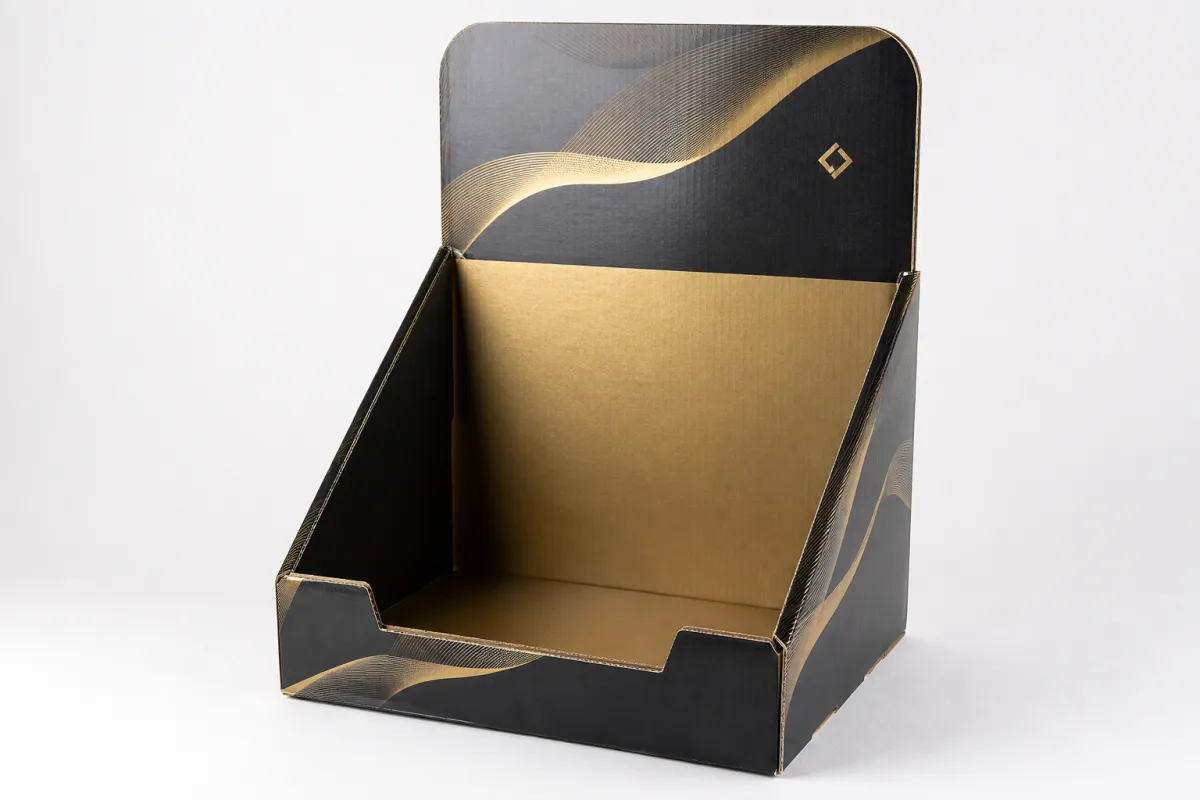
Printed corrugated display boxes are corrugated structures designed to ship product and present it for sale with minimal repacking. In practice, that can mean a tray with a printed header, a tear-away front panel, a floor display with shelves, or a pallet-ready shipper that converts into a branded presentation unit. The common thread is efficiency: the same package that protects the goods also becomes the selling surface. Done well, it feels obvious. Done badly, it feels like the box is trying to be three things and failing at all of them.
The retail reality is usually more ordinary than the sales deck suggests. A store team wants something that opens cleanly, stands up straight, and makes the product easy to shop in a matter of seconds. If a display needs two people, a knife, extra tape, or a small engineering degree, it starts losing value, and honestly, nobody in a back room has time for that kind of nonsense. Printed corrugated display boxes work best when the assembly logic is obvious and the merchandising face is visible from the aisle.
That is also where the efficiency gain becomes tangible. One package replacing a shipper plus a separate display tray can reduce touchpoints, pallet clutter, and backroom sorting. It also lowers the risk that a product gets damaged during a second unpacking step. For fast-moving launches, seasonal resets, and club-store programs, printed corrugated display boxes can remove enough handling to matter financially, not just cosmetically.
The sustainability story improves when the box is sized properly. Right-sized blanks mean less board per unit. Better cube utilization means more product per pallet and sometimes fewer trucks overall. Fewer ancillary materials, such as shrink wrap, plastic trays, and loose inserts, make recovery easier for downstream recyclers. printed corrugated display boxes do not solve every environmental question on their own, but they can tighten the packaging system in ways that are easy to defend with actual numbers rather than vague claims.
For brands comparing formats, the broader Custom Packaging Products catalog can help narrow whether the project really needs a display or whether a conventional shipper is sufficient. Some launches are better served by a retail-ready tray. Others still belong in a plain carton with a separate merchandising plan. printed corrugated display boxes sit in the middle of that decision tree, which is why they deserve careful sizing rather than a rush to artwork.
How printed corrugated display boxes work from packout to shelf
Printed corrugated display boxes rely on simple converting features that do a lot of work: die cuts, scores, tabs, tear-away panels, and reinforcements. The board starts as a flat blank, then it is folded, glued, or locked into a structure that can survive distribution. Once it reaches the store, the front panel might tear away cleanly, the header might pop into place, or the tray might sit directly on a shelf with the product already facing forward.
That conversion step is what separates a display from an ordinary corrugated shipper. Printed corrugated display boxes need enough structural integrity to be moved on a pallet, touched by receiving staff, and stacked with some confidence. Yet they also need to open in a controlled way, because retail teams do not want a box that collapses or splinters when the perforation is pulled. The better the score design and tear pattern, the easier the handoff from transit mode to display mode. I have seen more than one unit fail because the tear line sat too close to the glue seam, which is the sort of problem that looks tiny on a sample table and turns into a real headache on the sales floor.
There are several common formats. Countertop units fit impulse items, small cosmetics, and sample packs. Floor displays suit higher-volume launches and seasonal promotions. Sidekicks hang from fixtures and work well for narrow aisles. PDQs, or ready-to-display trays, are common for snack packs, tubes, and small accessories. Tray-style shippers do the most efficient job when the shipping carton itself becomes the retail tray. Printed corrugated display boxes can be built for each of these uses, but not every board grade or print style belongs in every format.
Structure and graphics have to cooperate. A display can only sell if the shopper can read it quickly, and the graphics only work if the unit stays upright and the front face stays clear. That is why flute selection, caliper, and reinforcement matter so much. A smoother face can improve print quality, but a heavier build may be needed if the display will be handled roughly or loaded with a heavy product. Printed corrugated display boxes work best when the engineering and the brand presentation are solved together.
Shopper behavior matters too. Visibility, facings, and fast product recognition can matter as much as the packaging itself. A display that allows the eye to find the product in one glance will often outperform a more decorative unit that hides the SKU or crowds the shelf edge. In other words, printed corrugated display boxes are not only about protecting product; they are about reducing friction between the customer and the purchase decision.
Key factors that shape printed corrugated display boxes performance
Printed corrugated display boxes succeed or fail on the specification sheet long before artwork is approved. Board grade and flute type set the foundation. E-flute can give a crisp print surface and a tighter profile for lighter goods. B-flute is often a practical middle ground. C-flute and heavier constructions make more sense for larger loads, longer storage, or displays that need extra crush resistance. For heavier products, a 32 ECT or 44 ECT-style board choice is often part of the discussion, though the right answer always depends on product weight, pack count, and how the display will travel.
Ink coverage and finishing choices matter nearly as much. Heavy ink coverage can make graphics punchy, but it also raises cost and may slow production. Aqueous coating can add rub resistance without the heavier plastic feel of a film laminate. Soft-touch finishes can look premium, yet they often make less sense for a paper-based retail unit that is meant to be recycled after use. printed corrugated display boxes should be finished for the actual retail environment, not just for a presentation board that sits in a conference room and never gets dust on it.
Sourcing choices carry weight too. Recycled content, FSC-certified paper, and minimal finishing can strengthen the sustainability story without hurting function. If a project needs transit validation, the test families published by ISTA are a useful reference point for drop, vibration, and handling checks. For material sourcing, FSC certification gives a clearer chain-of-custody signal. EPA guidance on paper recovery is also worth keeping in mind, especially if the design adds non-paper elements that could complicate recycling. printed corrugated display boxes are easiest to defend when the material story stays simple.
Retail conditions should shape the spec from the start. A display sitting in a cool, dry club store for a week has a very different risk profile than one stored in a humid back room, moved on and off pallets several times, and left on an endcap for weeks. Product weight, shelf depth, pallet movement, and backroom handling all affect the build. printed corrugated display boxes should be asked to do exactly what the retailer environment demands, and not much more.
One practical rule helps keep the design honest: if a 1/2 inch reduction in blank width does not hurt shelf presentation or product loading, take the reduction. Less board, less freight cube, and fewer chances for the unit to snag during handling. That sort of adjustment sounds small on paper. Over a national roll-out, it can have a noticeable impact on cost and waste. printed corrugated display boxes reward small, disciplined spec decisions.
Printed corrugated display boxes process, timeline, and lead time
The production path for printed corrugated display boxes is usually straightforward, but the details matter. It starts with a brief that covers product dimensions, unit weight, pack count, retailer requirements, and the target display format. From there, the structural team creates a dieline or converts an existing one, then the artwork team fits graphics to the printable areas. After that comes proofing, sample review, production approval, and the actual manufacturing run.
Most timing problems happen before the press run, not during it. Late copy changes, missing barcode data, and unapproved retailer measurements can add days or even weeks. Color matching can also cause friction if the proof and final run are not aligned on board type, coating, or print method. printed corrugated display boxes are only as fast as the approvals attached to them, and approvals are usually where the calendar starts to slip.
A practical lead-time expectation for a simple display is often around 10 to 15 business days after final proof approval, while more complex builds can run 3 to 5 weeks or longer if testing or retailer sign-off is required. Drop testing, compression checks, and structural revisions can extend that window. If the display has to pass a retailer compliance sheet, build in buffer. printed corrugated display boxes that look quick on paper can become slow if the sample stage is under-planned.
Common delay points are easy to name because they show up so often: incomplete artwork, unverified pallet patterns, missing legal copy, incorrect UPC placement, and assumptions about store assembly. The safest approach is to treat the first sample as a working document, not a ceremonial object. If the sample needs a new tab, a larger tear strip, or a stronger bottom panel, that is useful information. printed corrugated display boxes are usually cheaper to adjust early than to repair after approval has gone out.
For teams launching multiple SKUs, a short pilot run can be a smart middle step. It lets the brand test setup time, shelf fit, and display durability in a real retail environment before committing to a full production order. If the project is still undecided between a display, a shipper, or a more traditional carton, reviewing Custom Shipping Boxes alongside the display spec can keep the decision grounded in operational reality. printed corrugated display boxes should fit the launch calendar, not fight it.
Printed corrugated display boxes cost: pricing, MOQ, and quotes
Pricing for printed corrugated display boxes is driven by quantity, board grade, print coverage, finishing, structural complexity, and how the finished units are packed for shipment. A simple tray-style shipper with limited coverage may be relatively modest to produce. A floor display with multiple shelves, reinforced corners, and high-coverage graphics will cost more because it uses more board, more converting time, and more setup effort. The quote is rarely about one number; it is about how many variables are being asked to work together.
Small runs usually carry a higher unit cost because the fixed work is spread across fewer boxes. Tooling, prepress, proofing, and sample handling do not get cheaper just because the order shrinks. That is why a 500-piece run can look expensive next to a 5,000-piece run even when the design is identical. printed corrugated display boxes often become more efficient at mid-volume, where setup gets diluted enough to matter without forcing the brand into a huge inventory commitment.
The ranges below are directional, not formal quotes. They are useful for planning a program and comparing formats before artwork gets locked.
| Format | Best fit | Indicative unit cost on a mid-volume run | Notes |
|---|---|---|---|
| Tray-style shipper | Snacks, small accessories, bundled packs | $0.18-$0.40 | Usually the lowest-cost way to turn the shipper into a display |
| Countertop PDQ | Impulse items, cosmetics, sachets | $0.22-$0.55 | Compact, quick to load, and usually easy for store teams to place |
| Sidekick | Hanging items, narrow aisle promotions | $0.35-$0.85 | Needs careful weight balance and retailer hardware compatibility |
| Floor display | Launches, seasonal promotions, higher-margin lines | $1.10-$3.50 | More structure, more print area, and more freight cube |
| Pallet display | Club stores, bulk promotions, high-velocity items | $2.75-$8.00 | Often requires stricter pallet patterns and more testing |
MOQ expectations vary, but many converters treat 500 to 1,000 units as a practical low end for a simple custom build, while more complex displays may need 2,500 units or more before the numbers start to make sense. Hidden costs appear when the spec is vague. Oversized blanks waste board and freight cube. Rework adds both time and scrap. Retailer rejections can erase any savings from a cheap first quote. printed corrugated display boxes are easiest to price well when the brief is complete.
A good quote request should include dimensions, unit weight, pack count, quantity, artwork status, retailer compliance sheet, ship-to destination, and whether the order needs a prototype, a pilot run, or full production. If those details are missing, the quote becomes guesswork. In many cases, the best way to improve pricing is not to ask for a cheaper board, but to simplify the structure so printed corrugated display boxes use less material without losing presentation value.
Common mistakes with printed corrugated display boxes
The biggest mistake is designing the graphics first and the structure second. A display can look beautiful on a screen and still fail on a crowded shelf if the load path is weak, the tabs are undersized, or the front panel tears in the wrong place. printed corrugated display boxes are packaging structures before they are brand canvases. If the structure is wrong, the artwork ends up covering the problem rather than solving it.
Retail compliance misses are another frequent issue. Wrong dimensions, poor pallet patterns, missing labeling, and unsupported product loads can all trigger rejection. Some retailers are stricter about shelf depth, case count, and barcodes than brands expect. That is why a display should be checked against the actual merchandising plan, not just the product spec. printed corrugated display boxes that miss a compliance detail can create a chain reaction of rework, freight delays, and store-level frustration.
Overprinting and overfinishing cause their own trouble. Heavy decoration may make the unit more expensive to print and more complicated to recycle. A gloss film can look polished, but it may add a mixed-material layer the brand does not need. The same is true for unnecessary inserts, magnets, and plastic windows. printed corrugated display boxes should earn every added component, because every extra material increases cost and usually weakens the sustainability story.
The opening and setup problem is easy to underestimate. If the display tears in the wrong place, smudges during handling, or opens awkwardly, store staff will either spend time fixing it or avoid using it at all. That is a silent failure, and it is expensive because nobody sees the lost opportunity on a spreadsheet. A display should feel almost boring to assemble. printed corrugated display boxes that make retail work harder are usually the wrong spec, even if the artwork is excellent.
From a packaging buyer's point of view, the most expensive box is not the one with the highest quoted unit price. It is the one that creates extra labor, extra freight cube, or extra rejection risk. That is why many teams review printed corrugated display boxes together with the broader shipping and merchandising program, rather than treating the display as a standalone creative item. A little restraint here often pays back more than another layer of decoration.
Expert tips and next steps for printed corrugated display boxes
Start with one prototype in the actual product weight. Not a placeholder. Not an empty shell. A real sample with the real pack count tells you whether the shelf depth works, whether the base bows, and whether the display can survive handling. printed corrugated display boxes often look fine on a 3D rendering and then reveal a weak bottom panel the moment the product is loaded. That is normal, and it is exactly why prototypes earn their keep.
Ask for a production-ready dieline and review barcode placement, glue tabs, tear strips, and copy zones before approval. That sounds basic, but these are the details that create trouble when they are rushed. The dieline should be checked against the retailer compliance sheet line by line. If there is a mismatch, fix it before artwork finalization. printed corrugated display boxes are much easier to approve when the layout has already been stress-tested on paper.
A short pilot run is worth considering if the display will sit in many stores or carry a promotion with a hard launch date. A pilot shows whether the setup time is realistic, whether the display stays attractive after handling, and whether the product faces forward the way the brand expects. If the pilot reveals a problem, the fix is usually cheaper than redistributing a flawed full run. That is the practical side of printed corrugated display boxes: they are a retail tool, so they should be tested like one.
Here is the simplest next-step checklist:
- Gather product dimensions, unit weight, and pack count.
- Confirm retailer requirements, shelf depth, and any compliance sheet.
- Prepare artwork files, barcode data, and legal copy.
- Decide whether you need a prototype, pilot run, or full production order.
- Request a quote that separates structure, print, and freight assumptions.
If the project is still in early planning, those five steps can save a lot of back-and-forth. They also make the supplier conversation better because the brief is specific, not vague. printed corrugated display boxes are usually easiest to get right when the team treats them as a retail system with a shelf job, a transport job, and a material story all at once. That is the difference between a box that simply ships and a box That Actually Sells.
For custom logo packaging, the smartest move is usually to start with the real dimensions, the real weight, and the real store environment, then build outward from there. If you are scoping printed corrugated display boxes, collect the product specs, the artwork status, and the target quantity, then ask for a sample and a quote that reflects the actual retail use case rather than a generic carton estimate. That simple discipline tends to save time, money, and a few headaches later on.
What are printed corrugated display boxes used for?
They combine shipping and merchandising in one structure, so product can arrive and go straight to shelf with less handling. printed corrugated display boxes are especially useful for promotions, club stores, seasonal launches, endcaps, and countertop retail displays. They work best when the product needs visibility, light protection, and a fast setup for store teams.
How much do printed corrugated display boxes usually cost?
Cost is driven by quantity, board grade, print coverage, finishing, and how complex the display structure is. Small orders usually have a higher unit cost because setup and proofing are spread across fewer boxes. A detailed quote should include size, product weight, quantity, artwork status, and ship-to location so pricing is comparable for printed corrugated display boxes.
What is the lead time for printed corrugated display boxes?
Lead time usually includes structure approval, artwork setup, proofing, and a production window before shipping starts. Complex displays or retailer compliance checks can add time, especially if the first sample needs revisions. Build in buffer for launch dates, trade shows, or promotions so you are not depending on a last-minute turnaround for printed corrugated display boxes.
Are printed corrugated display boxes recyclable?
Usually yes, if the display stays mostly paper-based and avoids unnecessary mixed materials like heavy plastic windows. Water-based inks, minimal coatings, and right-sizing generally improve the recyclability and sustainability story. Check local recycling rules if the design includes magnets, laminations, or other non-paper components in printed corrugated display boxes.
What should I prepare before ordering printed corrugated display boxes?
Gather product dimensions, pack count, unit weight, and the retail environment where the display will be used. Prepare artwork files, barcode requirements, and any retailer compliance sheet before requesting samples or pricing. Decide whether you need a prototype, a short pilot run, or a full production order so the supplier can quote printed corrugated display boxes accurately.


