Buyer Fit Snapshot
| Best fit | Printed Corrugated Mailer Boxes with Logo projects where brand print, material claims, artwork control, MOQ, and repeat-order consistency need to be specified before quoting. |
|---|---|
| Quote inputs | Share finished size, material target, print colors, finish, packing count, annual reorder estimate, ship-to region, and any compliance wording. |
| Proofing check | Approve dieline scale, logo placement, barcode or warning zones, color tolerance, closure strength, and carton packing before bulk production. |
| Main risk | Vague material claims, crowded artwork, missing packing details, or unclear freight terms can make a low unit price expensive after revisions. |
Fast answer: Printed Corrugated Mailer Boxes with Logo: Film, Print, MOQ, and Carton Packing should be specified like a repeatable production item. The safest quote records material, print method, finish, artwork proof, packing count, and reorder notes in one written spec.
Production checks before approval
Compare the actual filled-product size with the drawing, then confirm tolerance on folds, seals, hang holes, label areas, and retail display edges. Reserve space for logos, QR codes, warning copy, and material claims before decorative graphics fill the panel.
Quote comparison points
Review material grade, print process, finish, sampling route, tooling charges, carton quantity, and freight assumptions side by side. A quote is only useful when the supplier can repeat the same color, closure quality, and packing count on the next order.
Printed corrugated mailer Boxes with Logo do more than carry a product from the warehouse to the doorstep; they shape the first physical impression a customer gets after checkout, and that moment tends to stick. A sturdy mailer with crisp print feels intentional in the hand, protects the contents in transit, and keeps the brand present from the packing table to the unboxing moment. That mix of function and presentation is exactly why these boxes show up in so many packaging programs.
For a packaging buyer, the appeal is practical as much as visual. Printed Corrugated Mailer Boxes with logo can replace a plain shipper with something that looks considered, stores flat to save space, and still offers enough structure for apparel, gifts, subscription items, cosmetics, supplements, and plenty of light-to-medium weight products. The real work is not making the box attractive in isolation; it is matching the print, board, and closure style so they hold up once the carton is filled, stacked, and pushed through parcel handling. That part matters more than most mockups let on.
That balance sits at the center of the topic. Printed Corrugated Mailer Boxes with logo can support cleaner material choices, reduce the need for loose filler, and improve the open experience, but only if the structure fits the product and the print method fits the order volume. A box that scuffs, crushes, or arrives late costs more than money. It creates friction at every step that follows, and nobody wants that kind of headache hanging around a launch.
Why Printed Corrugated Mailer Boxes with Logo Win Attention Fast
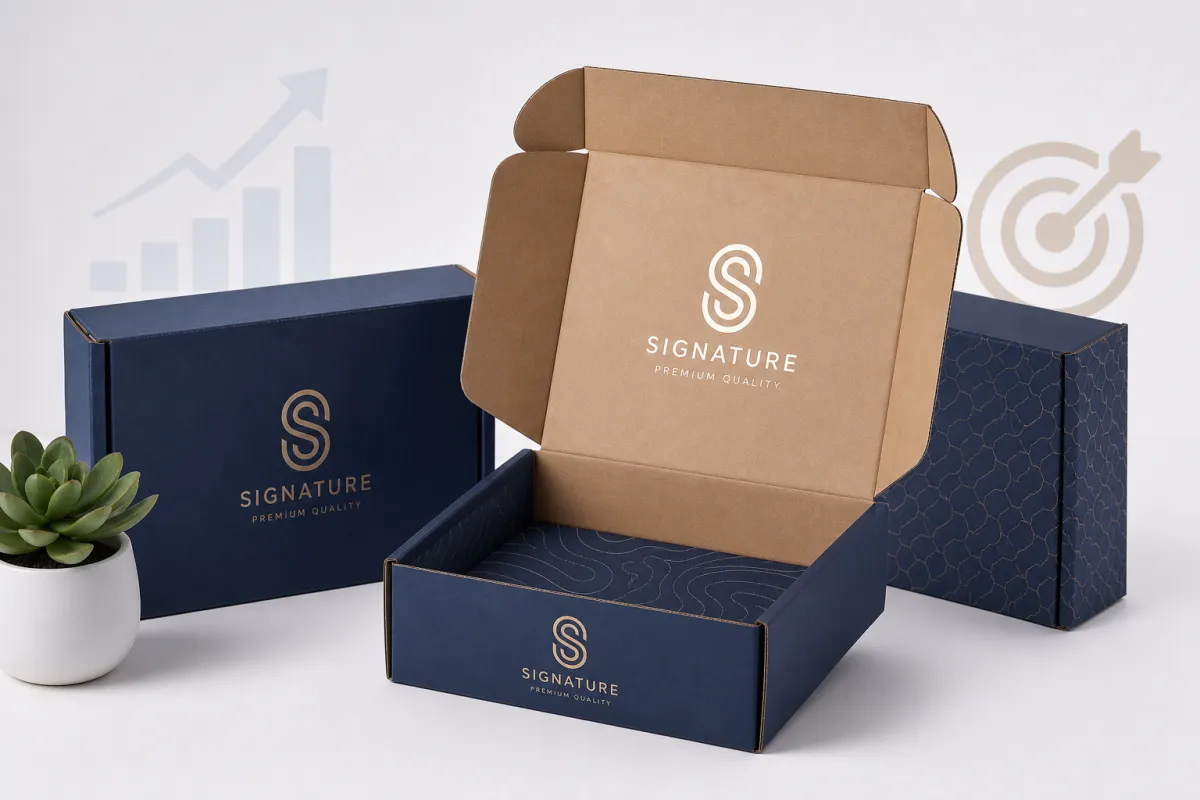
Put a plain brown shipping carton beside a branded mailer and the difference is immediate. The branded version feels like part of the product instead of just the vessel that carried it, and that feeling begins before the lid opens. That is one reason Printed Corrugated Mailer Boxes with logo have become a dependable choice for brands that care about presentation as much as protection.
These cartons are folding corrugated boxes designed to ship flat, set up quickly, and close with tuck flaps or similar mailer-style closures. Corrugated board brings stiffness and crush resistance, while the printed exterior carries the logo, color palette, messaging, or pattern. For e-commerce and subscription packaging, printed corrugated mailer boxes with logo sit in a useful middle ground: they look more polished than a plain shipper, yet they remain paper-based and practical for parcel shipping and recycling streams.
The box keeps working after it leaves the fulfillment bench. It gets seen again when the customer carries it inside, opens it, stores it, photographs it, or passes it along to someone else. That is the quiet strength of printed corrugated mailer boxes with logo; they continue doing brand work after the sale is complete. A clean logo lockup, good panel proportions, and a clear print area can make a simple shipment feel purposeful rather than generic.
Sustainability matters here, though it deserves an honest explanation. Corrugated board is widely recyclable in many curbside systems, especially when the design stays simple and avoids mixed-material complications. Right-sizing the carton reduces wasted air, and using a mailer instead of an oversized shipper can cut down on filler, unnecessary freight volume, and excess material. None of that makes every box automatically better for the planet, but it does mean printed corrugated mailer boxes with logo can fit a more careful packaging plan when the structure is chosen with restraint.
A good mailer has to do three jobs at once: protect the product, represent the brand, and make fulfillment easier. If one of those jobs gets ignored, the box usually shows it somewhere in the supply chain.
Most brands get stronger results when they treat printed corrugated mailer boxes with logo as a functional format first and a branded surface second. That order matters. The artwork should support the carton structure, not fight it, because folds, scores, and closure tabs are always part of the layout whether the design wants them there or not. I have seen beautifully rendered concepts fall apart the minute the first physical sample gets folded, and the fix is usually pretty simple: respect the structure early.
- Fast recognition: the logo and color palette create immediate brand identity at delivery.
- Better protection: corrugated flutes add cushion and stacking strength.
- Cleaner presentation: the box itself becomes part of the customer experience.
- Practical efficiency: flat-packed cartons save storage space and pack quickly.
How Printed Corrugated Mailer Boxes with Logo Are Built
The structure behind printed corrugated mailer boxes with logo is simple on paper and more technical in practice. Corrugated board uses linerboard on the outside and inside, with a fluted medium in the middle. Those flutes act like small arches, and that geometry is what gives the carton stiffness, cushioning, and stacking performance. For mailers, single-wall construction is common, but the flute profile and board grade should still match product weight, shipping conditions, and the amount of handling the carton will face.
Flute choice changes the feel of the box more than many buyers expect. E-flute often gives a smoother print surface and a cleaner look, while B-flute and C-flute can add thickness or crush resistance depending on the application. Light products that need a more polished presentation can work well with a lighter board. Heavier contents or parcels that move through a rougher fulfillment path usually need a stronger specification. With printed corrugated mailer boxes with logo, the board is part of the brand experience, because a flimsy box never feels premium for long.
Printing method comes next. Flexographic printing is often used for efficient runs with straightforward artwork, solid brand colors, and repeatable production. Digital printing suits shorter runs, frequent artwork changes, and quicker setup with less tooling. Litho-lam construction, where a printed sheet is laminated to corrugated board, can create a richer surface and a more premium presentation, though it usually adds cost and complexity. The right method depends on quantity, color demands, finish expectations, and how much handling the carton will see after printing.
There are also different ways to place the logo. Some printed corrugated mailer boxes with logo are printed directly on the outer liner. Others use preprinted liners or labels, and some rely on hybrid methods where the structure and graphic layer are produced separately. Direct print is often the most straightforward route for many programs, but preprinted liners can help when color control matters or the artwork is more detailed. Each approach changes texture, turnaround time, and the way the final surface feels in the hand.
Once the board is printed, the die-cutter shapes the blank, scores the folds, and creates the tabs and tuck features that allow the box to ship flat and assemble quickly. That die line is more than a template; it controls how the mailer opens, closes, and resists stress during parcel handling. A good layout keeps the logo away from scores where ink can crack and away from flaps where folding can distort the artwork. In practice, printed corrugated mailer boxes with logo work best when the print and the structure agree before the first production sheet is run.
For brands comparing formats across a wider packaging program, it often helps to review Custom Packaging Products alongside the mailer spec. That broader view makes it easier to choose between presentation-focused packaging and more utilitarian shipping structures. If the line also needs lighter outbound options, Custom Poly Mailers can serve a different role, while Custom Shipping Boxes can cover more general carton needs.
Key Factors That Affect Printed Corrugated Mailer Boxes with Logo
Three things usually decide whether printed corrugated mailer boxes with logo perform well: board strength, internal fit, and the way the artwork is built around the structure. If any one of those misses the mark, the box tends to show it in transit. The useful part is that these are controllable variables, and they are usually easier to solve before production than after a failed ship test.
Board grade is the foundation. For lighter apparel, small accessories, or low-risk consumer goods, a lighter single-wall corrugated spec may be enough. For heavier items, fragile contents, or parcels that will sit in a stacked warehouse environment, a stronger board with a higher edge crush test can be a smarter move. Many teams start by looking at 32 ECT for lighter mailers and 44 ECT or a similar strength target when they need more confidence, but the actual choice should reflect the product rather than a generic rule. Printed corrugated mailer boxes with logo only feel premium if they survive the trip looking like they did at packout.
Fit is the next issue, and it is one of the easiest places to waste money. A box that is too large invites movement, which leads to scuffing, corner damage, and extra void fill. A box that is too tight can slow packing and may stress the product or the carton during closure. The best internal dimensions give just enough room for the product plus any insert, tissue, or protective wrap. Proper fit can also reduce filler use, which helps sustainability and lowers labor during packing. That is why printed corrugated mailer boxes with logo should be sized around the product and the fulfillment workflow, not around the nearest standard carton.
Print coverage and finish deserve separate attention. Large solid areas create a bold look, but they can also show scuffs, rub marks, and minor color variation more clearly than a simpler design. Heavy ink coverage may also affect drying time and board feel. Water-based inks are common because they support paper-based recycling paths better than many plastic-heavy alternatives, and simpler coatings are often easier to manage from a material standpoint. If a brand wants a matte look, spot gloss, or soft-touch finish, it should ask how that finish affects recyclability and handling before the run is approved.
Sustainability is strongest when the box design stays clean and practical. Recycled-content board, FSC-certified paper options, and water-based inks can all fit into a better packaging specification, but the details still matter. Mixed-material windows, unnecessary lamination, and overly complicated coatings can make recycling harder. For a product that needs transit verification, a buyer may also ask whether the package design aligns with testing practices from ISTA or with methods similar to ASTM D4169. For fiber sourcing and certified paper, FSC is the reference many teams use when they want a clearer chain-of-custody path.
Accessories can help, but they should be chosen with intent. Inserts, partitions, and tear strips can improve presentation, reduce product movement, and make opening easier. They can also add tooling, assembly time, and cost. A die-cut insert may be the right fit for a high-value item, while a simple folder or tissue wrap could be enough for a lighter order. The key is to treat the whole packout as one system. Printed corrugated mailer boxes with logo work best when the product, insert, and carton all support each other instead of competing for space.
- Board strength: match flute and ECT to product weight and shipping risk.
- Internal fit: reduce movement without making packing difficult.
- Finish choice: decide how much coating or lamination is truly needed.
- Inserts: use them for protection or presentation, not as a default.
Cost and Pricing for Printed Corrugated Mailer Boxes with Logo
Pricing for printed corrugated mailer boxes with logo usually breaks down into four main parts: material, print method, tooling, and quantity. Box size affects board usage. Artwork affects setup. Quantity decides how much of the fixed cost gets spread across each unit. Once buyers understand those mechanics, quotes become much easier to compare.
Board grade is one of the largest cost drivers because stronger board usually uses more material and can require more careful handling. A larger box also uses more paper and may increase freight cost because it takes up more cube, even when it ships flat. Print coverage matters too. A simple one-color logo on a natural kraft liner costs less to produce than a full-coverage multi-color design with tight registration and specialty finishing. Two boxes can look similar in a mockup and land at very different price points once production is quoted.
Setup costs are another area where buyers need realistic expectations. Die-cut tooling, print plates for flexographic work, and prepress preparation can all add one-time charges. A straightforward run may carry a die charge in the low hundreds and plate charges that change with color count, while a more premium litho-lam build can add extra prepress work and mounting steps. Those costs make more sense as quantity rises. If a brand only needs a few hundred units, digital printing may be easier to justify. If the brand needs several thousand pieces and the artwork is stable, conventional print methods can become far more attractive.
To make the tradeoffs easier to compare, here is a practical pricing snapshot. These are indicative ranges only; actual quotes shift with size, board specification, print coverage, and shipping destination.
| Option | Best For | Typical Setup | Indicative Unit Cost at 1,000 | Indicative Unit Cost at 5,000 |
|---|---|---|---|---|
| Direct flexographic print | Simple logos, solid colors, repeat orders | Moderate plate and prepress setup | $0.85-$1.75 | $0.32-$0.68 |
| Digital print | Short runs, artwork changes, quicker approval cycles | Lower tooling, higher per-unit cost | $1.10-$2.40 | $0.55-$1.10 |
| Litho-lam build | Premium branding, rich graphics, strong shelf appeal | Higher prepress and finishing setup | $1.40-$3.00 | $0.70-$1.35 |
Those numbers only help if they are read the right way. A lower unit price does not always mean a lower landed cost. Freight, palletization, and storage all matter. Printed corrugated mailer boxes with logo ship flat, which saves space, but a larger carton run still occupies real warehouse cube. If the order is rushed, expedited freight can erase the savings from a cheaper per-unit quote. For that reason, ask for pricing at more than one quantity, usually one lower volume and one higher volume, so you can compare unit economics against inventory risk.
A buyer planning a launch should also think about hidden cost pressure. A box with inside printing, a tear-open strip, or a custom insert can improve the unboxing experience, but each feature adds complexity. A soft-touch coating may improve feel, yet it can also increase cost and complicate recyclability. So the right question is not simply, “What is the cheapest box?” The better question is, “Which version of printed corrugated mailer boxes with logo gives me the best total value once performance, appearance, and freight are all included?”
If you want a practical rule of thumb, compare pricing across at least three points: a pilot quantity, a midrange production quantity, and the volume you would order if the product takes off. That gives you a clearer view of how setup charges spread out and whether your packaging budget can support scale without surprises. It also keeps everyone honest about what the box is really doing for the business instead of just what it looks like on a render.
Process and Timeline for Printed Corrugated Mailer Boxes with Logo
The process for ordering printed corrugated mailer boxes with logo is usually straightforward, but it runs smoother when the buyer arrives with solid information. Start with the product dimensions, actual weight, fragility notes, any insert requirements, and the way the carton will ship. A box built for a light skincare set is not the same as a box carrying glass jars or dense metal accessories, and the supplier needs that context early.
The artwork and dieline stage comes next. The dieline is the flat template that shows folds, scores, flaps, and glue areas. This is where the logo should be placed with real care. If a mark lands too close to a score line, it can crack when the board folds. If a graphic sits on a tuck flap, it may disappear when the box closes. Good layout work treats the carton like a three-dimensional object from the beginning, which is why experienced buyers usually ask for a proof that shows the design in position rather than a floating image.
Proofing is where a lot of good projects are won or lost. A digital proof can confirm layout, spelling, color relationships, and panel placement. A physical sample goes a step further by showing how the carton feels, how the tuck closure behaves, and whether the product actually fits without too much movement. For printed corrugated mailer boxes with logo, that sample is usually worth the time because corrugated board behaves differently once it is creased and folded than it does as a flat digital image. I have seen more than one job where a small shift in the fold line changed the whole packout, and the sample caught it before the full order was printed. That saves real money.
Production often follows a familiar sequence: approval, scheduling, printing, die cutting, finishing, assembly, and final packing. The actual lead time varies with order size and method, but a straightforward run often lands around 10 to 20 business days after approval, while sampling may take a few business days more. Digital work can move faster. Complex finishes, revised artwork, unusual sizing, and custom tooling can all add time. If a brand is launching a seasonal product or a promotional offer, that timeline should be confirmed before the marketing calendar is locked.
In practice, delays usually come from three places. First, artwork changes after the first proof. Second, approval stalls while someone checks color, copy, or regulatory language. Third, the box spec changes after sampling because the product did not fit as expected. Any one of those can shift the schedule, and sometimes all three happen on the same job. The safest move is to treat printed corrugated mailer boxes with logo as part of the launch plan, not as a last-minute purchase.
For teams building several package formats at once, it helps to line up decisions in parallel. A mailer may be one part of the mix, while another product line uses a different carton or bag. Keeping the specs organized by item, quantity, and ship mode prevents a lot of confusion later on, especially when procurement, design, and fulfillment are all involved. It also keeps the conversation grounded in how the packaging will work in the warehouse, not just how it reads on a mood board.
- Gather product data: dimensions, weight, and fragility notes.
- Approve the dieline: confirm logo placement and closure behavior.
- Request samples: test fit, print quality, and packing speed.
- Confirm lead time: align approval dates with launch dates.
Common Mistakes with Printed Corrugated Mailer Boxes with Logo
The most common mistake is sizing the box by appearance instead of by function. A carton that looks elegant in a mockup can still let the product rattle around in transit, and that movement is what leads to abrasion, crushed corners, and annoyed customers. With printed corrugated mailer boxes with logo, the internal dimensions should always be driven by the actual packout, not by what seems visually balanced on a screen.
Another mistake is overdesigning the print. A busy layout, heavy ink coverage, metallic effects, and multiple finishing steps can make the box expensive without making it more effective. Sometimes the strongest design is also the quietest one: a clear logo, one or two support colors, and enough white space or kraft background to keep the mailer readable. When the design gets too busy, the logo can lose impact, and the box can start to feel decorative instead of purposeful. That can look polished in a presentation deck and kinda messy once the carton is stacked on a packing bench.
Skipping physical testing is another easy way to create problems. A carton can look perfect in artwork approval and still fail under stacked loads, drop events, or exposure to a damp loading dock. For shipping confidence, ask whether the pack should be evaluated against a transit test method such as ISTA 3A or a comparable internal drop-and-compression check. That kind of testing is not overkill for fragile goods; it is basic insurance against avoidable damage. Printed corrugated mailer boxes with logo should prove themselves before they reach customer orders, not after.
Sustainability claims can also go sideways when the structure becomes more complicated than the marketing suggests. A box with paperboard, plastic film, heavy lamination, and a glued-in non-paper insert may be harder to recycle than the copy implies. Buyers should ask what part of the box is recyclable, whether the paper comes from certified sources, and whether the finish changes end-of-life handling. Honest sustainability is usually simpler than the flashy version.
Lead time mistakes are common too. Even a simple order can slip if the logo file is wrong, if the dieline needs adjustment, or if the proof waits on internal approval. That is why printed corrugated mailer boxes with logo should be ordered with enough cushion for correction, sample review, and freight scheduling. Late packaging becomes a launch problem very quickly, and it tends to show up when everyone else is already juggling too much.
Expert Tips and Next Steps for Printed Corrugated Mailer Boxes with Logo
If you want a cleaner ordering process, ask for more than one sample. A side-by-side comparison makes it easier to judge board strength, print clarity, closure feel, and overall presentation. One sample might look excellent on a desk but feel too light once the product is inside. Another might be sturdier but slower to pack. Seeing those differences in person makes the final decision much clearer, especially for printed corrugated mailer boxes with logo that are meant to represent a premium brand.
Build a short specification sheet before requesting quotes. Include external dimensions, internal target fit, product weight, number of print colors, print coverage level, finish preference, insert needs, and shipping conditions. If the item is fragile, say so. If the carton has to survive repeated handling, say that too. The more complete the spec sheet, the better the quote quality and the fewer surprises later. A good supplier can work faster when the project is described well, and the whole process feels a lot less like guesswork.
Test the box in the actual packing workflow, not just on a table. That means the same tape, the same insert, the same operator motion, and the same pace the team will use during fulfillment. A structure that feels fine in a sample room may behave differently when someone is packing 300 units a day. This is where printed corrugated mailer boxes with logo earn their keep: they should support speed, not slow the line down.
A pilot run is smart for new launches or high-value products. A smaller first order exposes weak spots without locking the business into a large inventory commitment. It also gives the team a chance to collect customer feedback on presentation, opening experience, and protection. If the first round performs well, scale up with confidence. If something needs adjustment, the correction is cheaper and faster at low volume.
From there, the path is usually simple. Choose the board style, approve the dieline, confirm pricing at two or three quantities, and lock the sample before moving into full production. If the box program is part of a wider packaging system, compare it with other formats and make sure the mailer is doing the right job for the right product. That is where printed corrugated mailer boxes with logo become more than a box; they become a controlled part of the buying and fulfillment experience.
For many brands, the best result comes from a practical mix of clean graphics, sensible board strength, and a packout that fits the product without extra movement. Keep the structure honest, keep the artwork readable, and keep the timeline realistic. Do that, and printed corrugated mailer boxes with logo can earn their place in the operation rather than just in the design presentation. The next move is straightforward: build the spec around the product first, then let the logo sit on a box that is already doing its job well.
Frequently Asked Questions
What corrugated style works best for printed corrugated mailer boxes with logo?
For many e-commerce and retail shipping uses, a mailer-style carton with a secure tuck closure and a flute grade matched to product weight is a strong starting point. Lighter goods often do well with a lighter single-wall construction, while heavier or more fragile items usually need a stronger board specification. The best choice depends on how printed corrugated mailer boxes with logo will ship, stack, and open, not just how they look in a photo.
How do printed corrugated mailer boxes with logo get their graphics?
Common methods include direct flexographic printing, digital printing, and preprinted liners, and each method brings a different mix of speed, color control, and cost. Direct print is often efficient for larger, repeatable runs with simpler artwork, while digital printing can suit shorter runs or jobs that may change often. The right method for printed corrugated mailer boxes with logo usually comes down to quantity, artwork complexity, and how strict the color expectations are.
Are printed corrugated mailer boxes with logo recyclable?
Most corrugated mailers are recyclable when they are made from standard paper-based board and do not include hard-to-separate mixed materials. Water-based inks and simple finishes usually support recycling better than heavy lamination or composite structures. If sustainability is a priority, ask whether the construction of printed corrugated mailer boxes with logo is designed to work within the curbside recycling systems used in your market.
How long does it take to produce printed corrugated mailer boxes with logo?
Timeline depends on artwork readiness, sample approval, order size, print method, and whether custom tooling is required. A straightforward run can move fairly quickly once the dieline and proof are approved, but revisions can add meaningful time. The safest approach is to confirm the lead time before finalizing launch dates, promotions, or inventory replenishment plans for printed corrugated mailer boxes with logo.
What should I have ready before getting a quote for printed corrugated mailer boxes with logo?
Have product dimensions, product weight, target quantity, branding files, and any special shipping requirements ready before requesting pricing. It also helps to note whether you need inserts, inside printing, special finishes, or a specific sustainability target. The clearer the spec sheet, the more accurate the quote for printed corrugated mailer boxes with logo will be, and the fewer surprises there will be later in the process.
Strong packaging choices usually come from clear specs, honest testing, and a box design that respects both the product and the shipping route. That is the real value of printed corrugated mailer boxes with logo: they help a brand ship well, look sharp, and stay practical at the same time.


