Buyer Fit Snapshot
| Best fit | printed display boxes for retail for packaging buyers comparing material specs, print proof, MOQ, unit cost, freight, and repeat-order risk where brand print, material, artwork control, and repeat-order consistency matter. |
|---|---|
| Quote inputs | Share finished size, material target, print colors, finish, packing count, annual reorder estimate, and delivery region. |
| Proofing check | Approve dieline scale, logo placement, barcode or warning zones, color tolerance, and any recyclable or compostable wording before bulk production. |
| Main risk | Vague material claims, crowded artwork, or missing packing details can create delays even when the unit price looks attractive. |
Fast answer: Printed Display Boxes for Retail: Design, Cost, Timing should be specified like a repeatable production item. The safest quote includes material, print method, finish, artwork proof, carton packing, and reorder notes in one written spec.
What to confirm before approving the packaging proof
Check the product dimensions against the actual filled item, not only the sales mockup. Ask for tolerance on folds, seals, hang holes, label areas, and retail display edges. If the package carries a logo, QR code, warning copy, or legal claim, reserve that space before decorative graphics fill the panel.
How to compare quotes without losing quality
Compare board or film grade, print process, finish, sampling route, tooling charges, carton quantity, and freight assumptions side by side. A lower quote is only useful if the supplier can repeat the same color, closure quality, and packing count on the next order.
Most products do not fail because they are weak. They fail because they disappear into a shelf full of louder, busier, more aggressive choices. That is the practical strength of printed Display Boxes for Retail: they turn packaging into a visible selling tool, one that can organize inventory, carry the brand story, and pull attention without adding extra signage or asking for more shelf space than the store can spare.
Every square inch in a store has a job, and buyers know it. A well-built display box acts a little like a compact salesperson. It directs the eye, frames the offer, and makes the product easier to grab. In many categories, printed display boxes for retail do the work of a shipper, a display fixture, and a promotion card at the same time. That is a pretty efficient use of cardboard, honestly.
The questions that matter are practical. How do printed display boxes for retail perform in real stores? What drives price? Where do timelines slip? Which design mistakes quietly drain sell-through? The answers help a brand make better decisions before a dieline turns into a costly stack of cartons.
I have seen teams spend weeks polishing artwork, then lose the account because the display was too tall for the shelf bay by less than an inch. That sounds tiny on a screen. In-store, it can be the difference between a launch and a rejected pallet.
Printed display boxes for retail: why they outshine shelf clutter
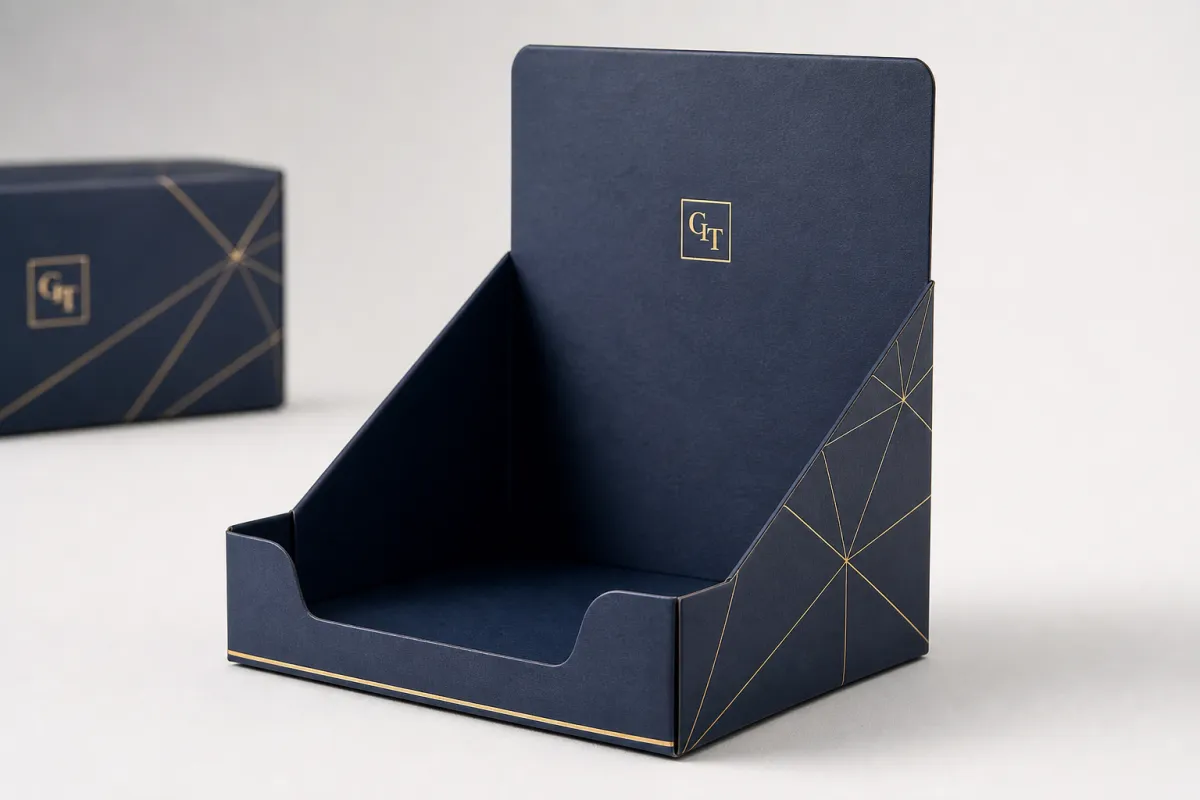
Retail shelves are noisy in a very literal sense. Competing graphics, price cards, adjacent brands, and pack-size clutter all fight for the same second of attention. Printed display boxes for retail cut through that noise because they add shape, height, and structure. A tray with side panels and a clear message is easier to notice than a flat carton lined up with everything else.
The idea is simple. Printed display boxes for retail are branded paperboard or corrugated structures made to present products at the point of purchase. They can sit on a counter, rest in a shelf bay, or stand on the floor. Some arrive ready to fill. Others are designed for store-side assembly. In both cases, the box is doing two jobs: holding product and selling it.
That dual function explains the repeat business. If a brand needs shipping protection, shelf presentation, and a clear promotional story, one printed structure can cover the field. Separate signage may still help, but it is not always essential. In tight retail spaces, fewer objects often beat more messaging.
A strong display box works a bit like endcap placement without the premium real estate bill. It will not replace a prime location, yet it can mimic the same attention pattern. Height, contrast, and message hierarchy work together. That combination can change the odds in categories where most items look interchangeable from six feet away.
Beauty, snacks, supplements, hardware, seasonal goods, and convenience items keep using printed display boxes for retail for the same reason. The product may be small and the margin may be tight. Better presentation can still move the sell-through curve enough to justify the spend. A 5% to 10% lift is often enough to make a display look smart instead of expensive, assuming the unit cost is under control.
One detail gets missed often: the display is not built only for shoppers. Store staff respond to it too. If the box stacks cleanly, opens quickly, and keeps units organized, replenishment becomes easier. That matters because a display that frustrates staff usually does not stay on the floor for long.
A display that looks polished on a screen and takes ninety seconds to load in-store is usually failing for a reason that has nothing to do with graphics.
If sustainability claims or performance testing are part of the conversation, the standards should stay grounded. The ISTA testing framework is useful when a display must survive transit, while FSC sourcing can matter when the substrate story is part of the brand promise. Those details shape the final decision as much as the artwork does. Packaging people can get a little dreamy about finishes; the retailer usually cares more about whether the box arrives intact and reads clearly.
How printed display boxes for retail work on the shelf
Attention begins as a physical reaction. The eye catches height, contrast, and shape first. Reading comes later. Decision comes after that. Printed display boxes for retail work because they organize that sequence. A smarter display reduces the amount of visual labor a shopper has to perform just to understand what is being sold.
Shape carries more weight than many teams expect. A tray with a front lip, a stepped riser, or a product cutout gives a small item more presence and makes browsing easier. A flat carton can function, but it rarely commands the same space. The best printed display boxes for retail use geometry to build hierarchy: brand, product, and offer each get a clear role.
Countertop displays, floor stands, shelf-ready trays, and gravity-fed formats are the most common structures. Countertop units suit impulse categories and smaller pack counts. Shelf-ready trays help with replenishment and retail compliance. Floor displays create more visual mass, but they need enough stability to avoid wobble, crush, or awkward access. Gravity-fed formats can work well for high-velocity items because they make refilling more predictable. I have seen them save a store clerk a half-hour a week, which sounds minor until you multiply it across 200 locations.
Structure and graphics should be planned together. The structure controls access, load-bearing strength, and the amount of product it can hold safely. The printed surface carries the message, and that message needs to be readable from normal shopper distance. In practice, that means color blocks, product names, and key benefits should make sense in two or three seconds, not after a close inspection.
Retail shoppers scan. They rarely study. A display that communicates the offer quickly reduces decision friction. The more obvious the price point, category, and benefit, the less decoding the shopper has to do. That is one reason printed display boxes for retail often outperform plain trays or generic shippers. The box answers the first round of questions before a staff member has to step in.
Placement changes the rules. A counter display near checkout behaves differently from a shelf tray in a wellness aisle. The first needs stronger front-facing graphics and a compact footprint. The second may need side panels, stack stability, and a shape that still works when another carton sits beside it. Good printed display boxes for retail are built for the environment first and the product second.
When the design is right, the box becomes part of the store’s merchandising logic. It guides motion, frames the assortment, and gives the product a visual anchor. Loose units and a few stickers rarely create that effect.
Design factors that change results fast
Size is never just a fit question. With printed display boxes for retail, the dimensions affect visual impact, replenishment volume, shipping efficiency, and whether the unit fits the retailer’s fixture plan. A box that is one inch too tall may hit shelf hardware. One that is too shallow may look weak and underfilled. That is why seasoned packaging teams measure twice and mock up once, then check the retailer spec again anyway.
Material choice moves the outcome quickly. Lightweight paperboard can work well for cosmetics, sachets, small confectionery items, and other low-load products. A 14pt to 24pt paperboard or a 250gsm to 400gsm SBS/CCNB can be appropriate depending on the structure. Corrugated board, especially E-flute or B-flute, is usually better for heavier products, larger counts, or displays that need to last through a longer store run. If the item is dense, flimsy board is a false economy.
Print coverage changes both cost and shelf response. Solid color blocking creates more visual punch than a busy collage. High-contrast typography helps shoppers understand the product faster. Matte finishes can support a more premium, restrained look, while gloss can feel louder and more promotional. Soft-touch lamination, aqueous coating, and spot UV each signal something different about the category. The finish has to match the brand story, not just the mood board.
Structural details often decide whether the display survives real use. Cutouts improve product visibility. Tear-away fronts make first access easier. Internal dividers keep bottles and tubes upright. Reinforced bottoms prevent sagging. If the display is load-bearing, those details matter more than a fancy panel layout. Overinvesting in graphics while underbuilding the structure is an expensive mistake.
Retail compliance is another layer that gets missed early. Box dimensions, barcode placement, warning copy, recycling marks, and store-specific height limits may all need to align before approval. Some retailers want shelf-ready units that open in a defined way; others care more about pack count and case labeling. Printed display boxes for retail should be designed around those rules, not after the first sample is already built.
Weight distribution matters too. A display holding lightweight sachets can tolerate a more open front. A display carrying glass jars needs a lower center of gravity and usually a stronger base. The difference looks obvious after a failure. It is easy to miss while reviewing renderings, which is why structural tests beat guesswork every single time.
For brands comparing options, the table below gives a practical starting point. These are typical market ranges, not fixed quotes; final pricing depends on quantity, print coverage, board grade, and the amount of assembly required.
| Display type | Typical use | Approx. unit cost range | Best fit | Watch-outs |
|---|---|---|---|---|
| Paperboard countertop display | Small items, impulse buys, launches | $0.45-$1.25 | Light products, short runs, high print visibility | Can collapse under heavy loads if under-engineered |
| Corrugated countertop tray | Heavier packaged goods, shelf-ready merchandising | $0.65-$1.60 | Products needing more rigidity and shipping strength | Usually needs more board and a stronger die structure |
| Floor display stand | Larger promotions, seasonal promotions, multi-SKU placements | $3.50-$12.00 | High visibility and greater inventory capacity | Freight, assembly, and durability can raise total cost fast |
| Gravity-fed display | Fast-moving items with frequent refill cycles | $1.10-$4.50 | Convenience and self-facing replenishment | Requires careful tolerance control and smooth dispensing |
For practical sourcing, many teams move between Custom Packaging Products and a display-specific quote process because the final structure can affect both shipping and store handling. If the project is still being defined, browsing Custom Packaging Products can help anchor expectations around board types, print methods, and structural choices before art is finalized.
That step is not glamorous, but it prevents the classic mismatch: a beautiful mockup that can’t be manufactured at the target price, or a cheap build that falls apart after one weekend on the floor. Retail has a long memory for broken packaging.
Printed display boxes for retail cost, pricing, and MOQ
Pricing comes from a stack of variables, and printed display boxes for retail are no exception. Material grade, print coverage, structure complexity, finishing, and total order quantity all matter. A plain one-color tray on standard board will never cost the same as a full-color, spot-UV, die-cut floor display with internal dividers.
MOQ changes the math quickly. Smaller runs usually carry a higher unit cost because setup, prepress, die creation, and sampling are spread over fewer pieces. Larger runs lower the per-unit price because those fixed costs are divided more efficiently. Bigger is not always better. The order size should match actual sell-through, not hopeful forecasting. A warehouse full of overbuilt displays is just expensive optimism.
Hidden variables add up faster than many buyers expect. Revision rounds for artwork. Prototype iterations. Special coatings. Kitting. Warehousing if the boxes ship in waves. Freight charges if the display is large or ships fully assembled. All of these can move the final number. A quote that looks low on the first page can turn expensive once the operational details appear.
One useful way to think about printed display boxes for retail is as a sales investment rather than a packaging line item. A slightly higher-priced display may still be cheaper overall if it improves sell-through, reduces product damage, or cuts restocking labor. The real cost is not the carton alone. The real cost is the outcome after the carton hits the shelf.
When requesting quotes, give suppliers the information they need to price accurately. The more precise the brief, the fewer surprises later. If the project includes multiple SKUs or region-specific compliance labels, say so early. If assembly happens at store level, include that too. If the retailer has a strict spec on height or open-front design, do not bury that in a footer note.
These inputs usually have the biggest effect on quote accuracy:
- Final dimensions, including internal usable space and assembled footprint
- Product weight and whether units are packed loose, sleeved, or boxed
- Target quantity and whether the run will be repeated
- Print method, color count, and finishing requirements
- Retail environment, such as counter, shelf, endcap, or floor placement
- Assembly expectations, including hand packing or pre-packed delivery
If sustainability is part of the brief, source matters too. FSC-certified paper can support a documented chain of custody, and many buyers ask for that upfront. Environmental claims and recycling language should stay clean and supportable. The more specific the material story, the easier it is to defend on pack and in-store. A useful starting point is FSC-certified paper sourcing guidance.
Price should be judged alongside compliance and testing. If a display will travel well, sit in inventory, and survive a retailer’s handling cycle, it often deserves the extra setup. If not, the cheapest quote can become the most expensive mistake. That is the part that makes procurement teams twitch, but it is also where the money is actually won or lost.
Production process, timeline, and lead time
The production path for printed display boxes for retail usually starts with discovery. Dimensions, product count, load weight, retailer rules, and the actual display goal all belong in the first conversation. Is the box meant to drive trial, support a seasonal push, or improve organization? The answer changes the structure before any artwork is touched.
After discovery comes dieline or structural design. That is where the geometry is defined: panel sizes, folds, locking tabs, product dividers, and any cutouts. Once the structural file is sound, artwork gets mapped onto it. Good teams treat the dieline and the graphics as one system, because print cannot rescue bad construction.
Sampling is where real-world issues show up. A prototype can reveal awkward folds, weak adhesive points, poor product visibility, or a label that lands too close to a crease. I once watched a launch stall because the front lip was only a few millimeters too shallow, which let the first row of product lean forward after the second refill. The render had looked fine. The aisle did not care.
Lead time depends on the process. Short digital runs can move faster because they need less setup. Custom offset work, complex die cuts, or large corrugated programs usually require more time for press setup, tooling, finishing, and transit. In practice, a straightforward display job might take about 12 to 15 business days from proof approval, while a more involved structural program can run longer once prototyping and freight are included. Those numbers shift with season, capacity, and material availability.
Timing slips usually come from the same few causes. Artwork is revised after proof approval. Retail specs arrive late. A sample needs to be corrected. Quantities change. Shipping gets compressed into a smaller window than the product launch can support. The root cause is usually planning, not the press itself.
Launch calendars need buffer. Seasonal resets, promotional windows, and distributor deliveries should all be plotted with enough room for proofing and freight. If the display must be in stores by a fixed date, build backward from that date and include at least one revision cycle. That advice is dull. It also prevents rushed jobs that end up costing more than the original production run.
Brands that care about ship-testing or transit durability should include recognized standards in the discussion. ISTA methods are often used to evaluate package performance under vibration, drop, and compression conditions. A display that passes concept review but fails in transit is not ready for the shelf. The same applies if the box will be stacked in warehouse storage before rollout.
When the timeline is tight, prioritize the details that affect release first: structure, compliance text, barcode placement, and pack count. Decorative refinements can come after the core is stable. That order sounds obvious, yet it is one of the most common reasons display projects run late. A nice-looking box that misses launch week is still a miss.
Common mistakes that quietly erode sell-through
The first mistake is designing for the mockup instead of the store. A display can look polished on a render and still fail once it sits next to other products, under fluorescent lighting, with a shopper reaching in from the side. Printed display boxes for retail need to survive the conditions they are sold in, not only the conditions used to approve them.
Weak messaging is another slow leak. If the box looks attractive but does not communicate the benefit in a few seconds, it wastes shelf attention. That is especially true for impulse categories. The shopper should be able to tell the product type, the primary value, and the brand without decoding a paragraph. A beautiful display that says too little is still a weak selling tool.
Overdesign and underdesign can both hurt. Too much board adds cost, increases freight weight, and can make replenishment awkward. Too little board leads to sagging, crushed edges, and retailer complaints. The right answer sits in the middle, but that middle depends on product weight, duration in store, and expected handling. There is no universal formula. Not even close.
Brand consistency matters more than teams sometimes admit. If the display color, typography, or claims do not match the rest of the packaging system, shoppers notice. That inconsistency can dilute trust, especially in categories where customers compare multiple pack formats. Printed display boxes for retail should reinforce the same brand cues used on the primary carton, sleeve, or label.
Skipping store testing is the final quiet failure. A display that holds up in a conference room can collapse in a real aisle because the lighting is different, the fixture is tighter, and staff handle it differently. The best teams test a prototype where the product will actually live. Even a short field check can expose problems that no CAD file will show.
There is a related mistake worth calling out: ignoring replenishment behavior. If the box looks great when full but falls apart as units sell through, the display creates a worse impression later in the cycle. Retailers notice that fast. So do shoppers. A display that goes from full and tidy to drooping and awkward tells a story you do not want.
In many cases, the fix is not a dramatic redesign. It is a more disciplined brief. Clear dimensions. Realistic weight data. A print hierarchy that respects the shelf. A structure that can be loaded in the time store staff can actually spare. That is the unglamorous difference between a pretty carton and a functional retail asset.
Expert tips and next steps for a smarter rollout
Start with a pilot. One SKU. One channel. One display structure. That is often the smartest way to test printed display boxes for retail before committing to a full rollout. A small run reveals how the unit behaves in store, how staff handle it, and whether the design helps sell-through or simply looks good in a presentation.
Use a pre-launch checklist. Confirm dimensions, product weight, barcode placement, print proof, retailer rules, and assembly instructions before approval. If the project includes FSC paper claims, verify the supporting documentation. If the unit needs to survive distribution, ask whether ISTA-style testing is appropriate. The checklist should be short enough to use and strict enough to catch mistakes.
Ask for a sample that can be placed in an actual retail environment. A conference-room review is useful, but it is not the same as a real aisle with real lighting and real customer movement. The best sample is one that proves the display can be loaded, stocked, and read under ordinary conditions. That is where printed display boxes for retail either earn their keep or expose a weak point.
Track the right outcomes after launch. Sell-through speed. Damage rate. Setup time. Refill accuracy. Staff feedback. Those five signals tell a better story than subjective praise. A display that increases attention but slows replenishment may not be a win. A display that reduces damage and moves stock faster usually is.
For teams building a broader packaging system, the display should not sit in isolation. It should align with the shipper, the primary pack, and any retail sign set. That is where the packaging budget starts to work harder. A coordinated system usually outperforms a collection of disconnected pieces, even if the individual parts are not flashy on their own.
If the brief is still taking shape, the next step is straightforward: audit the shelf, define the display job, and request a quote with your target MOQ and timeline. If you are planning a launch or promotion, printed display boxes for retail can be one of the most efficient ways to create visibility without adding clutter. They are not magic. They are better than random chance, and in retail, that is a serious advantage.
For packaging teams that want the process grounded in real constraints, the best results usually come from clear specs, practical testing, and a design that respects both the shopper and the store staff. That is the difference between packaging that merely exists and printed display boxes for retail that actually move product. Build the structure for the load, print for the scan, and test it where the customer will see it. Everything else is just decoration.
What are printed display boxes for retail used for?
They present products at the point of purchase so shoppers notice the brand faster and understand the offer without extra signage. They also organize inventory, improve shelf presentation, and make replenishment simpler for store staff. Many brands use printed display boxes for retail for launches, promotions, seasonal items, and compact products that benefit from a stronger retail footprint.
How much do printed display boxes for retail usually cost?
Pricing depends on size, material, print coverage, finishing, structure, and quantity. Small orders usually have a higher unit cost because setup and sampling are spread across fewer boxes. To get a realistic quote for printed display boxes for retail, share dimensions, product weight, MOQ target, and whether assembly or special finishing is required.
What affects the turnaround time for printed display boxes for retail?
Lead time is shaped by artwork approval, sample revisions, material availability, print method, and freight distance. Fast projects usually have final dielines ready and require fewer prototype changes. Any late change to dimensions, graphics, or retailer specs can add days or weeks to the schedule for printed display boxes for retail.
Which materials work best for printed display boxes for retail?
Paperboard often works well for lighter items and countertop displays where visual appeal matters most. Corrugated board is a stronger choice for heavier products, floor displays, and longer in-store runs. The best material for printed display boxes for retail depends on product weight, display location, shipping distance, and how long the box must last in store.
Do printed display boxes for retail need to be assembled at store level?
Some are shipped flat and assembled in store, while others arrive pre-packed depending on the retailer and product type. If labor is limited, choose a design with quick setup, fewer folds, and clear assembly cues. Always confirm the retailer’s expectations early so printed display boxes for retail match the workflow the store actually uses.