Buyer Fit Snapshot
| Best fit | Printed Ecommerce Boxes With Inserts projects where brand print, material claims, artwork control, MOQ, and repeat-order consistency need to be specified before quoting. |
|---|---|
| Quote inputs | Share finished size, material target, print colors, finish, packing count, annual reorder estimate, ship-to region, and any compliance wording. |
| Proofing check | Approve dieline scale, logo placement, barcode or warning zones, color tolerance, closure strength, and carton packing before bulk production. |
| Main risk | Vague material claims, crowded artwork, missing packing details, or unclear freight terms can make a low unit price expensive after revisions. |
Fast answer: Printed Ecommerce Boxes With Inserts: Design, Cost, and Fit should be specified like a repeatable production item. The safest quote records material, print method, finish, artwork proof, packing count, and reorder notes in one written spec.
Production checks before approval
Compare the actual filled-product size with the drawing, then confirm tolerance on folds, seals, hang holes, label areas, and retail display edges. Reserve space for logos, QR codes, warning copy, and material claims before decorative graphics fill the panel.
Quote comparison points
Review material grade, print process, finish, sampling route, tooling charges, carton quantity, and freight assumptions side by side. A quote is only useful when the supplier can repeat the same color, closure quality, and packing count on the next order.
Printed ecommerce boxes with inserts do more than move a product from a warehouse to a doorstep. They keep the item from sliding, protect fragile edges, and make the first reveal feel intentional instead of chaotic. Most damage complaints do not start with a crushed outer carton. They start inside the box, where the product shifts, rubs, or lands on a weak point. That is why printed ecommerce boxes with inserts should be treated as one engineered pack, not two separate purchases stapled together at the end.
At Custom Logo Things, the real question is not whether printed ecommerce boxes with inserts look good on a sample table. It is whether they still protect the product after parcel handling, warehouse stacking, and repeated pack-outs by different people on the line. A well-built system can cut void fill, reduce returns, and turn an ordinary shipment into something that feels deliberate. A bad one adds labor, waste, and a pile of hidden cost nobody wants to own later.
What Printed Ecommerce Boxes With Inserts Really Do
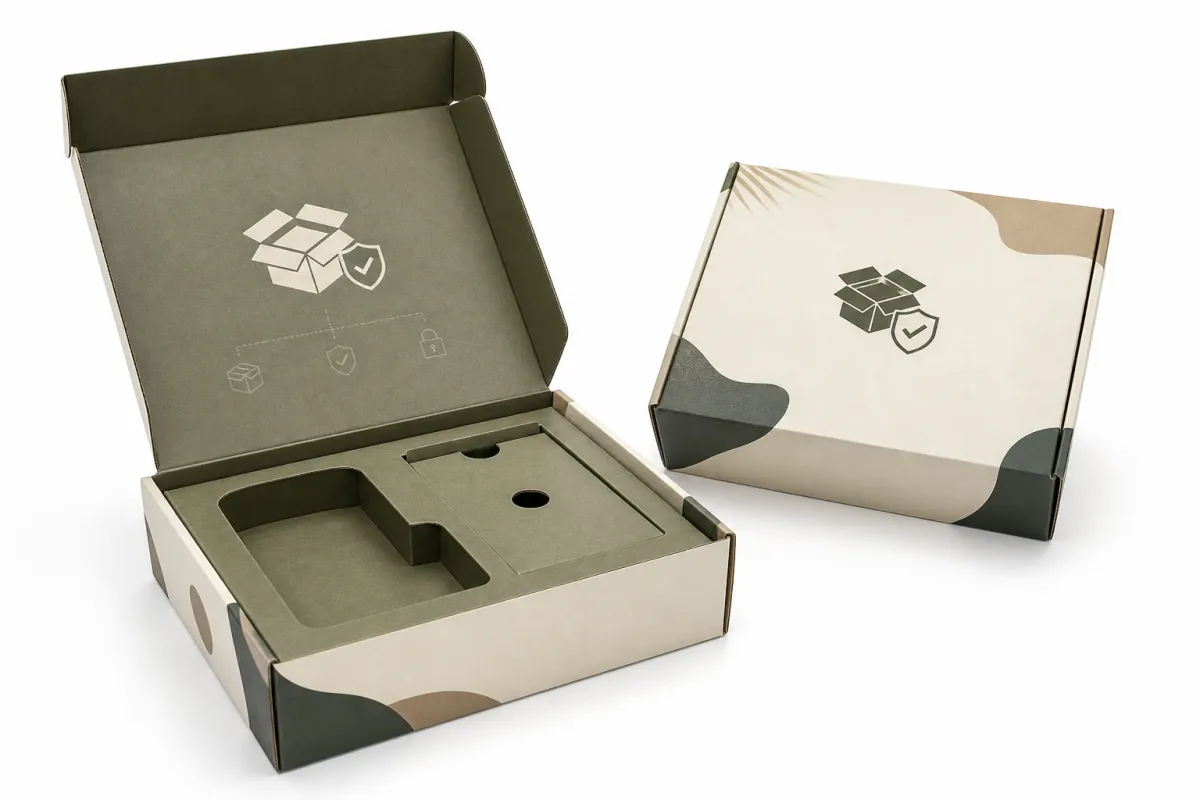
Printed ecommerce boxes with inserts solve a problem that gets blamed on the wrong part of the journey. People see a dented corner or a broken component and blame the carrier. The failure usually started earlier. The product moved, the insert flexed too much, or the carton had empty space that never should have been there. A snug insert keeps the item where it belongs while the printed outer box does the brand work. That pairing matters more than most teams admit.
From a packaging buyer's point of view, printed ecommerce boxes with inserts handle three jobs at once. The outer box provides structure and print space. The insert keeps the product from rattling, tipping, or scraping its way through transit. The whole pack also creates a repeatable opening experience. Lift the lid, open the mailer, and the product should sit centered, clean, and protected. That matters for fragile goods, cosmetics, electronics, premium accessories, and multi-piece kits that need to arrive in a fixed order.
There is a cost story hiding inside the presentation story. A package that uses printed ecommerce boxes with inserts well may need less void fill, fewer replacement shipments, and fewer support tickets. A loose pack may look cheaper on paper and still cost more later. That part is kinda boring until the returns start showing up. I see this mistake a lot. Teams chase the lowest unit price and ignore the rest of the math. The box is part of the product experience, not some disposable shipping shell nobody will ever notice.
Printed panels can do more than show a logo. Interior print can guide setup, add a thank-you message, or explain how to remove the insert without damaging the item. Thumb notches, cutouts, and hidden reveals turn printed ecommerce boxes with inserts into a small piece of choreography. If that sounds dramatic, compare it with the usual alternative: a brown carton, a couple of air pillows, and a product sliding sideways before it reaches the porch.
A secure pack does not feel luxurious because it is flashy. It feels luxurious because it is calm, controlled, and clearly built for the item inside.
For brands building a packaging system, think of the outer carton as the face and the insert as the restraint layer. The face does the talking. The restraint layer does the work. When both are planned together, printed ecommerce boxes with inserts become a practical tool for protecting margins and improving customer perception at the same time.
How Printed Ecommerce Boxes With Inserts Work in Fulfillment
The strongest printed ecommerce boxes with inserts are built as one workflow, not as two unrelated parts thrown into the mix later. It starts with the dieline, where carton dimensions, flap geometry, score positions, and print areas are locked in. Then the insert gets built to the actual product, not to a rough guess. That sounds obvious until you look at the number of packs that fail because someone treated "close enough" as a design method.
Common insert formats include die-cut paperboard trays, corrugated partitions, molded pulp nests, and folded pads. Paperboard works well for lighter items and presentation-heavy packs. Corrugated inserts are stronger and better for heavier products or mixed-SKU kits. Molded pulp brings a softer, more natural look and works well when cushioning and material story both matter. A lot of printed ecommerce boxes with inserts use one cavity for the main item and a second pocket for accessories, cables, or instructions.
Warehouse performance matters just as much as transit performance. If an insert ships flat and nests cleanly, operators can assemble it faster. If it needs to be folded in three stages with no visual cues, labor time goes up. Good pack-out design asks simple questions. Does the insert open left-to-right or top-down? Does the product drop in from above or slide in from the side? Can the finished box close with one hand? Printed ecommerce boxes with inserts should help the line move, not slow it down.
Shipping performance is where the engineering shows up. A pack that survives a realistic drop profile, compression load, and vibration exposure usually has better insert geometry. ISTA's testing standards are the right reference point, especially for parcel networks instead of palletized freight. You can read more about those standards at ISTA. A fit that stops lateral movement often does more than adding another millimeter of board thickness.
There is a bigger operational gain too. Printed ecommerce boxes with inserts make pack-out more consistent across shifts, facilities, and seasonal labor changes. If the insert shows exactly where the item belongs, the warehouse does not need tribal knowledge to build the pack correctly. That consistency matters for kitting, especially when the order includes several small parts that should not mix or drift around in transit. I have watched teams lose hours fixing packing errors that started with vague tray geometry.
When the system works, the customer sees precision. The product opens cleanly, the components stay arranged, and the insert fades into the experience instead of hijacking it. That is the quiet advantage of printed ecommerce Boxes with Inserts: they make the shipment feel controlled even when the network around it is anything but.
Key Factors That Shape Fit, Branding, and Cost
Fit comes first, because printed ecommerce boxes with inserts fail most often when the product dimensions were guessed instead of measured. Record length, width, height, and weight. Then measure the tolerances. A rigid item may need only 1 to 2 mm of working clearance in the insert cavity, while a fragile product may need enough room to load without scraping but not so much that it rattles. A tiny change in board thickness or crease depth can separate a clean pack from a frustrating one.
Material choice usually follows the product profile. Corrugated board is the default for strength, especially when the package will be stacked, shipped long distance, or built from heavier components. Paperboard is a better match for lightweight goods that need a polished interior and less material. Molded pulp often fits products that need cushioning without the plastic feel of foam. Specialty boards and hybrid builds sit in the middle, and they can improve presentation while pushing up tooling and setup burden. That is why printed ecommerce boxes with inserts should be priced as systems, not as one box line item.
| Insert / Box Option | Best For | Typical Strength | Branding Impact | Rough Unit Cost Note |
|---|---|---|---|---|
| Paperboard insert + printed mailer | Lightweight cosmetics, accessories, small kits | Light to moderate protection | Clean, premium interior presentation | Often lower at volume; setup matters most on short runs |
| Corrugated insert + printed ecommerce box | Fragile items, heavier kits, subscription packs | Strong restraint and better crush resistance | Practical, sturdy, still highly brandable | Usually mid-range; material weight adds cost |
| Molded pulp insert + printed outer carton | Electronics, glass, sustainability-led brands | Good cushioning, good fit control | Natural, eco-forward feel | Can be competitive on larger runs, less so on low volume |
| Multi-part custom insert system | Multi-piece sets, premium launches, fragile assortments | Highest fit precision | Strongest unboxing control | Higher tooling and sampling cost, but often best for returns reduction |
Print choices change cost almost as much as structure does. Full coverage, flood coats, metallic inks, inside print, and specialty finishes such as matte lamination or soft-touch all improve the visual story, but each one adds setup or production complexity. A restrained two-color exterior with a fully printed insert can sometimes give a better customer experience than printing every surface. Printed ecommerce boxes with inserts do not need maximum ink coverage to feel premium. They need the print to land where the customer actually looks.
Quantity matters because setup gets paid up front. If a custom insert needs tooling, die creation, or multiple proofs, the first-order cost can feel steep. Spread over 5,000 or 10,000 units, the unit price usually settles into a more workable range. For many brands, the real question is not whether printed ecommerce boxes with inserts are cheap. It is whether the lower damage rate, lower labor time, and better brand perception justify the spend. Often they do. Not always. Launch stage, product value, and shipping method all change the math.
Sustainability is another cost and brand variable. FSC-certified paperboard may carry a modest premium, but for buyers who want materials tied to a documented sourcing standard, the tradeoff can make sense. You can review certification basics at FSC. Some brands also want to reduce mixed-material packs to simplify recycling. Useful goal. Real-world constraint. A package that is technically recyclable but does a lousy job protecting the product is not a win.
For brands comparing options, the cheapest quote is not always the strongest value. If a lighter board or looser insert leads to higher returns, the savings disappear fast. That is the part many teams miss when they evaluate printed ecommerce boxes with inserts too early, before damage data and pack-out labor data are even on the table.
Step-by-Step Guide to Building the Right Box System
Start with the product, not the artwork. Measure the item in the packaging orientation it will actually travel in, then record weight, fragility, accessory count, and any surface that cannot be scratched or compressed. A bottle, a ceramic piece, and a small electronics kit all need different restraint logic. Printed ecommerce boxes with inserts should be built around the failure mode you most want to stop: corner impact, edge crush, internal abrasion, or component separation.
Choose the outer structure next. A mailer-style box is often a strong fit for lightweight ecommerce programs because it is easy to open, easy to print, and efficient to pack. A two-piece setup may suit a premium product that benefits from a lid-and-base reveal. Heavier products or longer transit profiles may need a stronger corrugated format with a higher test strength. The outer shell gives the package its shape, but the insert decides whether the item stays where you placed it. That is why printed ecommerce boxes with inserts need to be reviewed as one system.
Prototype the insert with actual samples. This is where teams often save money by spending a little first. Test how quickly the product loads, whether the insert tears during assembly, whether the item can be removed without force, and whether accessories stay visible. A box that looks perfect in a render may behave badly in hand. Printed ecommerce boxes with inserts deserve a real sample round before artwork is locked. If the geometry changes after print approval, the whole job gets more expensive. And yes, somebody is gonna ask why the second round costs more, so catch it early.
Pack-out order deserves more attention than it usually gets. If the product sits in the insert before a leaflet, code card, or accessory is added, the final sequence may be awkward. If the branding is printed on the inside lid but the insert blocks the view, part of that print budget is wasted. Coordinate the insert geometry with the brand message before production, not after it. That is where the practical value of printed ecommerce boxes with inserts shows up: structure, print, and handling should support each other.
A strong spec sheet prevents a lot of later confusion. Include outer dimensions, insert cavity dimensions, board grade, finish, print colors, glue points, acceptable tolerances, pack-out sequence, and reorder notes. If you use a vendor like Custom Logo Things, that document helps the production team quote more accurately and keeps the final pack from drifting between revisions. It also makes it easier to compare your packaging quotes against other Custom Packaging Products without losing detail in translation.
Bring the fulfillment team into the conversation before production starts. The warehouse knows where packages snag, where operators lose time, and where a beautiful design turns into a labor headache. If the insert needs two hands and a very specific angle to load, that may be fine for a luxury launch and a bad fit for a high-volume subscription box. Printed ecommerce boxes with inserts work best when the design matches the reality of the pack line.
One practical benchmark helps here: if the package is supposed to survive parcel handling, ask for a test plan tied to ISTA 3A or a similarly relevant protocol. That keeps the conversation focused on performance instead of opinions. The goal is not to overbuild every box. It is to build the lightest system that protects the product and still feels intentional.
Common Mistakes With Printed Ecommerce Boxes With Inserts
One of the biggest mistakes is designing the artwork first and the structure second. That order is backwards, even if it looks tidy in a deck. Printed ecommerce boxes with inserts need dimensional truth before the graphics are locked. If the product rubs the side panel or the insert blocks a fold, a beautiful printed surface cannot rescue the pack. Order matters.
Another mistake is making the insert too tight or too loose. Too tight, and pack-out becomes a fight. Operators may bend tabs, crush corners, or skip the right loading sequence. Too loose, and the item shifts, which can create abrasion, cracked corners, or the dreaded "arrived fine but looked messy" complaint. Printed ecommerce boxes with inserts should feel guided, not forced. The product should settle into place without a wrestling match.
Warehouse ergonomics are easy to ignore and expensive to ignore later. A complicated insert may protect the product beautifully and still slow every shipment by 10 to 20 seconds. Multiply that by thousands of orders and labor cost shows up with teeth. That is why printed ecommerce boxes with inserts should be tested by the people actually packing them, not only by the design team or the buyer staring at a sample photo.
Overprinting is another trap. If the customer only sees one exterior panel and one interior reveal, printing every hidden panel may not improve the experience enough to justify the cost. Sometimes a restrained layout with one strong brand mark and one sharp interior message performs better than a fully flooded carton. The same logic applies to inserts. A clean die-cut and a well-placed message can do more than a busy pattern ever will. Printed ecommerce boxes with inserts are strongest when the print supports the structure, not when it fights it.
Testing is the least glamorous step, and it saves the most money. A small drop test, compression check, or vibration simulation can expose a problem that sample-room handling will miss. For fragile or high-value products, that matters a lot. If the insert cracks under load or the product shifts after a corner drop, it is better to find that out before production. A few hours spent on testing can prevent a much larger batch of returns. Printed ecommerce boxes with inserts deserve that level of attention.
Replenishment planning often gets skipped because the launch is already moving. Then the second order gets delayed because no one documented the die code, board spec, or exact insert geometry. That is an avoidable headache. Keep the spec sheet clean, save the approved dieline, and note which version passed testing. Printed ecommerce boxes with inserts are only efficient if they are repeatable.
There is also a branding mistake that shows up later: treating the unboxing as a one-time novelty. Customers notice packaging consistency. If one order arrives perfectly seated and the next one rattles, trust erodes. The pack is part of the product promise. That is true whether the item is a $20 accessory or a $200 specialty item. Printed ecommerce boxes with inserts should deliver the same controlled result every time.
Printed Ecommerce Boxes With Inserts: Pricing and Timeline
Pricing for printed ecommerce boxes with inserts depends on six main drivers: box size, board grade, insert complexity, print coverage, finishing, and order quantity. A small mailer with a simple paperboard insert will price very differently from a heavy-duty corrugated box with a multi-pocket insert and interior print. Setup costs matter too. Die charges, tooling, and proof rounds can make the first order feel expensive, especially if the run is short.
For a realistic sense of scale, many custom programs land somewhere in these broad ranges: a simple printed mailer with a light insert might sit in the low tens of cents to the mid-range per unit at higher volume, while a more complex, multi-part set can move into the higher range quickly. At 5,000 units, a straightforward setup may land around $0.35-$0.75 per unit, while a more elaborate printed ecommerce boxes with inserts system can sit closer to $0.85-$1.60 or more, depending on board weight, print count, and finishing. Those numbers are not universal. They shift with size, material, and the number of custom components.
The schedule usually follows a predictable path. First comes the brief and measurement phase. Then the supplier prepares a structural sample or virtual proof. After that, artwork gets checked against the dieline and any insert layout. Once approvals are complete, production begins. Simple programs may move through that cycle in 12-20 business days after proof approval, while more complex printed ecommerce boxes with inserts can take longer if tooling or specialty materials are involved. Freight adds another layer, especially when the boxes are bulky.
Rush orders can be done, but they come with tradeoffs. Faster tooling, tighter production windows, and premium shipping tend to raise cost. That does not make rush production a bad call every time. A seasonal launch or a fulfillment backorder may justify it. Still, printed ecommerce boxes with inserts are easier to manage when the timeline leaves room for proof correction, fit iteration, and final sign-off. A two-day delay at approval can turn into a two-week problem downstream.
To get comparable quotes, suppliers need the same inputs. Send exact outer dimensions, product weight, shipping method, quantity, material preference, print expectations, and whether the insert must hold one item or several. Include photos if the product shape is hard to explain. Add a note about sustainability goals if you want FSC board, recyclable components, or fewer mixed materials. That information helps a supplier price printed ecommerce boxes with inserts accurately instead of padding the quote for uncertainty.
If you are comparing vendors, be careful about apples-to-oranges pricing. One quote may include only the printed outer carton. Another may include the insert, proofing, and a stronger board grade. Another may exclude freight or assume a simpler artwork build. I have seen teams choose the cheapest line item and then spend the difference on damage claims and labor. Printed ecommerce boxes with inserts should be costed on total landed value, not just unit price.
A small contingency helps. Budgeting an extra 5% to 10% for revisions, sample changes, or a second insert iteration is usually sensible. That buffer can stop a launch from stalling because one notch, tuck, or cavity needs a minor change. When the pack is custom, a little room in the budget saves time later.
Expert Tips and Next Steps for Printed Ecommerce Boxes With Inserts
Run a pilot batch before committing to a full rollout. A few hundred live shipments will show things that sample-room handling cannot, including operator shortcuts, scuff points, and how the insert behaves after repeated open-close cycles. Printed ecommerce boxes with inserts often look perfect in the sample stage and then reveal a small issue in the first real week of orders. That is normal. It is also why pilots are cheap insurance.
Standardize where you can. If three product variants share the same footprint, a shared insert platform can reduce tooling, simplify ordering, and make replenishment much easier. That does not mean every SKU should be shoved into one format. It means the packaging strategy should reward common dimensions instead of ignoring them. Printed ecommerce boxes with inserts get much easier to manage when the platform is modular.
Create a one-page packaging spec that everyone can use. Include the product dimensions, the insert style, the outer box style, the print layers, the finish, the assembly sequence, and the reorder reference. That may sound basic, but it prevents the most common handoff errors between brand, procurement, and fulfillment. It also helps when you need to request new custom packaging options or compare a revised structure against existing packaging products.
After launch, watch three data points closely: damage claims, customer feedback, and pack time. If the numbers show a problem, adjust the fit or the board grade before you blame the carrier. Carriers do damage packages, yes. If the product can bounce inside the box, the system was already weak. Printed ecommerce boxes with inserts should be corrected at the source whenever possible.
One more practical tip: keep the visual and mechanical goals aligned. A beautiful pack that takes too long to build is a problem. A highly efficient pack that feels cheap is also a problem. The sweet spot is a carton that protects the item, fits the line, and makes the customer think the brand paid attention. That is the standard worth aiming for, especially if you plan to scale.
If you are ready to move from idea to quote, collect three things today: product measurements, shipping profile, and target order volume. Those three inputs will let a supplier estimate printed ecommerce boxes with inserts with far more accuracy than a rough sketch ever could. From there, you can refine the board grade, insert geometry, and print layout until the system works for your product and your budget. The best printed ecommerce boxes with inserts are not the flashiest ones; they are the ones that protect the product, support the brand, and repeat cleanly at scale.
How do printed ecommerce boxes with inserts improve the unboxing experience?
They keep the product centered, cut visual clutter, and create a controlled reveal instead of a loose, shifting pack. Printed ecommerce boxes with inserts also let the exterior branding and the interior presentation work together, so the customer sees one clear story from shipping to first use.
What materials work best for printed ecommerce boxes with inserts?
Corrugated board is usually best for heavier or more fragile products that need stronger ship-ready protection. Paperboard works well for lighter items where presentation matters more than crush resistance. Molded pulp is a strong choice when you want cushioning, structure, and a more natural material story.
How much do printed ecommerce boxes with inserts cost?
Cost depends on box size, quantity, board grade, print coverage, and insert complexity. A simpler setup may land in the lower range at scale, while a custom multi-part system will cost more up front. Printed ecommerce boxes with inserts usually deliver better value when you factor in damage reduction and labor efficiency, not just unit price.
How long does it take to produce printed ecommerce boxes with inserts?
Timing usually includes sampling, artwork approval, production, and shipping. Straightforward projects may move through that process in a few weeks after approval, while complex structures or specialty finishes can take longer. Printed ecommerce boxes with inserts move faster when the spec is complete before quoting begins.
What should I send a supplier for an accurate quote on printed ecommerce boxes with inserts?
Send exact product dimensions, weight, quantity, fragility notes, shipping method, material preference, and print expectations. If the insert must hold multiple items or accessories, include a simple layout sketch or photo. The more precise the brief, the more accurately printed ecommerce boxes with inserts can be priced and engineered.