Buyer Fit Snapshot
| Best fit | Custom Retail Boxes with Inserts projects where brand print, material claims, artwork control, MOQ, and repeat-order consistency need to be specified before quoting. |
|---|---|
| Quote inputs | Share finished size, material target, print colors, finish, packing count, annual reorder estimate, ship-to region, and any compliance wording. |
| Proofing check | Approve dieline scale, logo placement, barcode or warning zones, color tolerance, closure strength, and carton packing before bulk production. |
| Main risk | Vague material claims, crowded artwork, missing packing details, or unclear freight terms can make a low unit price expensive after revisions. |
Fast answer: Custom Retail Boxes with Inserts: Board, Finish, Dieline, and Unit Cost should be specified like a repeatable production item. The safest quote records material, print method, finish, artwork proof, packing count, and reorder notes in one written spec.
Production checks before approval
Compare the actual filled-product size with the drawing, then confirm tolerance on folds, seals, hang holes, label areas, and retail display edges. Reserve space for logos, QR codes, warning copy, and material claims before decorative graphics fill the panel.
Quote comparison points
Review material grade, print process, finish, sampling route, tooling charges, carton quantity, and freight assumptions side by side. A quote is only useful when the supplier can repeat the same color, closure quality, and packing count on the next order.
Custom Logo Things
A product can look expensive in a mockup and still feel cheap on the shelf if it rattles around inside the package. Custom Retail Boxes with inserts fix that problem by holding the item in place, shaping the reveal, and making the whole package feel deliberate instead of improvised.
That part sounds simple. It is not. Good Custom Retail Boxes with inserts depend on product dimensions, board choice, insert style, print coverage, finishing, and how the box will actually travel from warehouse to customer. Miss one of those pieces and the whole thing gets weird fast.
What Are Custom Retail Boxes with Inserts?
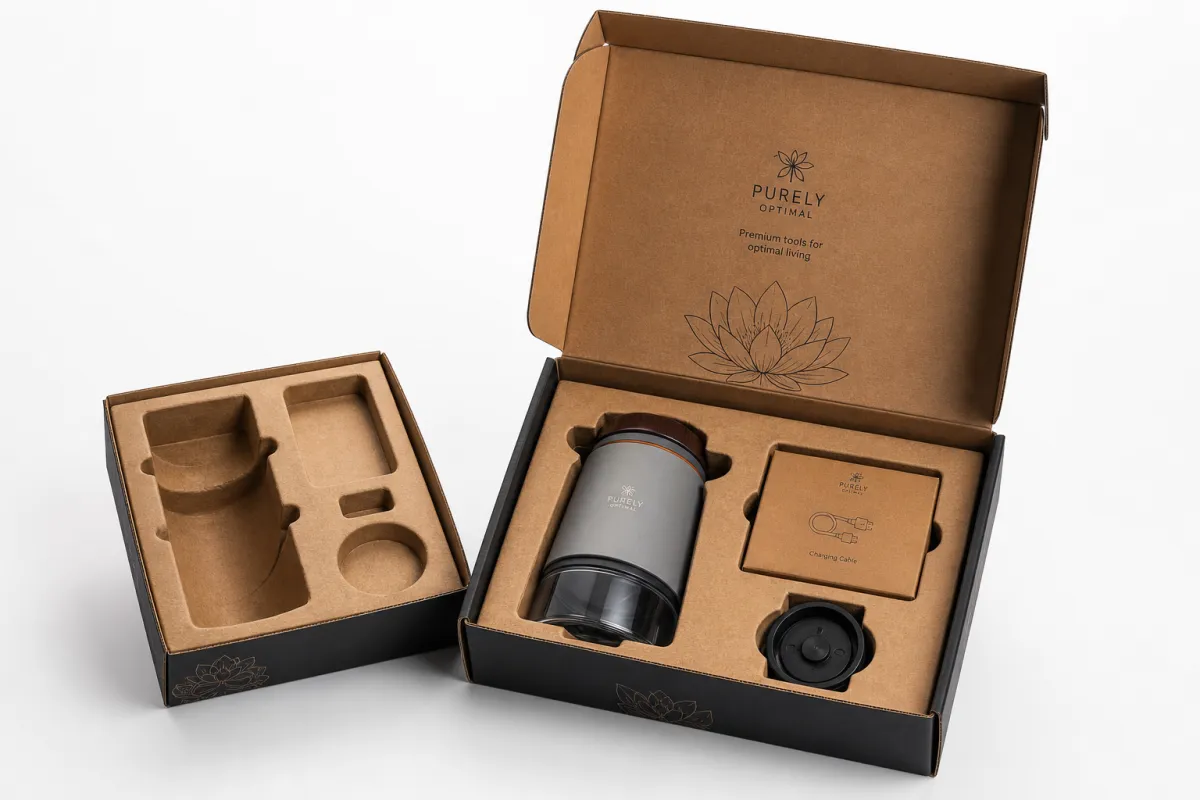
Custom Retail Boxes with inserts are a two-part packaging structure: an outer retail box and an inner component that holds the product, separates parts, or presents the item in a clean layout. The insert can be paperboard, molded pulp, foam, EVA, corrugated, or a folded structure built from the same board family as the box. The point is not decoration for its own sake. The point is control.
A product can be high-end and still feel cheap if it slides around inside the package. Buyers notice movement, noise, and loose parts immediately. So do retailers. That is why custom retail boxes with inserts show up so often in cosmetics, candles, electronics, supplements, jewelry, gift sets, and fragile accessories. A good fit makes the product look more valuable before the customer even touches it.
There is also a difference between a decorative insert and a functional one. Decorative inserts stage the item. Functional inserts hold it stable through handling, storage, and shipping. The best custom retail boxes with inserts do both. They create a neat presentation and keep the product from shifting an inch, because an inch is enough to scuff a finish or crush a corner. Packaging does not get points for trying.
From a packaging buyer's point of view, the insert should fit the product, not just fill dead space. Empty space invites damage. Oversized cavities look sloppy. Over-tight cavities crack, crease, or make removal annoying. That is why custom retail boxes with inserts need actual measurements, not optimistic guesses from a CAD file that nobody checked against the real item.
Practical rule: if the product moves, rattles, tips, or rubs on the wall, the insert is doing the wrong job.
Most brands first notice the packaging problem after a return spike or a bad unboxing video. Fair enough. Packaging is one of those costs people ignore until it starts costing them twice: once in production, and again in damaged goods. That is exactly where custom retail boxes with inserts earn their keep.
They also improve shelf appeal. Retail packaging has to do a lot in a small space. It has to protect, communicate, and sell. A well-built insert lets the box open in a controlled way, so the product faces forward, stays centered, and looks ready for display. That is package branding doing real work instead of just printing a logo and hoping for the best.
How Custom Retail Boxes with Inserts Work
The process starts with the product itself. Measure length, width, height, weight, and any break points: lids, buttons, spouts, clips, chargers, or accessories that change the footprint. If the item can rotate or slide inside the cavity, custom retail boxes with inserts need a tighter geometry. If the item is delicate, the insert needs more contact points and better shock absorption.
Structural choices come next. A tuck end carton, drawer box, two-piece rigid box, or magnetic closure box each changes the way the insert has to behave. The print area, opening method, shelf display needs, and shipping protection all affect the final shape. Custom retail boxes with inserts work best when those decisions are made together instead of one at a time. Otherwise you end up designing around a mistake and pretending it was strategy.
In practice, the insert is doing two jobs. It stabilizes the item during transit, and it shapes the reveal when the customer opens the package. That second part matters more than people think. A clean reveal makes the product feel intentional. A messy reveal makes even premium product packaging look rushed. That is why custom retail boxes with inserts often feel more upscale than loose-fill or tissue-heavy packaging, even before the customer handles the product.
Loose fill is cheap. Tissue is attractive. Foam pads can be effective. None of them control movement as well as a properly designed insert. They also create less repeatable placement, which gets ugly fast in higher-volume retail packaging. If your team wants the same look on every unit, custom retail boxes with inserts are usually the safer bet. Not perfect, just safer.
Sampling matters here. A paper dieline can tell you the box dimensions. It cannot tell you whether the lid catches on the insert edge or whether the product sits 3 mm too high and crushes the closure. That is why a physical prototype is worth the time. I would rather see one sample fail on a bench than 5,000 boxes fail in a warehouse.
If the packaging has to survive parcel handling, ask for transit testing, not wishful thinking. Industry testing bodies like ISTA provide useful frameworks for checking drop, vibration, and compression risk. No test removes all risk, but it does beat guessing. Custom retail boxes with inserts are much easier to trust after they have been through a real sample check.
Key Factors That Shape Fit, Finish, and Cost
Product shape drives the whole design. A tall candle jar, a flat skincare kit, a set of earbuds, and a three-piece gift bundle all need different custom retail boxes with inserts. A tall narrow item needs side restraint. A flat kit needs a shallow cavity with clear separation. A multi-piece bundle needs compartments that stop accessories from knocking into each other. That sounds obvious until a buyer asks for one generic insert shape to do four jobs. It will not.
Material choice is the next big lever. Paperboard is lightweight and print-friendly. Corrugated adds more crush resistance. Molded pulp gives a more sustainable story and decent cushioning. Foam protects delicate items well, but it can feel less premium depending on the brand and the customer base. EVA is often used for electronics or presentation kits where cut precision matters. Each material shifts the look, the feel, and the cost of custom retail boxes with inserts.
Finish changes perceived value fast. Matte lamination feels quieter. Soft-touch feels more luxurious but can mark or scuff in heavy handling. Foil and spot UV help with branding, though they should support the design instead of trying to carry it. If the artwork is weak, shiny coating will not save it. Good custom retail boxes with inserts make the structure and the graphics work together, which is the whole point of strong packaging design.
Compartment count matters too. Every extra cutout, divider, bridge, or nested tray adds labor and material waste. Two cavities are easier than five. One-piece inserts are usually cheaper than multi-part assemblies. That does not mean simpler is always better. It means the design should match the product set, not the fantasy of a sprawling unboxing moment that looks clever on a mood board and painful on the production line.
Sustainability is not just a branding line. It affects buyer trust, retailer acceptance, and sometimes compliance. Paper-based inserts can be easier to recycle in many markets, though local rules vary. If you want FSC-certified paperboard, look at the chain of custody standards from FSC. If the box can be designed with less material while still protecting the product, that is usually the smarter move. Less waste, lower freight weight, fewer headaches. Fancy concept. Very old idea.
Custom Printed Boxes also need realistic tolerances. Paperboard inserts compress a little. Molded pulp has natural variation. Rigid setups hold dimensions better, but cost more and ship heavier. If the product sits too tightly, you get rubbing. If it sits too loosely, you get movement. The sweet spot is usually just enough clearance for insertion without visible play. That is where experienced custom retail boxes with inserts stop being a nice idea and start becoming a practical system.
- Lightweight cosmetics: paperboard or molded pulp usually gives the best balance of cost and presentation.
- Fragile glass items: molded pulp, corrugated, or foam may be safer, depending on weight and drop risk.
- Premium electronics: EVA or precision-cut paperboard can create a cleaner layout and sharper product branding.
- Gift sets: multi-cavity inserts help keep the set organized and reduce return complaints about missing pieces.
Custom Retail Boxes with Inserts Pricing Breakdown
Pricing is where people get fantasy-optimistic. They ask for a quote on custom retail boxes with inserts and then act surprised when the number changes after the insert gets more complex, the finish gets upgraded, or the run gets smaller. Packaging is not a menu with fixed prices. It is a build. The cost depends on structure, stock, print coverage, finishing, quantity, and how much work the insert requires to stay accurate.
Small runs cost more per unit because setup work gets spread across fewer boxes. That includes die making, prepress, sample checks, and production adjustments. Larger quantities usually lower the unit price, but only if the design is stable. If you keep changing the cavity depth or artwork placement, those savings disappear fast. I have seen brands save a few cents on paper stock and then spend far more fixing damage claims. Brilliant strategy. Terrible math.
A workable pricing view for custom retail boxes with inserts looks like this. Numbers vary by region, board market, and finishing choice, but the ranges below are useful for planning:
| Option | Typical Use | Approx. Unit Cost at 5,000 Units | Main Strength | Main Tradeoff |
|---|---|---|---|---|
| Paperboard insert + folding carton | Cosmetics, small accessories, lightweight kits | $0.18-$0.38 | Clean print, low weight, efficient retail packaging | Less protection for heavy or fragile items |
| Molded pulp insert + carton | Electronics, glass items, gift sets | $0.24-$0.52 | Good cushioning and a more recyclable story | Surface finish is less polished than paperboard |
| Corrugated insert + custom printed box | Ship-ready retail packaging, heavier products | $0.30-$0.65 | Stronger crush resistance and better transit performance | Bulkier feel, more material usage |
| EVA or foam insert + rigid box | Electronics, presentation kits, premium displays | $0.60-$1.80 | Precise fit and strong product retention | Higher cost, weaker eco story, heavier build |
| Rigid box with specialty finish | Luxury sets, launches, high-value retail packaging | $1.10-$3.50+ | Premium feel and strong brand impact | Freight cost and setup cost go up quickly |
The hidden costs are where budgets get distorted. Sampling can add a few hundred dollars. Structural tooling can add more. Freight matters, especially for rigid packaging or oversized formats. Revisions cost time, and time is money once the launch date is fixed. If the insert needs more than one prototype round, the schedule and the budget both move. That is normal. It is also why custom retail boxes with inserts should be quoted as a system, not as isolated parts.
Do not ignore the landed cost. A box that saves $0.07 on paperboard but raises return rates is not cheaper. A box that adds $0.11 in insert cost but cuts damage claims is often a better buy. The real comparison is total cost: packaging, freight, damage reduction, replacement shipments, and how much brand value the shelf appearance adds. That is the difference between shopping for a quote and buying packaging that actually performs.
If you are comparing suppliers, ask for three versions: basic, balanced, and premium. Then compare the full package, not just the insert. For many brands, the middle tier is the sweet spot because it gives enough structure for product protection without turning the box into an expensive trophy. Save the trophies for award shelves, not shipping cartons.
Step-by-Step Process and Timeline
A good project starts with a clean brief. That means product dimensions, weight, quantity, target retail channel, shipping method, artwork status, and any accessories that must sit in the box. If a kit includes a charger, dropper, cable, or sample vial, list it. Custom retail boxes with inserts fail most often because the supplier gets incomplete information and has to guess about the missing piece.
Step one is structural design. The box style gets chosen first, but the insert cavity mapping should happen at the same time. The insert should support the product, allow easy removal, and account for manufacturing tolerance. A good designer will leave room for real-world variation. A bad one draws a cavity that looks nice in CAD and then closes like a vice grip around the product. Those are not the same skill.
- Brief the project: share dimensions, photos, weight, finish goals, and quantity.
- Choose the structure: folding carton, rigid box, drawer box, or ship-ready retail packaging.
- Map the insert: define cavities, pull points, retention pressure, and clearance.
- Review the dieline: check artwork zones, tuck flaps, and glue areas before printing.
- Prototype: test a physical sample with the actual product, not a stand-in.
- Approve production: lock the structure only after fit and presentation pass the check.
Sampling is not optional if the insert is doing real work. A PDF cannot show you whether the product sits too high, whether accessories tilt sideways, or whether the closure bulges. Custom retail boxes with inserts are tactile packages. They need tactile review. If the product will ship through parcel handling, ask the supplier whether the sample has been checked against drop or vibration criteria similar to ISTA test logic. The goal is not perfection. The goal is fewer surprises.
Timeline planning should work backward from launch. A simple paperboard project may move through sampling, approval, and production within a couple of weeks after proof signoff, while rigid or highly engineered setups often need more time. Add buffer for artwork changes, material availability, and freight. A late logo adjustment sounds harmless until it moves the whole press schedule. That is how a tiny change turns into a very expensive mood.
For a realistic plan, think in stages rather than one delivery date. Sample approval, structural lock, production run, finishing, packing, and shipping all need their own window. If you are coordinating retail launch dates, give yourself extra room for the part nobody respects until it causes trouble: the final fit check. It is amazing how often a package is designed around the ideal product and not the actual unit from production.
Common Mistakes That Waste Money
The first mistake is designing the outer box first and the insert second. That order sounds harmless. It is not. The insert should drive the internal geometry because it controls the product fit. If the outer box is fixed too early, the insert may end up too tight, too loose, or oddly shaped just to rescue a bad starting point. Custom retail boxes with inserts work best when the cavity decides the structure, not the other way around.
The second mistake is choosing the cheapest insert material without checking product weight or shipping stress. Light paperboard can be excellent for lightweight items. It can also be wrong for a glass bottle or a dense device. If a product can punch through the cavity during a drop, you will pay for it later in damage claims. Saving two cents is not smart if the box fails at the first corner impact.
The third mistake is forgetting the human hand. Customers need a way to remove the product without tearing the insert apart or fishing around for accessories. Pull tabs, thumb notches, and finger access points matter. A package that looks beautiful but feels awkward is still a weak package. Good custom retail boxes with inserts should be easy to open, easy to understand, and hard to misuse.
The fourth mistake is skipping transit testing because the box looked fine on the desk. Desk testing is a joke. Real shipping introduces compression, vibration, stacking, temperature changes, and clumsy handling. That is why some brands rely on standards-based checks such as ISTA methods instead of casual confidence. Packaging can fail in ways the artwork review never sees.
The fifth mistake is piling on too many finishes, compartments, and special effects. Spot UV, foil, embossing, soft-touch, multiple die-cuts, and deep inserts can look impressive individually. Together, they can inflate cost without improving sales. A cleaner design with strong package branding often beats a busy one that eats margin. Simpler also usually prints better. That matters more than people admit.
One more mistake: ignoring the product story. If the item is premium, the insert should not feel flimsy or rough. If the brand is sustainability-led, the packaging should not look like it came from three different material families in a trench coat. Custom retail boxes with inserts have to support the product promise. Otherwise the box is lying on the shelf, and customers are good at spotting that. They may not say it out loud, but they feel it immediately.
Expert Tips and Next Steps
Measure the product at the widest and tallest points, then add realistic tolerance for the chosen material. Not the fantasy dimension. The real one. Include closures, sleeves, caps, and accessories. If the insert needs to cradle a bottle, measure the shoulder and the base. If the kit contains multiple items, map the full set before you ask for a quote on custom retail boxes with inserts.
Ask for a physical prototype. Paper lies less than a mockup on a screen. A sample tells you whether the fit feels secure, whether the product sits level, and whether the customer can remove it without a struggle. If you are comparing custom retail boxes with inserts across suppliers, ask each one to build the same target sample so you can compare apples to apples instead of marketing promises to marketing promises.
Match the insert to the brand story. A luxury item should not rattle in a flimsy cavity with raw edges. A sustainable product should not be packed in wasteful overbuild. A value item should not carry a premium structure unless the shelf impact justifies the cost. That sounds basic, but it gets ignored all the time. Packaging is part of the offer. It is not a separate costume.
If the product has accessories, design the insert around the full kit. A charger on one side, a main item on the other, and a small manual tucked under a flap is cleaner than throwing everything into one open tray. Retail buyers like clarity. Customers like clarity. Operations teams like fewer missing parts. Everyone wins when the layout is intentional.
For teams building out packaging options, it helps to compare a box-first concept against a structure-first concept. If you need more formats, browse our Custom Packaging Products to see how different box styles can support retail packaging, shipping protection, and display goals. Then bring back the product data and ask for a sample target, not just a price.
My practical checklist is short: gather dimensions, photos, quantity, weight, shipping method, and a sample of the product if possible. Decide whether the priority is presentation, protection, or both. Then push the supplier to design the insert before locking the artwork. That order saves time, saves money, and usually gives you custom retail boxes with inserts that look premium without becoming a budget problem.
Bottom line: if you want custom retail boxes with inserts that ship cleanly, look sharp, and keep product returns under control, start with the product itself, then the insert, then the outer box. That is the order That Holds Up in real production, which is usually where the fancy ideas get tested. And yes, custom retail boxes with inserts are worth the effort when the fit is right.
What products work best in custom retail boxes with inserts?
The best candidates are fragile, premium, multi-piece, or presentation-driven products that need to stay put in transit. Cosmetics, candles, electronics, supplements, jewelry, and gift sets usually benefit the most. If an item is heavy, oddly shaped, or easy to scratch, custom retail boxes with inserts are usually worth the added setup.
Should I choose paperboard, foam, or molded pulp inserts?
Paperboard works well for lightweight products and clean presentation, especially when sustainability matters. Foam gives strong protection for delicate items, but it can feel less premium and less eco-friendly depending on the brand. Molded pulp is a strong middle ground when you want cushioning, structure, and a more recyclable story. The right choice depends on the product and the retail packaging goals behind it.
How much do custom retail boxes with inserts usually cost?
Price depends mostly on quantity, box style, insert complexity, material choice, and finishing. Small runs cost more per unit because setup and sampling get spread across fewer boxes. The real comparison is total cost, including damage reduction, returns, and replacement shipments. That is the part people forget while staring at the first line item.
How long do custom retail boxes with inserts take to produce?
Simple paperboard projects move faster than rigid or highly engineered inserts. Allow time for sampling, approval, production, finishing, and shipping instead of guessing on one best-case date. Complex inserts, specialty coatings, or late artwork changes can add days or weeks. A realistic timeline is usually safer than a rushed promise.
How do I measure products for a custom insert fit?
Measure length, width, and height at the widest points, not just the neatest points. Include accessories, closures, lids, cables, or anything that changes the package footprint. Add tolerance based on the insert material so the product fits snugly without being forced. That is the difference between a useful cavity and an expensive nuisance. For custom retail boxes with inserts, the measurement step does most of the heavy lifting.

