Buyer Fit Snapshot
| Best fit | packaging buyers who need clearer specs, stronger internal paths, and repeatable quote decisions where brand print, material, artwork control, and repeat-order consistency matter. |
|---|---|
| Quote inputs | Share finished size, material target, print colors, finish, packing count, annual reorder estimate, and delivery region. |
| Proofing check | Approve dieline scale, logo placement, barcode or warning zones, color tolerance, and any recyclable or compostable wording before bulk production. |
| Main risk | Vague material claims, crowded artwork, or missing packing details can create delays even when the unit price looks attractive. |
Fast answer: Printed Export Cartons with Logo: What Actually Matters should be specified like a repeatable production item. The safest quote includes material, print method, finish, artwork proof, carton packing, and reorder notes in one written spec.
What to confirm before approving the packaging proof
Check the product dimensions against the actual filled item, not only the sales mockup. Ask for tolerance on folds, seals, hang holes, label areas, and retail display edges. If the package carries a logo, QR code, warning copy, or legal claim, reserve that space before decorative graphics fill the panel.
How to compare quotes without losing quality
Compare board or film grade, print process, finish, sampling route, tooling charges, carton quantity, and freight assumptions side by side. A lower quote is only useful if the supplier can repeat the same color, closure quality, and packing count on the next order.
Printed export Cartons With Logo: what actually matters The cheapest-looking carton is often the most expensive carton on the dock. Printed export cartons with logo help reduce that hidden cost because they cut sorting mistakes, limit relabeling, and make pallet stacks easier to read before anyone breaks open the load.
A carton does more than hold product together. It works as a transport unit, a handling cue, and a brand marker all at once. Once the shipment crosses borders, gets re-labeled a few times, and lands beside similar orders in a warehouse, the print starts earning its keep in ways a plain box never really can.
From a packaging buyer's point of view, printed export Cartons with Logo do their best work when the box has two jobs: protect the product and move cleanly through receiving, storage, and distribution. They show up often in e-commerce replenishment, OEM supply, distributor orders, and retail replenishment runs where quick identification matters more than a plain brown shell. The branding matters, sure, but the logistics value usually carries the decision.
This is not about dressing up freight just for show. Printed export cartons with logo reduce friction. A clear logo, handling mark, carton count, and destination label can keep warehouse teams from guessing, make goods easier to verify at receiving, and present your company as organized before the seal even comes off.
The practical rule is simple: build the carton so it survives the route first, then make sure it supports the brand second. If it does both, the spec is working. If it only looks good on a screen, that is expensive optimism wearing a cardboard suit.
Printed export cartons with logo: why they beat plain boxes
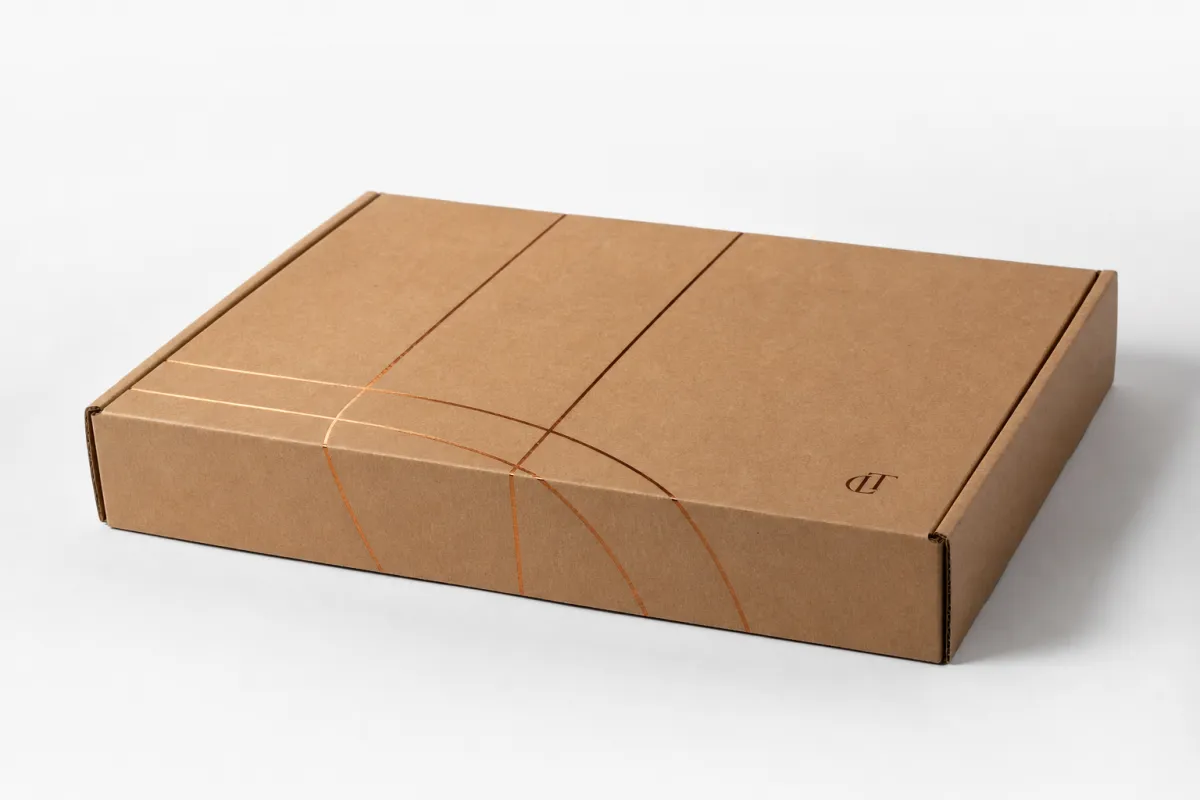
Printed export cartons with logo usually beat plain boxes for one plain reason: plain boxes create invisible labor. Someone has to add labels, apply stickers, sort by SKU, or confirm cartons by hand. None of that shows up in the unit price, which is why plain boxes look cheaper on paper and more annoying in the warehouse.
The risk side matters too. A plain carton can be hard to identify once it is stacked on a pallet, especially if outer labels get damaged, tucked out of sight, or buried under stretch wrap. With printed export cartons with logo, the brand mark, carton number, destination code, or handling instruction can sit where workers can read it from a distance. That detail feels small until a receiving crew is moving through fifty pallets and six delivery windows.
Brand presence counts, though not in a fluffy way. A printed carton signals that the shipment is planned, tracked, and consistent. Buyers notice that. Warehouse teams do too. Plenty of plain cartons arrive looking anonymous and scattered, which is an odd way to introduce a product line that likely took far more effort to develop than the box did.
I have watched pallets get rejected for nothing more than unreadable outer marks, and I have also seen a clean printed carton save fifteen minutes of hunting across a cold warehouse aisle. That gap sounds minor until it repeats hundreds of times a month. Then it becomes real money.
They fit especially well in these situations:
- Distributor orders that need fast SKU recognition at receiving.
- OEM shipments where the carton needs product and destination marks.
- E-commerce replenishment where pallet sorting speed matters.
- Retail supply chains that rely on carton-level identification.
- Export lanes where multiple handoffs create more chances for mix-ups.
Printed export cartons with logo are not the right answer for every shipment. Generic freight with no sorting complexity can live perfectly well in plain cartons. Once the order carries brand value, SKU complexity, or multiple destination labels, the printed box stops acting like decoration and starts acting like a control tool.
"If your receiving team keeps asking what is inside the pallet, your carton design has already failed a basic job."
That is why strong export packaging specs usually pair the logo with useful information: carton count, gross weight, handling icons, country-of-origin marking, and a clean space for barcodes or routing labels. The logo stays visible, but the carton still has to do the dull work. Dull work is what keeps freight moving.
Printed export cartons with logo production steps and lead time
Production usually runs smoothly, but only after the brief is complete. Printed export cartons with logo move through a familiar sequence: spec gathering, dieline creation, artwork proofing, sample approval, plate or tool setup, printing, die-cutting, gluing, packing, and dispatch. Skip one step and the run tends to remind everyone why packaging teams ask so many questions before they quote.
The schedule depends on how much is already locked in. A repeat order with the same carton size, the same board, and the same print layout can move quickly once proof approval is in hand. New sizes, heavier print coverage, coatings, and structural changes take longer because the supplier has to set up tooling, confirm the fit, and check whether the carton still performs under real shipping conditions.
Typical timing varies, though a useful working range looks like this: simple repeat runs may take about 10-15 business days after final approval, while a new printed carton program often needs 15-25 business days, sometimes longer if sample revisions are needed. Hot, humid, or rough-handling lanes deserve testing, not wishful thinking about print speed.
There is no magic in that timing. If the board grade is common, the print is simple, and the carton is already proven, production moves faster. If the box is new, the artwork is busy, or the route is harsh, the calendar gets wider. That is normal, and pretending otherwise is how rush fees sneak in later.
The most common schedule killers are rarely mysterious:
- Late artwork changes after proof approval.
- Missing barcode data or carton count details.
- Size changes that force a new dieline.
- Color corrections that trigger another sample round.
- Production starts before the sample is fully signed off.
Printed export cartons with logo should be planned against the product, the pallet, and the transport mode together. A carton that fits the product beautifully but stacks badly on a pallet is a poor export carton. A carton that stacks neatly but crushes under humidity is also a poor export carton. Cross-border shipping does not care which department approved the spec.
A practical rule helps a lot: if the carton has to protect the shipment through rough transit, build the timeline around sample validation and transport risk rather than printing alone. That matters even more on longer sea freight lanes, mixed freight, and distribution routes with multiple warehouse handoffs. A wrong sample is cheap to fix early. A wrong pallet already on the water is not.
There is also a standards angle worth taking seriously. Export cartons can be checked against transport testing expectations from groups like ISTA, and fiber choices can be matched to FSC requirements when recycled or certified material matters. Nobody needs a dissertation to buy a carton. The box still needs to fit the route you are paying for.
Cost, pricing, and MOQ for printed export cartons with logo
Printed export cartons with logo are priced by more than one variable, which is why “What is your box price?” is not enough by itself. Size, board grade, flute type, print method, number of colors, coating, tooling, and order quantity all affect the final figure. New artwork or new die tooling adds setup cost, and the pricing shifts again if the design calls for special labels, stronger adhesives, or moisture resistance.
MOQ exists because setup is real. Plates have to be made, the machine needs to be dialed in, and the first part of the run always creates some waste while the line stabilizes. Spread those fixed costs across 500 pieces and the unit cost looks ugly. Spread them across 5,000 or 10,000 pieces and the cost begins to look like a normal packaging line item instead of a penalty for being small.
Here is a practical pricing view for printed export cartons with logo on a 5,000-piece run. These are broad market ranges, not promises, because carton size and print coverage can swing things more than most buyers expect:
| Option | Typical unit price range | Best for | Tradeoff |
|---|---|---|---|
| Plain export carton, no print | $0.18-$0.40 | Generic freight and simple labeling | Lowest unit price, but more relabeling and sorting labor |
| Flexo printed carton with logo | $0.22-$0.55 | Durable export runs and repeat orders | Good value, but graphics are less detailed than offset |
| Litho-lam or offset printed carton | $0.45-$1.20 | Sharper brand presentation and retail-facing cartons | Higher cost and usually more setup work |
| Digital printed carton | $0.35-$0.95 | Short runs, frequent artwork changes, pilot launches | Can be efficient for smaller quantities, but not always the lowest at scale |
Those numbers only help if you compare them the right way. Ask for unit price, tooling cost, sample fee, freight terms, and the exact print spec in one quote. Otherwise you are not comparing offers. You are comparing one supplier’s neat email against another supplier’s honest math.
The lowest quote is also the easiest one to misunderstand. Sometimes the supplier trims board strength, reduces print coverage, chooses a cheaper coating, or packs cartons in a way that saves money now and creates damage later. That is a fine way to win procurement and lose cargo. Printed export cartons with logo deserve judgment based on landed cost and performance, not just the headline number.
There is a buying habit here that saves real money: split the quote into three parts. First, the carton itself. Second, any tooling or plate cost. Third, freight and handling. Once those pieces are visible, it becomes much easier to see whether a supplier is truly cheaper or only hiding cost in another line. That kind of comparison saves more than one hard negotiation ever will.
Choosing the right board, print method, and export specs
Printed export cartons with logo need a board structure that matches the actual load, not the hopeful version of the load. Single-wall corrugated board works for lighter products and shorter routes. Double-wall earns its place when stacking pressure, long transit, moisture exposure, or rough handling are part of the job. If the carton is underfilled or overpacked, the print spec will not rescue it.
Print method changes both the economics and the look. Flexo is usually the workhorse for export cartons because it is economical, durable, and suited to repeated production. Offset or litho-lam gives sharper graphics and richer image quality, which makes sense if the carton is seen by retail teams or used in a premium brand presentation. Digital is helpful for short runs and fast artwork changes, especially for launch testing or seasonal updates.
For most export programs, the most important specs are not glamorous:
- Edge crush and burst strength for compression and stacking.
- Moisture resistance if the route includes humidity or sea freight.
- Carton fit so the product does not rattle or deform the box.
- Pallet pattern so the load does not lean or waste space.
- Hand holes and tape zones for easier warehouse handling.
- Venting if the product needs airflow or temperature relief.
Branding should support those specs, not compete with them. A large logo printed across fold lines is a bad idea if it interferes with seams or glue zones. Tiny decorative graphics are also a waste if they disappear under stretch wrap. Printed export cartons with logo work best when the logo is bold, the placement is practical, and the important handling marks stay readable after a few hours on a pallet.
Compliance details matter too. The carton may need country-of-origin marking, carton count, gross or net weight, handling icons, SKU or barcode placement, and destination-market labeling. Some buyers also require recycled-content claims, FSC-certified fiber, or internal audit references. If you are buying into a formal supply chain, do not assume the printer will guess the labeling rules correctly. They usually will not.
The clean way to choose specs is straightforward: choose the board for protection, choose the print method for budget and image quality, then place the logo where it improves identification without weakening the structure. It is not dramatic. It is simply how export cartons stay useful after the truck pulls away.
Step-by-step order process for printed export cartons with logo
The cleanest order process starts with a packaging audit. Before you ask for a quote on printed export cartons with logo, confirm the product dimensions, gross weight, pack count per carton, pallet size, shipping route, and transport mode. Sea freight, air freight, and mixed freight punish weak carton specs in different ways. A box that survives a short domestic move may fail after a week of humidity and stacked pallets.
Next comes the carton spec and dieline. Inside dimensions, tolerance ranges, board grade, stacking requirement, and print area should be fixed before the artwork gets fancy. Skip that step and the logo ends up fighting the fold lines, the barcode gets too close to a seam, or the carton count label lands where tape will hide it. Packaging people are not being difficult when they push dimensions first. They are trying to keep the art file from becoming a production problem.
Then comes proof review. This is where careful buyers earn their keep. Check the logo scale, color accuracy, barcode readability, handling marks, and the placement of seams, folds, and glue areas. If you are using barcodes, verify the quiet zone. If you are printing handling icons, make sure they stay visible after palletization. If your artwork uses reversed text or thin lines, check those details at actual size rather than trusting a screen mock-up.
A sample should be treated as a gate, not a formality. Review fit, stacking strength, print clarity, and any crush or moisture concerns before you commit to volume. If the sample is too tight, too loose, or oddly weak at the corners, fix it now. A bad sample is cheap to reject. A bad shipment is not.
Production controls matter at the end. Confirm carton count per bundle, palletizing instructions, QC checkpoints, and shipping notice details so the finished cartons arrive usable, not just technically printed. For printed export cartons with logo, the final mile is often where problems get introduced. Someone stacks the bundles wrong, someone ships the wrong version, or someone forgets to note which labels belong on the outer carton. None of that is exotic. It is just avoidable.
- Lock the product dimensions and weight.
- Choose board grade and carton style.
- Approve dieline and artwork together.
- Review a physical sample.
- Confirm packing, palletizing, and dispatch details.
That sequence sounds basic because it is. Basic is good. Basic keeps export cartons from turning into a rework project.
Common mistakes with printed export cartons with logo
The biggest mistake with printed export cartons with logo is chasing the cheapest carton and ignoring damage risk. One crushed shipment can erase every penny saved on the box. That sounds obvious, yet buyers still get trapped by unit price when they should be looking at the landed cost of a successful delivery.
Another frequent error is designing before confirming the pallet size and stacking requirement. A carton can be sized perfectly for the product and still fail the route because it does not fit the pallet pattern or the distribution system. That is how unstable stacks, wasted freight cube, and a carton spec nobody wants to own show up in the same project.
Over-design is common too. Too many colors, too much print coverage, and too much fine detail can make the carton more expensive without improving logistics. A large logo, a clear product code, and the right handling marks usually do more than six decorative elements that will disappear under stretch wrap anyway. Printed export cartons with logo are not billboards. They are working packaging.
Skipping sample approval is another one. That is how teams end up with the wrong shade, unreadable barcode, weak glue seam, or logo placement hidden under tape. A sample should answer real questions: Does it fit? Does it stack? Does the print survive handling? If the answer is fuzzy, do not pass it just because the schedule is annoying.
Ordering too late is the last bad habit worth mentioning. When cartons are rushed by air just to meet launch dates, the freight bill can make the packaging budget look absurd. At that point the carton is not just a box. It is an expensive apology.
"The box price is never the whole story. The real cost shows up in labor, damage, rework, and freight."
That is why printed export cartons with logo should be planned like part of the supply chain, not like a last-minute branding add-on.
Expert tips and next steps before you request a quote
Send suppliers a one-page brief. Keep it blunt. Include product size, gross weight, destination markets, monthly volume, print colors, pallet size, and any stacking or moisture requirements. If you hand over a messy email chain and expect a polished quote, the result is usually a vague quote or a wrong one. Often both.
Ask for two paths if you can: one optimized for unit cost and one optimized for lead time. Those are not usually the same answer. Printed export cartons with logo can be made cheaper by increasing quantity, simplifying print, or relaxing certain finishing details. They can be made faster by choosing a more common board spec or a simpler print process. The right choice depends on which problem actually needs solving.
Request proof of similar export work, but keep it practical. A sample photo, carton spec sheet, or route example says more than a polished sales pitch. The goal is to judge whether the supplier understands export performance, not whether they can make a nice brochure.
Build a buffer into the rollout. Approve final artwork before inventory gets tight, and order extra cartons for spoilage, damage, and rework. A small cushion costs less than emergency freight and saves a lot of stress when the count comes up short by one pallet at the wrong moment.
There is one last buying habit worth copying: compare printed export cartons with logo apples to apples. Same dimensions. Same board grade. Same print method. Same coating. Same delivery terms. If the quotes are not aligned on those points, the cheapest price is just a noisy number.
- Gather the spec sheet.
- Take a current carton photo.
- List the destination markets.
- State the delivery window.
- Ask for an exact matched quote set.
That is enough to get a real proposal instead of a guessing contest. Guessing is not a procurement strategy.
Final thoughts on printed export cartons with logo
Printed export cartons with logo are worth buying when they make the shipment easier to identify, easier to receive, and easier to trust. That is the core test. If the carton only looks branded but does not improve handling, it is decoration with a freight bill attached. If it reduces confusion, supports labeling, and holds up in export transit, it earns its place quickly.
The best programs keep the spec grounded: the right board, the right print method, the right pallet fit, and the right approval process. That is how printed export cartons with logo avoid common mistakes and deliver real value instead of pretty disappointment. The buyers who get the best results are usually the ones who treat the carton as part of the logistics system, not as a side project for marketing.
If you are preparing a quote request for printed export cartons with logo, start with the product dimensions, gross weight, destination list, monthly volume, and a clear photo of the current carton. Then add the pallet size, coating needs, and any labeling rules that apply in the destination market. That gives suppliers something useful to work with and gives you a better shot at a clean comparison the first time around. Boring? Sure. Effective? Also yes.
The actionable takeaway is simple: lock the carton size, board grade, print method, and pallet pattern before artwork gets finalized. Do that once, and the logo becomes part of the shipping system instead of a last-minute styling decision.
Are printed export cartons with logo better than plain cartons for shipping?
Usually, yes, when you need faster receiving, fewer mix-ups, and a more professional presentation on pallets. Plain cartons can work for generic freight, but they often create extra labeling and sorting work that costs more than the print.
What is the best print method for printed export cartons with logo?
Flexo is the usual default for durable, cost-efficient export cartons, especially on repeat orders. Use offset or litho-lam when you need sharper graphics, and use digital when the run is smaller or the artwork changes often.
How do I estimate the unit cost of printed export cartons with logo?
Start with carton size, board grade, print colors, quantity, and whether new tooling is required. Then compare quotes that separate unit price from tooling, samples, and freight so you can see the real landed cost.
What lead time should I expect for printed export cartons with logo?
Simple repeat jobs can move quickly after approval, while new sizes or more complex print specs usually take longer. Add time for artwork revisions and sample approval, because skipping those steps is how shipments get delayed later.
What should I check before approving a sample carton?
Check fit, stacking strength, print accuracy, barcode readability, tape zones, and how the carton behaves when folded and handled. If the carton will ship through humid or rough lanes, confirm that the sample reflects the actual board and coating you will receive in production.


