Printed Fabric Labels: How to Choose and Order the Best Tags
Printed fabric labels are often the last physical detail a customer notices before a garment feels complete. That final touch can make a product feel considered and durable, or rushed and disposable. The difference is rarely obvious on a screen. It shows up in the hand, in the wash, and in the first five seconds of wear.
Printed Fabric Labels: What They Are and Why They Matter
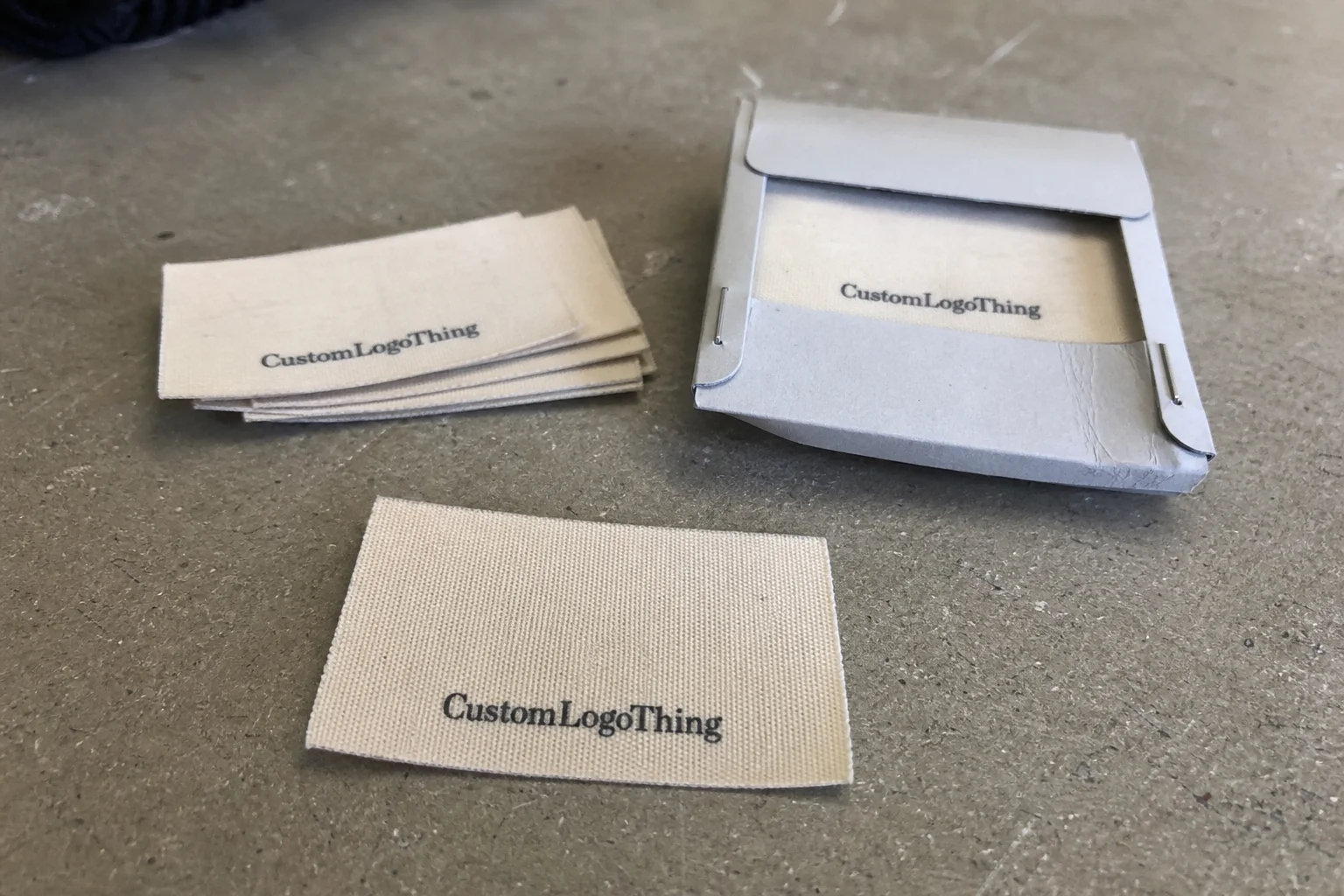
Printed fabric labels are fabric-based tags that carry brand, size, care, origin, or compliance information using ink rather than woven threads. That changes quite a bit. The surface is usually smoother, small text can reproduce more cleanly, and the cost structure often works better for medium and high-volume orders than heavily textured woven alternatives.
They appear across almost every apparel category, though the reason shifts by segment. Kidswear needs softness because skin sensitivity matters. Athleisure calls for low-profile branding because bulk gets in the way. Handmade goods often need flexible layouts because variable information and small runs are common. Uniform programs want repeatability more than decoration.
Some buyers treat labels as a minor trim decision. That is a mistake. A good label supports perceived quality; a poor one can make an otherwise solid garment feel cheap the first time someone rubs the inside collar or reads the care text. Customers rarely separate the trim from the product. They experience the whole thing as one object.
The tradeoff is simple enough. Printed fabric labels can deliver fine detail and lower unit costs at scale, but the base fabric, ink system, and finishing method decide whether they survive laundering, abrasion, and heat. A proof can look excellent and still fail in use if the material does not suit the garment.
Experienced buyers usually treat the label as part of the finished product, not as an isolated line item. The same brand might choose satin for a soft everyday tee, polyester for repeated wash cycles, nylon for tougher use cases, and cotton when the hand-feel needs to support a more natural presentation. The wrong choice does more than alter the look. It changes how the garment is judged.
How the Production Process and Timeline Usually Work
The production path is usually more structured than first-time buyers expect. A typical job moves through brief, artwork cleanup, proofing, sampling if needed, production, finishing, inspection, and shipment. Each step runs on its own clock. Total lead time stretches when revisions come back late or the artwork is underspecified.
- Submit the brief. Send artwork, label size, fold style, garment use, quantity, color targets, and exact copy.
- Artwork cleanup. The supplier checks line thickness, text size, color accuracy, and placement so the design can reproduce cleanly.
- Proofing. You receive a digital proof showing dimensions, layout, and usually a production mockup.
- Sampling. If the job is new, color-sensitive, or technically tight, a physical sample may be produced for approval.
- Production. The order moves into printing, drying or curing, cutting, folding, inspection, and packing.
- Shipment. Transit time depends on the route, carrier, and whether the labels are packed alone or with other trims.
Realistic timing helps prevent launch pressure later. Proof turnaround is often 1 to 3 business days. Sampling can add 5 to 10 business days if the changes are simple, and longer if the file still needs work. Production for a standard order commonly takes 7 to 15 business days after approval. Shipping is separate, and international freight can add another week or more depending on the route and customs flow.
Special colors, specialty finishes, and stricter inspection requirements can extend the schedule. Proof corrections can do the same. If the first version reveals unreadable 4-point care text or a layout that is too tight for the fold, that is not a minor tweak. The job goes back into review.
For teams managing packaging and garment trims together, the useful mindset is to treat the label as part of the full product system. A collar label that fails after repeated washing is a customer-facing quality issue, not a trim issue. That distinction matters when timelines, returns, and reorders start to interact.
Cost, Pricing, and MOQ: What Actually Changes the Quote
Pricing for printed fabric labels follows a few predictable variables: material, print complexity, size, finishing, and volume. Once those are separated, quotes become easier to compare. Until then, the numbers can look arbitrary because one supplier is quoting setup differently from another.
For standard runs, a simple satin or polyester label at 5,000 pieces might fall around $0.05 to $0.12 per unit before freight. A more complex build with denser coverage, specialty inks, or a softer finish can move toward $0.12 to $0.28 per unit. Small runs of 500 to 1,000 pieces often cost much more per unit because setup and proofing are spread over fewer labels.
MOQ exists for a reason. The supplier usually has fixed costs in artwork preparation, proofing, material setup, and production changeover. Those costs do not disappear just because the order is small. A buyer comparing 300 labels and 5,000 labels is comparing two different production models, not just two prices.
| Option | Typical Use | Relative Cost | What to Watch |
|---|---|---|---|
| Satin | Soft garments, basics, kidswear | Low to moderate | Comfort is strong, but wash durability still needs checking |
| Cotton | Natural, handmade, eco-positioned brands | Moderate | Good hand-feel; print clarity and wash life depend on the process |
| Nylon | Workwear, uniforms, higher-wear items | Moderate to higher | Durable, but confirm skin feel on garments worn close to the body |
| Polyester | General apparel, activewear, repeat washing | Low to moderate | Often the best balance for repeat use and cost control |
Hidden costs matter almost as much as the base price. Specialty inks, rush production, fold styles, custom packaging, and reproofing can all shift the final number. Freight can change the quote materially too, especially when the supplier prices ex-works and the buyer only sees shipping late in the process.
The cleanest comparison is a line-item comparison. Separate setup fees from unit price. Separate sampling from production. Ask where the next volume tier starts and what repeat orders cost if the artwork stays unchanged. The cheapest first order is not always the cheapest program over six months.
Choosing Materials, Ink, and Finishes That Hold Up
Material choice drives both feel and lifespan. Satin is usually the softest mainstream option. Cotton reads more natural and can fit a handcrafted or low-impact brand story. Nylon and polyester generally hold up better under repeated washing, which is why they show up often in uniforms, workwear, and activewear.
The substrate is only part of the story. Ink adhesion and curing matter just as much. The same artwork can perform very differently depending on the print system and how well the ink is dried or cured. Fine type and small care text are the first to expose problems. If the ink layer is too light or curing is incomplete, the label can fade, crack, or rub off faster than expected.
Finishing changes the result too. Cut edges feel different from folded ends. Heat-seal backing can help with placement, but it also changes how the label sits against skin and seams. Coatings can improve handling or print clarity, yet some coatings make the edge stiffer than expected.
Step-by-Step Ordering Guide for Cleaner Artwork and Better Samples
Start with the actual use case, not just the logo. A label for a baby bodysuit needs a different hand-feel and wash profile than one for a canvas jacket or gym short. Once the garment use is clear, the rest of the order gets easier to define.
Send vector artwork whenever possible. Clean vector files reduce cleanup time and usually preserve the sharpness of line work and type. If the design includes care icons, legal text, or multiple languages, build room into the layout before the proof stage. Crowded artwork tends to get corrected after it is already expensive to change.
Ask for a physical sample when color, touch, or wash performance could affect the order. Digital proofs show layout and copy well enough, but they do not tell you how the label feels against skin or how the ink behaves after laundering. A small sample often saves a larger reorder later.
Approvals work best when they are specific. Comments like “make it nicer” do not help production. Mark the exact copy that needs correction, call out the fold style, and confirm whether the sample should match the final bulk order or just test one element of the build.
Common Mistakes That Lead to Faded, Scratchy, or Rejected Labels
Too many buyers start with the lowest price and work backward from there. That usually leads to a label that looks fine in photos and fails in use. A slightly better substrate or print method often costs less than handling returns, replacements, or a delayed launch.
Another common problem is unreadable small text. Care instructions, fiber content, and compliance details often get squeezed into a layout that looks tidy on screen but collapses in production. Once the font size drops too far, the label becomes hard to scan and easier to reject.
Misjudging the wash environment causes trouble too. Labels for activewear, school uniforms, and work garments face more abrasion than labels on decorative fashion pieces. A soft finish that feels nice in hand can wear down quickly if the garment gets heavy use.
Late artwork changes create avoidable delay. One updated line of legal copy can reopen proofing, shift the production slot, and change the cost if the supplier has already set up the run. Small edits are rarely small once the job is in motion.
Expert Tips and Next Steps Before You Request a Quote
Keep one master spec sheet for each label style. Include size, fold, base material, ink colors, copy, wash target, and the garment category it belongs to. That simple file makes reorder conversations much faster and reduces the chance that a supplier reuses the wrong version.
Compare samples under the same light and on the same garment. A label that looks perfect on a desk can feel harsh once it is stitched into a knit tee. The context changes the read more than most people expect.
If the order is large, ask about repeat-order stability. Some suppliers can match previous work closely, while others need fresh setup every time. The difference affects both lead time and consistency across batches.
For a new program, it helps to treat the first order as a test of the production system, not just a purchase of labels. The goal is not only to get one good run. The goal is to make the next run easier to place, easier to inspect, and less expensive to manage.
FAQ
What are printed fabric labels used for?
They identify the brand and carry size, care, origin, or compliance details. They also affect how finished the garment feels to the customer.
Which material is best for printed fabric labels?
It depends on the garment. Satin is soft, cotton feels natural, polyester is durable, and nylon works well for tougher use cases.
How long does production usually take?
Proofs often take 1 to 3 business days, production usually takes 7 to 15 business days after approval, and shipping is separate.
Why do small orders cost more per label?
Setup, proofing, and changeover costs get spread across fewer units, so the unit price rises quickly on small runs.
Do I need a sample before production?
If color, hand-feel, or wash durability matter, a sample is a smart step. It catches issues that a digital proof cannot show.