Printed Hang Tags for Jewelry Packaging Print Finish Comparison: What the Finish Actually Changes
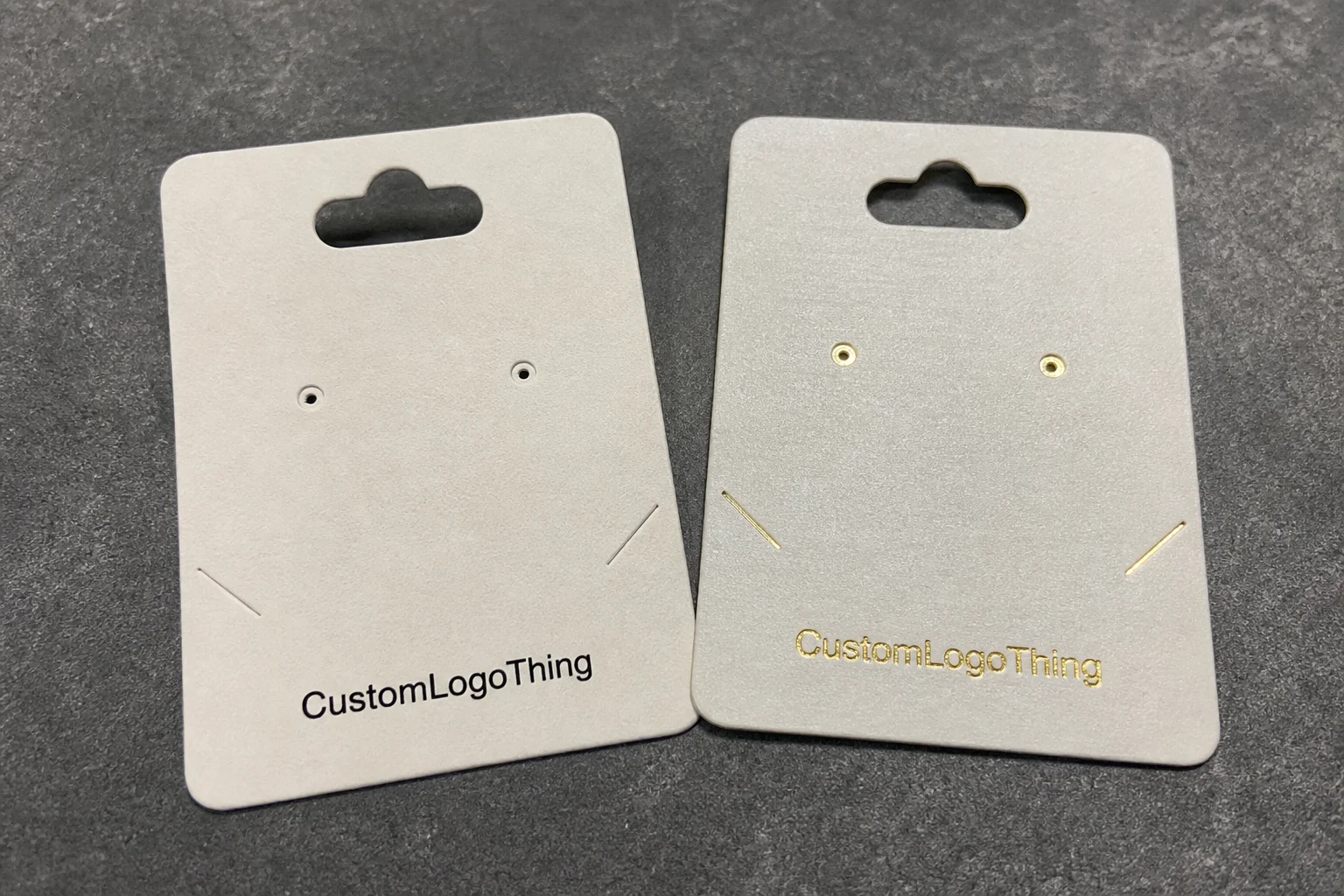
The phrase Printed Hang Tags for Jewelry packaging Print Finish Comparison is really about a practical choice: which surface treatment makes the tag readable, durable, and consistent with the jewelry it supports. At retail distance, a tag is judged fast. Light reflection, paper texture, and ink density become visible immediately, especially on small formats where there is little room for design error.
On jewelry, the finish affects first impression, color depth, glare, fingerprint visibility, and how the tag survives packing and handling. The tag also has to carry size, price, SKU, care details, and sometimes a barcode or QR code. That makes finish selection part of the packaging spec, not a decorative afterthought.
For a useful comparison, focus on six buying factors:
- Appearance under store lighting
- Tactile feel in the hand
- Durability during handling and shipping
- Print clarity on small text and logos
- Cost at realistic quantities
- Production complexity from proof to packing
That frame keeps the decision tied to the job the tag must do, not just how it looks on a screen.
How Gloss, Matte, Soft-Touch, Foil, and Spot UV Behave in Print
Each finish changes how the tag looks and how it is produced. Gloss boosts saturation and creates a brighter, more reflective surface. Matte lowers glare and gives artwork a quieter look. Soft-touch adds a velvety laminate that changes the feel as well as the appearance. Foil adds metallic emphasis through heat and pressure. Spot UV creates selective shine only where you want it.
The same artwork can succeed with one finish and fail with another. Gloss can make a color palette feel lively, but it can also create glare across tiny barcode areas. Matte improves legibility and control, but it can mute a brand that depends on shine. Soft-touch feels premium, though it can show scuffing on thin stock if the tag is handled heavily. Foil gives strong hierarchy, but on a small face it needs restraint. Spot UV works best as an accent, not as the main event.
Production matters too. Gloss and matte are often built into coating or lamination steps. Foil and spot UV add extra setup, more inspection, and more risk if the file is not prepared cleanly. That is why digital printing is often better for short runs or variable data, while offset printing usually makes more sense for larger quantities where repeat color matters more.
For jewelry tags, restrained combinations usually work best. Matte overall with a small foil logo is a common premium choice because the contrast is clear without being loud. Soft-touch with foil can look refined if the tag is large enough to support it. Too many effects on a small tag can make it feel overdesigned.
| Finish | Visual Effect | Handling Feel | Typical Cost Impact on 5,000 Pieces | Best Use |
|---|---|---|---|---|
| Gloss coating | Bright, high contrast, reflective | Slicker surface, easy to wipe clean | $0.10-$0.16 per unit | Fashion-forward branding, strong color, high-energy displays |
| Matte coating | Low reflection, soft color response | Quiet, controlled, less slippery | $0.11-$0.18 per unit | Readable text, restrained luxury, reduced glare |
| Soft-touch lamination | Muted, velvety, premium-looking | Distinctively smooth and tactile | $0.18-$0.30 per unit | Fine jewelry, bridal lines, premium gift presentation |
| Foil stamping | Metallic emphasis, strong contrast | No texture change unless combined with lamination | $0.06-$0.18 added to base | Logo accents, small highlights, luxury cues |
| Spot UV | Selective shine over matte or coated stock | Slightly raised or slick in highlighted areas | $0.05-$0.15 added to base | Logo marks, patterns, limited contrast elements |
Cost ranges vary by stock, coverage, and finishing method, but the pattern is stable: more steps usually means a higher unit cost. The exact cent value matters less than the relationship between quantity, finish complexity, and how many times the job has to move through production.
If you are comparing quotes, keep the specs identical. Same size, same stock, same finish coverage, same hole style, same stringing, same packing method, same shipping terms. Otherwise you are not comparing the same job.
If you want a baseline for material claims, review certification requirements through FSC. If the tags ship as part of a larger retail package set, transport guidance from ISTA helps frame handling risk.
Pricing Factors That Move Unit Cost and MOQ
For buyers, the quote is usually shaped by more than finish alone. Stock weight, print method, die cut, hole punching, stringing, and kitting all affect the final number. A simple tag can still require multiple machines, extra drying time, or hand assembly before it is ready to ship.
The biggest cost drivers are usually the stock and the number of production passes. A 350 gsm C1S card with a simple matte coat is very different from a 400 gsm soft-touch laminated tag with foil and spot UV. Specialty finishes add setup and inspection time, and that gap shows up more sharply on smaller quantities. On a 5,000-piece run, a plain gloss or matte tag might land around $0.10-$0.22 per unit, while soft-touch, foil, or multi-step decoration can push the same piece into the $0.18-$0.40 per unit range depending on coverage and assembly.
MOQ follows the same logic. A straightforward tag may be possible at 500 to 1,000 pieces in some digital workflows, but foil stamping, custom die cutting, or multiple finishes often make more sense at 2,000 pieces or above. If the job includes multiple SKUs, different hole placements, or variable data, the minimum can rise because the shop has to reset more often.
Waste tolerance is another cost factor. If the finish is sensitive, the printer may need extra allowance for registration, edge trim, or coating variation. That is especially true with dark backgrounds, fine logos, or foil placed close to the punch hole.
The most common quote variables are:
- Coverage: full-surface finish costs more than a localized effect
- Stock weight: heavier board improves feel but raises material cost and shipping weight
- Finish combination: matte plus foil is usually simpler than soft-touch plus foil plus spot UV
- Assembly: stringing, bundling, and SKU sorting add labor quickly
- Proofing: multiple proof rounds slow the schedule and sometimes the slot allocation
If the tags need to match other elements in the line, such as custom printed boxes, inserts, or pouches, quote the packaging set as a system instead of isolating the hang tag. A tag that looks premium beside a carton but too glossy beside a pouch creates visual friction.
For broader product architecture, hang tags often sit inside a larger mix of Custom Packaging Products and Custom Labels & Tags. The finish should reinforce that system, not fight it.
Production Steps and Lead Time From Proof to Delivery
Most delays happen before press starts. The usual sequence is artwork review, proofing, color approval, printing, finishing, die cutting, hole punching, stringing or kitting, packing, and shipment. If the job is clean and the buyer responds quickly, simple coated tags can move in roughly 7-12 business days after proof approval. Once foil, spot UV, or manual assembly enters the job, 12-18 business days is a more realistic planning window.
Late artwork changes are the easiest way to lose time. Missing bleed, small safe-area margins, or unclear finish callouts can force another check before the job can move to setup. Jewelry tags are unforgiving because one millimeter can affect readability and hole placement.
Printing method also changes the schedule. Digital printing is usually faster for short runs and variable artwork, while offset printing is often better for larger volumes where color consistency matters more across thousands of pieces. The better choice depends on quantity, finish, and how closely the tags need to match the rest of the line.
If the tags must coordinate with a box, pouch, or insert card, sample them together. A finish that looks right alone can feel off once it sits beside the full packaging set. Some combinations make the jewelry look less refined, while others create weak contrast.
For quality control, ask for checks that are easy to verify: coating uniformity, foil alignment, edge cleanliness, and hole integrity. If the tag will be handled often, ask whether the factory can inspect for rub resistance using a recognized abrasion method such as ASTM D5264 or a comparable internal standard.
Choosing the Right Finish for Your Jewelry Line
The right finish depends on the brand story and the price point. Matte and soft-touch usually suit fine jewelry, bridal collections, and understated luxury because they feel quiet and controlled. Gloss works better for bolder color palettes, fashion jewelry, or brands that want a brighter shelf presence. Foil is strongest as a focal accent, not as a full-cover treatment on a small tag face.
Product type matters too. A delicate necklace line with elegant typography can benefit from a soft-touch finish and a small foil mark. A bracelet collection aimed at gift buyers might tolerate more visual impact and a slightly higher-gloss surface. Rings and earrings, because they are often displayed close together, can look cluttered fast if the tag is busy or reflective.
Readability should stay near the top of the decision tree. If the tag carries care instructions, SKU numbers, legal copy, or a QR code, the finish must protect legibility. Heavy texture, bright foil fields, or mirror-like gloss can hurt scan performance and make small type harder to read, especially on dark artwork.
The handling question matters as well. Tags tied to chains, bracelet loops, or display hooks are touched more than many buyers expect. A finish that marks easily can look tired before the product is sold. Matte or soft-touch tends to hide fingerprints better than bare stock, while a tougher laminate can help the face stay cleaner through repeated contact.
For brands with multiple price tiers, the safest approach is to keep one dominant effect and let the rest of the design stay quiet. A lower-tier item can use a disciplined matte tag without looking cheap. A higher-tier piece can carry soft-touch or foil without looking excessive if the layout leaves enough negative space.
Common Mistakes When Choosing a Print Finish
The first mistake is judging a finish from a blank swatch with no real artwork on it. Once thin type, line art, metallic ink, or tight spacing are added, the result can change quickly. Small jewelry tags are unforgiving.
The second mistake is stacking too many effects on a tiny tag. Gloss background, foil logo, spot UV pattern, dark stock, and a shaped die cut can be too much for a piece only a few inches wide. More effects do not automatically create more value.
Lighting is another trap. A tag can look excellent on a bright worktable and then feel harsh in a boutique, especially near mirrors, polished cases, or glass shelving. Gloss and foil are the biggest culprits because they respond strongly to directional light.
There are also operational details that get missed: hole strength, string or thread color, barcode scanability, and scuffing during packing. A finish should support the job, not complicate it.
One more issue is inconsistency across reorders. A buyer approves one batch, then the next run arrives a shade darker or with different foil pressure. The fix is simple: keep a written spec with stock code, coating type, foil reference, dieline version, and approved sample photo.
Next Steps: Build a Finish Sample Set and Quote Brief
If you want to move forward with Printed Hang Tags for jewelry packaging print finish comparison, do not sample everything. Choose two or three directions and compare them side by side in real light, on the actual jewelry, and next to the rest of the branded packaging. Seven samples usually create confusion. Three samples usually create clarity.
Your quote brief should be specific. Include the finished size, stock, quantity, finish area, die cut shape, hole position, stringing or kitting needs, print colors, and any special packing requirements. If the tag has to match a box or pouch, say so early. If you need the tags bundled by SKU or packed with other inserts, include that too.
It also helps to request a short-run proof before the full order, especially if you are matching a premium box, pouch, or insert card. A finish can look right on paper and still feel wrong in context.
When the sample arrives, test it the way a customer or sales associate would. Hold it near the piece. Tilt it under store lighting. Check the type at arm’s length. Look for glare, fingerprinting, edge wear, and how the finish interacts with the hole and tie. Then approve one direction and lock the specs.
Which finish works best for jewelry hang tags?
Matte and soft-touch usually feel the most refined for fine jewelry and bridal lines. Gloss is stronger when the brand wants color to pop or needs a brighter look. Foil or spot UV works best as a controlled accent, not a full-cover effect on a small tag.
How does finish choice change the cost of jewelry hang tags?
Special finishes add setup steps, which raises both unit cost and lead time. Foil, spot UV, and multi-pass coating usually cost more than a simple matte or gloss coat. Smaller quantities feel the increase more because setup is spread across fewer tags.
Will a coated tag hold up to handling on necklaces and bracelets?
Yes, if the stock and finish are chosen for handling rather than just appearance. Matte, laminate, and soft-touch options generally resist fingerprints and light scuffing better than bare stock. Reinforced holes and the right string or tie matter as much as the surface finish.
What is a realistic turnaround for hang tags with finish options?
Simple print-and-coat jobs usually move faster than foil or spot UV projects. Approval speed matters because the press cannot move until artwork and proof details are confirmed. If the job includes stringing, kitting, or complex die cutting, plan for extra production time.
Can I combine multiple finishes on one jewelry tag without making it look busy?
Yes, but limit the design to one hero effect and keep the rest of the face quiet. Use contrast intentionally, such as matte overall with foil on the logo or spot UV on a small mark. Test the tag in real retail lighting before approving the final combination.