Buyer Fit Snapshot
| Best fit | Printed Inner Cartons with Logo projects where brand print, material claims, artwork control, MOQ, and repeat-order consistency need to be specified before quoting. |
|---|---|
| Quote inputs | Share finished size, material target, print colors, finish, packing count, annual reorder estimate, ship-to region, and any compliance wording. |
| Proofing check | Approve dieline scale, logo placement, barcode or warning zones, color tolerance, closure strength, and carton packing before bulk production. |
| Main risk | Vague material claims, crowded artwork, missing packing details, or unclear freight terms can make a low unit price expensive after revisions. |
Fast answer: Printed Inner Cartons with Logo: Board, Finish, Dieline, and Unit Cost should be specified like a repeatable production item. The safest quote records material, print method, finish, artwork proof, packing count, and reorder notes in one written spec.
Production checks before approval
Compare the actual filled-product size with the drawing, then confirm tolerance on folds, seals, hang holes, label areas, and retail display edges. Reserve space for logos, QR codes, warning copy, and material claims before decorative graphics fill the panel.
Quote comparison points
Review material grade, print process, finish, sampling route, tooling charges, carton quantity, and freight assumptions side by side. A quote is only useful when the supplier can repeat the same color, closure quality, and packing count on the next order.
Printed inner Cartons with Logo: branding basics that hold up in production
Printed inner Cartons with Logo are one of those packaging details customers register faster than they expect. The outer shipper does the hard travel, sure, but the inner carton is often the first branded reveal, the moment that tells someone the product was planned with care rather than simply packed to survive the trip. That small opening sequence does a lot of quiet work. It makes the package feel more deliberate, more trustworthy, and, in the best sense, more valuable.
For a packaging buyer, printed inner cartons with logo sit right where presentation meets production. They can carry a logo, handling notes, product IDs, batch cues, assembly prompts, or a short line of brand messaging, while still needing to fold cleanly, fit the product, and keep up with packing lines and distribution. That balance is what makes them useful. They are not decoration alone, and they are not structure alone. They do both jobs at once.
Printed inner cartons with logo: the unboxing detail customers notice first
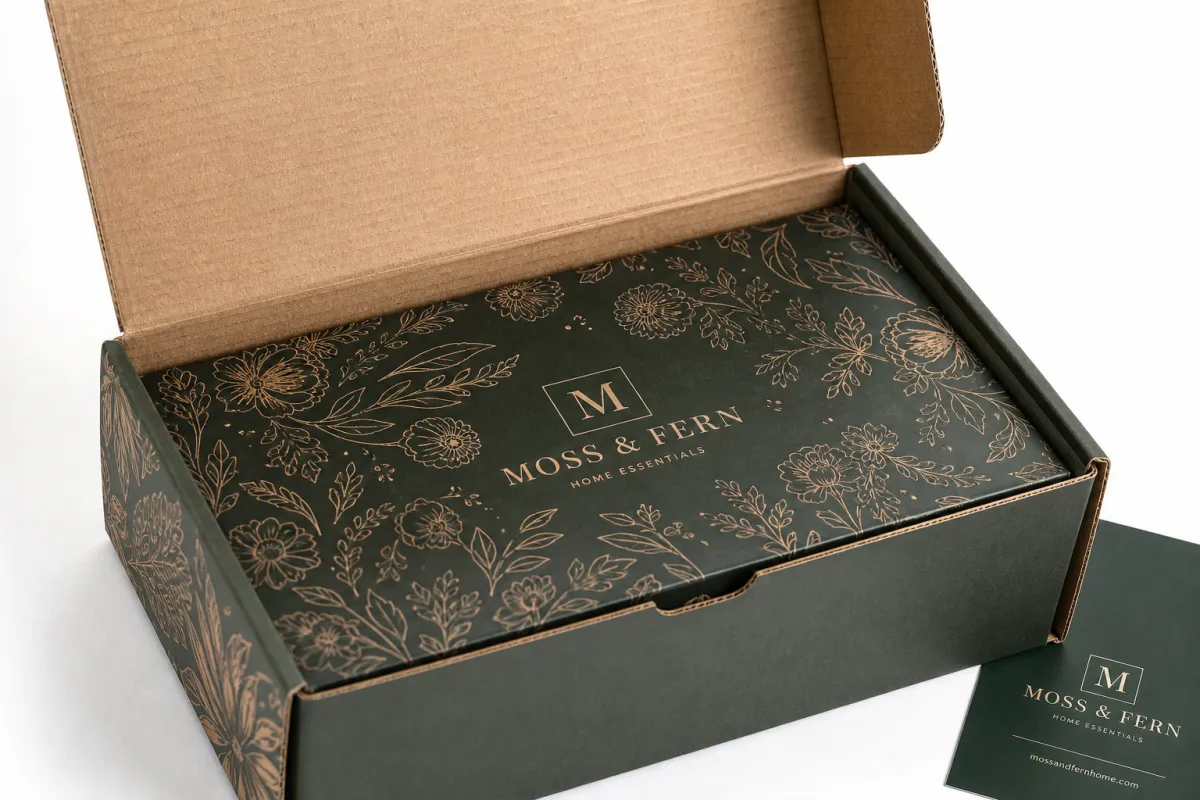
Picture a basic fulfillment flow. The shipping carton arrives. The customer opens it. Void fill, wrap, or a tray may hold the product steady, yet the first real brand moment usually comes from the inner carton. That is where printed inner cartons with logo earn their place. They create a controlled reveal that can make a modest product feel considered and premium without leaning on oversized packaging or unnecessary embellishment.
In practical packaging terms, printed inner cartons with logo are the secondary carton or internal pack that holds or presents the product inside the outer shipping system. Depending on the item, they might be folding cartons, tuck-end cartons, sleeves, or compact rigid-style components made from paperboard or light corrugated board. They differ from plain inserts because they communicate as well as separate. They also differ from unprinted cartons because the print becomes part of the product story rather than a hidden manufacturing detail.
From the buyer side, the value shows up quickly. A blank inner pack can protect a product, but it rarely adds meaning. Printed inner cartons with logo do more. They reinforce the brand, make the pack feel intentional, and help the customer trust that the contents are organized and complete. Even if the carton is visible for only a few seconds, that brief interaction matters because it happens at the exact moment the customer is deciding whether the experience feels ordinary or polished.
They also carry practical information that helps warehouse staff, packers, and end users. I often see inner cartons printed with SKU names, orientation arrows, batch references, recycling cues, or short assembly notes. That mix of branding and utility is useful because the carton becomes part of the operating system inside the package, not just a pretty shell around the product.
A well-designed inner carton should feel calm in the hand, open in the right sequence, and communicate the product without making the customer work for it.
There is one honest caveat: printed inner cartons with logo are not automatically the right answer for every product. A plain insert may be enough for some items. Other products are better served by a branded sleeve or a more protective nested tray. Still, when presentation, organization, and brand recall all matter at once, this format is hard to beat because it gives you a branded surface exactly where the customer’s attention naturally lands.
How printed inner cartons with logo are made
The production path for printed inner cartons with logo starts with structure, not artwork. First comes the dieline, which defines panel sizes, fold direction, glue flaps, locking tabs, and any product retention features. A good dieline keeps the carton from becoming annoying on the packing line or weak at the corners. If the structure is wrong, nice printing will not rescue it. I have seen beautiful art wrapped around a bad fold plan, and it never ends well.
Once the structure is set, artwork is built against the dieline, with logo placement, copy, barcodes, and any regulatory text positioned around folds and glue zones. This is where a lot of avoidable problems begin, especially when teams design from a flat mockup instead of a properly supplied template. For printed inner cartons with logo, a few millimeters can be the difference between a clean lock-up and a logo that lands across a seam.
From there, the printer selects a process based on quantity, turnaround, and design complexity. Offset printing usually suits higher volumes and tighter color control, especially when the artwork needs crisp solids, fine type, or consistent brand colors across repeat runs. Digital printing makes more sense for short runs, pilot programs, or products with frequent artwork changes, because setup is lighter and variable data is easier to manage. Flexographic printing can be practical on board stock and certain converting lines, especially when the project is more production-driven than presentation-heavy.
Substrate choice matters just as much as the print method. SBS board is a common choice for clean print reproduction and a smoother branded look. Kraft board supports a more natural, earthy appearance and often pairs well with sustainability-forward positioning. Corrugated board brings more structure and crush resistance, which is useful when the inner carton does more than simply present the product. Coated paperboard usually gives the sharpest image and the most reliable color pop, while uncoated stocks can feel warmer and less glossy, although they may show ink differently under store or warehouse lighting.
After printing, the sheets or rolls move into converting. That usually includes die-cutting, scoring, folding, gluing, and packing for shipment. Finishing can stay simple or be pushed further, depending on the brand brief. Common options include aqueous coating for basic scuff resistance, matte or gloss lamination for a more finished appearance, spot UV for selective emphasis, embossing or debossing for tactile detail, and simple varnishes when you want surface protection without the cost of full lamination.
For packaging teams, the real challenge is not chasing every finish available. Printed inner cartons with logo should still fold easily, stack neatly, and survive real handling. If a carton looks beautiful but slows the pack line by a few seconds per unit, that cost shows up quickly in labor. A good supplier will usually talk about not just the printed result, but also the press sheet yield, the nesting pattern, the glue pattern, and the way the carton behaves when hundreds or thousands of units are assembled.
For structural and material best practices, I often point buyers to broad industry resources such as packaging.org, especially when they want a grounded overview of how packaging formats and material choices affect performance. That kind of reference is useful because printed inner cartons with logo are never just a graphic exercise; they are a converted package built around real production constraints.
Material, structure, and print choices that change the result
If there is one thing I wish more buyers understood, it is that printed inner cartons with logo are only as good as the substrate and structure underneath them. A logo can look sharp on a smooth board and disappoint on a rougher surface if the artwork was not prepared for that stock. Likewise, a carton that feels sturdy in a sample room can collapse in practice if the board thickness, score depth, or flute profile do not match the product weight.
Board thickness affects more than protection. It influences stiffness, fold memory, crush resistance, and how cleanly the carton registers in print. Thin folding board, often in the range of 14pt to 24pt depending on the application, is common when the inner pack needs a neat profile and crisp print. Heavier paperboard or light corrugated constructions may be appropriate for products with added mass or more travel through distribution. If the product is delicate, the structure should do more than advertise the brand; it should control movement and reduce abrasion.
The structure itself deserves careful thought. A simple tuck-end carton is easy to run and familiar to packers. A sleeve-and-tray format can create a more premium reveal because the outer sleeve slides away from the retained product tray. Mailer-style cartons are popular for direct-to-consumer programs because they combine presentation and shipping strength. Inserts and partitions can keep multiple items from contacting one another, which is especially helpful for glass, cosmetics, electronics, or bundled kits. Printed inner cartons with logo often succeed because they combine one of these structures with a clear visual hierarchy, so the customer understands how the carton opens and what belongs where.
Logo placement matters more than many teams expect. A small emblem placed well on the front panel can feel more elegant than a large logo stretched across every surface. Strong brand color can help, but it also needs contrast and breathing room. If the carton will be viewed under warehouse LEDs, retail lighting, or a home kitchen lamp, readability changes. A fine line that looks perfect on screen may disappear on textured kraft stock, and dark ink on dark board can flatten the whole presentation.
Color count affects the budget, but it also affects consistency. A one- or two-color layout often gives printed inner cartons with logo a clean, disciplined look and keeps the press more predictable. Full-color process printing can be excellent when photography or detailed illustration matters, but it should be used for a reason. When the brand system is already strong, a restrained palette often feels more confident than a crowded one.
Sustainability deserves a practical view as well. Recycled content, FSC-certified board, right-sized design, and removable coatings all play a role, but the most sustainable carton is usually the one that is not overbuilt. A carton that is too large, too heavily laminated, or packed with unnecessary layers creates waste and often costs more to manufacture and ship. If the inner carton can be designed to fit the product closely without compromising protection, you save material and reduce freight volume at the same time. For buyers who want to understand recycled feedstocks, chain-of-custody, and forest stewardship claims more deeply, the FSC site is a helpful reference point.
Printed inner cartons with logo also need to consider assembly speed. A clever locking feature can look elegant on paper and frustrate a line if workers have to fight the fold sequence. A slightly simpler structure that assembles faster can deliver better overall value even if it looks less theatrical on the bench. In practice, the best solution usually balances product fit, presentation goals, and the number of hands involved in packing.
- Tuck-end cartons work well for straightforward packing and compact presentation.
- Sleeve-and-tray formats create a more premium unboxing sequence.
- Mailer-style inner cartons suit ecommerce programs that need added protection.
- Partitioned inserts help separate fragile or multi-component products.
Cost and pricing: what printed inner cartons with logo actually cost
Pricing for printed inner cartons with logo is driven by a handful of variables that show up quickly once a quote request is written well. Quantity is the biggest one. Board grade, size, number of print colors, finishing, and structural complexity all matter too, but volume tends to decide how much the setup cost gets spread across the order. That is why a short run can feel expensive per unit even when the carton itself is simple.
For small quantities, digital print often makes the most sense because it reduces tooling and setup burden. For larger runs, offset can bring the unit cost down substantially, especially when the artwork stays consistent. Flexographic printing can be competitive for certain board applications, particularly where the design is simple and the converting line is already set up for the format. Printed inner cartons with logo usually land in a range rather than a fixed price, because the combination of stock, finish, and dieline complexity shapes the quote more than the logo alone.
Here is a practical way to think about it. For a run around 5,000 pieces, a simple paperboard carton with one- or two-color print might fall in a lower unit-cost band, while heavier board, full-color artwork, or added coating will move the number up. Special finishes such as embossing, foil, or spot UV can add noticeable cost, not just because of the finish itself, but because of the added setup and registration checks. If you need inserts, partitions, or unusual glue patterns, that adds another layer of production labor.
Sampling and artwork changes can also affect the total. I have seen projects where the carton price was reasonable, but the budget drifted because the team made several dieline revisions after the first proof, then requested another color proof, then changed the barcode location late in the process. None of those changes are impossible to manage. They just cost time and money. That is why printed inner cartons with logo should always be priced with the full production path in mind, not just the per-unit number.
The table below is a useful way to compare common approaches without pretending every supplier prices the same way.
| Option | Typical Use | Strengths | Budget Range |
|---|---|---|---|
| Digital printed folding carton | Short runs, pilot launches, frequent artwork changes | Lower setup, faster proofing, easy version control | About $0.28-$0.75 per unit at modest quantities |
| Offset printed paperboard carton | Medium to high volumes with consistent branding | Better color consistency, stronger value at scale | About $0.12-$0.32 per unit as volume increases |
| Flexo printed corrugated inner carton | Utility-driven packs, ecommerce, protective inserts | Efficient on board, good for production-friendly formats | About $0.18-$0.45 per unit depending on board and print coverage |
| Premium carton with lamination or special finish | Gift sets, retail presentation, high-touch unboxing | Stronger shelf presence, more tactile brand feel | About $0.35-$1.20 per unit depending on finish and structure |
Those ranges are not promises. They are planning numbers. If your printed inner cartons with logo need die-cut windows, custom inserts, foil, or a complex nested structure, the cost can climb quickly. If the design is clean, the board is standard, and the order repeats regularly, the economics improve fast. That is why the smartest budget conversations happen with a specification sheet in hand, not just a logo file and a rough guess.
For teams trying to control cost, I suggest setting three numbers before requesting quotes: the target quantity, the acceptable material grade, and the maximum finishing level. Once those are clear, vendors can quote on the same basis, and you are much less likely to compare apples to oranges. Printed inner cartons with logo are easiest to buy well when everyone agrees on structure, stock, print coverage, and finishing before the quote lands.
Process and timeline: from dieline to delivery
A good project for printed inner cartons with logo starts with measurements, not with artwork. The supplier needs the product dimensions, the required clearance, the number of items per carton, and any special handling concerns. If the product has sharp corners, fragile surfaces, or a preferred opening direction, that information should be part of the brief at the beginning. Good structure comes from good input.
The typical workflow begins with briefing and dieline development. After that, the artwork is adapted to the template and reviewed for safe zones, fold lines, glue areas, and barcode space. Once the design is approved, prepress checks the files, prepares plates or digital output, and often issues a proof. If the carton is new or the fit is tight, a mockup or sample is worth the time. It lets the team verify the opening sequence, the carton depth, the panel alignment, and the way the logo behaves after scoring and folding.
Then production begins. Depending on the complexity, the cartons may move through printing, coating or lamination, die-cutting, stripping, folding, and gluing before final packing. Simple printed inner cartons with logo can often move faster than more elaborate structures, but there is almost always some chance of delay if the artwork changes late or the board supply shifts. Color proof revisions are another common bottleneck. A brand team may want to tighten a Pantone match or shift the background tone slightly, which is understandable, but those decisions need to happen before full production, not during it.
A realistic planning window for straightforward work is often 12-15 business days from proof approval to manufacturing completion, followed by transit time. More complex cartons, heavier finishing, or custom inserts can push that to 18-25 business days or more. If the order is international, add shipping and customs handling into the timeline. That is where project management matters. Printed inner cartons with logo are usually easier to live with when the team plans backward from a launch date, not forward from a quote date.
Prototyping is where a lot of risk gets removed. A sample can expose problems that drawings hide, such as a flap that catches during assembly, a logo that falls too close to the crease, or a carton that looks clean but scuffs badly in transit. I am always in favor of a pilot when the product is new, the finish is unfamiliar, or the brand wants to test how the unboxing sequence lands with real customers. Even a small pilot order can reveal whether the chosen structure feels right in hand.
For transport testing and distribution confidence, many packaging teams also look toward standards and test methods through organizations like ISTA. That kind of check is especially useful when printed inner cartons with logo are part of a broader pack-out system that must protect the product through vibration, drop events, and repeated handling.
The safest schedule is the one with a buffer. If you have a product launch, retail reset, or fulfillment commitment, build in room for proofing, rework, and shipping delays. The worst packaging rushes I have seen were not caused by printing problems alone; they were caused by the project starting too late and the carton becoming the final thing everyone rushed to approve.
Common mistakes to avoid with printed inner cartons with logo
The biggest mistake is designing for the render instead of the real carton. Printed inner cartons with logo need to look good flat, but they also need to fold, glue, stack, and open cleanly. A file that appears elegant on screen can become awkward once the scores, seams, and wraps are introduced. If a design is not built around the dieline, trouble follows.
Another common issue is placing critical branding or text too close to cut lines, glue zones, or high-stress folds. That can distort a logo, obscure copy, or make a barcode hard to scan. The safest approach is to protect those areas in the layout from the start. I also see teams overpacking the carton with text because they want every inch to do something. In practice, restraint usually reads better. Printed inner cartons with logo often feel more premium when the design has breathing room.
Color management deserves more attention than it usually gets. If the artwork is exported in the wrong profile, if the proofing process is skipped, or if the substrate is very different from what the team expected, the final print can drift from the brand standard. That does not always mean the printer made a mistake. Sometimes the file was not prepared for the stock. Sometimes the chosen paper is naturally warmer or more absorbent than the design team anticipated. These are solvable problems, but only if they are discussed early.
Size mistakes are expensive too. Oversized cartons waste board, take up more shipping space, and can make the product look less considered. Undersized cartons create fit issues, slow assembly, and increase the chance of damage. If the product sits too loose inside the carton, the unboxing experience loses precision. If it sits too tight, packers start forcing it in, and that is how creased corners and scuffed surfaces happen.
Regulatory and informational content gets overlooked more often than it should. Depending on the product, you may need handling symbols, ingredient information, warning copy, recycling marks, or batch identification printed inside the carton. Printed inner cartons with logo should not crowd out those details. The branding and the information need to coexist, and in some categories, the information is non-negotiable.
One final mistake is forgetting how the carton nests during packing and transport. If cartons are shipped flat, the nesting pattern matters. If they arrive pre-assembled, the pack-out method matters even more. I have seen attractive cartons that jammed because the glue pattern was too aggressive, and that turns a branding decision into a labor issue very quickly. The best projects are the ones where the print, structure, and handling plan all support each other.
- Do not place logos across glue flaps or heavy score lines.
- Do not approve color from a laptop screen alone.
- Do not oversize the carton just to make it feel premium.
- Do not ignore barcode, warning, or batch code placement.
- Do not skip a sample when the structure is new.
Expert tips and next steps for printed inner cartons with logo
Start with the product, not the decoration. If the item is fragile, slick, heavy, or assembled in parts, the carton needs to account for that first. Once the physical requirements are clear, printed inner cartons with logo become easier to design well because the structure and the branding are working toward the same goal instead of competing with each other.
Ask for a side-by-side sample whenever possible. A coated board, a kraft board, and a lighter folding stock can all carry the same artwork, yet they will feel very different in the hand and print very differently under light. That is why a proof on paper is so much more useful than a PDF on a screen. With printed inner cartons with logo, tactile judgment matters. The customer will touch the carton, not the file.
Build a print-ready checklist before release. I recommend confirming the dieline version, the logo lockup, the barcode placement, the copy deck, the color system, and the assembly sequence. If the carton includes a tray, insert, or locking feature, check whether the part number or orientation marks need to be visible to the packer. Those small operational details keep printed inner cartons with logo from becoming a manual headache on the line.
If the product is new or the sell-through is uncertain, a pilot order can be the smartest move. It gives you a chance to test customer reaction, packing speed, and carton durability before committing to a larger quantity. That approach is especially useful for seasonal products, subscription programs, and retail launches where the packaging brief may still evolve after the first market response.
For product protection, it is always worth thinking beyond appearance and testing against the actual distribution path. If a carton will travel by parcel, pallet, or mixed freight, the inner structure may need to absorb more abuse than the design team first expected. In those cases, printed inner cartons with logo should be evaluated together with the outer shipper, not in isolation. A strong inner carton inside a weak shipping system can still fail the overall pack-out.
If you are planning your own project, gather the dimensions, define the brand priorities, estimate the quantity, and decide what matters most: visual polish, easy assembly, product protection, or cost control. Once those priorities are clear, quotes become more meaningful and the carton decision gets much easier. That is usually where the best results start, and it is exactly how I would approach printed inner cartons with logo for a real production run.
The practical takeaway is simple: lock the structure first, proof the artwork on the real stock, and verify assembly before you commit to a full run. If those three pieces are sound, printed inner cartons with logo tend to do exactly what they should — protect the product, reinforce the brand, and make the opening moment feel intentional instead of improvised.
What are printed inner cartons with logo used for?
They create a branded reveal inside the package, which helps the product feel more intentional and polished. They can also hold the product, organize components, protect delicate parts, and carry useful details like handling instructions, batch references, or product identification.
Are printed inner cartons with logo more expensive than plain cartons?
Usually yes, because printing, setup, and any added finishing increase the total project cost. The difference depends on quantity, board type, print method, finishing, and whether the structure needs custom inserts or special die-cut features.
How long does it take to produce printed inner cartons with logo?
Lead time depends on design approval, proofing, carton complexity, and shipping distance. Simple runs can move relatively quickly once artwork is signed off, while custom structures, special finishes, or late artwork changes can add several business days or more.
What material works best for printed inner cartons with logo?
The right material depends on product weight, presentation goals, and how the carton will be assembled. Paperboard works well for lighter items and cleaner print, while heavier board or corrugated stock is often better when the carton needs more protection or stacking strength.
How do I make sure the logo prints correctly on the inner carton?
Start with a proper dieline, use print-ready artwork, and confirm the color setup before production begins. A sample or proof is the safest way to check placement, legibility, and color so the final printed inner cartons with logo match the intended brand look and open exactly the way you planned.


