Buyer Fit Snapshot
| Best fit | Recycled Folding Cartons with Logo projects where brand print, material claims, artwork control, MOQ, and repeat-order consistency need to be specified before quoting. |
|---|---|
| Quote inputs | Share finished size, material target, print colors, finish, packing count, annual reorder estimate, ship-to region, and any compliance wording. |
| Proofing check | Approve dieline scale, logo placement, barcode or warning zones, color tolerance, closure strength, and carton packing before bulk production. |
| Main risk | Vague material claims, crowded artwork, missing packing details, or unclear freight terms can make a low unit price expensive after revisions. |
Fast answer: Recycled Folding Cartons with Logo: Board, Finish, Dieline, and Unit Cost should be specified like a repeatable production item. The safest quote records material, print method, finish, artwork proof, packing count, and reorder notes in one written spec.
Production checks before approval
Compare the actual filled-product size with the drawing, then confirm tolerance on folds, seals, hang holes, label areas, and retail display edges. Reserve space for logos, QR codes, warning copy, and material claims before decorative graphics fill the panel.
Quote comparison points
Review material grade, print process, finish, sampling route, tooling charges, carton quantity, and freight assumptions side by side. A quote is only useful when the supplier can repeat the same color, closure quality, and packing count on the next order.
Recycled Folding Cartons with Logo: A Practical Guide
Recycled folding cartons with logo can look quietly premium when the board, print, and finish are chosen with care. A brand gets more than a recycled substrate and a logo placement; it gets a package that has to fold cleanly, hold its shape, and carry the product story without looking forced. That balance is where good carton work shows itself, and where weak carton work usually gives itself away fast.
From a packaging buyer's standpoint, the carton has to do several jobs at once. It protects the item, holds up through packing and shipping, gives the customer a clear brand impression, and still looks composed under store lighting. When one of those pieces slips, recycled folding cartons with logo can come out dull, scuffed, or fragile even if the sustainability claim sounds strong on paper.
I have seen a lot of brands get tripped up by the same thing: they approve a carton from a screen capture, then the first live sample lands and the board reads very differently than expected. The sections that follow break down how recycled folding cartons with logo are made, what affects quality and cost, and how to move from spec to order without creating avoidable delays. The details that usually matter most are board grade, caliper, coating, print method, proofing, and timing, because those choices shape the final result.
What Are Recycled Folding Cartons with Logo?
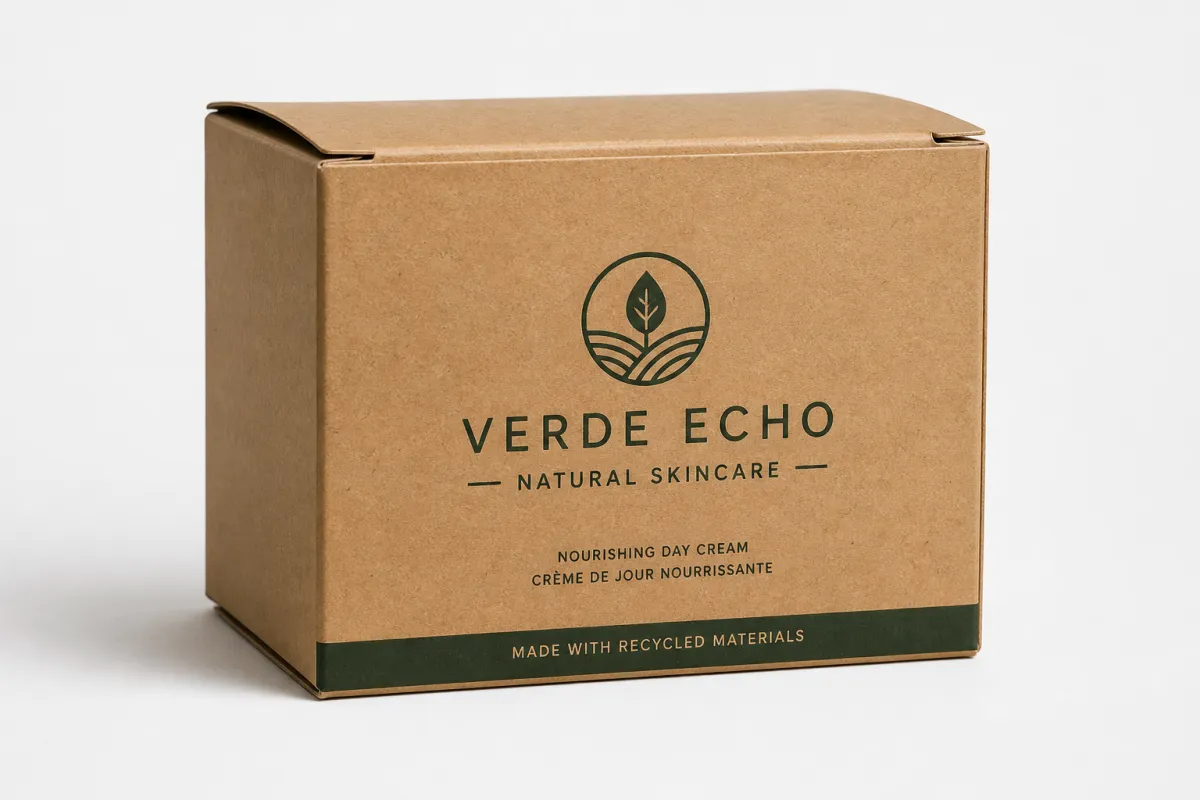
Recycled folding cartons with logo are paperboard cartons that ship flat, get converted into a finished box, and carry branding, product information, and regulatory copy on the outside panels. The folding format keeps freight efficient and storage tidy, which is one reason these cartons are so common across retail packaging.
The recycled part deserves precision. In packaging, recycled content usually means the board contains post-consumer fiber, post-industrial fiber, or a blend of both. Post-consumer fiber comes from material that has already gone through consumer use, while post-industrial fiber comes from manufacturing trim or scrap that re-enters the fiber stream. Those claims are related, but they are not interchangeable, and recycled folding cartons with logo should be specified carefully if the claim appears on pack.
Recycled content is only one part of the picture. A carton made with recycled board can still create waste if the dimensions are too large, the coating is heavier than needed, or transport efficiency suffers. Brands usually look at recycled folding cartons with logo as part of the full package system rather than as a single sustainability checkbox.
This format works well for a wide range of products, especially items that benefit from a clean shelf face and a light package. Recycled folding cartons with logo are commonly used for:
- Cosmetics and personal care items
- Supplements and wellness products
- Candles and home fragrance goods
- Apparel accessories and gift items
- Retail electronics accessories and small hardware
- Specialty food items that do not need a heavy barrier structure
Some products need more than a recycled-content carton can comfortably provide. Heavy items, oily goods, moisture-sensitive products, or packages that take a lot of abuse in transit may need stronger board, an insert, a more protective coating, or a different package style altogether. Recycled folding cartons with logo can still be the right sustainable choice, but only if the structure is built for the load.
A carton that looks responsible but fails in transit is still a poor carton; the best specification protects the product, the brand, and the rest of the supply chain.
For brands building a retail presence, recycled folding cartons with logo offer a clean way to show both identity and material intent. The carton works best when nobody assumes that "recycled" automatically means "strong enough" or "good-looking enough." The board blend, the logo treatment, and the carton structure all shape the result.
How Recycled Folding Cartons with Logo Move Through Production
Once a carton concept is approved, recycled folding cartons with logo move through a familiar print-and-convert sequence, and every step can still create delays if the details are loose. The process usually starts with dieline review, where the converter checks panel dimensions, glue flap size, tuck style, and any added feature such as a window, insert, or tear strip. If the dieline is still changing, the rest of the job stays in flux.
After the structure is confirmed, prepress prepares the artwork for the press and converting equipment. Bleed, safe zones, barcode placement, and panel orientation all need to be set correctly. Recycled folding cartons with logo often rely on restraint and clean spacing, which means the logo size and type placement matter more than many teams expect. Small type that looks fine on a screen can disappear once it lands on a textured board surface.
Printing is usually the next major decision point. Digital printing can suit lower quantities, pilot runs, and artwork that is still being refined, since setup time is lighter. Offset printing tends to fit longer quantities, tighter color requirements, and brand work that needs more control from run to run. Recycled folding cartons with logo can be produced well in either method, but the lead time, setup cost, and color behavior are different.
After printing, the sheet is cut, creased, and often glued, then checked for quality before flat packing and shipment. In some shops, printing and converting happen together; in others, they are separate steps with a handoff in between. That handoff matters because recycled folding cartons with logo only become useful once the printed board is turned into cartons that can be stored, erected, and filled on line.
Timing usually slips in three places:
- Artwork is incomplete or the dieline changes late.
- The board or coating spec is unusual and needs sourcing.
- Proof approval takes longer than the production schedule can absorb.
When files are final and the spec is clear, production can move quickly. Custom tooling, specialty finishing, or unusual board behavior adds time. Recycled folding cartons with logo may look simple on a spec sheet, yet a small shift in board brightness, fold memory, or glue response can alter appearance and line performance.
If your cartons need to meet formal test expectations, the shipping and distribution side deserves attention. Standards from groups like ISTA are often used to assess distribution hazards, while organizations such as the EPA publish useful guidance on recycling and waste reduction practices. Those references do not replace package-specific testing, but they help frame why recycled folding cartons with logo should be evaluated as part of the whole supply chain, not as a print-only project.
From the buying side, the cleanest approach is simple: lock the spec early. Recycled folding cartons with logo reward disciplined handoff work. When the printer, designer, filler, and procurement team work from the same assumptions, the chance of rework drops fast. That is the kind of thing that sounds boring until it saves a launch.
What Affects Quality, Durability, and Shelf Appeal?
Quality begins with the board itself. Caliper, surface brightness, recycled fiber blend, and stiffness all shape how recycled folding cartons with logo behave in actual use. A lighter board can reduce cost, yet if the carton needs to hold a glass jar, a candle vessel, or a supplement bottle, the package can feel soft or dented before it ever reaches the shelf.
That is why board selection is more than a commodity decision. A carton in the 14-pt or 16-pt range may work well for a light cosmetic set, while a heavier or more structural product may need thicker stock or a board with better crush resistance. Recycled folding cartons with logo should be matched to the load, not only to the color palette.
Print quality matters just as much. Recycled board often has a different surface character than a virgin coated sheet, and that affects how ink reads and how solid areas appear. Dark flood coverage can look elegant, but it also tends to show scuffs more easily and can make recycled folding cartons with logo harder to keep consistent from run to run. Fine type, reversed-out copy, and barcodes deserve real attention because texture can soften the edges if the artwork is too small or too dense.
Finish choice changes the look and the handling. An aqueous coating is often used because it adds protection without a heavy plastic feel, while matte or gloss varnish shifts the visual tone in a more direct way. Soft-touch coatings can create a richer handfeel, though they add cost and can react differently under abrasion. Spot coating can highlight a logo or product name, which works well for recycled folding cartons with logo that need shelf presence without covering every panel in a heavy finish.
Structural design is where shelf appeal and durability meet. Tuck styles, locking tabs, window patches, and inserts all change how the carton performs once it is filled and handled. If the product is likely to move through distribution with vibration, stacking pressure, and repeated consumer handling, the closure has to hold. Recycled folding cartons with logo may look ideal in a mockup and still fail if the tuck flap opens too easily or the side seam does not hold.
Three environments shape the carton in different ways.
- Shipping: vibration, compression, and shifting loads
- Retail handling: shelf pulls, consumer touch, and stocking abuse
- Consumer opening: clean opening behavior without tearing the brand face
Each environment pushes recycled folding cartons with logo in a different direction. A stronger board may resist shipping damage, yet if the score lines are too aggressive, the fold can crack. A softer finish may feel elegant, yet cartons rubbing inside a case pack can show scuffing quickly. The right answer depends on the product and the route it takes to market.
A practical technical spec usually covers board caliper, coating type, print method, logo treatment, and closure style because those details control the finish more than broad sustainability claims do. If your recycled folding cartons with logo are going into premium retail, think about what a buyer sees from three feet away. Contrast, logo placement, and restrained layout often work better than crowded design.
Recycled Folding Cartons with Logo: Cost and Pricing
Price is usually the first question, and it should be. Recycled folding cartons with logo sit in a space where small spec changes can move the budget more than a buyer expects. The main drivers are board grade, carton size, quantity, number of print colors, coating choice, and add-on features such as a window, insert, embossing, or specialty lock. Change one of those variables and the unit price can move noticeably.
Smaller runs carry more setup cost per carton because press make-ready, proofing, plates, and converting adjustments are spread over fewer units. Larger runs usually reduce the unit price because the fixed costs are shared across more cartons. That is why recycled folding cartons with logo can look expensive at 2,500 units and more manageable at 10,000 or 25,000, even when the board spec stays the same.
The board itself is only part of the economics. Converting complexity, freight, quality checks, and packing format can matter just as much. Recycled folding cartons with logo are not priced by paper weight alone. A plain tuck carton with one or two colors is a very different job from a carton with a matte finish, a special structure, and tight registration requirements.
| Carton Option | Typical Use | Relative Unit Cost | What Drives the Price |
|---|---|---|---|
| Basic recycled tuck carton | Light retail items, simple branding | Lowest | Standard board, simple print, minimal finishing |
| Mid-range recycled folding carton with logo | Cosmetics, supplements, candles | Moderate | Better board, fuller ink coverage, aqueous coating |
| Premium recycled folding carton with logo | Giftable or shelf-critical products | Higher | Special coating, tighter color control, inserts, window patch |
| Short-run digitally printed carton | Pilots, launches, seasonal drops | Variable, often higher per unit | Low setup, faster proofing, smaller quantity economics |
The table is not a quote, but it does show how recycled folding cartons with logo tend to behave across price tiers. In many buying situations, the lowest-looking quote turns out to be the most expensive once freight, rework, and delays are added back in. A carton that arrives late can cost more than a carton that costs a few cents more per unit.
Comparing quotes line by line is the safest way to keep the numbers honest. Look for the exact board spec, the print process, the coating, the pack format, the proofing steps, and the expected turnaround. If one supplier is quoting recycled folding cartons with logo on a 0.018-inch board and another is quoting a heavier caliper, those are not interchangeable options even if the carton dimensions appear close on the page.
For budgeting, many brands find it easier to think in ranges rather than one perfect number. A simple recycled folding carton can land in a modest per-unit band at higher quantities, while premium finishing and smaller quantities push the price up quickly. The strongest quote is the one that makes the spec clear enough for a true comparison.
If your purchasing team is looking at multiple vendors, ask whether their recycled folding cartons with logo include board sourcing, prepress, plates, die tooling, coatings, and freight separately or as part of one total. That distinction matters because a bundled number can hide weak spots that only show up later, usually right when the cartons are needed most.
Step-by-Step: Ordering Recycled Folding Cartons with Logo
The cleanest orders start with the product, not the artwork. Before anything else, define the item's dimensions, weight, filling method, retail environment, and shipping conditions. Recycled folding cartons with logo work best when the package is matched to the actual product, because that keeps the board spec, structural style, and finish aligned with the job.
Next, choose the structure and board. Decide whether the carton needs a straight tuck, reverse tuck, auto-bottom, lock-bottom, or another style. Then confirm whether the product needs a window, insert, or tamper-evident feature. Recycled folding cartons with logo can be engineered in many directions, but each feature adds complexity, and complexity affects both lead time and cost.
Once the structure is set, artwork prep becomes much easier. Use the approved dieline, build in bleed, keep key copy inside safe zones, and make sure barcode spacing is respected. If the carton includes legal copy, ingredient text, or multiple language panels, reserve enough room early. Recycled folding cartons with logo often suffer when the design tries to cram too much onto one face and leaves the side panels underused.
A proof should happen before production is released. That proof can be digital, hard copy, or both, depending on the job. The point is to confirm logo placement, fold direction, color tone, and panel alignment before the press is committed. On a clean job, a proof catches small issues. On a difficult job, it prevents an expensive misprint.
Sampling and test assembly are worth the time, especially for new products. A sample carton lets you check fit, friction, closure behavior, and shelf presence. Recycled folding cartons with logo are easier to trust once someone has folded them, loaded them, and packed a few cases. That sounds basic, yet it avoids a lot of frustration later.
This order sequence works well for many teams:
- Gather product dimensions, weight, and distribution assumptions.
- Pick the carton style and recycled board spec.
- Review the dieline and confirm print panels.
- Prepare artwork with bleed, safe zones, and barcode placement.
- Approve a proof or sample.
- Release production and confirm inbound timing at the fill line.
The sequence sounds simple, but it is exactly where recycled folding cartons with logo either stay organized or drift into last-minute corrections. The better the upstream paperwork, the fewer surprises the downstream teams have to absorb.
For compliance-minded brands, this is also the place to verify any certification or chain-of-custody requirement. If the carton needs FSC sourcing, ask for documentation from the supplier and confirm whether the planned print and converting path can support the specific grade. You can review FSC requirements directly at fsc.org, which helps clarify what the claim is tied to.
Common Mistakes to Avoid with Recycled Folding Cartons
The first mistake is treating recycled content as proof of performance. It is not. Recycled folding cartons with logo still need the right board strength, the right score, and the right finish if they are going to hold up through packing, transit, and retail handling. A carton can be environmentally sensible and still fail mechanically if the caliper is too light or the closure is too loose.
The second mistake is overloading the design. Dark flood coats, dense textures, and tiny reversed-out text can be hard on recycled board because the substrate may show scuffing or print variation more quickly than a coated virgin sheet. Recycled folding cartons with logo usually look better when the artwork respects the material instead of burying it under heavy coverage.
The third mistake is vague sustainability language. Buyers Should Know exactly what recycled fiber means, what percentage is being used, and whether any certifications or claims apply. If the carton is being sold as environmentally responsible, the wording needs to be accurate. Recycled folding cartons with logo should support the claim instead of creating confusion around it.
Ask for the exact fiber spec, not a vague promise; recycled content only means something when the board grade, certification, and use case are all clear.
The fourth mistake is approving design too early. If the dieline is still moving, final artwork approval is premature. That is especially true for recycled folding cartons with logo that use windows, inserts, special folds, or artwork that wraps across multiple panels. A small panel shift can alter logo placement enough to matter on shelf.
The fifth mistake is underestimating timing. Paperboard sourcing, proof approval, shipping, and receiving all take time, and a carton that arrives before the fill line is ready still creates storage and handling headaches. Recycled folding cartons with logo should be scheduled with the whole launch calendar in mind, not just the print date.
If you want to avoid the most common problems, keep this short checklist in view:
- Confirm board strength against product weight
- Keep artwork realistic for the substrate
- Verify recycled and certification claims
- Lock the dieline before final art approval
- Build in shipping and receiving time
Those five checks solve more issues than most brand teams expect. They are not glamorous, but they are the kind of details that separate a package that merely exists from one that performs consistently. Recycled folding cartons with logo need that discipline because the format looks simple on the surface and turns sensitive quickly underneath.
Expert Tips and Next Steps for Better Results
My first recommendation is to request a sample or mockup early. A good sample tells you more than a spec sheet can, because it shows how recycled folding cartons with logo look under real light, how the board folds, and whether the logo reads with the right amount of contrast. If the prototype feels off in the hand, it will probably feel off on the shelf too.
Ask for a clear spec sheet that lists the board type, recycled content, coating, print method, and expected pack-out behavior. That document should be specific enough that another supplier could quote the job on the same assumptions. Recycled folding cartons with logo become much easier to manage when every detail is written down instead of implied.
For pricing comparisons, insist that each quote use the same assumptions for quantity, freight, proofing, and finishing. That is the only fair way to compare suppliers. A lower quote on recycled folding cartons with logo might look attractive until you realize the coating is different, the board is lighter, or the turnaround is too slow for the launch window.
It also helps to view the carton as part of the full packing process. If the filling line needs fast erection, the closure style should support that. If the product is going into retail distribution, the structure should stand up to case packing and shelf stocking. Recycled folding cartons with logo work best when the design team, packaging buyer, and operations group all share the same assumptions.
There is a reason careful ordering saves money. Every late change creates ripple effects in artwork, tooling, freight, and receiving. Recycled folding cartons with logo can absolutely deliver a polished appearance and a more responsible material profile, but only if the project is run with the same care you would give any other critical packaging component.
The most useful next step is straightforward: gather your dimensions, artwork, target quantity, and launch timing, then compare recycled folding cartons with logo on matched specs rather than on headline price alone. That habit usually leads to better quotes, fewer delays, and a carton that does its job from the first case off the line to the last unit on the shelf.
If you are still deciding between two or three options, I would narrow the choice by fit, board strength, and print behavior before worrying about the last penny. That order keeps the project grounded in how the carton will actually perform, which is the part that matters once production starts moving.
Frequently Asked Questions
Are recycled folding cartons with logo strong enough for retail products?
Yes, when the board caliper and structure are matched to the product weight and handling conditions. Heavier items usually need a thicker paperboard, tighter glue control, and a closure style that resists popping open in transit. Recycled folding cartons with logo can be very dependable, but the strength has to be specified instead of assumed.
How much do recycled folding cartons with logo usually cost?
Pricing depends on quantity, board grade, print color count, finishing, and whether special structures are needed. Lower volumes usually carry higher setup cost per unit, while larger runs spread press and converting costs more efficiently. Recycled folding cartons with logo are best compared with a line-by-line quote, not a single unit price.
What recycled content is typical in folding cartons with logo?
The recycled content can vary widely by board supplier and product requirement, so it is best to ask for the exact fiber specification. If sustainability claims matter on pack, confirm whether the board uses post-consumer fiber, post-industrial fiber, or a blend. Recycled folding cartons with logo should carry a claim that matches the actual board description.
How long does it take to produce recycled folding cartons with logo?
Lead time depends on artwork readiness, proof approval, board availability, print method, and finishing complexity. A clean job with final files and standard specs can move quickly, while custom structures, specialty coatings, or larger runs take longer. Recycled folding cartons with logo usually stay on schedule when the dieline is final early and approvals do not stall.
What file setup do I need for recycled folding cartons with logo artwork?
Use the approved dieline, place artwork in the correct bleed and safe zones, and keep text and barcode elements inside readable margins. Export print-ready files in the format your converter requests, and verify logo colors, small type, and panel orientation before approval. That file discipline makes recycled folding cartons with logo much easier to produce cleanly.
For the smoothest path forward, start with the product specs, ask for the board and finish details in writing, and compare recycled folding cartons with logo on the same assumptions so the final choice fits both budget and sustainability goals.


