Printed Inserts Wholesale MOQ: Pricing, Specs, and Ordering Reality
printed inserts wholesale moq is usually the point where a buyer discovers that the small parts inside a package can affect the whole order more than the box does. A plain insert looks simple until a 2 mm change in cavity size alters the dieline, changes how the blanks nest on the sheet, and shifts the quote enough to matter. I have seen that happen more than once, and it is never because the supplier is being mysterious. It is usually because the structure changed in a way that touched material use, die work, or hand assembly all at the same time. That is the part that trips people up.
The real job of a printed insert is not to sit there and look tidy. It has to hold the product, protect the finish, and make packout predictable. If it does only one of those things, the result is kind of half-finished, and the line feels it right away. printed inserts wholesale moq depends on all of those details, plus board grade, print coverage, finishing, and how the insert is built for production. A quote that ignores those pieces is usually too soft to trust.
If you are comparing prices now, compare the same structure, the same board, the same print method, the same finish, and the same assembly state. A lower number often hides a missing step. That is not magic; it is just arithmetic with a better haircut.
Printed Inserts Wholesale MOQ: Why Quotes Jump
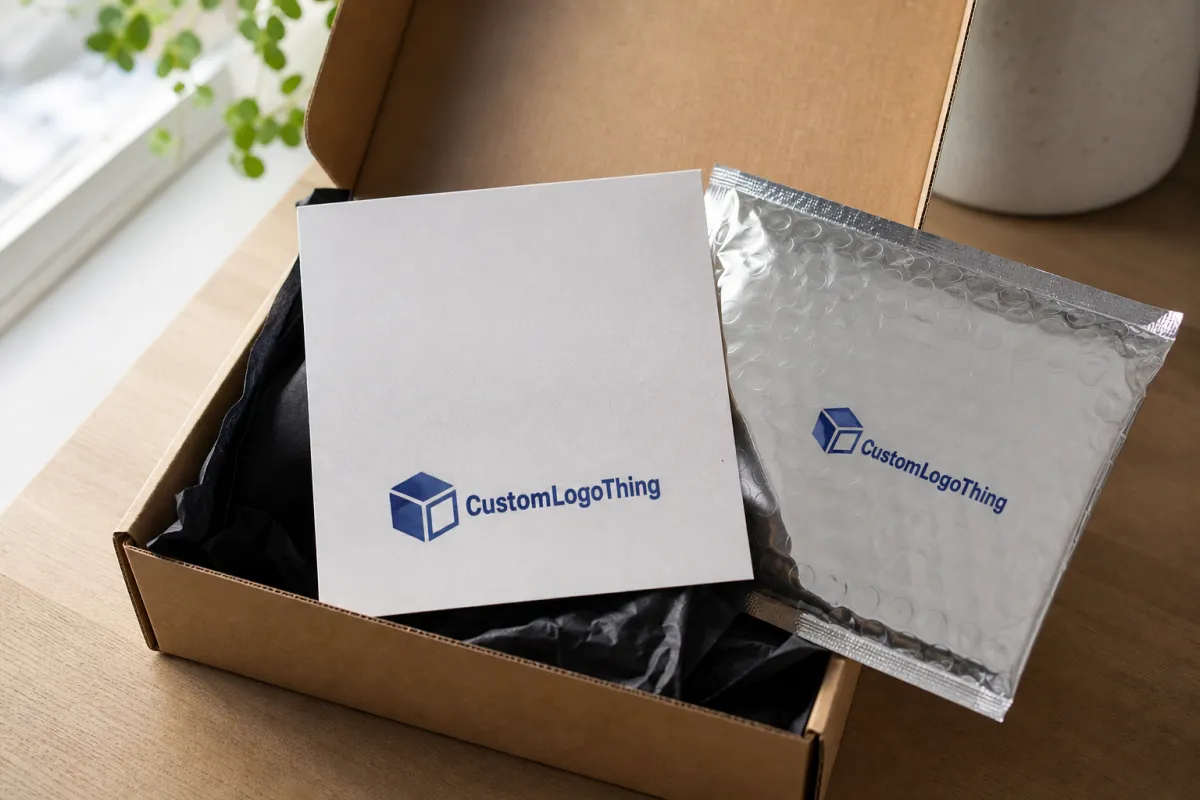
Many buyers think inserts should be easier to price than cartons because the insert is hidden inside the package and never gets the first visual impression from the customer. That assumption is exactly why printed inserts wholesale moq surprises people. The insert may be smaller than the outer box, but the fit tolerance is usually tighter, and tighter fit means more drawing work, more trial waste, and more checking before production starts. One small shift in cavity shape can change sheet yield, and once yield changes, the unit price changes with it.
Some inserts cost more than the cartons they live in. A precise nest, full-surface artwork, or an unusual shape can push the number up quickly. If the insert has to cradle a bottle shoulder, separate fragile accessories, or keep a set of small parts from shifting around, the structure becomes more demanding than the carton outside it. In that case, printed inserts wholesale moq is driven by fit accuracy and structural stability, not just by paper weight or board thickness.
Five things usually move the number: material grade, die complexity, print setup, finishing, and labor. A custom die adds tooling. Full coverage print adds press time. Pre-glued or pre-folded pieces add labor. Special coatings or soft-touch finishes add process steps and often raise the unit cost. That is printed inserts wholesale moq in a real plant, not on a sales slide.
MOQ itself is not usually one fixed number across every insert style. Plain paperboard inserts often support lower minimums because they nest well and trim efficiently. Corrugated inserts tend to sit in the middle. Specialty board, heavy ink coverage, or pre-assembly usually push the minimum higher because the supplier needs to recover setup costs across fewer sellable pieces. In other words, MOQ is less a strict rule and more a reflection of how hard the job is to manufacture without waste.
“printed inserts wholesale moq is less about a hard minimum and more about whether the layout, the die, and the finishing all make sense together.”
If you want a useful price reference, ask for tiered quantities instead of a single flat quote. A good supplier should show pricing at 250, 500, 1,000, and 5,000 pieces so the breakpoints are visible. If the team cannot explain where the price starts to improve, they probably have not priced the full job, and that usually means the quote will need correction later.
Cheap-looking inserts can still drain money once packout starts. If workers have to force the insert into the carton, re-fold parts by hand, or separate components before every fill, labor will eat through the savings faster than people expect. printed inserts wholesale moq should always be judged against actual packing speed, not only the number on the page. A lower quote that slows the line is not really a lower cost.
The other thing that catches buyers off guard is the effect of nesting. I have seen a change of a few millimeters move a die line from a clean sheet layout to a wasteful one, and that tiny layout change can swing the order economics enough to matter. That is why the first quote should never be treated like a guess in nice clothes.
What Printed Inserts Do Inside the Package
Printed inserts do more than sit under a product and carry branding. Their first job is functional: keep the item from moving, protect the finish through shipping, and make the packout repeatable. Their second job is presentation: make the unboxing feel deliberate rather than improvised. Those two jobs need to work together. An insert that looks great but lets the product slide around is failing. A purely functional insert that looks rough can drag the whole package down.
For cosmetics, printed inserts wholesale moq often comes down to bottle stability, accessory separation, and the clean appearance of the cavity layout. For electronics, the concern is usually the device, the cable, the manual, and small parts staying put without scuffing the surface. Subscription kits need inserts that can hold a group of items with slight variation in size and weight. Gift sets bring their own pressure because the insert has to look premium and still survive handling. In every case, the insert is doing physical work and visual work at the same time.
Paperboard inserts, corrugated inserts, and specialty board solutions cover most common use cases. Paperboard works well for lighter products, tidy presentation, and lower MOQ targets. Corrugated brings better crush resistance and often makes sense when the item needs more protection or a larger cavity. Specialty board can create a higher-end feel, but it usually raises cost and can push MOQ up because the material and finishing requirements are harder to absorb. For buyers trying to keep printed inserts wholesale moq manageable, paperboard is often the easiest place to start.
Assembly speed matters more than many buyers expect. A nice insert that takes too long to set up slows down the line, and that slows the whole order. If a team packs 500 units a day, even a few extra seconds per carton adds up fast. Wholesale buyers should know whether the insert ships flat, folds easily, locks without extra tape, and stacks cleanly before filling. Fast assembly is part of the real cost, not a bonus feature.
Material choice changes the feel of the package too. A 300gsm paperboard insert can be enough for a lightweight cosmetic kit, while 350gsm or 400gsm board may fit better if the product has sharper edges or needs more stiffness. Corrugated inserts usually come into play when protection matters more than a refined surface. Specialty board can produce a cleaner premium finish, but if the product does not call for it, you are paying for appearance instead of function. That is a poor trade unless the brand position truly asks for it.
Print method matters as well. Offset lithography often gives the cleanest color and the sharpest type for branded inserts, while digital printing can make sense for shorter runs, variable text, or faster proof cycles. Flexographic printing may be useful on certain board structures, especially where simple graphics and volume matter more than fine detail. Each method changes setup, unit economics, and finish quality in a slightly different way, so the print choice should be made with the product and quantity together, not after the fact.
Standards matter too. If the product is shipping retail-ready or moving through a rougher transit path, packaging testing is not optional theater. Buyers sometimes use ISTA testing expectations or reference ASTM-style material behavior to judge whether the structure can handle compression, vibration, or drop risks. Not every insert needs to be overbuilt, yet the shipment environment still shapes the spec. A good supplier should ask about that before quoting, because a quote without the transit context is missing a major part of the picture.
For buyers who need broader packaging support, our Wholesale Programs page shows how production orders are structured. If the immediate goal is just to settle an ordering question, our FAQ page can clear up the basics before files are sent.
Specifications to Lock Before You Request Samples
If you want a useful sample instead of a polished guess, lock the specs first. printed inserts wholesale moq gets more accurate when the supplier knows the product dimensions, cavity depth, board thickness, and removal clearance. Without that, the sample may look fine on screen and fail as soon as the product is placed inside it. Fit-critical parts do not reward approximation.
The first measurement is the product itself. Give full dimensions, not just the face size. If the item has a lip, shoulder, cap, cable, or fragile finish, include that detail. The second measurement is the internal cavity depth. If the insert is too shallow, the product pops out. If it is too deep, the item sits loose or the top panel bows. The third factor is clearance. Most buyers want the item to come out without scratching the finish, so a few millimeters of tolerance can save a lot of trouble later.
Print specs matter just as much. Decide whether the insert needs single-sided or double-sided print. Choose whether the color coverage is light, medium, or full bleed. Pick the coating early: matte, gloss, soft-touch, or no coating. If the insert includes brand copy, care text, or a QR code, give that content room to breathe. printed inserts wholesale moq can shift noticeably if the print is simple on one side versus full coverage on both sides, and the difference shows up fast in setup work.
Die-cut complexity is another pricing trigger. A basic rectangle with one fold is easy. A complex nest with multiple cutouts, tabs, locking arms, and adhesive points is not. Every extra cut line adds work to the die and can slow down production. If the insert needs pre-assembly, say so clearly. Flat-packed inserts usually cost less to make and ship. Pre-built inserts bring more labor and usually need more careful packing.
Here is the short version of what to approve before sample work begins:
- Final product dimensions, including protrusions and fragile edges
- Board grade and thickness, such as 300gsm, 350gsm, or corrugated spec
- Print sides, color count, and coverage level
- Finishing, such as matte laminate, gloss, soft-touch, or aqueous coating
- Assembly state, including flat, folded, glued, or pre-packed
- Tolerance targets for easy removal and clean fit
Skipping the dieline review is how teams end up paying twice, first for the wrong sample and then for the corrected version. If the product has awkward geometry, ask for a dieline mockup before anything is printed. That small step usually saves more money than the sample itself costs. printed inserts wholesale moq becomes much easier to control once the structure is approved before artwork goes live.
Artwork placement matters more than people think. A logo too close to a fold can distort. A care message too near a cut edge can disappear. Small type inside an insert can look sharp on screen and blur on press if the line weight is too light. If the insert carries instruction text or promotional copy, keep the message simple and leave enough margin. Cleaner art means fewer revisions, and fewer revisions usually mean lower setup charges.
Sustainability should be decided early. If FSC-certified board or recycled content is required, say so at the start. That choice can affect sourcing, price, and lead time. For buyers comparing environmentally conscious options, packaging guidance is often available through FSC certification resources and EPA packaging resources covering sustainable materials. Not every project needs a green premium. The goal is a spec that matches the product and the brand, without turning the order into a research project.
One more detail worth locking early is the release method. If a customer needs to lift the product straight out of the insert, the cutout should be generous enough to avoid scuffing. If the product is meant to stay in place through multiple handling cycles, the cavity can be snugger. That decision changes the structure, and yes, it changes the quote too.
Printed Inserts Wholesale MOQ Cost: What Actually Drives Pricing
printed inserts wholesale moq cost usually comes down to five levers: material, print coverage, die cost, finishing, and labor. Everything else sits underneath one of those categories. A quote that truly holds up should show where the money is going instead of hiding every variable inside one number. That is the easiest way to tell whether the board, the setup, or the assembly is driving the cost.
Material grade is the first driver. Light paperboard is cheaper than a thicker or specialty-grade board. Corrugated material often costs more than plain paperboard, though it can save money if it prevents damage in transit. Specialty board, textured stock, and premium-surface paper tend to push cost upward. The less common the material, the more likely printed inserts wholesale moq will rise with it.
Print coverage is next. A minimal job with one-color branding is easier than full-bleed art with several ink zones, registration demands, and reverse printing. If the insert is only visible for a moment during opening, heavy ink coverage is not always necessary. Straightforward art often delivers the best unit cost. Over-designed inserts are one of the fastest ways to waste budget.
Tooling fees and setup charges are where smaller runs feel expensive. A custom die has to be made, mounted, and tested. Press setup takes time. Color matching takes time. Folding and glue-line adjustments take time. Those costs exist whether you order 250 units or 25,000. Larger orders simply spread those charges across more pieces, which is why bulk pricing improves after the first few quantity tiers. If MOQ is low, the setup charges carry a lot of weight.
Finishing can be helpful, but it should be earned. Matte coatings reduce glare and can make type easier to read. Gloss can add punch to certain graphics. Soft-touch gives a premium feel, though it also adds process and cost. Aqueous coating can help with surface protection while staying lighter on budget than more involved finishes. The right choice depends on whether the insert is mostly functional or part of the brand reveal.
The table below gives a practical way to think about common insert options. These are typical ranges, not fixed promises, because size, artwork, finish, and packing state still matter.
| Insert Type | Typical MOQ Range | Common Unit Cost Range | Best For | Cost Pressure Points |
|---|---|---|---|---|
| Paperboard printed insert | 250-1,000 units | $0.18-$0.45 per piece | Cosmetics, gift sets, light retail kits | Full-bleed print, tight nesting, folds |
| Corrugated printed insert | 500-2,000 units | $0.28-$0.70 per piece | Electronics, protective packaging, heavier items | Material thickness, die complexity, shipping volume |
| Specialty board insert | 1,000-3,000 units | $0.40-$1.10 per piece | Premium presentation, rigid feel, brand-heavy kits | Special finishes, higher tooling fees, slower runs |
| Pre-assembled insert | 500-2,500 units | $0.35-$1.25 per piece | Fast packout where labor savings matter | Assembly labor, carton volume, packing complexity |
Use that table as a guide, not a promise. Real pricing depends on footprint, board thickness, and whether the insert fits standard sheet layouts cleanly. A strange size can wreck yield quickly. A small change that improves nesting can lower the cost per piece enough to matter over a larger run. Good packaging teams do not just ask for a lower quote. They ask whether a smarter dimension can improve the economics without hurting fit.
When comparing suppliers, ask for the same quantity breaks and the same shipping assumptions. One quote may include flat-packed inserts while another includes pre-assembled pieces. One may quote FOB while another includes freight. One may include proofing while another lists that separately. If the numbers do not share the same structure, you are not comparing bulk pricing. You are comparing half-finished proposals.
A useful buying tactic is to ask for pricing at 250, 500, 1,000, and 5,000 pieces even if you do not plan to order every level. That reveals where the real breakpoint sits. Sometimes the jump from 500 to 1,000 units cuts the price enough to justify a little extra stock. Sometimes it barely changes. That is still valuable information. printed inserts wholesale moq works best as a planning tool rather than a random vendor rule.
Freight matters too. A bulky insert that ships in more cartons can make a low unit price look worse once shipping is added. If the design folds flat, the landed cost often improves. Pack method shapes the total more than many buyers expect. A small change in assembly state can lower labor cost, transport cost, and storage space at the same time. The invoice only tells part of the story, and it is not the most honest part of the story either.
If the project is going to live in a warehouse for a while before use, storage volume matters too. Flat inserts are easier to stack and cheaper to hold. Pre-built inserts can save labor, but they eat floor space faster. That tradeoff should be visible before the order is placed, not discovered after the pallets arrive.
Process, Timeline, and Turnaround for Printed Inserts
The cleanest projects follow the same path: inquiry, quote, dieline confirmation, proofing, sampling, production, quality check, and shipment. If one step is fuzzy, the schedule slips. printed inserts wholesale moq is easier to manage when the process is organized early. Buyers often ask for a delivery date first, but the better question is whether the inputs are complete enough to support that date.
For a straightforward printed insert with final dimensions, standard board, and simple artwork, sampling often takes about 5 to 10 business days after spec approval. Production can then run in roughly 10 to 15 business days, depending on quantity and finishing. More complex jobs need longer, especially if a custom die is required, the artwork needs multiple revisions, or the insert is pre-assembled. Special coatings or premium board can also stretch the lead time.
The biggest delays usually are not production failures. They are spec failures. Unclear dimensions force the team to redraw the dieline. Late artwork changes trigger reproofing. Too many internal reviewers slow approvals. If three people need to sign off, expect the calendar to drift unless one person owns the timeline. printed inserts wholesale moq should not become a moving target because nobody wants to make the final call.
Here is what can shorten the turnaround:
- Send the product sample or final carton size first
- Approve the structure before asking for decorative changes
- Keep artwork final and press-ready, not “almost done”
- Choose a standard board spec if performance allows it
- Confirm quantity breaks early so production planning is exact
Rush orders are possible in some cases, but not all. A simple flat insert with minimal print coverage can move quickly if the plant has the right materials on hand. A complex insert with custom tooling and a multi-step finish will not. Fast only stays fast when the job is simple enough for it to be fast. That sounds obvious, yet people still ask for miracles, and the schedule usually pays for that optimism.
If shipping has to match a launch date, leave buffer time for proof approval and freight. A good supplier should flag risk early instead of pretending the calendar will behave itself. Honest lead times are worth more than optimistic promises. Anyone can say “quick turnaround.” The real question is whether they can keep the line moving once the spec is locked.
For packaging buyers who need standard order support, a well-run Wholesale Programs structure usually helps with repeat orders, reorder planning, and simpler approvals. If the process is still being sorted out, the FAQ page can clear basic terms before a run is approved.
One small thing that saves real time: name one person who owns the sample approval. When approvals are spread across five people, the work does not move faster just because the group is bigger. It usually moves slower, and the deadline starts pretending it is flexible.
Why Choose Us for Wholesale Printed Inserts
We keep the quote process practical. That means spec-based pricing, clear quantity breaks, and no fake “starting at” number that falls apart the moment a real dimension appears. printed inserts wholesale moq should be transparent from the beginning. If the board, print coverage, or assembly Changes the Cost, you should see that right away. Hiding the variables helps nobody except the supplier who does not want questions.
Wholesale buyers usually want consistency more than polished sales talk. They want the same cut quality on reorder one and reorder five. They want the print to match the approved proof. They want the insert to fit the product the same way every time. That is the point of a controlled production process. If the insert shifts in size or finish between runs, the packaging system stops feeling dependable.
We also help buyers avoid the expensive mistakes that come from rushing the fit stage. That includes checking whether the insert can be packed efficiently, whether the artwork sits in safe zones, and whether the folding sequence makes sense for real production. In plain terms, we care about whether the piece works, not only whether it looks good in a render. A beautiful insert that jams the line is still a problem.
Lower MOQ flexibility matters for launches, seasonal programs, and product tests. Nobody wants to overbuy a structure before the market proves itself. Small or mid-sized runs let you test presentation, fit, and customer response without taking on too much inventory. Once the design has earned its place, the next order can move into better bulk pricing. That is often the smartest way to approach printed inserts wholesale moq, especially if the product is still finding its footing.
We also support repeat order planning. That means keeping the approved spec clean, preserving the dieline, and making reorders easier to authorize. If a buyer comes back six months later and wants the same insert with a different printed message or a minor cavity change, the process should stay straightforward. No one needs a full rebuild for a one-line adjustment.
For buyers who care about material sourcing, we can help frame options that fit the branding goal and the budget. If FSC content is required, or if a more recyclable board choice is preferred, that should be discussed early so there are no surprises later. Good packaging is not only about the insert itself. It is about matching the insert to the way the product is sold, shipped, and opened. It is also about staying honest on what the material can and cannot do.
There is a practical side to this that buyers appreciate once they have lived through a few runs. The best insert is not the one with the most features. It is the one that fits, runs cleanly, ships at a sane cost, and does not force a bunch of extra hand work onto the packing table. That is the real test.
Next Steps for a Fast Printed Inserts Wholesale MOQ Quote
If you want a quick printed inserts wholesale moq quote, send the right information first. Start with product dimensions, insert style, board preference, print coverage, quantity, and delivery location. If you have a sample product, include that too. A sample or a final carton size helps the structural team check fit, nesting, and packing efficiency before the quote hardens into a production plan.
Ask for tiered pricing at a few quantity breaks. That shows where the unit cost drops and whether it makes sense to move from a small run to a slightly larger one. If the savings at 1,000 pieces are meaningful and storage is manageable, that can be the smarter buy. If the curve barely moves, stay conservative. There is no prize for ordering more than you need.
Keep artwork separate from structure until the structure is approved. That is one of the easiest ways to avoid revision delays. If the dieline changes after artwork is placed, someone has to adjust the file, recheck margins, and redo approval. That turns a simple job into a slow one. printed inserts wholesale moq moves faster when the structural spec is stable before graphics go final.
Send the delivery target, but also send the real constraint. Is the deadline tied to a launch, a retail reset, or a fulfillment date? That helps the supplier judge whether rush production is realistic. If you are asking for a rush, the job needs to be simple enough to support it. If it is not, hearing “no” early is better than getting a false yes and missing the date anyway.
For the fastest response, include these five things in one message:
- Product dimensions or sample carton size
- Insert type and board thickness preference
- Print sides, color count, and finish choice
- Quantity estimate with at least three break points
- Ship-to location and target delivery date
That is enough to get past the vague part and into real numbers. If you want help moving faster, ask for a spec check, a price break table, and a sample review together. That is the cleanest path to a usable quote and a better order. printed inserts wholesale moq works best when the buyer gives the supplier enough information to price the job honestly the first time.
And yes, if you are still balancing packaging budget against launch timing, that is normal. The answer is not to guess harder. The answer is to lock down the structure, compare the unit cost at real quantity breaks, and choose the insert that protects the product without inflating setup charges. That is how printed inserts wholesale moq should be handled.
One last practical note: if the insert is going into a high-value kit, ask for a physical sample after proof approval rather than relying on a screen mockup. Screens do not show board stiffness, fold memory, or the way a finish behaves under warehouse light. That is the sort of detail that looks minor until the pallet is already on the dock.
FAQ
What is a realistic MOQ for printed inserts wholesale?
Paperboard inserts usually support lower minimums than rigid or specialty materials because they nest efficiently on the sheet. MOQ rises once you add heavy print coverage, coatings, complex die cuts, or pre-assembly. Asking for pricing at 250, 500, and 1,000 units usually shows where the true breakpoint sits, and it is often more useful than one single number.
Can I get printed inserts wholesale moq pricing for a small launch?
Yes, though the unit price will be higher because setup cost is spread across fewer pieces. The best small-run savings usually come from simpler artwork, standard board stock, and a clean one-piece structure. If the order is a test run, keep the first version functional and save premium finishes for the reorder.
What changes the printed inserts wholesale quote the most?
Size, board thickness, print coverage, and die-cut complexity are usually the biggest drivers. Assembly requirements matter as well because pre-built inserts cost more labor than flat-packed ones. Shipping can shift the total a lot if the insert is bulky or if the run is split across multiple cartons, so it is wise to compare landed cost instead of stopping at the factory price.
How long does printed inserts wholesale production usually take?
Simple jobs move faster, while custom inserts with proofs, revisions, or special finishes take longer. Sampling often takes about a week or a bit more, and full production usually runs longer after approval. Tight deadlines work best when the specs are complete from the start and the approval path is not getting bounced around.
Do I need a dieline before requesting a printed inserts wholesale quote?
No, though you do need final product dimensions and enough detail for the structural team to build one. A sample product or carton size helps prevent fit mistakes and makes the quote more accurate. If you already have a dieline, send it early; it speeds proofing and cuts back-and-forth.
Can sustainability requirements affect MOQ?
Yes. FSC-certified board, recycled content, or specialty coatings can affect sourcing, lead time, and the way the quote is structured. If those details matter, they should be named before sampling begins so the order is priced against the actual material choice rather than a placeholder option.
If you are ready to move, send your specs and ask for printed inserts wholesale moq pricing with tiered quantity breaks, a sample review, and a clear spec check. That is the fastest way to get a real answer instead of a vague one, and it is often the difference between a clean launch and a packaging headache nobody needed.


