Buyer Fit Snapshot
| Best fit | packaging buyers who need clearer specs, stronger internal paths, and repeatable quote decisions where brand print, material, artwork control, and repeat-order consistency matter. |
|---|---|
| Quote inputs | Share finished size, material target, print colors, finish, packing count, annual reorder estimate, and delivery region. |
| Proofing check | Approve dieline scale, logo placement, barcode or warning zones, color tolerance, and any recyclable or compostable wording before bulk production. |
| Main risk | Vague material claims, crowded artwork, or missing packing details can create delays even when the unit price looks attractive. |
Fast answer: Printed Kraft Food Pouches Bulk: Specs, Pricing, Lead Times should be specified like a repeatable production item. The safest quote includes material, print method, finish, artwork proof, carton packing, and reorder notes in one written spec.
What to confirm before approving the packaging proof
Check the product dimensions against the actual filled item, not only the sales mockup. Ask for tolerance on folds, seals, hang holes, label areas, and retail display edges. If the package carries a logo, QR code, warning copy, or legal claim, reserve that space before decorative graphics fill the panel.
How to compare quotes without losing quality
Compare board or film grade, print process, finish, sampling route, tooling charges, carton quantity, and freight assumptions side by side. A lower quote is only useful if the supplier can repeat the same color, closure quality, and packing count on the next order.
Printed kraft food pouches bulk offer food brands a practical way to package dry goods with a clean, shelf-ready look while keeping procurement manageable at scale. The savings are not always visible at first glance. For many buyers, the bigger gain comes from eliminating separate label application, reducing handling steps, and moving to one finished pack that can go from filling line to shelf with less added labor.
That matters because packaging is doing more than holding product. It is the first thing a shopper sees on a retail shelf, the thumbnail image that has to read clearly online, and the format wholesale buyers expect to move through warehouses without extra friction. If the print is weak, the structure is wrong, or the closure fails during use, the cost shows up later as returns, damage, or slower repeat orders.
For brands packing dry snacks, tea, coffee, granola, powdered blends, pet treats, and other shelf-stable foods, kraft pouches can create a restrained, natural presentation that still feels premium. The key is matching the paper look with the right barrier layer, the right size, and the right print specification so the package performs as well as it photographs.
Why Printed Kraft Food Pouches Bulk Make Sense Fast
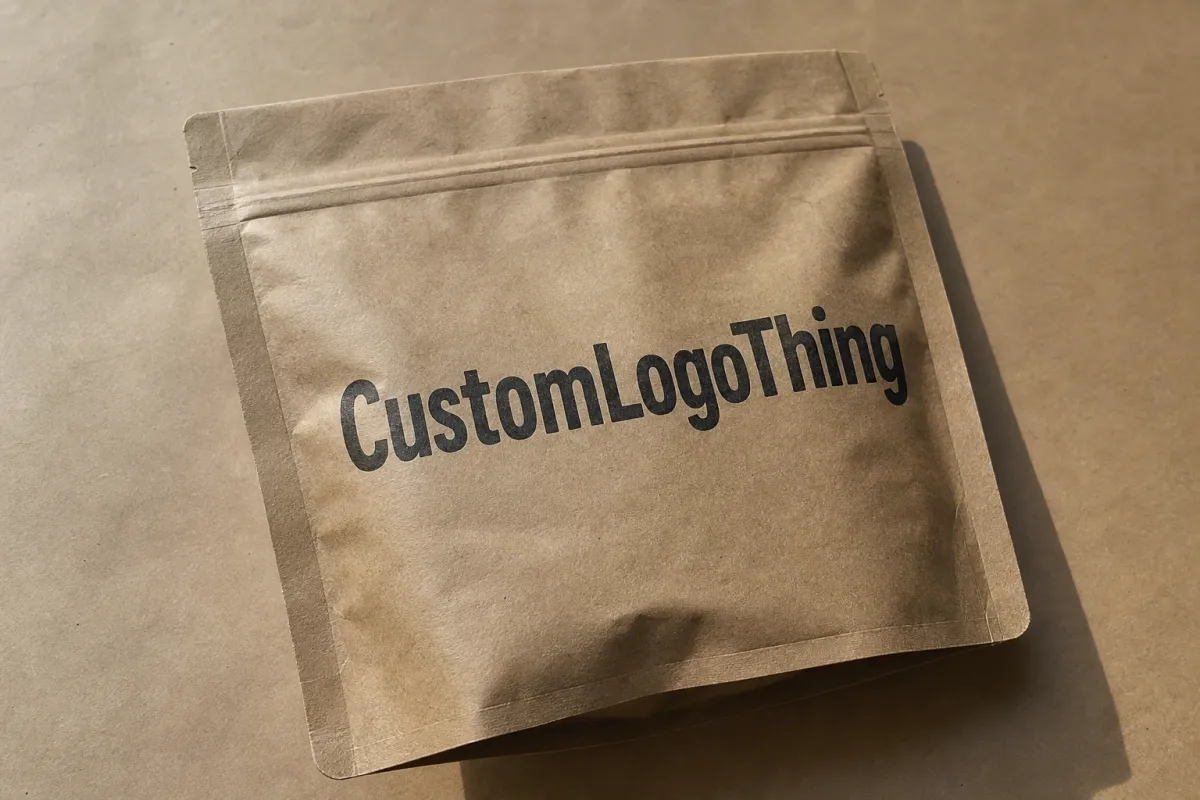
Many brands start with kraft because they want a more natural visual language on shelf, but the economics usually improve for reasons that have little to do with style alone. A printed pouch replaces multiple small tasks: no separate label inventory, no manual placement step, fewer SKUs to manage, and less risk that a label shifts, wrinkles, or peels in transit. Once the pouch itself carries the artwork, the pack becomes one finished unit instead of a stack of parts assembled at the last minute.
That shift matters most in bulk. Setup costs, print plates, proofing time, and conversion labor are easier to absorb across a larger run. A production line that repeats one pouch size and one artwork file also tends to hold better consistency from carton to carton, which is useful for buyers who need predictable reorders. If a launch performs well, repeating the same structure is faster than rebuilding packaging from scratch every time inventory runs low.
From a packaging buyer's point of view, the best candidates are usually products that already benefit from a dry, shelf-stable format and a clear front panel. Think roasted coffee, loose tea, granola, trail mix, crackers, baking mixes, dehydrated fruit, protein powders, collagen blends, seasoning mixes, and pet treats. These products do not need a rigid box to look credible. They need a pouch that seals well, stands upright if needed, and presents the brand clearly.
A pouch that looks good but leaks at the zipper costs more than it saves. In bulk orders, the real value is not only the print; it is the repeatable performance of the whole package.
Retail also rewards the pouch format because a well-made stand-up bag gives a strong front panel with enough room for product name, flavor callout, net weight, compliance copy, and a readable brand mark. For e-commerce, the same pack creates a clean hero image without extra styling. For wholesale cartons, a consistent pouch size stacks predictably and is easier to count, ship, and replenish. That combination is why printed kraft food pouches bulk often make sense earlier than buyers expect.
There is one practical caveat. Kraft looks simple, but simple is not the same as forgiving. Dark graphics, fine lines, and low-contrast typography can disappear if the substrate and ink system are not planned carefully. The better the artwork and structure are matched to each other, the stronger the packaging performs in the real world.
Product Details: Materials, Print, and Finished Look
In food packaging, kraft usually refers to the outer paper layer, not the full barrier structure. Paper alone is not enough to protect a product from oxygen, moisture, aroma loss, grease migration, or handling damage. The actual work is done by the inner layers, which may include PE, PET, foil, or other barrier films depending on the product's shelf-life target and the line it will run on.
That is why two kraft pouches can look similar and perform very differently. One may be a paper-and-film construction for low-moisture snacks, while another uses a stronger barrier layer for coffee or a powder that needs better aroma retention. A buyer should not choose on appearance alone. The contents determine the structure, and the structure determines whether the pack keeps product quality stable through storage and shipping.
Finish changes the read of the package under retail lighting. Matte tends to feel more restrained and paper-forward, which suits organic, artisanal, or ingredient-focused brands. Gloss can make color blocks and photography pop more strongly, though it can also make the pack feel less natural. Some buyers want a clear window to show the product itself, which can help with trust on shelf but should be placed carefully so it does not crowd the branding.
Functional features matter just as much as visual ones:
- Resealable zippers help preserve freshness after opening and reduce the chance of spills.
- Tear notches make first opening easier and improve customer experience.
- Hang holes support peg display in specialty retail.
- Bottom gussets create the stand-up profile that many brands want for shelf presentation.
- Seal bands and heat-seal areas must match the filling process and the seal temperature on the line.
Printing on kraft has its own rules. The paper surface is more textured and warmer in tone than white film, so artwork should be built with that in mind. Dark logos, bold type, and deliberate spacing usually work better than crowded layouts with thin strokes. If the design depends on a pure white background, the final result may feel muted because kraft naturally influences the color. That is not a defect; it is a design constraint that should be planned from the start.
Brand owners often underestimate how much the substrate changes color perception. A soft green on white film may look earthy on kraft. A fine gold accent may turn muddy if it is too light or too close to the paper tone. Strong contrast, disciplined typography, and a layout that gives the logo room to breathe will almost always print better than a busy artwork sheet packed with too many claims.
For buyers who need to justify material choices internally, certification and sourcing language can matter too. If the paper portion of the structure is part of a sustainability story, ask whether the paper source can be specified as FSC-certified where applicable. For transport durability, it also helps to know whether packs have been checked against industry testing methods such as ISTA transit standards. Those standards do not replace product-specific testing, but they do give a useful baseline for shipment abuse and handling resistance. See the general references at FSC and ISTA.
One more detail deserves attention: barrier claims should be tied to the product, not the aesthetic. A pouch may look earthy and natural, but the inside still needs to perform against the real risks your product faces. Coffee needs aroma protection. Snack mixes often need moisture and grease resistance. Powdered products can be vulnerable to clumping if humidity creeps in. The paper look should never become a substitute for technical fit.
Specifications to Confirm Before You Order
The fastest way to avoid expensive back-and-forth is to confirm the pouch specification before artwork is finalized. Start with the basics: width, height, bottom gusset depth, and the target fill weight. Those numbers determine the usable front panel, how the pouch stands, and whether the final pack will hold the product cleanly without bulging or looking underfilled.
It also helps to define how the package will be used after filling. Will it stand on shelf, hang from a peg, or ship flat for e-commerce? Will it be filled manually, on a semi-automatic line, or on a fully automated machine that requires precise seal geometry? These details affect not only size but also the type of zipper, seal area, and film stiffness that make the pack behave well in production.
Barrier requirements should be discussed in plain terms. Dry snacks may need moisture resistance and grease resistance. Coffee may need stronger oxygen and aroma protection. Powder blends can be sensitive to clumping if moisture ingress is not controlled. None of that is resolved by kraft paper alone; the inner construction is what protects the product. The better the barrier matches the content, the less likely the buyer is to face shelf-life complaints later.
These are the details that often get missed in first quotes:
- Zipper style such as press-to-close, slider, or child-resistant if the application requires it.
- Window size and placement, especially if product visibility is a selling point.
- Tear-open behavior so the first opening is controlled and not ragged.
- Seal strength for both shipping and repeated handling after opening.
- Compatibility with filling equipment to avoid jams, poor seals, or inconsistent output.
Compliance and quality checks should be part of the conversation as well. For food-contact packaging, ask about the materials used and the expected compliance documentation for your market. If recycled content is part of the requirement, confirm whether the exact structure can support it without compromising performance. And if the product is shipping long distances or moving through multiple warehouses, ask for sample review or transit testing before committing to a full run.
A good purchasing process also includes a real-world sample check. Hold the pouch under store lighting. Look at the legibility of the net weight and flavor copy. Open and reseal it a few times. Fill it with the actual product if possible. Those small checks can reveal whether the pack is ready for production or whether a specification adjustment is still needed.
Brands sometimes skip this step because a flat proof looks clean on screen. A flat proof, however, does not tell you how the zipper feels, whether the pouch stands properly when filled, or whether the print still reads well once the kraft tone absorbs part of the color. Physical sampling is slower, but it prevents expensive surprises.
Pricing, MOQ, and Quote Basics for Bulk Orders
Bulk pricing is shaped by a handful of predictable variables. Size is one of the biggest, because a larger pouch uses more material and often needs a heavier structure to keep its shape. Print complexity matters too: more colors, larger ink coverage, and tighter registration usually add cost. The barrier layer, zipper type, window, gusset style, and finish all influence the final price. Custom tooling or format changes can also affect the quote if the specification is not already close to an existing production setup.
MOQ, or minimum order quantity, is tied to setup efficiency. In a simple run, the factory can spread plate or setup cost across a larger quantity, which usually lowers the per-unit price. If the pouch structure is specialized, the artwork changes often, or multiple versions are needed for different flavors, the minimum may rise because each variant adds production complexity. That is not a penalty so much as the reality of converting printed flexible packaging at scale.
For buyers trying to compare options, it helps to see how structure affects cost and use. The following ranges are broad, but they are useful for initial planning on standard bulk orders with typical print coverage:
| Option | Best Use | Typical Cost Impact | Notes |
|---|---|---|---|
| Kraft stand-up pouch with zipper | Snacks, granola, dry mixes | Lower to mid | Common choice for shelf display and reclosability |
| Kraft pouch with clear window | Products where visibility helps sell the item | Mid | Window placement must be balanced with branding space |
| High-barrier kraft pouch | Coffee, aroma-sensitive powders, premium shelf-life needs | Mid to higher | Better protection usually means a more complex inner structure |
| Kraft pouch with specialty closure | Premium retail or repeated-open products | Higher | Slider and specialty zipper features raise conversion cost |
For rough planning, many brands find that standard printed kraft food pouches bulk can land in a wide range depending on specification, often somewhere around $0.18-$0.45 per unit for moderate-to-larger quantities, with simpler structures toward the low end and more complex barrier, print, or closure combinations moving higher. That is only a planning band, not a promise. A 5,000-piece coffee pouch with a zipper and strong barrier will not price the same as a basic snack pouch with a simpler build.
If you want a useful quote, send a clean specification package. Include final pouch size, fill weight, product type, finish preference, artwork status, target quantity, and delivery window. If you have only a rough idea, send a current sample or a reference pouch. That gives the packaging team something concrete to match instead of guessing at proportions and closure details.
There are also smart ways to hold cost down without weakening the package. Keep the structure consistent across flavors. Use one pouch size if your fill weights allow it. Simplify ink coverage where it does not hurt shelf impact. Avoid late-stage copy edits, because those changes can trigger proof revisions, print plate updates, and added lead time. A little discipline early often protects margin later.
It also helps to think beyond unit price. A slightly cheaper pouch that causes filling delays, higher waste, or weak shelf presentation can cost more over the life of the program than a better-built option. For recurring products, the right comparison is total package cost, not the lowest line item on the quote.
Process and Timeline for Bulk Orders
The production path for Printed Kraft Pouches is straightforward once the specification is settled. First comes the initial review of the size, product needs, and artwork fit. Then the design file is checked against the dieline, proofed for layout and color, and approved by the buyer. If sampling is needed, that step sits between proof and full production. After approval, the run moves into manufacturing, packing, and shipment.
Lead time depends heavily on how ready the order is at the start. A final dieline, a clean artwork file, and a clear specification move much faster than a project that is still changing size, closure, or window placement. If the buyer knows the exact fill weight and the final presentation, the order can usually proceed with fewer revisions. If the project is still being debated internally, the schedule stretches as each adjustment ripples through the quote and proof.
The most common delay points are easy to avoid with a little planning:
- Missing dielines that force the team to rebuild the layout from scratch.
- Low-resolution files that do not hold up in print.
- Unclear color targets that create expensive proof corrections.
- Late changes to zippers, windows, or claims that affect both printing and finishing.
- Unconfirmed ship dates that leave too little room for production and freight.
For planning purposes, many bulk orders move through the workflow in roughly 12-18 business days after proof approval, though the exact timing depends on quantity, structure, and current production load. Shipping time is separate, and freight method can change the arrival date more than buyers expect. A domestic truck shipment and an international ocean move are very different clocks.
That is why the best timeline strategy is simple: request the quote early, approve the proof promptly, and schedule inventory before the launch date instead of after it. Packaging should not become the bottleneck in a launch plan. If the pouch is late, the product launch is late.
For brands managing multiple SKUs, a reusable specification file helps a lot. Once the structure, closure, and print area are approved, reorders become much more predictable. That continuity matters for seasonal products, subscription programs, and wholesale accounts that expect the same package every time they reorder.
Teams that handle private-label or co-packed products also benefit from having a single approved packaging record. It reduces duplicate review work, prevents version drift, and makes it easier to compare production runs across seasons. A little order on the front end saves a great deal of uncertainty later.
Why Choose Us for Printed Kraft Food Pouches Bulk
At Custom Logo Things, the goal is not just to print a pouch that looks good in a mockup. The real standard is whether the packaging holds up through filling, shipping, retail display, and customer use. That means paying attention to material consistency, clean print registration, reliable seal performance, and the details that keep the pack looking right from the first carton to the last.
Bulk food packaging needs technical discipline. A consistent paper tone, a stable barrier structure, and a print file that has been checked against the dieline are what prevent the small defects that can turn into visible problems on shelf. If a logo drifts too close to a seam, if color coverage is too light on the kraft surface, or if the closure is not matched to the product, the package can still look acceptable in a flat proof while failing in the real world.
Practical support matters just as much as production quality. Many buyers know the product they want to sell, but not the exact pouch structure that suits it. That is where a good packaging partner earns trust: by helping with pouch sizing, barrier selection, artwork checks, and reorder continuity without making the process feel like a guessing game. For growing brands, that guidance saves time and cuts down on expensive trial runs.
We also understand that food businesses live on schedules. Retail resets, seasonal launches, and wholesale shipments leave very little room for packaging surprises. Clear communication during quoting and production helps protect those timelines. If the delivery window is tight, the quote should reflect that. If the print specification needs a correction, that should be identified before the run starts. Straight answers are better than optimistic ones.
For buyers comparing suppliers, the most reliable sign is not a polished mockup. It is whether the supplier asks the right technical questions early: what product is going inside, how long it must stay fresh, what kind of filler is running it, and how the pack will be displayed after sealing. Those answers shape the whole structure, and they are what separate a decorative pouch from one that can actually support the product.
If your team uses a broader purchasing program, our Wholesale Programs can help keep repeat orders organized across sizes and product lines. That is especially useful for brands with multiple flavors, private-label accounts, or recurring seasonal batches that need the same printed kraft format every time.
Here is the simple purchasing logic: the right pouch is one that supports the product, protects the contents, and presents the brand clearly without creating extra work in operations. That is the standard we aim for. Printed kraft food pouches bulk should perform like production packaging first and marketing packaging second, because the order only works if both jobs are handled well.
Next Steps to Order Printed Kraft Food Pouches Bulk
The cleanest way to move forward is to gather the essentials before requesting a quote. Start with the product type, fill weight, target shelf life, and the pouch style you want. Then note any must-have features such as a resealable zipper, clear window, hang hole, or a specific stand-up profile. The more exact that starting information is, the more accurate the first quote will be.
If artwork is ready, send it. If it is still in draft form, send the label copy and logo files anyway. A quick file review can reveal whether the text size is too small, whether the contrast needs adjusting, or whether the layout needs to change to suit kraft better than a white label would. That early check is often the difference between a smooth proof and a round of corrections.
It also helps to compare options side by side. Ask for pricing with the target quantity, desired finish, and any alternates you are considering. For example, compare a pouch with and without a window, or compare zipper styles if you are deciding between presentation and cost. Real quotes are far easier to use than rough estimates, especially if the product launch has a fixed date.
Before you approve production, confirm the details one more time: size, closure, artwork placement, color expectations, and delivery window. Those five items prevent most of the painful mistakes that happen in packaging projects. If they are locked in, the order can move with far less friction.
For brands that want printed kraft food pouches bulk to do real work on shelf, in fulfillment, and in repeat orders, the best next step is simple: send the specifications, review the proof carefully, and move into production with the structure already matched to the product. That approach protects schedule, presentation, and margins at the same time.
FAQ
What products work best in printed kraft food pouches bulk?
Dry, shelf-stable products are usually the best fit: snacks, tea, coffee, granola, powders, seasoning blends, dehydrated fruit, and pet treats. The right barrier structure should be chosen based on moisture sensitivity, oxygen exposure, and aroma retention, not just the kraft appearance. Products with higher grease or moisture needs usually require a stronger inner layer and a reliable sealed closure.
Are printed kraft food pouches bulk suitable for retail shelves?
Yes. The kraft surface gives a natural, premium look that can stand out well in retail and in online photos, provided the artwork is designed for the paper tone. Strong contrast, clean typography, and correct sizing matter because retail lighting can make weak designs harder to read. Stand-up formats with zippers and hang holes are common for shelf-driven sales.
What affects the price of printed kraft food pouches bulk?
Price is mainly driven by pouch size, material structure, print coverage, number of colors, barrier level, zipper type, and whether the pack includes a window or other specialty features. MOQ and run length matter because setup cost is spread across more units on larger orders. Late artwork changes can raise the quote because they often trigger extra proofing or rework.
How long does a printed kraft food pouches bulk order take?
Timeline depends on proof approval, production queue, final specifications, and shipping distance. Orders usually move faster when the dieline is ready and the artwork is final before quoting. For planning, many orders are completed in roughly 12-18 business days after approval, but the exact schedule should be confirmed with the final quantity and finish details.
What should I send for a quote on printed kraft food pouches bulk?
Send the pouch size, fill weight, product type, closure preference, and whether you need a window, gusset, or hang hole. Include artwork files if you have them, along with your target quantity and delivery window. If you are still deciding on specifications, a current sample or a reference pouch helps the packaging team match the structure more accurately.
Can printed kraft food pouches bulk be used across multiple flavors or SKUs?
Yes, and that is often the most efficient way to buy them. Keeping the same pouch structure across several flavors helps control cost, simplifies filling, and makes reorders easier to manage. The main change is usually the artwork or flavor panel, while the base format stays constant.
The practical takeaway is straightforward: choose the pouch structure based on the product's real needs, not the paper look alone. Lock the size, barrier, and closure before artwork is finalized, then approve a physical sample or proof that reflects the actual fill. That sequence keeps printed kraft food pouches bulk aligned with shelf performance, production speed, and the rest of your launch plan.


