Printed Label Roll Buying Guide for Clothing Brands
A printed label roll is a small procurement item with a direct effect on line speed. On the packing table, it works more like part of the equipment than a simple consumable. The right roll keeps labels in sequence, reduces handling, and lets operators move through orders without sorting loose sheets or rechecking orientation.
That matters for apparel teams using labels for polybags, cartons, size stickers, barcode labels, and product identification. Roll-fed labels are easier to dispense, store, and count, and they are less likely to arrive bent, dusty, or mixed across batches. If you are comparing formats for your own line, a supplier like Custom Labels & Tags can help translate the artwork into a roll spec that fits the actual workflow.
Why a printed label roll can speed up every packing line
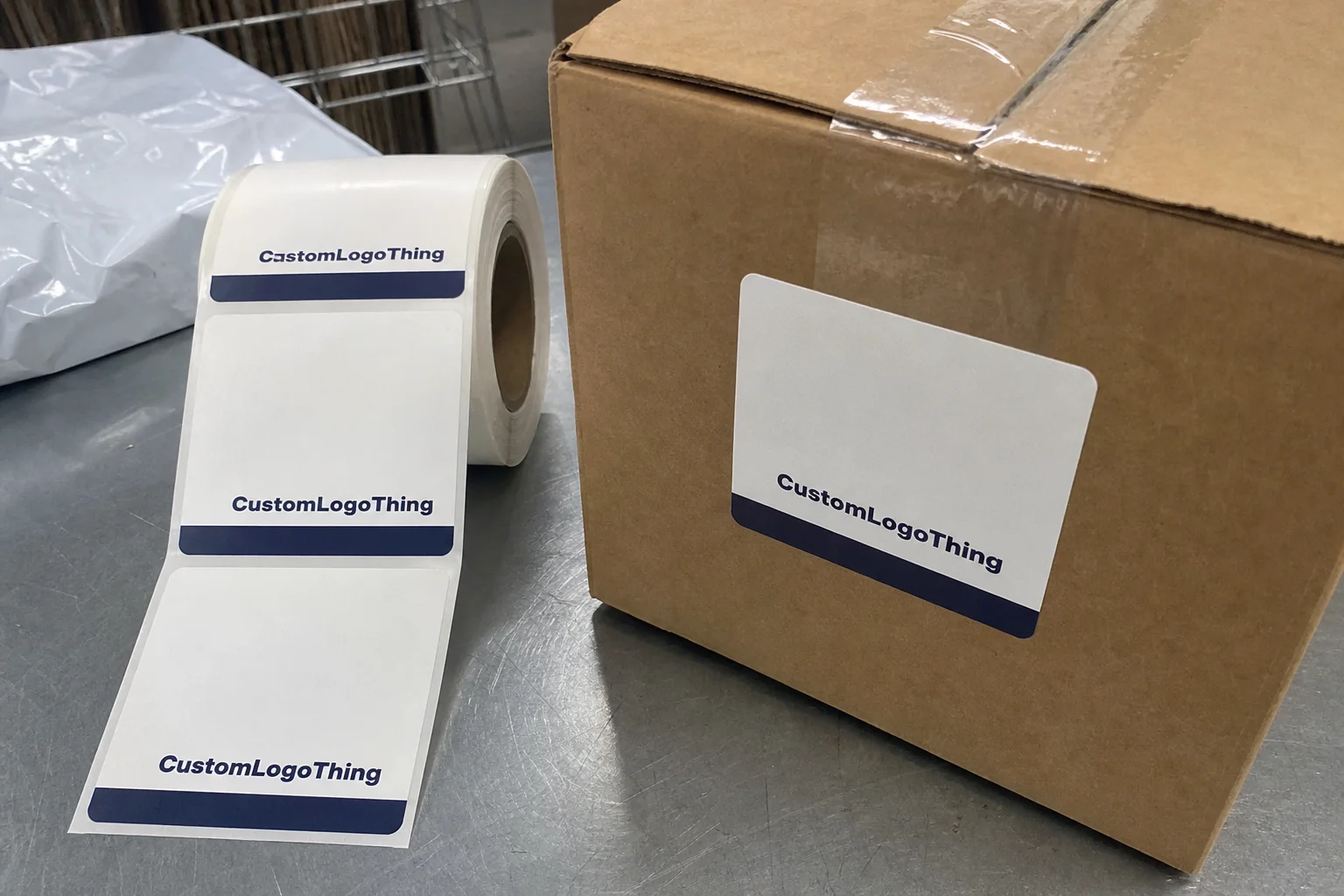
Most packing delays are small and repeated: peel a label, reorient it, set it down, and repeat. A roll removes several of those steps. The next label is already in sequence, the leading edge is easy to find, and the operator does not need to manage a stack of loose pieces.
That is useful when SKU counts rise. A line shipping one style can absorb some inefficiency. A line shipping multiple colors, cuts, and carton packs cannot. Roll-fed labels help maintain a steady rhythm, which reduces mislabels, crooked placement, and fatigue during long shifts.
A label can print correctly and still slow production if the unwind direction, core size, or spacing does not match the dispenser.
Rolls also reduce waste from mixed or damaged stock. Cut sheets are easier to mis-sort, and loose labels can collect dust or get moved between tables without protection. A roll keeps the labels contained and easier to count, which lowers rework and cleanup time.
- Polybags: size, color, and SKU identification.
- Cartons: shipping marks, route codes, and carton IDs.
- Inserts: care notes, lot numbers, and merchandising cues.
- Retail prep: barcode and price labels where scan quality matters.
For most clothing brands, the benefit is operational rather than decorative. The format helps a packing team move faster without changing the rest of the process.
How the roll format works from print file to dispenser
The workflow is straightforward: artwork is prepared, stock is printed, labels are die-cut or kiss-cut, and the finished web is rewound onto a core. The roll is then loaded into a dispenser or applicator so labels feed in a controlled sequence.
The common mistake is assuming a good design file is enough. It is not. A usable roll depends on spacing, winding direction, core diameter, and label orientation. A roll wound the wrong way can force a reload. A gap that is too tight or too loose can create misfeeds. Too much tension can make labels resist release; too little can let the roll shift in transit.
Before production, the file review should confirm a few practical points:
- What size is the label, and what shape is the die?
- How much gap is needed between labels?
- Is the roll outside wound or inside wound?
- What core size does the applicator require, usually 1 inch or 3 inches?
- Will the labels be applied by hand or by a semi-automated machine?
Those details determine whether the roll is usable on the floor. A proof can look correct and still be wrong if it ignores the dispenser or the way operators actually apply the label.
Roll direction is worth checking early. If the label must enter a machine from the top edge, the unwind must match that path. If the team pulls labels from the front edge by hand, the winding should support that motion. Standardizing the spec sheet helps prevent rework: keep the same core size where possible, state the winding direction clearly, and note the dispenser model if one is already in use.
Material, adhesive, and finish choices that affect performance
Material choice affects how a label performs after printing and after application. Paper is the most economical option for many apparel jobs, especially where the label has a short life and the environment is dry. Polypropylene is better when the label needs more resistance to scuffing and light moisture. Polyester is usually reserved for tougher handling or longer wear.
Paper is still a valid choice for inner-pack labels, bundle identifiers, and temporary retail prep. The question is not whether the material is premium. It is whether it survives storage, handling, transport, and whatever happens on the packing table.
Adhesive selection matters just as much. Permanent adhesive belongs on labels that must stay attached through shipping, warehousing, or retail handling. Removable adhesive is better when the label should peel away cleanly and leave little or no residue. Stronger is not always better; if the label is temporary, too much bond can create cleanup work or damage the pack surface.
Finish changes both appearance and function. Matte finishes usually improve readability under warehouse lighting and reduce glare on barcodes. Gloss can improve branding but tends to show scuffs more quickly. Coatings and lamination can add durability, but they should be justified by the actual use, not by habit.
Shape and print density matter too. A small round size sticker behaves differently from a long carton label or a narrow barcode strip. Fine type, dense QR codes, and heavy coverage all require more control because the result depends on ink laydown, contrast, and cut accuracy.
For a broader packaging reference, groups such as Packaging Machinery Manufacturers Institute and transport testing methods like ISTA are useful when judging whether a label will hold up in handling and shipping. If sourcing documentation matters, paper origin may also be relevant for Brands That Need FSC-aligned records.
| Material | Typical unit cost at 5,000 pcs | Best for | Tradeoff |
|---|---|---|---|
| Paper | $0.03-$0.07 | Dry indoor use, size labels, short-life packaging marks | Lower scuff resistance |
| Polypropylene | $0.05-$0.12 | Retail handling, light moisture, better durability | Costs more than paper |
| Polyester | $0.08-$0.18 | Longer wear, tougher handling, higher abrasion resistance | Usually unnecessary for temporary labels |
The ranges are planning figures, not fixed market rates. Coverage, die shape, finishing, and pack-out method can move the price up or down, but they are still a useful baseline before quotes are collected.
Production steps and lead time: from proof to shipment
The usual sequence is simple: confirm the spec, review the artwork, approve the proof, print, finish, rewind, inspect, and ship. Each step catches a different type of error before the labels reach the packing table.
Lead time is shaped more by readiness than by press capacity alone. A file that is press-ready can move quickly. A file that needs barcode correction, size adjustment, or color clarification can wait. Changes after proof approval are another common delay source, especially if the buyer changes stock, winding direction, or label count.
For standard production, 12 to 15 business days after proof approval is a reasonable planning window. Simple jobs can move faster; special winding, sample approval, or nonstandard cores can extend the schedule. Rush work is possible only when the art is clean and the spec is locked.
The most useful questions are specific:
- What print method is being used?
- How many labels are on each roll, and how many rolls are in the order?
- What core size does the dispensing setup require?
- Should the roll be outside wound or inside wound?
- What is the estimated ship date after approval?
If the order includes barcode labels or variable data, ask for a proof that reflects the final production format, not just a flat artwork preview. That catches unreadable codes, text placement issues, and spacing problems before they become a reprint.
Pricing, MOQ, and unit cost: what changes the quote
Several variables drive the quote for a printed label roll: material choice, label size, color count, quantity, finish, die-cut complexity, and winding requirements. If the order needs special packing, a nonstandard core, or extra QA for variable data, that can raise the price too.
MOQ, or minimum order quantity, is the smallest run a supplier will produce at a workable rate. Smaller quantities usually carry a higher unit cost because setup, plates, proofing, and finishing are spread across fewer labels. That is why a 1,000-piece order often looks expensive next to a 10,000-piece run.
Bigger runs reduce unit cost, but storage still matters. Brands that rotate SKUs often can end up buying more than they can use efficiently. Excess inventory is not a bargain if it sits for months and ties up space. The right order size is the one that fits the production cycle and reorder timing.
The lowest quote is not always the lowest total cost. A cheaper label that jams in the dispenser, peels early, or forces rework because the adhesive is wrong can cost more once labor is counted. When comparing bids, ask the supplier to separate base print cost, finishing cost, special winding, and any added proofing or QA. That makes quotes easier to compare and shows whether the difference is real.
Brands that work with Custom Labels & Tags usually get better outcomes when they compare the whole package, not just the headline price. A useful quote should tell you what is on the roll, how it will feed, and what is included before shipment.
Common mistakes that create waste, reprints, or slowdowns
The first mistake is sending artwork before the application surface is clear. A label that works on corrugated cardboard may behave differently on coated polybags or slick retail film. If the surface changes, the adhesive usually needs to change too.
The second mistake is ignoring roll specifications. Core size, unwind direction, and label spacing are not cosmetic details; they determine whether the roll feeds properly. A roll wound for the wrong side of the machine can create immediate friction on the line.
Barcode and fine-text checks deserve more attention than they usually get. A barcode that looks crisp on a screen may still fail in scanning because the contrast is weak or the quiet zone is too small. The same risk applies to care copy, fiber content, and legal text placed too close to the trim.
Another avoidable mistake is over-specifying temporary labels. Not every inner-pack label needs heavy film, lamination, or premium adhesive. If the label is removed before retail sale, the brand may be paying for durability it never uses.
The cleanest orders are the ones where the buyer states the functional requirement plainly: what the label must survive, what it must stick to, how long it must stay on, and how the operator will use it.
- Confirm the application surface before choosing adhesive.
- Verify roll direction and core size against the dispenser.
- Test barcode scanability before full production.
- Use the simplest material that still meets the job.
Expert tips and next steps for ordering the right roll
If the label will run through a fast packing workflow, start with a sample or a short pilot run. That is the fastest way to catch spacing issues, adhesive mismatch, or application problems before a full order is committed.
Build a practical spec sheet before requesting quotes. Keep it short and complete: size, material, adhesive, quantity, finish, core size, winding direction, and application surface. Add barcode format, variable data needs, or pack-out requirements if they apply.
Ask for a proof that reflects the real job. If the label is going onto a polybag, carton, or insert card, the proof should show the right dimensions and placement expectations. That makes it easier to judge readability, margins, and print weight.
For compliance-heavy brands, it helps to keep notes on sourcing and transport checks. Paper origin may matter if you report FSC-aligned sourcing. Shipping durability may matter if labels are packed with other goods and exposed to vibration. ASTM and ISTA references are useful when you want the discussion to stay practical.
The most reliable approach is simple: compare the sample against the real packing setup, not a desk test. If the roll feeds cleanly, scans correctly, and stays attached for the required time, the spec is doing its job. Once that is set, repeat orders become less risky and the packing line becomes easier to keep moving.
What is a printed label roll used for in clothing packaging?
It is used for fast, repeatable labeling on polybags, cartons, inserts, size stickers, and other apparel packaging tasks. The roll format makes it easier to dispense labels quickly without sorting loose sheets or handling individual pieces. It is especially useful when a packing team needs consistent placement across many SKUs.
Which material works best for a printed label roll on apparel orders?
Paper works well for short-term, dry indoor use when cost matters most. Polypropylene or polyester is better when the label needs more scuff resistance or exposure to handling and moisture. The right choice depends on the surface, the storage conditions, and how long the label needs to stay readable.
How do I choose the right adhesive for a printed label roll?
Use permanent adhesive when the label must stay put during storage, shipping, or retail handling. Use removable adhesive when the label should peel off cleanly without leaving residue. Match the adhesive to the actual surface, because cardboard, plastic film, and coated materials behave differently.
What affects the cost of printed label roll pricing the most?
Material, size, color count, quantity, finish, and die-cut complexity usually have the biggest impact. Smaller quantities often have a higher unit cost because setup time is spread across fewer labels. Special winding, core requirements, or tight turnaround can also change the quote.
How long does printed label roll production usually take?
Standard timing depends on artwork readiness, proof approval, and the production queue. Simple orders move faster when the file is press-ready and the specs are already confirmed. Lead time can extend if the job needs samples, barcode checks, or nonstandard roll configuration.