Buyer Fit Snapshot
| Best fit | Printed Mailer Boxes for Candles projects where brand print, material claims, artwork control, MOQ, and repeat-order consistency need to be specified before quoting. |
|---|---|
| Quote inputs | Share finished size, material target, print colors, finish, packing count, annual reorder estimate, ship-to region, and any compliance wording. |
| Proofing check | Approve dieline scale, logo placement, barcode or warning zones, color tolerance, closure strength, and carton packing before bulk production. |
| Main risk | Vague material claims, crowded artwork, missing packing details, or unclear freight terms can make a low unit price expensive after revisions. |
Fast answer: Printed Mailer Boxes for Candles: Fit, Print, and Ship should be specified like a repeatable production item. The safest quote records material, print method, finish, artwork proof, packing count, and reorder notes in one written spec.
Production checks before approval
Compare the actual filled-product size with the drawing, then confirm tolerance on folds, seals, hang holes, label areas, and retail display edges. Reserve space for logos, QR codes, warning copy, and material claims before decorative graphics fill the panel.
Quote comparison points
Review material grade, print process, finish, sampling route, tooling charges, carton quantity, and freight assumptions side by side. A quote is only useful when the supplier can repeat the same color, closure quality, and packing count on the next order.
Printed Mailer Boxes for candles do more than carry a jar from warehouse to doorstep. They stabilize a fragile product, frame the brand before the candle is even lifted out, and quietly shape whether the shipment feels refined or careless. In practical terms, the box affects damage rates, labor time, freight spend, and the first impression a customer forms in the first ten seconds after opening the parcel.
That is why candle packaging deserves more discipline than a last-minute size choice or a pretty mockup on screen. A good mailer has to protect a glass vessel, keep the candle centered during vibration and compression, and still arrive looking intentional. Structure, board grade, print coverage, coatings, and internal fit all influence how well the carton performs once it enters a carrier network that was never designed to be gentle.
For brands working through Custom Packaging Products, this format often earns its place because it can function as the shipper, the presentation box, and the brand’s most visible surface in one piece. If a candle ships with a note, matchbook, accessory, or second product, the outer carton may also sit alongside other protective formats such as Custom Poly Mailers for bundled or secondary shipments.
Why printed mailer boxes for candles matter more than most brands expect
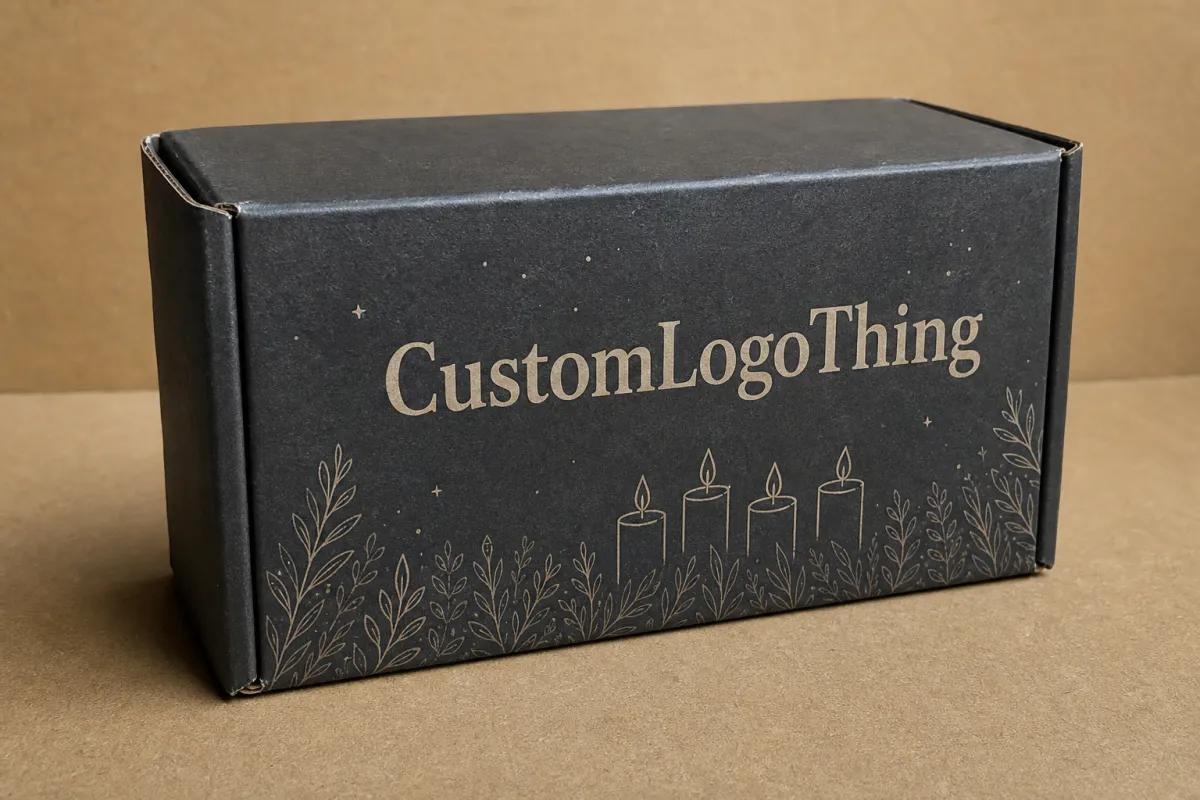
Most candle damage does not begin with a dramatic drop. It starts with movement. A jar that can shift a few millimeters inside the box may rub a label edge, loosen a lid, or create pressure on a glass seam long before the customer sees the parcel. That is why Printed Mailer Boxes for candles should be built around the packed product, not an estimate that only looks close enough on a spec sheet.
A mailer box is usually a self-locking carton made from corrugated board, though lighter paperboard structures can work for non-shipping presentations. The appeal is practical: it ships flat, assembles quickly, and gives the outside surface room for branding. For candle makers, that combination supports direct-to-consumer fulfillment, holiday launches, subscription programs, wholesale sample packs, and gift sets without forcing the team to manage a different package for each order type.
Candles sit in an unusual spot. They are fragile, but they also carry perceived value. A $24 soy candle may be easy to ship in theory and still feel delicate in the hand. If the carton looks too plain, the product can feel underbuilt. If it looks luxurious but fails under load, the packaging spends money on decoration while the parcel network exposes its weakness. The stronger candle brands usually land in the middle: practical first, branded second, and polished enough that the unboxing feels deliberate rather than accidental.
A candle box usually does not fail because the artwork was wrong. It fails because the jar moved, the board flexed, or the closure was too light for the weight inside it.
That reality changes the buying conversation. A lower-cost carton that raises breakage by even 1% can wipe out the savings once replacements, reshipments, and customer service time are included. On the other hand, a box that is oversized for a small votive adds freight cost and extra board without improving protection. The right answer depends on the vessel, the route, and how the team actually packs orders at the table.
How printed mailer boxes for candles work from structure to unboxing
At the core of the package is a die-cut blank. It is scored so it folds into a finished carton with side walls, top and bottom flaps, and a closure that locks into place. For candle applications, corrugated board is usually the default choice because it offers better crush resistance and stronger edges than a thin folding carton. E-flute often works for smaller, lighter candles. B-flute, or another stronger build, is more common for heavier jars, gift sets, or multi-piece kits.
The closure deserves more attention than many teams give it. A properly designed tuck and tab can reduce tape use, speed up pack-out, and create a cleaner opening moment for the customer. If the box is printed on the outside, that same closure panel also becomes part of the brand’s visual language. The customer sees the logo, palette, and message before they ever touch the candle, so the first surface should feel like part of the product instead of a reused shipper with a label on top.
Print turns the shell into a branded asset. High-coverage color, a crisp logo, the product name, scent notes, or a short brand statement can make the carton feel connected to the candle line. For a seasonal release, print may be the only visible difference between a standard SKU and a limited run. For a subscription brand, the carton may need to stay consistent across many sends while still being efficient enough to keep repeat fulfillment economical.
Internal fit matters just as much as the outside graphics. A candle may need an insert, a corner lock, a paperboard cradle, or a partition if two or more items ride in the same mailer. Tin candles behave differently from glass vessels. A heavy wax fill changes the center of gravity. Tall lids create pressure points. If the pack includes a hang tag, wick trimmer, matchbook, or gift card, each addition needs to be planned with the same care as the jar itself.
The journey is worth mapping step by step. The packer folds the mailer, places the candle, closes the flaps, and sends the box into the carrier stream. During transit, the parcel can tilt, stack, vibrate, drop, and rub against other packages. On arrival, the customer sees the box before the candle. If the fit held the product centered and the printed surfaces stayed clean, the experience feels controlled. If the candle rattled, the label creased, or the ink scuffed, the brand impression drops with it.
That is also why small brands often get better results from a plain structural sample before they approve a full printed run. A sample with the right internal dimensions can reveal more than a polished digital render. It shows whether the closure is secure, whether the jar needs more clearance, and whether an insert helps or only adds labor. For printed mailer boxes for candles, a modest sample can prevent an expensive error later.
Key factors that affect fit, protection, and print quality
Sizing comes first. Start with the candle’s true outer dimensions, not the nominal jar size on the product page. Include the lid, label, shrink band if one is used, and any protective sleeve or insert. A 3-inch jar with a metal lid may need a different pocket than a 3-inch jar with a wood cap. That small difference changes wall clearance and total box depth. If the candle ships with a card or accessory, measure the full packed configuration rather than the candle alone.
Clearance is a balancing act. Too little, and the packer fights the box while the candle rubs the walls. Too much, and the jar moves enough to create scuffs or breakage. Many successful DTC candle mailers keep movement low with a snug fit and a simple insert, especially for glass vessels. If a brand wants more negative space for a premium reveal, the protective structure still needs to pass real drop, vibration, and compression testing.
Board choice changes the whole feel of the carton. Corrugated construction brings strength, but the flute profile and liner quality matter. E-flute gives a smoother print surface and a slimmer profile. B-flute usually offers more cushioning and a sturdier hand feel. If the goal is a softer, more upscale presentation, the outer liner can be chosen for better ink reception and less visible fiber grain. If sustainability messaging matters, FSC-certified board often enters the discussion, and the FSC site is a useful reference for what responsible sourcing claims can and cannot mean.
The weight of the candle changes the packaging math quickly. A light soy candle in a tin behaves very differently from a 12-ounce glass jar filled with dense wax and capped with thick glass or metal. Heavier products increase stress on closure points, score lines, and bottom panels. If the jar has decorative glass, a frosted finish, or a fragile lid, the risk rises further because damage often shows up at corners and seams rather than as a clean break. For those products, the carton has to work as a transit package, not just a printed sleeve.
Surface finish is another area where small choices matter. Matte aqueous coatings reduce glare and help colors feel calm and controlled. Gloss can make saturated artwork stand out, but it may show scuffs sooner depending on the ink system and shipping conditions. Spot varnish can highlight a logo, scent name, or graphic detail, yet too much raised or glossy detail on an outer shipper can scratch during carton friction in parcel handling. Soft-touch lamination can create a premium tactile feel, though it is not always the best choice for high-abrasion shipping unless the structure protects it well.
Artwork coverage should also match the physical realities of the fold lines. Dark full-bleed art can look striking, but every score, fold, and edge shows more quickly. Light scuffing becomes visible. Corners may reveal board on white areas or show white creasing on dark backgrounds. That does not make dark boxes a bad idea; it means the design should expect handling. High-contrast typography, careful panel placement, and coatings matched to the print coverage help a box age better after the first shipment.
For transit validation, many packaging teams reference industry test profiles such as ISTA methods or related ASTM procedures, then choose the version that best reflects the actual shipping route. A parcel moving through a busy carrier network needs different assumptions than a box that only travels from warehouse to a local store shelf. Test the package against the path it will actually follow, not a softer version that only looks reassuring on paper.
Useful fit and finish checklist:
- Measure the jar with lid, label, and any wrap or band in place.
- Confirm the packed weight, not just the empty container weight.
- Check whether the closure needs tape, glue, or a reinforced lock.
- Match the finish to the handling environment, not only the brand mood board.
- Request a sample with the actual candle and any insert or accessory.
Cost and pricing: what drives the quote for candle mailers
Pricing for printed mailer boxes for candles almost never comes down to one variable. Dimensions, board grade, print method, finishing, tooling, and order volume all pull on the total. A small box with minimal print on standard board can look inexpensive until the buyer adds a custom insert, a specialty coating, or a heavier shipping spec. A more premium carton may cost more up front and still save money by reducing damage, improving pack speed, and holding retail value better once the customer sees it in person.
Box size is one of the clearest cost drivers. Larger cartons use more board, more print area, and more freight space. They also tend to ship less efficiently, which matters because parcel carriers price by dimensional weight as well as actual weight. If the box is too large for the candle, the brand pays for air. If the box is too tight, the team pays for breakage. Good packaging economics sit between those two mistakes.
Quantity has a strong effect on unit cost because setup, die cutting, press preparation, and proofing are spread across the run. A 500-unit order can make sense for a launch test, but the per-unit price is usually much higher than at 2,000 or 5,000 units. That is normal. Tooling, artwork prep, and press setup are not free, so the more units that move through the line, the more those fixed costs disappear into the total order.
To help compare options, the table below gives illustrative ranges only. Actual quotes depend on box dimensions, print coverage, the number of sides decorated, insert complexity, and freight terms. The pattern still holds across most candle packaging jobs: stronger board, more colors, and more custom fit features all raise the price, while larger quantities usually bring the unit cost down.
| Option | Typical build | Best fit | Approx. unit price at 500 units | Approx. unit price at 2,000 units | Approx. unit price at 5,000 units |
|---|---|---|---|---|---|
| Standard mailer | E-flute corrugated, 1-color or 2-color print, no insert | Single candle, lighter glass, simple DTC orders | $1.55 - $2.40 | $0.92 - $1.55 | $0.58 - $0.96 |
| Printed premium mailer | Full-color outside, matte aqueous, stronger finish | Gift sets, seasonal launches, higher perceived value | $2.10 - $3.60 | $1.25 - $2.20 | $0.78 - $1.45 |
| Mailer with insert | Custom insert or partition, heavier board, tailored cavity | Glass jars, two-piece kits, premium protection | $2.70 - $4.80 | $1.60 - $3.00 | $1.05 - $2.10 |
Hidden costs matter just as much as the quoted carton price. A box that packs slowly adds labor cost to every order. A box that takes too much cube can raise shipping spend. A package that drives breakage creates replacement product cost, customer service time, and return freight. The cheapest carton on the quote sheet is not always the cheapest carton in the P&L.
When comparing suppliers, ask what is included. Does the quote cover structural sampling? Are prepress files or dieline adjustments extra? Are freight charges built in or billed separately? What about specialty inks, coatings, or custom inserts? A fair comparison should use the same assumptions on every line item so the numbers do not mislead the buyer. If one vendor quotes only the printed box and another includes shipping, proofing, and insert assembly, the lower price may not be lower at all.
Some brands also need to think about sustainability claims and material sourcing. FSC-certified board can support responsible sourcing goals, and the EPA has useful guidance on materials, recycling, and waste reduction for packaging teams that want to keep the conversation grounded in real recovery systems rather than vague claims. The point is not to add a slogan; it is to choose materials and structures that make sense for the product, the route, and the brand’s environmental goals.
Process and lead time: from dieline to finished cartons
A clean packaging project usually follows the same sequence: discovery, sizing, dieline creation, artwork prep, proofing, sampling, production, finishing, and shipment. The order matters. If the structural decisions are rushed, the rest of the project absorbs the mistake. If the art is finalized before the box dimensions are locked, the graphics may need to move later, which adds time and sometimes cost. Good candle packaging work is not just creative; it is staged carefully so each approval has something concrete to verify.
Discovery starts with the candle itself. What is the jar diameter, height, and weight? Is the lid flat, domed, wood, aluminum, or glass? Is there a label on the shoulder? Will the candle ship alone or with a note, wick trimmer, matchbook, or seasonal insert? These details define the internal geometry of the mailer. They also help determine whether the box can be self-locking or whether it needs reinforcement at the closure or corners.
From there, the dieline is created. A dieline is the flat template that shows where the box folds, cuts, locks, and prints. For fully custom printed mailer boxes for candles, this is where engineering starts to matter. The designer needs to know which panels are visible first, where the logo should sit when the box is closed, and whether any copy might disappear into a score line or fold. A good dieline keeps the graphics honest and the structure buildable.
Proofing should happen in layers. A digital proof helps catch layout problems, spelling errors, panel orientation issues, and color placement. A structural sample or white sample helps verify the actual fit. If a printed mock-up is available, it can show how the finish reacts to the artwork and whether the closing panel still reads correctly once the box is folded. Strong candle projects do not skip these steps, because a ten-minute sample review can save weeks of rework later.
Lead time depends heavily on how custom the mailer is. A standard format with ready artwork may move faster than a structural redesign that needs a new cutting die, multiple rounds of revision, and more than one sample. Print coverage also affects scheduling. Heavy coverage, specialty coatings, and insert assembly add production steps. If the order lands in the same window as a seasonal rush, the schedule can stretch quickly. That is one reason candle brands should think about packaging before the inventory is already boxed and waiting.
As a planning rule, many teams are safer when they budget extra time for seasonal launches. If a product has to be ready for a holiday drop, the packaging should often be in motion earlier than the candle fill itself. That gives room for proof corrections, shipping delays, and the occasional structural adjustment. A launch that waits on packaging usually costs more than a launch that planned ahead by a few weeks.
Practical timeline markers:
- 1-3 business days for initial sizing, brief review, and project alignment.
- 3-7 business days for dieline development and artwork setup, depending on revisions.
- 3-10 business days for proofing and sampling if the structure is new.
- 10-20 business days for production on many custom runs, depending on order size and finish.
- Additional transit time based on the shipping lane and freight method.
If the candle line is moving quickly, a small pilot run can be a sensible choice. That pilot can test fit, print, pack-out speed, and customer response before the brand commits to a larger quantity. For some teams, the pilot package becomes the final structure with only minor artwork changes. For others, it reveals that the closure needs reinforcement or the insert needs a tighter cavity. Either outcome is useful because it replaces guesswork with a measured decision.
Common mistakes that weaken candle packaging and raise freight risk
The most common mistake is leaving too much empty space. A box that looks roomy in a render often becomes a problem in transit because the candle can shift, strike the walls, and scuff its finish. If the jar is glass, that movement can also raise the chance of chips or cracks. A customer may never see the motion inside the parcel, but they will see the result when the product arrives damaged.
Another frequent error is choosing a box style that looks strong but is not built for the real weight of the product. A light closure panel may seem fine on a sample, then fail after repeated stacking, vibration, or drop exposure in parcel handling. Side walls that are too thin can bow. Bottom flaps can open under pressure if the locking design is not matched to the load. Board grade and construction style need to fit the candle, not just the mood board.
Printing can also create trouble if the finish is not chosen for use. A box with no coating may pick up warehouse scuffs quickly. A dark full-bleed design may show fold wear faster than expected. Metallic inks can be beautiful, but they may not age well if the carton is handled roughly. If the box is meant to be a shipper first and a display box second, the print system should reflect that order of priorities.
Carrier testing is another place where projects go sideways. Some teams assume a box that passes a simple bench test will survive parcel handling. That is not always true. Real distribution includes vibration, compression, corner drops, conveyor impacts, and temperature swings. A test profile aligned to ISTA or similar methods is a much better guide than a quick hand toss across the room. The goal is not to simulate heroics; it is to understand the ordinary stress a box sees in the network.
Warehouse speed can be overlooked too. A box that takes too long to fold, fill, and close can slow fulfillment during a launch. A beautiful insert may protect the candle but add steps to the pack line. A very tight cavity may protect the jar but force workers to fight the carton, which slows throughput and can create repetitive strain. The best candle mailer solves the shipping problem without creating a labor problem elsewhere.
Storage is another practical concern. Flat cartons take less room than preassembled ones, but they still need space, dry conditions, and sensible stack management. If the board is prone to warping or the print finish marks easily, warehouse handling should account for that. A packaging decision is not finished when the supplier ships the cartons. It only becomes real when the product is being packed under actual warehouse conditions.
Common failure points to check before release:
- Excess internal space that allows shifting during transit.
- Underbuilt closures on heavier candle jars.
- No coating on surfaces that will see abrasion.
- Untested inserts that look good but do not stabilize the product.
- Ignored carrier test assumptions or skipped drop validation.
Expert tips and next steps for launching a better mailer
Ask for a structural sample first, even if the project later moves into full-color print. The sample does not need to be polished. It needs to prove that the candle fits, that the closure locks correctly, and that the carton behaves the way the team expects once it is packed. If the jar is glass, test the exact jar. If the pack includes an insert or gift note, include that in the sample. Small differences at this stage can turn into expensive surprises after production begins.
Compare landed cost, not just unit cost. That means looking at the box price, freight, setup, assembly time, damage rate, and replenishment timing together. A box that is twenty cents cheaper but adds ten seconds to pack-out may not actually save money. A stronger mailer that reduces breakage can pay for itself quickly. Packaging buyers who think in terms of total shipped cost usually make better decisions than buyers who only compare the quote line.
Choose finish effects with restraint. A little gloss, a clean matte surface, or a single spot highlight can sharpen the presentation without making the carton fragile or overdesigned. For brands that want a premium feel, the material, ink, and coating combination should support handling, not fight it. A decorative effect should help the package feel intentional, not create a surface that shows scuffs the first time a carton slides across a fulfillment table.
Brand teams should also decide early whether the mailer will serve only as a shipper or whether it will also appear on shelf, in gifting displays, or in photography. That answer changes the print choices. Retail-visible boxes may need better color control, more polished panel composition, and a cleaner exterior surface. Pure shippers can prioritize strength and efficiency more aggressively. A single box can do both jobs, but the structure should be designed with the main job first.
For launches, the simplest action plan usually works best:
- Measure the candle, lid, label, and any included accessory.
- Define the shipping route and the level of parcel stress it will see.
- Collect artwork only after the box dimensions are stable.
- Request a structural sample and test it with the actual product.
- Review print finish, board choice, and insert design together.
- Place the order with enough lead time for proofing, production, and transit.
That sequence helps candle brands avoid the common trap of treating packaging as a late-stage decoration. In practice, the box is part of the product experience and part of the shipping system. Brands that plan for both usually see fewer replacements, steadier pack-out, and a cleaner impression when the customer opens the parcel.
For teams building out a broader packaging program, the same discipline applies across other formats too. A candle mailer may sit alongside inserts, retail cartons, or protective outer packaging, and the strongest programs keep those pieces aligned instead of treating each one as a separate purchase. That is where thoughtful planning with printed mailer boxes for candles pays off again: lower damage, steadier fulfillment, and a brand moment that feels prepared rather than improvised.
The clearest takeaway is simple: choose the box around the candle’s true packed dimensions, confirm the route it will travel, and sample the exact build before committing to print. If those three steps are handled well, printed mailer boxes for candles become more than packaging. They become part of the product’s reliability, margin, and first impression.
Frequently Asked Questions
What size printed mailer boxes for candles should I choose?
Start with the candle’s actual outer dimensions, including the lid, label, and any protective wrap or insert. Leave enough internal clearance for easy pack-out, but not so much that the jar can move during transit. If you ship bundles or gift sets, size the box around the full packed configuration, not just the candle itself.
Are printed mailer boxes for candles strong enough for glass jars?
Yes, when the board grade, box style, and internal fit are matched to the jar weight and shipping method. Glass candles usually need tighter fit control and, in many cases, an insert or partition to reduce movement. Testing with the real product matters because a strong-looking box can still fail if the candle shifts inside it.
How much do printed mailer boxes for candles usually cost?
Pricing depends on size, board choice, print coverage, finish, insert design, and order quantity. Smaller runs usually cost more per unit because setup and tooling are spread across fewer boxes. The best comparison is landed cost, which includes freight, damage risk, and packing efficiency as well as the box price.
What is the typical lead time for printed candle mailer boxes?
Lead time depends on whether the structure is standard or fully custom, plus how many proofing and sampling rounds are needed. Artwork readiness matters, because late changes can delay dieline approval, proofing, and production scheduling. Seasonal demand can stretch timelines, so it helps to plan packaging before the candle inventory is finished.
Can printed mailer boxes for candles be used for both shipping and retail presentation?
Yes, many brands use them as a shipper and as the first branded surface a customer sees during unboxing. The box should be designed to hold up in transit while still looking intentional on arrival. For retail display, consider print finish, color consistency, and how the box reads when stacked or shelved.


