Buyer Fit Snapshot
| Best fit | Printed Mailer Boxes with Inserts projects where brand print, material claims, artwork control, MOQ, and repeat-order consistency need to be specified before quoting. |
|---|---|
| Quote inputs | Share finished size, material target, print colors, finish, packing count, annual reorder estimate, ship-to region, and any compliance wording. |
| Proofing check | Approve dieline scale, logo placement, barcode or warning zones, color tolerance, closure strength, and carton packing before bulk production. |
| Main risk | Vague material claims, crowded artwork, missing packing details, or unclear freight terms can make a low unit price expensive after revisions. |
Fast answer: Printed Mailer Boxes with Inserts: Design, Cost, and Fit should be specified like a repeatable production item. The safest quote records material, print method, finish, artwork proof, packing count, and reorder notes in one written spec.
Production checks before approval
Compare the actual filled-product size with the drawing, then confirm tolerance on folds, seals, hang holes, label areas, and retail display edges. Reserve space for logos, QR codes, warning copy, and material claims before decorative graphics fill the panel.
Quote comparison points
Review material grade, print process, finish, sampling route, tooling charges, carton quantity, and freight assumptions side by side. A quote is only useful when the supplier can repeat the same color, closure quality, and packing count on the next order.
Printed Mailer Boxes with Inserts: Design, Cost, and Fit
Printed Mailer Boxes with inserts can look premium on a shelf and still fail the moment the product starts moving. That is the fault line. The outer box draws the eye, but the insert usually decides whether the package arrives intact, opens neatly, and feels worth the line item on the invoice. For a packaging buyer, printed mailer boxes with inserts are less about decoration and more about control: motion, presentation, and labor.
Most damage, and most awkward unboxing moments, come from poor internal fit rather than weak cartons. A handsome printed mailer can hide a lot, but it cannot stop a candle from tipping or keep a serum bottle from grinding against a wall it was never meant to touch. Once the insert does its job, printed mailer boxes with inserts become a different kind of package. The product stops wandering, the reveal gets sharper, and the whole set feels planned instead of improvised.
Cosmetics, candles, electronics, kits, and subscription products all benefit from printed mailer boxes with inserts because the format does two jobs at once: it protects the product and presents it as if it belongs in a retail setting. Structure has to come before artwork. The strongest projects start with fit, then material, then finish. The rest of this post looks at how printed mailer boxes with inserts work, what drives price, how long production usually takes, and where teams waste money by guessing instead of measuring.
Printed Mailer Boxes with Inserts: why fit matters first
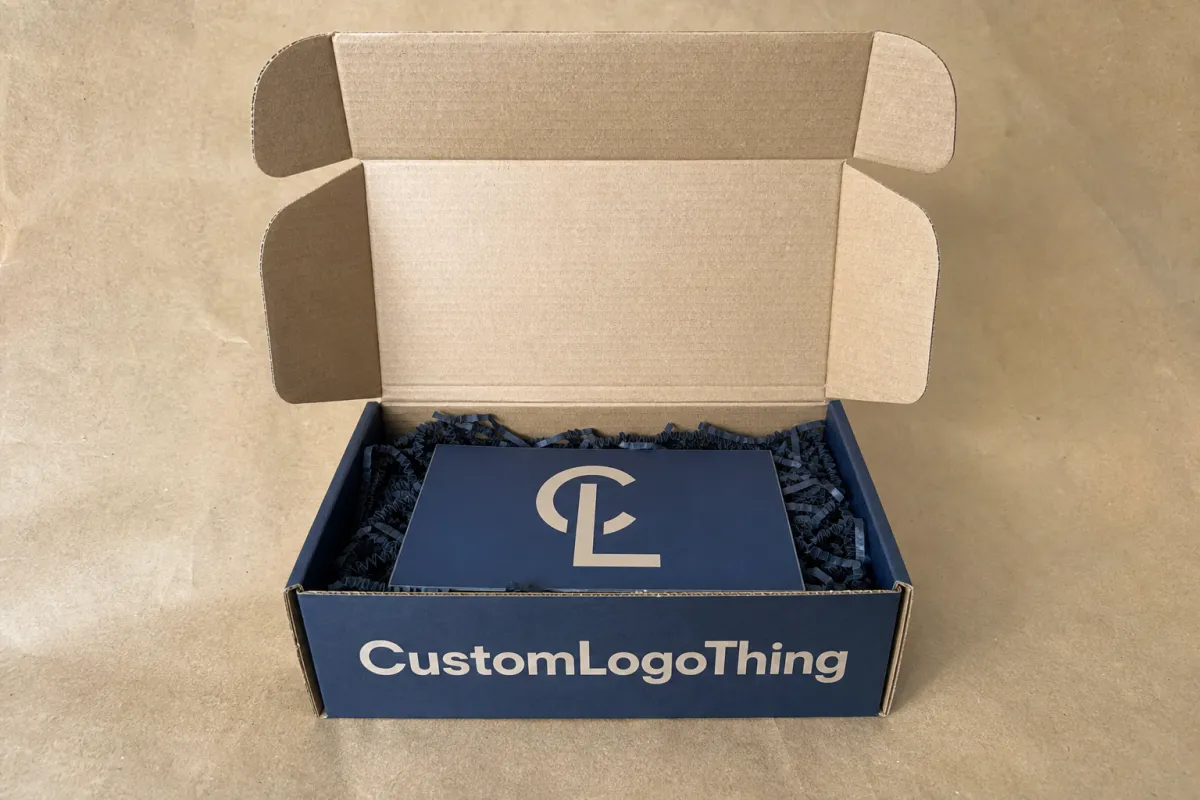
Printed mailer boxes with inserts make sense the moment packaging stops being treated like a wrapper and starts being treated like a support system. The same mistake shows up again and again: a team approves a polished printed mailer, then someone says the insert can be “handled later.” That usually means the product arrives loose, the packer wrestles with assembly, and the customer opens the box to find a crooked, scratched, or tilted item. Premium? Not really.
The odd truth is that the outer carton is often the easy part. Corrugated mailers already do a fair job with stacking, edge protection, and the usual abuse that comes with shipping. The trouble begins inside. If the cavity is too wide, the product shifts. If it is too tight, packing slows down and the product may get pinched. Printed mailer boxes with inserts solve both problems only when the structure is built from the actual product dimensions, not from a box size someone spotted in a catalog. That difference matters more than most buyers expect.
Printed mailer boxes with inserts also change the emotional tone of the package. A blank shipper protects the item. A printed mailer with a fitted insert presents it. That matters for cosmetics, candles, small electronics, sample kits, and subscription boxes because those products are judged the second the lid opens. If the item sits centered, clean, and secure, the brand feels more disciplined. If it rattles around or lands at a strange angle, the customer notices before touching the product.
Another reason fit comes first: returns. A lot of “product damage” claims are really packaging failures hiding in plain sight. Scuffed labels, broken lids, cracked corners, bent accessories, or spills often come from motion inside the box, not from the outer shipping carton failing outright. A properly designed insert lowers that risk. That is why printed mailer boxes with inserts are usually a better spend than upgrading the exterior print while ignoring the cavity that actually holds the product.
I have seen this in prototype reviews more than once: a sharp-looking mailer with a beautiful exterior, and a product that shifted half an inch every time the box was inverted. That half inch is enough to ruin the unboxing. It is also enough to create a customer service problem nobody budgeted for.
If the product can move, the insert is not finished. Pretty packaging is pleasant. Packaging that keeps the item where it belongs is what earns its keep.
For teams comparing formats, it helps to look beyond a single box style. The same product might work in a paperboard mailer with a custom cavity, a corrugated set with partitions, or a combination of outer mailers and inner trays. If you are still weighing structural options, the broader range of Custom Packaging Products can help you compare where printed mailer boxes with inserts sit against folding cartons, rigid-style presentations, and other shipping-safe formats. The right answer depends on the item, the transit risk, and how much hand assembly you can tolerate.
How printed mailer boxes with inserts work
Printed mailer boxes with inserts are simpler than they look, but only if the parts are clear. You have the outer mailer, the printed exterior, the insert, and the product cavity. The outer mailer handles shipping strength and the first impression. The printed surface carries branding, product information, or a clean visual theme. The insert holds the item in place. The cavity is the negative space built around the product so the item sits snugly without being crushed.
The insert has two jobs, and this is where many teams underestimate it. First, it has to protect during transit. That means absorbing vibration, resisting compression, and keeping the item from drifting into the walls. Second, it has to present the product well when the customer opens the box. A good insert frames the item. It can make a set feel curated instead of dropped into a shipping carton. Printed mailer boxes with inserts only work when those two jobs stay in balance. Overbuild the protection and the box becomes annoying to pack. Overbuild the presentation and you end up with a beautiful failure in the mail.
There are several common insert types, and each has its own personality. Die-cut paperboard inserts fit lighter cosmetics, folded kits, and products that do not need much crush resistance. Corrugated inserts add more structure and suit heavier items or packages that need a little more buffer. Molded pulp makes sense when you want a recyclable feel and a more natural finish, especially for electronics accessories or sustainability-minded brands. Foam still shows up for very fragile items, but it is usually the hardest sell if recyclability or a cleaner retail story matters. Printed mailer boxes with inserts are not better simply because they are more elaborate; they are better when the insert matches the product and the route it must travel.
The smartest way to size the system is product first, box second, print third. Measure the real object, not the CAD-file fantasy version. Include closures, pumps, caps, accessories, and the slack needed for easy loading. Then build the cavity around that. Only after the fit is stable should the art layout be locked. Reverse-engineering printed mailer boxes with inserts from an existing stock box usually creates a chain of compromises: the artwork shifts, the insert gets awkward, and someone on the packing line ends up “making it work” by hand. That is how repeatability starts to slip.
For products that will be drop-tested or shipped through tougher lanes, ask what performance target the supplier is designing around. Packaging teams often reference ASTM and ISTA testing methods to check whether a box can survive realistic handling. If the package will face rough distribution, it is worth reading the test language instead of assuming “mailer box” automatically means “shipping safe.” You can find general testing standards and industry resources through ISTA. The point is not paperwork for its own sake. The point is to know whether printed mailer boxes with inserts are being built for shelf drama or transit reality.
Printed mailer boxes with inserts also behave differently depending on the assembly flow. A one-piece insert that drops in quickly is not the same as a multi-part tray that needs folding, locking tabs, and precise orientation. If your team packs 300 units a day, that difference matters. A design that saves two seconds per pack sounds tiny until it burns an hour of labor every shift. Packaging math is rude that way.
Printed mailer boxes with inserts: cost, pricing, and MOQ
Printed mailer boxes with inserts cost more than a plain mailer. That should surprise nobody. You are paying for the box, the insert, extra structural design, and often a tighter fit tolerance. The real question is not whether they cost more. The real question is whether they cost more than the damage, returns, and labor they prevent. For the right product, printed mailer boxes with inserts are cheap insurance. For the wrong product, they are just expensive cardboard with too many opinions.
The biggest cost drivers are board grade, print coverage, insert material, tooling, finish, and freight. A simple one-color mailer with a basic paperboard insert is usually far easier to price than a full-coverage outside print with soft-touch lamination, foil, spot UV, and a custom die-cut insert that nests multiple items. Once the insert gets complicated, the savings from higher volume can flatten quickly because labor and tooling start carrying more weight. That is why printed mailer boxes with inserts often need a tighter comparison than a standard corrugated shipper.
As a rough ordering guide, simple printed mailer boxes with inserts can land in the low cents to low dollars per unit depending on size, quantity, and finish. At around 5,000 units, a straightforward set might sit somewhere in the $0.55-$1.20 range per unit for the box plus insert, while a more premium retail presentation can climb well above that if you add specialty coatings or unusual structures. Those numbers are not a promise. They are a reality check. If someone quotes you a much lower number than the rest, ask what board, insert material, and finish were left out.
MOQ is another place where buyers get caught off guard. A standard mailer alone can be relatively flexible. Printed mailer boxes with inserts usually push the minimum higher because the supplier has to justify the insert tooling, cutting setup, and fit verification. A simple flat insert may tolerate lower minimums. A multi-cavity insert with tight tolerances often does not. The more cavities, the more likely the MOQ rises. That is not the supplier being dramatic. It is the economics of setup time.
Here is a useful way to compare common insert choices before you request quotes:
| Insert type | Typical use | Approx. add-on cost at 5,000 units | Main advantage | Main tradeoff |
|---|---|---|---|---|
| Die-cut paperboard | Cosmetics, sample kits, light retail sets | $0.10-$0.22 per unit | Clean look, lightweight, easy to print | Limited crush protection for heavy items |
| Corrugated insert | Candles, jars, small electronics, subscription kits | $0.08-$0.18 per unit | Better strength and cushioning | Bulkier feel, less polished if exposed |
| Molded pulp | Sustainable packaging programs, tech accessories | $0.20-$0.45 per unit | Recyclable story, good fit for structured items | Tooling and lead time can be higher |
| Foam | Very fragile products, premium protection needs | $0.30-$0.80 per unit | Strong cushioning and form control | Harder to recycle, can feel less premium |
Sample costs should be in the budget from the start. Structural proofs, digital comps, physical prototypes, and shipping cartons are not “extra” in any meaningful sense. They are part of the job. A clean prototype can save you from ordering 10,000 misfit sets. That is not a theoretical benefit. It is the difference between a controlled launch and a very expensive lesson. Printed mailer boxes with inserts almost always justify at least one sample stage if the product is fragile, giftable, or likely to be reused as a presentation package.
If you are comparing different package families, it can also help to look at Custom Poly Mailers for lighter, non-fragile items. They are not a substitute for printed mailer boxes with inserts, but they do show how much your spend changes when you stop asking the package to provide rigid support and presentation at the same time. That tradeoff is the whole equation.
Production steps, turnaround, and lead time
Printed mailer boxes with inserts follow a predictable production path, but the clock only behaves if approvals do. The sequence usually starts with a dieline and final dimensions, then prepress, sampling, approval, production, finishing, and packing. If the insert is custom die-cut or molded, that part gets its own tooling and test stage. Every step can move fast or slow depending on whether the buyer changes art, changes dimensions, or changes their mind about the finish after the mockup has already been built. That is how schedules get wrecked.
Lead time usually gets lost in the same few places. The first is late artwork changes. The second is structural revisions after someone finally measures the real product instead of the prototype. The third is insert fit tweaks because the item is thicker than expected, has a cap that sticks out, or needs clearance for a cable, card, or accessory. The fourth is finish approvals, especially when gloss, matte, soft-touch, foil, or spot UV needs to be checked against the print. Printed mailer boxes with inserts stay on schedule more easily when the structure is frozen before the artwork starts moving around.
A repeat order is almost always faster than the first run. That sounds obvious, but buyers still budget as if the second order will take as long as the first. It usually will not. Once the dieline is set, the insert works, and the artwork is approved, a repeat job can move through production far more quickly because the supplier is not solving structural problems again. The first custom run may take 12-20 business days after approval depending on factory load, material, and complexity. A cleaner repeat run can be shorter. Printed mailer boxes with inserts benefit a lot from that one-time setup discipline.
What does faster turnaround actually mean? Usually not magic. Usually fewer revisions, more standard materials, and less finishing complexity. If you want speed, do not ask for six print effects, a brand-new molded insert, and a packaging concept that needs to be reinvented from scratch. Ask for a stable structure, clear dieline approval, and a sample that matches production as closely as possible. That is how printed mailer boxes with inserts move faster in the real world.
For fragile products or gift sets, I prefer a physical prototype over a polished digital render. A digital mockup tells you the graphics line up. It does not tell you whether the lip fits, whether the insert bows, or whether the lid closes cleanly over a taller cap. A prototype shows those problems before they turn into waste. That matters even more if the product has awkward dimensions, reflective packaging, or mixed components that need to sit in a specific order.
Some buyers also ask about shipping validation during development, and that is a smart question. If the package is going into ecommerce channels, look at the handling conditions you actually expect: pallet stacking, parcel sorting, temperature swings, and vibration. Printed mailer boxes with inserts can be designed for a lot of those conditions, but the design brief has to mention them. Otherwise, the box gets built for a neat desk instead of a rough route.
Key factors that make or break the insert
The first factor is product dimensions, and I mean real dimensions, not rounded ones. Measure height, width, depth, closure height, protruding caps, accessories, and any extra clearance needed for easy loading. Printed mailer boxes with inserts are only as good as the data they are built from. A product that is 78 mm wide on paper and 81.5 mm wide in the actual assembly is the difference between a snug fit and a packing headache. Tolerance matters here, because packaging tolerances stack up fast.
Weight and fragility come next. A light tube of hand cream does not need the same support as a glass candle jar or a small device with accessories. The insert should support the heaviest side and prevent bounce. If the item can crack, dent, spill, or scratch, the cavity needs to reflect that risk. Printed mailer boxes with inserts should not be designed like a one-size-fits-all tray. They should be tuned to the product’s weak points.
Branding choices matter too, but not in the abstract way a lot of design decks pretend. Ask where the insert will actually be seen. If it is barely visible after opening, do not spend money making every surface a tiny billboard. If the insert frames the product and stays in the customer’s line of sight, a printed insert or a branded top panel can make sense. If the insert is doing heavy lifting inside the box, functional clarity may be more valuable than ink coverage. Printed mailer boxes with inserts work best when the brand does not fight the structure.
Shipping conditions are another real-world filter. A package that only moves through one controlled fulfillment center has a different risk profile than one that gets tossed into ecommerce parcel networks or stored in a hot warehouse. Compression, vibration, and temperature swings all matter. That is why packaging professionals often look at test methods, not just polished renderings. If you need a sustainability-oriented material path, the Forest Stewardship Council is a useful reference point for fiber sourcing and responsible paperboard choices. See FSC certification guidance for more on chain-of-custody and sourcing standards.
Sustainability tradeoffs are usually more practical than philosophical. Recyclable paperboard and molded fiber are easier to explain and easier for customers to handle after use. Plastic-based inserts can provide excellent protection, but they can also complicate disposal and weaken the package’s recyclability story. The cheapest option is not always the smartest one if it creates a disposal problem or clashes with your brand message. Printed mailer boxes with inserts should make sense for the customer after the opening, not just for the buyer at purchase order time.
Assembly speed is the last factor many teams forget. A beautiful insert that takes thirty seconds to fold by hand can become a labor problem very quickly. That matters if you ship in volume or have seasonal peaks. Printed mailer boxes with inserts should be simple enough to assemble without guesswork. If the packer needs a diagram and a prayer, the design is not finished.
One practical check I use is this: if a temporary packer can load ten units in a row without nudging the product into place, the insert is probably doing its job. If they have to twist, press, and re-seat each item, the fit is too clever for the line that has to run it.
Common mistakes with printed mailer boxes with inserts
The most common mistake is sizing the insert too tightly. Buyers think tighter means safer. Sometimes it does. Often it just makes packing slow and causes scuffs, bent corners, or crushed finishes as workers force the item in. Printed mailer boxes with inserts need enough hold to stop movement, but they also need enough tolerance for practical packing. That margin is not wasted space. It is labor and damage insurance.
Another classic error is overprinting the insert. Not every surface needs full graphics. Not every cavity needs foil. Sometimes the product should be the focal point and the insert should disappear into the background. Overdesigned inserts can steal attention from the item and add cost without improving the experience. Printed mailer boxes with inserts look more premium when the structure feels intentional, not loud.
Teams also skip proper sample testing. That is how they discover broken corners, rubbing, lifted coatings, or loose cavities after a full run has already shipped. A decent sample program catches the big problems: insert fit, closure pressure, edge scuffing, and the way the product behaves when the box is shaken or inverted. For parcel-bound packaging, it is wise to test against realistic handling conditions and simple drop scenarios. The industry does this for a reason. Packaging is not meant to be judged only by how it looks on a table.
One expensive mistake is approving only the outside box dimensions and forgetting the inside. Printed mailer boxes with inserts live or die on internal measurements. The outside can look perfect while the cavity is off by a few millimeters. That sounds tiny until you are trying to fit a glass bottle or a thick accessory pack into a run of 8,000 boxes. Then it is not tiny. It is inventory.
Warehouse workflow gets ignored too. A design that is technically beautiful can still fail if it is hard to pack at scale. If the insert has too many parts, the assembly sequence gets messy. If the item has to be oriented with left-right care every time, packing slows down and error rates rise. Printed mailer boxes with inserts should match the pace of the fulfillment team, not just the mood board.
And yes, freight mistakes count. A heavy insert that increases dimensional weight may blow up shipping cost. A huge master carton that protects the inserts too well can waste space. Printed mailer boxes with inserts need a shipping plan, not just a print spec. Packaging buyers who ignore cube optimization usually pay for it later, which is a very expensive way to learn geometry.
Expert tips and next steps for ordering
Start with the product, then the insert, then the outer print. That order saves time and money. If you begin with a stock mailer and try to force the product into it, you will probably create compromises that show up later in damage rates or pack-out time. Printed mailer boxes with inserts should be designed around the thing they hold, not the other way around. That sounds obvious. A lot of packaging projects still get it wrong.
Ask for a sample or short-run proof before you commit to full production, especially if the product is fragile, premium, or likely to be photographed after opening. Printed mailer boxes with inserts reveal their weaknesses fast in a sample. You will see whether the product slides, whether the lid closes cleanly, and whether the insert looks too busy or too plain. A good sample saves you from expensive theory.
Compare quotes on the same spec sheet. Same board. Same print coverage. Same finish. Same insert material. Same quantity. If one supplier is quoting a lower price but quietly downgraded the board or removed a finish, the quote is not really lower. It is just less honest. Printed mailer boxes with inserts are easy to compare only when every buyer is speaking about the same build. Otherwise, the quote stack is theater.
A practical ordering checklist looks like this:
- Confirm the product dimensions, weight, and any fragile points.
- Choose the insert material based on protection, look, and recyclability.
- Decide how much of the insert should be visible or branded.
- Request pricing at the target quantity and at the next higher tier.
- Approve a prototype before the run if the item is sensitive or giftable.
- Review assembly labor, inner pack-out speed, and re-order needs before launch.
If you need a broader look at packaging formats beyond printed mailer boxes with inserts, the product range at Custom Packaging Products can help you compare structural options before you lock the build. Sometimes the best answer is still a mailer with a custom insert. Sometimes it is not. A good packaging buyer knows the difference and does not force one answer into every problem just because the artwork looked nice in a deck.
My last practical advice is simple: do not treat the first order like a one-off art project. Treat it like the beginning of a repeatable system. Printed mailer boxes with inserts should be evaluated for reorder speed, storage space, assembly labor, and shipping economics from the start. If those pieces are in place, the box earns its keep. If they are not, you will spend the next quarter fixing avoidable mistakes. Packaging has a habit of punishing optimism.
Final thoughts on printed mailer boxes with inserts
Printed mailer boxes with inserts work because they solve the two things customers notice most: whether the product arrives safely and whether the unboxing feels deliberate. That is the real value. Not just a prettier shipper. Not just more cardboard. A package that actually fits the product, protects it in transit, and makes the brand look like it has a plan.
If you are choosing printed mailer boxes with inserts for cosmetics, candles, electronics, kits, or subscription products, start with the cavity dimensions, then choose the insert material, then finish the print story. Keep an eye on MOQ, sample cost, lead time, and fulfillment labor. Ask for clear specs, compare quotes fairly, and test the build before you order the full run. That process is less glamorous than guessing, but it is how you avoid the kind of expensive surprise that can ripple through a launch.
The clearest takeaway is this: lock the internal fit first, confirm it with a prototype, and only then approve the print. That sequence is what turns printed mailer boxes with inserts from a design idea into Packaging That Ships, protects, and presents the product the way it should.
What products work best in printed mailer boxes with inserts?
Fragile or presentation-driven products are the strongest fit: candles, cosmetics, sample kits, tech accessories, small electronics, and subscription items. If the item can shift, scratch, tip, or arrive looking messy, printed mailer boxes with inserts usually earn their place fast.
Are printed mailer boxes with inserts expensive to make?
They cost more than a plain mailer because you are paying for the insert, extra structural work, and often tighter tolerances. The better question is whether printed mailer boxes with inserts save enough in damage reduction, labor, and customer perception to justify the added spend.
What is a normal MOQ for printed mailer boxes with inserts?
MOQ depends on size, print method, and insert complexity. Custom inserts usually raise the minimum above a simple mailer order, especially if the design has multiple cavities or a more specialized finish. The more custom the fit, the more likely printed mailer boxes with inserts need a higher run to stay economical.
How long does production take for printed mailer boxes with inserts?
A first run usually takes longer because artwork approval, structural sampling, and insert fitting all need to be locked before production. Simple repeat jobs move faster. Complex inserts, special coatings, and late revisions slow printed mailer boxes with inserts down quickly.
Can printed mailer boxes with inserts be made recyclable?
Yes, if you choose paperboard, corrugated, or molded fiber inserts and avoid mixed-material builds that are hard to separate. Clean material choices make printed mailer boxes with inserts easier to recycle and easier for customers to understand after use.


