Buyer Fit Snapshot
| Best fit | Printed Padded Mailers for Jewelry projects where brand print, material claims, artwork control, MOQ, and repeat-order consistency need to be specified before quoting. |
|---|---|
| Quote inputs | Share finished size, material target, print colors, finish, packing count, annual reorder estimate, ship-to region, and any compliance wording. |
| Proofing check | Approve dieline scale, logo placement, barcode or warning zones, color tolerance, closure strength, and carton packing before bulk production. |
| Main risk | Vague material claims, crowded artwork, missing packing details, or unclear freight terms can make a low unit price expensive after revisions. |
Fast answer: Printed Padded Mailers for Jewelry: Sustainable Options should be specified like a repeatable production item. The safest quote records material, print method, finish, artwork proof, packing count, and reorder notes in one written spec.
Production checks before approval
Compare the actual filled-product size with the drawing, then confirm tolerance on folds, seals, hang holes, label areas, and retail display edges. Reserve space for logos, QR codes, warning copy, and material claims before decorative graphics fill the panel.
Quote comparison points
Review material grade, print process, finish, sampling route, tooling charges, carton quantity, and freight assumptions side by side. A quote is only useful when the supplier can repeat the same color, closure quality, and packing count on the next order.
Printed Padded Mailers for Jewelry: Sustainable Material Options
A jewelry order gets judged before the box opens. The mailer is the first thing customers touch, and that first impression carries a lot of weight. That is why Printed Padded Mailers for Jewelry packaging sustainable material options matter so much: they need to protect delicate pieces, make the brand look intentional, and avoid wasting material on shipments that do not need a heavy package. A common build uses a 350gsm C1S artboard face over 3 mm to 5 mm padding, with a self-seal flap and a clean print surface that does not look like an afterthought.
For many jewelry brands, the right mailer sits in a useful middle ground. It protects more than a thin poly mailer, takes up less space than a rigid box, and usually ships more efficiently than a layered setup with corrugated cardboard and extra filler. Used well, it supports branded packaging, keeps freight weight down, and makes the order feel tidy from warehouse to doorstep. That matters whether the product is a single pair of studs or a small gift set that would look ridiculous rattling around in a box half its size.
The real test is not whether a mailer can be printed. Any supplier can put ink on a surface and call it premium. The question is whether the structure, padding, print coverage, and sustainability claim all hold up in real fulfillment. A mailer that looks polished on a sample board but tears at the seams, scuffs in transit, or hides behind vague eco language will not survive buyer scrutiny for long. Jewelry buyers notice edge crush, seal alignment, and whether the package opens cleanly. They do not need a packaging degree to see when something is off.
Printed padded mailers for jewelry packaging sustainable material options: why sustainable choices matter
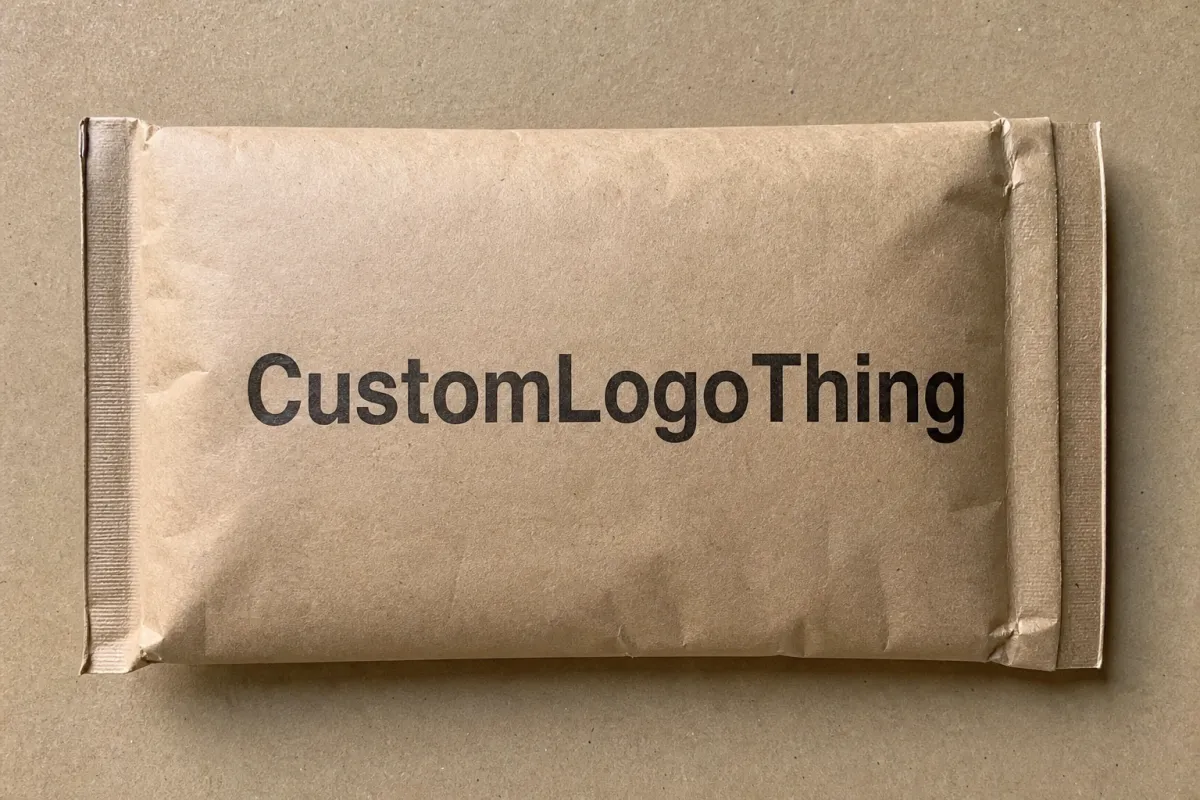
Jewelry is small. The expectations around it are not. A pair of earrings, a pendant, or a delicate chain often carries more perceived value than its weight suggests, which means the shipping pack has to do more than keep the item from sliding around. It has to show that the brand pays attention to details people can actually feel, from the clasp on the piece to the closure strip on the mailer.
Printed Padded Mailers are envelopes or mailers built with a cushioning layer, usually paper fiber, recycled-content film, or another protective insert, plus an outer face that can carry custom graphics. Compared with standard poly mailers, they add impact protection and a more polished feel. Compared with rigid boxes, they are lighter, flatter, and often easier to ship for small accessories and direct-to-consumer orders. Brands that already use Custom Packaging Products across the rest of the line can fold these mailers into the same visual system without much drama.
The sustainability side goes beyond choosing less plastic and hoping that counts as strategy. The right material can reduce package weight, cut dimensional shipping costs, lower damage claims, and remove the need for extra secondary packaging. That matters for jewelry because returns are expensive relative to the item size. A scratched pendant or bent card can trigger a replacement, and the shipping and repacking cost can eat past the product value very quickly. A mailer that saves even a few cents and one return in a hundred is doing real work, not just wearing a green label.
There is a branding layer too. Jewelry buyers notice texture, seal quality, print registration, and the way a mailer opens. They notice if the package feels thin or flimsy. They also notice when a brand uses a restrained design instead of covering the whole surface in ink just to look expensive. Good package branding usually looks calmer than people expect. A clean logo on a paper face, a quiet repeat pattern, or a single spot color often does more than a loud full-bleed layout.
Five things usually decide the buying choice:
- Protection need - how fragile the piece is, how much movement is allowed, and whether moisture resistance matters.
- Recyclability claims - what the material is actually made of, and what customers can realistically do with it after use.
- Print coverage - one-color branding, full-bleed artwork, metallic effects, or a quiet logo placement.
- Budget - unit cost, setup charges, freight, and the cost of holding inventory.
- Production realities - size, MOQ, lead time, and how quickly the artwork can be approved.
A mailer can be lighter and better at the same time if the fit is right. If it rattles, folds badly, or needs extra filler to keep jewelry from moving, it is carrying empty space instead of value.
Start with the product, not the packaging catalog. A charm bracelet has different needs than a thin chain. A ring in a soft pouch behaves differently from a necklace card in a sleeve. The best result usually comes from matching the mailer to the item instead of making one standard structure do every job in the building. A 4 x 8 inch mailer might be fine for studs and small earrings, while a 6 x 9 inch or 7 x 10 inch format may fit bracelets, cards, or gift sets with less stress on the seal.
How printed padded mailers protect jewelry in transit
The protective logic of a padded mailer is simple enough. The details are where the money goes. The outer face resists abrasion and carries the print. The middle layer adds cushion, so impacts from sorting belts, tote bins, and parcel stacks get absorbed instead of pushed straight into the jewelry. The closure seal keeps the pack shut, and the inner cavity or liner limits movement so the item is not sliding around inside the envelope like it has nowhere better to be.
For jewelry, fit matters. Chains can tangle if they are left loose. Earrings can scratch each other. Stone-set pieces can mark soft cards or rub against metallic finishes. Even if the outer shell stays intact, too much flexing can make the package feel less premium because the customer feels the contents shifting when they pick it up. That is why many brands pack the jewelry in a pouch or card first, then place that in the mailer so the mailer is doing shipping work instead of trying to be the whole system.
Why jewelry needs a different shipping structure
Apparel can tolerate some movement. Jewelry usually cannot. A small pendant may survive shipping just fine, but the surface finish, the presentation card, and the secondary packaging are often more delicate than the metal itself. If the order is packed in a way that lets the product jostle, the damage may not look dramatic, but the experience still drops. That is enough to affect reviews, repeat purchases, and customer confidence.
A padded mailer earns its keep here. It gives the brand a flat-format shipper that is lighter than a box, yet better at protecting delicate retail packaging than a bare poly bag. For lightweight orders, subscription shipments, and accessory drops, that balance is usually the sweet spot. If the jewelry line includes gift sets or a box-plus-insert presentation, the mailer can also act as the outer shipper around a small rigid carton or one of the brand’s custom printed boxes.
What the padding actually does
Padding does not make a package bulletproof. No one should pretend otherwise. What it does is spread force across a wider area and soften minor impacts. In practical terms, that helps during conveyor drops, chute transfer, or the occasional corner crush in a parcel bag. A 3 mm to 5 mm cushioning layer is often enough for light jewelry orders if the product is already protected inside a pouch, tray, or sealed inner bag. For more delicate pieces, a stronger mailer can be paired with an insert so the item is immobilized before it enters the shipper.
A common spec for paper-forward builds is 350gsm C1S artboard on the outer face, backed by a paper fiber or paper honeycomb pad. That gives the mailer a crisp print surface and enough stiffness to resist casual bends in transit. If the route is rougher, recycled-content poly with a foam or bubble liner can outperform paper on puncture resistance, even if the look is less natural. That tradeoff is normal. Packaging is full of them.
Moisture resistance matters too. Jewelry does not need the same barrier protection as cosmetics, but humid warehouse conditions, rainy delivery routes, and damp sorting centers still matter. A paper-based exterior may be the better sustainability story, yet a recycled-content poly exterior can be the smarter choice when scuff resistance and moisture defense are the priority. The point is not to chase one perfect material; the point is to choose the compromise that matches the route the package actually travels.
Print performance under handling
Strong graphics lose value fast if they crack at the fold line or smear near the seal. Good print on a mailer should survive stacking, bending, and parcel handling without peeling or fading. In the best cases, the brand color stays crisp, small type remains readable, and the seal area does not distort the artwork. That matters for package branding because jewelry buyers often notice the micro-details first: line thickness, logo placement, finish consistency, and whether the surface feels deliberate or cheap.
Flexographic print on poly, offset or litho print on paper faces, and digital print on shorter runs each have a place. The trick is matching the process to the order size and the artwork. A one-color logo on a kraft face is usually the cheapest path. A four-color wrap with white ink, metallic accents, or flood coverage raises the price and tightens the tolerances. Pretty is nice. Pretty that survives the conveyor is better.
When shipping tests are part of planning, many teams compare performance against common parcel expectations modeled on ISTA methods. The exact protocol depends on the weight, route, and packaging structure, but the principle stays the same: test the pack the way it will be used, not just the way it looks in a mockup. For background on parcel testing standards, see ISTA.
Key factors in cost, materials, and print setup
Cost in printed mailers depends on more than size. Substrate, padding, print coverage, finishing, and volume all move the quote in different directions. A buyer who understands those levers can make better tradeoffs instead of treating every quote like it came from the same product with a different logo pasted on top.
A simple recycled kraft exterior with one-color branding may be the lowest-cost route, especially at moderate volume. A fully printed recycled-content poly construction with a glossy finish, stronger tear resistance, and custom sizing usually costs more. The value question is not only price per unit; it is how well the mailer fits the jewelry line, the customer experience, and the shipping environment.
| Material option | Best fit | Typical strengths | Common tradeoffs | Rough unit range at mid volume |
|---|---|---|---|---|
| Recycled kraft padded mailer | Brands that want a natural look and curbside recycling alignment | Clean appearance, paper-forward story, good print surface for restrained branding, often built with 350gsm to 450gsm paper face and paper-based padding | Less moisture resistance than poly, surface can show scuffing sooner | $0.18-$0.32 each |
| Recycled-content poly padded mailer | Orders that need better tear resistance and weather protection | Strong against punctures, light weight, stable closure performance, good for 3 mm to 4 mm bubble or foam liners | Paper-recycling claims are not appropriate, sustainability story needs careful wording | $0.16-$0.30 each |
| Paper-based hybrid mailer | Brands balancing a paper look with stronger protective performance | Good tactile feel, better structure than plain paper in some builds, printable surface, often paired with recycled fiber padding | Availability varies, recyclability depends on exact build and coatings | $0.20-$0.36 each |
| Compostable-style or specialty bio-based construction | Programs with a clear end-of-life plan and verified sourcing | Distinct sustainability message, useful for brands with strict material criteria | Claim complexity, higher cost, and disposal options depend heavily on local facilities | $0.24-$0.42 each |
At 5,000 pieces, a standard jewelry mailer with simple one-color print often lands about $0.15-$0.24 per unit, depending on size, substrate, and print coverage. Larger formats, heavier padding, full-bleed art, or specialty finishes can move that into the $0.25-$0.40 range fast. Lower MOQs usually carry a higher unit cost because setup, printing, and converting costs get spread over fewer cartons. Higher runs usually improve the per-piece price, but they also increase inventory risk and storage needs. If a colorway or collection changes quickly, that matters more than people like to admit.
Print coverage is another big cost driver. A simple logo on one panel is easier on the budget than a full-wrap design with heavy ink coverage. Dark solids, fine gradients, metallic accents, and special coatings can all push the price higher. They can also complicate recycling claims if the final construction is no longer a straightforward paper stream. A restrained design can still look premium if the typography, spacing, and brand marks are handled well.
The same logic applies to sizing. A custom size that hugs the jewelry box or pouch may reduce movement and wasted space, but if the dimensions are too specific, the brand may pay more for tooling or longer lead times. Standard sizes usually move faster and cost less. Custom sizes make sense when the product line is stable enough to justify them. For many jewelry brands, a 6 x 9 inch mailer is a common starting point because it handles small boxes, padded pouches, and carded pieces without a lot of dead space.
For teams comparing options, one useful filter is whether the mailer fits into the broader packaging design system. If the brand already uses kraft paper, muted typography, and recycled inserts, the mailer should reinforce that system. If the line is more polished and color-driven, the mailer should still feel intentional rather than generic. A strong product packaging system usually looks coordinated across the shipper, the insert, and any inner wrap.
When the brand is also evaluating other formats, it helps to compare the padded mailer against boxes and sleeves side by side. If the jewelry line is moving toward premium kits, the brand may keep the mailer as the shipping shell and reserve the more visual packaging for the inner carton. That is often where Custom Poly Mailers or other shipping formats become a practical benchmark for cost, protection, and print coverage.
For recycling language, do not guess. Use the actual structure and align it with guidance from groups such as the EPA recycling guidance, then tell customers exactly what the mailer is made from and how it should be disposed of in their area. Clear claims build trust. Vague claims usually create suspicion.
Production process and lead time: from artwork to shipment
Even a mailer that looks simple on screen goes through several steps before it is ready to ship. The order usually starts with concept review and size selection, then moves into dieline approval, artwork setup, proofing, material sourcing, printing, lamination or converting, assembly, quality checks, packing, and freight booking. Each step can be smooth, and each step can also turn into a delay if the details are not locked down early.
Lead time is usually driven by three things: artwork readiness, material availability, and structural complexity. If the artwork already fits the dieline and the brand has clear print standards, the process moves faster. If Pantone matching needs multiple adjustments, or if the chosen paper stock has to be sourced in a specific weight or finish, the schedule stretches. For a straightforward custom run, many orders ship about 12 to 15 business days from proof approval. That is the kind of number buyers can actually plan around.
Where delays usually appear
The most common delay is artwork that does not match the dieline. A logo placed too close to a fold, type sitting in a glue zone, or bleed that stops short of the trim can force a redraw. Another frequent issue is approving color from a screen instead of from a printed proof. Jewelry brands that care about a specific rose gold, soft black, or muted sage often need a physical sample before final sign-off.
Sustainable substrates can change timing too. A recycled kraft base may be widely available, while a specialty paper-based hybrid or a compostable-style build may need a longer sourcing window. That does not mean one material is better than another. It means the purchasing team needs to think about the calendar before launch, not after it. If the holiday drop depends on a fixed ship date, buy the mailers early enough to absorb one round of comments and one round of revisions.
Typical timeline framework
For a straightforward custom run, many orders land in the 12 to 15 business day range after proof approval, with freight added on top. More complex jobs, such as fully custom dimensions, full-coverage print, specialty finishes, or unusual substrate sourcing, often sit closer to 3 to 5 weeks. Sample approval can add several days, but it usually saves time overall by catching mistakes before the full run is printed.
That timing matters for subscription boxes, seasonal launches, and holiday collections. If the jewelry drop depends on a campaign date, the mailer should be ordered early enough to allow one proof cycle and one contingency buffer. A small delay in print is manageable; a missing pack at launch can force the team into emergency freight, and nobody enjoys paying for panic.
What a clean production workflow looks like
- Confirm product dimensions, target ship weight, and the level of protection needed.
- Choose the substrate and finish based on sustainability goals and transit conditions.
- Approve the dieline and verify placement for the logo, copy, and any recycling mark.
- Request a printed sample or digital proof, then check color, seal area, and fold performance.
- Run one or two real packing tests with the actual jewelry, not dummy filler.
- Finalize the order quantity, confirm the MOQ, and lock the shipping window.
For companies that already manage broader branded packaging, this process should feel familiar. The review path for a mailer looks a lot like the process for custom printed boxes, except the shipper is flatter and more exposed to abrasion. The right prep work keeps surprise costs out of the way later.
Step-by-step guide to choosing the right sustainable material option
The best material choice usually becomes clear once the team answers a few practical questions. Start with the jewelry itself. Is it a ring, a chain, a bracelet, or a multi-piece set? Does the order sit inside a pouch, a carded insert, or a small box? Does the product need moisture resistance, scratch resistance, or tamper evidence? Those details matter more than a generic sustainability label with nice font.
Then look at the route. A local delivery with short transit time is not the same thing as a cross-country parcel moving through several sorting hubs. The more handling the pack sees, the more important crush resistance and closure strength become. If the jewelry is light and the fulfillment path is simple, a paper-forward option may be enough. If the route is rougher or the product is more sensitive, recycled-content poly or a hybrid can be the better practical choice.
Build the decision in the right order
Step 1: Define the protection goal. Decide whether the main concern is scuffing, movement, puncture resistance, or moisture. Do not try to solve all four with the same material unless the structure truly supports it.
Step 2: Set the size. A well-fitted mailer reduces movement and can lower the need for filler. Oversized packs are one of the fastest ways to lose the premium feel that jewelry buyers expect.
Step 3: Choose the material family. Recycled kraft, recycled-content poly, paper-based hybrid, or specialty compostable-style construction each sends a different message. Pick the one that supports both the shipping reality and the brand story.
Step 4: Plan the print strategy. Decide if the mailer needs a one-color logo, a simple repeating pattern, or a full-coverage exterior. If sustainability claims are part of the message, keep them specific and accurate.
Step 5: Test the sample in real use. Fold it, seal it, load it with actual jewelry, and move it through the warehouse workflow. Check whether the closure holds, whether the surface scuffs, and whether the customer presentation feels clean.
This sequence keeps the discussion grounded. Too often, a team starts with a graphic concept and works backward, only to learn that the structure cannot support the print coverage or the sustainability target. A better method is to let the product and the route define the structure first, then build the visual story around it.
There is also a good reason to request two sample paths before placing the order. One should favor the strongest sustainability story, such as recycled kraft with minimal ink. The other should favor the strongest transit performance, such as a recycled-content poly or hybrid with a stronger exterior. Put both through real packing and handling. The comparison usually tells the truth quickly, especially for brands still deciding how much durability they need versus how much paper-forward branding they want.
If the goal is to keep the entire shipment aligned, think about the mailer as part of a packaging design system, not a one-off shell. Tissue, inserts, labels, and the opening message should all sound like they belong together. That is how a small format can still feel expensive in the best sense: calm, coordinated, and easy to understand at first glance.
Common mistakes when ordering printed padded mailers for jewelry
The most common mistake is also the easiest to avoid: picking a mailer that is too large. Excess space lets the contents move, and movement causes trouble. It can bend cards, tangle chains, scratch polished finishes, and make the package feel less considered when the customer opens it. A few millimeters of extra room may not sound like much, but in jewelry packaging it can change the whole experience.
Another mistake is asking a material to do something it cannot support. Heavy ink coverage on a paper-forward structure may look rich, but it can increase cost and weaken the recycling story. Metallic effects can lift a design visually, yet they may also push the package away from the clean material stream the brand hoped to claim. The design should support the substrate, not fight it.
Prepress issues that slow the whole order
Missing bleed, low-resolution logos, inconsistent fonts, and unclear panel placement create unnecessary back-and-forth. Jewelry brands are often working with small artwork areas, which means the tolerances are tight. If the copy sits too close to a fold or the seal, it may disappear once the mailer is assembled. That is not a print problem so much as a planning problem.
Color approval is another area that deserves more attention than it usually gets. A soft metallic gray or muted brand green can shift under different paper stocks and print methods. If the brand cares deeply about the exact tone, it should approve a physical proof instead of relying on a screen. Small packaging often magnifies small color differences, because the customer holds it close to eye level.
Weak sustainability claims
Terms like eco-friendly or green are too vague to carry much weight. Buyers are increasingly literate about packaging claims, and they will ask what the mailer is actually made from, whether it contains recycled content, and how it should be disposed of. If the construction includes mixed materials, coatings, or specialty films, that should be stated plainly. Accuracy builds trust faster than broad claims ever will.
It also helps to avoid assuming every customer has the same disposal options. What is curbside recyclable in one area may not be accepted in another. That is why clear, specific labeling is more useful than broad promises. If the brand can support a claim with material data or supplier documentation, that should be part of the file before launch.
From the buyer side, the best orders are usually the boring ones: right size, clear specs, accurate claim language, and clean artwork. That kind of order prints better, ships better, and creates fewer surprises later. It also leaves more room for the jewelry to be the hero, which is exactly where the attention should stay.
Expert tips and actionable next steps for a better order
If you are choosing printed padded mailers for jewelry, a simple decision matrix can save a lot of debate. Score each option on protection, sustainability, branding impact, unit cost, and lead time. Put the numbers side by side, then test the top two candidates in real packing conditions. That process is basic, and it works because it removes a lot of guesswork.
I also recommend comparing the mailer against the full packaging stack, not just the item itself. Ask whether the jewelry needs an inner pouch, a small insert card, a seal label, or a secondary outer carton. For some programs, the mailer is the whole shipper. For others, it is the final shell around a box or a branded tray. The right answer depends on the item and the customer experience you want to create.
If the brand already uses kraft paper, printed tissue, or corrugated cardboard in the rest of its line, carry those cues into the mailer. Consistency matters. A customer who opens a jewelry order should feel the same design discipline from the outer shipper to the final insert card. That is a stronger signal than piling on more decoration.
Here is a practical planning order that works well for many teams:
- Measure the jewelry and any inner packaging.
- Set the budget per unit and the total run quantity.
- Choose the material family that best matches the transit conditions.
- Decide how much print coverage the brand really needs.
- Request samples and run real pack tests.
- Confirm MOQ, lead time, and freight timing before approving the order.
If you want to compare your mailer against other formats while planning the line, browse the broader range of Custom Packaging Products and see how the same brand voice can carry across boxes, shippers, inserts, and labels. For some jewelry brands, that comparison makes it obvious whether the padded mailer should be the main shipper or one piece in a larger product packaging system.
One last practical point: do not decide based only on the supplier’s sustainability language. Ask for the substrate specification, the recycled-content percentage if applicable, the coating information, and the print method. Those details tell you whether the package is actually paper-forward, whether it fits the brand’s recycling story, and how likely it is to survive the warehouse without looking tired by the time it reaches the customer.
For a jewelry brand trying to balance presentation, transit protection, and material responsibility, printed padded mailers for jewelry packaging sustainable material options are often the most sensible place to start. Measure the product, define the claim, test the sample, and choose the structure that holds up in real shipping conditions; that is the cleanest way to make the packaging work for the brand instead of just looking good on a spec sheet.
FAQ
Are printed padded mailers for jewelry packaging sustainable material options safe for delicate pieces?
Yes, if the mailer size and padding match the product weight and shape, delicate pieces can ship safely with far less movement inside the package. A 3 mm to 5 mm padded build, plus a pouch, card, or inner bag, is usually enough for earrings, pendants, and lighter chains. Use inserts, small pouches, or sealed inner bags for items with chains, polished stones, or loose components that can scratch each other in transit. It is smart to test the mailer in a real packing workflow before launch so you can confirm seal strength, fit, and presentation quality.
Which sustainable material options work best for jewelry mailers?
Recycled-content paper or kraft-based constructions are strong choices when curbside recyclability and a natural look are priorities. A paper-forward build with a 350gsm C1S artboard face can print cleanly and still feel sturdy in hand. Recycled-content poly can be a practical option when moisture resistance and tear strength matter more than a paper look. The best option depends on your product, shipping method, and how clearly you want to communicate sustainability to customers.
How does print coverage affect cost and recyclability?
More print coverage usually raises unit cost because it adds ink usage, setup complexity, and sometimes additional finishing steps. Heavy coverage can also make a package harder to recycle if it interferes with the base material stream or uses incompatible coatings. A restrained design can still feel premium if it uses strong layout, thoughtful typography, and well-placed brand color. For many 5,000-piece runs, the gap between a one-color logo and a full-bleed wrap is enough to matter on both budget and materials handling.
What MOQ and unit cost should a jewelry brand expect?
MOQ varies by material, size, and print complexity, but custom mailers usually price better at higher quantities. A 5,000-piece order for a standard size often lands around $0.15-$0.24 per unit for simple print, while more complex builds can move higher. Brands launching a new line often benefit from a smaller test run first, then a larger reorder once demand is clear. Ask for a quote that separates setup, printing, material, and freight so you can compare options honestly.
How long is the lead time for custom padded mailers?
Lead time depends on artwork readiness, proof approval, material sourcing, and whether the mailer is standard or fully custom sized. Simpler orders often ship 12 to 15 business days after proof approval, while specialty substrates, full-coverage printing, and custom structures usually take longer. Build in extra time before a launch so you can review samples and avoid rushing the production process. If the launch date is fixed, order early enough to absorb one proof round and one shipping buffer.