Buyer Fit Snapshot
| Best fit | Printed Padded Mailers for Jewelry projects where brand print, material claims, artwork control, MOQ, and repeat-order consistency need to be specified before quoting. |
|---|---|
| Quote inputs | Share finished size, material target, print colors, finish, packing count, annual reorder estimate, ship-to region, and any compliance wording. |
| Proofing check | Approve dieline scale, logo placement, barcode or warning zones, color tolerance, closure strength, and carton packing before bulk production. |
| Main risk | Vague material claims, crowded artwork, missing packing details, or unclear freight terms can make a low unit price expensive after revisions. |
Fast answer: Printed Padded Mailers for Jewelry: Wholesale Pricing should be specified like a repeatable production item. The safest quote records material, print method, finish, artwork proof, packing count, and reorder notes in one written spec.
Production checks before approval
Compare the actual filled-product size with the drawing, then confirm tolerance on folds, seals, hang holes, label areas, and retail display edges. Reserve space for logos, QR codes, warning copy, and material claims before decorative graphics fill the panel.
Quote comparison points
Review material grade, print process, finish, sampling route, tooling charges, carton quantity, and freight assumptions side by side. A quote is only useful when the supplier can repeat the same color, closure quality, and packing count on the next order.
If you are comparing printed padded mailers for jewelry packaging Wholesale Pricing Factors, the real answer is never just the printed unit price. It is the build, the fit, the print method, the seal, the freight lane, and whether the mailer actually protects a necklace box or a pouch without making the whole order feel overpackaged. Jewelry is small. That does not make packaging simple. If anything, it makes bad choices more visible.
Most jewelry damage claims do not begin with a crushed carton. They start with a surface scratch, a loose insert, a weak adhesive strip, or a mailer that looked fine on paper and arrived with the dignity of a bent cereal box. Customers notice that stuff. They also notice when the outer package feels generic and the brand value disappears before the parcel is even opened.
That is why Printed Padded Mailers deserve the same attention as the jewelry itself. A well-chosen mailer protects the item, supports the unboxing moment, and keeps wholesale costs in line with the order margin. A cheap mailer that fails in transit is not cheap. It is a return waiting to happen.
For jewelry brands, the outer mailer often acts as the first physical brand touchpoint. The customer may never visit a store, never talk to a salesperson, and never see the item outside a shipping workflow. They do see the envelope or padded shipper. That first impression matters more than packaging people like to admit.
Why Printed Padded Mailers Pay Off for Jewelry Shipments
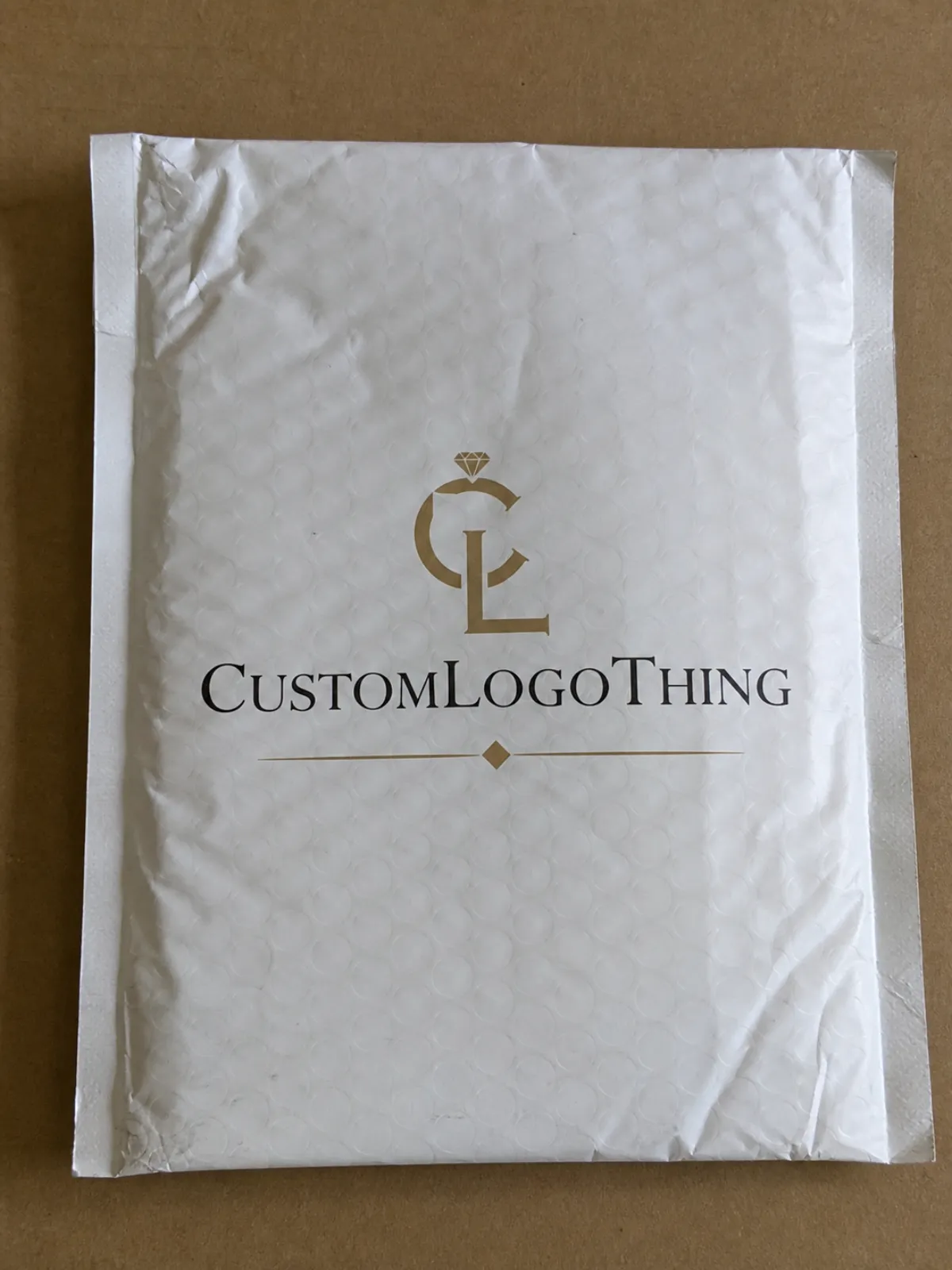
Jewelry may be light, but it is not forgiving. Earrings shift inside pouches. Chain clasps catch on rough interiors. Small rigid boxes get corner wear if the mailer is loose. A padded mailer reduces that movement and keeps the shipment looking intentional rather than improvised. For many buyers, that is the reason they move away from plain shipping envelopes and toward printed options early in sourcing.
There is also a straightforward cost reason. A branded padded mailer can replace a heavier outer carton for lightweight orders, which reduces material use, packing time, and sometimes parcel charges. If the jewelry already ships in a rigid inner box or soft pouch, the outer mailer becomes the final layer of protection and the brand carrier at the same time. That matters for earrings, charm sets, small bracelets, and gift-ready accessories that need to arrive neat.
Size matters more than people expect. A 6 x 9 in. or 8 x 10 in. mailer is often enough for a pouch, carded earrings, or a small rigid box. A 9 x 12 in. format is better for multi-item bundles, bulky necklace sets, or boxed kits with insert cards. That size choice changes board usage, print area, freight density, and the quote itself. Packaging suppliers ask for exact dimensions for a reason. The dimensions are not a footnote. They are the budget.
From a brand perspective, a printed mailer does one thing very well: it makes the product feel owned by the brand before the customer even opens the parcel. A plain shipper asks the buyer to infer quality. A printed mailer states it directly. That is useful for small brands, private label programs, and seasonal collections that need a stronger presence without moving straight into expensive custom rigid boxes for every SKU.
A mailer that protects the jewelry, prints cleanly, and survives parcel sorting is usually worth more than a cheaper one that arrives scuffed or fails at the seal.
Jewelry sellers often treat mailers as part of the packaging system rather than a separate shipping item. That is the right instinct. The pattern, finish, closure, and color consistency all affect how the customer reads quality. Even a one-color logo can feel premium if the surface is clean, the print is sharp, and the proportions suit the mailer size. A logo that looked polished in a mockup but washed out on the real substrate is still a problem. The customer does not award extra points for good intentions.
Look at the full customer journey. The parcel arrives. The customer handles the outer mailer. They open it. They remove the inner box or pouch. Only then do they reach the jewelry. Every step can reinforce trust, or chip away at it. That is why the purchase decision should weigh protection, branding, order volume, and unit economics together. One of those variables alone is never enough.
Printed Padded Mailers for Jewelry Packaging Wholesale Pricing Factors
The pricing of printed padded mailers starts with the actual build. Material type, wall thickness, print coverage, closure style, and order quantity all shape the wholesale quote. A simple logo on a stock-size mailer is a very different job from a full-bleed custom envelope with coordinated colors and premium finishing. That is why the phrase printed Padded Mailers for Jewelry Packaging wholesale pricing factors is not just a keyword to stuff into a page. It is the logic behind the purchase order.
MOQ changes the price structure fast. Smaller runs carry a higher unit cost because setup labor, plate or screen preparation, proofing, and color matching are spread across fewer pieces. Larger runs usually bring the price down, but only if the specification stays put. Once buyers start changing dimensions, print sides, or finish type, the savings shrink. The cleanest comparison is always the same spec sheet across every quote.
For planning, a one-color printed mailer at 5,000 pieces often lands around $0.15-$0.24 per unit, depending on size and coverage. Smaller runs can sit closer to $0.22-$0.40 at 1,000 pieces, and custom builds can move upward if the artwork uses more surface area or asks for premium finishing. Those are practical planning ranges, not promises. If a quote looks unusually low for a premium spec, something is missing from the math.
| Option | Typical MOQ | Estimated Unit Price | Best Fit | Tradeoff |
|---|---|---|---|---|
| Stock padded mailer with label | 500-1,000 | $0.22-$0.40 | Testing a new jewelry line or seasonal drop | Fastest to launch, but branding is limited |
| 1-color printed mailer | 1,000-5,000 | $0.15-$0.24 at 5,000 pieces | Simple logo and recurring shipments | Lower setup cost, moderate visual impact |
| Full-color custom printed mailer | 3,000-10,000 | $0.28-$0.58 | Premium retail packaging and gift orders | Higher press control and freight sensitivity |
| Premium finish with soft-touch or special coating | 5,000+ | $0.34-$0.70 | Higher AOV jewelry kits and limited collections | Best shelf feel, highest unit cost |
Those ranges are for planning. Final pricing depends on the construction, artwork complexity, shipping destination, and whether the order needs extra handling such as bundle counts, carton labeling, or mixed-SKU staging. Freight can shift landed cost as much as the printed price, especially on packaging that is bulky but light. Cheap-to-make packaging can still be irritating to ship. That is usually where budgets get surprised.
Print coverage is another major driver. A small front-side logo generally costs less than edge-to-edge artwork with reverse-side printing, tight registration, and several PMS colors. CMYK works well for gradients and photographic designs, while spot colors make more sense for repeatable brand marks. If the artwork uses fine lines, small typography, or a barcode, the printer needs tighter control, and that affects both price and tolerance. Tiny type on a moving print line is how people end up reordering packaging they already approved.
Material grade also changes the quote. Recycled content, FSC-certified paper stocks, stronger poly film, or a denser cushioning layer can all push the price upward. Those upgrades can still be worth it if the mailers support a higher-value jewelry line or help reduce damage claims. If paper sourcing matters to your customers, look for FSC certification and list it clearly in the product spec.
Buyers should compare shipments on a true landed-cost basis instead of staring at unit cost in isolation. A mailer that saves two cents but ships in a wasteful carton pattern can end up more expensive after freight and warehouse handling. A slightly better-fitting mailer may raise piece price while lowering total cost per order. That is the tradeoff that matters in wholesale packaging programs. Unit price is not the full story. It is barely the headline.
Bottom line: compare like for like. Same size. Same print coverage. Same finish. Same freight assumption. Once those variables are aligned, printed padded mailers for jewelry packaging wholesale pricing factors become much easier to read without a lot of noise.
Material Choices for Jewelry Mailers
A jewelry mailer usually has three jobs built into one format: the outer surface accepts print, the interior cushioning protects the item, and the closure keeps the shipment sealed through handling, stacking, and the occasional rough sort. The exact construction varies by supplier, but the logic stays the same. The face has to look clean and carry the brand. The interior has to reduce abrasion and minor impact damage. The seal has to stay closed.
Paper-based mailers are often the better fit when a buyer wants a more polished, retail-friendly look. They support stronger visual branding, cleaner typography, and a surface that feels closer to product packaging than to a plain shipper. A common premium paper build might use a 350gsm C1S artboard face laminated over a cushioned interior, or a 250-300gsm kraft outer layer paired with a 3mm paper pad or EPE insert. That combination gives a clean print surface without turning the mailer into a brick.
Poly-based options usually bring better moisture resistance and better tear resistance. That can matter if parcels pass through wet loading areas or high-volume distribution lanes. A standard poly bubble build often uses a 60-75 micron PE film with a bubble or foam lining. That is a practical choice for lightweight pieces that do not need a rigid presentation. It is not as refined as paper, but it is durable and usually easier on freight density.
Interior texture matters more than many first-time buyers expect. A rough interior can scuff a finished box, dull a pouch, or mark a plated accessory if the item shifts too much. A smooth, controlled cushioning layer is better for finished retail packaging because it protects the presentation as well as the product. If you are shipping boxed earrings, pendant sets, or bracelet cards, ask for sample cuts and check the fit with the actual inner package, not just the mailer by itself.
There is a practical reason some brands compare padded mailers with Custom Poly Mailers as part of their packaging mix. Different SKUs may need different protection levels. A light accessory insert may travel fine in a thinner outer shipper, while a boxed necklace set benefits from extra cushioning. That kind of SKU-level thinking helps avoid one-size-fits-all buying, which is usually how packaging budgets drift upward without much to show for it.
Print compatibility should also be part of the material conversation. Some surfaces accept fine detail and crisp color better than others. A coated paper exterior may give cleaner brand lines, while a textured or recycled face can add visual warmth but soften tiny type and narrow rules. If your brand uses a distinct logo, ask for a proof that shows the minimum line weight and the smallest text size you can realistically use. That is a better test than assuming the artwork will look the same on every substrate.
There is no rule that jewelry mailers must be flashy. In many cases, the strongest result is restrained and well executed: one strong logo, a controlled color palette, and a finish that matches the jewelry line. That approach works especially well for brands with minimal aesthetics, luxury presentation, or matching package branding across mailers, tissue, and inserts.
For transit validation, it helps to reference recognized test methods rather than guessing. Many packaging teams use standards such as ISTA procedures and ASTM-style transit thinking to check drop, vibration, and compression risk. You do not need a lab for every order, but you do need a real fit test with the actual product and route. A sample that survives a desk drop is nice. A sample that survives a parcel route is useful.
Specifications That Influence Fit, Protection, and Shelf Appeal
Specifications are where many packaging decisions get won or lost. A mailer can look inexpensive on a quote sheet and still be the wrong choice if the internal dimensions are too tight, the seal is weak, or the print area cannot support the artwork. The most useful review starts with dimensions: internal size, external size, depth, and any tolerance range the supplier allows. A half-inch error can matter when a jewelry box has rigid corners or a built-up ribbon closure.
Fit is especially important for jewelry shipped in a box or pouch. A tiny ring box may need only minimal void space, while a necklace set in a folding box may require a wider footprint and a little extra cushion. Too much room creates movement. Movement creates wear. Too little room can crush the closure or distort the outer face. Good packaging design handles that balance on purpose. The box should settle into the mailer, not rattle around like loose change.
Wall thickness is another specification that deserves a careful read. More material can improve impact protection and stiffness, but it also raises the unit price and may increase the finished shipment size. The best thickness is the one that protects the item without creating needless bulk. If the mailer travels inside a larger consolidation carton before final shipment, the inner mailer may not need to do all the work. If it ships as the outer parcel, the spec should be stronger.
Closure style matters more than most buyers expect. A self-seal strip is standard for efficiency, but adhesive quality varies. Some seals hold on the first press and fail later if the strip is contaminated with dust or stored in heat. Others need a firmer closure but stay dependable under load. Tear strips can improve opening experience for direct-to-consumer orders, while reinforced flaps can improve confidence for heavier accessories. None of those features is automatically best. They need to fit the actual use case.
Finish changes shelf appeal and cost at the same time. Matte can feel understated and clean. Gloss can make colors pop and may suit stronger retail graphics. Soft-touch can feel more premium, though it may require more careful handling during production and packing. For jewelry brands that want a refined tactile impression, the finish should work with the metal tones, gem colors, and brand palette rather than fight them.
- Confirm dimensions: inner size, outer size, and tolerance.
- Check print area: front panel, back panel, and bleed limits.
- Review finish: matte, gloss, soft-touch, or coated paper face.
- Test closure: seal strength, opening force, and tamper behavior.
- Match the SKU: single item, boxed set, or bundled order.
For buyers who also source broader product packaging, it helps to compare the mailer spec against the rest of the line. If the mailer is much more polished than the inner box, the unboxing can feel disconnected. If the inner box is premium and the mailer is flimsy, the outer impression suffers. Strong branding is not only a logo; it is the consistency between pieces.
The most useful question is simple: does the spec protect the jewelry while presenting the brand the way the customer expects? If the answer is yes, the price is easier to justify. If the answer is no, the cheapest quote usually becomes the most expensive choice after reprints, complaints, or returns.
Cost, Pricing, and MOQ Factors Behind Your Wholesale Quote
The wholesale quote is rarely driven by one number. It is a stack of decisions. Size, material, print colors, coverage, finish, MOQ, packaging configuration, and delivery location all shape the final price. Buyers sometimes focus on unit cost alone, but in packaging sourcing the landed cost is the number that controls the budget. That includes freight, palletization, and any secondary handling charges. A pretty unit price does not help much if the freight bill shows up and ruins the spreadsheet.
MOQ is the most visible reason small runs cost more. A supplier has to prepare artwork, set the press, align color, run samples, and inspect the first pieces before the order reaches full output. If the run is small, those setup costs sit on fewer units. If the run is larger, the cost spreads out. That is why a 1,000-piece order may look expensive on paper while a 10,000-piece order looks far more efficient, even if the larger job uses richer graphics.
Print coverage changes the economics in a direct way. A one-color logo printed on a single face usually costs less than a full-wrap layout with reverse-side branding. Multiple PMS colors can add setup and ink complexity. Metallic inks, heavy coverage, and tight registration add more control points. The more brand-heavy the design, the more the quote tends to rise. That is not a flaw. It is the cost of moving from basic shipping function to branded packaging.
Freight deserves careful attention because padded mailers can be bulky for their weight. They do not weigh much, but they occupy space. That means a shipment can fill a pallet fast and still leave the actual weight low. Pallet efficiency, carton count, and shipping zone can matter as much as the printed price. A quote that looks strong at the factory gate can become less attractive once it reaches a long freight lane.
Specification changes also move the number faster than buyers expect. A small increase in mailer dimensions can affect material consumption. A richer finish can add process time. Printing on both sides can change setup and inspection. Even adding a barcode or internal message can have a cost effect if it requires a new press setup. That is why it helps to approve the artwork and dimensions before asking for a firm number.
Here is a practical way to compare quotes without getting tangled in details:
- Lock the dimensions first.
- Choose the material family.
- Decide on one-sided or two-sided print.
- Confirm quantity break points.
- Ask for freight separately, then combine it with unit cost.
If the quotes are still hard to compare, ask for a line-by-line breakdown. A clear supplier should be able to separate material, print, finishing, packing, and freight assumptions. That transparency is especially useful for wholesale programs, because it shows where volume discounts actually begin and where the cost curve starts to flatten.
For larger buyers, it is worth asking how the mailer fits into the broader sourcing plan. If you need a mix of envelopes, inserts, and outer shippers, a shared production approach may lower the total program cost. That is often the right time to review Custom Packaging Products and compare the mailer against other branded shipping materials. If you are building a recurring buy, the terms inside Wholesale Programs can matter just as much as the piece price.
Buyer rule: do not compare a premium printed mailer against an unprinted stock mailer and call it a fair quote. Compare mailers with the same print scope, same size, same finish, and same freight assumption. Only then do printed padded mailers for jewelry packaging wholesale pricing factors tell the truth.
Process, Timeline, and Production Steps From Art to Carton
The production path is straightforward once you know the steps, but each step can affect the schedule. The process usually begins with a specification review, where the buyer confirms dimensions, material, print colors, finish, and quantity. After that comes artwork preparation and proofing. If the logo file is not clean, if the color target is not clear, or if the dieline does not match the real size, the clock slows down before production starts.
Artwork proofing is where many jewelry mailer orders gain or lose time. Small typography, barcode details, and fine-line logos can look simple on a screen and reveal problems on press. If your brand uses delicate type or narrow script, ask for a production-oriented proof rather than assuming a digital mockup is enough. The goal is to verify placement, spacing, and legibility before anything is printed at scale. Screens are polite. Presses are not.
For standard production, realistic lead times often run about 12-15 business days from final proof approval, though simple stock-based runs can be faster and specialty finishes can take longer. That timeline can stretch if the order needs new tooling, an unusual size conversion, or a material that is not already allocated. The biggest delays are usually not the press itself. They come from artwork changes, late approvals, or missing order details.
After approval, the production line usually moves through material allocation, print setup, color check, curing or drying, converting, seal testing, and carton packing. Each stage matters. A print that looks perfect at setup can shift if the material feed is uneven. A seal that feels strong in a sample can weaken if the adhesive is not fully controlled. Good production teams test those points before the pallet leaves the floor.
There is also a change-control issue that buyers should not underestimate. Once a job is in motion, a size adjustment or artwork revision can trigger a full rework of setup. That can affect both timeline and price. If you know the logo placement, outer dimensions, and final copy before production begins, you protect the schedule and avoid unnecessary back-and-forth.
From a purchasing standpoint, the fastest orders are the ones prepared like a manufacturing file rather than a concept. Final dimensions. Final artwork. Final quantity. Final ship-to location. When those are fixed, the supplier can move from quote to proof to production with much less friction.
For buyers who want a reliable comparison standard, transit testing guidance from groups like ISTA can help frame how the mailer should perform in real shipping conditions. You do not need to over-engineer a small jewelry order, but you do want confidence that the closure holds, the surface stays clean, and the mailer protects the inner packaging through normal parcel handling.
Why Choose Us for Wholesale Jewelry Mailer Orders
Wholesale buyers usually want the same three things: dependable specs, fair pricing, and clear communication. That sounds simple. It is also where packaging suppliers vary the most. A good partner should understand that a jewelry mailer is not just a parcel carrier. It is part of the brand experience, part of the product presentation, and part of the operational cost structure that affects every shipment.
Our approach is practical. We pay close attention to print consistency, material selection, sealing performance, and the way the package looks when it reaches the customer. For a jewelry line, that means checking how the mailer works with a finished box, a soft pouch, or a small accessory set. It also means keeping the look aligned with the rest of the brand system, so the mailer supports the same visual language as your inserts, tissue, and other branded packaging.
We also know that wholesale buying is rarely a one-time decision. Many customers test one size first, then add another format later, then refine the artwork after seeing customer feedback. That is why sample review and specification adjustments matter. A good supplier should answer clearly, explain the tradeoffs, and help you move from idea to firm order without making the process feel vague.
If your line needs a broader packaging mix, it helps to work with a supplier that can support the full program rather than only one item. A jewelry launch may need printed mailers, inserts, labels, and outer shipping materials in the same visual family. Browsing Custom Packaging Products can help you think through that mix before you place separate orders that do not quite match.
The real value is repeatability. Anyone can produce one attractive sample. The harder part is making the same quality show up on the second, third, and tenth run. That is where color control, material consistency, and process discipline matter. A supplier that can repeat the result helps protect brand trust and reduce surprises across seasons.
In practical terms: if your jewelry packaging needs to hold its shape, print cleanly, and arrive with the right retail feel, you need a partner who treats the mailer as a manufacturing job, not a last-minute accessory.
How to Order the Right Mailers for Your Jewelry Line
The best place to start is with measurements and a clear use case. Gather the size of the jewelry item, the outer dimensions of any inner box or pouch, the monthly volume you expect, and the branding style you want printed on the mailer. If you are shipping a single pair of earrings, the build may be very different from a boxed necklace set or a bundle with an insert card. A ring in a velvet pouch does not need the same structure as a three-piece gift set. People still order like every SKU is identical. It is a brave approach. Usually not a useful one.
After that, decide how much of the mailer should carry brand messaging. Some buyers want only a logo and a clean color field. Others want full-side artwork or seasonal graphics. The more the mailer behaves like retail packaging, the more it should be planned like part of the brand system. That includes color values, safe print zones, and how the package looks on a warehouse shelf before it is shipped.
It usually pays to request a sample or proof before approving a full run. That is the easiest way to test fit, seal performance, print clarity, and surface feel against the real jewelry box or pouch. If the sample slides around, if the adhesive feels weak, or if the artwork looks too light under normal room lighting, you can correct it before the bulk order is locked in. For jewelry, that step is not extra caution; it is normal purchasing discipline.
Comparing two or three spec options can also help your team make a cleaner decision. For example, you may want a standard build for everyday orders and a richer finish for premium collections. Or you may want a lower MOQ for the first run and a larger quantity once sales are proven. Side-by-side comparison makes budget planning easier because it shows the cost of each upgrade rather than forcing you to guess.
Here is a simple checklist that keeps the quote process efficient:
- Dimensions: item size, inner box size, and mailer size target.
- Artwork: logo file, color target, and print placement.
- Quantity: first order size and likely reorder volume.
- Protection level: pouch only, boxed item, or mixed shipment.
- Delivery: ship-to location, freight preference, and timing needs.
That checklist helps the supplier answer faster and helps you avoid comparing quotes that are not built on the same assumptions. It also gives you a more honest view of whether the mailer should be optimized for appearance, protection, or cost. Most lines need all three, but not in equal measure.
If you want a stronger branded packaging program, think beyond a single mailer order. Tie the mailer choice to your inserts, labels, and outer packaging so the entire shipment feels coordinated. That is where package branding starts to work harder for you, because every touchpoint speaks the same visual language.
Once you have the measurements, files, and quantity in hand, the quote process becomes easier. And that is the point: the fastest way to evaluate printed padded mailers for jewelry packaging wholesale pricing factors is to start with accurate specs, not rough guesses.
What drives printed padded mailers for jewelry packaging wholesale pricing the most?
The biggest drivers are material choice, size, print coverage, and order volume, with setup costs spread across the run. Freight, finishing, and custom dimensions can move the landed price more than a simple logo change. For example, a 5,000-piece one-color run may land around $0.15-$0.24 per unit, while a heavier finish or wider print area can push the number higher.
What MOQ is typical for printed padded mailers for jewelry?
MOQ usually depends on whether the mailer is a stock size or fully custom, and on how many print colors are included. Smaller runs are possible, but the unit cost is usually higher because setup work is shared across fewer pieces. A practical starting point is 500-1,000 for stock formats and 1,000-3,000 for simple printed runs.
Are printed padded mailers enough protection for jewelry orders?
For lightweight jewelry, they are often enough when the item is already in a pouch or jewelry box. For heavier sets or premium boxed orders, pair the mailer with the right internal packaging and test the seal and fit. A 6 x 9 in. padded mailer may work for earrings or a ring box, while a 9 x 12 in. mailer is safer for larger necklace kits or bundled sets.
How long does production usually take for wholesale printed jewelry mailers?
Timeline depends on proof approval, material availability, and the print method used. Standard orders often take 12-15 business days from proof approval to finished cartons, while specialty finishes or new tooling can add time. If the artwork is final and the dimensions are locked, the schedule stays much cleaner.
Can I request samples before ordering printed padded mailers for jewelry packaging?
Yes, samples help confirm size, print quality, and seal performance before you commit to a bulk run. Testing with your actual jewelry box or pouch is the best way to avoid fit problems later. If the sample is built with a 350gsm C1S artboard face or a 60-75 micron poly shell, you can check whether that construction matches your brand and shipping route before you order in volume.
Printed padded mailers can do a lot of work for a jewelry brand: protect the item, present the product cleanly, and carry the logo in a way that feels deliberate rather than generic. If you compare the spec carefully, ask for proofed artwork, and look at landed cost instead of piece price alone, you make a much stronger buying decision. Lock the dimensions, print scope, finish, and freight assumptions first, then sample the exact jewelry box or pouch in the chosen mailer. That sequence prevents most pricing surprises and keeps the final order aligned with both the brand and the budget.