Buyer Fit Snapshot
| Best fit | Printed Padded Mailers for Jewelry projects where brand print, material claims, artwork control, MOQ, and repeat-order consistency need to be specified before quoting. |
|---|---|
| Quote inputs | Share finished size, material target, print colors, finish, packing count, annual reorder estimate, ship-to region, and any compliance wording. |
| Proofing check | Approve dieline scale, logo placement, barcode or warning zones, color tolerance, closure strength, and carton packing before bulk production. |
| Main risk | Vague material claims, crowded artwork, missing packing details, or unclear freight terms can make a low unit price expensive after revisions. |
Fast answer: Printed Padded Mailers for Jewelry: Film, Print, MOQ, and Carton Packing should be specified like a repeatable production item. The safest quote records material, print method, finish, artwork proof, packing count, and reorder notes in one written spec.
Production checks before approval
Compare the actual filled-product size with the drawing, then confirm tolerance on folds, seals, hang holes, label areas, and retail display edges. Reserve space for logos, QR codes, warning copy, and material claims before decorative graphics fill the panel.
Quote comparison points
Review material grade, print process, finish, sampling route, tooling charges, carton quantity, and freight assumptions side by side. A quote is only useful when the supplier can repeat the same color, closure quality, and packing count on the next order.
Printed Padded Mailers for Jewelry: Material Thickness Guide
The printed Padded Mailers for Jewelry Packaging material thickness guide sounds dry because it is. It is also the piece that saves you from reprints, returns, and the special joy of opening a shipment full of dented presentation boxes. Jewelry looks delicate because it is delicate, but the packaging problem is less about romance and more about structure, fit, and whether the outer mailer can survive the route without collapsing under pressure. A ring pouch may ship fine in one lane and get crushed in another even if the dimensions look identical on a spec sheet. The difference usually lives in the caliper, the padding loft, the seam build, and the way the print holds up when parcels rub against each other in transit.
For most jewelry brands, the buying pattern is pretty familiar: a first run around 1,000 to 5,000 units, then a larger reorder once sales and fulfillment patterns settle. At that scale, a $0.02 difference per mailer matters. So does the time spent repacking damaged orders, answering complaints, or explaining why the package looked cheaper than the product inside. That is why the Printed Padded Mailers for Jewelry packaging material thickness guide should be treated like an operations tool, not a branding exercise with a nicer font.
Why the Printed Padded Mailers for Jewelry Packaging Material Thickness Guide Matters More Than You Think
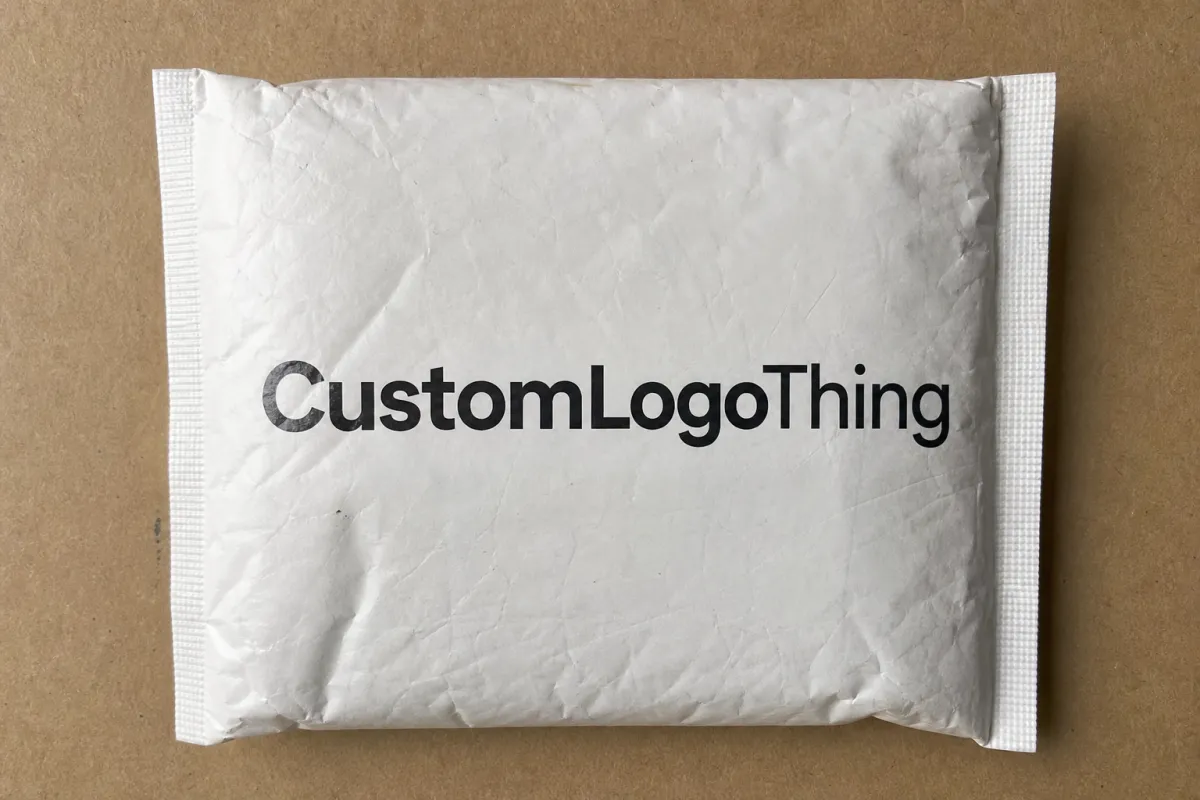
Jewelry is deceptively easy to ship. A ring box, earring card, velvet pouch, or slim necklace sleeve weighs almost nothing, which makes people assume the packaging can be equally light. Then the package goes through conveyor belts, stacking, compression, and a few rough handoffs, and the assumptions start leaking money. If the mailer is too soft, the contents move. If it is too bulky, postage climbs without much added protection. That tradeoff is exactly what the printed padded mailers for jewelry packaging material thickness guide is meant to sort out.
Material thickness is not a single number. It usually includes the outer face stock, the padding layer, the seam construction, and how much shape remains after printing and converting. A sample can feel reassuring in your hand and still fail once it is filled and stacked. A better-built mailer with moderate caliper often protects more effectively because the internal structure keeps the jewelry packaging centered instead of letting it wander around and crush a corner. For a premium but practical build, a 350gsm C1S artboard face with a 2-3 mm cushion layer and a reinforced heat-sealed or adhesive edge is a common starting point. That is enough structure for a ring box or pendant card without turning the parcel into a brick.
Presentation matters too. Jewelry usually ships with more than the product itself: a box, pouch, insert, tissue, or card that carries the brand. Once that outer parcel reaches the customer, it becomes part of the unboxing experience. A clean printed face, crisp edges, and enough structure to resist dents all signal that the brand pays attention. If the outside feels flimsy, customers notice before they open the mailer. They may not say it out loud, but the expectation drops.
A mailer can feel solid on the packing table and still fail under pressure if the seam, padding, or closure is underbuilt. The smartest choice is usually the lightest mailer that still protects the jewelry presentation system you actually ship.
For a packaging buyer, thickness is a planning tool. It helps control damage rates, postage, and consistency across runs while keeping the parcel polished enough to support retail packaging standards. Buyers compare mailers the same way they compare custom printed boxes: not by one feature, but by how the whole system behaves after printing, packing, and shipping. The right spec is the one that works in real fulfillment, not the one that wins a hand-feel contest in a sample meeting.
How Printed Padded Mailers Work in Jewelry Shipping
Most padded mailers use a layered build. The outer face carries the print, the middle layer cushions the contents, and the sealed edges keep the item from slipping out or getting smashed at the corners. That layered construction matters for jewelry because small pieces do not need bulk; they need controlled movement. The goal is to keep the box, card, or pouch from shifting enough to scuff the print, bend the corners, or rattle loose inside the mailer. If a necklace card can slide 10-15 mm inside the pack, the spec is already weak.
The printed surface gets the attention first, but the print is only as good as the material under it. A kraft paper face gives a natural, premium look that fits a warmer, handmade brand. A white or coated face can sharpen color and make logos punch harder. Poly-based mailers can handle strong graphics and resist moisture well, though they feel different in the hand and behave differently during converting. If brighter color accuracy matters, a 350gsm C1S artboard front panel with a matte aqueous coat is a common choice. If the priority is a softer, more recycled look, a 250gsm to 300gsm kraft paper face may be the better fit. If you are comparing paper and plastic-based options, check them against Custom Poly Mailers so you can judge feel, print style, and shipping profile side by side.
Print placement can wreck a good idea fast. A logo too close to a seal or fold can distort when the mailer fills up, and heavy ink coverage on a soft face can scuff if the finish is wrong. Packaging design for mailers is more than dropping artwork onto a flat template. Good layouts account for seams, gussets, fold lines, and the way the mailer behaves under pressure, especially when it gets stacked with other parcels or shoved into a tote bin. A full-bleed design on a paper mailer may look sharp on screen, then show edge cracking if the coating is too dry or the fold lines are too tight.
Cushioning is the part teams tend to underestimate. A jewelry box may be tiny, but if it has room to move, the mailer will not fix that on its own. The padding needs enough loft to absorb small impacts and enough recovery to keep the item centered. Structure and compression resistance matter more than raw squish. A mailer that springs back after being squeezed often performs better than a softer one that looks thick but flattens and stays there. For smaller jewelry pieces, 2-3 mm of effective cushioning is often enough when the inner box is rigid. For more fragile presentation sets, 4-5 mm is a safer lane.
Closure strength and moisture resistance finish the job. A seam that splits during packing turns a good spec into waste, and a weak adhesive strip slows fulfillment because staff have to tape or rework every unit. Paper-based outer layers can use surface finish and coating to protect the print from rub and light humidity. Brands that want a more natural look often choose kraft paper because it supports an earthy presentation while still fitting modern product packaging expectations. If the line ships through humid routes or sits in a warehouse for weeks, that finish choice matters more than the marketing deck usually admits.
Teams also need to look at the full shipping stack. A line that ships in corrugated cardboard boxes may need less external cushioning than a soft-pouch program. A small rigid carton or corrugated insert can protect a delicate jewelry set very well, but it can also increase dimensional weight and packing time. The point is not to make the mailer carry every burden. The point is to make each layer do its job properly. A rigid ring box can ride safely in a medium padded mailer, while a loose pouch with a delicate chain may need a heavier outer build or an inner card to stop movement.
For transport and package validation, many teams use ISTA test methods or similar parcel simulation programs. Those tests are useful because they recreate the abuse parcels actually see. They are not the same as a desk squeeze test, and they are not optional if the order is large enough to matter. For paper-based sourcing, FSC certification can matter when procurement needs the mailer to align with sustainability claims and supplier requirements.
Key Thickness, Cost, and MOQ Factors to Compare
There is no universal thickness number that works for every jewelry mailer. Outer material, padding style, and how much structure survives after conversion all change the answer. Buyers need a practical comparison framework. That means looking at the shipping environment, the weight and shape of the jewelry package, the branding level, and the order volume that makes sense for the business. A mailer for a 35 g earring card is not the same spec as a mailer for a boxed bracelet set, even if the brand palette stays identical.
Thicker mailers usually cost more because they use more material, take more converting work, and can add shipping weight. The relationship is not always clean or linear. A slightly thicker mailer may cut damage enough to save money on returns, replacements, and customer service time. That is why unit price alone is a lazy way to buy packaging. Total cost of ownership matters too, including inside protection, packing labor, and the risk of a dented box landing in the customer’s hands. If a $0.03 upgrade cuts even a small number of reships, it pays for itself quickly.
Print coverage is another major variable. A one-color logo on a kraft paper mailer usually costs less than a full-bleed design with multiple colors, tight registration, and a special finish. Matte coatings, soft-touch effects, and dense graphics can make package branding look better, but they also add setup complexity. For a higher-ticket jewelry line, the extra spend may be justified. For a launch test or seasonal run, a simpler print spec may be the sharper move. As a rough guide, a basic one-color branded run at 5,000 units might land around $0.15-$0.19 per unit, while a more finished mailer with heavier print coverage often sits closer to $0.20-$0.24 per unit, depending on size, ink count, and coating.
MOQ planning matters just as much as aesthetics. A lower minimum order quantity helps when you are testing a collection, changing a logo, or checking whether a new unboxing style actually lands. A higher MOQ often lowers the unit cost and makes sense once the design is settled and sales are predictable. Brands building a wider packaging system often use a mix of components from Custom Packaging Products so the mailer, insert, and inner box stay aligned without overcommitting to one oversized run. If the jewelry line is still shifting, a 1,000 to 2,000 unit test run is often safer than locking in a huge pallet of the wrong size.
| Thickness Band | Typical Build | Best For | Approx. Unit Cost at 5,000 Units | Typical MOQ | Notes |
|---|---|---|---|---|---|
| Light | About 2-3 mm total caliper, 250gsm-300gsm outer paper, simple one-color print | Soft pouches, flat carded earrings, very light accessories | $0.15-$0.20 | 1,000-3,000 | Lowest postage impact, but least forgiving when the item can shift |
| Medium | About 3-5 mm total caliper, 300gsm-350gsm face stock, stronger seams, better loft | Most ring boxes, necklace cards, compact gift packaging | $0.18-$0.24 | 2,000-5,000 | Common sweet spot for jewelry brands balancing protection, look, and cost |
| Heavy | About 5-8 mm total caliper, 350gsm C1S artboard or heavy kraft face, more cushioning | Richer presentation sets, fragile add-ons, stacked inside packs | $0.22-$0.35 | 3,000-10,000 | Better crush resistance, but cost and packing bulk rise fast |
The table gives a starting point, not a rulebook. One supplier may measure thickness differently from another, and a paper-faced mailer can feel stiffer than a poly-faced one at the same caliper because the surface stock resists flex. Ask how thickness is measured, whether the padding uses recycled fiber, bubble, or foam, and what happens to the structure after printing. Those details affect performance and appearance at the same time. A 3 mm mailer with a crisp 350gsm face can outperform a 5 mm mailer with soft, saggy walls. That is the kind of annoying detail that saves money.
If you are choosing between a slim mailer and a box-based format, compare the entire packing system. A small rigid carton or a corrugated insert may protect a delicate jewelry set extremely well, but it can also increase dimensional weight and packing time. The right answer depends on the product, not the label on the material. For lightweight earrings, the extra structure may be overkill. For a set with a glass vial, a chain, and a carded insert, the extra support may be exactly right.
Printed Padded Mailers for Jewelry: Production Steps and Lead Time
Most timeline problems start before production begins. Artwork has to match the dieline, logos need to stay inside safe areas, and print colors should be checked against the real substrate instead of a screen preview. Missing bleed, low-resolution logos, or the wrong color system can slow the schedule more than the print itself. For custom jobs, clean art handoff beats a rushed fire drill every time. If the logo is sitting 2 mm too close to a seam, somebody will notice it after the first proof, not before.
The usual flow looks like this:
- Artwork prep: confirm size, panel placement, seam zones, and print coverage.
- Dieline review: make sure the mailer dimensions fit the jewelry package and closure style.
- Proof approval: check color notes, logo placement, and any finish callouts.
- Material sourcing: lock the outer face, padding type, and adhesive method.
- Printing and converting: run the job, cut, fold, seal, and inspect.
- Final packing: count, bundle, label, and prepare for shipment.
Lead time depends on job complexity and how quickly approvals move. A simple branded mailer with straightforward print and standard sizing might move in roughly 12-15 business days after proof approval. Larger or more complex runs take longer, especially when finish, print coverage, or material choice needs special handling. Full-bleed art, multiple colors, or custom sizing can add days because every variable has to line up during converting. If the packaging needs a special laminate, foil accent, or a custom cut window, add another few business days. That is normal, not a surprise.
Sample rounds cause a lot of delays. Teams often ask for samples only after the artwork is mostly approved, which is too late if the dimensions or finish feel wrong in hand. Request samples early enough to check fit, surface feel, and closure performance. That matters even more when the jewelry line pairs the mailer with a premium box, insert, or branded tissue wrap, because the mailer has to fit the complete package, not just the bare product. For launch planning, a sample window of 3-5 business days is common, plus shipping time if the sample is moving between facilities.
Material substitutions create another timing headache. If the supplier switches from one outer stock to another, even a small change in caliper or coating can affect color and scuff resistance. Procurement should ask about approved substitutions before the order is released. A buyer who wants the package to meet retail packaging standards should insist on a final sample or photo proof before scale-up, especially when the launch date is fixed. One small stock change can make the mailer feel cheaper than the spec sheet promised.
The fastest jobs are the ones where the art is ready, the material choice is settled, and the team has already agreed on the protection level. When the specification is still floating, the schedule stretches. Keep lead time under control by making the sample stage do real work instead of treating it like a formality. If the team knows it wants a 350gsm C1S face, 3-4 mm cushioning, and one-color black print before the quote lands, the process stays sane.
Step-by-Step Guide to Spec the Right Mailer
Good spec work starts with the jewelry SKU itself. A ring in a soft pouch behaves differently from a necklace card in a rigid sleeve, and both behave differently from a small gift set with an insert and folded card. Map the total packed item, not just the jewelry. That packed item includes the outer presentation, the closure method, and anything inside the box or pouch that can move during transit. If the jewelry ships with a 60 mm by 90 mm insert card, a velvet pouch, and a thank-you card, the mailer has to accommodate all of it with a little clearance.
Before choosing thickness, measure the finished pack in its real shipping state. If the jewelry sits inside a box, include the box. If there is tissue, a thank-you card, or a velvet insert, include that too. Teams underestimate the need for spacing when they are used to flat product packaging. A mailer that fits the bare article may be too tight once the full presentation is assembled. A practical rule: allow about 3-5 mm of movement control around a rigid box and a little more if the outer pack has soft edges or a bulky closure tab.
A practical test is to compare at least three options side by side. Fill them the same way, seal them the same way, and stack them the same way. Then check three things: whether the mailer bends too easily, whether it bulges in a way that threatens the seam, and whether the printed face still looks polished after handling. If the mailer feels good on the table but creases badly after filling, it is not the right choice for volume shipping. For jewelry, the winner is usually the one that stays neat after 20-30 pack cycles, not just the one that photographs well once.
The checklist below keeps the decision grounded:
- Protection: does the mailer stop crushing, puncture, and internal movement?
- Branding: does the print support the desired package branding and unboxing feel?
- Postage impact: does the added material change weight or parcel classification?
- Packing speed: can the fulfillment team close it quickly without extra tape or rework?
- Consistency: does every sample look and feel the same after handling?
Some jewelry brands learn that they do not need the heaviest mailer once the inner packaging improves. A sturdier insert card, a more stable ring box, or a tighter fold on the tissue can reduce movement enough to keep the outer mailer lighter. That is usually better than forcing the mailer to cover for a weak inner system. Good packaging design works as a chain, not a single decision. If the inner box is doing its job, the mailer can stay simpler and cheaper.
It also helps to think about the line as a whole instead of one SKU at a time. A collection with earrings, necklaces, and gift sets may need separate specs even if the brand wants one visual family across all shipments. In those cases, the outer appearance can stay consistent while thickness and padding vary by SKU. That keeps the branded packaging story clean without overspending on every order. A slim earring card might use a light mailer, while a layered pendant set moves up one thickness band.
If the line uses corrugated cardboard for some sets and a slim mailer for others, document the reason. Fulfillment teams need to know why one item gets a heavier structure and another does not, and customer service teams need to understand the expected feel when customers open the parcel. That kind of documentation turns the mailer from a guess into a repeatable part of the retail packaging system. It also makes reorder decisions much easier because nobody has to reconstruct the logic from memory six months later.
Common Mistakes That Waste Money or Damage Product
The priciest mistake is choosing thickness by feel alone. A mailer can seem reassuring in hand because it has a dense surface or a firm fold, yet still fail when stacked, compressed, or tossed into a larger carton. Real shipping conditions are harsher than a sample on a desk, so the spec has to be judged by performance, not by instinct. A hand test tells you how it feels. Transit testing tells you whether it survives.
Oversized mailers are another common problem. If the jewelry package slides around inside the mailer, corners can scuff, print can rub, and the item may arrive with a bent card or crushed presentation box. Sometimes the damage is subtle, which is worse. The customer does not see a dramatic failure, just a parcel that feels tired or less premium than expected. That gap can weaken trust even when the product itself is fine. A loose fit is not harmless. It is just quieter damage.
Weak seals can erase the value of a heavier material. If the adhesive strip does not hold cleanly, staff may add tape, slow down packing, or create rough edges that distract from the look of the mailer. Poor print quality can drag down the entire experience too, especially if the logo is fuzzy, off-center, or rubbed in transit. When a brand invests in product packaging, the outer mailer should support the message, not sabotage it. A clean seal and a clean print are not luxury details. They are the basics.
Another hidden cost is rework. If the package fails in testing, the team has to reorder, repack, or replace damaged units, and each of those steps burns labor. Returns are expensive, but the quieter cost of disappointing customers is expensive too. A jewelry shopper may forgive one shipping issue, but repeated problems make the brand look careless. That is why thickness decisions should always be checked against the actual shipping environment, not just the catalog render. Even a small failure rate can wipe out the savings from choosing the cheapest mailer.
These mistakes come up often in buyer reviews:
- Choosing a heavier mailer when the inner box is already strong enough.
- Using a light mailer for a package that has sharp edges or loose inserts.
- Ignoring how print coverage changes the look of kraft paper or coated stock.
- Skipping transit testing and relying only on visual approval.
- Forgetting that faster fulfillment may require a stronger adhesive or cleaner seam.
There is also a branding mistake that sneaks past teams. If the outer mailer feels cheap but the jewelry inside is presented well, the customer still experiences a mismatch. The outside is the first promise. The inside is the proof. When those two layers do not match, the whole package branding effort loses force. A polished inner tray cannot fully rescue a battered outer mailer.
Next Steps: Sample, Test, and Approve the Final Spec
The cleanest way to finish the decision is to put it on one page. Include dimensions, target thickness band, print coverage, closure style, MOQ, acceptable lead time, and any notes about finish or paper source. That one-page spec helps procurement, operations, and marketing stay aligned, and it gives the supplier a clearer target during quoting and proofing. A good spec sheet usually also lists acceptable material options, such as 300gsm kraft, 350gsm C1S artboard, or a bubble-lined paper mailer, so nobody has to guess later.
Then test at least three sample configurations. Use the same jewelry item, the same packing method, and the same closure process for each sample. Score them on protection, appearance, packing speed, and cost. If one mailer protects beautifully but is slow to seal, that matters. If another looks great but adds too much postage weight, that matters too. The best answer is usually the one that balances all four factors without creating a hidden problem later. If the team can pack 100 units without slowing down or seeing seal failures, that is a much better signal than a pretty sample in a meeting.
It helps to include the right people in sign-off. Operations can judge packing speed and seam reliability. Marketing can judge visual consistency, color, and whether the mailer supports the brand story. Customer service can flag likely complaint points, such as scuffing, broken seals, or a presentation that feels weaker than the rest of the box. When those groups agree early, the final spec is much easier to scale. Nobody enjoys discovering a packaging flaw after 8,000 units are already printed.
If your program is growing, compare the mailer against the rest of your branded packaging plan. Some jewelry lines need a family of pieces that includes inserts, sleeves, and custom printed boxes. Others only need a clean outer shipper and a strong inner box. The important thing is that the outer mailer and the inner presentation feel like one system. That is where Custom Packaging Products can help keep the visual language consistent across formats. A good packaging system is boring in the best way: it works the same way every time.
Before production starts, take one final pass through the spec and ask a blunt question: does this mailer protect the jewelry package you actually sell, or only the sample you tested once? That is the best filter for avoiding waste. A printed padded mailers for jewelry packaging material thickness guide should make the package more reliable, more consistent, and easier to fulfill, not just prettier on a spreadsheet. If it does those three things, keep it. If it only looks good in a render, keep shopping.
Frequently Asked Questions
What thickness is best for printed padded mailers for jewelry packaging material thickness guide planning?
Start with the weight and fragility of the packed jewelry, not the jewelry alone. A lightweight pouch may work well in a lighter mailer, while a rigid ring box or gift set usually needs more structure. The best choice is the thinnest mailer that still prevents crushing, puncture, and internal movement once the package is sealed. For many brands, that means a 2-3 mm light build for simple items and a 3-5 mm medium build for boxed jewelry.
Are thicker padded mailers always better for jewelry shipments?
Not always. Extra thickness can raise unit cost, add postage weight, and slow packing without giving much more protection. If the inner box already has good structure, a medium mailer may perform better than a heavy one. Match the mailer to the whole packaging system, including the insert, closure, and outer presentation. A mailer that is too thick can be just as annoying as one that is too thin.
How does print coverage affect the price of custom padded mailers?
More ink coverage usually costs more, especially when the design uses multiple colors, full-bleed art, or tight registration. Special finishes, coated stocks, and custom sizing can also push the price up. If branding matters, ask for pricing at different coverage levels so you can see where the visual payoff justifies the extra spend. For many 5,000-piece runs, pricing often lands around $0.15-$0.24 per unit depending on size, print count, and surface finish.
What is a typical lead time for printed padded mailers?
Lead time depends on proof approval, print complexity, order quantity, and material availability. Straightforward jobs with clean artwork can move faster, often around 12-15 business days after approval, while more complex runs can take longer. Build in extra time if you need samples, are changing the artwork, or are launching a new jewelry collection. If foil, special coating, or nonstandard sizing is involved, add a buffer.
How can I test whether a mailer protects my jewelry packaging well?
Pack the same item the same way every time, then compare how each sample handles stacking, shaking, handling, and light drop testing. Use your real fulfillment conditions, not a gentle desk test. Check whether the package still looks polished after transit, because presentation is part of the product experience for jewelry buyers. If the outer face scuffs easily or the closure opens under pressure, the spec needs another pass. For higher-volume programs, add a simple compression check and a short transit trial before you place the full order.
The practical takeaway is simple: measure the fully packed jewelry, choose the lightest mailer that keeps it centered and seals cleanly, then test it under real packing and transit conditions before you scale. That is how you keep costs sane, damage low, and the unboxing experience intact.