Buyer Fit Snapshot
| Best fit | Branded Padded Mailers for Jewelry projects where brand print, material claims, artwork control, MOQ, and repeat-order consistency need to be specified before quoting. |
|---|---|
| Quote inputs | Share finished size, material target, print colors, finish, packing count, annual reorder estimate, ship-to region, and any compliance wording. |
| Proofing check | Approve dieline scale, logo placement, barcode or warning zones, color tolerance, closure strength, and carton packing before bulk production. |
| Main risk | Vague material claims, crowded artwork, missing packing details, or unclear freight terms can make a low unit price expensive after revisions. |
Fast answer: Branded Padded Mailers for Jewelry: Film, Print, MOQ, and Carton Packing should be specified like a repeatable production item. The safest quote records material, print method, finish, artwork proof, packing count, and reorder notes in one written spec.
Production checks before approval
Compare the actual filled-product size with the drawing, then confirm tolerance on folds, seals, hang holes, label areas, and retail display edges. Reserve space for logos, QR codes, warning copy, and material claims before decorative graphics fill the panel.
Quote comparison points
Review material grade, print process, finish, sampling route, tooling charges, carton quantity, and freight assumptions side by side. A quote is only useful when the supplier can repeat the same color, closure quality, and packing count on the next order.
Branded Padded Mailers for Jewelry Packaging Material Thickness Guide
Branded Padded Mailers for Jewelry Packaging material thickness guide sounds like a mouthful because it is. The decision itself is not that dramatic. You are not buying a fancy envelope. You are buying protection for a small, high-value item that gets sorted, stacked, bent, dropped, and handled by people who are not grading your logo color.
For custom logo packaging, the thickest option is usually the lazy answer. The better question is whether the mailer protects a box, pouch, or insert card from corner crush and surface abrasion without turning shipping and storage into a mess. That balance shapes package branding, unit economics, and the first thing a customer touches when the order lands.
Why Branded Padded Mailers for Jewelry Need the Right Thickness
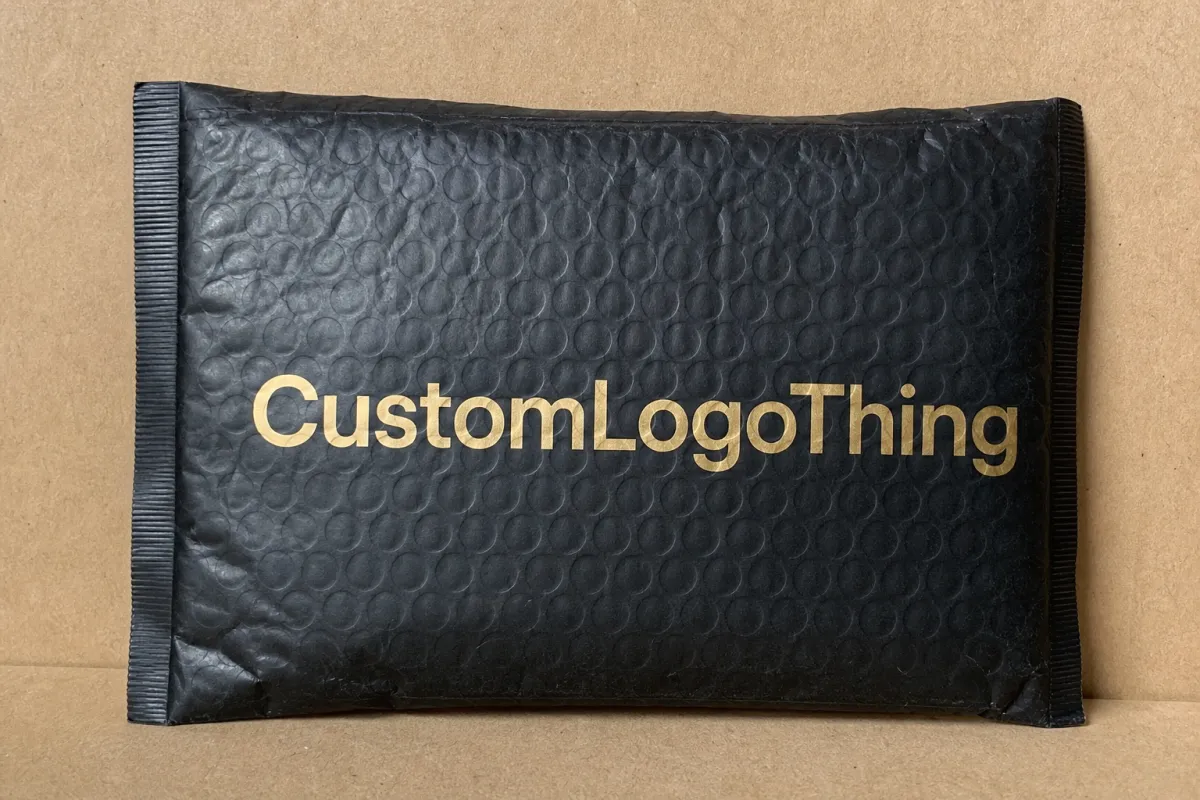
Jewelry shipments usually fail at the edges. Not inside the box. At the edge of the mailer, where a conveyor corner, stack pressure, or a bad drop can bend the outer layer before the customer ever sees the product. That is where claims start, and that is where thin packaging gets exposed fast.
Thickness is not one number on a spec sheet. It is the face stock, the cushion, the seam, the closure, and how the whole thing behaves once it gets squeezed. A padded mailer can feel solid in your hand and still fail under compression if the seal is weak or the cushioning crushes flat. The opposite happens too: a lighter build can hold up well when the structure is balanced and the fit is tight.
Jewelry is different from apparel. The contents are smaller, denser, and usually packed with a presentation layer. That can be a branded box, a velvet pouch, a card insert, tissue, or a tiny display tray. Nice details. Also nice little sources of movement, friction, and corner pressure. A necklace in a soft pouch behaves one way. The same necklace in a rigid paperboard gift box behaves another. A pair of studs on a card barely shifts. A bracelet in a rigid tray can punch a corner through a weak mailer if the fit is sloppy.
The real question is not, “What is the thickest mailer?” It is, “What thickness protects the product, supports the brand, and still makes sense to ship?” That is the tradeoff. Too thin and you pay later in replacements, complaints, and ugly reviews. Too thick and you pay now in freight, warehouse space, and unit cost. The best choice protects the shipment you actually send, not the sample you squeezed at your desk.
For broader format options and material comparisons, review Custom Packaging Products before locking in a jewelry mailer spec.
Branded Padded Mailers for Jewelry Packaging Material Thickness Guide
Now the useful part. A branded padded mailer for jewelry can be built a few different ways, and each build changes the thickness profile. Paper-based padded mailers usually feel cleaner and fit well with kraft-forward branding. Poly bubble mailers usually absorb impact more evenly. Both can work. The right one depends on what you are shipping and how much visual damage you are willing to tolerate.
Start with the outer face. Paper outer layers are commonly described in grams per square meter, often around 100-120 gsm for stronger mailers and 120-160 gsm for heavier-duty builds. If the mailer includes a rigid paperboard insert or a premium printed face, you may see specs like 350gsm C1S artboard laminated to a corrugated or cushioned inner layer. Poly exteriors are usually discussed in microns, with many custom poly mailers sitting around 50-75 microns per film layer depending on the build. Those numbers matter, but not by themselves. A thicker face stock with weak seams can still fail. A slightly lighter structure with better padding and a better seal can survive a rougher route.
The inner cushion does the real work. Bubble interiors with a 3/16-inch profile are common because they spread impact and reduce point pressure. For heavier jewelry kits or rigid box inserts, some buyers move to 1/4-inch bubble or a double-layer paper cushion. Paper padding or fiber-based cushioning can feel more premium and may fit a sustainability-led brand story, especially if you want FSC-certified kraft paper sourcing. If you want to compare structures by material behavior instead of marketing copy, ask suppliers how the mailer performs under drop and compression testing aligned with ISTA methods.
Branding changes the equation too. Thicker materials can improve the tactile feel and make package branding more memorable, but they can also change print clarity, seam placement, and how much artwork is visible. If your logo crosses a fold or a padded seam, the finished pack can look distorted even if the file was perfect. That is why branded packaging should be reviewed as a structure, not just as a print file. A mailer with a clean matte kraft face and a 1-color print can look sharper than a glossy, overbuilt sample with sloppy registration.
Think about the shipping path. A mailer will probably go through conveyor sorting, bin stacking, delivery truck compression, and porch drops before the customer opens it. That is where thickness matters. A mailer that protects against edge crush and vibration is doing its job. A mailer that only looks good on a table is decoration.
Practical rule: if the jewelry box or pouch can move inside the mailer, the wall thickness is only solving half the problem. Fit and closure matter just as much as caliper.
If your brand uses custom printed boxes for core product presentation, the mailer becomes the shield around that experience. A common setup is a 350gsm C1S artboard jewelry box inside a padded mailer with a 3/16-inch bubble or 100-120 gsm paper cushion. That combination protects the corners, keeps the print face cleaner, and avoids the baggy look that happens when the outer package is oversized.
For a real-world comparison of structure options, look at Custom Poly Mailers alongside your padded mailer samples. The comparison is usually more useful than the catalog description.
Key Thickness Factors That Change the Best Choice
Product type changes the answer more than most teams expect. Rings in slim boxes behave differently from earrings on a card, and both behave differently again when packed in a pouch. A bracelet with a rigid insert has more mass and more edge pressure. A necklace in a soft pouch can shift enough to scuff the inside face of the mailer. Boxed sets tend to be the most demanding because they combine weight, corners, and internal movement in one shipment.
Weight matters, but not in a cute little spreadsheet way. A pair of lightweight studs may need very little cushioning, while a heavier plated chain or a gift set with multiple inserts can create enough inertia to stress the seam and dent the outer wall. The issue is not just weight. It is how that weight moves. If a small item can slide, swing, or settle into one corner, the mailer needs to resist that movement without folding or creasing.
Distribution profile changes the choice too. A direct-to-consumer order that ships one piece at a time can use a different structure than a subscription kit, a wholesale shipment, or a bundle with multiple SKUs. The more items inside the package, the more likely internal friction, stack pressure, and void space will create damage. A thicker mailer helps, but so does sizing the pouch or box more tightly so there is less room for motion. A set that includes a ring box, thank-you card, and polishing cloth usually needs more structure than a single pendant in a soft pouch.
Do not confuse thickness with durability in only one direction. Seal strength, tear resistance, and puncture resistance are separate issues. A mailer can be thick and still split at a corner fold or fail if the adhesive closes unevenly. A lighter mailer can outperform if the seam is reinforced and the closure flap is wide enough. That is why the best spec sheet lists structure, padding type, closure design, and size together instead of reducing the whole purchase to one caliper number.
Climate and shipping distance matter too. Humidity can affect paper-based surfaces. Long regional routes, seasonal carrier congestion, and high-sortation networks add more handling touchpoints. If the route is rough, a stronger structure may be worth the extra penny or two per unit. If the lane is short and controlled, a cleaner brand finish with moderate cushioning can be the better move. A small rise in material cost is easier to swallow than a pile of replacements after a holiday rush.
Testing should happen with the actual jewelry packaging inside the mailer. A blank sample does not reveal how a box corner behaves, how a pouch shifts, or whether a closure line presses into the print area. The mailer should be judged as a system: contents, insert, fit, outer wall, and seal working together. If the sample includes a 350gsm C1S artboard box, test that box, not a lighter dummy insert that tells you nothing useful.
That system view is the same logic used across broader product packaging. The same buyer who would never choose a fragile carton for a dense item should not choose a decorative mailer that cannot survive the same transit path. Packaging design is not about one attractive component; it is about the stack of decisions surrounding it.
Process, Timeline, and Lead Time for Sampling to Production
The production timeline for custom mailers usually takes longer than buyers expect, mostly because the schedule includes both design and physical validation. A typical sequence starts with a brief, then artwork approval, material selection, sample creation, revision, final proof, mass production, and freight. The sample stage is where many teams lose time, especially when they want the same thickness in two different constructions for comparison.
Sampling often takes 5-7 business days for simple structures and closer to 7-10 business days if the print coverage is heavy, the size needs adjustment, or the structure includes a custom insert or special closure. Production commonly runs about 12-15 business days from proof approval for standard runs, with some orders stretching to 18-20 business days if the order is large, the structure is complex, or the production calendar is full. Freight adds another variable. Air and sea are not interchangeable here; a rush launch can get expensive quickly if the date is fixed and the packaging has not been signed off.
Stock sizes move faster. Custom thickness changes move slower. That does not make custom the wrong choice. It just means you should know where the time goes. A changed caliper, an extra padding layer, or a new closure style can affect tooling, material availability, and minimum order quantity. If you are building a seasonal line or a campaign box set, request the sample before artwork lock, not after. Waiting until final artwork is approved and then changing the wall spec is how calendars get wrecked.
Physical testing deserves its own spot on the calendar. One or two internal days are not enough if the package needs to be tried with the actual jewelry, insert, seal method, and shipping label. A good test should include a short mailing run, a few rough handling checks, and a review under daylight so you can spot scuffs, wrinkles, and print shifts clearly. If your team also uses retail packaging in stores or for event kits, test those use cases separately because the handling profile can be different. The mailer that survives a clean office handoff may behave differently after a carrier route and a rainy porch drop.
Rush orders force compromises. Sometimes the compromise is simpler artwork. Sometimes it is a thinner structure than you wanted. Sometimes both happen. If the product is high value or fragile, that tradeoff can create more risk than the deadline is worth. In practice, a slightly earlier sample request saves more money than most emergency freight charges.
A simple internal schedule helps:
- Request two sample thicknesses and confirm dimensions.
- Test with the real jewelry, box, pouch, and closure.
- Approve the version that survives transit with the least wear.
- Lock the spec sheet before mass production.
- Add a receiving buffer before launch or campaign start.
If you want examples of how brands structure that decision, the Case Studies page can be a useful reference point for comparing formats, lead times, and packaging choices.
Cost, Pricing, and MOQ: What Thickness Changes in Your Quote
Thickness affects price in more ways than raw material usage. A thicker wall means more substrate, more shipping weight, and sometimes slower throughput on the production line. It can also affect storage costs because a heavier, bulkier mailer takes up more carton space before it is even filled. Buyers tend to look at the line item price and miss the full landed cost.
For custom Branded Padded Mailers, a small order may sit in one cost structure, while a larger run drops the unit price enough to make upgraded thickness more attractive. A common custom range at 5,000 pieces might look something like this: basic paper padded mailers at about $0.15-$0.24 per unit depending on size and print coverage, poly bubble mailers at about $0.16-$0.29 per unit, and reinforced or premium constructions at about $0.24-$0.42 per unit. Those are directional numbers, not a quote. A full-coverage print, larger dimensions, or a custom closure can move the price up fast.
MOQ changes the conversation. A higher minimum can reduce unit price, but only if the chosen structure genuinely protects the jewelry and cuts the chance of returns. A mailer that saves two cents but creates a few percentage points of damage is not a saving. It is a delayed loss. One avoided replacement or refund can wipe out the difference in mailer cost for dozens of shipments. That is before you count the time spent dealing with customer service tickets that should never have existed.
Ask suppliers to break the quote into actual drivers: material grade, padding type, print coverage, size, seal style, and whether the outer face uses kraft paper or poly. If the package has a premium finish, ask whether that finish improves protection or only appearance. Not every attractive detail helps performance. A soft-touch surface can be nice, but it does not replace stronger cushioning. A 350gsm C1S artboard outer box looks sharp, but it still needs the right mailer around it.
There is also a hidden cost in oversizing. A mailer that is too large may need more filler, more labor, and a bigger shipping footprint. That extra void space lets the jewelry box move, which undercuts the benefit of thicker walls. In many cases, a slightly smaller, tighter mailer with moderate thickness outperforms a bigger one with more padding.
Compare options with a real quote scenario, not just a catalog spec.
| Mailer option | Typical structure | Best fit | Indicative unit price at 5,000 pcs | Commercial note |
|---|---|---|---|---|
| Paper padded mailer | 100-120 gsm kraft face with paper cushioning, or 120-160 gsm face for heavier builds | Light jewelry, pouches, premium branding | $0.15-$0.24 | Strong visual feel, often better for FSC-led branding |
| Poly bubble mailer | 50-75 micron film with 3/16-inch bubble interior | Boxed jewelry, heavier pieces, higher transit risk | $0.16-$0.29 | Usually better impact absorption, less premium tactility |
| Reinforced mailer | Thicker face stock, stronger seam, optional insert support | Gift sets, multi-item orders, higher claim sensitivity | $0.24-$0.42 | Higher upfront price, often lower damage exposure |
For brands balancing sustainability with presentation, look for paper-based options that can support FSC sourcing claims without weakening the structure. That matters in branded packaging because buyers notice the feel first, but they remember the failure second.
Keep an eye on freight class and total shipment weight too. A thickness upgrade that adds only a fraction of a gram per unit can still matter when you are shipping tens of thousands of mailers a quarter. The packaging line item may stay small; the logistics line can quietly move.
Common Mistakes When Choosing Jewelry Mailer Thickness
The first mistake is choosing by feel alone. A mailer that seems sturdy in the hand can still collapse under stack pressure or flex too much at the seam. Hand feel helps, but it is not a transit test. The pack has to survive vibration, compression, and repeated handling, not just a desk-side squeeze. A sample that feels “premium” can still be a bad shipment.
The second mistake is oversizing the mailer. Extra room sounds safe, yet too much empty space lets the jewelry box move. That movement creates abrasion, corner wear, and pressure on the closure. In some cases, a thicker outer wall cannot fix a loose fit. The real answer is a tighter size or a different insert, not more padding alone.
The third mistake is treating branding and durability as separate jobs. A beautiful logo does not fix a weak seal. A polished surface does not stop punctures. The same point applies to custom printed boxes and mailers alike: the art can lift the brand, but the structure has to carry the shipment. If the print is perfect and the corners arrive crushed, the customer still notices the crushed corners.
The fourth mistake is ignoring closure strength. If the adhesive fails, the flap opens, or the seal strip is too narrow, the best thickness in the world will not save the parcel. That is especially true for jewelry orders that include a rigid box, because the box edge can press against the flap and stress the adhesive during movement. A wide adhesive strip and a clean flap alignment are not decorative details. They are part of the structure.
The fifth mistake is assuming one test covers the whole product line. Rings, bracelets, and necklaces do not create the same stress pattern. A sample that passes for a lightweight pair of earrings may fail for a heavier chain or a boxed set. If your assortment is wide, create separate specs or at least separate testing profiles for the high-risk SKUs.
The sixth mistake is overbuying premium thickness without checking freight and storage impact. A thicker mailer can be the right answer, but not if it quietly pushes your warehouse cube higher than planned or raises outbound shipping enough to erase the margin. The best spec is not the thickest one. It is the one that keeps the whole order profitable.
Common trap: people buy a better-looking mailer and assume they bought better protection. Those are related, but they are not the same purchase.
One more caution: do not copy a competitor’s spec blindly. Their jewelry packaging may use a different insert, a different carrier mix, or a different claim tolerance. A thickness that works for them may be too light or too heavy for your product line.
Expert Tips and Next Steps for Choosing the Right Mailer
Start with two practical samples: one baseline thickness and one upgraded thickness. Test both with the actual jewelry, the actual insert, and the actual closure method. If the item shifts, dents, or arrives with visible wear, the next move is usually to improve the fit or increase the wall strength, not to add more printing.
Run a small internal trial with your real shipping labels and carrier mix. That gives you data on scuffs, crushed corners, returns, and customer feedback. Ten pieces is better than nothing. Fifty is better still. The point is to see the package the way the customer sees it, after handling and transit, not before. If you can, include one test with a rigid box, one with a pouch, and one with the full gift set. You will learn more in one afternoon than from a stack of marketing PDFs.
Create one page of packaging specifications before reordering. Lock in the approved thickness, dimensions, print area, seal type, acceptable variation, and any approved paper or film source. That spec sheet protects future orders from quiet drift. It also helps if you scale from direct-to-consumer orders into retail packaging or wholesale replenishment later.
Use a decision rule instead of intuition:
- If the jewelry moves, tighten the fit first.
- If the box corners dent, increase wall strength or add cushioning.
- If the seal opens, improve adhesive or flap design.
- If the print looks distorted, revisit artwork placement and material choice.
- If margin erodes, compare thickness options against freight, claims, and storage.
Ask suppliers for recommendations tied to your order profile, not generic marketing language. A supplier who knows your average item weight, box dimensions, and transit lane can usually point you toward a better starting point than a one-size-fits-all sample. If the product line includes mixed packaging such as pouches, boxes, or inserts, ask for a sample set that shows how each one fits in the mailer.
Check print quality under daylight, not only under warehouse lighting. That sounds minor, but the finish on a padded mailer can change how color reads, especially on kraft paper or darker poly. A logo that looks rich in the sample room may look flatter on the line. That is part of package branding, and it deserves the same scrutiny as the structural spec.
The strongest decision process is simple: choose the mailer that protects the jewelry’s actual journey, document the result, and hold that standard for every reorder. That turns branded Padded Mailers for Jewelry Packaging material thickness guide into a repeatable buying rule instead of a one-time guess.
Conclusion
The best mailer thickness is the one that matches the jewelry, the internal packaging, and the route it will travel. For many brands, that means testing at least two constructions, comparing unit cost against claim risk, and making sure the final spec supports both product packaging and brand presentation. A stronger outer wall can be worth paying for, but only if the fit, seal, and print area all work together.
If you treat the Branded Padded Mailers for jewelry packaging material thickness guide as a full specification process instead of a style choice, you will make better buying decisions and fewer rescue shipments. That usually means fewer returns, cleaner unboxing, and a package that feels intentional instead of accidental. The practical takeaway: test with the real jewelry, approve the structure that survives transit with the least wear, and lock that spec before the next reorder.
What thickness should I choose for branded padded mailers for jewelry?
Start with the lightest thickness that protects the jewelry box or pouch from corner crush and movement. Heavier pieces, rigid boxes, and multi-item kits usually need more cushioning than single lightweight earrings. Test with your real product inside the mailer, not with an empty sample, because fit changes the protection level. A sample with a 350gsm C1S artboard box inside can behave very differently from a blank mailer on its own.
Do branded padded mailers for jewelry need bubble padding or paper padding?
Bubble padding usually offers more impact absorption, while paper padding can feel more premium and align better with recyclable branding. Choose based on shipping risk, unboxing goals, and whether your brand prioritizes sustainability or maximum cushioning. If the jewelry box is rigid and heavy, bubble-style protection usually performs better in transit tests. For lighter pouches, paper-based padding can be enough if the fit is tight.
How does thickness affect printing on branded padded mailers for jewelry?
Thicker materials can improve the premium feel, but they can also change how ink sits on the surface. Ask for a printed proof because color, line sharpness, and seam placement can shift between thin and thick stock. If the print area is tight, choose a thickness that supports branding without distorting the artwork. A clean 1-color logo on kraft often holds better than dense full-coverage art on a heavy seam.
What lead time should I expect for custom branded padded mailers for jewelry?
Stock sizes move faster, while custom thickness or print changes usually add sampling and approval time. Sampling often takes 5-7 business days, and production is often 12-15 business days from proof approval for standard runs. Build in time for testing the mailer with real jewelry packaging before final production. If your launch date is fixed, request the sample and production schedule before approving artwork.
How do I compare pricing for different branded padded mailers for jewelry thickness options?
Compare the full quote, not just unit price: material grade, print coverage, size, and shipping weight all matter. Ask for at least two thickness scenarios so you can measure price against damage reduction. A common custom run at 5,000 pieces may land around $0.15-$0.24 per unit for simpler paper padded mailers, depending on size and print coverage. The cheapest option is not always the lowest-cost option if it creates returns, replacements, or bad reviews.