Buyer Fit Snapshot
| Best fit | Printed Padded Mailers for Jewelry Packaging Finishes projects where brand print, material claims, artwork control, MOQ, and repeat-order consistency need to be specified before quoting. |
|---|---|
| Quote inputs | Share finished size, material target, print colors, finish, packing count, annual reorder estimate, ship-to region, and any compliance wording. |
| Proofing check | Approve dieline scale, logo placement, barcode or warning zones, color tolerance, closure strength, and carton packing before bulk production. |
| Main risk | Vague material claims, crowded artwork, missing packing details, or unclear freight terms can make a low unit price expensive after revisions. |
Fast answer: Printed Padded Mailers for Jewelry Packaging Finishes should be specified like a repeatable production item. The safest quote records material, print method, finish, artwork proof, packing count, and reorder notes in one written spec.
Production checks before approval
Compare the actual filled-product size with the drawing, then confirm tolerance on folds, seals, hang holes, label areas, and retail display edges. Reserve space for logos, QR codes, warning copy, and material claims before decorative graphics fill the panel.
Quote comparison points
Review material grade, print process, finish, sampling route, tooling charges, carton quantity, and freight assumptions side by side. A quote is only useful when the supplier can repeat the same color, closure quality, and packing count on the next order.
For custom logo shipping, the right Printed Padded Mailers for jewelry packaging Print Finish Comparison is not decorative fluff. It affects branding, protection, and the first impression a customer gets before they ever see the piece inside. A ring set, a pair of studs, or a fine chain often lands in the mailer long before the jewelry box is opened, so the outer surface does more work than most teams budget for.
Finish changes the read of the package immediately. Matte feels restrained and clean. Gloss pushes contrast and color harder. Satin sits in the middle and behaves like the sensible one in the lineup. Soft-touch adds a velvety hand feel that makes a small order feel more considered. That choice affects scuff visibility, color depth, photography, and how the package looks on a packing bench, a porch, or a social post that nobody planned but everybody sees.
For jewelry brands, the outer layer is part of the packaging story, not an afterthought. The right finish supports branded packaging, survives carrier handling, and matches the tone of the collection, whether the line is minimal and elegant, playful and trend-heavy, or gift-ready with a little more presence.
A mailer that looks sharp on a screen is only half the job. If it picks up rub marks in transit, shows fingerprints under warehouse lights, or photographs flat beside the product, the finish has already lost ground.
Printed padded mailers for jewelry packaging: why finish matters
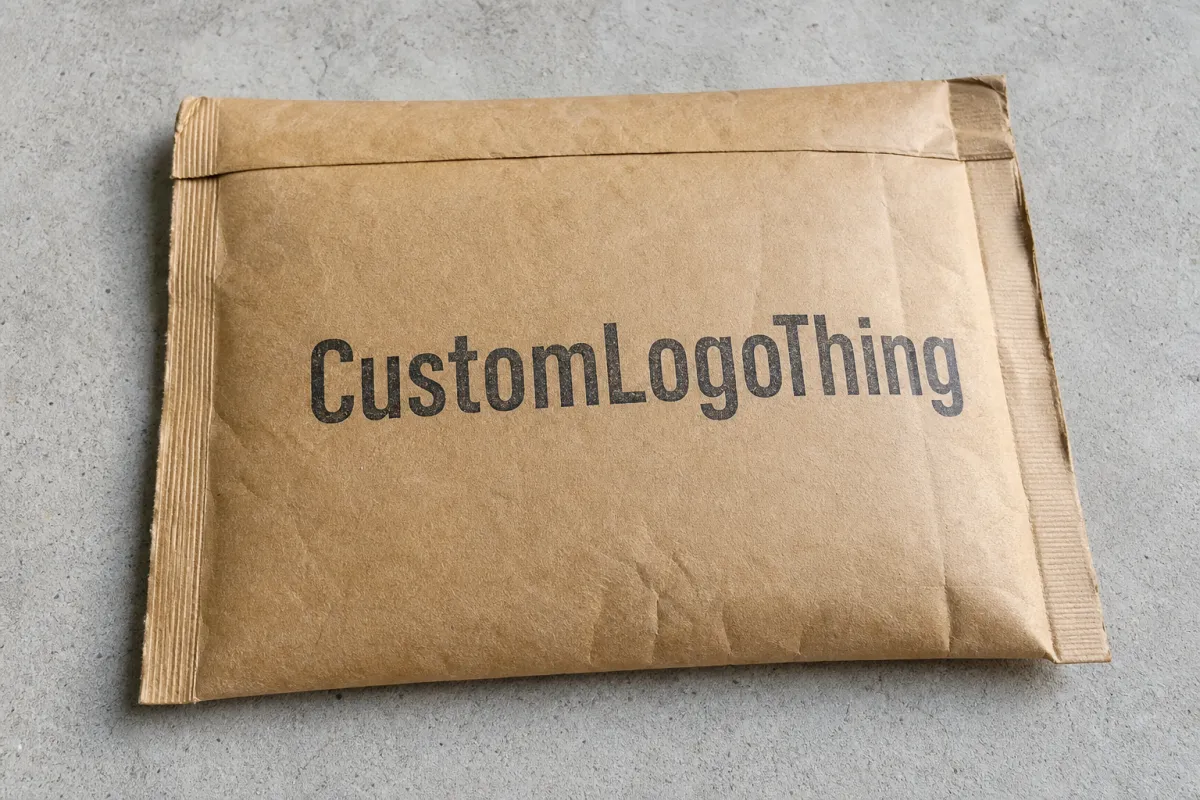
Printed Padded Mailers for Jewelry Packaging sit in an awkward but important spot. They are not the jewelry box, and they are not the shipping carton, but they are often the first branded item the customer touches. That makes finish a real decision, not a design garnish. It controls what the customer feels first, what the camera sees first, and how much wear the package can hide before it reaches the doorstep.
In practical terms, the finish changes the emotional temperature of the order. A matte surface tends to feel calmer and more curated, which suits fine jewelry, bridal pieces, and understated retail packaging. A gloss surface feels brighter and more energetic, which works for fashion jewelry, promotional launches, and packaging that needs stronger visual punch. Satin lands between those two. Soft-touch goes a step further by giving the mailer a cushioned, tactile feel that buyers often associate with premium custom printed packaging.
The finish also changes how the printed artwork behaves. Dark colors can show rub marks sooner on glossy surfaces if the design gets handled roughly, while matte surfaces may mute some saturated tones but hide the marks better. Small logos, thin rules, and fine text need a surface that keeps edges crisp after printing, because jewelry mailers often carry brand marks, return addresses, and barcode labels all at once. If the finish interferes with readability, the package stops doing its job.
Choose the finish with the full trip in mind: packing table, transit, delivery, unboxing, and shelf or drawer storage after the jewelry is removed. For a brand manager, a fulfillment lead, or a buyer comparing options across Custom Packaging Products, the question is not just which finish looks nicest. It is which finish protects the brand impression through the entire shipping cycle.
Printed padded mailers for jewelry packaging print finish comparison
The cleanest way to compare finishes is to look at how each one handles light, touch, and wear. On padded mailers, the printed outer layer carries the finish, while the cushioning layer does the protection work. That means the surface treatment has to look good and survive friction from sorting belts, mail totes, packing bins, and stacked parcels. Cute, in a very industrial way.
For short runs, digital printing is often used because it keeps setup flexible and reduces plate costs. For larger branded packaging programs, flexographic or gravure printing is more common on film-based mailers, while offset may still appear for paper components such as inserts or cards. The finish becomes the last visual layer the customer experiences, and that layer needs to match the print method cleanly. Dense ink coverage, gradients, and small typography all behave differently depending on whether the surface is matte, gloss, satin, or soft-touch.
Most jewelry teams are choosing between a few common constructions: a 60-70 micron PE outer film with a bubble or paper pad, a self-seal closure, and a print area that covers anywhere from one logo to full-wrap artwork. If the order also includes insert cards, matching tissue, or a care slip, a typical insert card spec is 350gsm C1S artboard. That does not change the mailer finish, but it does change how the whole unboxing set feels in the hand. Packaging is annoyingly honest that way. One weak piece makes the rest look less intentional.
Here is the practical comparison many teams use when comparing custom poly mailers for jewelry orders:
| Finish | Look and feel | Scuff visibility | Print behavior | Best use case | Typical cost impact |
|---|---|---|---|---|---|
| Matte | Soft, muted, refined, low glare | Usually hides handling marks well | Excellent for text and clean logos; colors look calmer | Fine jewelry, bridal, minimalist branding | Usually baseline pricing or a small premium |
| Gloss | Bright, reflective, high-energy | Can show scratches and fingerprints sooner | Boosts saturation and contrast; strong for bold artwork | Fashion jewelry, launches, playful branded packaging | Often similar to matte, sometimes slightly lower or higher depending on coating |
| Satin | Balanced sheen, smooth but not shiny | Moderate hiding power | Keeps artwork readable while adding a finished look | General jewelry packaging, gift-ready mailers | Usually a modest step above basic matte or gloss |
| Soft-touch | Velvety, premium, tactile | Often hides light wear well, but dark inks still need care | Creates a high-end feel; best with simple, strong graphics | Luxury direct-to-consumer orders, VIP mailers | Often 10% to 25% above a standard finish, sometimes more |
The table helps, but it still skips the part that matters after the package has been handled five or six times. A satin or matte mailer may not look as flashy as gloss in a photo, yet it can hold its appearance better once labels, tape, and sorting friction start doing their thing. A gloss finish can create strong shelf impact for retail packaging and influencer seeding, but it needs more attention to scratch resistance and print placement.
Photo behavior matters too. Gloss can throw hot spots under warehouse lighting and direct sunlight, which makes product images and user-generated content look inconsistent. Matte and soft-touch reduce glare, so the printed brand mark usually reads better on a phone camera. For a jewelry brand that leans on social sharing, that difference matters as much as the unboxing itself.
Finish also interacts with the structure of the mailer. A padded mailer with a pressure-sensitive closure can survive transit well, but the outer surface still needs enough durability to keep the brand looking intact. If the design uses deep black backgrounds or rich jewel tones, a finish that resists visible rub marks becomes more valuable than a finish that merely looks shiny on day one.
For brands building a broader packaging system, the same finish logic often carries across inserts, hangtags, and Custom Poly Mailers, even when the substrate changes. Consistency helps the customer recognize the brand quickly, and recognition is part of package branding, not decoration for the sake of it.
Key factors to compare before you choose a finish
Choosing a finish gets easier once you compare it against a few concrete priorities instead of staring at a render and hoping for the best. Start with scuff resistance. Jewelry mailers are often light in weight, stacked in bulk, and packed in high volumes, which means they get moved around more than many buyers expect. A finish that looks excellent in a sample photo can still show rub marks after one shift in a fulfillment center.
Next is color impact. Gloss tends to make artwork feel brighter and more saturated, especially on solid colors and high-contrast logos. Matte and satin usually soften the look, which can make typography feel more elegant and less promotional. Soft-touch can deepen the premium impression further, but it works best when the artwork is disciplined instead of busy.
Brand fit comes right after that. A dainty fine jewelry line, a bold costume jewelry collection, and a handmade artisan brand do not need the same surface language. Fine jewelry often benefits from a quiet matte or soft-touch finish because it supports a calm, expensive-feeling presentation. Trend-driven fashion jewelry can use gloss to make the mailer feel louder and more energetic. Handmade collections may favor satin because it feels intentional without looking overproduced.
Shipping abuse matters too. Mailers ride through sorting systems, truck beds, mail totes, and delivery scans, and each step adds friction. If the package ships inside a second outer carton, the finish has a little more freedom. If the padded mailer is the only exterior package, the finish needs to carry more visual weight. Moisture is part of the equation as well. A finish that handles minor dampness and handling wear can save the brand from looking careless when the parcel has been exposed to rain, condensation, or a crowded delivery route.
Artwork complexity is the other big piece. Thin lines, fine text, foil-like graphics, and small return-address blocks all need care. Some finishes make low-contrast copy harder to read, especially once a label is applied over part of the surface. If the mailer needs room for handwritten notes, shipping labels, or barcode stickers, the finish should work with those elements instead of fighting them.
Sustainability and customer expectation round out the list. Many jewelry buyers care about how a package photographs, how it feels in the hand, and whether it reads as responsible product packaging rather than excess plastic. If your outer mailer includes paper components, recycled content, or fiber-based inserts, sourcing claims are easier to support when the supply chain is clearly documented. For fiber-based materials, FSC certification can help communicate that sourcing standard; for shipping performance and distribution cycles, teams often reference ISTA test methods and ASTM distribution testing. Good starting points include the International Safe Transit Association and the Forest Stewardship Council.
Practical rule: if the mailer will be photographed often and handled gently, prioritize appearance and tactility. If it will face heavier transit wear or warehouse handling, prioritize scuff hiding and print durability. If the order is high-value or gift-focused, test the finish under the same lighting conditions your customers will actually see.
Production process, timeline, and turnaround for custom mailers
People love asking about turnaround like it is one clean number. It never is. The schedule is a chain of smaller steps: artwork intake, proofing, sample review if needed, print setup, finish selection, final production, packing, and freight. Each step can add time if the specs are not locked early.
Finish decisions affect the rest of the workflow. If the brand switches from gloss to soft-touch after artwork approval, the proof may need to be reviewed again for color shift, reflection behavior, and logo visibility. If the color match is sensitive, a supplier may ask for an extra press check or sample round. That is normal. Much better than finding the issue after a full run and pretending nobody will notice.
For many custom mailer projects, simple reorders move faster than new launches. A repeat order with the same size, same print coverage, and the same finish can often be turned around in 12-15 business days from proof approval. A new custom design with special coating, thicker padding, or more complex color work may need closer to 15-25 business days before shipping. Freight time sits on top of that. Exact timing depends on material availability, order volume, and whether the vendor is using digital printing or a longer-run process that favors larger quantities.
Lead time changes when the packaging program includes multiple SKUs. A jewelry brand with earrings, rings, and necklaces may need more than one mailer size, and each size can affect tooling, fit, and nesting. If the team is also ordering tissue, insert cards, or matching outer cartons, the schedule should be built from the slowest item, not the fastest one. That matters even more when the mailers need to coordinate with other branded packaging elements in the same drop.
A realistic workflow for a first order often looks like this: 1-2 days for artwork cleanup, 2-4 days for proofing, 1-3 days for sample signoff if the team wants a physical check, 5-10 days for production depending on finish and quantity, and then freight. If a supplier is quoting a rush schedule that ignores proof time, they are either very optimistic or not counting the same way you are.
Planning backward from the ship date is the safest move. If the launch is tied to a holiday event, wedding season, or influencer campaign, sample review should happen early enough to leave room for a correction. A finish that looks excellent on a monitor can still surprise people under warehouse LEDs, so a physical sample is not optional if the order matters.
- Artwork review: confirm logo placement, bleed, safe area, and any barcode or return-address zones.
- Proof approval: check color, spelling, finish notes, and trim lines before production.
- Sample check: test the mailer under daylight, indoor light, and the actual packing station.
- Production: allow time for printing, coating or lamination, curing, and packing.
- Freight: add transit time and a buffer for delays, especially on first orders.
One habit saves a lot of pain: keep a production checklist that names the finish explicitly. "Matte," "gloss," and "satin" may sound simple, but in packaging design they are not interchangeable. The wrong finish can change how the brand looks enough to create a mismatch between samples and reorders, which is exactly the kind of problem that wastes time and annoys everyone.
Cost, pricing, MOQ, and quote planning
When jewelry buyers compare quotes, the most common mistake is chasing the lowest line item and calling it smart. A lower print price can be misleading if the sample process is weak, the finish chips easily, the freight is expensive, or the supplier charges more on reorders. Real quote planning starts with unit cost, but it ends with landed cost and brand impact.
The biggest cost drivers are easy to name once you know where to look: finish type, print coverage, number of colors, mailer size, material thickness, order quantity, and any special effects. A heavily printed dark design usually costs more than a simple one-color logo because it uses more ink and may require tighter process control. Soft-touch and specialty coatings also tend to raise the price because they add material or finishing steps.
MOQ matters because it changes the shape of the purchase. A higher minimum order quantity can lower unit cost, but it also increases inventory commitment and storage needs. A jewelry brand shipping 300 to 800 orders a month may not want to sit on 10,000 mailers if the artwork or seasonality changes quickly. On the other hand, a stable line with repeatable packaging can benefit from a larger run, especially if the vendor discounts heavily at higher volumes.
For a realistic planning conversation, compare quotes on the same basis. That means the same size, same material thickness, same color count, same closure style, and same finish. If one quote includes sample charges, freight, or setup fees and another does not, the headline price is not useful. Ask for total landed cost so the decision is based on actual spend, not just print cost.
Here is a simple way to think about the pricing side for custom jewelry mailers at common production levels:
| Quantity | Simple matte or gloss | Satin finish | Soft-touch or premium coating |
|---|---|---|---|
| 2,000 pieces | $0.30 to $0.56 each | $0.34 to $0.62 each | $0.46 to $0.78 each |
| 5,000 pieces | about $0.15 to $0.24 per unit, depending on size and print coverage | $0.18 to $0.29 each | $0.24 to $0.41 each |
| 10,000 pieces | $0.12 to $0.22 each | $0.15 to $0.26 each | $0.20 to $0.38 each |
Those ranges are directional, not a promise, because actual pricing depends on artwork coverage, construction, shipping lane, and supplier capacity. They still help because they show how strongly MOQ affects unit price. A soft-touch finish may be a modest premium at 10,000 pieces, but the same finish can feel expensive at 2,000 pieces. A full-print mailer with dark ink coverage can also sit at the top end faster than a simple logo on white or kraft.
Value matters just as much as price. A mailer that scuffs quickly can undermine a premium jewelry line and create customer-service noise if parcels arrive looking tired. A finish that photographs well can improve social sharing and strengthen brand recognition. That is why the cheapest option is not always the smartest one, especially for branded packaging that sits in the customer’s hand at the most visible moment.
If your packaging program includes broader retail packaging, such as tissue, inserts, and custom printed boxes, then the jewelry mailer should be costed as part of the whole experience rather than in isolation. That is usually where buyers find the best balance between savings and presentation.
Step-by-step guide to choosing the right finish for jewelry orders
A clean decision process prevents a lot of backtracking. Start by defining the jewelry line itself. Everyday basics usually need a finish that feels tidy and efficient. Bridal or fine jewelry benefits from a quieter, more elegant surface. Handmade artisan collections often want warmth and authenticity. Trend-driven pieces can carry more shine and color without looking out of place.
Next, narrow the list to two or three finishes that actually fit the brand. Do not compare six variants at once unless the team has a strong visual system in place, because too many samples can blur the decision. Then request physical samples or printed proofs. A screen render can never tell you how the mailer feels in hand, how glare behaves, or how a metallic-looking logo reads after a short rub test.
Once the samples arrive, test them under ordinary handling. Slide each one across a table. Hold it under bright light and under softer indoor light. Check the logo after a few passes of handling. See whether the finish hides fingerprints and whether the color still feels balanced once a shipping label is added. If the brand uses handwritten notes or thank-you cards, lay those elements on top of the sample so the entire package story gets judged together.
The next step is to compare the finish against the unboxing script. A soft-touch mailer may be ideal if the customer should feel a calm, premium transition from exterior to interior. A matte mailer may be better if the outer package needs to stay restrained so the inside presentation can carry the reveal. A gloss finish may suit a more playful direct-to-consumer brand that wants the mailer itself to act as a visual cue before the box opens.
Then check the practical dimensions. Size matters because jewelry orders range from tiny single-piece shipments to bundled sets with care cards and branded inserts. Common sizes like 4x8, 6x9, and 8x10 work for earrings and thin chains, while 9x12 or 10x13 usually fit heavier sets or multiple items. Closure strength matters because a flimsy seal erodes trust quickly. Label space matters because the shipping label should not fight the logo. Return-address placement matters because the surface needs to support operations, not just aesthetics.
Finally, lock the spec in writing. Record the chosen finish, approved artwork, acceptable color range, material thickness, and reorder expectations. That prevents small shifts from creeping into later lots. Packaging design is only truly successful when it can be repeated without confusion, which is why the spec sheet is part of the brand story too.
- Define the jewelry line and the customer expectation.
- Shortlist two or three finish options.
- Review physical samples under normal lighting.
- Test for scuffs, glare, label readability, and feel.
- Compare unit price, lead time, and landed cost.
- Document the approved finish for future reorders.
Common mistakes, expert tips, and next steps
The most common mistake is choosing a finish from a digital mockup alone. Screens flatten texture, suppress glare, and hide handling marks. A second mistake is ignoring scuff testing. Jewelry mailers may be small, but they are still exposed to repeated contact, and a finish that cannot tolerate friction will make a premium product feel less deliberate than it should.
A third mistake is adding too much detail. Thin lines, tiny legal copy, and low-contrast artwork can become hard to read after printing and shipping wear, especially on finishes that slightly diffuse light. In many cases, a stronger logo mark and a cleaner layout will outperform a busy design with more visual noise. That holds for package branding and the rest of the branded packaging system too.
Here is the practical advice I give buyers most often. Use matte or satin when the goal is a quieter, more refined luxury feel. Use gloss when color pop and visual energy matter most. Use soft-touch when the customer experience should feel distinctly premium and the budget allows a small finish premium. If the mailer has to work hard in transit, do not let appearance outrank durability.
A useful comparison process for printed Padded Mailers for Jewelry packaging is to test the exact finish under real shipping conditions, not just on a desk. Put the sample in the packing flow. Add the real label. Slide it against other parcels. Look at it in daylight and warehouse light. Ask whether the finish still supports the product after handling, because that is the condition the customer will actually receive.
If you are building a broader packaging program, keep the same evaluation discipline across Custom Packaging Products and your mailers so the entire presentation feels intentional. Jewelry buyers notice the difference between packaging that was selected because it looked nice once and packaging that was chosen because it performs consistently.
Next steps that usually save time and money: narrow the finish list, order samples, compare them under multiple lighting conditions, review unit cost and lead time, and approve the option that best balances look, durability, and budget. That sequence keeps the decision grounded in actual use rather than guesswork.
The right finish should make each shipment feel polished, protect the jewelry inside, and support a repeatable standard for the brand. That is why Printed Padded Mailers for jewelry packaging print finish comparison belongs in the core packaging decision stack, not on the "we'll figure it out later" list.
FAQ
Are matte or gloss finishes better for printed padded mailers for jewelry packaging?
Matte usually hides scuffs better and gives a softer, more refined look, while gloss often makes colors brighter and helps logos stand out under light. The better choice depends on whether the brand wants quiet luxury or a higher-shine, more energetic presentation. For many jewelry lines, satin lands between the two and feels easier to live with during shipping.
How does finish affect durability on jewelry mailers?
A finish can help hide rub marks, fingerprints, and handling wear during transit, but it does not replace good construction or proper testing. Smoother, higher-shine surfaces may show scratches sooner on dark or solid-color designs, while matte and satin can disguise some of that movement. Always test the actual artwork and shipping method, not just the sample image.
What should I ask for when comparing quotes on printed padded mailers?
Ask for unit cost, MOQ, setup fees, proofing costs, freight, and any finish-related extras. Make sure every quote uses the same size, material, color count, and finish so the comparison is fair. It also helps to request total landed cost, because a cheap print price can look very different once shipping and reorders are included.
How long does the process usually take from artwork to delivery?
Timeline depends on proof approvals, sample requests, finish complexity, material availability, and order quantity. Simple reorders can move faster than new custom designs with special coatings or color matching. For many jobs, expect 12-15 business days from proof approval for a repeat run, then add freight time and a little buffer for real life.
What is the best finish if I want premium jewelry packaging on a budget?
A clean matte or satin finish often delivers a premium feel without the cost of more complex effects. Keeping the artwork simple and limiting ink coverage can also help control pricing while still looking polished. Compare sample mailers in real lighting so you can see whether a modest finish still supports the brand image.
What material specs should I ask about before approving a run?
Ask for the outer film thickness, the padding type, closure style, and whether the print uses digital or offset methods. For matching inserts or care cards, 350gsm C1S artboard is a common starting point, while mailers themselves often use a 60-70 micron PE outer layer with a bubble or paper pad. Specifics matter because vague specs create expensive surprises later.


